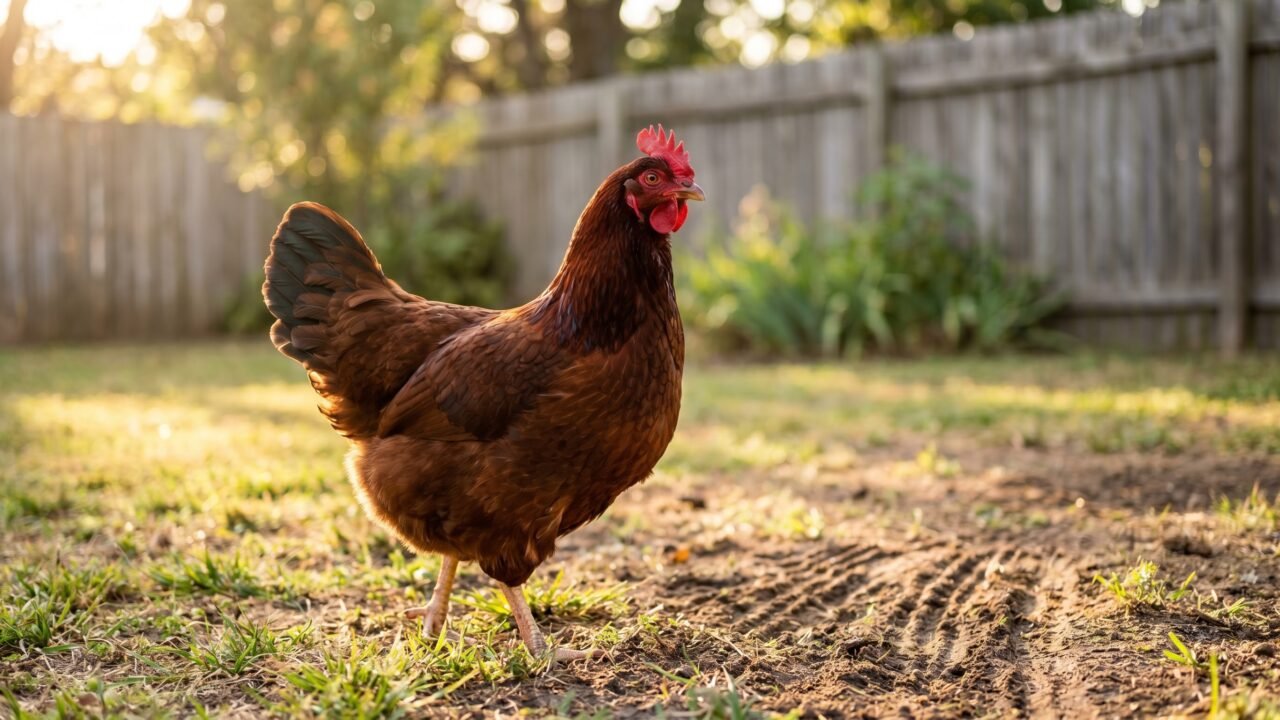
If you want a hen that shows up every morning, handles a cold snap without fuss, and still puts real meat on her frame, the Rhode Island Red is probably the breed you keep coming back to. Production-type hens reliably lay 250-300 large brown eggs per year - roughly five eggs a week at peak - and the breed has been earning its keep on American farms since the 1880s. There are tradeoffs worth knowing, especially around temperament in mixed flocks and the single comb's vulnerability to hard winters. This profile covers all of it.
Origin and history
The breed took shape in Rhode Island and Massachusetts during the late 1800s, when farmers crossed birds of Oriental origin - Cochin, Java, Malay, and Shanghai - with Brown Leghorn stock from Italy. The goal was a hen sturdy enough to survive a New England winter and productive enough to justify the feed bill, with males large enough to raise for the table. By 1895 the breed was exhibited under its current name, and a written standard was drawn up in 1898. The single-comb variety entered the American Poultry Association's Standard of Perfection in 1904; the rose-comb variety followed in 1905 or 1906, depending on the source. Rhode Island made the breed its official state bird in 1954, a title it still holds.
Since the 1940s, selection pressure has split the breed into two distinct populations. Production-type Rhode Island Reds - the birds you order from most hatcheries today - are leaner, lighter in color (sometimes closer to rust than the classic deep mahogany), and bred almost entirely for laying output. Heritage-type birds are darker, heavier, and closer to the breed standard; they are the focus of conservation work and were removed from The Livestock Conservancy's watch list as populations stabilized (the breed now carries Recovering status). Both lay well, but their egg numbers and body weight differ enough to matter when you are choosing a bird for a specific purpose.
At a glance: breed specifications
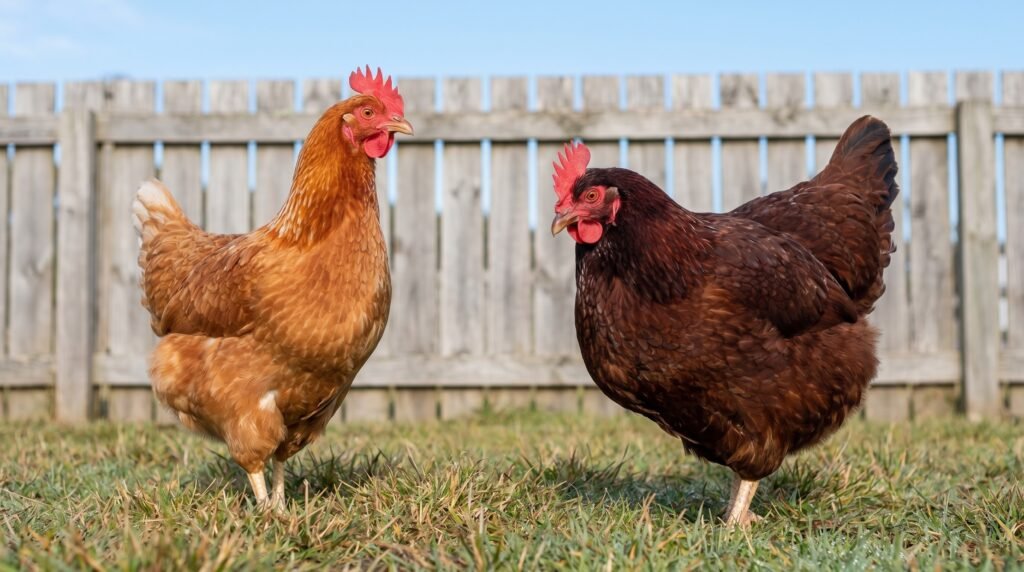
| Trait | Production-type Rhode Island Red | Heritage-type Rhode Island Red |
|---|---|---|
| Egg production (annual, peak) | 250-300 large brown eggs | 200-250 large brown eggs |
| Egg color | Brown | Brown |
| Hen weight (APA standard) | 6-7 lb (production); APA standard 6.6 lb | 6.6 lb+ (APA standard) |
| Rooster weight | 7.5-8.5 lb | 8.6 lb (APA standard) |
| Plumage color | Rust to medium red; black tail | Deep mahogany red; black tail |
| Comb type | Single comb (primary); rose comb also APA-recognized | Single or rose comb |
| Broodiness | Occasional | Occasional to moderate |
| Cold hardiness | Good; single comb needs moisture management in hard freezes | Good |
| Heat tolerance | Good with shade and airflow | Good with shade and airflow |
| Dual-purpose meat value | Modest; smaller frame than heritage | Good; traditional farm bird |
| Laying age | 18-22 weeks | 20-24 weeks |
| APA classification | American class | American class |
Production numbers above reflect peak-year hens on balanced layer feed. Expect a natural drop in year two and a more significant decline by year three, which is typical across laying breeds. See our guide to top egg-laying breeds for comparisons with White Leghorns, Australorps, and sex-links.
Eggs: what to expect week to week
At peak production, a Rhode Island Red hen lays roughly one egg every 24-26 hours - the same cycle length as most active layers - which translates to about five eggs per week. With 20 hens in the flock, that works out to roughly 90-100 eggs per week during the best months of spring and early summer.
Egg production tracks daylight. Below about 14 hours of light per day, most hens slow down or stop entirely. Rhode Island Reds are considered one of the more winter-reliable breeds - hatchery spec data puts their annual average at 265 eggs, which holds up better through the season than breeds like Brahmas or Cochins - but they are not immune to the winter drop. If you want consistent winter production, supplemental lighting bringing the coop up to 14-16 hours per day is the reliable fix (timer setup and bulb placement are covered in the encouraging winter laying guide).
Pullets generally lay their first egg between 18 and 22 weeks of age. The early eggs are often small and sometimes soft-shelled as the reproductive system works out the timing. This is normal. Give them two to three weeks and shell quality evens out. Make sure pullets have switched to layer feed (16% protein, 3.5-4.5% calcium) by the time that first egg appears, and offer oyster shell free-choice from then on.
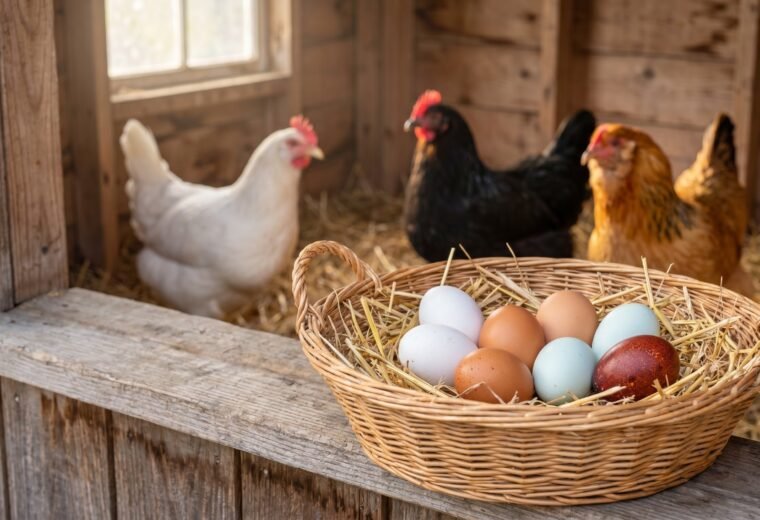
Shell color also shifts over a hen's life: the deep chocolate-brown typical of early laying gradually fades to a lighter tan as the season progresses and becomes noticeably lighter in older hens - normal variation, not a health concern.
Annual molt, typically in fall, halts laying for six to twelve weeks as the hen redirects protein to feather regrowth. Rhode Island Reds that molt hard and fast tend to resume laying sooner than those that molt slowly. There is nothing to do but keep up their feed quality - a complete layer ration is especially important during molt, when protein demand spikes.
Temperament: confident, not aggressive
Rhode Island Reds are active birds. They forage hard, investigate everything, and tend to land near the top of the pecking order in a mixed flock. Hatchery descriptions call them "exuberant" and "curious," and that is accurate - these are not birds that stand around waiting for things to happen.
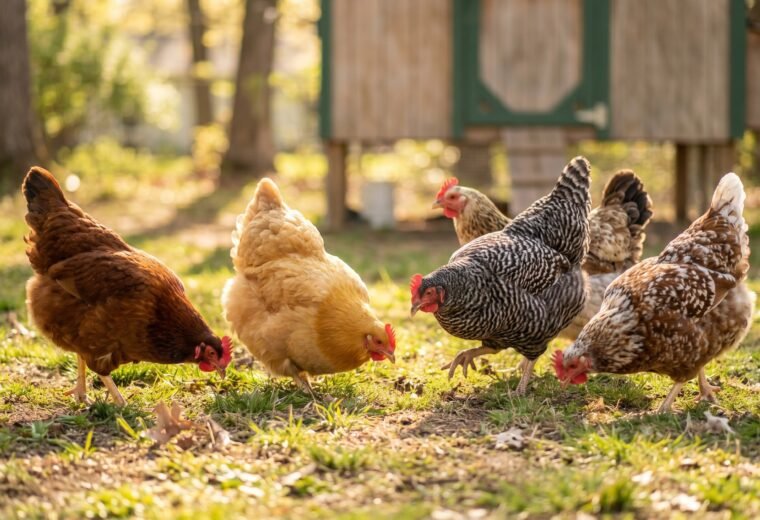
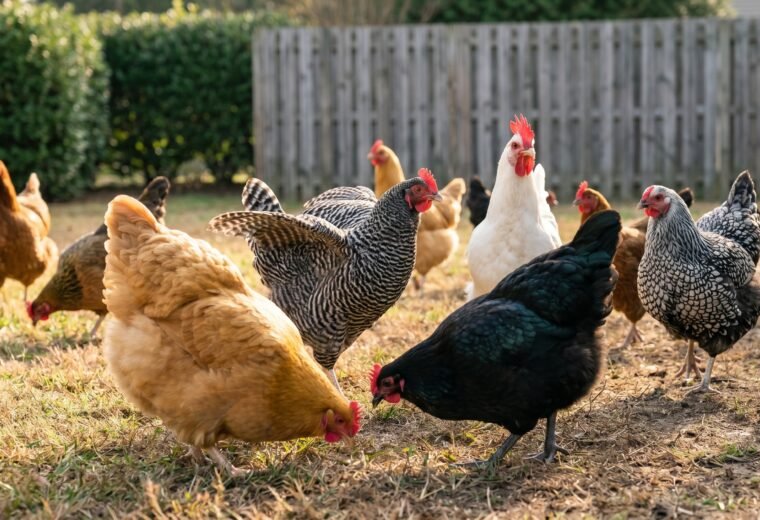
Assertiveness has a cost in mixed flocks. A Rhode Island Red hen paired with a docile breed like a Silkie, Polish, or small bantam will likely bully the smaller bird at the feeder and roost. The pairing works much better when you match RIRs with similarly sized, similarly confident breeds: Australorps, Barred Plymouth Rocks, Wyandottes, Speckled Sussex. If your flock is mixed, run multiple feed and water stations so lower-ranking birds can eat without getting body-blocked. Visual breaks in the run - a pallet leaned against the wall, a corner divided by a bit of hardware cloth - give subordinate birds an escape route.
Roosters deserve a separate note. RIR males can be pushy, especially as they mature. Some are calm and manageable; others become territorial in a way that is a real problem around children. No hatchery can guarantee rooster temperament, and selection within any individual hatch varies. If you are keeping a rooster, handle him regularly from a young age, and be prepared to rehome a genuinely aggressive bird.
Hens handled regularly from chick age tend to be calm and curious around people. They will not sit in your lap the way a Buff Orpington might, but they are not flighty either. For a beginner flock where you want productive birds that will not be traumatized by routine handling, the Rhode Island Red is a reliable choice - though it may not be the gentlest breed in a flock with young children. Weighing temperament against production is covered in more depth in the beginner breed guide.
Cold hardiness, heat tolerance, and the single-comb question
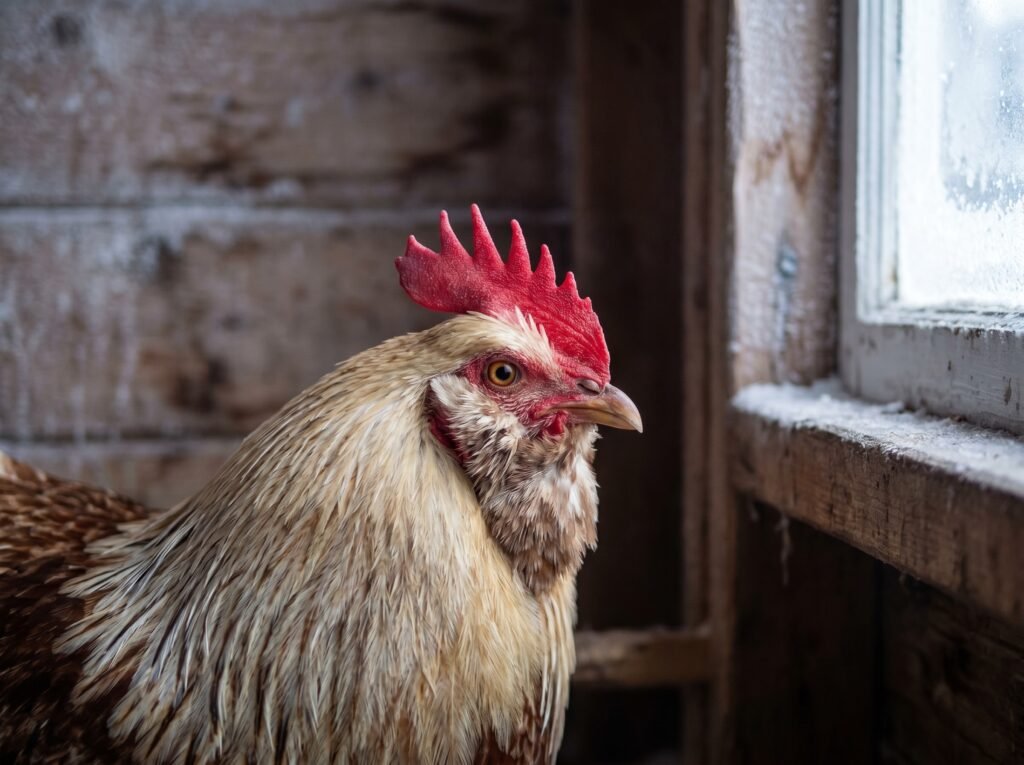
The breed is genuinely cold-hardy in the sense that matters: it keeps eating, maintains good body condition, and lays reasonably well in cold weather. The body size helps. What the Rhode Island Red is NOT immune to is comb frostbite, and this is the main cold-weather management point to get right.
The most common strain carries a single comb - the tall, upright style with five points that extends well forward of the skull. In hard freezes, that tall comb is exposed to cold air, but the actual tissue damage is driven by moisture as much as temperature. A coop with poor ventilation traps humidity from bird respiration and manure, and wet comb tissue freezes at much higher ambient temperatures than dry tissue would. The fix is airflow, not heat: keep the coop well-ventilated at the peak (where birds don't roost directly in the draft), keep litter dry, and the comb frostbite risk drops sharply. A rooster with a large, tall comb is more vulnerable than the average hen. Rose-comb Rhode Island Reds carry a flat, low-profile comb that sits close to the skull and is far less prone to frostbite - worth specifying when you order if your winters are genuinely harsh.
Heat tolerance is solid when basics are in place: shade during the hottest part of the day, fresh cool water available at all times, and a coop with real airflow rather than being sealed up tight. Rhode Island Reds are a heavier bird than Leghorns, so they generate more body heat. Watch for signs of heat stress - open-mouth panting, wings held out from the body, lethargy - on days above 90°F and provide frozen treats or a shallow pan of cool water to stand in.
Care and housing requirements
Rhode Island Reds thrive in the same setup that works for most active, medium-to-large laying breeds. Plan on a minimum of 3-4 square feet per bird inside the coop and 8-10 square feet per bird in the run. They are enthusiastic foragers - give them any access to range and they will use it productively - but they adapt to a fully enclosed run without the behavior problems you sometimes see in more high-strung breeds like Leghorns.
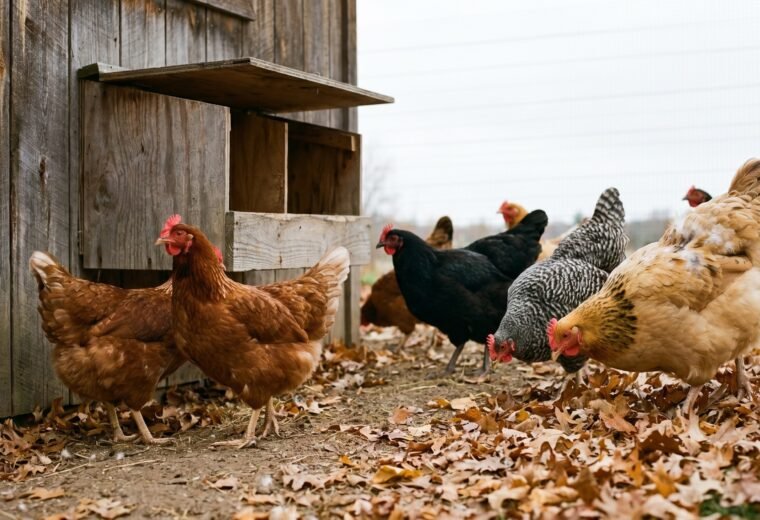
Roost bars should sit at 18-24 inches off the floor, higher than the nest boxes to prevent hens from roosting in the boxes and soiling them overnight. Allow 8-10 linear inches of roost space per bird; the 6-inch figure you sometimes see is too tight for a bird this size and leads to squabbling at roosting time. A flat 2x4 laid wide-side-up is more comfortable than a round dowel for heavy breeds, because hens can cover their toes with their breast feathers in cold weather. Plan one nest box for every three to four hens, sized at 12x12 inches minimum - Rhode Island Reds are standard-sized birds and need the full box.
Feed a balanced layer ration (16% protein, 3.5-4.5% calcium) from first egg onward. Oyster shell free-choice covers any individual hen who needs more calcium than the feed provides. Grit is necessary if birds are not free-ranging on soil. Treats should stay at roughly 10% of total feed intake or less - more than that dilutes the protein and calcium balance that healthy shells depend on.
Introduce new birds gradually and quarantine any new additions for at least 30 days before mixing them with your established flock. Rhode Island Reds are not uniquely prone to health problems, but their assertive nature means integration scuffles can be more intense than with gentle breeds. Flock composition and pecking order dynamics get a fuller treatment in the chicken breeds overview.
Broodiness and hatchability
Rhode Island Reds are only occasionally broody - that trait was largely bred out of commercial strains decades ago, and most hens today will not reliably go broody on their own. This is a feature if your priority is an uninterrupted supply of eggs (a broody hen stops laying for the duration of her sit, plus a few weeks of recovery). It is a drawback if you want a hen to hatch and raise chicks naturally without an incubator. Heritage-type birds are somewhat more likely to go broody than production strains, but neither is dependable.
Who the Rhode Island Red suits best
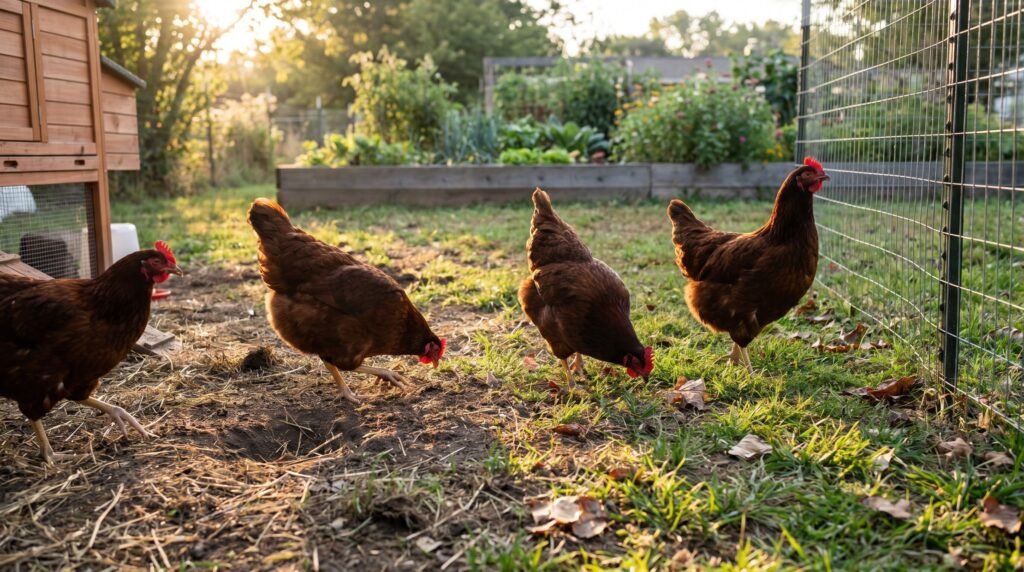
This breed fits a specific keeper profile well. If you want proven egg volume, cold-climate toughness, and a bird that does not require much coddling, the Rhode Island Red delivers. It is less suited to households with very young children who will handle birds daily (an assertive bird intimidates a five-year-old), and it needs thoughtful flock composition if you are mixing with small or timid breeds.
The heritage-type bird adds real dual-purpose value - the males are worth raising for the table in a way that production-type males are not. If that matters to you, source specifically from heritage breeders rather than standard hatchery stock.
For a small flock of four to eight hens where the goal is reliable eggs and minimal drama, a group of Rhode Island Reds with a few same-sized companions like Australorps or Barred Rocks covers almost every practical base a backyard keeper needs.