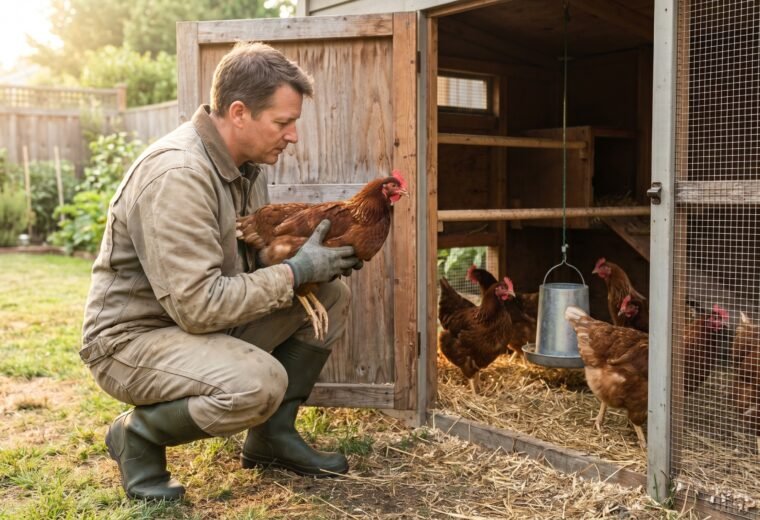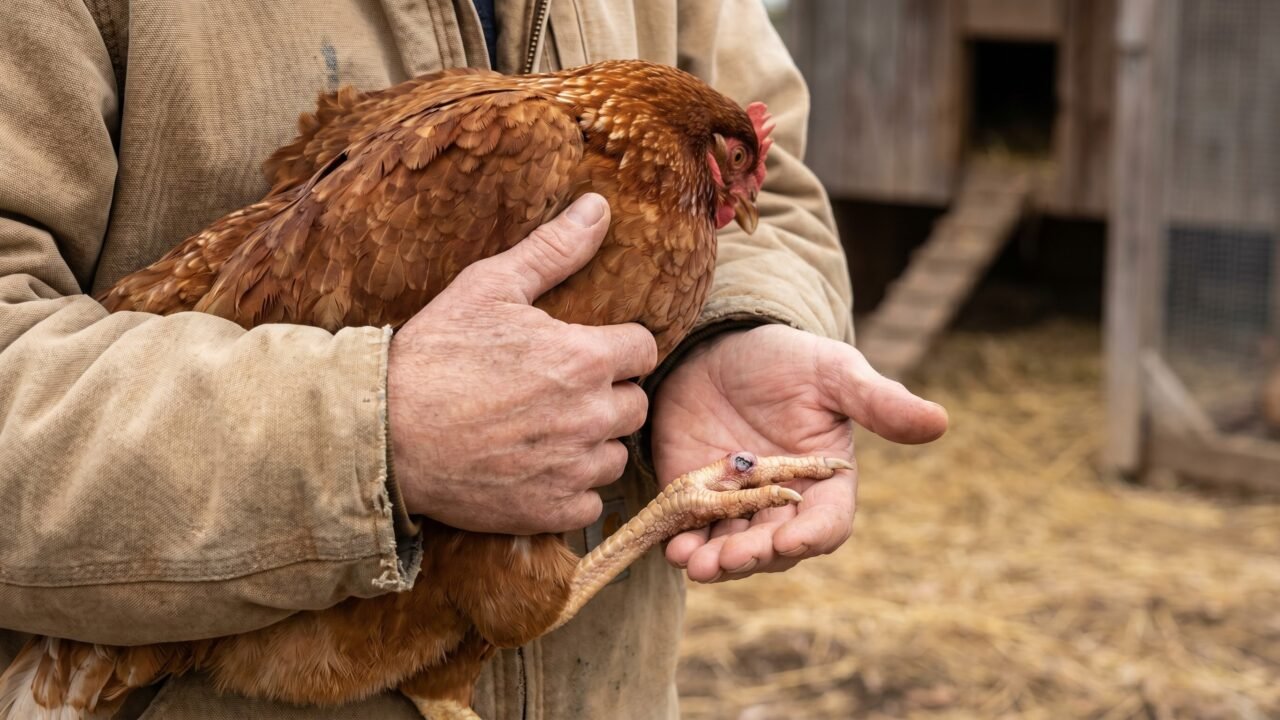
That hard, dark lump on the underside of your hen's foot is almost certainly bumblefoot - a bacterial infection of the footpad that starts small but can reach bone if it goes untreated. The good news: when you catch it at Grade I or II, husbandry adjustments and careful wound care are usually enough to turn things around. The hard part is that the earliest stage rarely causes limping at all, so most keepers miss it until things have already progressed.
Here is what the condition actually is, which birds face the highest risk, what to look for, and how your setup today either protects your flock or sets them up for trouble down the road.
What bumblefoot actually is
Bumblefoot is a localized infection of the footpad - clinically called plantar pododermatitis - triggered when bacteria enter the skin through an abrasion, puncture, or pressure sore. *Staphylococcus aureus* is the most frequently isolated culprit, accounting for roughly 68% of confirmed cases in laying hens, with *Enterococcus faecalis* the next most common (PMC, 2024). Other *Staphylococcus* species, including *S. hyicus*, *S. agnetis*, and *S. simulans*, have also been recovered from lesions, per the Merck Veterinary Manual.
The bacteria themselves are everywhere - in soil, on litter, on your birds' skin. What gives them an opening is broken skin. Once inside the dermis, they trigger acute inflammation, tissue death (necrosis), and eventually abscess formation: the fibrous, caseous mass under that characteristic black scab. Microscopically, established lesions show edema, necrosis, and granulomas containing bacterial colonies (Merck Veterinary Manual). Left alone, that abscess can track inward to tendons and bone.
Severity is graded on a five-level scale. Grade I is a mild redness with no ulceration and no lameness - easy to miss and almost always missed. Grade II shows skin changes and early infection without significant swelling. Grades III through V involve progressive soft tissue swelling, potential tendon involvement, and at the most severe end, osteomyelitis (bone infection) that can include fractures. A veterinarian needs X-rays to accurately stage anything beyond a surface lesion, because what looks like moderate swelling on the outside can conceal bone involvement underneath.
Which birds get it most - and why
Body weight is the single clearest risk factor. The Merck Veterinary Manual lists bumblefoot as more prevalent in heavier birds and in males. A 2024 peer-reviewed case series in *Animals* (Konicek et al.) put the median body weight of affected birds at 3,047 grams and noted that "the most affected chickens were heavy individuals belonging to heavy breeds." If you keep Brahmas, Jersey Giants, Cochins, or heavy Buff Orpingtons, your birds carry extra pressure on those footpads with every step.
That pressure load matters most when the landing surface or the perch forces the foot into a concentrated point of contact. A heavy hen dropping off a roost that sits more than 18-24 inches off the floor hits the ground with real impact. Penn State Extension's laying flock guide recommends keeping roosts 18 to 24 inches above the floor specifically to limit the stress of repeated dismounts. Round or narrow perches create a grip posture that concentrates load on the toe joints and ball of the foot rather than distributing it across the whole footpad. The practical recommendation from veterinary sources is a perch wide enough that the bird's toes can wrap around roughly three-quarters of its circumference - or, for flat-sleeping chickens, a wide flat surface that allows the foot to rest fully open.
Litter condition is the other major lever. A study on cage-free laying hens found footpad lesions in 38% of birds kept on dry litter - and in 92% of those kept on wet litter (PMC, 2024). Wet, compacted bedding softens the skin and raises ammonia levels, both of which weaken the skin barrier that keeps *Staphylococcus* out. The Merck Veterinary Manual notes that wet litter can cause "ammonia burns of the cornea, footpad dermatitis, breast blisters, and skin burns" - and footpad dermatitis is the clinical umbrella for the condition backyard keepers call bumblefoot, once bacterial infection sets in. (A vet diagnosing "footpad dermatitis Grade I" may be describing a non-infected pressure lesion - not yet the infected abscess that constitutes bumblefoot proper.)
Small physical hazards round out the picture. A splintered roost bar, a protruding wire end, a jagged edge on a hardware cloth floor - any of these can nick the footpad and give bacteria their entry point. Dr. Jacquie Jacob (University of Kentucky, via Poultry Extension) identifies puncture injuries as the primary initiating event and recommends removing any object that could injure birds from shelters and ranging areas.
How to spot bumblefoot before it becomes serious
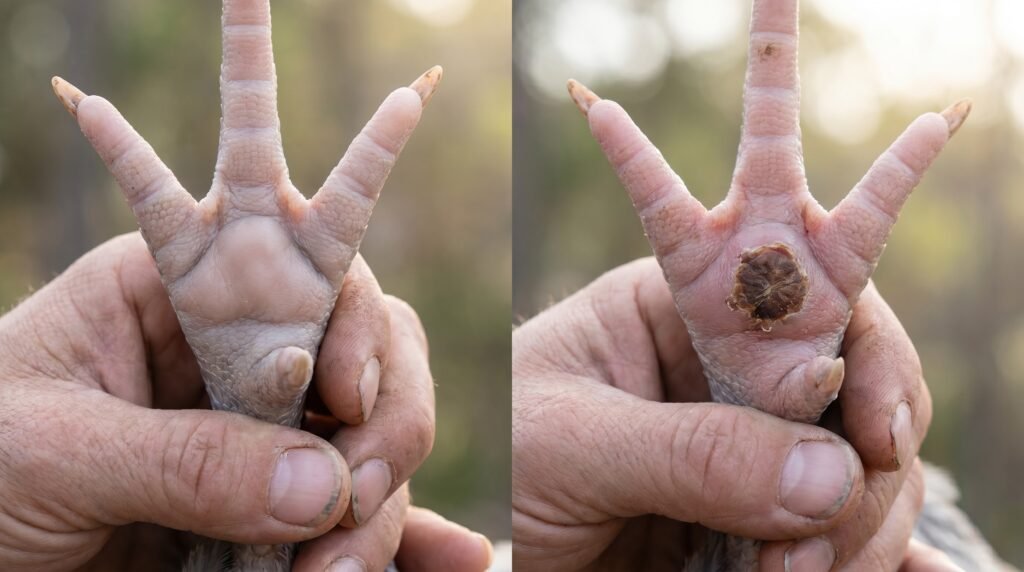
The classic presentation at Grade II and above is a firm, swollen footpad with a dry, dark scab - brown to black, sometimes raised - sitting on the plantar surface. Push gently around the swelling; if it feels hot and hard rather than soft, infection has already set in. At Grades III and IV, you may also see the bird shifting weight off the affected foot, walking with a stiff or flat-footed gait, or choosing to sit rather than move around the run.
Grade I looks like almost nothing. A faint redness, a subtle roughness, perhaps a tiny callus or thickening with no scab yet formed. This is the window where good husbandry alone - no soaking, no surgery - can stop the condition from advancing.
The table below matches what you see with what it likely means and what comes next:
| What you observe | Likely grade | Typical next step |
|---|---|---|
| Slight redness or rough skin patch, no scab, bird walking normally | Grade I | Improve litter, check roost surfaces, monitor daily |
| Small dark scab, mild swelling, bird still moving but slightly favoring foot | Grade II | Epsom salt soak, topical wound care, fix the underlying husbandry cause; recheck in 48 hours |
| Firm, hot, visibly swollen footpad with large scab; bird reluctant to walk | Grade III | Veterinary evaluation - the infection has deepened and may need debridement |
| Severe swelling, bird mostly sitting, possible discharge or secondary toe involvement | Grade IV-V | Veterinary care urgently - bone or tendon involvement is possible; X-ray needed |
Check feet during your regular flock inspections. Flip each bird briefly, look at both footpads, and feel for any warmth or firmness that was not there before. Catching Grade I in a flock of 15 takes under five minutes and prevents the weeks-long treatment a Grade III case demands.
Gentle care for early-stage cases
For Grade I - red, rough, no open wound - the priority is fixing the environment. Check and sand the roost surface, pull any splinters, swap out wet bedding, and watch the foot daily. No soaking needed. Sometimes that is all it takes.
Grade II presents a small, stable scab with mild swelling. Warm water soaks - 10 to 15 minutes, once or twice daily - soften the skin and improve local circulation. After soaking, keep the area clean and dry, wrap it loosely with clean gauze and a light bandage to keep the footpad off dirty ground, and ask a poultry vet which topical wound products are appropriate for birds. Change the wrap daily and watch closely. If swelling is growing, heat is increasing, or the bird is clearly in pain, this is no longer a home-care situation.
At every stage, isolate the affected bird on clean, dry bedding away from the main flock's litter. This limits re-exposure to bacteria and reduces the pecking that healthy flock members often direct toward any visible lesion.
Two common mistakes at this stage: using hydrogen peroxide repeatedly on open tissue (it damages healthy cells and slows healing) and leaving a wet bandage on for days. A dirty, wet wrap is worse than no wrap at all.
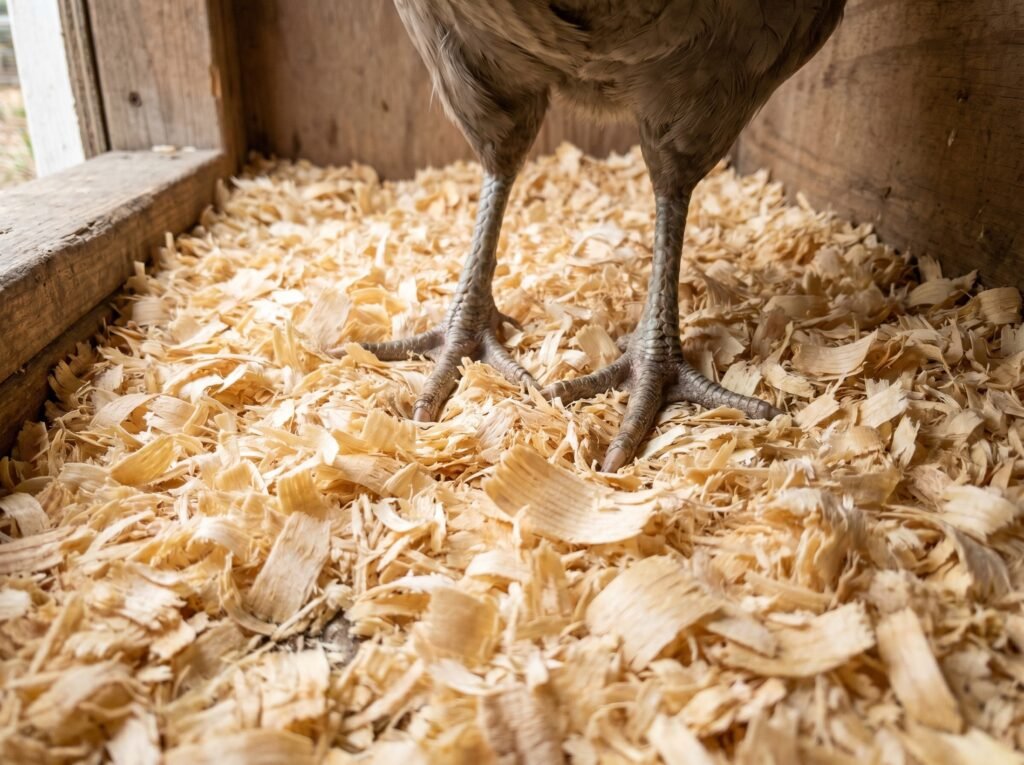
For the broader housing environment, the deep litter method done correctly - with 4 to 12 inches of pine shavings and active management to keep moisture levels in check - can reduce footpad pressure and bacterial load simultaneously. The chicken bedding options guide compares materials for absorbency and foot safety if you are deciding what to put down.
The vet line - when to stop waiting
Any bird that is clearly lame, any swelling that has been growing for more than 48 hours despite cleaning and wrapping, and any case where the bird is reluctant to stand at all needs a poultry-experienced veterinarian. Grades III through V involve infection that has moved into subcutaneous tissue and potentially into joints and bone. A vet can assess the true depth of the lesion, culture the bacteria to identify which organism is present, and determine whether debridement, systemic antibiotics, or both are required. A 2024 peer-reviewed case series in *Animals* (Konicek et al.) documented that a meaningful proportion of advanced cases required surgical debridement and that resolution could take many weeks to months depending on severity.
Osteomyelitis - bone infection - is a real endpoint for untreated or under-treated bumblefoot, and it requires radiographic imaging to diagnose. No amount of soaking or wrapping at home reaches bone. If you are seeing a bird that has lost toe function or is carrying one foot entirely, that bird needs X-rays, not another Epsom salt bath.
Our chicken health overview covers the broader signs that tell you a bird needs professional evaluation versus routine monitoring at home.
Prevention: the husbandry checklist
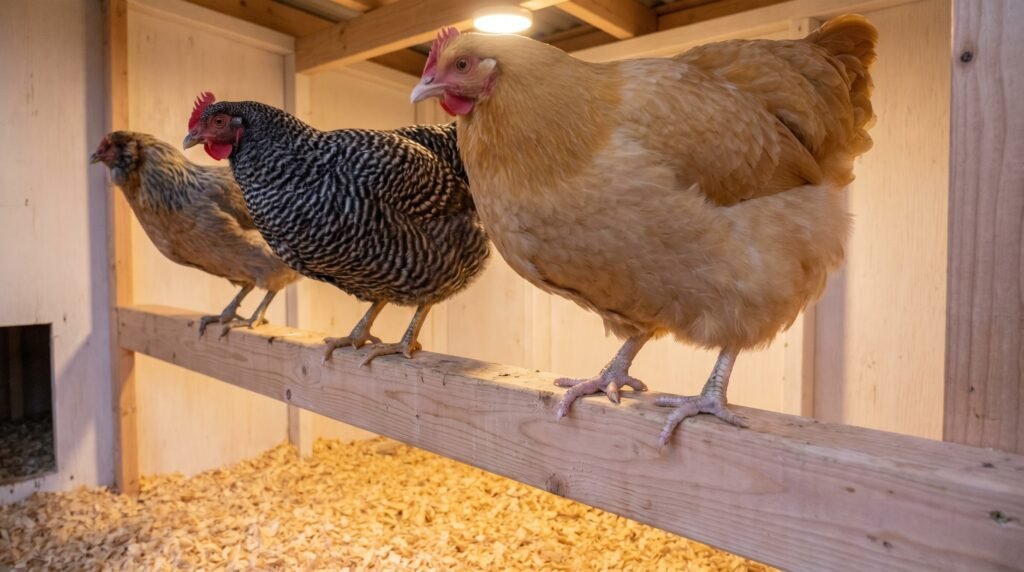
Almost all bumblefoot cases are preventable with consistent attention to four things: roost design, litter quality, sharp-edge elimination, and weight management in heavy breeds.
Roost surfaces. A flat 2x4 placed wide-side-up gives a heavy hen a broad, flat platform to sleep on rather than a narrow rail she must grip. Run your hand along every inch of every roost bar at least once a season. Sand any rough patches, replace any bar that has begun to split or splinter. Our detailed guide on chicken roosts and bars covers roost height, material, and spacing in depth.
Roost height. For standard-size birds, keeping roosts 18 to 24 inches off the floor reduces impact stress on landing. For heavy breeds - birds over roughly 7-8 lb - consider staying toward the lower end of that range and adding a step or ramp so they do not have to drop straight down. Repeated hard landings on concrete or packed earth are a documented path to Grade I lesions in heavier hens.
Litter management. Keep bedding dry. Penn State Extension specifies 3 to 4 inches of pine shavings and immediate removal of any wet patches. The research showing a jump from 38% to 92% footpad lesion rates simply by moving from dry to wet litter makes "keep it dry" the highest-leverage bumblefoot prevention step you can take. Spot-check under nipple drinkers and near waterer bases every few days - those are the spots that go wet first.
Sharp-edge audit. Walk the run and coop with a glove on and drag your hand across flooring, wire, and hardware cloth edges. Any catch or scratch on your glove will also catch on a footpad. File or cover any hardware cloth cut edges. Replace bent wire that has created a hook. Pull any nails that are not fully seated.
Weight and exercise. Veterinary sources note that overweight birds face higher risk of pressure-related footpad breakdown. This is most relevant for breeds prone to obesity with limited ranging - confined Cochins or Brahmas eating unlimited high-energy scratch, for example. Keep treats to the standard 90/10 ratio (90% complete feed, 10% treats), offer space to forage and walk, and weigh suspect birds periodically if you are managing a small flock of heavy breeds.
Run surface. Hard concrete or bare compacted dirt offers no cushion under a 9-lb bird's foot. Deep bedding or a thick layer of coarse sand in the run spreads impact better than a bare floor. If your birds spend significant time on wire mesh flooring, switch to solid flooring with appropriate bedding - wire floors are a documented bumblefoot risk in aviary and cage systems.