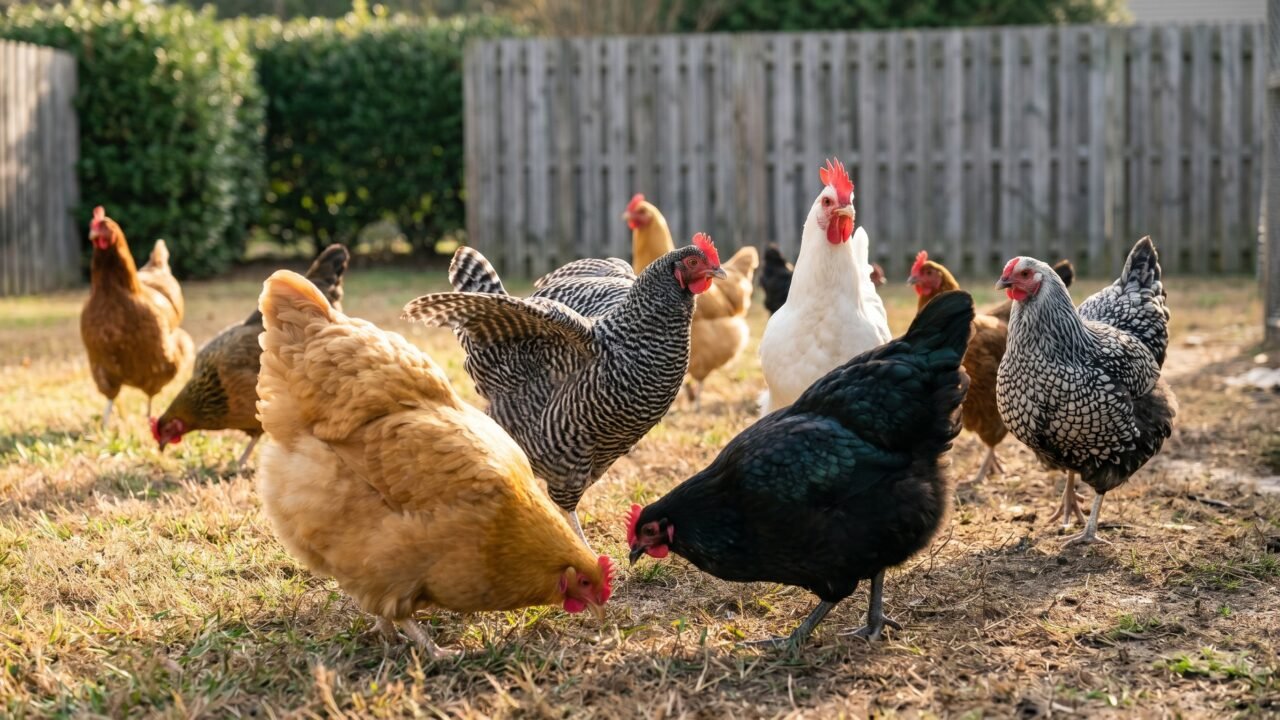
Walk into any hatchery catalog and you'll find 50-plus breeds, all promising something slightly different. The honest shortcut: decide on your top priority first (maximum eggs, beginner-friendly temperament, cold-climate hardiness, or limited space), then narrow from there. Every other choice follows naturally.
This guide lays out the four main variables you need to match against your situation, pairs them with real production and temperament numbers from hatchery breed data and university extension sources, and ends with a breed-by-breed comparison table you can scan in under two minutes.
A note on the "heritage breed" label: Penn State Extension data does list some heritage breeds at as few as 50-100 eggs per year - but those numbers describe ornamental and rare breeds, not the productive dual-purpose breeds covered in this guide. The Australorps, Barred Rocks, Buff Orpingtons, and Wyandottes discussed below are classified as heritage breeds in the broader sense but are purpose-selected for consistent egg production. Expect 180-280 eggs per year from a healthy hen, not 50-100.
Variable 1: How many eggs do you actually want?
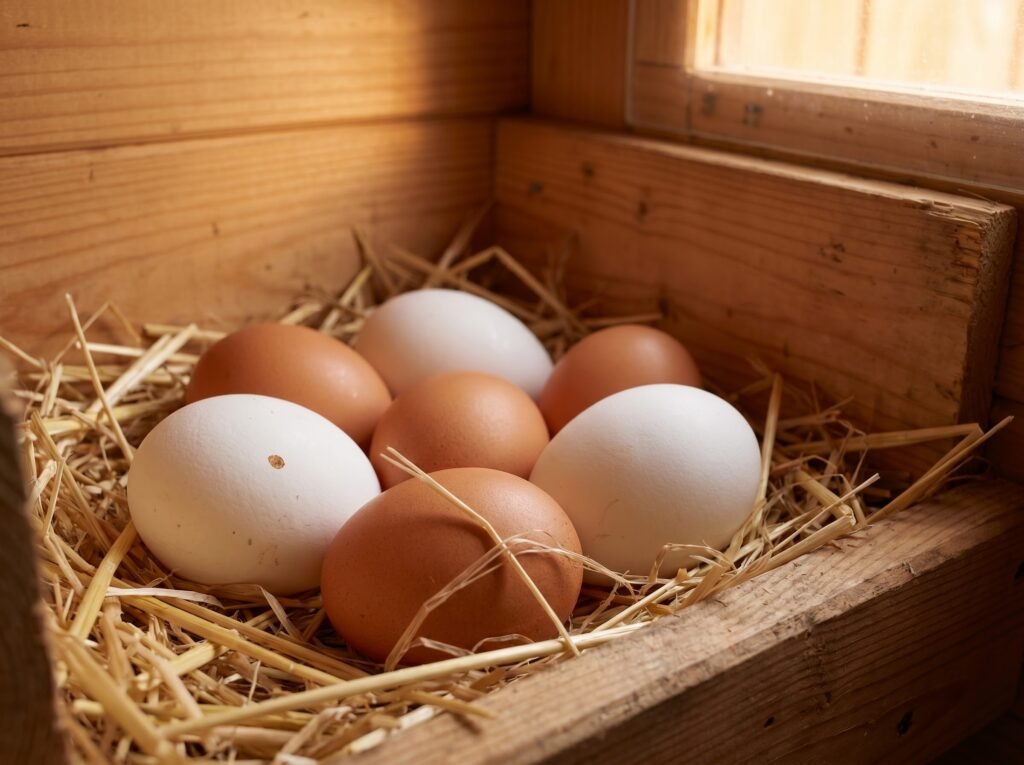
Production breeds like White Leghorns and sex-link hybrids deliver 240-300 eggs per year. Dual-purpose breeds - Australorps, Barred Rocks, Buff Orpingtons - land at 200-280 per year. That middle range suits most backyard flocks: enough eggs without sacrificing a manageable, family-friendly bird. Ornamental and rare heritage breeds can fall below 150 per year and are not covered here.
Egg output varies more than most beginners expect. Penn State Extension data puts commercial sex-linked hybrid hens at 240-280 eggs per year, while common heritage breeds clock in at 50-100 eggs annually. That gap matters a lot if eggs are your whole reason for keeping chickens.
Production (egg-type) breeds sit at the top of the range. White Leghorns average 220-300 eggs per year at Cackle Hatchery's standards. They convert feed to eggs efficiently, stay lean, and rarely go broody, which means they keep laying instead of sitting on a nest. The tradeoff is temperament: Leghorns tend to be flighty and independent, not the birds that walk up to greet you. In our experience keeping Leghorns alongside calmer breeds, they are the last to settle at roost and the first to clear the run when anything moves overhead - manageable, but not a bird for a slow, hands-on keeper.
Dual-purpose breeds land in the middle. Black Australorps produce roughly 250 large brown eggs per year according to Hoover's Hatchery, with a docile disposition that makes them a better fit for families. In our observation, Australorps are unusually consistent through winter - less production dip than most single-comb breeds in cold snaps, and they recover quickly after molt. Barred Plymouth Rocks reach 220-280 per year. Buff Orpingtons average 220 per year. Lower than a Leghorn, but the hens are calm, friendly, and gentle enough that beginners rarely regret the trade-off in volume. We find Buff Orpingtons tend to go broody more often than hatchery descriptions suggest in some lines - useful to know if eggs are the priority.
Wyandottes produce around 200 eggs per year, and their rose comb means they keep laying in cold snaps where single-comb birds get frostbitten. The HenAcre team consistently recommends Wyandottes to keepers in northern climates who want a reliable cold-weather layer without adding heat to the coop.
To compare top producers side by side with peak-year and decline data, see the best egg-laying breeds breakdown. Still sorting out egg color, shell quality, and freshness? The chicken eggs overview has the answers before you commit to a breed.
Variable 2: Temperament - calm birds vs. flighty birds
The calmest breeds for beginners and family settings are Buff Orpingtons, Barred Plymouth Rocks, Black Australorps, and Wyandottes - all tolerant of handling, slow to startle, and well-suited to confined runs. Leghorns are the clearest exception: excellent layers but flighty, resistant to handling, and better matched to a free-range setup than a suburban backyard where kids and neighbors are nearby.
Temperament matters most when your flock is within earshot of neighbors, kids are involved, or you plan to handle birds regularly. It also affects stress levels in confined runs; a flighty, high-strung breed in a small space can trigger pecking-order problems.
The calmest, most handleable breeds in regular hatchery production are Buff Orpingtons (described as "docile, calm, gentle, friendly" by Hoover's Hatchery), Barred Plymouth Rocks, and Black Australorps. Wyandottes show a "gentle temperament" and are popular in family settings. Brahmas and Cochins are notably calm but grow slowly and are less productive.
Leghorns occupy the opposite end: alert, active, and quick to spook. They're excellent layers but will startle easily, resist handling, and can be hard to catch. For a five-bird suburban flock where the kids want to name every hen, a Leghorn is usually the wrong choice.
Starting out and not sure which temperament will suit you? The best breeds for beginners page ranks by ease of care alongside production.
Variable 3: Climate - comb type is the key variable
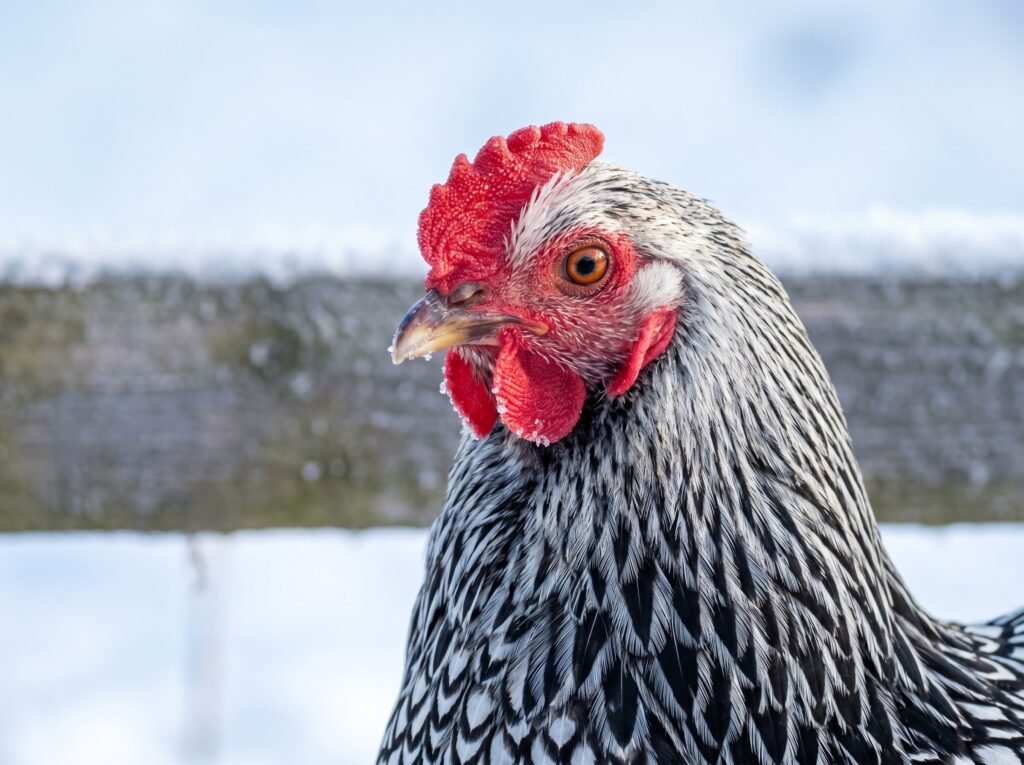
For cold climates, choose a rose-comb or pea-comb breed - Wyandottes, Dominiques, Ameraucanas - because low, compact combs resist frostbite where single-comb breeds struggle. For hot climates, Mediterranean-class light breeds like Leghorns handle heat better than heavy, fluffy breeds. True all-climate workhorses are Australorps and Buff Orpingtons, both rated cold and heat hardy by their major hatcheries.
Cold hardiness comes down to two factors: body mass and comb type. Heavier birds hold heat better. More critically, large single combs are the main frostbite risk in freezing winters. Blood circulation to an upright comb can slow in deep cold, and the tips freeze, causing pain and sometimes permanent tissue loss.
Rose combs stay close to the head and have far less exposed surface area. Wyandottes carry a distinctive rose comb with no spike. Cackle Hatchery notes their "insulative loose feathering, along with its rose comb, combine to make the breed especially cold hardy." The same advantage applies to Dominiques and Buckeyes. Ameraucanas carry pea combs that sit low and tight, giving similar protection.
For hot climates, the physics flip: large combs radiate heat efficiently, which is why Mediterranean-class breeds like Leghorns, Anconas, and Andalusians do well in the South. Their light frames also mean less metabolic heat to dump. Heavy, fluffy breeds like Cochins and Brahmas struggle in humid southern summers.
A practical middle ground exists: Black Australorps and Buff Orpingtons are both rated "cold and heat hardy" by Hoover's Hatchery, making them solid choices when you want one breed that handles seasonal swings without special management. If your winters are harsh, work through cold-hardy breeds first; if summer heat is the bigger problem, start at heat-tolerant breeds.
Variable 4: Bird size - standard, bantam, or something in between
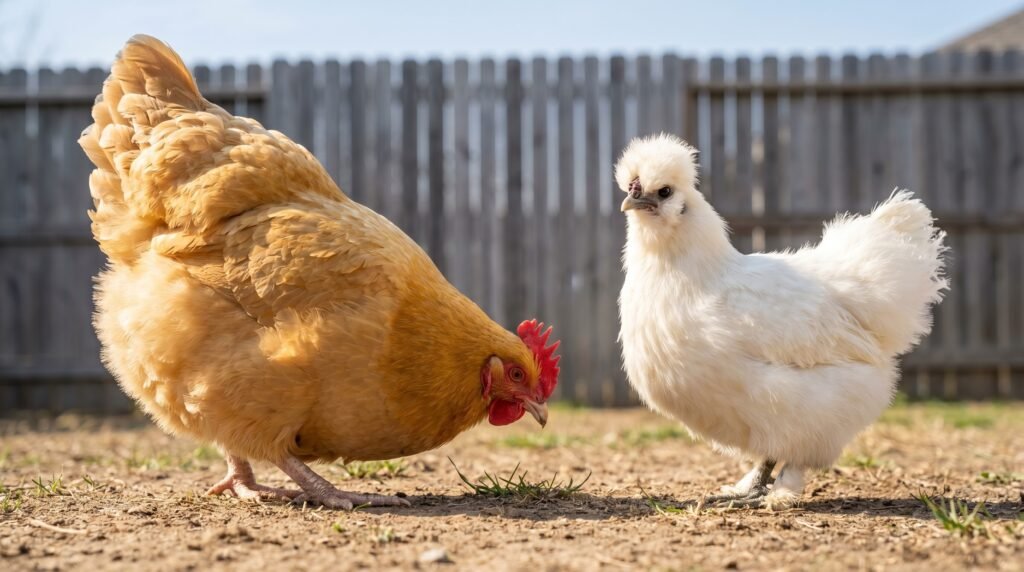
Standard large fowl hens range from roughly 4.5 lbs (Leghorn) to 10 lbs-plus (Jersey Giant) and eat, and need space, proportionally. Bantams run about one-fifth that size - less feed, smaller eggs, less coop space required - but their lower body mass makes them more vulnerable to cold and their egg output is noticeably smaller. Dual-purpose breeds in the 6-8 lb range split the difference: enough meat to justify processing surplus cockerels, enough eggs to keep a small household supplied.
Standard large fowl chickens weigh anywhere from 4.5 lbs (Leghorn hen) to 10 lbs-plus (Jersey Giant), eat proportionally more, and need more coop and run space. The Cackle Hatchery lists the White Leghorn hen at 4.5 lbs, which makes it one of the lightest true production breeds. The University of Wisconsin Extension describes bantams as "the miniatures of the poultry world," roughly one-fifth the size of their large-fowl counterparts.
Bantams eat less, produce smaller eggs, and require less square footage per bird. A true bantam like a Silkie or a Belgian d'Uccle can thrive where a full-size Orpington can't. The limitation: egg volume drops sharply, and large-fowl cold-hardiness data doesn't always transfer. Bantams have less body mass to buffer temperature swings. Most bantam breeds also come in a large-fowl version, so you can choose the size without giving up the breed.
Dual-purpose breeds split the difference for anyone who wants the option of processing older or excess cockerels. Plymouth Rocks, Rhode Island Reds, Sussex, and Australorps all hit mature weights (6-8 lbs for hens) worth the effort, while still producing 200-plus eggs per year in good conditions.
Leaning toward smaller birds? Bantam breeds has everything on egg size, space needs, and winter tradeoffs. Interested in processing surplus cockerels? Dual-purpose breeds lays out the weight-to-production balance.
Quick-reference breed comparison
The eight breeds below cover the main production and temperament categories most first-time keepers consider. Scan the Eggs/year and Temperament columns first; if those two align with your situation, read across. For most beginners a dual-purpose breed in the 200-260 egg range with a calm temperament is the right starting point - you get useful production without a difficult bird.
The table below pulls together hatchery-sourced production figures, temperament ratings, and climate data for the breeds beginners ask about most. Use it to shortlist two or three candidates, then read the individual breed profiles for the detail that doesn't fit in a row.
| Breed | Eggs/year (approx.) | Egg color | Hen weight | Temperament | Comb | Climate strengths | Broody tendency |
|---|---|---|---|---|---|---|---|
| White Leghorn | 220-300 | White | 4.5 lbs | Flighty, active | Single (large) | Heat hardy; cold OK with dry coop | Rarely |
| Black Australorp | 250-280 | Brown | 5-6 lbs | Docile, energetic | Single | Cold and heat hardy | Occasionally |
| Barred Plymouth Rock | 220-280 | Brown | 7-7.5 lbs | Calm, docile | Single | Cold tolerant | Occasionally |
| Buff Orpington | 220 | Brown | 6-7 lbs | Calm, gentle, friendly | Single | Cold and heat hardy | Often |
| Wyandotte | ~200 | Brown | 6-6.5 lbs | Gentle | Rose (cold advantage) | Especially cold hardy | Occasionally |
| Rhode Island Red | 250-300 | Brown | 6.5 lbs | Hardy, moderately active | Single | Handles poor conditions well | Rarely |
| Ameraucana | ~200 | Blue | 5.5 lbs | Generally calm | Pea (cold advantage) | Cold hardy; pea comb resists frostbite | Rarely |
| Sex-link hybrid (e.g. Red Star) | 240-280 | Brown | 5-6 lbs | Hardy, docile | Single | Adaptable | Rarely |
A few notes on reading this table: egg counts are hatchery-peak figures under good management. Real-world production drops 10-20% per year after peak, more in a hard molt or nutritional deficit. Broody hens stop laying for weeks at a stretch; breeds listed as "often" broody can cut your annual count meaningfully if you don't manage it. And temperament descriptions reflect breed tendencies. Individual birds vary, and early handling shapes behavior regardless of breed.
Need more breeds or APA classification details? The chicken breed chart adds 40-plus varieties with egg sizes and full specs.
How flock size changes the math
Most households with four to six people do well with six to eight mid-production hens - enough for daily eggs without a surplus problem. If your goal is sharing or selling, ten to fourteen production-breed hens at peak gives you a real cushion through the slow months (molt, short winter days). Smaller mixed flocks work fine but benefit from keeping breeds within a similar size and temperament band to limit pecking-order friction.
Nine hens at 250 eggs each produce roughly 2,250 eggs per year, more than most households consume. If eggs are the goal but refrigerator space isn't, that's a reason to keep six or seven birds rather than nine, or to pick a lower-output breed that's easier to manage. Three Buff Orpingtons averaging 220 eggs apiece give you about 660 eggs annually (a bit over a dozen a week), which covers a family of four without overflow.
On the other end: if you want a meaningful egg surplus to share or sell, 10-14 production-breed hens at peak gives you a real cushion to absorb the slower months (molt, short winter days) without running dry.
Flock size also shapes breed choice in another way. A mixed flock with multiple breeds at different temperament levels can trigger pecking problems at the feeder or in the nest boxes. Keeping breeds in a similar size and temperament range, or giving the flock enough space that calmer birds can avoid aggressive ones, smooths integration. If you are adding birds to an existing flock, read the pecking order page before you bring anyone home.
One honest caveat on broody breeds
If a breed is listed as "often broody" in the table - Buff Orpington, Sussex - expect her to take herself off-lay for six to eight weeks per episode. In a small flock of three hens that is a real drop in production. If hatching is not part of your plan, weigh that tradeoff before choosing a strongly broody breed purely on temperament or looks.
Broodiness is listed in the table because it genuinely affects your egg count, and some beginners don't realize how much. A broody hen sits on a nest for 21 days, then spends several weeks mothering chicks (or, in a flock without fertile eggs, sitting in frustration). During that span she doesn't lay. Buff Orpingtons and Sussex go broody "often," which is wonderful if you want to hatch eggs, but cuts annual production noticeably in a small flock.
Thinking about hatching your own? The broody hen page explains the signs to watch for and when to step in.
Where to actually get your birds
Breed choice and bird source are equally important. The three main options each have real tradeoffs.
Mail-order hatcheries (Hoover's, Murray McMurray, Cackle, and similar) give you the widest breed selection, sexed pullets with high accuracy, and consistent production-strain genetics. The downside is minimum order sizes (typically 8-25 chicks depending on season and hatchery) and the stress of shipping on young chicks. For most new keepers starting with a specific breed list, this is the most reliable path.
Feed-store chicks (usually available in spring) are convenient and let you buy small numbers, but breed selection is limited, sexing accuracy varies, and the birds are often a mix of whatever the store's supplier had available. Straight-run (unsexed) batches mean roughly half will be cockerels.
Local breeders and farm-sale pullets let you see the birds before buying and often get started pullets close to laying age, skipping the brooder stage entirely. Quality is harder to predict without knowing the breeder, and selection is whatever they happen to have. Going the chick route? Raising chickens for beginners has brooder setup from day one.