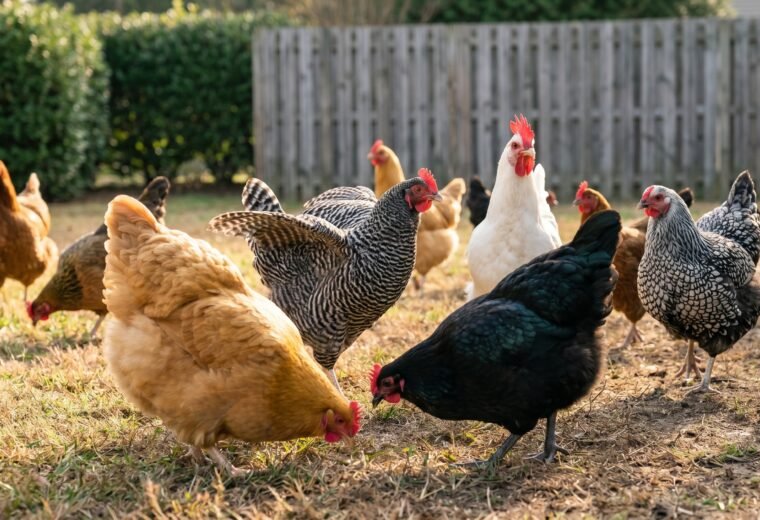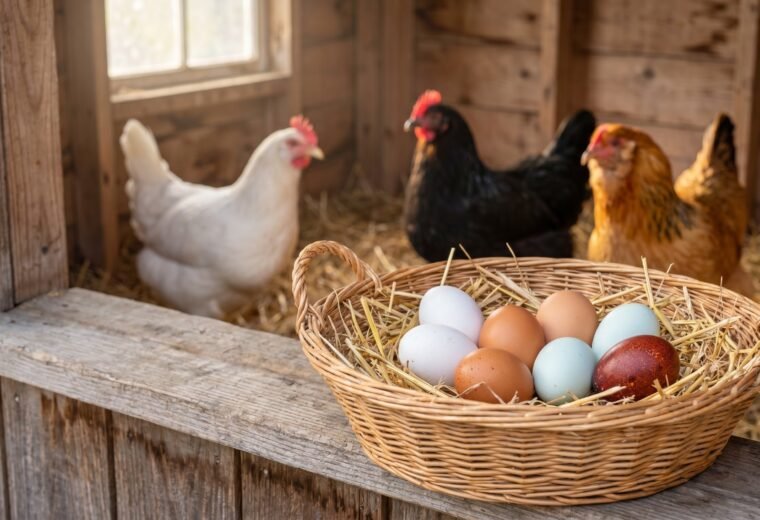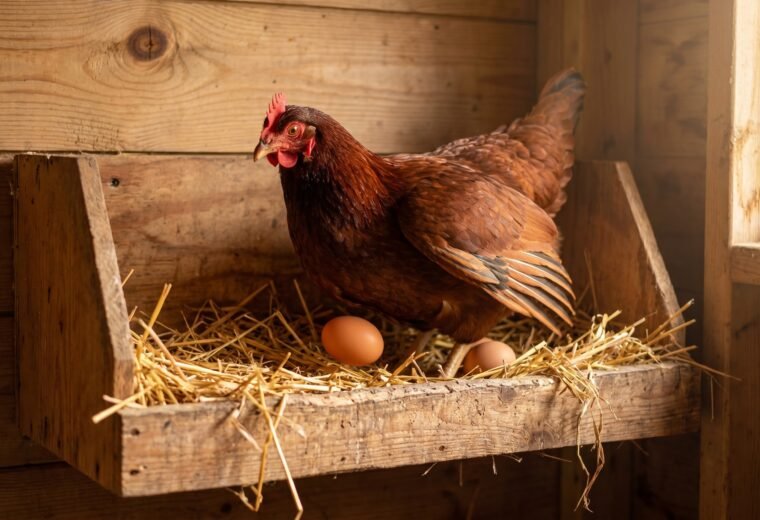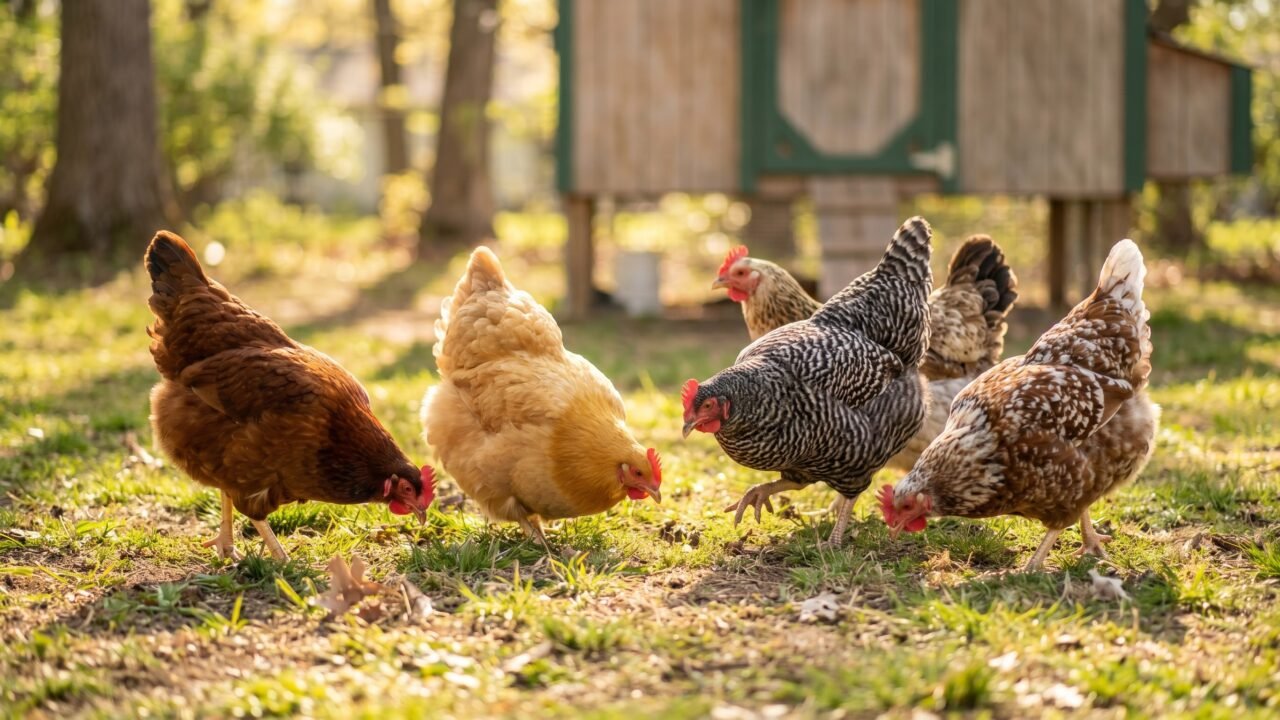
Six breeds stand out for first-time chicken keepers: Rhode Island Red, Buff Orpington, Barred Plymouth Rock, Black Australorp, Silver Laced Wyandotte, and Speckled Sussex. Each one combines a calm temperament with genuine cold hardiness and consistent egg output - the three things that make a flock enjoyable rather than stressful to manage.
Picking the wrong breed is the mistake most beginners make before they build a single nest box. A commercial Leghorn will outlay almost anything in her first year, but university extension guidance notes that high-production commercial egg layers "tend to be flighty and high strung and are not good choices for small and backyard poultry flocks." Docility matters because you will be in that coop every day. Hardy matters because you will not want to heat your coop all winter. Reliable laying matters because it is why most people get chickens in the first place.
The six picks below clear all three bars. The chicken breeds guide maps the full landscape including rare and heritage breeds beyond these six. Production-first keepers will find ranked egg counts and strain comparisons in the best egg-laying breeds roundup.
What makes a breed beginner-friendly
Ohio State University Extension identifies Plymouth Rocks, Wyandottes, and Orpingtons as the breeds with the strongest reputation for docility, calling them "good choices for the novice backyard poultry enthusiast or if young children will be helping to raise and care for the poultry." That framing captures the three qualities worth evaluating in any breed before you buy chicks.
Temperament
A docile bird tolerates handling, does not bully flockmates aggressively, and does not panic and pile when you enter the run. This matters most in small backyard flocks, where a flighty or aggressive hen affects every bird in the group. Roosters are a separate story - even the calmest breed can produce assertive males, so plan accordingly if your municipality allows them.
Hardiness
Hardy breeds hold body condition through weather swings without constant intervention. Cold hardiness has a comb component that beginners rarely hear about until a bird gets frostbitten: the extension.org poultry health database notes that "the incidence of frostbite in chickens with the smaller comb types, such as pea and strawberry, is much less" than in single-comb breeds. Wyandottes, which carry a rose comb, have an edge over Rhode Island Reds and Barred Rocks in severe winters, even though all six picks are rated cold and heat hardy by hatcheries.
Reliable laying
Every hen's production peaks early and then eases off. University of Florida IFAS Extension data shows that a typical flock hits a peak of about 90% production six to eight weeks after the birds begin laying, then gradually declines to about 65% after 12 months of lay. The practical translation: your second and third year birds will lay noticeably fewer eggs than they did as pullets. Good beginner breeds stay productive long enough to justify the feed cost across two to three laying seasons before production drops sharply.
The six best breeds for a first flock
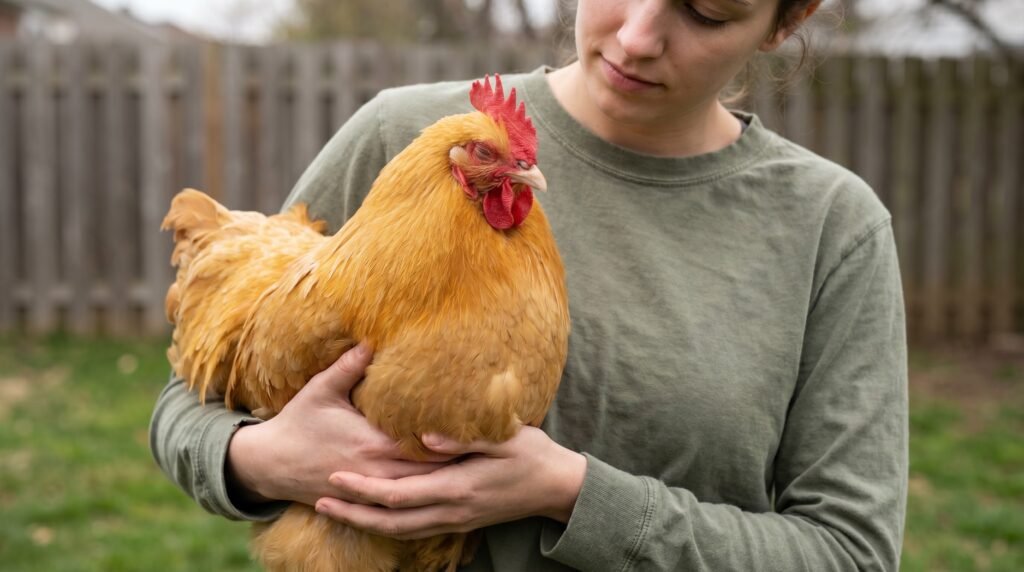
The table below lets you compare the six picks side by side. Egg-count figures are hatchery estimates and vary with daylight, feed, age, and flock management - treat them as useful ballparks, not guarantees. Laying age ranges reflect Cackle Hatchery's breed-category data where cited; figures marked with * are hatchery general guidance widely reported across poultry extension resources (typical range for Barred Rocks is 16-20 weeks; Sussex is similar). Barred Rock weight is the APA Standard of Perfection hen figure; production-strain hatchery birds may run lighter.
| Breed | Eggs/year (hatchery estimate) | Egg color | Laying age | Temperament | Comb type | Mature hen weight | Best-fit situation |
|---|---|---|---|---|---|---|---|
| Rhode Island Red | 250-300 | Brown | 5-6.5 months | Curious, friendly | Single | 6-7 lbs | High-yield first flock; mild winters |
| Buff Orpington | 200-250 | Brown | 6-9 months | Docile, gentle | Single | 8 lb (APA); 6-7 lb production | Families; kids; pet-quality flock |
| Barred Plymouth Rock | 200-280 | Brown | ~5 months* | Calm, docile | Single | 7.5 lbs (APA standard) | All-around dual-purpose; cold climates |
| Black Australorp | 250-280 | Brown | 4-4.5 months | Docile, energetic | Single | 5-6 lbs | Fast-start flocks; warm and cold climates |
| Silver Laced Wyandotte | 180-260 | Brown | 6-9 months | Docile | Rose | 6.5 lbs | Cold climates; predator-aware keeping |
| Speckled Sussex | 200-240 | Cream | ~5-6 months* | Docile, friendly | Single | 7-8 lbs | Free-range setups; curious foragers |
Rhode Island Red
The Rhode Island Red is the closest thing to a "no-fail" layer for beginners who want consistent production. Production-strain hens typically reach 250-300 eggs per year at peak; Hoover's Hatchery lists the breed at 265 and Cackle Hatchery's figure runs 200-280, a range that reflects differences in strain and management rather than unreliable genetics. Hens typically begin laying somewhere between five and six and a half months old, which is faster than Orpingtons or Wyandottes.
The temperament note worth knowing: the breed description at Hoover's is "exuberant, curious, friendly" rather than "docile" - a meaningful distinction. Rhode Island Reds are confident birds. Most are easy to handle, but they can hold their own in a mixed flock and occasionally boss smaller breeds. For a single-breed starter flock, that is rarely a problem. If you plan to mix breeds, pick a similarly sized or equally assertive companion.
Single combs make RIRs a bit more frostbite-prone than rose-comb breeds in harsh winters. The fix is a well-ventilated, draft-free coop rather than supplemental heat - good coop design matters more than breed choice on this front.
Buff Orpington
Buff Orpingtons are the breed most chicken keepers reach for when children are involved. Hoover's Hatchery calls them "one of the best breeds for newcomers" and describes them as "big quiet birds with fluffy feathers" - an apt summary. Temperament is listed as docile, calm, gentle, and friendly across multiple hatcheries, and that reputation holds up in practice with birds handled from chick age.
The honest tradeoff is laying. Most hens land in the 200-250 range across a full year; Hoover's puts the figure at 220 and Cackle Hatchery's range runs wider at 150-280, though the breed tends toward the lower end outside peak conditions. Orpingtons are also late starters - Cackle Hatchery categorizes them as late layers with a range of six to nine months before the first egg. If you want eggs quickly, an Australorp will beat an Orpington to lay by two to four months.
What Orpingtons offer in return is a calm flock atmosphere, easy handling for daily checks, and a heavy body that holds warmth well through cold weather. They go broody more readily than most breeds, which is a feature if you want to hatch eggs naturally and a mild inconvenience if you just want steady production.
Barred Plymouth Rock
Barred Plymouth Rocks hit a practical middle ground that makes them a top recommendation in OSU Extension's breed-selection factsheet - listed alongside Wyandottes and Orpingtons as a breed with a strong docility reputation. Hoover's Hatchery rates the breed calm, docile, and easy to care for, with production at 250 large brown eggs per year; across strains, expect roughly 200-280 per year. Cackle Hatchery's standard Barred Rock runs 200-220, which reflects heritage lines vs. production-bred stock. Order from a production-oriented hatchery if egg count is your priority. The APA Standard of Perfection lists the Barred Rock hen at 7.5 lbs; production-strain hatchery birds often run somewhat lighter, which is typical for commercial-oriented lines.
The Barred Rock handles confinement well without becoming restless - useful in smaller runs. Most pullets start laying around five months, consistent with the breed's general reputation across poultry extension resources, which is solid for a dual-purpose bird. Coop care note from Cackle Hatchery: the breed "usually handles cold weather well when keepers provide a dry, draft-protected coop with good ventilation." That sentence applies to nearly every breed on this list - ventilation beats heat, every time. The raising chickens for beginners guide covers coop ventilation, bedding depth, and the full first-year setup in one place.
Black Australorp
If there is one breed to pick for sheer laying reliability out of the gate, Australorps make a strong case. Good-year production runs 250-280 eggs, with Hoover's Hatchery listing the breed at 250 large brown eggs per year. Mississippi State University Extension notes they "became popular for breaking numerous world records for number of eggs laid" - a reference to documented laying trials in Australia during the 1920s that put a single hen at 364 eggs in 365 days under controlled conditions. Modern backyard birds do not hit that mark, but the breed genetics still favor early, consistent production.
Cackle Hatchery categorizes Australorps as early layers with a window of four to four and a half months - the fastest to first egg on this list. That matters when you have chicks in the brooder in spring and want eggs by mid-summer. Temperament is docile and energetic: they move around the run actively, forage well, and do not tend toward aggressive pecking-order behavior. Hoover's lists hatchery hens at 5-6 lbs, which is lighter than the APA Standard of Perfection figure of 6.5 lbs for a hen - a normal gap between production-strain hatchery birds and exhibition-standard weights. Feed efficiency is good either way.
Silver Laced Wyandotte
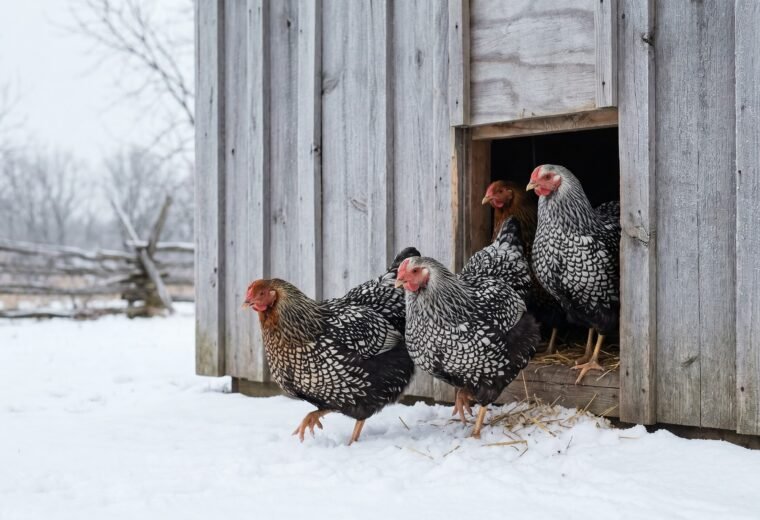
Wyandottes earn their place on this list partly for reasons that only become obvious in February. Loose insulative feathering combined with a rose comb that sits flush against the head makes the breed especially cold hardy (Cackle Hatchery), and the difference is real when temperatures drop below freezing for weeks. Extension.org's poultry health data confirms that frostbite incidence in small-comb types is significantly lower than in large single-comb breeds.
Production runs 180-260 brown eggs per year at Cackle Hatchery, with the breed categorized as a late layer starting around six to nine months. That is the main patience-test with Wyandottes: you wait longer for the first egg. What you get is a calm, community-minded flock bird with genuinely striking plumage that tends to stay calm in confinement and integrate well with other breeds. The rose comb advantage is real enough that if you are in Minnesota or Michigan and need to choose just one breed, a Wyandotte is worth serious consideration.
Speckled Sussex
Speckled Sussex are big-bodied foragers with a curious, alert personality that makes them enjoyable in a free-range or large-run setup. Hoover's Hatchery rates the breed docile, friendly, and gentle, with production at 240 medium cream eggs per year; across strains the realistic annual range is 200-240. That shell color is slightly different from the brown you get from the other five breeds - subtle but noticeable, and it surprises some new keepers who expect a darker brown from a dual-purpose bird.
The Sussex family in general is valued for sustained production across multiple seasons rather than just a single pullet-year peak, and the 200-240 range holds up reasonably well into the second year. The breed holds weight well (7-8 lbs mature hens per Hoover's) and handles both cold and heat, making it adaptable across most US climates. Sussex also tend to be curious about people in a calm way rather than a flighty way, which means they often warm up quickly to new keepers who spend time around the flock.
How to pick the right breed for your setup
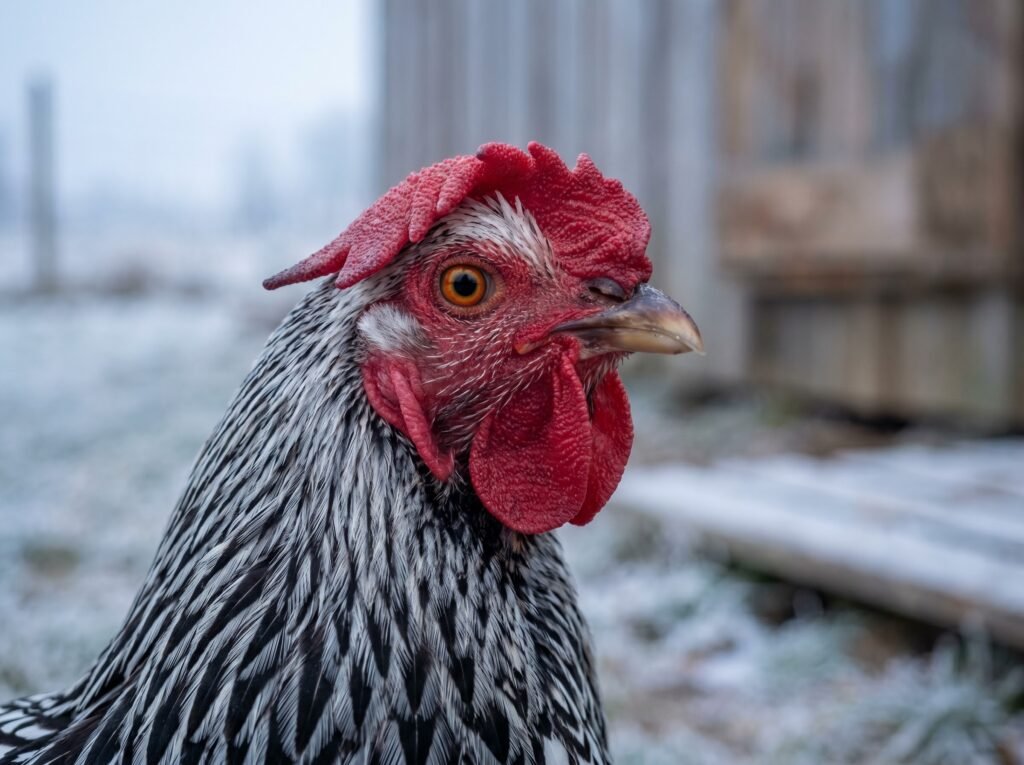
These five questions narrow the choice faster than any table:
- Cold climate with harsh winters? Prioritize Wyandotte (rose comb) or the heavier-bodied breeds like Orpington and Sussex. Ventilation and dry bedding matter more than breed choice, but the rose comb gives an extra margin in severe cold.
- Kids handling the birds regularly? Buff Orpington is the clearest call. Barred Rocks and Sussex are close seconds.
- Maximum eggs in year one? Rhode Island Red or Black Australorp. Australorps hit first-egg faster; RIRs may edge ahead by late winter.
- Small backyard run with limited space? Barred Rocks and Wyandottes adapt to confinement without becoming restless. All six picks need the same basic minimum: roughly 3-4 square feet per bird inside the coop and at least 8-10 square feet per bird in the run - more is always better.
- Planning to mix breeds? Buff Orpingtons and Sussex do best in a peaceful mixed flock. Rhode Island Reds can hold their own with assertive breeds; avoid mixing them with very small or timid birds.
Starting with three to six birds of one or two breeds is almost always smarter than buying one of everything. A smaller, well-matched flock settles its pecking order faster and gives you a cleaner picture of how a specific breed actually performs in your climate and management style. You can always add more birds later - with a proper quarantine period first.
One common mistake that costs beginners their first season
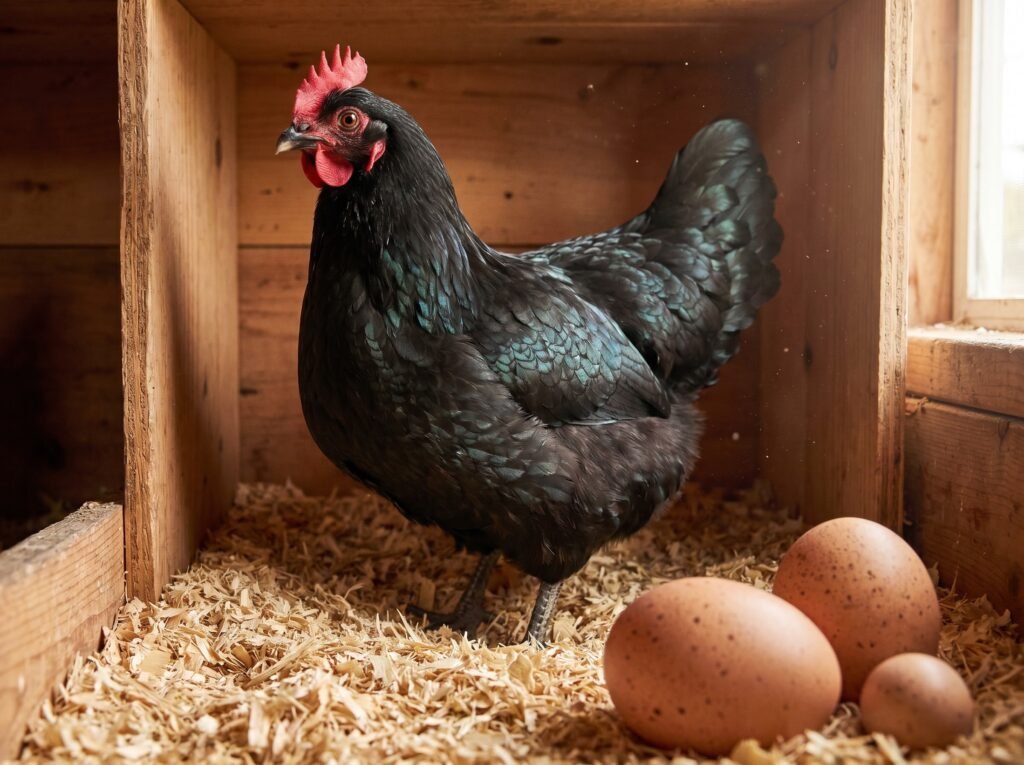
New keepers often choose a breed based on peak laying numbers and then feel let down when production drops in fall. That decline is not a flock health problem - it is normal biology. University of Florida IFAS Extension data shows that after hitting a production peak of around 90% (roughly six to eight weeks after the birds start laying), a typical flock gradually declines to about 65% of that peak after 12 months of continuous lay. Add in a first molt at typically 15-18 months and you will see a full pause in egg production for eight to twelve weeks.
The practical response is to plan for that drop rather than fight it. Keep good records of which hens lay when. Stagger the ages of your flock by a year or two so you always have younger pullets picking up production as older hens taper off. And feed a proper layer ration - roughly 16% protein with calcium supplemented free-choice as oyster shell - so the birds you do have are reaching their genetic potential. Where these six sit relative to dedicated production hybrids is spelled out in the best egg-laying breeds roundup.