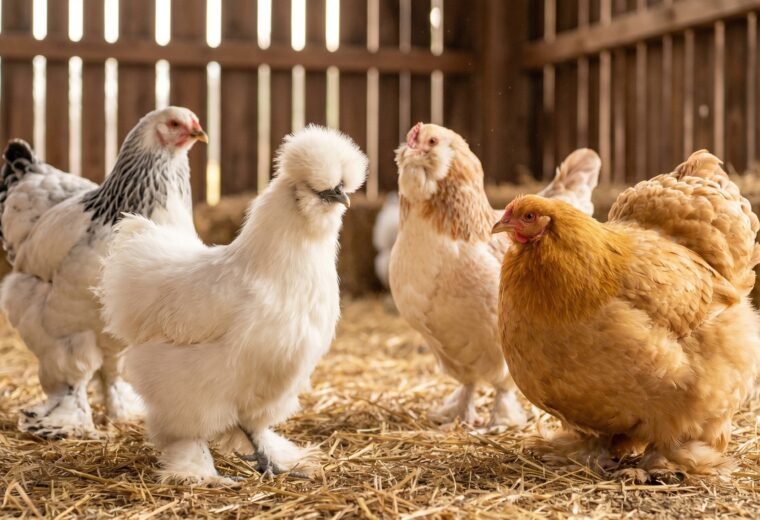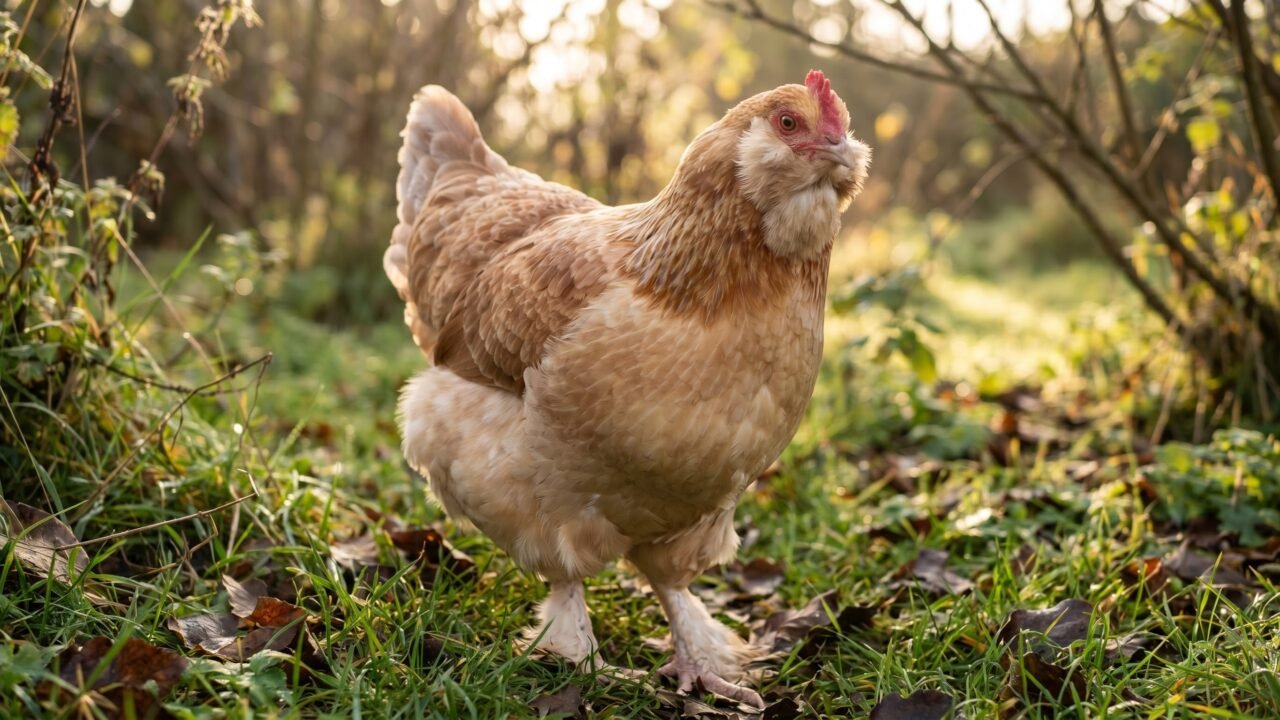
Walk toward a Salmon Faverolles hen and she will likely walk toward you first - that is the tell. Most chicken breeds take a few steps back. This one has been bred for calm curiosity since 1860s France, and it shows every time you open the coop gate. Beyond the distinctive greeting habits, these birds produce around 180-200 light brown eggs per year, handle cold winters better than most breeds, and wear a beard-and-muff combination that looks like they dressed for a formal occasion. The catch is real: they are soft-natured to the point of getting pushed around by bossy flockmates, and those feathered feet need more attention than bare-shanked breeds. If you go in knowing both sides, this is one of the most rewarding breeds in a backyard setting.
Origin and history
The Faverolles breed takes its name from the village of Faverolles in the Eure-et-Loire region, just southwest of Paris. French farmers in the 1860s needed a bird that could produce winter eggs reliably and still dress out well for market, so breeders began crossing what was on hand: Houdan, Brahma, French Rennes, Flemish Cuckoo, Malines, and Dorking all went into the mix at various points, according to the Livestock Conservancy's breed records. By about 1886, a consistent type had emerged with the feathering and conformation that defines the breed today.
The breed reached England in 1894 and arrived in the United States in 1901-1902, brought over by Dr. A.H. Phelps of New York. The American Poultry Association admitted the Salmon variety to the Standard of Perfection in 1914 - the variety most backyard keepers know today. A White variety followed in 1981. The Livestock Conservancy currently lists Faverolles at Watch status, meaning annual US registrations remain below 2,500, which makes each breeding flock a genuine contribution to the gene pool.
What Salmon Faverolles look like
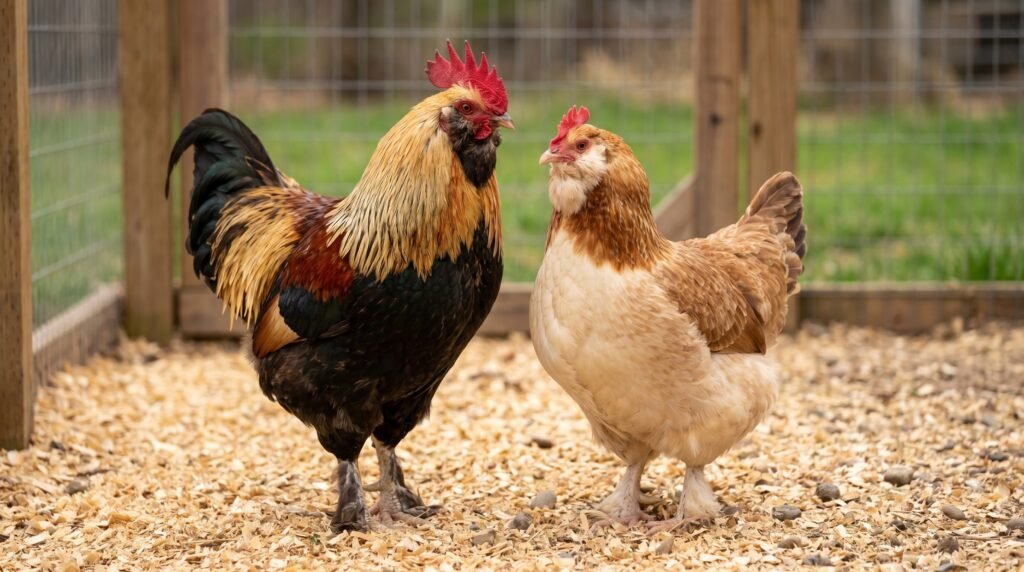
Five features set this breed apart from across the yard.
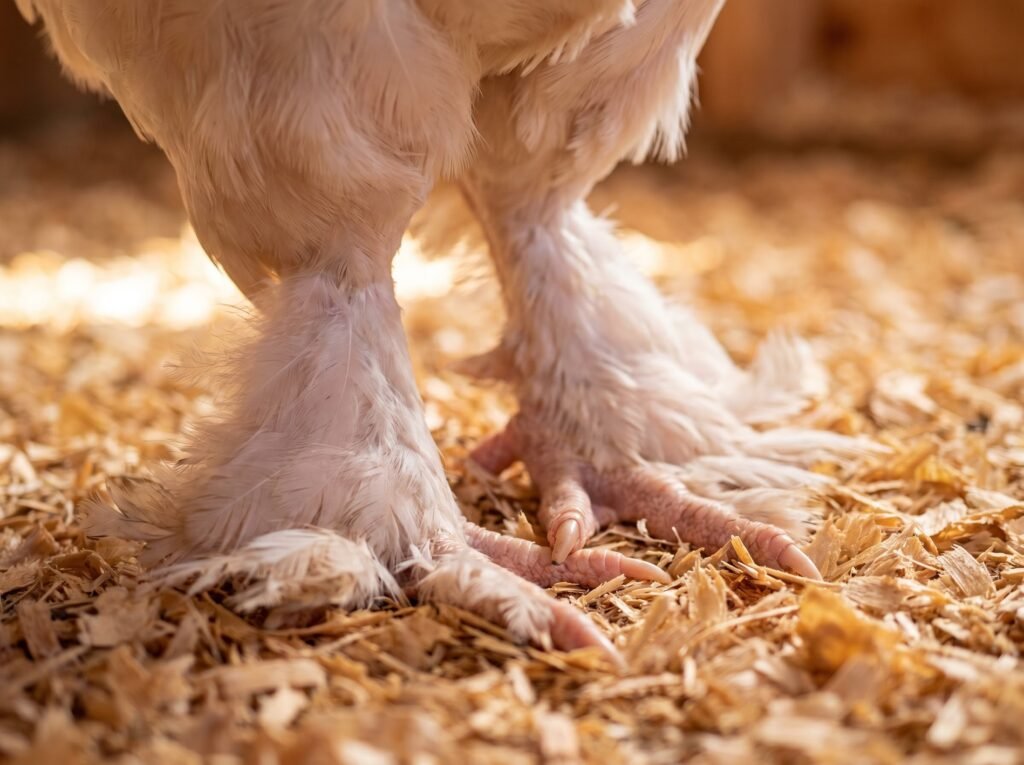
- Five toes. Most chickens have four. Faverolles carry a fifth toe on each foot, a trait they share with Dorkings and Silkies. That extra toenail grows quickly and needs trimming every few months with standard pet nail clippers.
- Beard and muffs. Dense feathering puffs out from the face on both sides (muffs) and under the chin (beard). It gives them a permanently startled, affectionate expression.
- Feathered shanks and toes. Pinkish-white feathering runs down the legs to the toes. This is part of what makes mud management non-optional.
- Single red comb, small wattles. The small comb and nearly invisible wattles reduce frostbite exposure in cold weather compared with large-combed breeds.
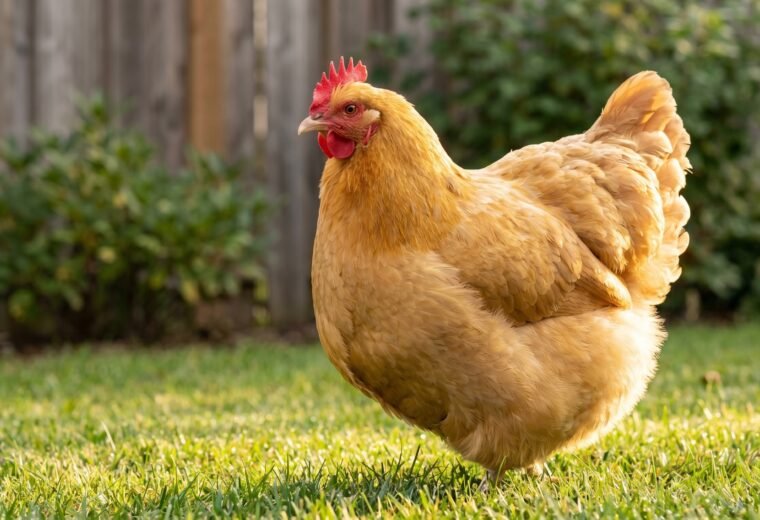
- Salmon color pattern. As the Livestock Conservancy notes, "Salmon is a unique color pattern found exclusively on the Faverolles chicken." Hens are soft cream and warm salmon-brown; roosters are dramatically different, with darker straw, reddish-brown hackles, and black breast feathers. Sexing young birds by color is possible once adult feathering comes in, though it takes a few weeks of growth to read clearly.
Standard weights run 8 lbs for cocks and 6 lbs for hens under the American Standard of Perfection. In practice, production-line hens from hatcheries typically land around 5.5-6.5 lbs. They have a deep, compact, broad body - broader than a Leghorn, narrower than a Brahma - that fits the Continental class designation.
Egg production and egg color
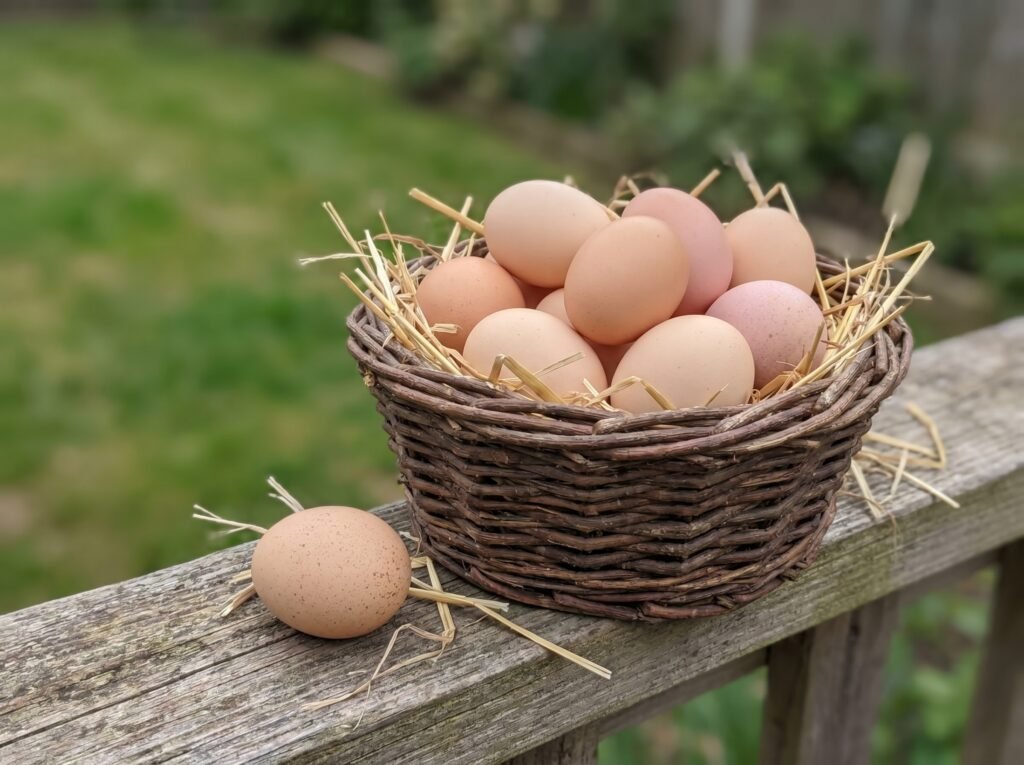
Expect roughly 180-200 light brown eggs per year from a well-fed hen in good health. One major hatchery puts the figure at 180 medium light brown eggs annually, and the Livestock Conservancy's range runs from 150 to over 200 depending on line and management. That works out to about three to four eggs per week through most of the year.
The eggs are medium-to-large and range from pale cream to a warm light brown. Some keepers describe them as "pinkish-tinted" early in the laying cycle. The shade does not compete with a dark Marans chocolate egg or a blue Easter Egger egg, but it is a nice warm color that looks good in a mixed dozen.
One reason French farmers valued this breed is winter laying. Faverolles were originally selected to produce through the long, cold, dark winters north of Paris, and that tendency has stayed in the genetics. Hens tend to keep laying when shorter days slow down breeds with less cold-weather drive. Adding a few Faverolles to a mixed flock is a practical way to keep the egg basket fuller through November and February.
Broodiness is occasional. Hens do go broody sometimes, particularly in dual-purpose lines, but it is not a breed-wide trait the way it is with Cochins or Silkies. Ornamental-focused hatchery lines may rarely go broody at all.
Faverolles typically start laying at 20-22 weeks, roughly in line with other medium-to-large breeds. They are not early starters like a Golden Comet, but they are not slow either.
Temperament: the good and the honest tradeoff
The Livestock Conservancy describes Faverolles as "active, yet gentle" and "energetic, adaptable and curious" with people of all ages. That matches what breed clubs and longtime keepers consistently report. Hens are curious about humans, will follow you around the yard, and rarely show aggression. Roosters in this breed are notably calm compared to many other breeds - some are genuinely the quietest roosters you will encounter.
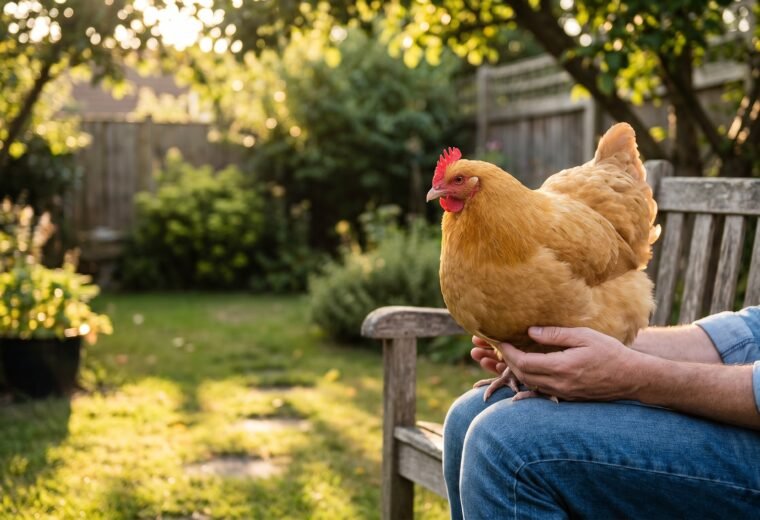
For families looking for a breed children can interact with safely, Faverolles rank near the top. They tolerate handling, don't spook easily, and tend to enjoy attention rather than tolerate it.
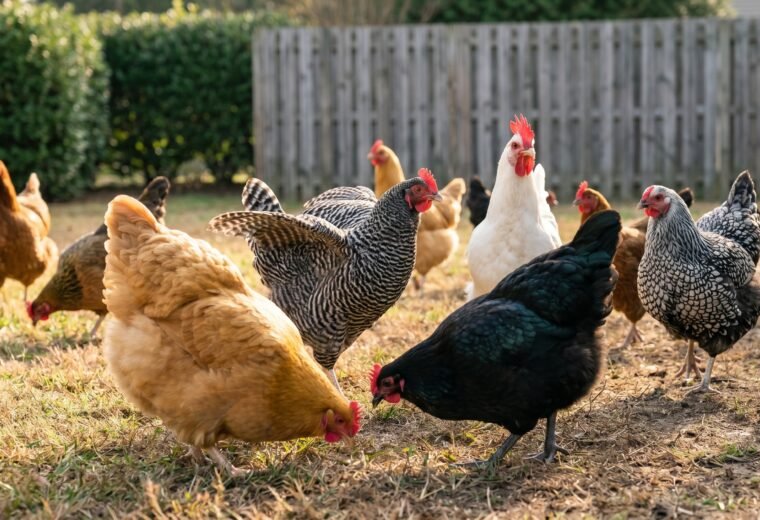
The tradeoff is their position in a mixed flock. Faverolles almost always land at the bottom of the pecking order when housed with assertive breeds. They won't fight back. Breeds like Rhode Island Reds or production Wyandottes can chase, feather-peck, and stress a Faverolle hen enough to reduce her laying and her quality of life. The fix is straightforward: choose flockmates with a similar temperament. Cochins, Brahmas, Buff Orpingtons, and Speckled Sussex tend to share space with Faverolles without conflict. A flock of four to eight birds, all in the gentle-to-moderate range, suits this breed well. Running two or three Faverolles together so they have each other's company also helps when mixed flocks are unavoidable.
Cold and heat tolerance
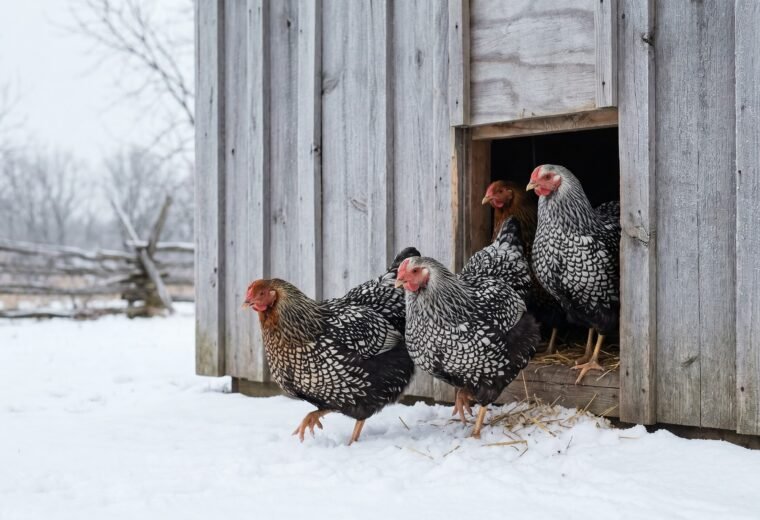
Cold hardiness is a genuine strength. The small single comb and small wattles limit frostbite vulnerability, and the dense, fluffy body feathering provides real insulation. Faverolles do not need a heated coop. As the extension.org frostbite guide confirms, chickens "can do well at sub-zero temperatures" with a dry deep-litter coop and a water warmer - no heat lamp required. Heat lamps are a documented fire hazard and the HenAcre team recommends against them except in genuine emergencies. Good ventilation and dry bedding matter far more than artificial warmth for this breed.
Heat is where Faverolles genuinely struggle. All that dense feathering traps body heat quickly during summer, and you will see hens panting heavily once temperatures push past the mid-80s Fahrenheit. Shade, cool fresh water refreshed frequently, and good airflow are mandatory in hot climates. If you are in a region with long, hot summers, Faverolles will need more active management than a heat-tolerant breed would. The honest read: this breed performs best in temperate to cold climates and is better suited to the northern US, Canada, or the UK than to the Gulf Coast or desert Southwest.
For a broader look at which breeds hold up well in winter conditions, the cold-hardy chicken breeds guide compares dozens of options across comb size, feathering, and documented winter performance.
Breed-at-a-glance comparison
The table below places Faverolles next to two common alternatives keepers often consider when choosing a gentle, productive breed.
| Trait | Salmon Faverolles | Buff Orpington | Cochin |
|---|---|---|---|
| Eggs per year | 180-200 | 150-220 | 100-150 |
| Egg color | Light brown / cream | Brown | Brown |
| Hen weight | 5.5-6.5 lbs | ~8 lbs | 8.5 lbs |
| Temperament | Very gentle, curious | Gentle, calm | Very calm, placid |
| Cold hardiness | Excellent | Good | Good |
| Heat tolerance | Poor | Moderate | Moderate |
| Broodiness | Occasional | Frequent | Very frequent |
| Feathered feet | Yes | No | Yes (heavily) |
| Pecking order | Low - watch flockmates | Mid-low | Low |
| Heritage/Watch list | Yes (Livestock Conservancy) | No | No |
Note on hen weights: the Faverolles figure (5.5-6.5 lbs) reflects typical hatchery production birds. The Cochin figure (8.5 lbs) is the APA Standard of Perfection exhibition weight; hatchery Cochins often run lighter. The Buff Orpington figure (~8 lbs) similarly reflects exhibition standard. Use these as rough size comparisons rather than precise hatchery predictions.
Coop and run setup
The eXtension backyard poultry space guidelines call for 3-4 square feet per bird indoors and 10 square feet per bird in an outdoor run. For a group of five Faverolles, that means a minimum of 15-20 square feet of coop floor and around 50 square feet of run. More is always better, especially since Faverolles enjoy foraging and will use the space.
Two adjustments matter specifically for this breed.
Keep roosts lower than you would for bare-shanked breeds. The combination of feathered feet and a fifth toe means Faverolles don't grip a round perch the same way a Leghorn does. Lower roosts are specifically recommended for this breed due to the feathered feet and fifth toe. A wide 2x4 set flat-side-up at 12-18 inches off the floor works well - it lets hens settle their full foot flat rather than gripping, and reduces the drop distance when they come down in the morning. Standard roost depth is 8-10 inches of linear space per bird.
Mud is the enemy of feathered feet. Wet, matted foot feathers stay damp against the skin for hours, creating conditions for bacterial skin irritation and, in freezing weather, frostbite. A covered run, good drainage, and either sand or gravel in the highest-traffic areas make a real difference. Deep litter in the coop (4-8 inches of pine shavings, refreshed on top, never cedar) keeps the indoor floor dry. Check foot feathering weekly during wet seasons; if mud has built up and hardened, soak the feet briefly in warm water, work the debris loose gently, and dry thoroughly before the bird goes out in the cold.
The fifth toenail does not wear down the way the others do because it rarely contacts the ground. Trim it every few months using pet nail clippers; an overgrown fifth toe can curl and dig into the foot.
Feeding and general health
Faverolles do well on a standard layer ration of about 16% protein with 3.5-4.5% calcium, starting when hens reach laying age (around 20-22 weeks). Offer oyster shell free-choice in a separate container - hens regulate their own calcium intake and laying birds need more than the feed alone provides. Provide insoluble grit if birds don't have regular access to bare soil or gravel.
The feathered face creates one feeding quirk: deep, narrow feeders can mat the beard and muffs with wet feed, keeping those feathers damp and uncomfortable. A wider, shallower feeder or a nipple waterer setup solves the problem. Make sure the beard does not trail in the water trough.
Mite and lice checks should run the same schedule as any chicken - part the feathers around the vent and under the wings at least once a month. The dense beard and muff feathering can harbor northern fowl mites if left unchecked, so include those areas in the inspection. Dust baths are essential; ensure the flock always has access to a dry, loose-soil area or a box of dry sand or wood ash.
For a sick or injured bird, contact a poultry vet. This article covers husbandry and prevention only.
Who this breed suits
Faverolles earn their reputation as a family-friendly breed. They suit beginners who want a calm, handleable bird with decent egg production - the kind of chicken that builds confidence rather than tests patience. They are a natural fit for households with young children, for smaller flocks of four to eight birds, and for keepers who live in temperate or cold climates.
They are a tougher sell for anyone in a hot region without covered, well-ventilated housing; for flocks that already include assertive breeds; or for keepers who want maximum egg yield from every square foot of coop space. In those situations, a Golden Comet or Rhode Island Red will outperform a Faverolle on pure numbers.
If you are still deciding how many birds to start with, or whether Faverolles fit your setup alongside other gentle breeds, the best chicken breeds for families with kids guide covers flock-building from scratch with temperament and size guidance for each option.