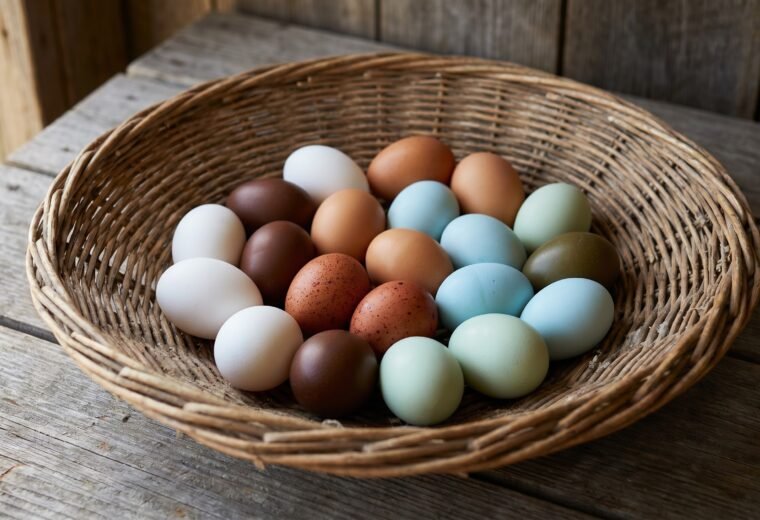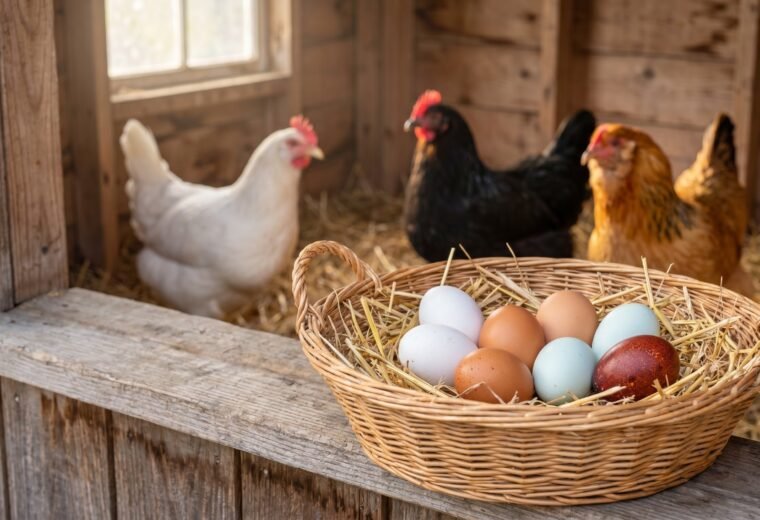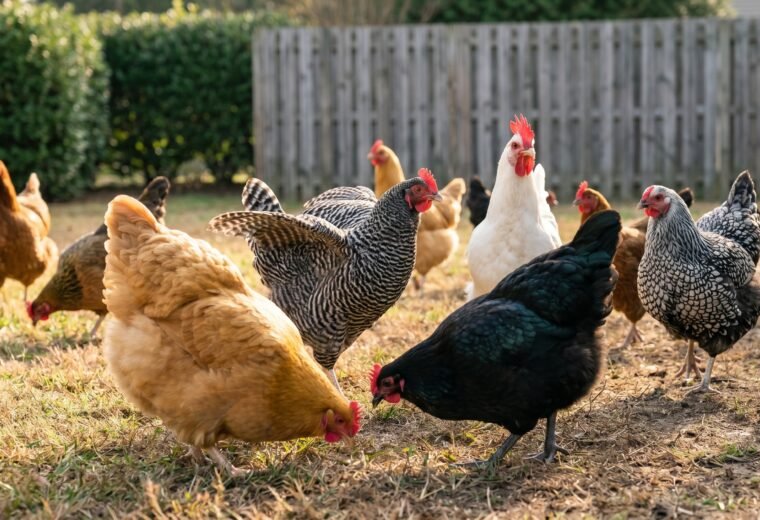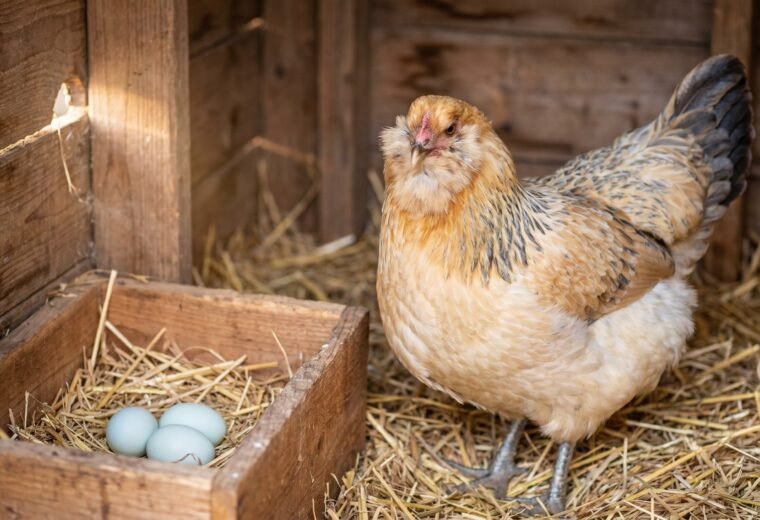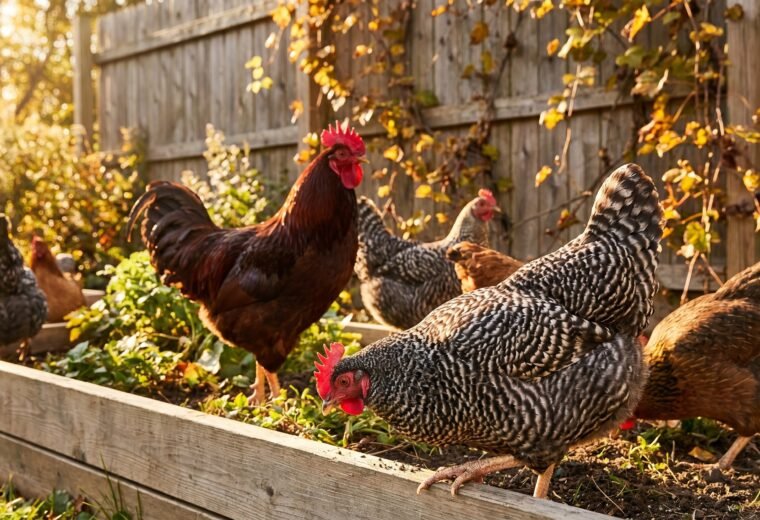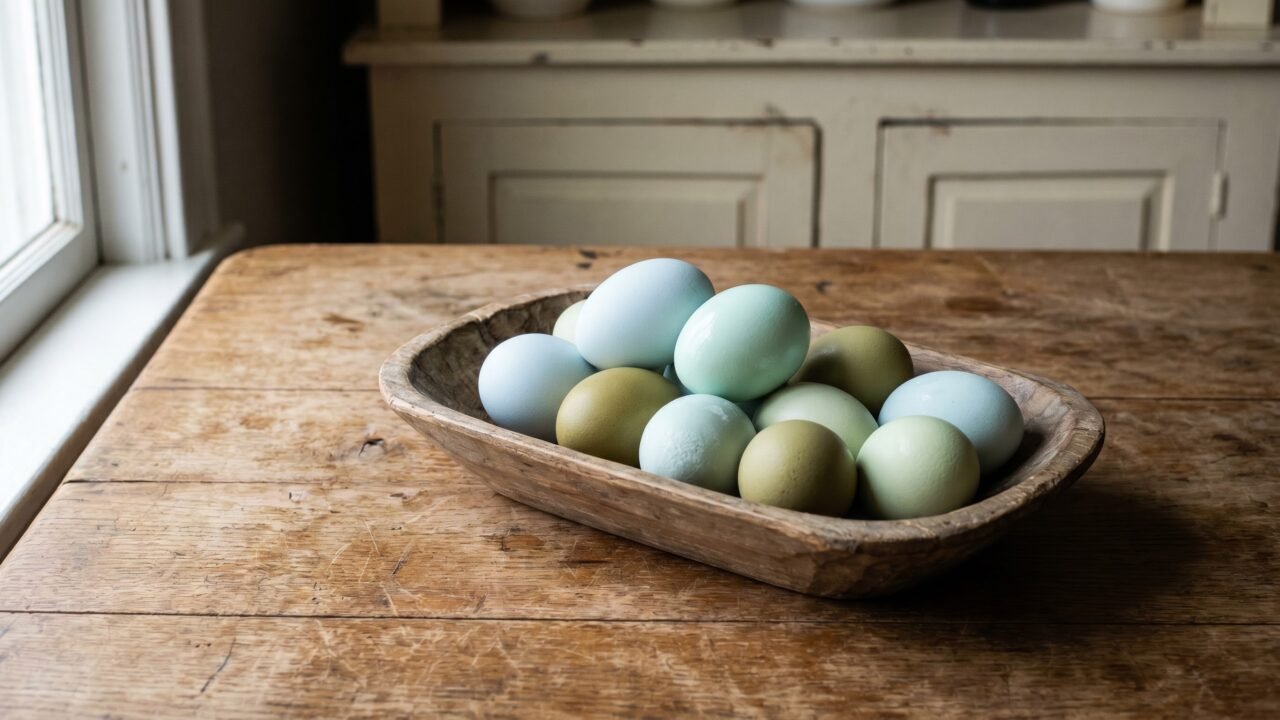
Five types of chicken lay blue or blue-derived eggs: the Ameraucana, the Araucana, the Cream Legbar, the Easter Egger, and the Olive Egger. Only the first three are recognized breeds with predictable, true blue shells. Easter Eggers scatter across a pastel rainbow, and Olive Eggers deliver green rather than blue - because their blue base shell has been painted over with brown pigment. Knowing which is which saves you from buying a dozen "Ameraucana" chicks at a feed store and ending up with a basket full of greenish-brown surprises.
The table below gives the fast-reference picture for the five groups, with egg production numbers drawn from hatchery breed data. Full details follow each entry.
| Type | APA recognized? | True blue shell? | Eggs/year (est.) | Notes |
|---|---|---|---|---|
| Ameraucana | Yes (1984) | Yes (occasional light green) | 180-200 | Muffs, beard, full tail; 9 color varieties |
| Araucana | Yes (APA) | Yes - pale blue | 180-260 | Tufted, rumpless; lethal gene limits hatch rates |
| Cream Legbar | No (US) | Yes - minty blue to aqua | 180-200 | Auto-sexing at hatch; small crest |
| Easter Egger | No | Varies - blue to green to pink | 200-280 | Mixed breed; each hen lays one consistent color |
| Olive Egger | No | No - olive green | 180-200 (F1) | Blue base + brown overlay; F2 color is unpredictable |
Why some eggs are blue: the retrovirus nobody talks about
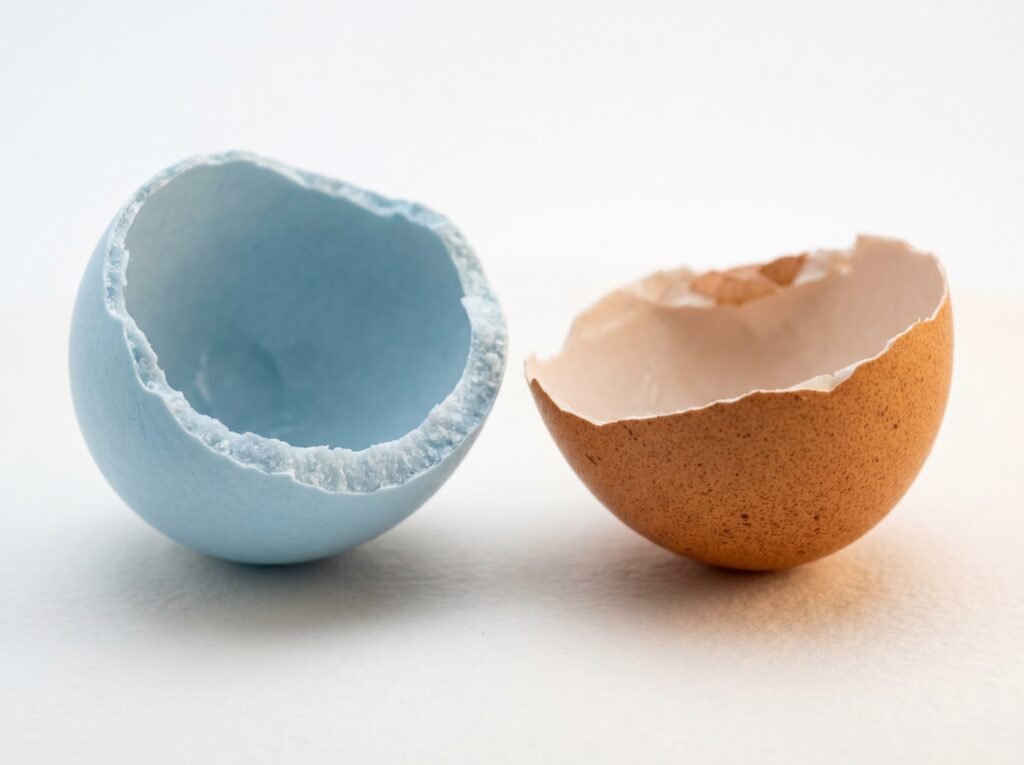
All chicken eggshell pigment comes from two compounds: biliverdin, which produces blue and green tones, and protoporphyrin IX, which produces the rusty-brown tones of a typical brown egg. What makes blue eggs genuinely different from brown ones - in a physical sense - is where the pigment sits. Research published in PMC shows that biliverdin is dissolved in shell proteins at a relatively constant concentration across the entire shell depth, while protoporphyrin concentrates close to the outer surface. Crack a blue egg and the inside of the shell looks just as blue as the outside. Scratch the surface of a brown egg hard enough and you expose a whitish shell beneath.
The ability to make that biliverdin happens because of a mutation that looks, on close inspection, like something from a virology textbook. A stretch of endogenous retroviral DNA - a piece of ancient viral genome that became permanently lodged in a chicken's chromosomes - inserted itself near a gene called SLCO1B3. That insertion acts as an enhancer, switching on SLCO1B3 expression in the shell gland during egg formation. The gene encodes a bile-salt transporter, and biliverdin happens to be one of its substrates - so the uterine tissue begins shuttling biliverdin into the forming shell. The result is a blue egg.
Inheritance is autosomal dominant, which means a hen needs only one copy of the gene to lay blue eggs. A hen with two copies (homozygous) lays a somewhat deeper blue than a heterozygous hen - a gene-dosage effect confirmed by transcript-level studies. Interestingly, this retroviral insertion happened at least twice in history: once in South American Araucana ancestors and independently in Chinese breeds such as Lushi and Dongxiang. Two populations arrived at the same blue egg by separate accidents of viral integration.
Green shells are a mix: biliverdin provides the blue base, and then protoporphyrin is layered on top. The shade of green depends on the ratio. An olive egg takes that further - a blue base shell under a heavy coat of dark brown pigment from a Marans or Welsummer parent.
If you want to understand how egg color fits across every common breed, our egg colors by breed guide maps the full palette.
Ameraucana: the most reliable blue-egg breed for backyard flocks
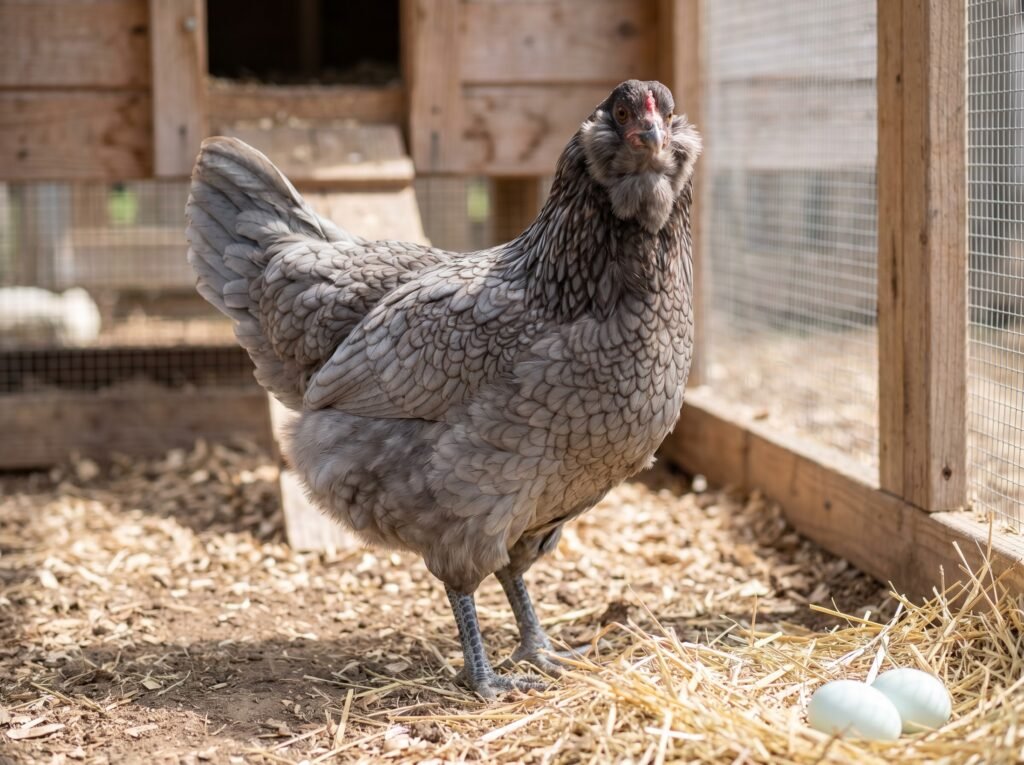
Ameraucanas are the practical choice for anyone who wants consistent blue eggs with manageable breeding. The American Poultry Association admitted them to its Standard of Perfection in 1984; nine color varieties are recognized in both large fowl and bantam sizes. Hens weigh roughly 4.5-5.5 lb and produce about 180-200 medium to large blue eggs per year, often continuing to lay through winter months.
Physically, Ameraucanas are easy to identify: full tail, fluffy muffs and beard on the face, small pea comb, and slate-colored legs. Their pea comb makes them a decent choice for cold climates, since small combs lose less heat than large single combs. Temperament tends toward active and curious; roosters are generally not aggressive.
One honest caveat: a small percentage of hens lay eggs with a greenish tint rather than pure sky blue, because individual gene expression varies. This is normal within the breed and does not indicate an impure bird. What is a red flag is the label "Americana" - a misspelling used by some commercial hatcheries for Easter Eggers. If a feed-store bin is labeled Americana, you are buying Easter Eggers, which will lay a range of colors.
For a full breed profile including temperament details and flock mixing notes, see the Ameraucana breed guide.
Araucana: the original, and the hardest to keep
Araucanas are where the blue egg gene entered the Western poultry world. The breed came out of Chile, was recognized by the APA, and carries two traits that make it genuinely difficult to produce: ear tufts and a rumpless (tailless) body.
The tuft problem is serious. Tufts are caused by a gene that is also semi-lethal - when both parents carry it, 25% of fertilized eggs fail to develop and die in the shell. Add the fact that the rumpless conformation interferes with natural mating (a tail normally pulls feathers aside during mating), and hatch rates end up significantly lower than what you would expect from a typical breed. Araucanas lay pale blue eggs at rates somewhere in the 180-260 eggs per year range, but the low hatch performance means true-standard Araucanas are rarely found at commercial hatcheries. Several stopped carrying them after customer returns.
The eggs themselves are beautiful - a cool, pale blue - but if you buy chicks labeled "Araucana" from a mainstream source, verify the conformation. Tufted and rumpless together means a true Araucana. Tailed birds with muffs are Ameraucanas. Everything else is probably an Easter Egger.
Cream Legbar: the auto-sexing blue egg layer from Britain
The Cream Legbar offers something none of the other blue-egg breeds do: males and females can be told apart by down color and pattern on the day they hatch. That auto-sexing trait is wired into the breed's genetics - it was developed in Britain partly at Cambridge University - and it means you can plan your flock composition without the guesswork of manual sexing or the wait of weeks.
Hens are light-bodied (around 5 lb) with a small crest and an active, free-range-oriented disposition. They lay roughly 180-200 eggs per year in shades described as minty blue, aqua blue, or occasionally greenish - individual hens vary, though most land clearly in the blue-to-aqua range. Cream Legbars are still somewhat uncommon in the US; hatcheries sell them seasonally, and demand often outpaces supply in spring. The breed is not yet recognized by the APA in the US, but it carries an established standard in the UK.
For keepers who want a productive, sexable blue-egg layer with a bit of character, the Cream Legbar earns its following. Just expect birds that need space and stimulation - they do not thrive in tight confinement.
Easter Egger: the rainbow layer that is not a breed
Easter Eggers are the most common "blue egg" bird sold in the US, and technically they are not a breed at all. They are crossbred chickens carrying the blue egg gene without meeting the conformation standards of any APA-recognized breed. Easter Eggers may carry Ameraucana blood, but they lack the breed's uniform conformation and won't necessarily lay eggs with blue shells - a point that breeders and poultry extension resources reinforce consistently.
What you actually get from a flock of Easter Eggers is a basket of surprises. Each hen lays one consistent color for her laying life - pale blue, green, pinkish, even brownish - but you cannot predict which color any given chick will produce until she starts laying. A mixed pen of 15 Easter Eggers might give you four blue-green layers, five mint-green, three pinkish, and three who lay a color that reads more olive than anything else. At 200-280 eggs per year on average, they tend to outproduce the standardized blue-egg breeds, and their temperament is often friendly and outgoing.
If you want a reliable blue egg specifically, an Easter Egger is a gamble. If you want a colorful basket and are happy with whatever shade lands, they are a genuinely fun addition to a mixed flock. Our Easter Egger breed profile covers selection and flock integration in more detail.
Olive Egger: blue genetics, green eggs
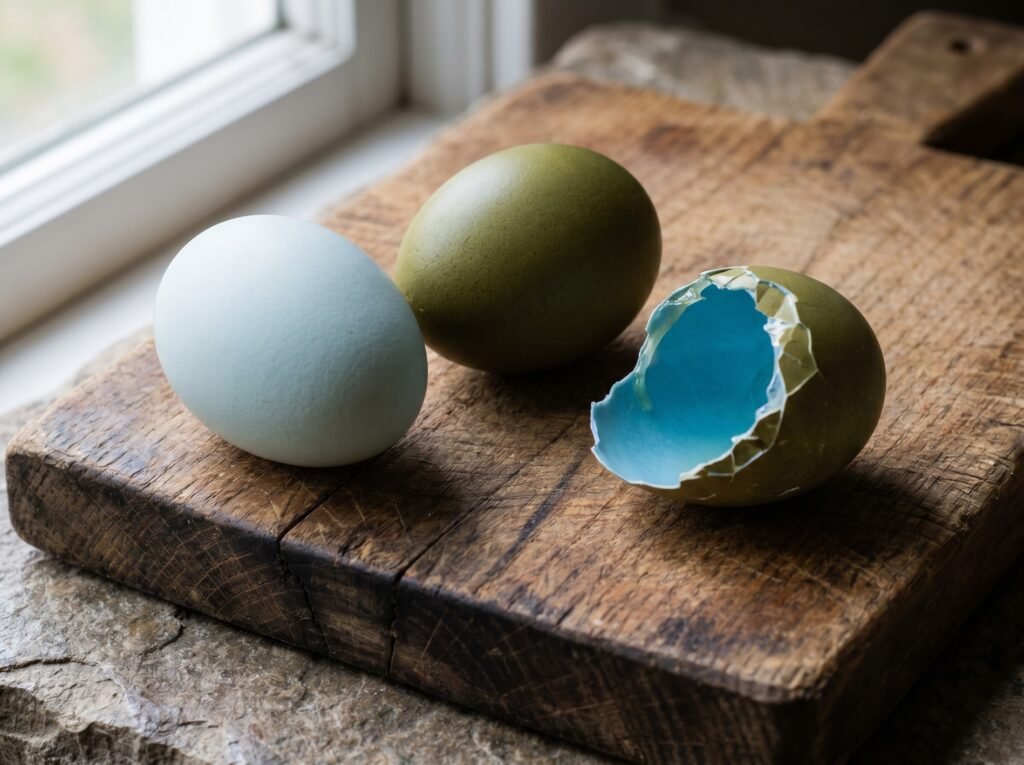
Olive Eggers are not blue-egg layers. Their eggs are olive green - sometimes deep and earthy, sometimes lighter and mossy - because they carry the blue egg gene but also inherit dark brown pigment genes from a Marans, Welsummer, or Barnevelder parent. The blue base shell is there, but it is overlaid with enough protoporphyrin to read green rather than blue.
The first generation (F1) cross is the most predictable. Breed a Cream Legbar rooster over Welsummer hens, for example, and roughly 97% of the pullets lay olive eggs. Egg production runs 180-200 per year. Go to a second-generation (F2) cross - breed two F1 Olive Eggers together - and the genetics become unpredictable enough that offspring may lay olive, blue-green, brown, or darker shades. If consistent olive color matters to you, stick with F1 birds.
Olive Eggers occupy a useful niche: they add a color to the basket that none of the other groups produce. They pair naturally with a blue-egg layer and a dark brown-egg layer (Marans or Welsummer) if you want the widest color range from a small flock. For a broader look at how egg color varies by breed - including the dark brown breeds used in Olive Egger crosses - see our egg colors by breed guide.
The one myth worth correcting
Blue eggs are nutritionally identical to white or brown eggs of the same size and from hens on the same diet. Shell color is pigment deposited during the last hours of shell formation; it does not affect the albumen, yolk, or nutritional content. The persistent idea that blue eggs taste different is a perception effect - the novelty of the color, or differences in how individual flocks are managed, not the shell pigment itself. University extension resources on egg composition are consistent on this point: shell color is about genetics, not nutrition or flavor.
A second persistent myth: that "Araucana" chicks from a feed store are actual Araucanas. They almost never are. True show-quality Araucanas are rare and expensive, and most commercial hatcheries stopped breeding them due to hatch-rate problems. What feed stores typically stock under that name - or under "Ameraucana" - are Easter Eggers. If the bird has a tail and muffs, it is an Ameraucana or an Easter Egger. If it has ear tufts and no tail, it is (or is close to) an Araucana. A bird with none of those features that is labeled either breed is almost certainly neither.
Choosing among these five types comes down to what you actually want. A predictable blue egg every time points toward Ameraucana or Cream Legbar. A rare true Araucana is a project for experienced breeders, not casual backyard flocks. Easter Eggers give maximum production with maximum color variety. Olive Eggers add the green range and work beautifully alongside blue-egg hens in a multi-breed flock. For a broader look at which breeds match different keeper goals, the best egg-laying breeds guide and our full chicken breeds overview are good next stops.