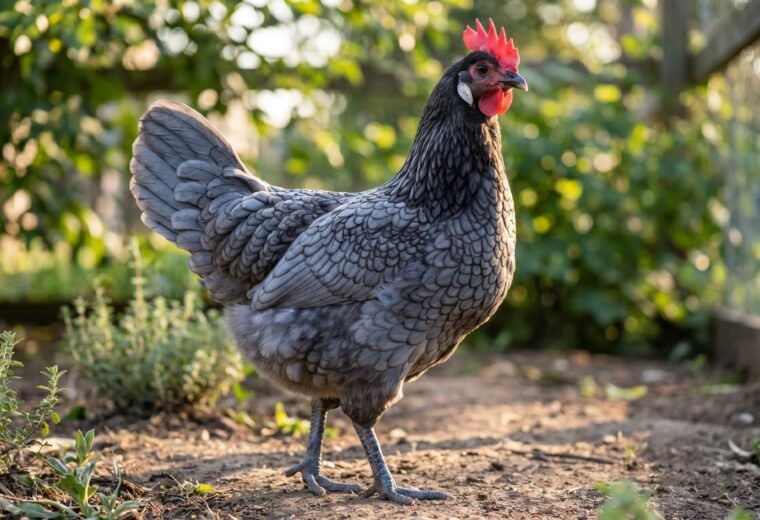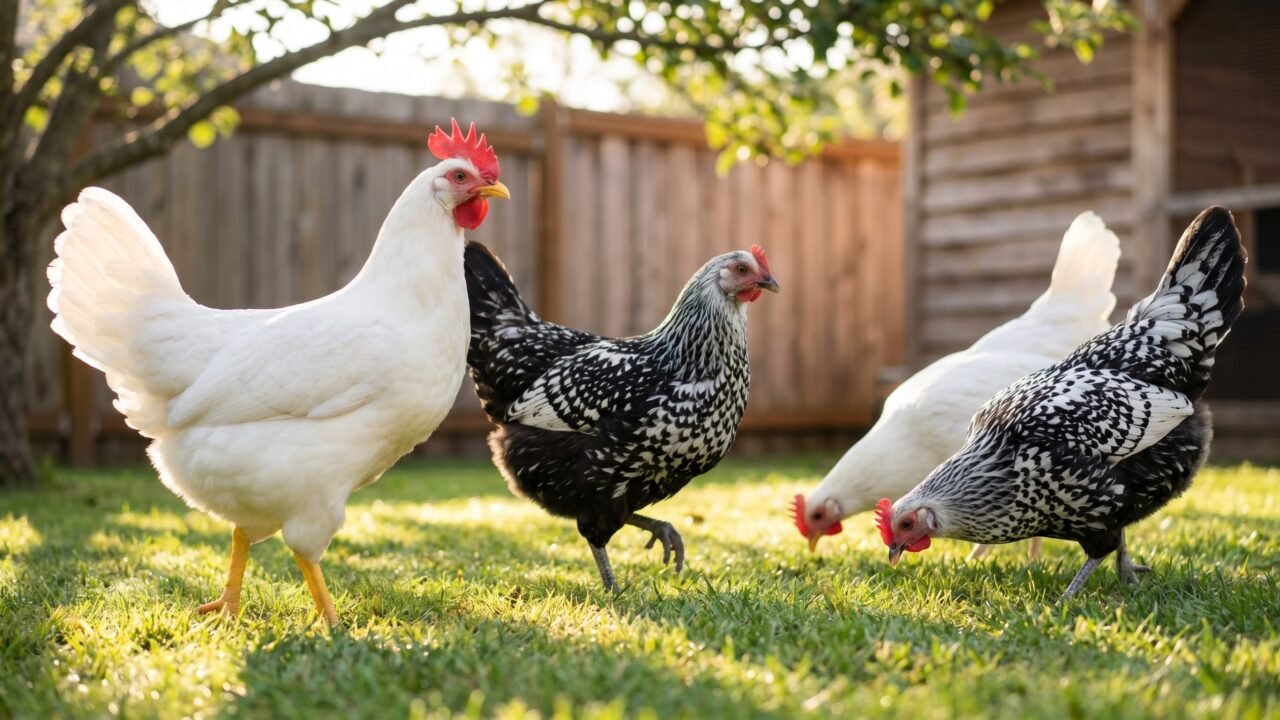
Pick any carton of supermarket eggs and there's a very good chance a White Leghorn laid them. That alone tells you something useful: white-egg breeds are production powerhouses. But "white egg layer" covers a surprisingly wide range - from near-commercial output machines to ornamental showstoppers that happen to lay. The six breeds below are the ones most backyard keepers actually encounter, and they differ enough in temperament, output, and care needs that the right choice depends on what you want from a flock of, say, a dozen birds.
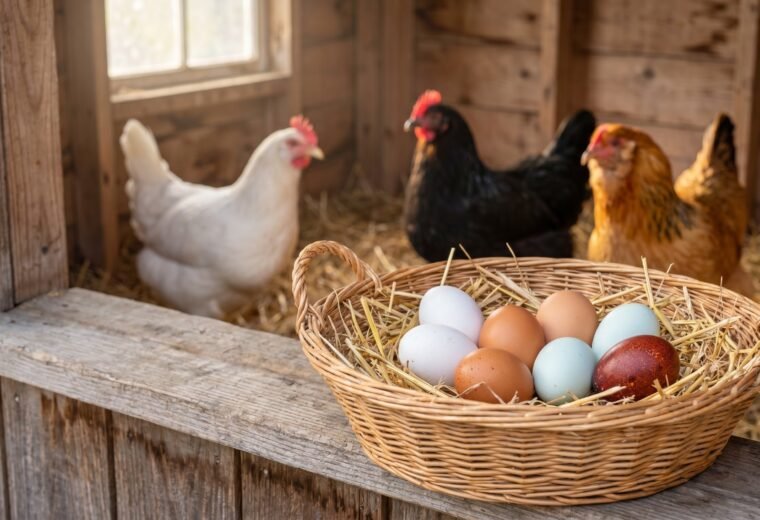
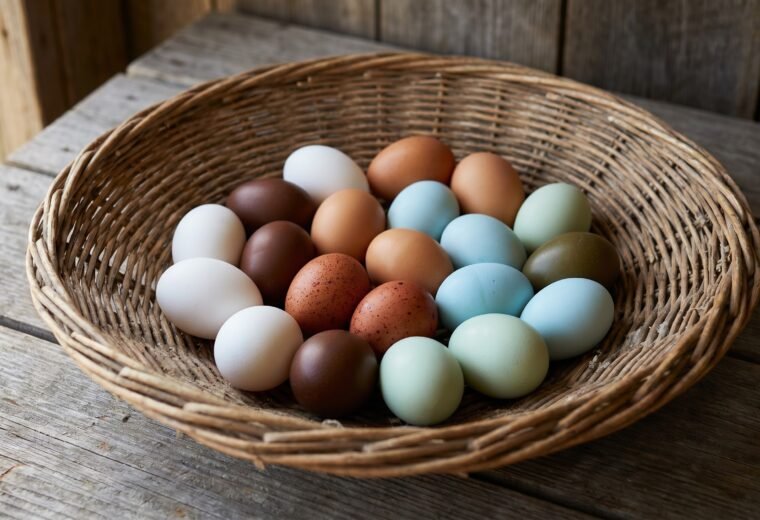
Before the breed breakdown, one thing worth settling: shell color has no effect on nutritional quality or taste. According to Gregory Archer, Ph.D., a poultry specialist with Texas A&M AgriLife Extension, "the color of an egg is primarily determined by the chicken's genetics," and "all chicken eggs have no major differences in taste or nutritional composition." White shells, brown shells, even blue-green shells - all are cosmetic. Diet and freshness shape flavor; genetics shapes color. For a fuller look at how shell color maps to breed, see our egg colors by breed guide.
How to read the comparison table
The table below puts all six breeds side by side on the numbers that matter most. Production figures are annual estimates from primary hatchery data and breed conservation organizations; individual birds vary based on feed quality, light, season, and age. Temperament ratings reflect the breed's general disposition with humans, not flock aggression. "Confinement tolerance" is whether the breed handles a standard run well or needs extended foraging space to stay calm.
| Breed | Eggs/year (est.) | Egg size | Hen weight | Temperament | Confinement tolerance | Broodiness |
|---|---|---|---|---|---|---|
| White Leghorn | 280-325 | Large | 4-5 lbs | Active, alert, flighty | Moderate - prefers space | Rarely |
| California White | 300+ | Large | 5.5 lbs | Active, calmer than Leghorn | Good | Rarely |
| Ancona | 220-240 | Medium | 4-6 lbs | Social, active, vocal | Low - needs room to range | Occasionally |
| Hamburg | 120-225 | Small-medium | 4 lbs | Flighty, alert, independent | Low - dislikes confinement | Never |
| Andalusian | 160-200 | Medium-large | 5.5 lbs | Active, not aggressive, not a lap bird | Low - needs space | Rarely |
| Polish | ~150 | Medium-large | 4.5 lbs | Calm, easily startled | Good if predator-safe | Rarely |
White Leghorn: the benchmark every other breed gets measured against
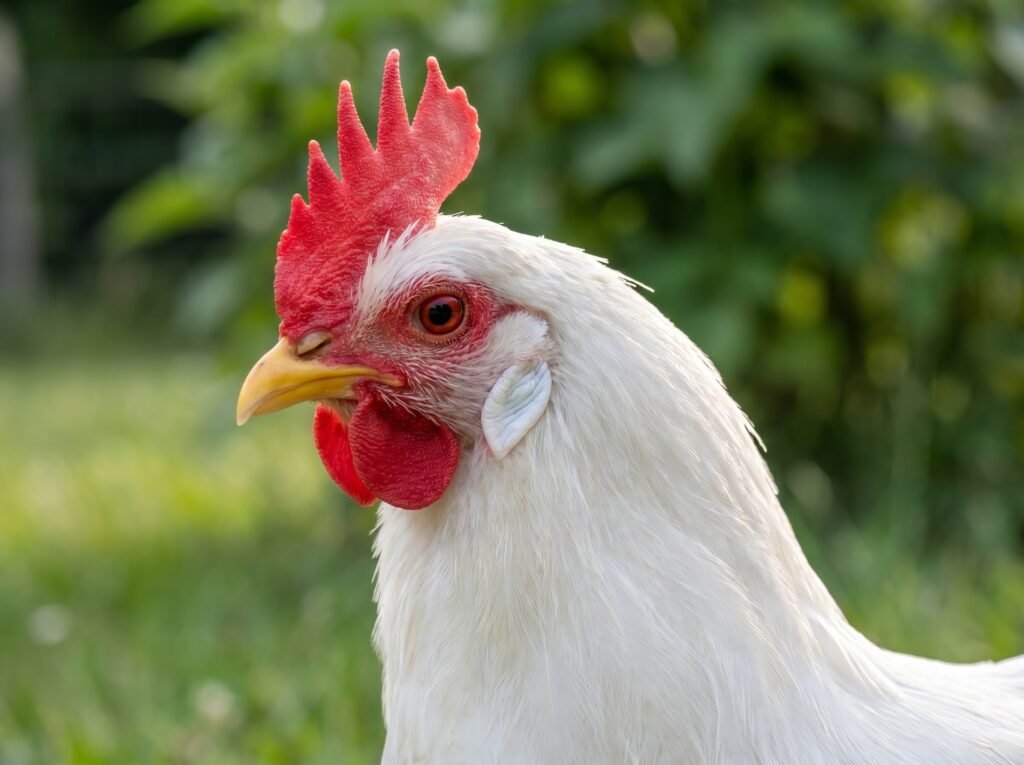
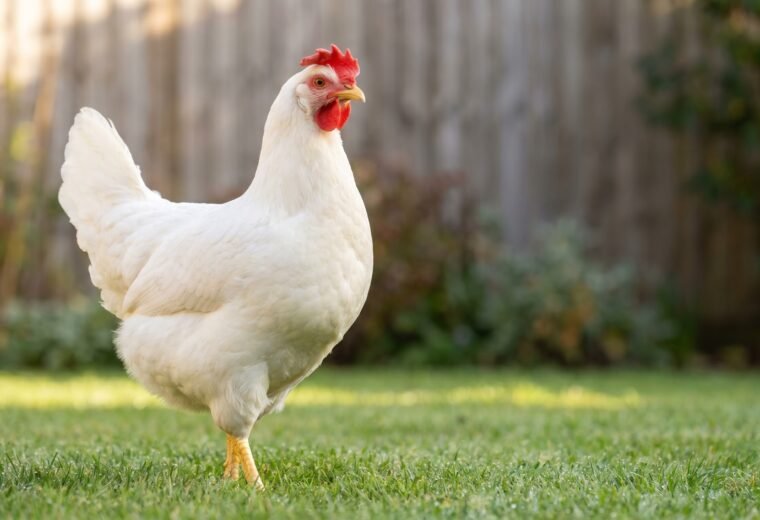
Leghorns originated in Tuscany and arrived in North America in the 1850s through the port of Livorno - the word "Leghorn" being the English rendering of that port's name. Hatchery records list the White Leghorn at 325 large white eggs per year while consuming less feed than most other breeds. Wikipedia's breed entry, drawing on poultry science data, puts the average at 280 and notes peaks reaching 300-320. The spread reflects strain differences: hatchery-optimized lines push the high end, older exhibition lines run lower. Either way, no pure breed in a backyard setting consistently beats them.
The tradeoff is temperament. Hatchery descriptions consistently use words like "active," "alert," and "nervous." These birds are not mean, but they spook easily, dislike handling, and move fast. A Leghorn flock of 12 will produce roughly 65-75 eggs per week at peak - enough for a family plus neighbors. Of the six breeds here, none match this output. For more on how their laying compares across breeds, our best egg-laying breeds overview has the side-by-side numbers.
Leghorns have white earlobes, a defining Mediterranean-class trait linked to white shell production. They're cold and heat hardy per hatchery data, rarely go broody, and eat efficiently. They do best with room to move. Cramped runs make flighty breeds jumpier; a well-fenced free-range area or a spacious covered run is a better fit than a small enclosed pen. For a deep look at the breed on its own, see our Leghorn breed guide.
California White: more eggs, less attitude
The California White is a first-generation cross - White Leghorn over California Grey - developed for commercial production. It's not a recognized exhibition breed, but it is one of the more practical choices for backyard keepers who want near-Leghorn output without the same level of skittishness. Commercial hatchery records list production at 300+ large white eggs per year with a hen weight of 5.5 lbs.
The temperament difference is meaningful. Where Leghorns are described as nervous, California Whites are "active enough to be productive, yet they also handle close confinement better than many lightweight, flighty breeds" - from hatchery breed records for this cross. Adult hens carry faint black flecks in their white plumage, courtesy of the California Grey parent. They tend to start laying as early as 17-18 weeks, slightly earlier than many dual-purpose breeds.
One practical note: because it's a hybrid, you can't maintain this cross by letting birds hatch their own eggs and keeping a rooster. Offspring won't match parent performance. Plan to source new chicks each generation.
Ancona: the winter layer that outpaces Leghorns in cold weather
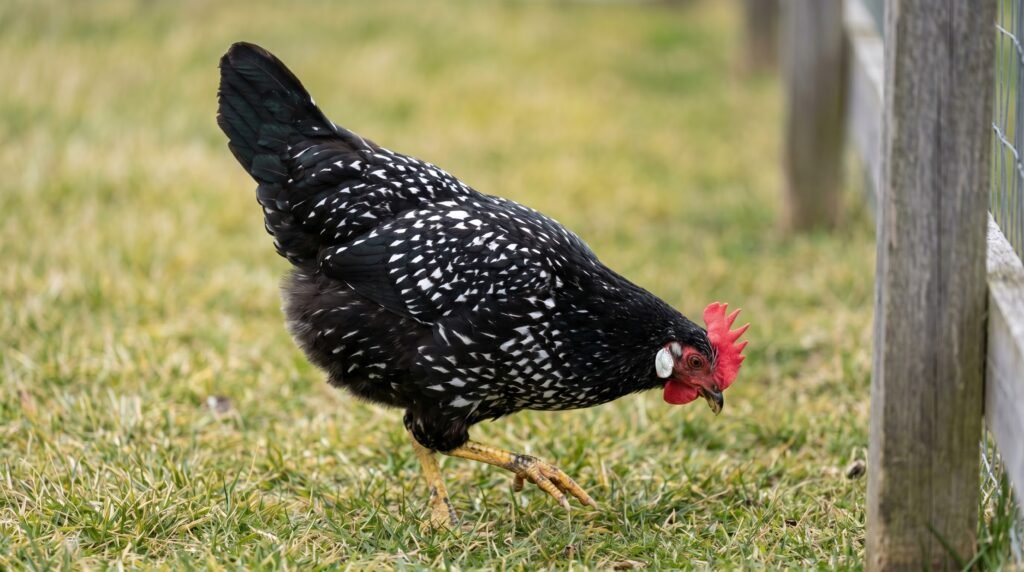
The Ancona comes from the Marche region of Italy, named after the coastal city of Ancona. The Livestock Conservancy records them at about 220 eggs per year, and commercial hatchery data puts their production at 240 medium white eggs annually. The Ancona's real selling point, which often gets overlooked in straight production comparisons, is winter performance. Breed references note that Anconas lay well through cold months, maintaining output in periods when many Mediterranean breeds slow down - which matters in climates where production drops sharply from October through February.
Plumage is black with white-tipped mottling distributed across the body, the pattern intensifying with each molt so older birds show more white. Earlobes are white, consistent with their white shell production. Hatchery records describe temperament as "social, active, vocal" - they're not as flighty as Leghorns but still very much an alert, foraging breed rather than a lap bird. Pullets often begin laying at five months. The Livestock Conservancy lists Anconas on their Conservation Priority List ("Watch" status), so sourcing can require a bit more research than finding a Leghorn chick. Our Ancona breed profile has sourcing and care details.
Hamburg: the oldest white-egg layer, and the most independent
Hamburg chickens have been around in Europe since at least the 14th century, admitted to the American Poultry Association Standard of Perfection in 1874. They're small - hens at 4 lbs, roosters at 5 lbs - and compact, with a distinctive rose comb and large round white earlobes. The Livestock Conservancy's breed data shows the widest production range of any breed here: 120-225 white eggs per year, depending on strain and age. Commercial hatchery data for production-focused lines estimates 200+ annually.
That variance deserves attention. A Hamburg from a show-focused line might produce at the low end; a hatchery production line pushes toward 200. If you're buying Hamburgs for eggs, ask about the breeder's focus. Exhibition lines have been selected for appearance; production lines have been selected for laying frequency. These are genuinely different birds despite sharing a breed name.
Temperament is the most honest deterrent for many backyard keepers. The Livestock Conservancy's description says it plainly: "The nature of the breed is one of great activity and alertness, and they are sometimes considered flighty." They prefer trees to roost bars, can clear most standard fencing, and do not enjoy being handled. Hamburgs thrive with space to range and foragers who want a breed that essentially manages itself. They never go broody - ever - which means consistent laying through much of the year without interruption from sitting hens. Our Hamburg breed profile covers the variety colors in detail.
Andalusian: a conservation-status breed with solid white-egg output
The Blue Andalusian originated in the Andalusia region of Spain and reached the United States between 1850 and 1855. The Livestock Conservancy places it on their Conservation Priority List as "Threatened," and global breeding populations are small enough that sourcing birds is a genuine research project, not a hatchery order.
That rarity makes the production numbers almost secondary, but they're respectable: 160-200 medium-to-large white eggs per year, per the Livestock Conservancy, with excellent winter-laying consistency. The breed's genetics produce a quirk that surprises new keepers: blue Andalusians do not breed true. Cross two blues and you get approximately 50% blue, 25% black, and 25% splash (white with blue-black flecks) - a straightforward Mendelian outcome of the incomplete-dominance dilution gene that creates the blue coloring. If color consistency matters to you, that means culling or selling non-blue birds each generation.
Temperament, per the Livestock Conservancy, runs active and independent - "not aggressive with people but is not the best choice if you want a 'pet.'" They handle poor confinement badly and may bully flockmates without enough space. Andalusians are excellent foragers with what the Conservancy calls a "rugged nature." Males weigh 7 lbs, females 5.5 lbs, making them the largest bird in this group. Our Andalusian breed profile covers the genetics and sourcing in more depth.
Polish: the ornamental layer with a crest that needs managing
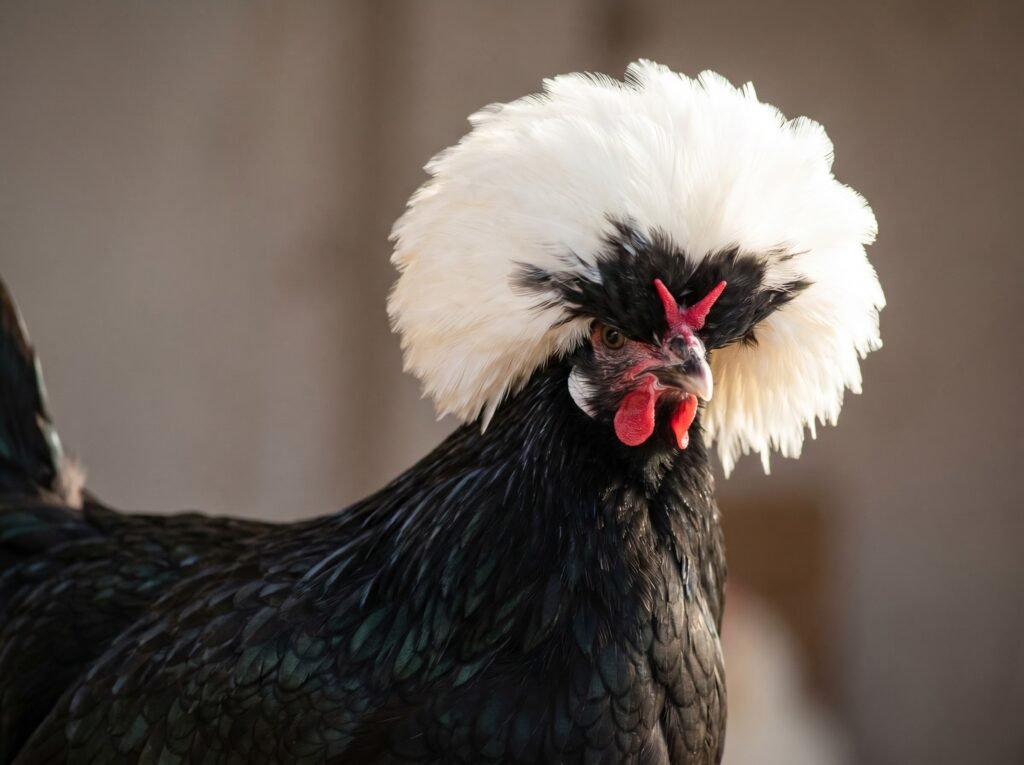
Polish chickens are the outliers in this group - chosen as often for the dramatic feathered crest on their heads as for their eggs. The Livestock Conservancy records production at about 150 medium-to-large white eggs per year, with a note that they "tend to begin a bit late in the season but persistently laying once they commence." Hens weigh 4.5 lbs, roosters 6 lbs.
The crest is genuinely beautiful and genuinely a management consideration. The Livestock Conservancy's breed entry states that head feathers "can sometimes fall over the chicken's eyes and impede its vision." Reduced vision makes Polish birds jumpy at sudden movement and significantly more vulnerable to predation - aerial predators especially - because they simply can't see the threat coming. In a predator-pressured yard, Polish chickens need a covered, secure run more urgently than any other breed on this list.
The practical fix for keepers who aren't showing birds is simple: trim the crest feathers away from the eyes. This improves visibility without harming the bird. Show birds can't be trimmed, so exhibition keepers need purpose-built housing with additional overhead protection. Also watch for mites and lice in the crest - dense head feathering traps debris and warmth, making it a preferred spot for external parasites. Inspect closely during routine health checks. Our Polish chicken profile covers the color varieties and crest care in full.
Polish chickens are calm and non-aggressive when not startled. They sit near the bottom of most mixed-flock hierarchies, which means pairing them with assertive breeds like Leghorns or Hamburgs in a small pen is a bad idea. They do well in calm groups with their own kind or with equally docile breeds.
Matching breed to flock size and goals
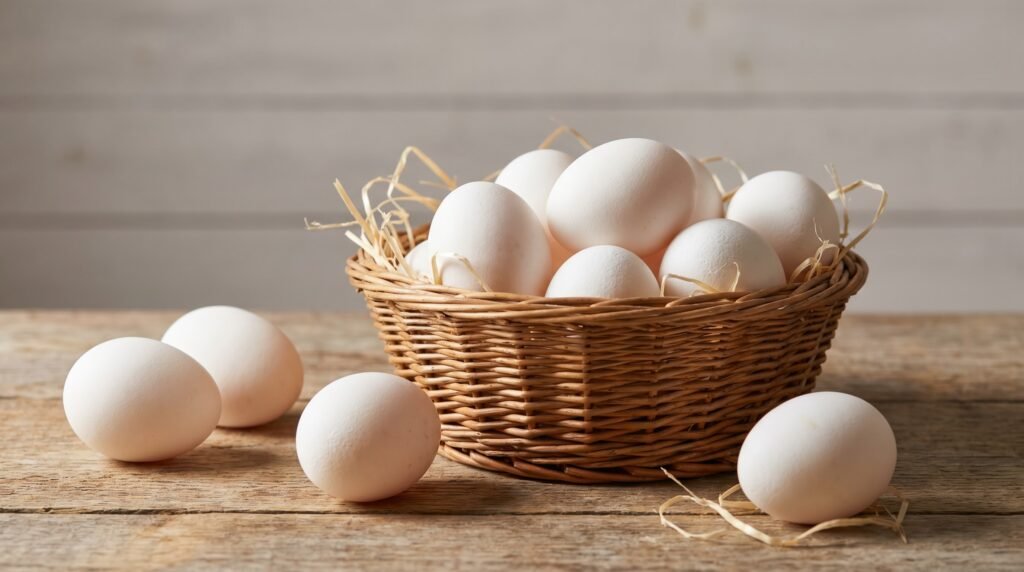
For a flock of 12 hens targeting maximum white-egg output, White Leghorns or California Whites are the straightforward answer - 300+ eggs per hen per year means roughly a dozen eggs per day at peak. That's around 84 eggs per week from a standard dozen birds. Leghorns eat less per egg produced than almost any breed; California Whites tolerate smaller spaces more gracefully.
For a mixed-purpose flock of four or five where egg production matters but so does keeping birds that are easier to handle, Anconas offer a middle path: 220-240 eggs per year with a more sociable disposition than Leghorns, plus better winter output. Hamburgs suit keepers with open land who want a heritage breed that largely takes care of itself. Andalusians reward those specifically interested in conservation work and a rare, visually striking breed. Polish are the right pick when a family wants an engaging, personable bird and 150 eggs per year is sufficient.
Whatever breed you choose, production drops reliably when day length falls below 14 hours. USU Extension's guidelines recommend 14-16 hours of consistent light per day during laying season; supplemental lighting in winter maintains output. Layer feed should run 16-18% protein with 3.5-4% calcium. Both factors matter more to weekly egg counts than breed choice alone. For a full breakdown of the broader breed landscape, our chicken breeds directory covers over 40 breeds with production data.