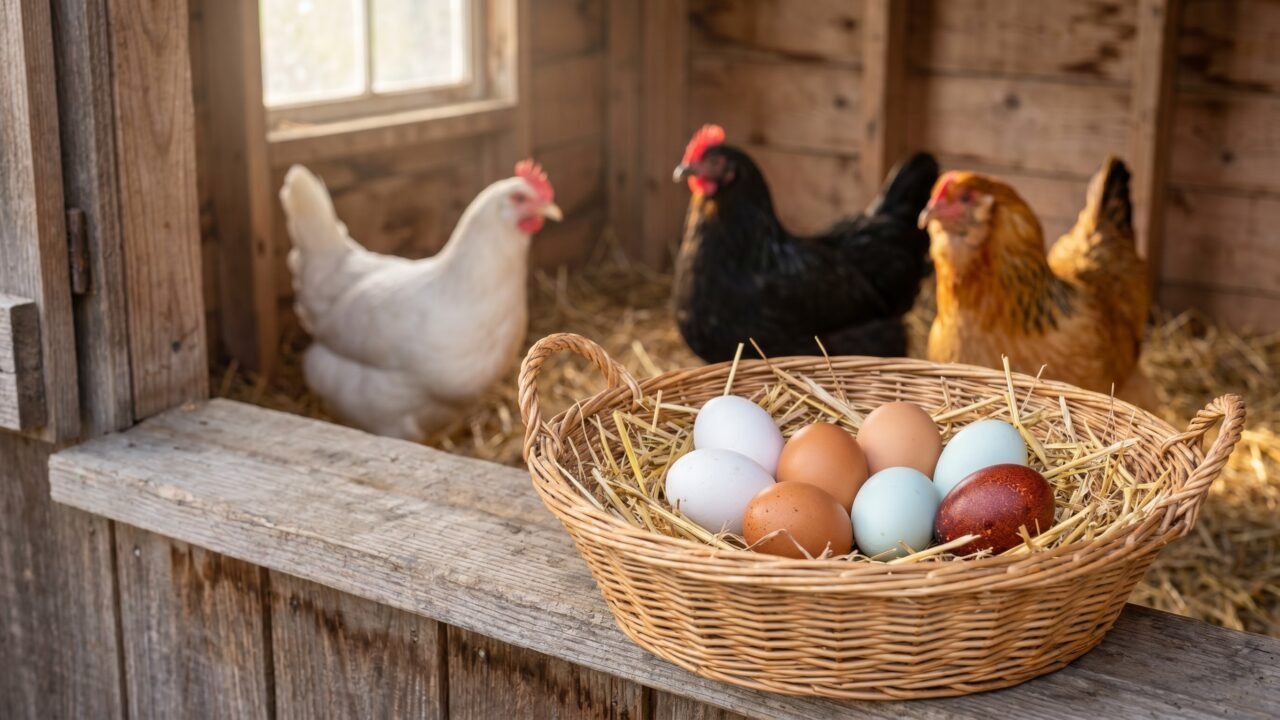
Pick the right breed and 20 hens will put 400-plus eggs on the counter every month. Pick the wrong one and you might get half that. The difference is not coop design or feed brand. It is genetics, and it is worth sorting out before you order chicks.
This guide covers the top egg-laying breeds, organized by what they actually do best: raw output, egg color, cold-weather reliability, and how long they hold production across seasons. Every production figure comes from hatchery breed data or extension service sources; nothing is estimated from memory.
The breed comparison table
The numbers below are annual estimates from Cackle Hatchery, Hoover's Hatchery, Murray McMurray, and University of Minnesota Extension. Every hen listed here produces large eggs except where noted. Actual results vary with management, light exposure, feed quality, and individual birds. These ranges are honest starting points, not marketing ceilings.
| Breed | Type | Eggs/year (est.) | Egg color | Temperament | Climate fit |
|---|---|---|---|---|---|
| White Leghorn | Production layer | ~280-320 | White | Active, nervous | Cold and heat hardy |
| Red Star (sex-link) | Hybrid | 280-365 | Brown | Active, friendly | Wide range |
| Golden Comet (sex-link) | Hybrid | 250-320 | Brown | Friendly, calm | Wide range |
| Black Australorp | Heritage / dual | 250-280 | Light brown | Active, gentle | Cold hardy; needs shade in heat |
| Barred Plymouth Rock | Heritage / dual | ~250 | Brown | Calm, docile | Cold and heat hardy |
| Rhode Island Red | Heritage / dual | 200-280 | Brown | Active; roosters can be assertive | Wide range; comb frostbite risk |
| Easter Egger | Hybrid / mixed | 200-280 | Blue, green, pinkish | Active, curious | Adaptable |
| Buff Orpington | Heritage / dual | ~220 | Brown (medium) | Docile, gentle | Cold and heat hardy |
| Welsummer | Heritage | 200-280 | Dark reddish-brown, speckled | Active, friendly | Adaptable; comb frostbite risk |
| Midnight Majesty Marans | Hybrid / dark-egg | ~250 | Dark chocolate-brown | Calm, friendly | Cold and heat hardy |
One pattern worth noticing: the most productive breeds per year (Leghorns, sex-links) are also the most active and least handleable. The calm, heavy-bodied breeds trade some output for easier handling. That tradeoff is real, not just perception, and it shapes the recommendations below.
Top layers by egg color
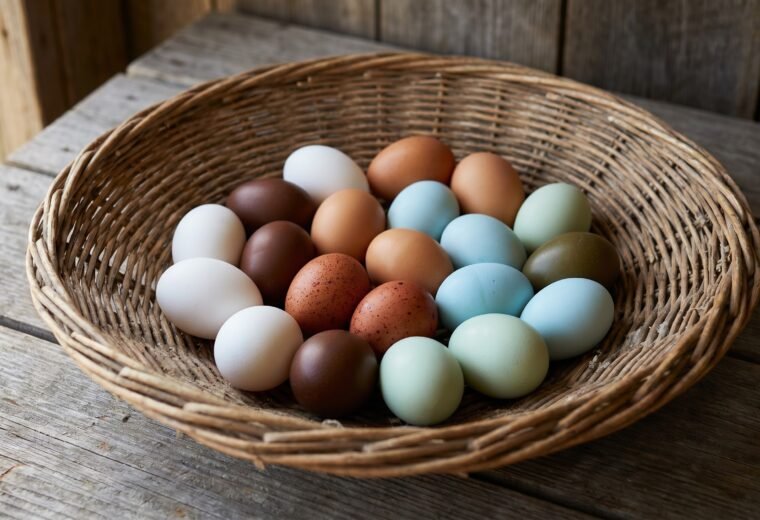
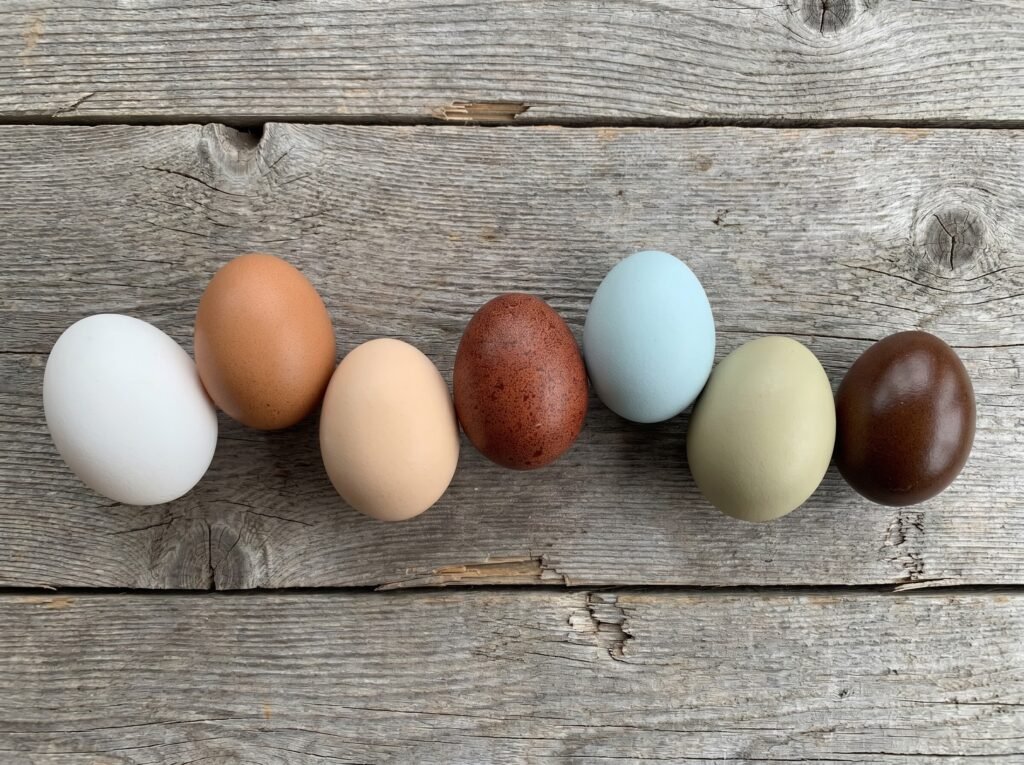
Egg color is pure genetics. White-shell production breeds all trace back to Leghorn ancestry, while brown-shell layers descend from Rhode Island Red stock - this is basic poultry breeding science, consistent across extension literature and breed histories. Blue and green shells come from an entirely different gene, carried by Araucanas and Ameraucanas. Here is how the best layers sort by color.
White eggs: the Leghorn's territory
No purebred comes close to the White Leghorn. Hoover's Hatchery rates them at around 280-320 large white eggs per year, among the highest single-breed figures from any major hatchery. They are small-bodied (4-5 lbs), heat-tolerant, and efficient converters of feed to eggs. The honest caveat is temperament: Hoover's describes them as "Active, Alert, Athletic, Nervous." They startle easily and are not cuddly birds. For a warm-climate keeper who wants maximum egg volume and is not looking for a lap hen, the Leghorn is the clear answer.
Brown eggs: most of the field
Brown-egg choices range from 200 to 365 eggs per year, depending on whether you go hybrid or heritage. The key options:
- Red Star / sex-link hybrids. Murray McMurray's Red Star is rated at 280-365 large brown eggs per year under ideal conditions. Mississippi State University Extension confirms sex-links produce "300 eggs per year or more" and are "extremely good egg layers." They are color-sexable at hatch, which means you know which chicks are pullets from day one. Start young, produce fast, and are friendly enough for most backyard setups.
- Golden Comet. Cackle Hatchery lists 250-320 large brown eggs per year. A first-generation sex-link hybrid, color-sexable at hatch, with a reputation for consistent output even in variable weather. Female chicks hatch brownish-red; males hatch mostly white. Easy to sort.
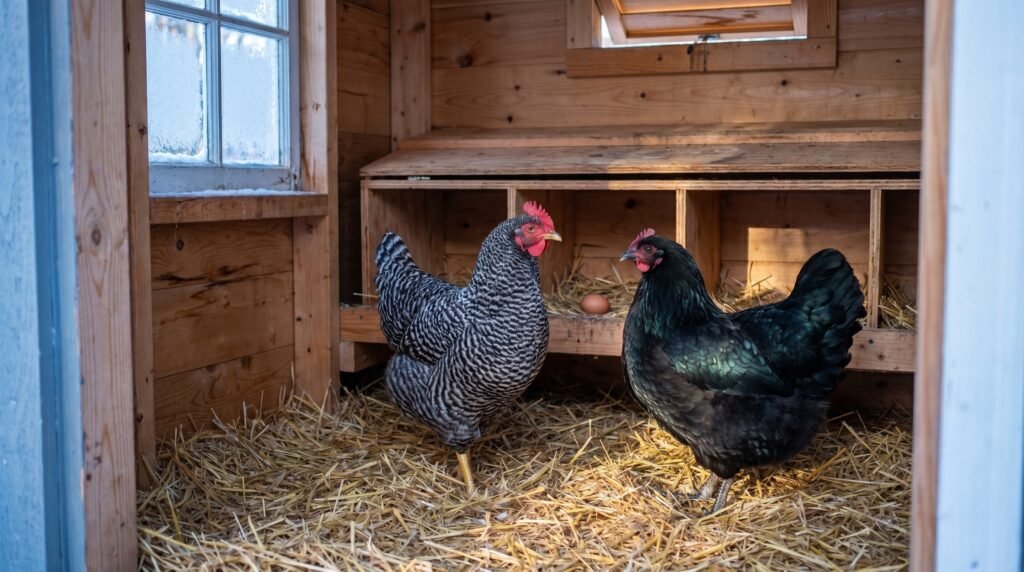
- Black Australorp. Cackle Hatchery estimates 250-280 light brown eggs per year, and notes they have "a strong reputation as winter layers, which makes them especially useful when shorter days slow down many other hens." The historical numbers are staggering: in a 1922-23 trial, six Australorp hens averaged 309.5 eggs each over 365 consecutive days, and one individual hen laid 364 eggs in 365 days. Modern hatchery Australorps won't match that. Those records were set without artificial lighting and with far stricter selection pressure. The breed's winter-laying ability is still genuine and well-established.
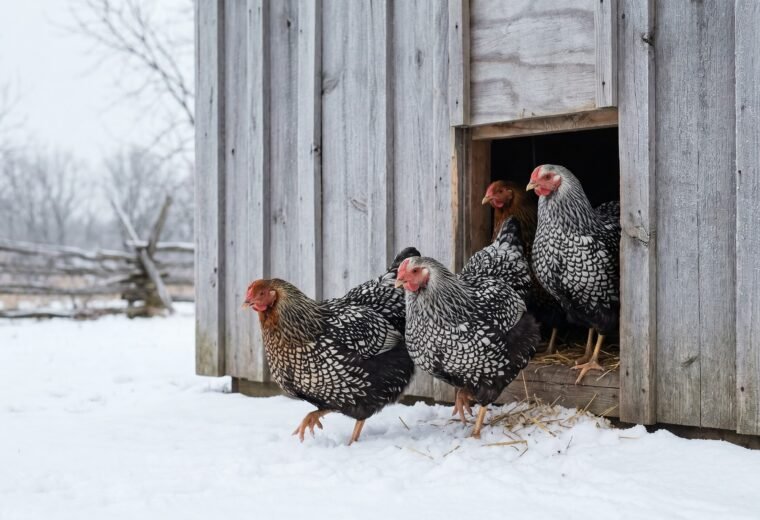
- Barred Plymouth Rock. Hoover's rates them at 250 large brown eggs per year and notes that "with a New England heritage, they do not let winter blizzards interrupt laying." They are calm and docile (5-6 lbs), cold and heat hardy, and are consistently recommended as a beginner breed for exactly those reasons.
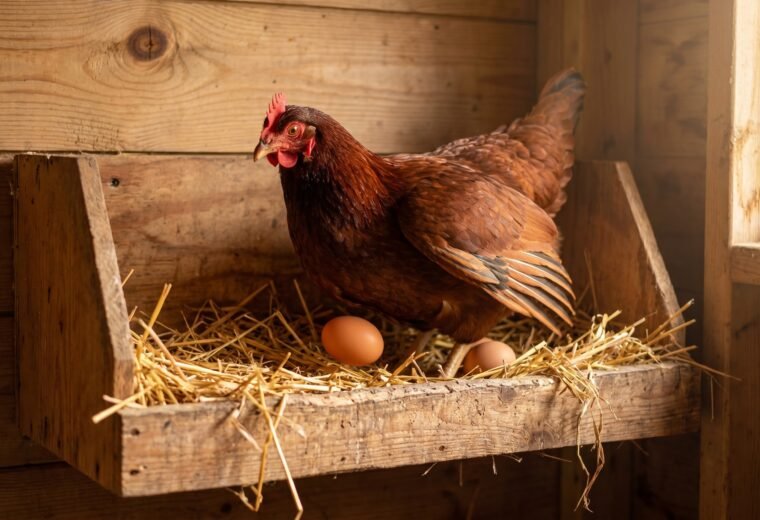
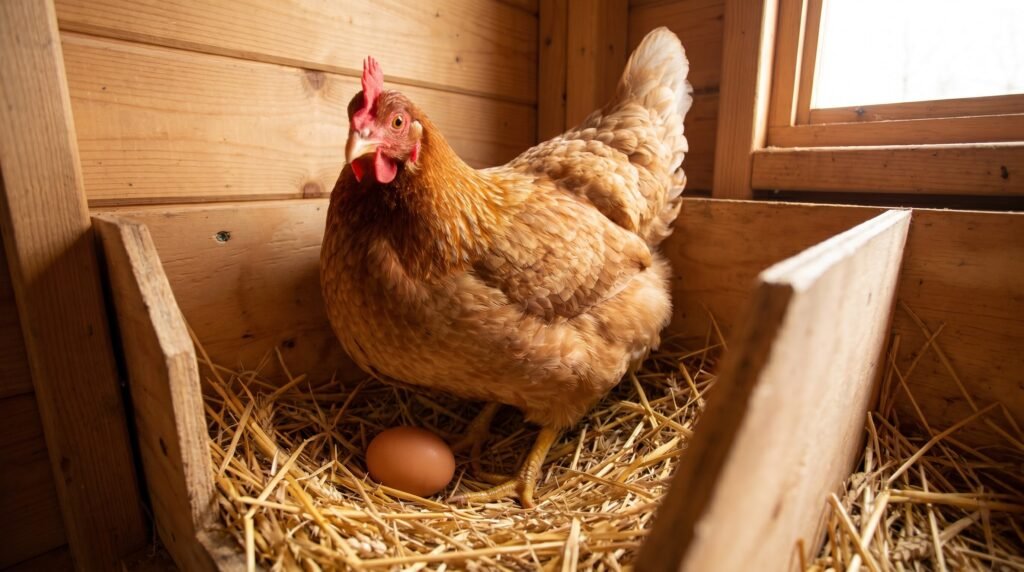
- Rhode Island Red. Cackle Hatchery estimates 200-280 large brown eggs per year. One of the most field-tested breeds in North American backyard poultry: reliable, wide-climate-range, and quick to lay (one keeper reported a first egg at 21 weeks). Single combs are a frostbite risk in severe cold, and rooster temperament can be assertive; hens are generally manageable.
- Buff Orpington. Hoover's lists 220 medium brown eggs per year. Fewer eggs than the breeds above, but the temperament makes up for it: "Docile, Calm, Gentle, Friendly" is Hoover's description, and it is accurate. The dense feathering handles cold well. They are the standard recommendation for families with young children or keepers who want a flock that is genuinely easy to handle.
Blue and green eggs
Easter Eggers are the practical route here. Cackle Hatchery lists them at 200-280 eggs per year, in colors ranging from "pale blue to darker blue, various shades of green, and occasionally light brownish or pinkish tones." One thing that surprises new keepers: each hen lays one consistent shell color throughout her laying life. A single Easter Egger will always lay the same color. A flock of 20 Easter Eggers, though, can produce a genuinely varied carton spread across several shades. You just need multiple birds, not multiple colors from one bird.
The Araucana-Ameraucana-Easter Egger distinction that feed stores often blur gets a full breakdown by breed and shell-color genetics in that linked piece.
Dark chocolate-brown eggs
Welsummers and Marans occupy this space. Cackle Hatchery rates Welsummers at 200-280 eggs per year, with "large dark brown to reddish-brown eggs" that often carry "darker speckles." Color intensity can vary from hen to hen and through the laying season. Hoover's Midnight Majesty Marans hybrid is listed at 250 large dark brown eggs per year, with a "Calm, Friendly" temperament and cold-and-heat-hardy rating. For traditional Marans lines, hatchery breed descriptions generally place production at around 150-180 eggs per year (see Cackle Hatchery's Marans page for current figures). Both breeds are lower-output than the brown-egg heritage breeds above, but for keepers who specifically want the darkest-shelled eggs available, they are the options worth considering.
Climate fit: what actually matters
Comb style is the best single predictor of cold hardiness. Single combs (tall, with multiple upright points) carry more exposed tissue and are the most vulnerable to frostbite in hard freezes. Rose combs and pea combs sit closer to the skull and resist frostbite without any special management. Welsummers carry a single comb, as do Rhode Island Reds - both breeds share the same frostbite exposure in hard freezes. Cackle Hatchery specifically flags that Welsummers "should have a dry, well-ventilated, draft-free coop in freezing weather to help reduce frostbite risk." That guidance applies equally to Leghorns and RIRs in severe cold climates.
Body mass is the key variable for heat tolerance. Light, lean breeds (Leghorns, Easter Eggers) handle summer heat much better than heavy, full-feathered birds. The Australorp is an excellent layer but needs shade and cool water in high heat; Cackle Hatchery notes: "In hot weather, give them shade, airflow, and plenty of cool water so they do not overheat." Buff Orpingtons need the same consideration in sustained high temperatures, despite their "Cold and Heat Hardy" rating from Hoover's.
For keepers in cold climates specifically, the Barred Plymouth Rock is the strongest single pick: cold and heat hardy, 250 eggs per year, calm temperament, and a New England heritage that bred winter resilience into the strain. The Australorp is a close second specifically for winter laying ability.
Keepers in northern zones will find deeper breed-level ratings on comb types, body mass, and winter laying performance; those managing summer heat can compare options across heat-tolerant breeds by breed size and feathering.
Production hybrids vs. heritage breeds: the honest tradeoff
Sex-link hybrids front-load their output. A Golden Comet or Red Star typically starts laying between 18 and 22 weeks - earlier than most heritage breeds - peaks fast, and holds high numbers through the first two seasons. After that, production drops harder than it does in heritage breeds. Commercial-type hens deliver a higher level of production initially, but other breeds tend to lay for more years, as poultry.extension.org documents. University of Minnesota Extension adds that hens can continue for five to ten years, but peak production concentrates in the first two.
What that means in practice: many keepers running a hybrid flock plan to rotate birds every two to three years to maintain output. Heritage breeds like the Barred Rock or Australorp decline more gradually. The longevity math is worth running: a hybrid producing 320 eggs in year 1, 250 in year 2, and 150 in year 3 gives roughly 720 eggs over three seasons. A heritage breed at 250 eggs per year, declining more slowly to 240, 220, 200, and 180 across five seasons, gives around 1,090. The totals diverge meaningfully once you count the full flock life rather than just peak-year output - hybrid year-one output is higher, but heritage breeds hold the multi-year cumulative lead.
Feed efficiency is another variable the year-one comparison misses. A White Leghorn or Red Star converts feed to eggs more efficiently than a 6-7 lb Buff Orpington or Australorp. Heavier breeds eat more per egg produced, which shows up in cost-per-dozen math across a season. For small flocks where feed cost is a real budget item, that difference matters: a light, efficient hybrid can produce more eggs on the same feed bill than a heavier heritage bird even at similar annual egg counts.
There is a flock-dynamics dimension too. The calm heritage breeds (Barred Rock, Buff Orpington) integrate more easily when you introduce new birds, and they handle beginner management mistakes with less stress response. Stress suppresses laying. A bird that is docile in a disrupted flock often lays more consistently than a higher-rated bird in the same conditions.
Breeds built for both eggs and table use - the ones not covered by pure-layer rankings above - are compared by body weight and production figures in the dual-purpose breeds breakdown.
The factor most breed lists skip: light
Breed genetics set the ceiling. Light determines whether you ever reach it. Laying hens need at least 12 to 14 hours of light each day to keep producing, a threshold University of Minnesota Extension documents. Penn State Extension goes further for sustained production: "For mature laying hens, aim for 16 hours of light per day."
Without supplemental coop lighting in fall and winter, even the highest-rated breeds will slow or stop laying as natural daylight drops. That is a normal hormonal response, not a breed failure. The fix is simple: a low-wattage LED bulb on a timer, set to come on in the early morning before sunrise. Gradual changes work best; Penn State recommends increasing the photoperiod by no more than one hour per week.
Whether to use supplemental light at all is a legitimate choice. Letting hens go through a natural winter rest supports long-term laying health; running artificial light year-round can accelerate the reproductive decline that comes with age. Neither approach is wrong, but it is worth understanding what you are trading. University of Minnesota Extension summarizes the natural cycle: "Egg production drops each year when the hens molt (replace their feathers in the early fall) and as daylight hours are lost." That annual fall in output is expected, not a sign of a sick flock.
Realistic seasonal egg counts by flock size put breed-table numbers in context across a full year. When output drops unexpectedly, every common cause from molt to stress to disease is covered in order of likelihood.
Quick picks by situation
- Maximum eggs, full stop: White Leghorn (~280-320/year) or Red Star sex-link (280-365/year)
- Maximum eggs from a heritage breed: Black Australorp (250-280/year) or Barred Plymouth Rock (~250/year)
- Best for beginners or families with kids: Buff Orpington (~220/year) or Barred Plymouth Rock (~250/year)
- Colorful egg basket (blue/green): Easter Egger (200-280/year)
- Darkest egg shells: Midnight Majesty Marans (~250/year) or Welsummer (200-280/year)
- Best cold-climate winter layer: Black Australorp or Barred Plymouth Rock
- Best for hot climates: White Leghorn or Easter Egger
If you are still deciding on your first breed or first flock, breed picks matched to beginner setup realities pair these production figures with coop size, handling needs, and starter costs. The broader chicken breeds index reaches well beyond the top-layer tier covered here.