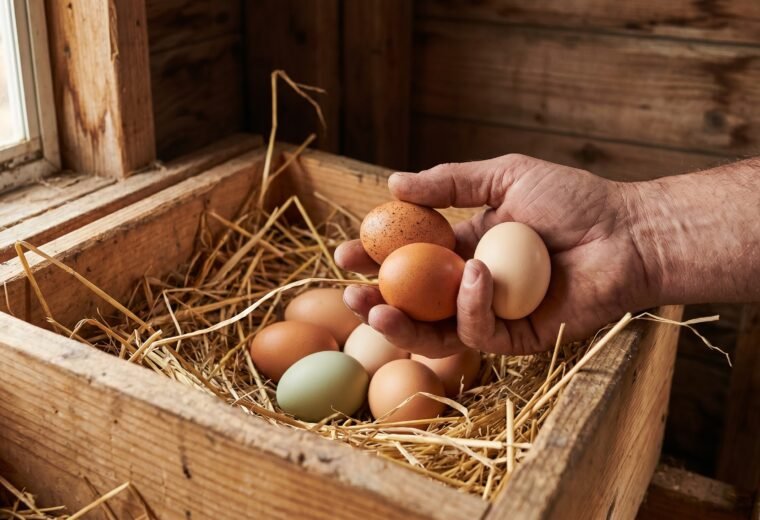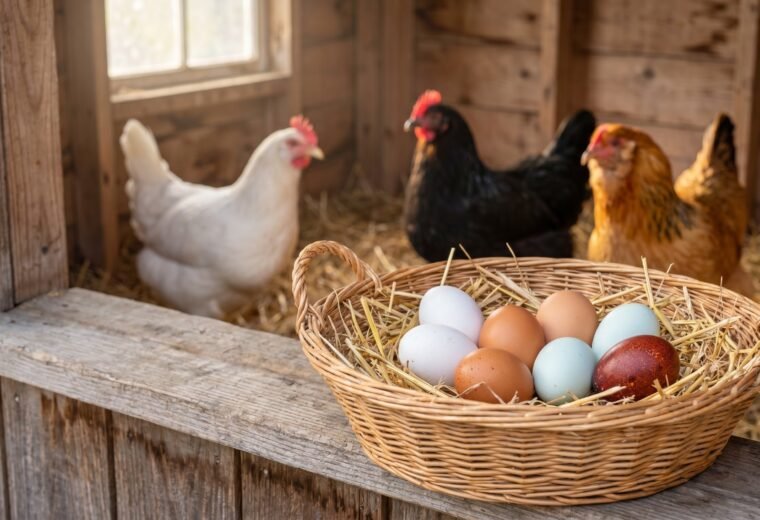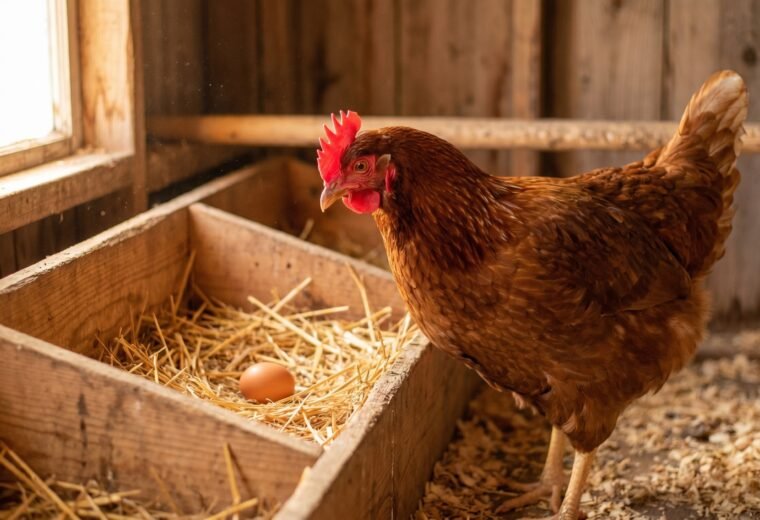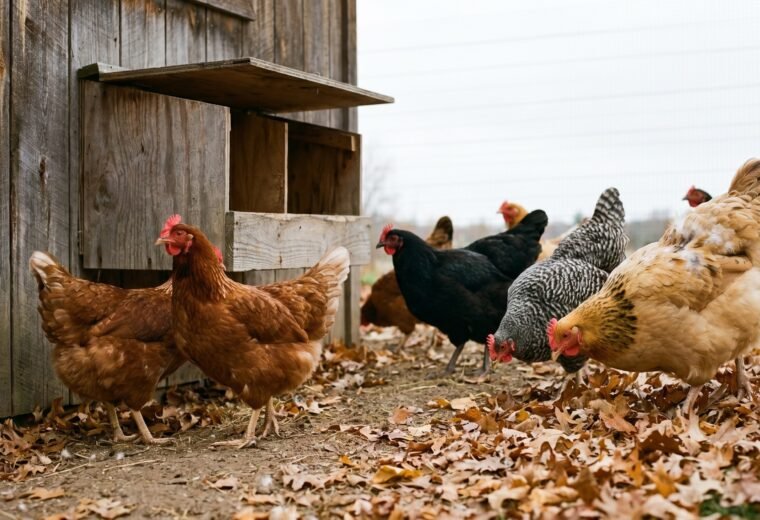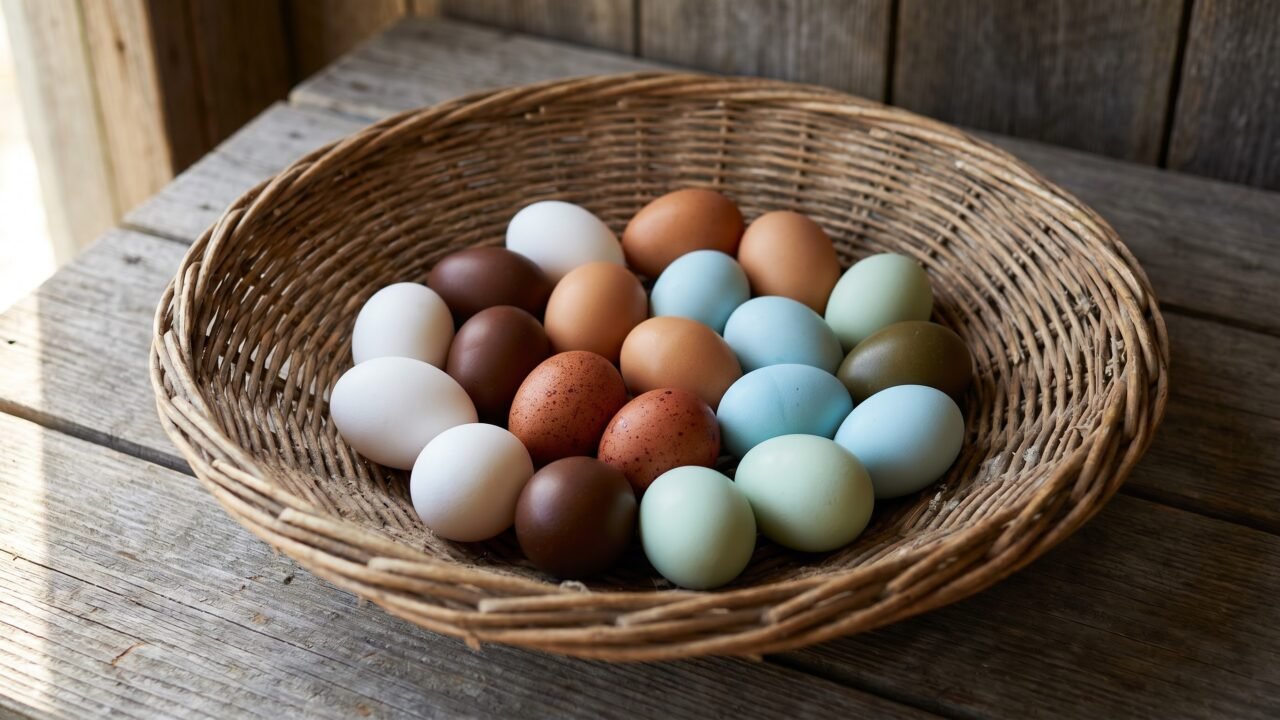
Crack open a blue Ameraucana egg and the inside of the shell is blue too. Crack a brown Rhode Island Red egg and the interior is white. That single observation tells you almost everything about why chicken eggs come in so many colors - and it comes down to two pigments, where they land, and which gene the hen carries.
Every eggshell starts as white calcium carbonate. Color is added during the 24 to 26 hours the shell spends forming in the shell gland (uterus) of the oviduct, and the pigment that gets deposited - and when - determines what you find in the nest box. All eggs start out white; those that end up any other color receive pigment as the egg travels through the oviduct, Michigan State University Extension explains.
What two pigments produce every chicken egg color?
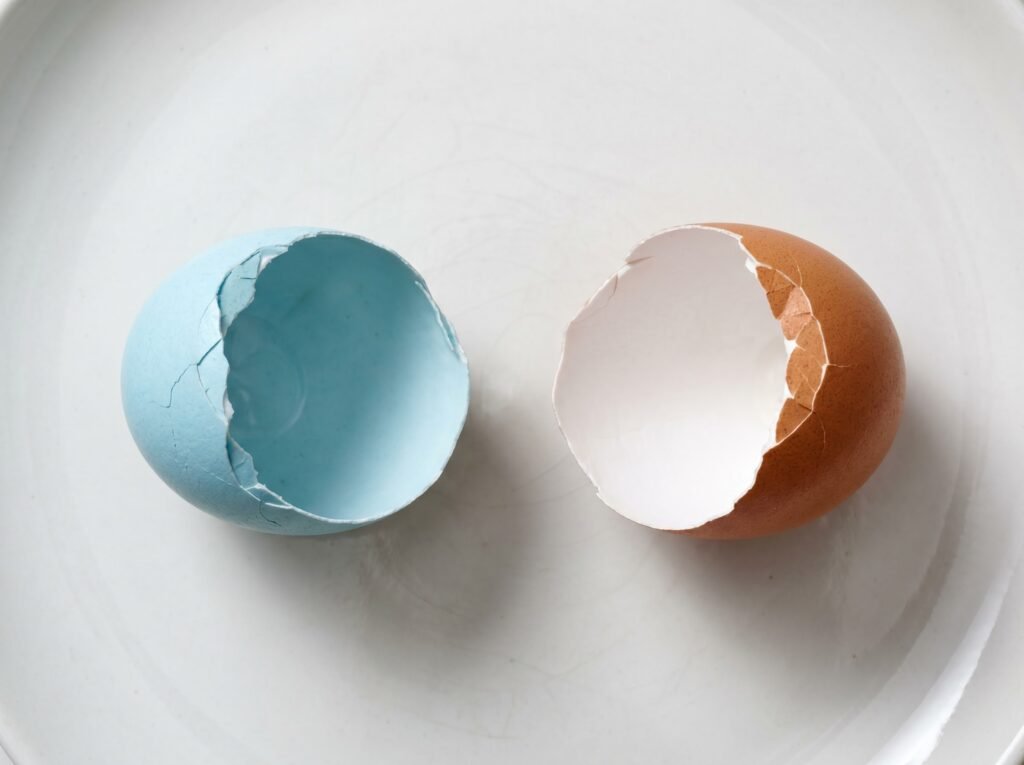
Only two pigments produce the entire chicken-egg color spectrum: protoporphyrin-IX (the brown pigment) and biliverdin/oocyanin (the blue pigment). Every shade from cream to chocolate to olive to sky blue is some combination or absence of those two compounds. Brown sits in the outermost cuticle only; blue soaks all the way through the shell matrix from inner membrane to outer surface.
Protoporphyrin-IX is responsible for brown shells. It is the most abundant pigment in commercial brown-shelled eggs, according to UF/IFAS Extension's publication on eggshell pigmentation. It is deposited during the last 3 to 4 hours of shell formation, sitting primarily in the cuticle - the outermost coating. Because the pigment never works its way inward through the calcite layer, the interior of a brown egg is always white. This surface-only layering also explains why the color of a brown egg fades over a hen's laying cycle: the cuticle wears, the hen ages, and pigment intensity decreases with age - a pattern documented by UF/IFAS Extension. Stress, illness, and certain medications can accelerate the fade.
Biliverdin (oocyanin) works differently. Unlike protoporphyrin, biliverdin is deposited early in shell formation and soaks all the way through the calcium carbonate matrix - so the interior and exterior of the shell end up the same blue color. A blue egg cut in cross-section is blue from outer surface to inner membrane.
The genetic driver behind blue eggs is a dominant gene called oocyan, caused by an ancient retroviral insertion. A 2013 study in PLOS Genetics identified the mechanism: a retrovirus called EAV-HP inserted near the gene SLCO1B3, causing massive overexpression in the shell gland - roughly 19-fold higher than in non-blue-egg hens - and about 180-fold higher in the oviduct. The result is a flood of biliverdin transported into the developing shell. Two copies of the gene (homozygous) produce a deeper, more saturated blue than one copy (heterozygous), which is why two hens of the same breed can lay noticeably different shades.
How do green and olive eggs form?
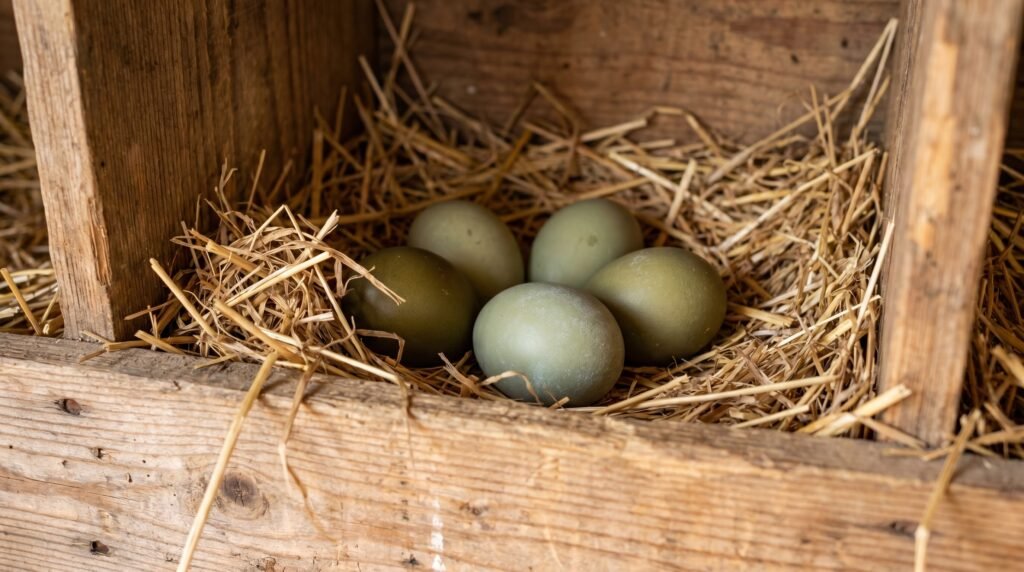
Green and olive eggs are not produced by a third pigment - they result from blue biliverdin in the shell base with brown protoporphyrin layered on top. The more brown in the mix, the darker the olive. A brown pigment overlaying a blue shell is what produces a green egg. A light-brown gene over blue gives sage or mint; a heavy-brown gene from Marans or Welsummer parentage gives a rich, dark olive.
Dedicated Olive Egger lines are produced by crossing a dark-brown-egg rooster with a blue-egg-laying hen. The first generation (F1) reliably inherits one copy each of the oocyan and brown-producing genes, making consistently olive eggs. Second-generation crosses can vary more widely. Hoover's Hatchery rates their Olive Egger at 260 large olive eggs per year, while their Starlight Green Egger reaches 280 large green eggs per year - with a noted 5% chance that any individual hen lays brown eggs instead due to hybrid variability.
Why do white eggs have no color?
White eggs carry neither pigment in meaningful quantities - no protoporphyrin, no biliverdin. The shell stays the natural calcium-carbonate white it started as before entering the oviduct. The Kenyon MicrobeWiki review of egg-color genetics confirms that "white eggs have very little protoporphyrin," and no biliverdin pathway is activated in the shell gland of white-egg breeds.
White Leghorns are the commercial standard. Production strains typically average 250-300 eggs per year, with top lines at the higher end of that range - consistently the highest output of any single breed. Commercially, white-shelled eggs in grocery stores overwhelmingly come from White Leghorns or Leghorn-derived hybrids, which is why brown eggs often carry a "farm-fresh" premium in retail markets even when the nutritional content is identical. Ancona, Hamburg, and California White are other consistent white-egg breeds, all high-production Mediterranean types.
Can you predict egg color from a hen's earlobe?
Roughly, yes - white earlobes usually signal white eggs, darker earlobes usually signal brown or colored eggs. White earlobes generally mean white eggs, the rule Texas A&M AgriLife Extension's poultry team uses as a starting point. It is a useful quick-read for common production breeds, but it breaks down with Easter Eggers, Araucanas, and most hybrids, so treat it as a guideline, not a guarantee.
Crosses, hybrids, and a few heritage breeds break it cleanly. Easter Eggers often have reddish earlobes yet lay blue or green eggs. Araucanas carry the oocyan gene regardless of earlobe color. A hen's genetics, not her earlobe alone, determine what ends up in the nest box - and color is fixed for life. Whatever she produces in her first weeks of laying is the color she will always produce, Texas A&M AgriLife Extension confirms.
Which breeds lay which egg color, and how many eggs a year?
The table below covers 16 breeds and hybrids commonly available to backyard keepers, organized by shell color from white through to olive. Each row includes an annual egg estimate and a brief note on the breed. Production figures are hatchery estimates under good conditions - actual output varies with feed, daylight, age, and flock management.
The best egg-laying breeds article ranks the top producers by annual output, and the breed chart adds temperament and cold-hardiness next to those same egg figures.
| Breed | Shell color | Estimated eggs/year | Notes |
|---|---|---|---|
| White Leghorn | Bright white | 250-300 (production strains up to ~280-300) | The commercial standard; prolific but flighty |
| Ancona | White | 200-220 (estimate, varies by hatchery) | Active Mediterranean breed |
| Rhode Island Red | Medium brown | 250-300 | Dependable dual-purpose classic |
| Black Australorp | Light brown | 250-280 | Record-breaking layers; docile temperament |
| Barred Plymouth Rock | Brown | 200-280 | Hardy, calm dual-purpose breed; production strains reach the higher end |
| Welsummer | Dark reddish-brown, often speckled | 200-280 | Speckles vary; color fades through season |
| Cuckoo Marans | Dark brown, speckled | 200 | Easier to source than Black Copper; lighter than French varieties |
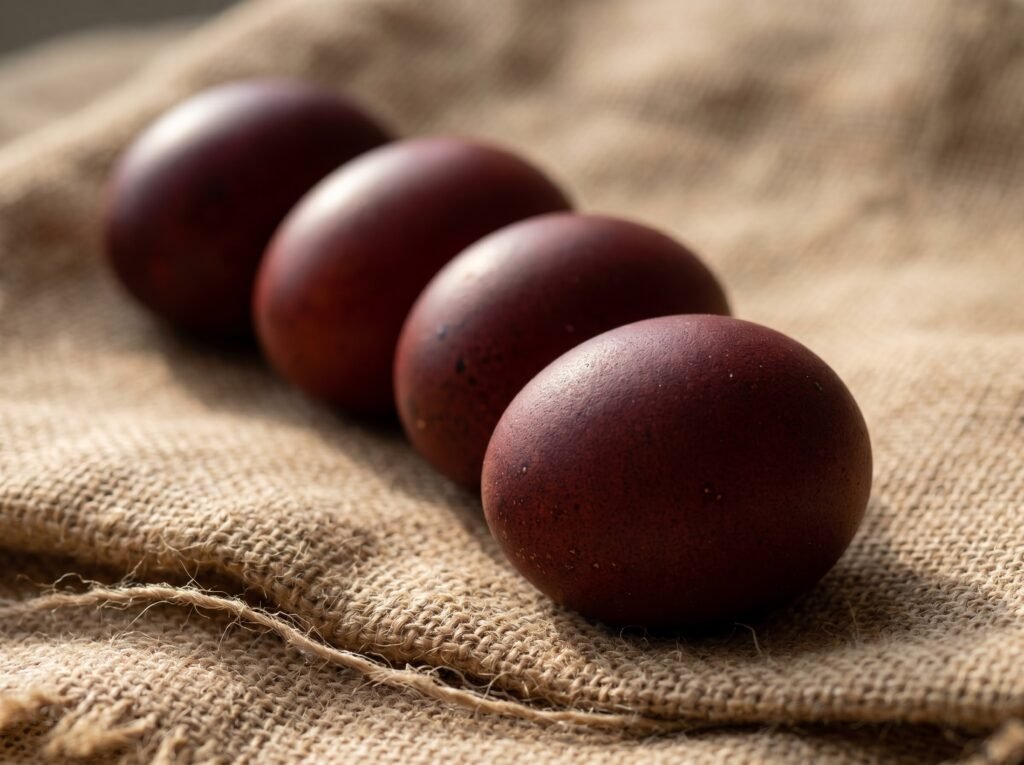
| French Black Copper Marans | Deep chocolate brown (#4-#6 Marans scale) | 200+ | Darkest eggs widely available; production lower than most |
| Barnevelder | Dark brown, double-laced | 160 | Beautiful bird; modest output |
| Ameraucana | Blue to blue-green | ~200-250 (estimate, varies by hatchery) | True breed; color depth varies by copy of oocyan gene |
| Araucana | Blue | ~150-200 (estimate, varies by hatchery) | Tufted, rumpless; lethal gene reduces hatch rate |
| Cream Legbar | Minty blue to aqua | 180-200 | Auto-sexing; some hens shade toward blue-green |
| Prairie Bluebell Egger (hybrid) | Medium blue | 240 | Hoover's production blue-egg hybrid |
| Easter Egger (Americana) | Blue, green, olive, occasionally cream/brown | 240 | Color varies hen to hen; no two lay identical shades |
| Starlight Green Egger (hybrid) | Green | 280 | 5% of hens may lay brown; high production |
| Olive Egger (hybrid) | Olive to dark olive | 260 | Darker olive requires dark-brown-egg parent |
How do you build a flock that lays every egg color?
Pick one or two breeds from each color group - white, light brown, dark brown, blue, and olive - and you will cover every shade in the spectrum. A 12-hen flock with that spread produces approximately eight to ten eggs a day at peak lay in peak season and a basket that reads like a paint swatch. The key planning decisions are balancing volume layers against specialty layers, and accounting for the color variability inherent in hybrids.
One straightforward combination that works well in practice: four reliable brown-egg layers (Rhode Island Reds or Australorps for volume), two dark-egg birds for the chocolate corner (French Black Copper Marans or Welsummers), two dedicated blue layers (Cream Legbars or a blue-egg hybrid), two Easter Eggers for the green-to-olive range, and two White Leghorns if white eggs matter to you. Expect fewer eggs in winter months and during any molt, even from otherwise prolific breeds.
When we put together a similar mix with Cream Legbars and a Cuckoo Marans trio, the Legbar eggs came out a noticeably lighter aqua than the hatchery photos suggested - something worth factoring in if you are chasing a specific blue shade rather than any blue egg.
A few things to plan around before ordering chicks:
- Easter Eggers and Olive Eggers are hybrids - each hen picks her own color from within the range, and you cannot predict which individual will land where. Buy more than you think you need if a specific shade matters.
- Dark-brown-egg production, especially from Marans, trades volume for color. Their 200+ egg range still sits noticeably below an Australorp at 250-280, and individual hens often land at the lower end of that band. If total output is the priority, weight the flock toward volume layers and use one or two Marans purely for the aesthetic.
- Blue egg depth scales with gene copies. A homozygous Ameraucana lays a deeper blue than a heterozygous bird from the same breeder. Hatcheries rarely sort for this, so expect some variation even within a single breed order.
- Shell color does not change nutritional content. Texas A&M AgriLife's poultry research team confirms there are "no major differences in taste or nutritional composition" across egg colors. The shell is purely genetics; what matters nutritionally is diet and housing, not the pigment.
The egg fundamentals guide picks up where this article leaves off - laying cycles, storage rules, and the seasonal output swings your multicolor flock will go through.
Why do brown and speckled eggs fade through the season?
Brown and speckled eggs fade because protoporphyrin - the pigment responsible for brown shells - depletes over a hen's laying cycle. The hen produces the most concentrated pigment at the start of a new cycle, after a molt. By mid to late season, the same hen can lay eggs noticeably lighter than those she started with, and this is entirely normal.
A Marans hen that laid near-black chocolate eggs in February may produce noticeably lighter russet eggs by July. The protoporphyrin supply depletes over a laying cycle, stress depletes it faster, and age depletes it permanently. This surprises a lot of first-season keepers who suspect illness or a different bird using the nest - it is neither. If dark color is the goal, expect this seasonal variation and plan to cull or retire your darkest-laying birds after two seasons rather than three.
Welsummer speckles also fade on the same timeline. The spots are concentrations of protoporphyrin applied in the final minutes before lay; once depleted, they lighten or disappear mid-season even on the same individual hen.