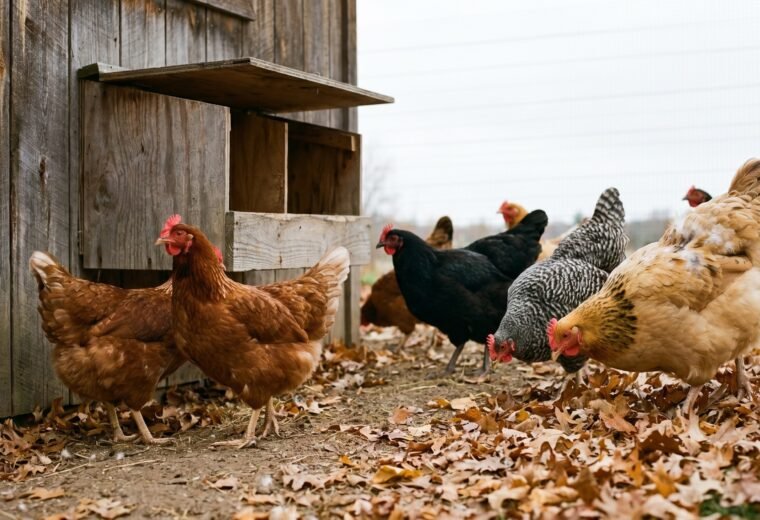
Sixteen weeks. That is the earliest a fast-maturing hybrid pullet is likely to drop her first egg, and it catches a lot of new keepers off guard because the chick still looks small. Most backyard flocks land somewhere between 18 and 24 weeks, and heavy heritage breeds can push past 28 weeks before a single egg appears. The spread is wide enough that "when?" is one of the most frequently asked questions we get from keepers with a coop full of growing pullets and empty nesting boxes.
The short version: breed is the single biggest variable. Light comes second. Everything else - feed, space, stress - either supports or slightly delays the timeline that breed has already set.
How does breed determine when a hen starts laying?
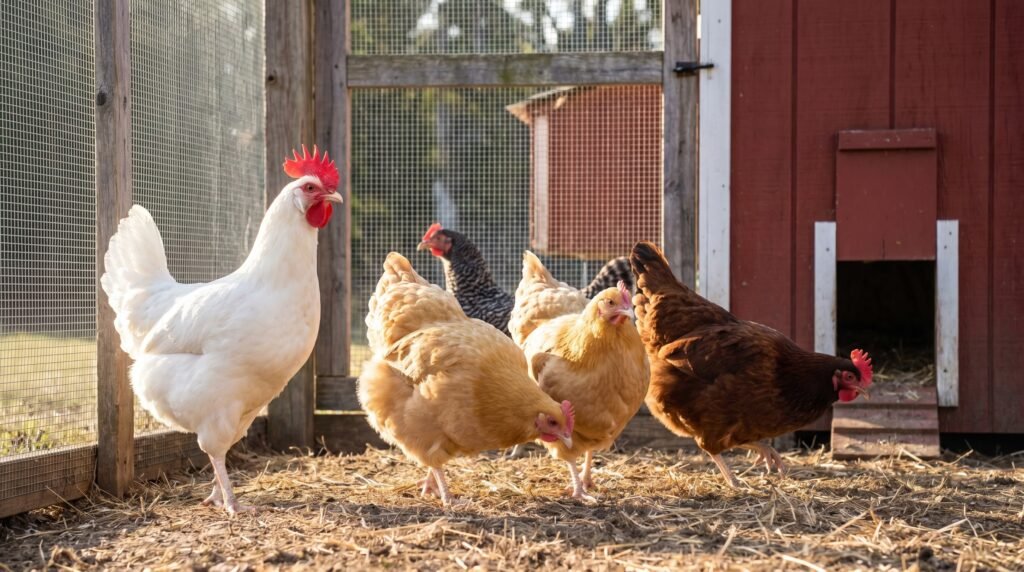
Breed is the single largest factor in laying age. Fast-maturing hybrids like Red Stars and Golden Comets can lay as early as 16 weeks; mid-weight breeds such as Rhode Island Reds start at 20 to 24 weeks; and heavy heritage breeds like Cochins and Brahmas routinely wait until 28 to 32 weeks. Light and nutrition can shift these windows slightly, but breed sets the baseline.
Production-bred hybrids were selected specifically for early, high-volume laying. A Red Star or Golden Comet can start as young as 16 weeks and regularly hits 250-plus eggs in her first year. White Leghorns follow closely, often laying by 17 or 18 weeks. These birds are lean, fast-maturing, and built for output.
Mid-weight dual-purpose breeds take longer. Rhode Island Reds, New Hampshires, and Sussex hens typically start at 20 to 24 weeks. They are still solid layers - 200 to 280 eggs per year is a realistic range - but their bodies put more into frame and muscle before the reproductive system ramps up.
Heavy heritage breeds operate on their own schedule. Buff Orpingtons and Wyandottes typically start at 26 to 30 weeks. Cochins and Brahmas are the slowest of the common backyard breeds, with most birds coming into lay between 28 and 32 weeks, and some individuals not laying reliably until eight months. The tradeoff is that many heritage breeds maintain usable production for more years than a commercial hybrid will.
The table below groups common backyard breeds so you can set a realistic expectation for your flock. Ranges reflect normal variation within each breed, not a guarantee.
| Breed group | Typical first egg | Annual egg estimate | Egg color |
|---|---|---|---|
| Hybrids (Red Star, Golden Comet, Black Sex-Link) | 16-18 weeks | 250-320 | Brown or light brown |
| White Leghorn | 17-18 weeks | 250-320 | White |
| Australorp | 16-20 weeks | 200-280 | Brown |
| Rhode Island Red, New Hampshire, Delaware | 20-24 weeks | 200-280 | Brown |
| Easter Egger, Sussex | 20-26 weeks | 180-280 | Blue/green or light brown |
| Wyandotte, Welsummer | 24-28 weeks | 180-260 | Brown or speckled |
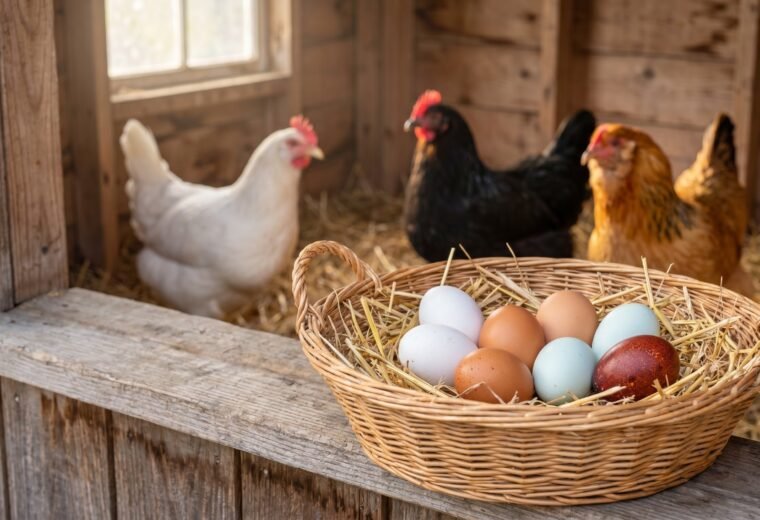
| Buff Orpington, Marans, Ameraucana | 26-30 weeks | 150-280 | Brown, dark brown, or blue |
| Brahma, Cochin | 28-32 weeks | 130-160 | Brown |
Annual egg estimates compiled from hatchery breed pages; individual results vary by management, climate, and genetics.
If you want to dig deeper into which breeds suit your priorities, our overview of the best egg-laying breeds covers production rates, temperament, and cold-hardiness side by side.
What are the signs that a pullet is about to start laying?
Watch for four reliable signals in the two to three weeks before the first egg: the comb deepens to a full, glossy red; she performs the submissive squat when you approach; she explores and sits in nesting boxes without laying; and her feed intake visibly increases. Seeing all four together means eggs are likely within one to two weeks.
Pullets do not just suddenly start laying. Several physical changes happen in the two to three weeks before the first egg, and once you know what to look for, the wait becomes surprisingly precise.
Comb and wattles turn red. A pullet's comb sits pale pink or yellow-pink through most of the growing phase. As her reproductive hormones climb, the comb and wattles enlarge and deepen to a full, glossy red. University of Wisconsin Extension describes a ready-to-lay bird's comb as "large, bright red and glossy" that should "feel velvety soft and warm when touched." A dull, cool, or pale comb almost always means she is weeks away still.
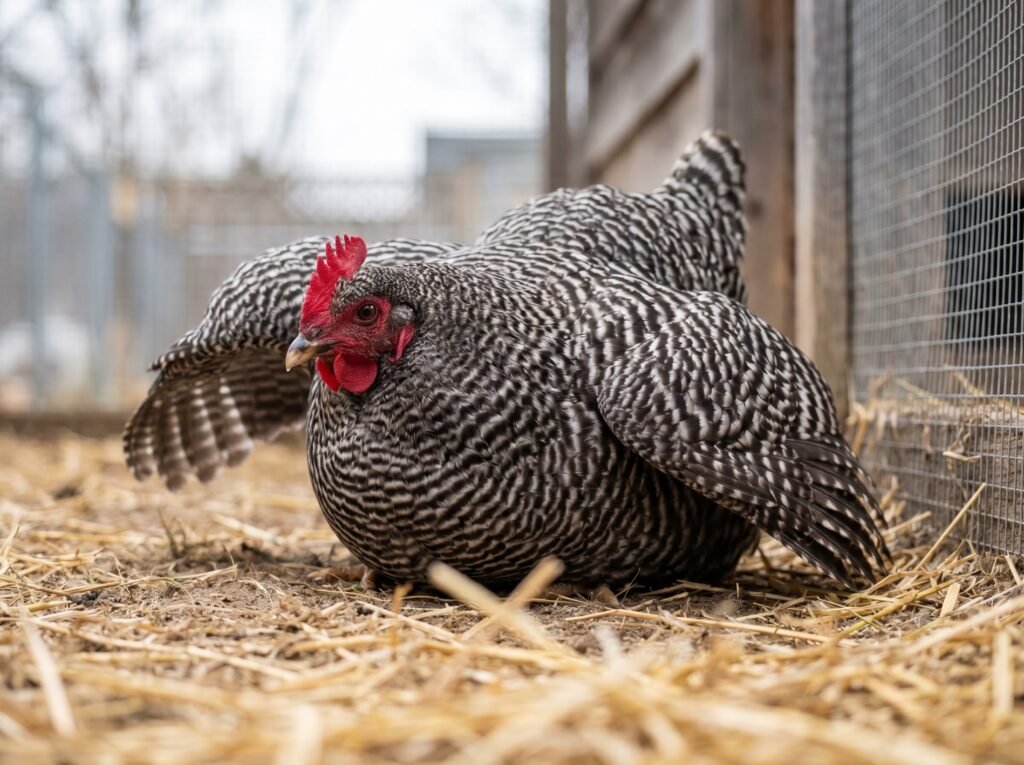
She squats when you approach. The submissive squat - dropping low with wings held slightly out when a hand or a rooster comes near - is an instinctive mating response that kicks in when hormones reach a threshold. Most hens start squatting roughly one to two weeks before the first egg. Keeper reports consistently name the squat as the single most reliable individual predictor: a bird who squats on Monday typically lays by the following weekend, sometimes sooner.
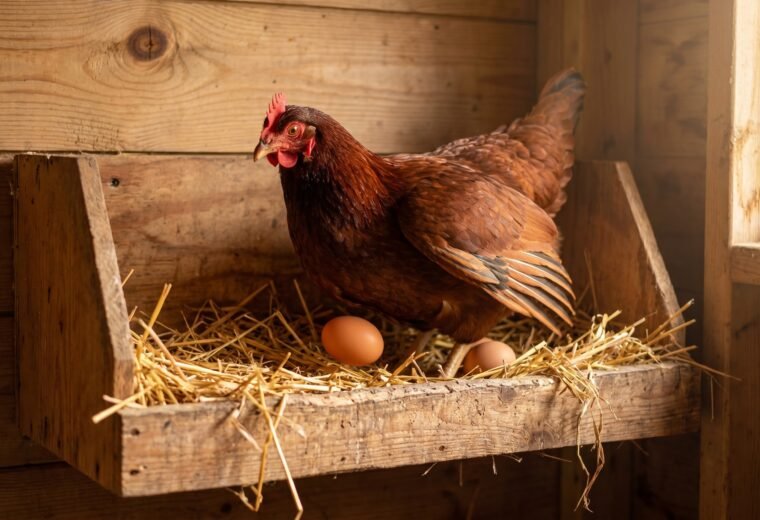
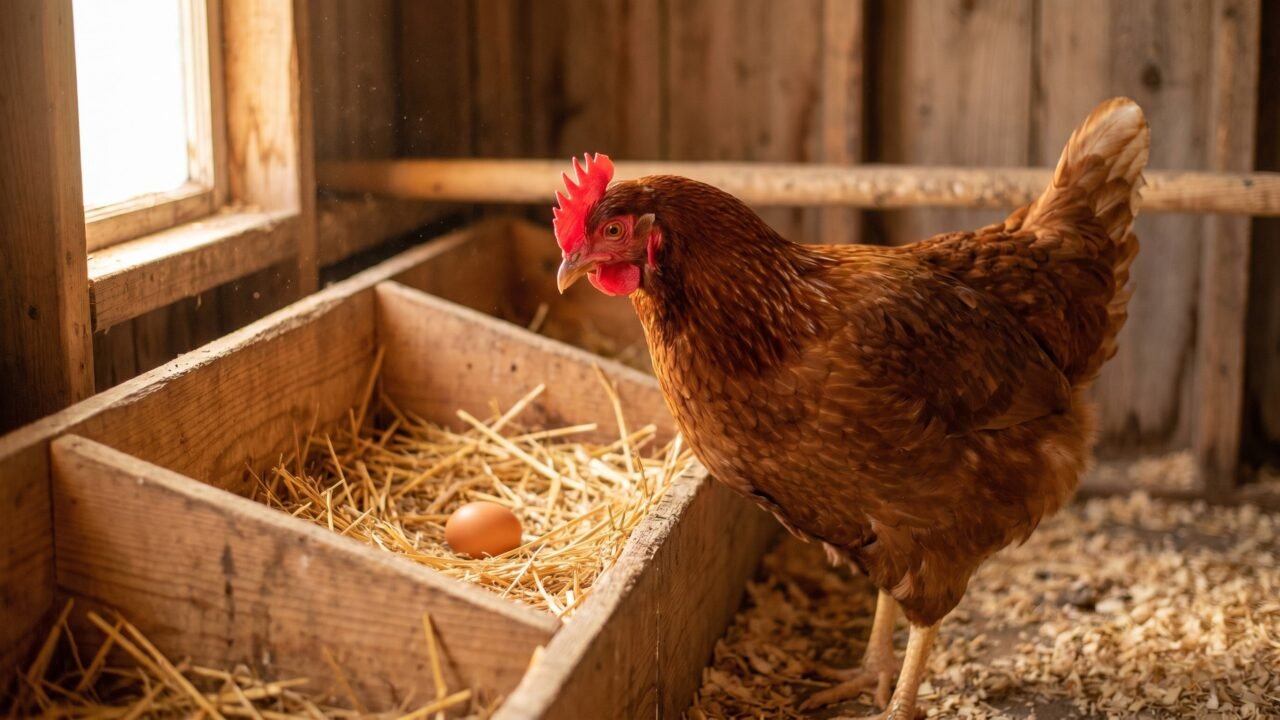
She explores the nest boxes. Pullets getting close to point-of-lay will walk in and out of nesting boxes, rearrange the bedding, and sit in them without actually laying. This is normal nesting instinct. Make sure boxes are clean, bedded, and slightly dim - hens prefer privacy. Sizing matters too; each box should be roughly 12 by 12 inches. Our nesting box guide covers dimensions, placement height, and bedding choices.
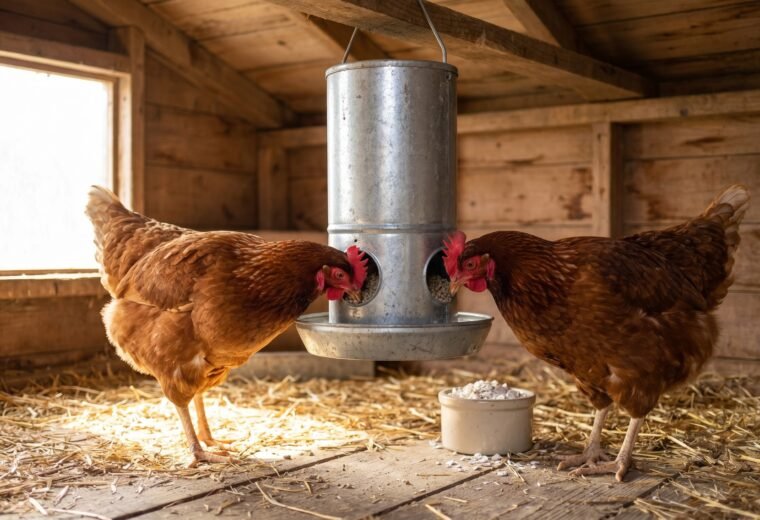
Feed intake jumps. The body is gearing up to produce an egg every 25 to 26 hours. A pullet approaching point-of-lay will eat noticeably more. If your feeder is emptying faster than it did two weeks ago, that is a useful signal.
What else controls when the first egg arrives?
After breed, light and nutrition are the two levers that matter most. Pullets maturing under fewer than 12 to 14 hours of daily light can have their first egg delayed by weeks. Feeding layer ration too early - before 18 to 20 weeks - can damage kidneys without accelerating laying. Both factors are fully within a keeper's control.
Two things can push the first egg earlier or later than a breed's typical range: light and nutrition.
Light is the lever. Hens need a minimum of 12 to 14 hours of light per day to trigger and sustain laying. Penn State Extension recommends 14 to 16 hours for maximum year-round production. Chicks hatched in late winter or early spring naturally mature as day length grows, which helps them hit point-of-lay right on schedule. A flock hatched in July, on the other hand, is maturing just as day length drops below 14 hours in the fall - and that shorter photoperiod can delay or even suppress the first eggs by weeks.
The fix is a simple incandescent or LED bulb in the coop, set on a timer to bring the total light period to 14-16 hours. Penn State's guidance is to use warm-white bulbs (under 3500K, which matches the orange-red wavelengths chickens use for reproduction) and keep intensity low - as little as half a foot-candle (about 5 lux) is enough to stimulate the photoperiod response. Add the light in the early morning, before sunrise, so the natural sunset still sends birds to roost.
One hard rule: once you start supplemental lighting, do not cut it back. Penn State Extension states plainly that "never decrease the lighting period on birds in production, or they will stop laying." Gradual changes - no more than one hour per week - prevent stress responses like restlessness or soft-shelled eggs.
Feed matters, especially calcium. Growing pullets need a grower or developer feed (14-15% protein) until they approach laying age. Switching too early to layer feed is a common and damaging mistake. Layer rations contain 2.5 to 3.5% calcium - roughly triple the amount in grower feed - and feeding that calcium load to kidneys that are not yet producing eggs can cause kidney damage. Hold the layer feed until you see the signs above or until around 18-20 weeks, whichever comes first. Our layer feed guide walks through the exact transition, protein requirements, and when to add free-choice oyster shell.
What should you expect from a pullet's first eggs?
The first eggs are rarely perfect, and that is normal. Expect them to be noticeably small, possibly thin-shelled or soft, and irregularly timed. You may also see the occasional yolk-less "fart" egg or an oversized double-yolk egg. All of these quirks resolve on their own within six to eight weeks as the oviduct matures and the laying cycle stabilizes.
First eggs from young pullets are rarely textbook-perfect. Knowing what is genuinely normal saves a lot of unnecessary worry.
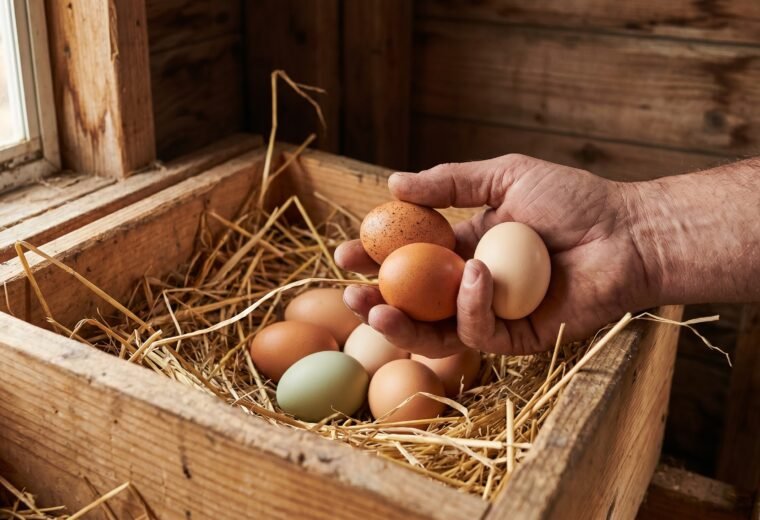
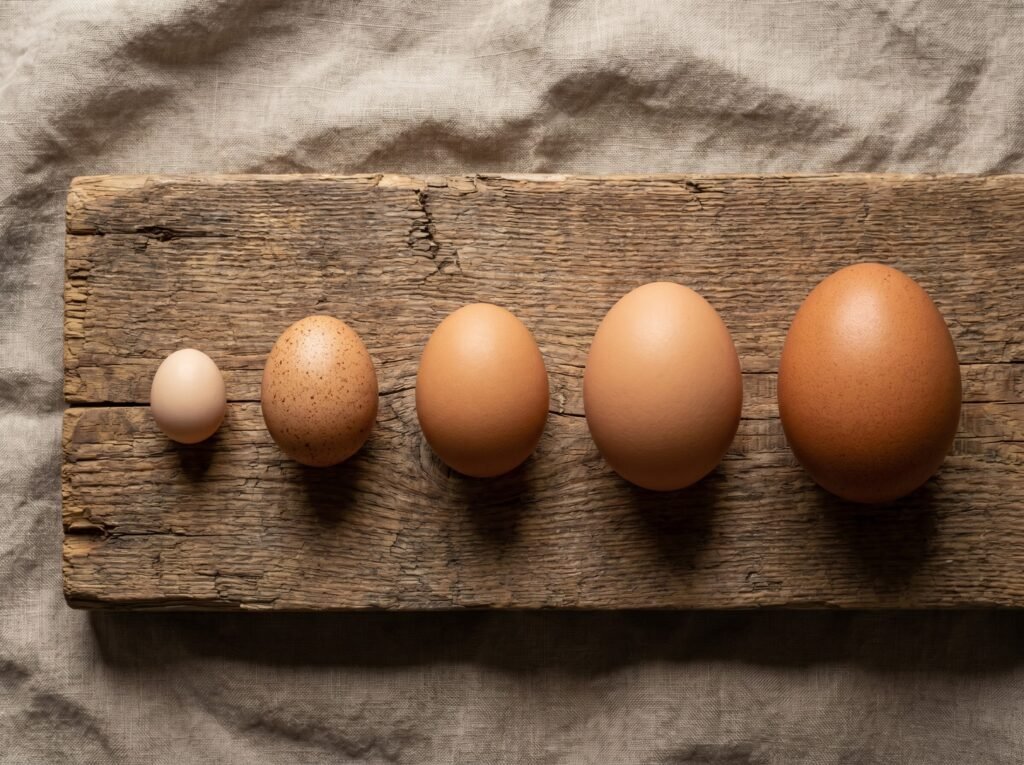
Small size. A pullet's first eggs run noticeably small - often barely larger than a quail egg. Size climbs steadily over the first six to eight weeks of laying as the oviduct matures. By the time she has been laying two months, most breeds are hitting their target size.
Soft or thin shells. The shell gland takes time to calibrate. A few thin-shelled or soft eggs in the first couple of weeks are common. If soft shells persist beyond the first month, check that calcium is available - either as layer feed or free-choice oyster shell alongside grower feed for the overlap period. A consistently soft shell in a mature hen is a different story and worth investigating; our article on soft and thin-shelled eggs covers the likely causes.
Yolk-less "fart" eggs. poultry.extension.org notes that "it is rare, but not impossible, for a young hen to produce an egg with no yolk at all," formed when a small bit of tissue is sloughed off the oviduct and travels through the egg-formation process. These tiny, yolk-free eggs alarm new keepers but are harmless.
Double yolks. Young hens sometimes release two yolks in quick succession before the timing mechanism is fully synchronized. The result is an oversized egg with two yolks inside. Double yolks are perfectly edible and actually make for a nice surprise in the first few weeks.
Irregular timing. A hen's egg cycle runs about 25 to 26 hours - slightly longer than a calendar day. That means her laying time shifts roughly an hour later each day until she eventually skips a day and resets. In the first few weeks, the cycle is not yet settled, so eggs may appear at unpredictable times. This is normal. A healthy pullet settles into a more predictable rhythm within a month or two of starting.
For a broader picture of what drives production up and down over a hen's life - including what happens after the first year - our article on understanding chicken eggs covers the full arc.
What should you do if a pullet is past her expected window and still not laying?
Before assuming something is wrong, check the four most common causes: insufficient light (under 14 hours daily), wrong feed stage, recent stress such as a predator scare or flock change, and mistaken sex identification. A healthy-looking bird with a red comb who still has not laid by 32 weeks warrants a poultry vet visit to rule out a reproductive condition.
If your pullet is past her breed's expected window and has not laid yet, work through this short checklist before assuming something is wrong:
- Is she getting 14-plus hours of light daily? A dark coop in autumn is the most common culprit.
- Is she on the right feed? Grower ration without supplemental calcium will not delay the first egg, but it rules out a nutrition gap.
- Is the flock under stress? A new predator scare, a move, a flock integration, or extreme heat can push back point-of-lay by two to four weeks.
- Is she actually a she? Slow-maturing cockerels can look remarkably hen-like well past 16 weeks, especially in heavier breeds.
If everything above checks out and a healthy-looking bird with a red comb and active behavior still has not laid by 32 weeks, a visit to a poultry vet is worth it. There are reproductive conditions that prevent laying, and a vet is the right person to investigate them - not a checklist.