What is layer feed and when should hens eat it?
Layer feed is a complete ration formulated for hens actively producing eggs. It runs 15-18% crude protein and roughly 3.5-4.5% calcium - about three to four times the calcium in a grower ration (older laying-mash specs cited 2.5-3.5%, but modern formulas run higher). Switch when hens show pre-lay signs or reach 16-18 weeks, whichever comes first. High calcium in a grower ration damages kidneys; too-late a switch can affect shell quality.
Around week 16 to 18, a pullet starts looking like a hen - her comb deepens, she lingers at the nest box - and her nutritional needs shift just as noticeably. Layer feed exists for exactly this moment. It delivers the calcium a laying body demands (roughly two-and-a-half to three-and-a-half times the amount in a grower ration) and keeps protein at a level that supports consistent egg production without the excess your birds' kidneys can't safely handle. Getting the switch right is one of the highest-leverage decisions in backyard poultry keeping.
Layer feed is a complete ration formulated for hens actively producing eggs. A standard formula runs 15-18% crude protein and 3.5-4.5% calcium (older laying-mash specs list 2.5-3.5%; modern commercial layer feed runs higher). For comparison, a chick starter runs 18-22% protein but well under 1% calcium - a growing chick needs protein for muscle and feathers, not the heavy mineral load that goes into eggshell production. Understanding those two numbers - protein and calcium - is the foundation for every choice that follows.
What goes into a layer ration and why each number matters
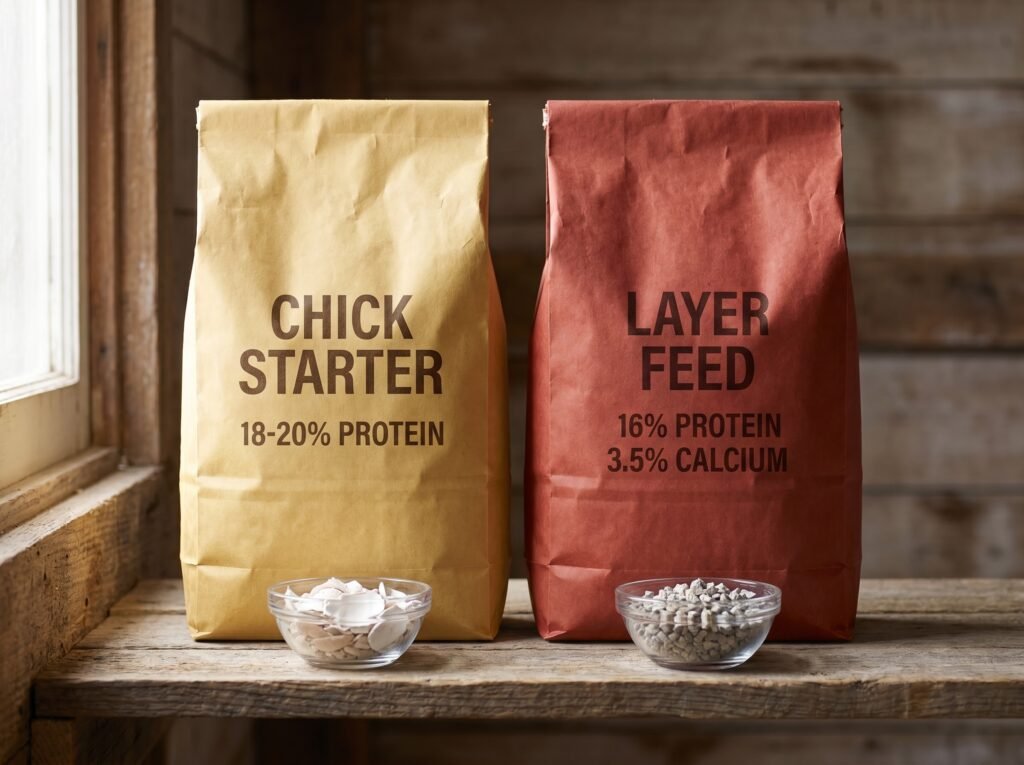
A complete layer feed supplies energy (grains and fats), amino acids, vitamins, and minerals in proportions tuned to a laying hen's daily cycle. The two figures to watch on any feed tag are crude protein and calcium.
Protein. Most commercial layer feeds land at 16-17% crude protein. Penn State Extension's guidance for laying hens calls for 16-18%; Purina's Layena pellets list a minimum of 16.00% crude protein, and Nutrena's NatureWise Layer 17% pellets specify 17.0%. That range covers standard egg-layers well. High-production or free-range birds - and hens coming out of molt - can benefit from a higher-protein formula (19%+), but for a typical mixed flock of seven or eight laying hens, the standard 16-17% formula handles the job.
Calcium. A hen deposits roughly 2 grams of calcium into every eggshell, and her daily requirement runs around 4 grams total. Layer feeds provide this through limestone, oyster shell, or both baked into the ration. Purina Layena pellets guarantee 3.25-4.25% calcium; the Alabama Extension's recommendation for egg-layer rations is 3.60-4.20%. Either way, that's several times the 1.2% calcium that a growing pullet's ration should contain. Feed that level of calcium to a bird whose kidneys aren't yet in laying mode and you risk real harm - more on that in the timing section.
Beyond protein and calcium, a complete layer feed supplies phosphorus (typically 0.45%+), manganese, vitamin D3 (critical for calcium absorption), vitamin E, and vitamin A. The feed tag you see on a bag of Purina Layena or Nutrena NatureWise is, in practical terms, a complete nutritional profile - not a supplement but the whole diet.
The switch timing debate: 16 weeks, 18 weeks, or first egg?
This is the most contested question among backyard keepers, and the sources do not fully agree. Here is what the authoritative guidance actually says, side by side, so you can make the call for your own flock.
| Source | Recommended switch point | Key caveat |
|---|---|---|
| Penn State Extension | 18 weeks | Feed 16-18% layer ration; oyster shell free choice |
| University of Maine Extension | Onset of lay | Do not introduce layer diet more than 2 weeks before first egg |
| Purina Mills | 18 weeks or first egg | Transition over 4-5 days; mix feeds evenly during the switch |
| Nutrena NatureWise | 16 weeks or onset of lay | Earlier window for breeds that begin laying at 16-18 weeks |
The consensus center is somewhere between 16 and 20 weeks, with most extension programs landing at 18. The University of Maine adds the most practically useful guardrail: do not start layer feed more than two weeks before actual laying begins. That limit exists because of calcium. Feed your pullets 3.5-4% dietary calcium before their kidneys are processing it for eggshells, and you expose them to kidney damage or worse - "kidney damage can result" from high-calcium diets in growing birds (eXtension / USDA-NIFA Cooperative Extension).
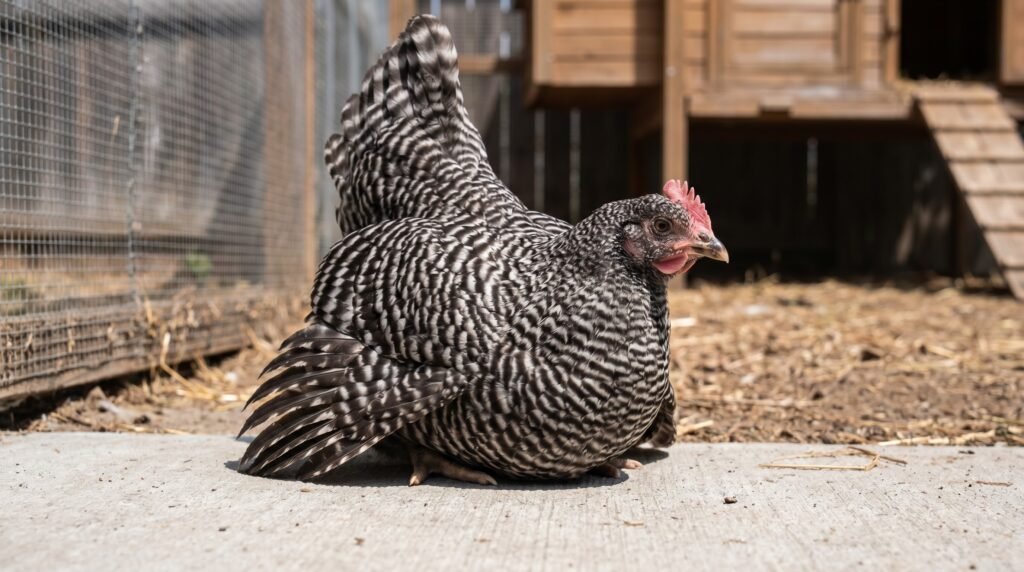
In our coop, with a mixed flock of five - standard layers alongside two bantam Cochins - we start watching comb and wattle development closely from week 15 onward. When combs deepen and birds start crouching (the pre-lay squat), we begin the 4-to-5-day transition blend. We have never switched a bird before the first physical signs of imminent laying. Breed matters: an early-maturing Leghorn can start at 16 weeks while a heavier dual-purpose bird like a Barred Rock is sometimes still three to four weeks away from its first egg at the same age. Early-maturing egg-breeds (Leghorn, Golden Comet) typically show the pre-lay squat by week 16, while heavier breeds like Wyandottes and Barred Rocks commonly run to week 19-20.
If you have a truly mixed flock - growing pullets alongside already-laying hens - the situation gets complicated fast. See the section below on flock raiser as one practical workaround.
Pellets, crumbles, or mash: what actually makes a difference
Layer feed comes in three physical forms, and the choice affects daily waste more than nutrition - the nutrient profile is essentially equivalent across all three.
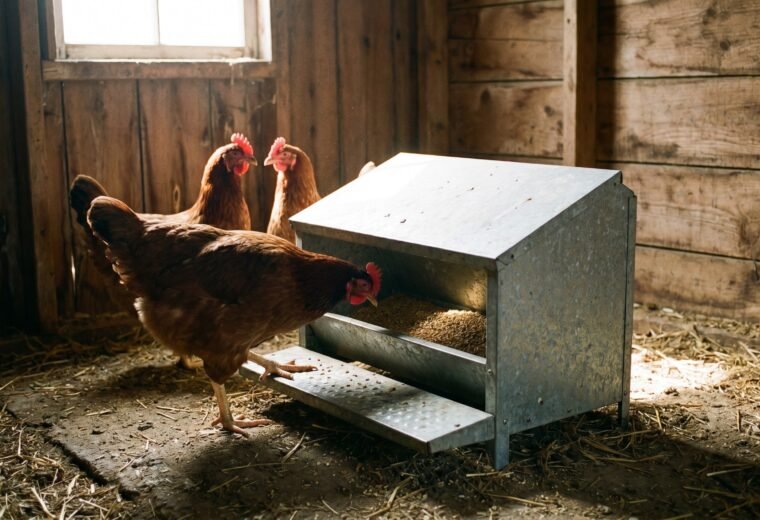
- Pellets are compressed cylinders (roughly 3/16 inch diameter). Because each piece is a complete cross-section of all ingredients, birds can't sort through the feed to pick favorites. Pelleted feed allows birds to "consume and metabolize a greater amount of feed," according to University of Maine Extension, because the compaction increases digestibility. Pellets are the easiest form to manage in tube and trough feeders - they flow freely and leave minimal fines. For bantams and very small breeds, standard-size pellets can be cumbersome; crumbles or a smaller crumble form work better.
- Crumbles are pellets broken into smaller pieces. The nutrition is identical to pellets from the same formula. The tradeoff is waste: Alabama Extension notes that "adult chickens eating crumbles tend to waste more feed and can have more powdery 'fines' left in the feeder that birds prefer not to eat." In our experience, a hanging tube feeder loaded with crumbles will accumulate a layer of dusty fines at the bottom within a few days - birds step around it rather than eating it. That said, crumbles are a good choice for birds transitioning from chick feed, since the smaller piece size is familiar.
- Mash is the original form - loosely ground, not pressed. Nutritionally sound, but it packs in tube feeders, doesn't flow well, and birds tend to sort through it and scatter it more than the other forms. A pan feeder or trough suits mash better than a tube feeder. It's typically the cheapest form because there's no pelleting cost - worth knowing if you're running 20 or more birds and budget matters.
Our recommendation for most backyard flocks: pellets, in a hanging tube feeder. The waste reduction is real and measurable. Crumbles if you have bantams or birds just making the switch from starter.
When layer feed isn't the right tool: mixed flocks and the flock raiser option
If you keep roosters, growing pullets, ducks, or quail alongside laying hens, standard layer feed presents a problem. The calcium level that serves a laying hen damages the kidneys of a non-laying bird eating the same ration every day. Two practical solutions exist.
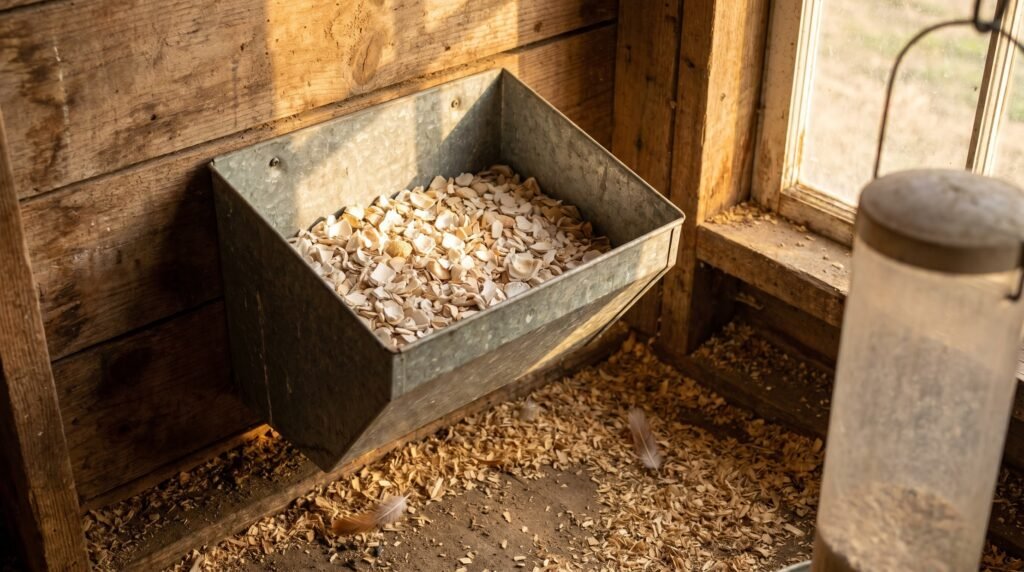
Option 1 - Flock raiser + free-choice oyster shell. All-flock or flock raiser feeds run higher protein (typically 20%) and much lower calcium (Purina Flock Raiser lists 0.80-1.30% calcium vs. Purina Layena's 3.25-4.25%). Laying hens will self-regulate their calcium by eating supplemental oyster shell offered separately in a small dish or container. Non-laying birds - roosters, growing pullets, ducks - generally won't touch the oyster shell because they don't need it. This approach is flexible and works well for genuinely mixed flocks. The eggshell quality in our coop (five birds, rooster included) was indistinguishable from when we ran layer feed, once we ensured oyster shell was always available.
Option 2 - Layer feed + separate calcium. Keep laying hens on layer feed, house non-laying birds separately, and provide oyster shell free choice to the layers in addition to the ration. This works cleanly if you can separate housing; it gets complicated in a shared run.
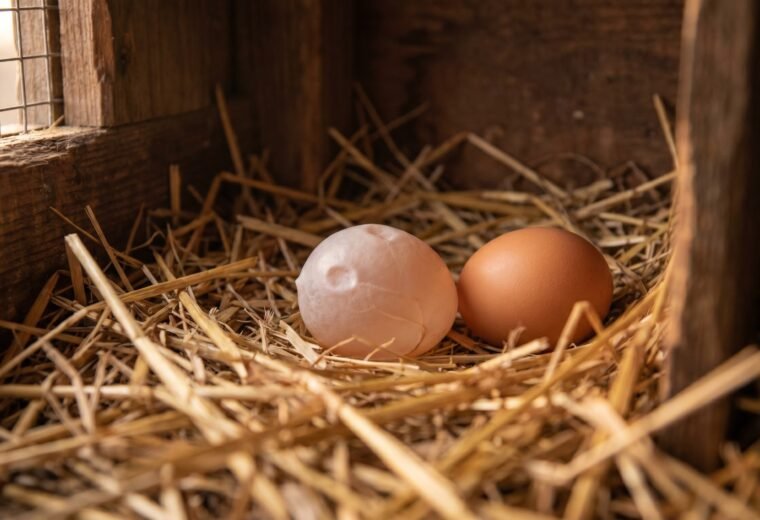
Either way, free-choice oyster shell is good practice alongside any layer feed. Purina specifies at least 3.25% calcium minimum in Layena - but high-producing breeds, hot weather, and heavy-shelled eggs can push a hen's daily calcium needs above what the ration alone delivers. Thin-shelled or soft-shelled eggs are often the first signal that calcium supply isn't keeping up; the soft or thin-shelled eggs piece works through each cause in order of likelihood, from calcium gaps to vitamin D shortfalls.
Grit, treats, and the 90/10 rule
Layer feed is a complete diet - it supplies everything a laying hen needs. The 90/10 rule (feed makes up at least 90% of the diet, extras no more than 10%) is the practical limit Purina recommends, and it's sound guidance. Scratch grains, kitchen scraps, mealworms - all fine as occasional extras, but feed them beyond that 10% ceiling and you dilute the nutritional profile your hens need for consistent shell quality and egg production.
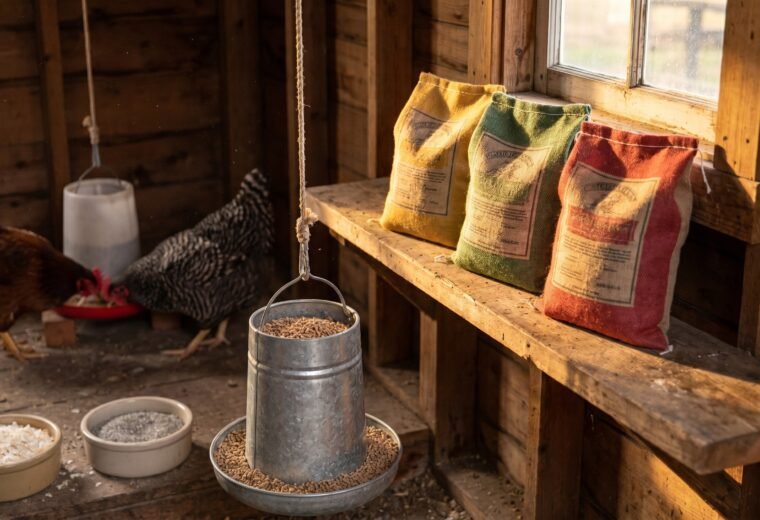
Grit is separate from oyster shell and matters for a different reason. Oyster shell supplies calcium. Grit - insoluble granite or flint particles - sits in the gizzard and grinds feed mechanically. Hens that free-range pick up grit naturally. Confined hens need it provided. University of Maine Extension states that "hard insoluble granite grit should be fed" to backyard hens. For confined birds that cannot pick up grit from the ground, keep it available free-choice at all times - the same principle that applies to oyster shell. Keep grit and oyster shell in separate containers so birds can self-select each according to their own need.
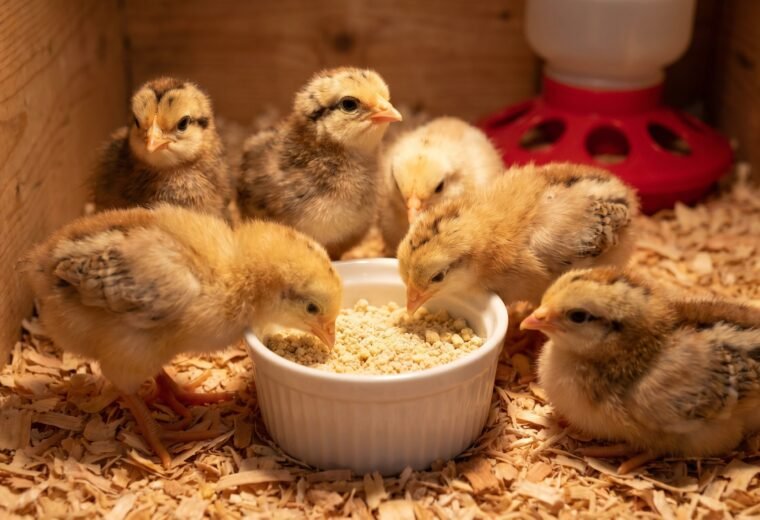
A word on medicated feed: medicated starter (which contains amprolium to prevent coccidiosis) is appropriate only for young chicks in the first weeks of life. Layer feed is never medicated. If a hen is sick, a veterinarian is the right call - not a feed change.
Choosing a layer feed brand: what the feed tag tells you
Walk the feed aisle at any farm store and you'll find a dozen options. Rather than a ranking, here's a decision framework tied to what the feed tag actually shows - the guaranteed analysis is the honest comparison point, not the marketing on the front of the bag.
| Product | Protein (min) | Calcium range | Best for |
|---|---|---|---|
| Purina Layena 16% Pellets/Crumbles | 16% | 3.25-4.25% | Standard laying breeds; widely available |
| Purina Layena+ High Protein 19% | 19% | 3.25% min | Post-molt recovery; high-production breeds |
| Nutrena NatureWise Layer 17% Pellet | 17% | 3.7% min | Slightly higher protein baseline; common regional availability |
| Purina Flock Raiser 20% (+ oyster shell) | 20% | 0.80-1.30% (add oyster shell) | Mixed flocks with roosters, ducks, growing birds |
When comparing bags: look at the guaranteed analysis on the back or side panel, not the front-label claims. Check crude protein (minimum), calcium (minimum and maximum if listed), and phosphorus. A calcium minimum below 3.0% in a layer feed should prompt a closer look - supplemental oyster shell becomes non-optional in that case. Phosphorus at 0.45% or above is the standard benchmark for layers.
Organic and non-GMO options exist across most major brands. The nutritional profiles mirror conventional feeds closely - the primary difference is ingredient sourcing and certification cost, which typically adds 30-50% to the price. Whether that premium fits your goals is a values question, not a nutrition one.
For feeder options and how physical form interacts with feeder design, the chicken feed piece maps the full program from day-old chick through molt. If you're still in the starter phase, chick starter feed breaks down medicated vs non-medicated and the exact timing for moving on.
FAQ
Can I give layer feed to my rooster?
A rooster eating layer feed occasionally won't suffer acutely, but the sustained calcium level (3.25-4.25%) far exceeds what a non-laying bird needs and can stress his kidneys over months. If your flock includes a rooster, a flock raiser feed with free-choice oyster shell on the side is the cleaner long-term setup. The hens self-select enough calcium; the rooster ignores the oyster shell because his body doesn't signal the need for it.
Do I still need oyster shell if I'm already on a complete layer feed?
For most hens on a standard 16-17% layer ration with 3.25-4.0% calcium, the ration alone covers baseline shell needs. Supplementing oyster shell on top of a high-quality complete diet adds little for most birds - but it is harmless. During peak production, hot weather, or post-molt recovery, demand can spike. Keeping a small dish of oyster shell accessible at all times costs almost nothing and removes any guesswork.
My pullets are different ages. When do I switch the whole flock?
If the oldest birds are at or near point of lay and the youngest are at least 14-15 weeks old, you can move the whole group to layer feed. Below 14-15 weeks, the kidney-damage risk from high calcium is real enough that keeping younger birds on grower and separating the groups (or using flock raiser for everyone) is worth the hassle. Never switch birds under 14 weeks to layer feed regardless of what their flockmates are eating.
How much layer feed does a hen eat per day?
A standard-size laying hen eats roughly 0.25 pounds - about half a cup - of complete layer feed daily. That number rises slightly in cold weather (more calories needed for warmth) and dips in extreme heat. For a flock of 5 standard hens, plan for about 1.25 pounds of feed per day, or roughly 8-9 pounds per week.