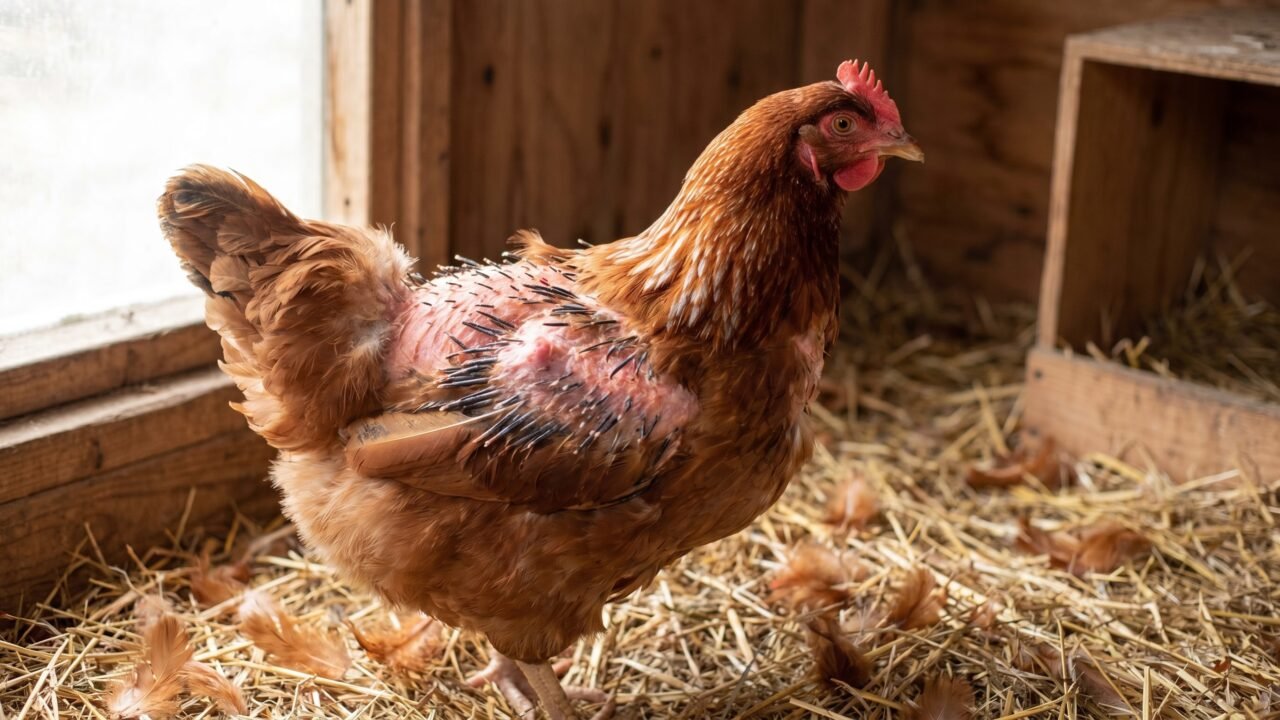
Around the time your flock turns 18 months old, you may walk out one morning to find the coop floor scattered with feathers and your hens looking oddly patchy. Nothing is wrong. Your birds are molting - and understanding what is happening, and what to do about it, makes the difference between a flock that bounces back in eight weeks and one that drags through winter still bare-backed and barely laying.
Molt is the annual cycle of feather loss and regrowth that every chicken goes through. It is a physiological reset triggered by declining daylight, not cold weather. When photoperiod decreases, chickens begin to lose and replace feathers, and egg production decreases or stops entirely (Penn State Extension). In the US, that crossover typically lands in September and October, when day length drops below 12 hours.
What triggers molt and why fall is the default season
Chickens are keenly sensitive to daylight. As summer tips into autumn and the hours of light shorten, the brain registers the change and begins shutting down the reproductive system. Egg production tapers. Feather follicles activate. The hen redirects every available nutrient from making eggs to rebuilding her coat.
Texas A&M veterinary scientists put it plainly: hens are "stimulated by decreased day length more so than changes in temperature." That matters practically. A hen in a naturally lit coop will molt on schedule every fall. A hen under 16 hours of supplemental light year-round may push the molt off by months - but she will still molt eventually. You cannot skip it, only delay it. The seasonal chicken care guide walks through month-by-month light schedules, and the winter-laying article explains exactly what production to expect once natural day length bottoms out.
The first full adult molt arrives around 18 months of age, according to Texas A&M. After that, the cycle repeats annually. Chicks also go through a series of juvenile feather changes in their first several months of life, but those are distinct from the full adult molt and typically pass without the dramatic feather blizzard keepers notice in older hens.
How long molt lasts - and why two hens can look very different
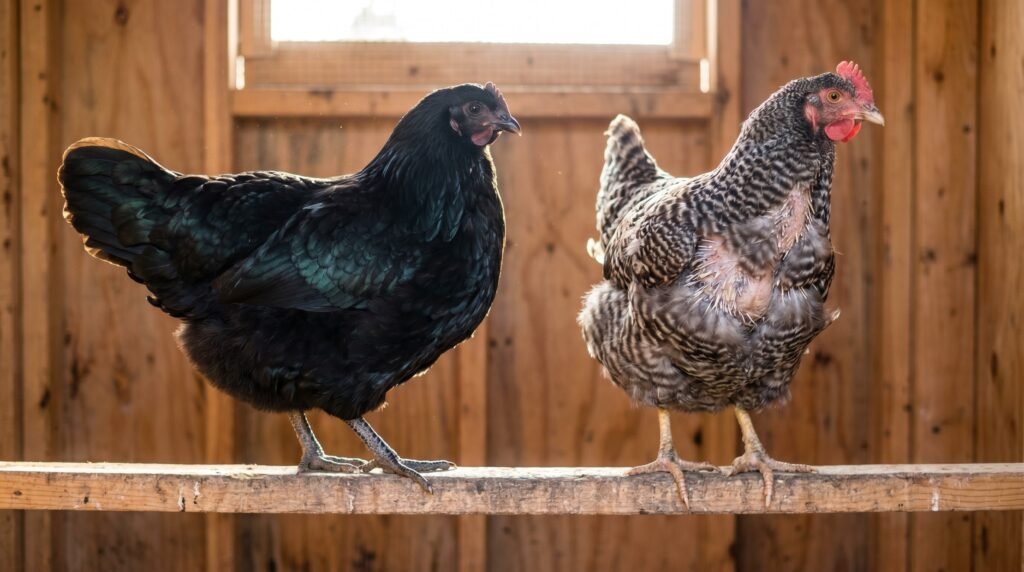
Texas A&M reports that most molting takes eight weeks from feather loss to feather replacement, though the range can stretch from one month to three depending on the individual bird and her environment.
Mississippi State University Extension explains why two hens in the same flock can look completely different during molt. "Early molters" and "late molters" behave differently, and the difference is a reliable signal of laying quality:
| Trait | Early molter | Late molter |
|---|---|---|
| When molt starts | After only a few months in production | After 12-14 months in production |
| How fast molt completes | Slowly - 3 months or more | Quickly - 2-3 months |
| Feather appearance mid-molt | Smooth, better-groomed look | Ragged, tattered appearance |
| What it signals | Generally a poor layer | Generally a good layer |
| Return to laying | Slower | Faster |
So the hen who looks the worst mid-molt is often your best producer. The bird sitting tidy and fully feathered in October while her flockmates look bedraggled is probably the one who laid the least to begin with.
Feathers do not fall out randomly. Mississippi State Extension documents a consistent sequence: head first, then neck, breast, body, wings, and finally tail. If you track this order across a few seasons, you can gauge roughly where in the molt a given bird sits.
Why laying stops - and what to expect on the other side
Most hens stop producing eggs until after the molt is completed, per Mississippi State Extension. The reason is straightforward resource arithmetic. A hen's body cannot easily run two protein-intensive processes at the same time. Egg production pauses so the available nutrients flow into feather construction instead.
Feathers are made of 80-85% protein, according to Purina Animal Nutrition's documented guidance, while eggshells are primarily calcium. The nutritional demand during molt is real. A hen carries thousands of individual feathers, and she replaces every one of them during molt.
The return to laying after molt is not instant. Penn State Extension notes a genuine upside: "Molting also increases egg size and quality for a period." Hens that complete a strong molt often come back laying eggs with thicker shells and better internal quality than they produced toward the end of their previous laying cycle. Think of molt as maintenance that pays dividends. The why-chickens-stop-laying article covers the full list of causes - molt, light, age, stress, and nutrition - with troubleshooting steps for each.
How to feed molting chickens
The single most effective thing you can do during molt is boost protein. Your standard layer feed typically runs 14-16% protein, which is calibrated for egg production, not feather rebuilding. Purina Animal Nutrition recommends switching to a complete feed with around 20% protein when molt begins - a flock raiser or starter-grower formulation fits this need without the excess calcium a layer ration carries.
That calcium point matters. High-calcium layer feed is formulated for eggshell production. During molt, when a hen is not laying, that calcium load is unnecessary and puts extra work on her kidneys. A 20% protein feed without the high calcium of a layer ration is the better fit for the 8-12 weeks of active molt. Once feathers are in and laying resumes, transition back gradually - mix the two feeds over 7-10 days rather than switching abruptly.
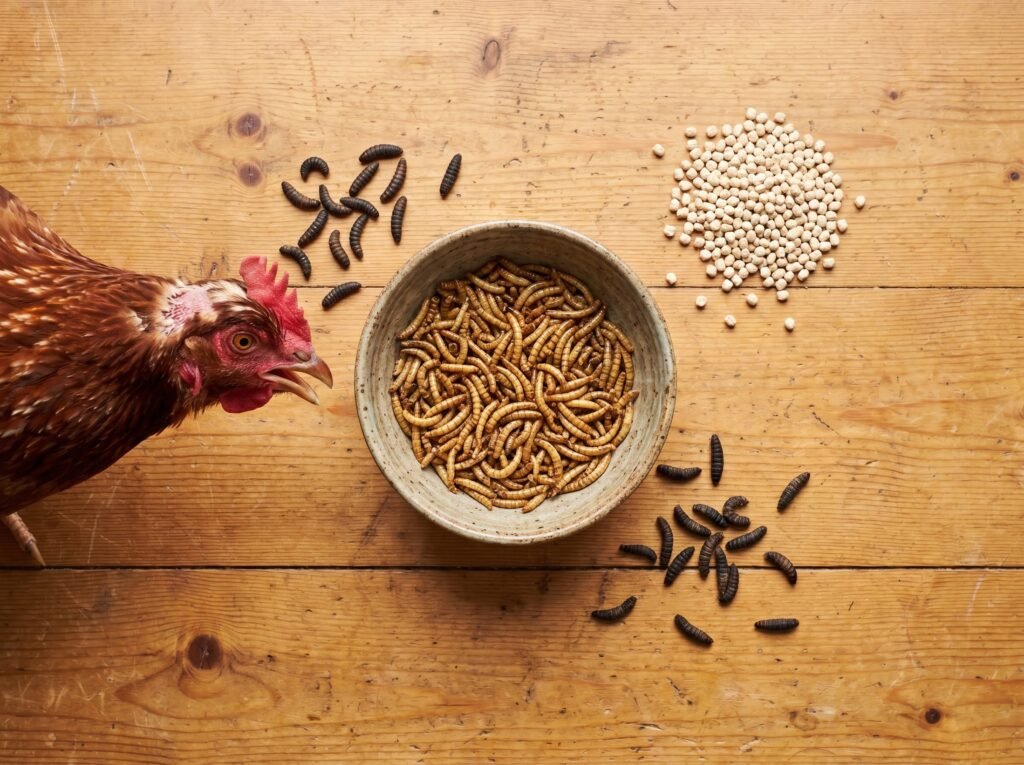
Supplemental protein sources can help bridge the gap if you choose to stay on layer feed or want to top up nutrition. Dried mealworms, plain scrambled eggs, plain unseasoned cooked fish, or black soldier fly larvae are practical options keepers commonly use. Keep treats to no more than about 10% of the total diet - a high-treat proportion dilutes the protein percentage of the whole ration. The complete feed guide breaks down every life stage from chick starter through senior hen, with a toxics list to keep nearby.
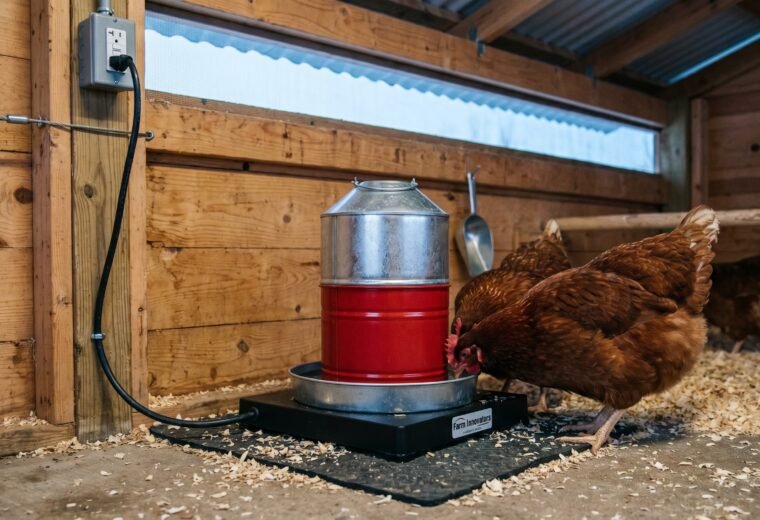
Water access matters more during molt than many keepers realize. Feather growth is metabolically demanding, and hens need consistent hydration to support it. Keep waterers clean and filled. If you are heading into cold weather alongside molt, the heated-waterer roundup compares bucket-style and base-heater options by flock size and wattage so you can pick one before the first hard freeze cuts off access.
What not to do during molt
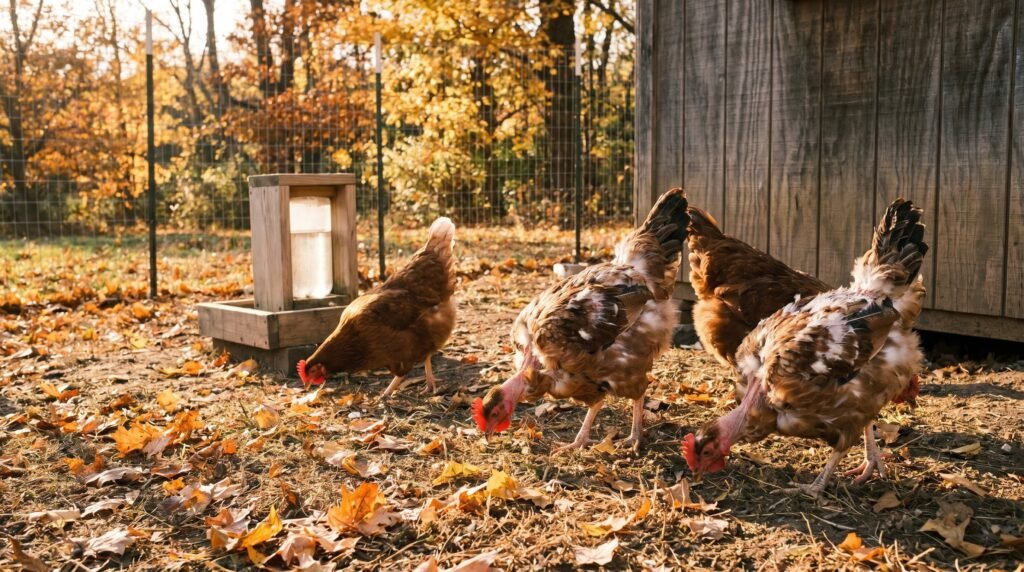
Molt is a physiologically demanding period. Several common keeper habits can make it harder than it needs to be.
Avoid excessive handling. Mississippi State Extension advises to "handle the birds as little as possible." Texas A&M spells out the reason: "The replacement pin feathers are very fragile and can be easily damaged." Pin feathers are actively vascularized - they contain a blood supply while they grow. A damaged pin feather bleeds. Repeated handling during active feather growth stresses the bird and risks injuring those new shafts.
Do not add new birds to the flock. Introducing new chickens during molt stacks two stressors simultaneously. The established flock is already stressed and immunologically busy. New birds disrupt the pecking order and carry biosecurity risk. Wait until molt is complete and the flock has settled before making introductions.
Do not over-clean the coop. A thorough deep-clean right in the middle of molt disrupts the flock unnecessarily. Maintain basic sanitation, but save the full litter change for before molt starts or after it ends. Unnecessary disruption extends the stress period.
Skip extra calcium supplements during molt. Free-choice oyster shell is fine to leave available, but actively pushing calcium on non-laying hens is unnecessary. The high-calcium layer ration problem above applies to loose calcium supplements too.
Do not ignore thermoregulation risk in cold weather. A heavily molting hen entering cold temperatures has significantly reduced insulation. If your molt overlaps with a cold snap, make sure birds have access to a draft-free sleeping area and are not roosting in exposed or unshielded spots. You do not need to heat the coop - healthy hens tolerate cold well once feathered - but a very bare bird mid-molt is more vulnerable than a fully feathered one, and extra windproofing in the coop is sensible insurance.
Watch, but do not over-intervene. Molting hens can look alarming. Bare patches, scruffy necks, and visible pin feathers are all normal. However, keep an eye out for feather-pecking by flock mates - pin feathers can bleed if targeted, and blood in the coop escalates quickly. If serious pecking starts, give birds more space or separate the target temporarily. For any signs of illness beyond normal molt appearance - swelling, discharge, lethargy that seems out of proportion - contact a poultry vet rather than guessing at a cause.
Frequently asked questions
My hen is losing feathers but it is April. Is something wrong?
Fall is the most common molt season, but hens can also go through a partial molt at other times of year in response to stress - a disease episode, sudden diet change, severe fright, or a spell of very short days after moving coops. If the feather loss is localized (bare neck, patchy back) and there are no other symptoms, stress molt is the likely explanation. A full autumn molt affecting the whole flock in sequence is the seasonal version. If the bird looks unwell beyond the feathers, see a poultry vet.
Will adding supplemental light prevent molt?
Supplemental lighting that keeps day length above 14 hours can delay or suppress the natural fall molt, because the photoperiod trigger never fires. Most extension guidelines recommend 14-16 hours of light per day for peak production. But molt is a reset the hen's body needs eventually - and a hen that has had molt suppressed for an extended period often goes through a harder, more abrupt molt when her system finally forces the issue, rather than the gradual seasonal shed you see in naturally lit flocks. Many backyard keepers let their flocks molt naturally each fall rather than running lights year-round for exactly this reason. Both approaches are valid - the tradeoff is eggs now versus a more predictable, gentler molt later.
How do I know when molt is finished and I can switch feed back?
Look at the feather coverage rather than the calendar. When the bird is fully feathered, no bare skin is visible, and pin feathers have fully unfurled into mature plumage, molt is done. Eggs usually resume within a few weeks of that point. Transition back to layer feed gradually over 7-10 days.
My rooster is also molting. Should I manage him differently?
Roosters molt on the same annual cycle as hens, driven by the same photoperiod cue. The same high-protein feeding guidance applies. Roosters do not lay, so the feed transition back to layer ration is less critical - a flock raiser or all-flock feed works year-round for a mixed flock.