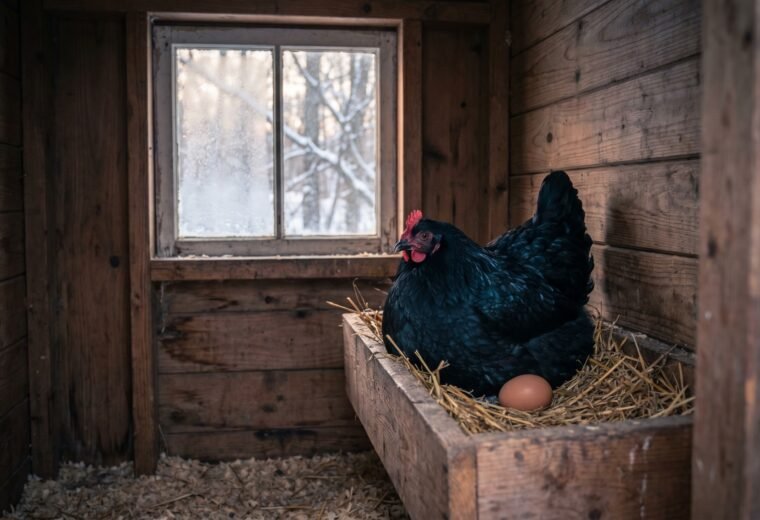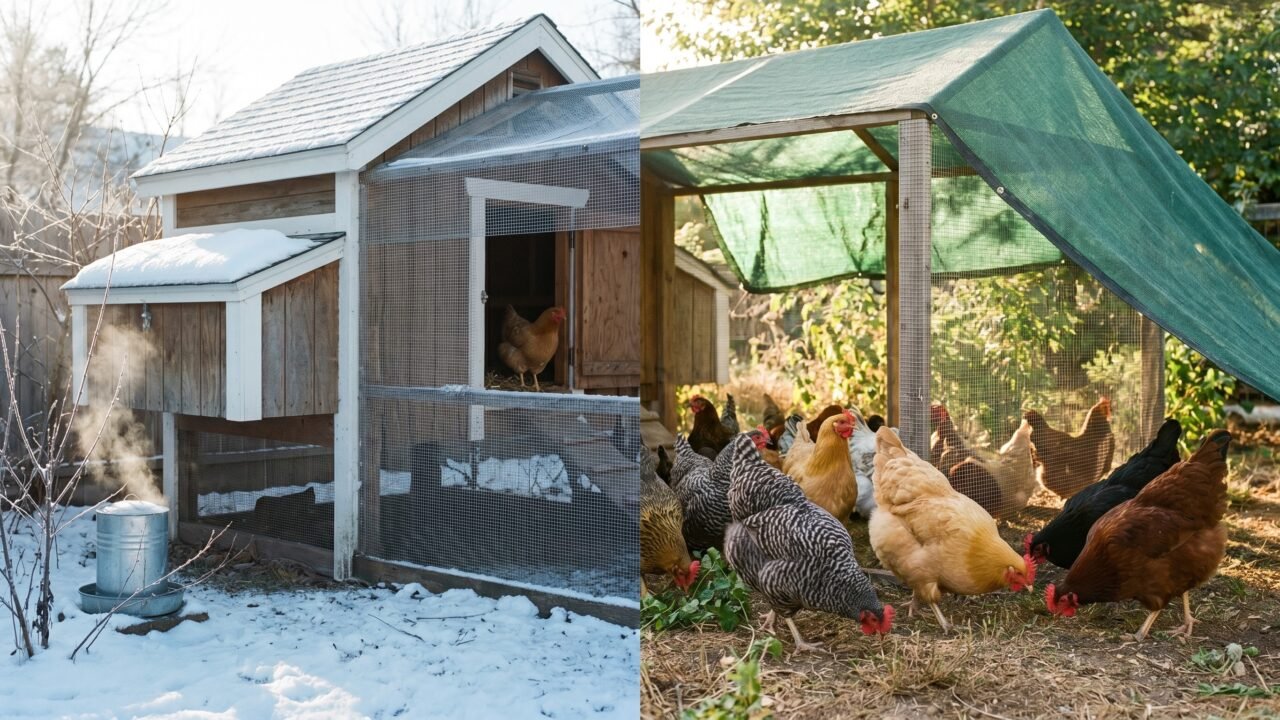
Your flock's needs shift dramatically from January to July, and the gap between a well-managed coop and a struggling one often comes down to knowing what to do at the right time of year. Cold, heat, molt, and short days each demand a different response - and each carries its own failure modes that catch new keepers off guard. This guide covers all four seasons in one place so you can plan ahead rather than react.
How do you keep chickens warm and healthy through winter?
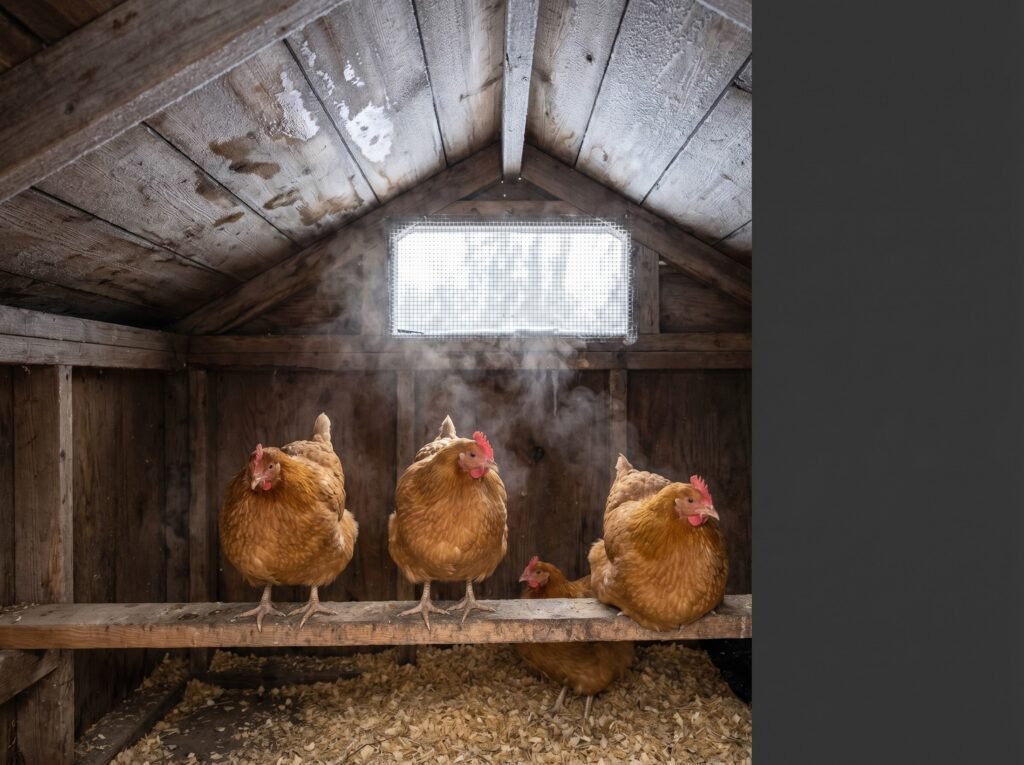
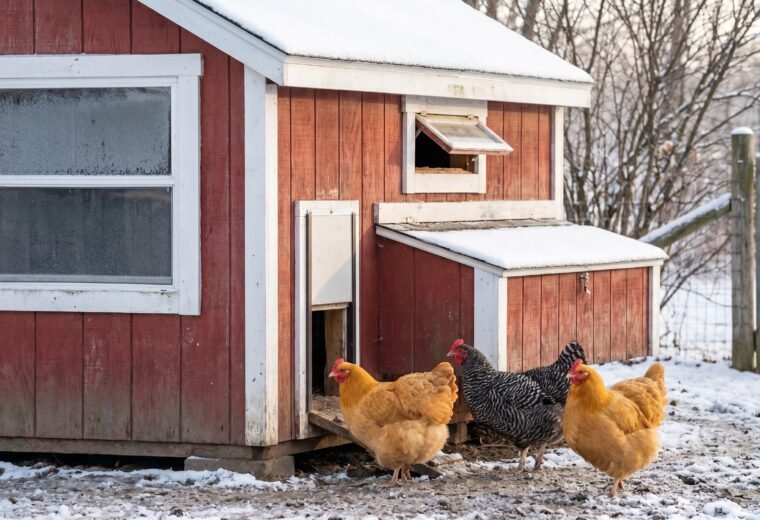
Healthy adult chickens tolerate cold far better than most people expect - a dry, draft-free coop handles most of the work. The real winter dangers are moisture, frozen water, and frostbite, not temperature itself. Keep ventilation high, waterers ice-free, and bedding dry, and a standard mixed flock will winter reliably without supplemental heat.
Healthy adult chickens tolerate cold far better than most people expect. Their thermoneutral zone runs roughly 60-75°F, but a dry, draft-free coop lets them handle temperatures well below freezing without supplemental heat. What kills them in winter is moisture, not cold. A coop packed with ammonia and damp litter is far more dangerous than a coop sitting at 20°F with good airflow.
Ventilation is the highest-priority winter task. Roof-level vents let moisture and ammonia escape while keeping cold drafts off the birds on the roosts below. The quick test: if you walk into your coop on a cold morning and the windows are fogged or the walls are running with condensation, your ventilation is insufficient. UMN Extension's guidance is direct - if you smell ammonia or see moisture collecting on surfaces, increase ventilation immediately and clean up manure more frequently. Proper coop ventilation matters more in winter than in any other season.
On the question of heat lamps: most backyard flocks with adult, fully feathered birds do not need supplemental heat. Heat lamps are a documented fire risk and create a dependency that leaves birds unprepared for a power outage on the coldest night of the year. The exception is bantam breeds, which produce less body heat than large fowl, or situations where temperatures drop to single digits for extended stretches. If you do add a heat source, mount it securely - never hang it by the cord alone - and use a model with a safety cage.
Frostbite is the other big winter hazard, and it's driven by the same culprit: moisture. Combs, wattles, and toes are most vulnerable. Large-combed breeds like Leghorns and roosters of any breed face higher risk. Keep bedding dry (top-dress with fresh shavings rather than letting damp litter build), maintain airflow, and use a flat 2x4 roost wide-side-up so birds can cover their toes while sleeping. Some keepers apply petroleum jelly to combs and wattles before a hard freeze - it's a reasonable precaution on susceptible birds, though it's insulation, not treatment. If you see blackened, blistered tissue, that bird needs separation to prevent pecking and a call to a poultry vet.
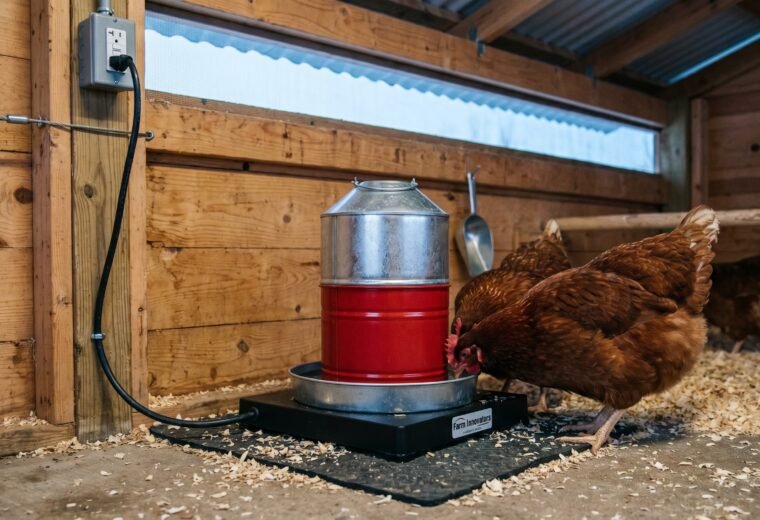
Water is the most urgent daily task in winter. Frozen water means no water - chickens cannot break through ice to drink, and dehydration sets in quickly. Check waterers at least twice daily when temps are below freezing. A heated waterer is the most reliable solution and well worth the investment if you're in a cold-winter climate. Budget options include a black rubber tub placed in direct sun, which stays ice-free longer on clear days, and a canning-jar base heater placed under a metal fount. Whatever your setup, position waterers where spills and drips don't wet the bedding directly under the roosts.
Feed intake climbs in cold weather - poultry extension research puts the increase at up to 25% because birds burn more calories maintaining body temperature. Keep feeders full and consider a scratch grain scratch ration given in the evening. Scratch generates heat through digestion and gives birds a calorie bump right before they settle on the roost. Scratch should stay a treat, though - no more than chickens can clean up in about 15 minutes - because it dilutes the protein and calcium content of their layer ration.
When does summer heat become dangerous for chickens, and what can you do about it?
Heat stress in chickens starts at 80°F, when birds begin panting to cool themselves, and escalates quickly from there. By 90-95°F, layers and heavy breeds face real danger of heat exhaustion. Above 100°F, survival depends on active intervention. Prevention - shade, multiple cool water stations, and airflow at bird level - is far more effective than emergency response once a bird is in distress.
Above 80°F, chickens shift from passive cooling to active panting, and at 90-95°F the situation can become life-threatening surprisingly fast. Penn State Extension's heat management data shows a clear progression: at 80-85°F you'll see slight feed reduction and shell quality dips; at 85-90°F egg production drops more noticeably; at 90-95°F layers and heavy breeds are in danger of heat exhaustion; above 100°F, survival depends on intervention.
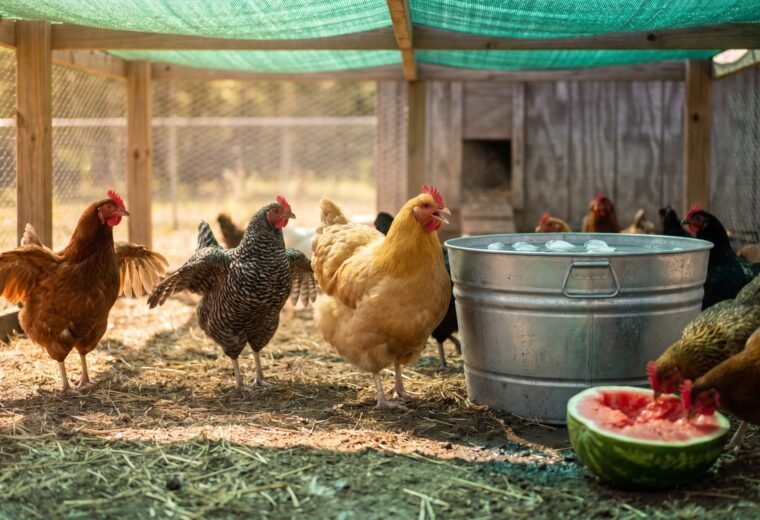
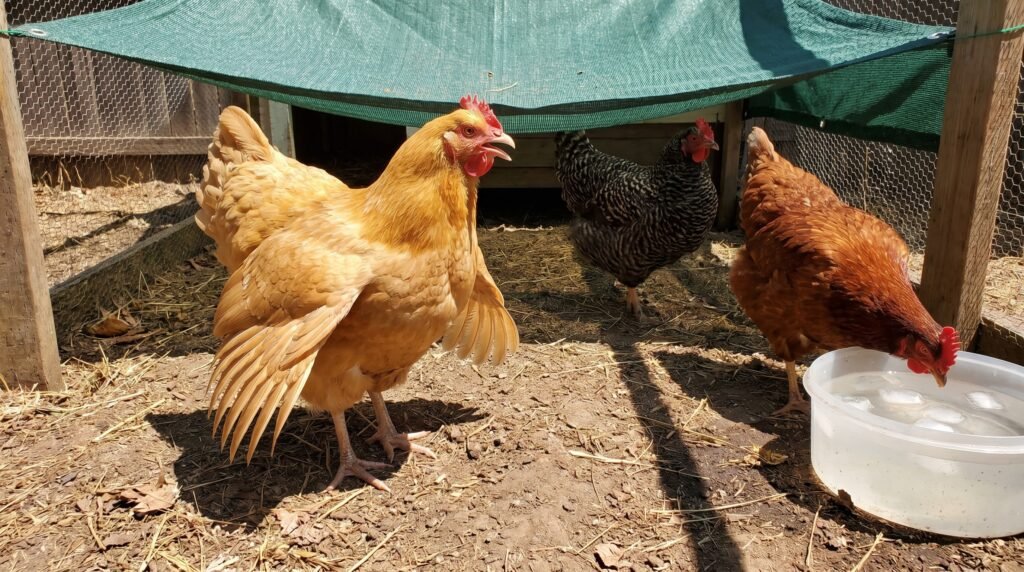
Chickens have no sweat glands. They lose heat through their wattles, shanks, and the bare skin under their wings, and through panting once ambient temperatures climb past 80°F. The moment you see a bird holding her wings out from her body, panting with her beak open wide, or showing a pale comb and wattles, treat it as an emergency. Move her to shade immediately, offer cool (not icy) water, and if she's unresponsive, submerge her body up to the neck - not the head - in a bucket of cool water to bring down core temperature. If symptoms don't resolve quickly, contact a vet.
Prevention is far better than emergency response. The most important summer moves are:
- Shade over the run during the hottest midday hours. Shade cloth, a tarp, or trees positioned so they don't block airflow all work.
- Multiple water stations, kept cool, in shade. Birds drink significantly more water during heat stress - Penn State Extension notes consumption rises dramatically as temperatures climb past 80°F. Nipple drinkers alone are not ideal in extreme heat - open fonts let birds submerge their heads and wattles to cool down.
- Airflow at bird level, not just at the roofline. Fans positioned low in the coop move air across the birds where it matters. A turbine vent reduces coop temperature but doesn't replace active airflow during a heat wave.
- Feed chickens their main ration in the early morning and late evening, when temperatures are lower. Digesting feed generates heat, and you don't want birds processing a full crop during peak afternoon temperatures.
Dark-colored, heavy birds are highest risk in summer. Larger, older hens and any bird that is already stressed (from a recently established pecking order, or that just finished a molt) are also more vulnerable. Heat-tolerant breeds like Leghorns, Andalusians, and Egyptian Fayoumis handle warm summers notably better than heavy dual-purpose breeds, which is worth factoring in if you're choosing birds for a warm-climate flock.
Full details on cooling strategies and breed selection for summer are in our guide to keeping chickens cool in summer.
Why do hens lose feathers and stop laying in fall, and how long does it last?
Fall molt is a normal annual feather replacement triggered by shortening days in September and October. Laying stops while protein and nutrients are redirected into growing new plumage. Most productive hens complete molt in eight to twelve weeks; slow molters can take up to six months. The fix is simple: boost dietary protein and minimize handling during pin-feather growth.
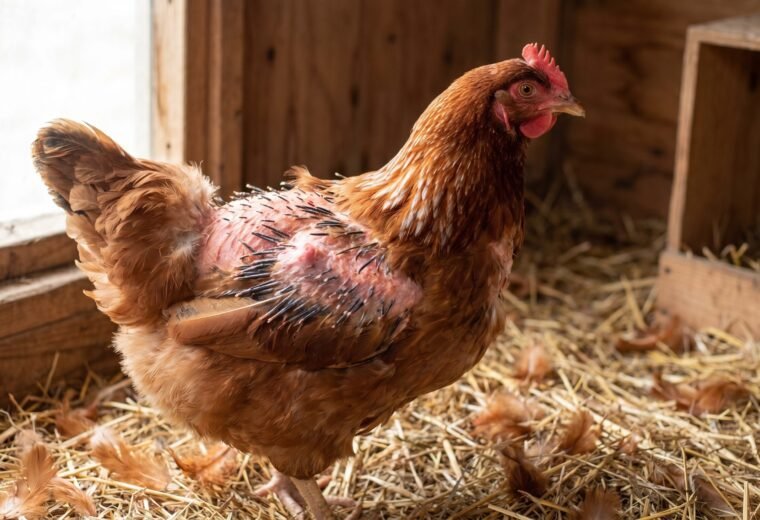
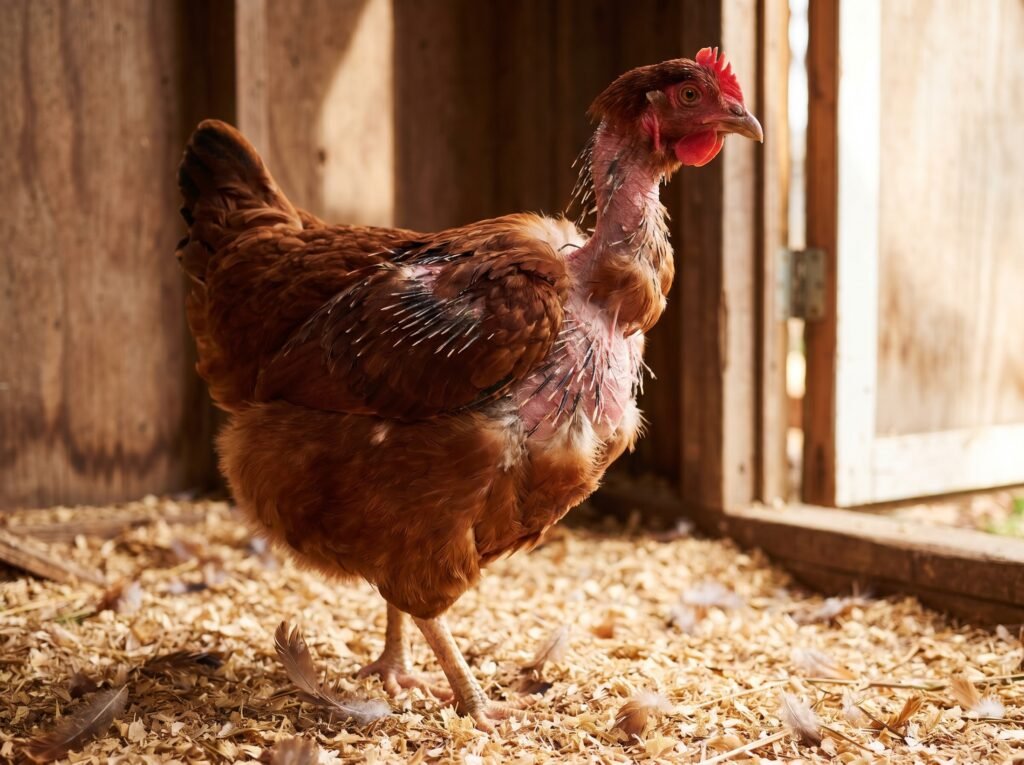
Sometime in late summer or early fall, you'll walk out to find feathers scattered across the coop floor and your hens looking ragged. This is molt - the annual replacement of old plumage with new feathers - and it's completely normal. Nearly all hens go through it, usually triggered by the shortening days of late September and October, when natural light drops below about 12 hours per day in most of the US.
Laying stops during molt, and that's by design. The same nutrients that go into egg production - especially protein - are redirected into feather growth. Feathers are roughly 85% protein by dry weight - a figure widely cited in poultry nutrition literature and consistent with Poultry Extension feeding guidance - and a hen replacing a full set of plumage has a high demand for it. The best thing you can do during molt is switch to a higher-protein feed or supplement with protein-rich treats. A layer ration runs 16% protein, which is adequate for laying but marginal for molt. Many keepers temporarily switch to a grower ration at 18-20% protein, or add high-protein treats like dried mealworms, black soldier fly larvae, or scrambled eggs.
How fast a hen molts tells you something about her productivity. Fast molters - often the best layers - drop feathers quickly and are back in production in eight to twelve weeks. Slow molters look gradually rough for months and may take closer to six months to complete the process. A hen that molts slowly and partially is generally a lower-producing bird. If you're selecting breeding stock or replacements, fast molters are worth keeping.
Avoid handling molting birds more than necessary. Pin feathers - the new feather shafts growing in - are full of blood and sensitive. Rough handling is painful and can cause bleeding. Keep the coop calm and reduce stressors during this period.
Our complete chicken molting guide covers the molt cycle in more detail, including how to distinguish molt from a mite infestation or nutritional deficiency (both of which can cause feather loss at other times of year).
How does the season affect how many eggs your hens lay, and what can you do about it?
Laying is driven almost entirely by light: hens need roughly 14-16 hours of daily light to stay in production. As natural daylight drops below 12 hours in fall, most flocks slow or stop laying entirely and enter molt. A single low-wattage bulb on a timer can maintain winter production, but it comes with real tradeoffs in flock rest and long-term laying life that are worth understanding before you reach for the timer switch.
Laying in chickens is driven almost entirely by light. Specifically, hens need a certain minimum daily light exposure to maintain the hormonal state that supports egg production. Poultry Extension's research is clear: "Decreases in the number of hours of light per day typically will put a flock out of production. For this reason, many flocks that are not provided with supplemental light go out of production during the fall and winter months."
The threshold most extension services identify is around 12-14 hours of light per day. Below that, production drops; most sources recommend maintaining 14-16 hours to simulate summer conditions and keep hens laying year-round. A single low-wattage bulb on a timer is enough - hens don't need bright light, just enough to stimulate the photoreceptors that trigger ovulation (about half a foot-candle, or enough to read a newspaper by). A 25-40 watt incandescent or equivalent LED does the job for a coop housing a dozen birds.
If you choose to use supplemental light, set the timer to add hours in the morning rather than the evening. This mimics a lengthening spring day and is considered less disruptive to the birds' natural dark-period sleep. Increase or reduce the photoperiod gradually - no more than one hour per week - to avoid stressing the flock. Sudden large changes in day length cause restlessness, flightiness, and can trigger aggressive pecking.
The supplemental light debate - an honest look at tradeoffs
Using artificial light to extend the laying season is effective, but it's not a cost-free decision. Here's the tradeoff in plain terms:
| Approach | Winter eggs | Flock recovery | Long-term laying life | Cost |
|---|---|---|---|---|
| No supplemental light | Near zero (natural molt and rest) | Full natural molt and rest cycle each fall | Often somewhat longer per hen | No electrical cost |
| Supplemental light (14-16 h/day) | Continued or near-peak production | Molt may be suppressed or delayed | Hen "uses up" her finite supply of ova faster | Low electrical cost; timer required |
There's no single right answer. Commercial operations use light because production is the goal. For a small backyard flock of, say, 10-15 hens where you care about the birds' wellbeing over many years, letting some or all of them go through a natural molt and rest period has merit. One practical middle ground: don't run lights on pullets in their first fall (let them establish a natural rhythm), then introduce lighting in subsequent years if winter production matters to you. More on winter laying strategies is in our piece on whether chickens lay in winter.
What are the most important chicken care tasks to do in each season?
The big seasonal risks - frostbite and frozen water in winter, heat exhaustion in summer, protein deficiency during molt, and parasite pressure in spring - each demand a different response. Knowing what to check before each season arrives means you're solving problems weeks in advance instead of reacting to an emergency. This calendar shows the priority actions for a typical mixed flock of 10-15 standard birds.
Across a typical year, the critical tasks cluster by season. This table shows what to prioritize when for a flock of 10-15 mixed standard birds:
| Season | Priority tasks | Watch for |
|---|---|---|
| Late summer (Aug-Sep) | Increase coop ventilation; maximize shade and water stations; prepare for molt | Heat exhaustion in heavy breeds; feather loss starting (early molt) |
| Fall (Oct-Nov) | Switch to higher-protein feed; decide on supplemental lighting; clean and inspect coop before cold sets in; check roost bar width | Full molt underway; egg production dropping; first frosts |
| Winter (Dec-Feb) | Maintain water twice daily minimum; check coop moisture and ventilation; watch for frostbite on combs/wattles/toes | Frozen water (most common failure); ammonia buildup; frostbite on large-combed breeds |
| Early spring (Mar-Apr) | Deep-clean coop; switch back to layer ration; remove extra bedding as temperatures rise; check for mites as birds spend more time outdoors | Parasites active again; production resuming; any hen not laying after 4+ weeks may have a hidden issue |
| Summer (May-Aug) | Add shade; stock extra waterers; shift feeding to morning/evening; monitor for heat stress daily at midday | Panting, pale combs, and wing-spreading during peak afternoon heat |
Spring: what does your flock need as the weather warms up?
Spring is the reset season - the right time for a deep coop clean, a parasite check, and a gradual return to normal management after winter. Laying typically resumes in February to March as daylength crosses back above 12-14 hours, and most hens that went through a natural fall molt will ramp back up to near-peak production without any intervention from you.
The most important spring tasks are:
- Deep-clean the coop. After a full winter of reduced ventilation and heavier foot traffic, litter can harbor Marek's disease spores, coccidia, and red mite eggs. Remove all bedding down to the floor, scrub the boards, and let the coop air out for a day before re-bedding with fresh pine shavings. This is especially important if you used the deep litter method over winter.
- Check for mites and lice. Parasites become active as temperatures warm in March and April. Part the feathers near the vent and around the neck of several birds and look for moving mites or clusters of lice eggs attached to the feather shafts. A clean spring flock is a much easier parasite situation to manage than one that carries a load into summer.
- Switch back to layer feed. If you bumped to a higher-protein grower ration during molt, return to a quality layer ration (16% protein, with calcium) once birds are back in production. Continuing high-protein grower ration on laying hens is unnecessary cost and may contribute to kidney stress over time.
- Resume outdoor time gradually if birds were restricted over winter. After months of limited range, spring pasture comes back fast - and so does the coccidia pressure that builds when birds heavily use the same ground patches. Rotate range area if you have the space, or keep ranging sessions shorter early in the season while the soil dries out.
Any hen that is not showing renewed laying interest by four to six weeks into spring - assuming she went through a complete molt - is worth watching. A single hen still in the coop while the rest of the flock is back in production may have an underlying issue: a hidden internal layer condition, a persistent infection, or simply old age. Spring is a natural audit point for flock productivity.
What should you check and fix in the coop before cold weather arrives?
Most winter coop failures trace to problems that were already present in fall and simply became critical when temperatures dropped: a small roof leak, a blocked vent, a waterer with a failing heating element. A 20-minute walkthrough in early fall catches all of these while there's still time to fix them. Here's what to look at before the first hard freeze.
A quick pre-winter audit prevents most cold-season problems. Walk through the coop in early fall and check:
- Roof integrity - even a small leak lets rain or snow wet the litter, and wet litter is the root cause of both frostbite and respiratory illness.
- Drafts at bird level - block horizontal drafts that hit roosting birds directly, but leave upper vents open. Wind on feathers drops effective temperature dramatically.
- Roost bar placement - roosts should be at least 12 inches off the floor, higher than nest boxes, and wide enough (a 2x4 flat side up is ideal) for birds to cover their toes while sleeping.
- Bedding depth - 3-4 inches of pine shavings or straw provides insulation and allows some microbial heat generation with the deep litter method.
- Water heater setup - test your heated waterer before you need it; discover the dead heating element now, not in January.
A full winterization checklist with coop-specific details is in our guide to keeping chickens warm in winter.