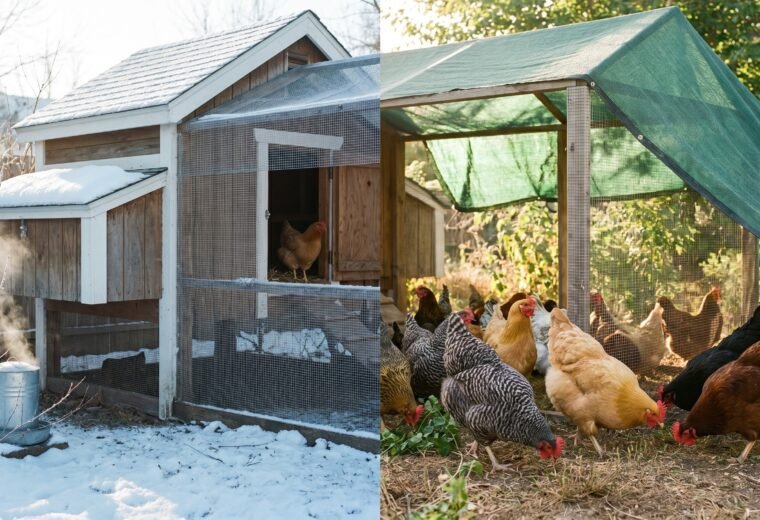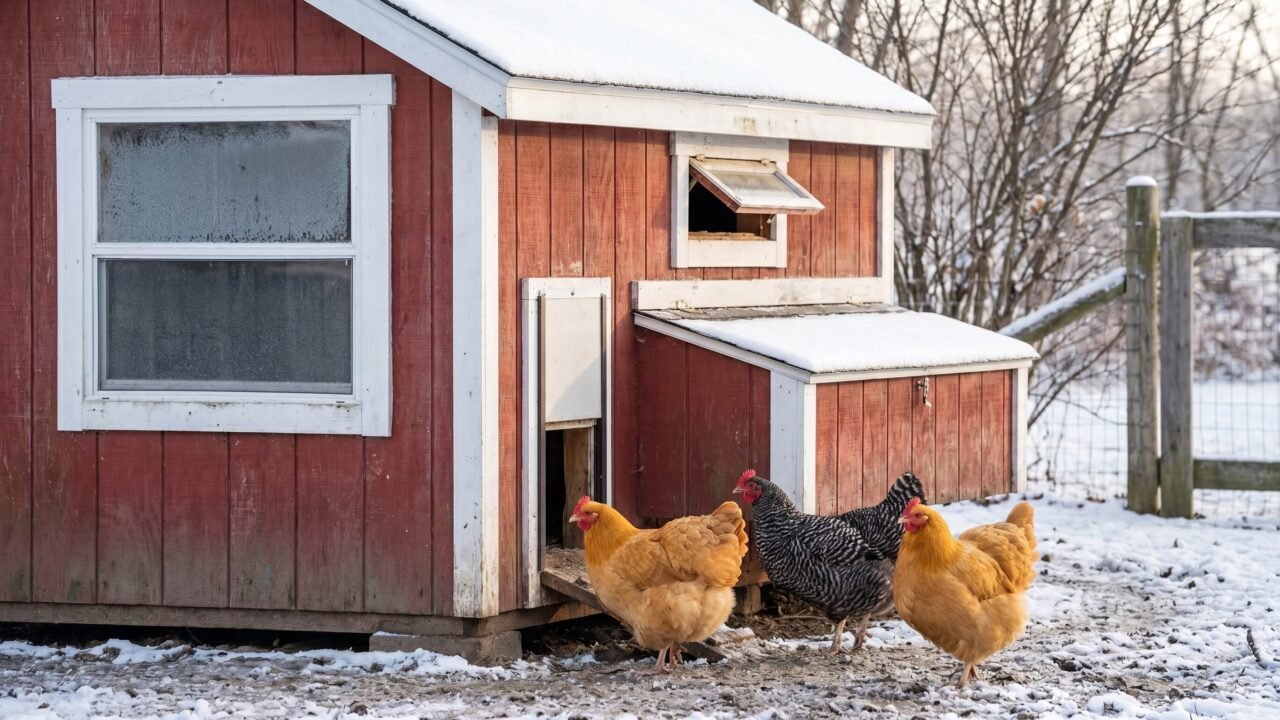
How to keep chickens warm in winter: the short answer
Healthy chickens do not need a heated coop. They need a dry, draft-free space with steady airflow to carry away moisture and ammonia. Keep the bedding deep and dry, roosts wide and flat so birds can cover their feet overnight, and block cold drafts at roost height while leaving high vents open. Get those four things right and most acclimated flocks handle single-digit nights without supplemental heat.
That said, there are real hazards in a cold coop - frostbitten combs, frozen water, and the fire risk of a poorly placed heat lamp. The sections below cover each of these areas in full, grounded in university poultry extension research.
Why ventilation beats heat
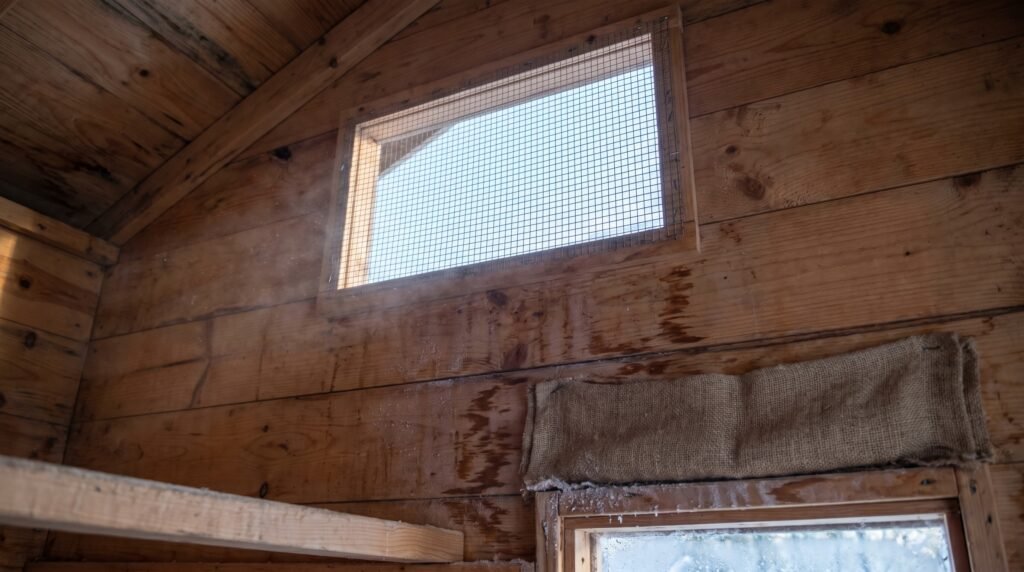
Chicken manure is roughly 70 percent water, according to University of Minnesota Extension. Add the moisture from breathing and you get a coop that, without airflow, becomes a warm, damp incubator for respiratory disease and frostbite rather than a shelter against them. Condensation on windows first thing in the morning is the clearest signal that ventilation is failing.
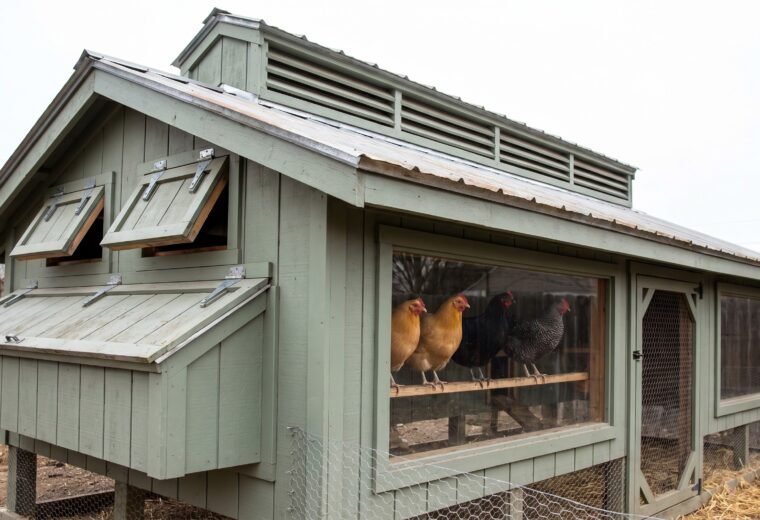
The fix is high vents - positioned above roost height so fresh air enters near the peak and drops slowly toward the floor, warming as it falls, without blowing directly across sleeping birds. Roof vents or a south-facing ridge opening work well; burlap over partially open windows is a classic low-cost option for smaller coops. What you must avoid is sealing the coop tight. "Air exchange within a coop is key to preventing moisture build-up and poor air quality due to ammonia," Minnesota Extension states plainly.
As for supplemental heat: University of New Hampshire Extension recommends against it in most circumstances because "the risk of a heat source causing a fire is too high with combustible bedding materials present." Heat lamps are a documented ignition source in coops, and a cold snap that cuts a lamp off can leave birds less acclimated to the actual temperature than if they had never had heat at all. Ohio State University Extension confirms: cold-tolerant breeds acclimated to the weather, living in an insulated, dry coop with adequate ventilation, "do not usually need supplemental heat." If you keep bantams or very small flocks in extreme climates, a purpose-built flat-panel coop heater is a safer option than an open bulb lamp - but that decision is covered in detail in our piece on whether chickens need heat in winter.
For a complete look at coop air management, see our chicken coop ventilation guide.
Dry bedding: the job that never ends
Wet litter is the engine of frostbite. Extension.org's frostbite resource notes that frostbite in chickens is more likely "during the nighttime hours in a cold, poorly ventilated coop with damp bedding." The two variables - ventilation and bedding - reinforce each other: good airflow dries the litter, and dry litter reduces the moisture load on ventilation.
University of Minnesota Extension recommends 4 to 6 inches of straw or wood shavings. As the top layer soils, stir it so manure works toward the bottom, where microbial activity generates a small but real amount of warmth - this is the deep litter principle. Do not clean the coop down to bare floor in November; postpone the full cleanout until spring and let the bedding layer build. A useful field check: press a handful of bedding - if it clumps and holds its shape, the litter needs stirring or topping up with fresh material.
A few practical points worth knowing:
- Pine shavings dry faster and resist compaction better than straw alone; mixing both works well.
- Add 6 to 8 inch kickboards at doors so birds do not scatter litter when they exit.
- Wet patches near waterers need immediate attention - a dripping nipple drinker or a spilled fount can ruin a good litter bed within days.
- Avoid hay as primary bedding; it mats and molds quickly when damp.
Roost width and the frozen-toes problem
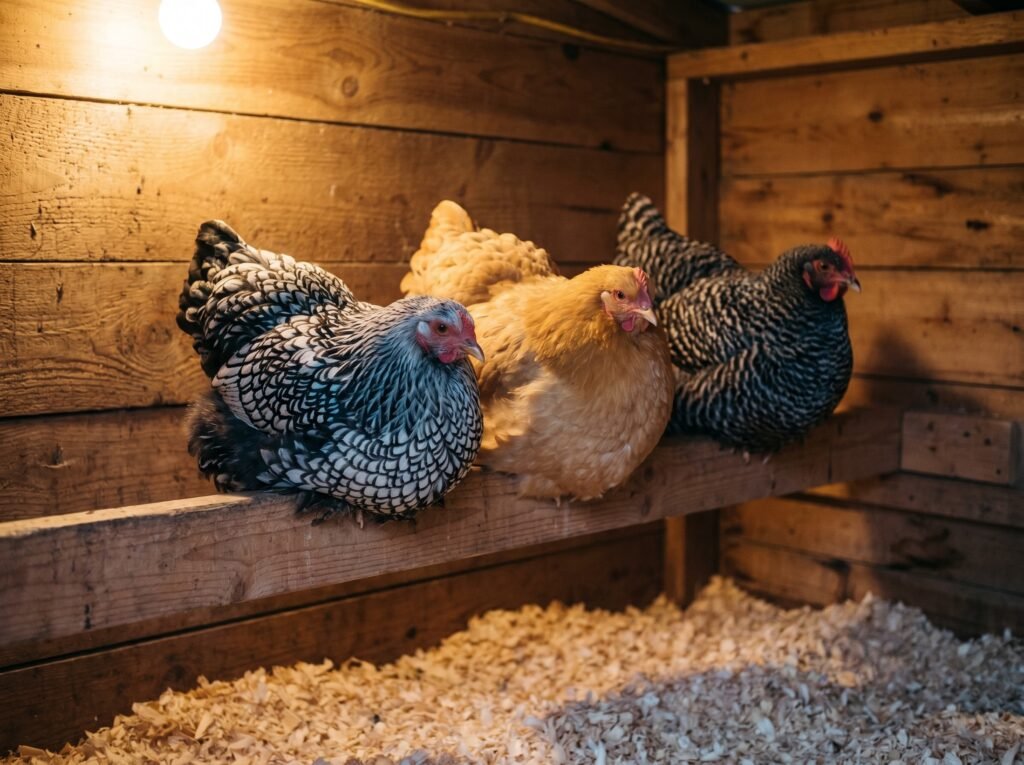
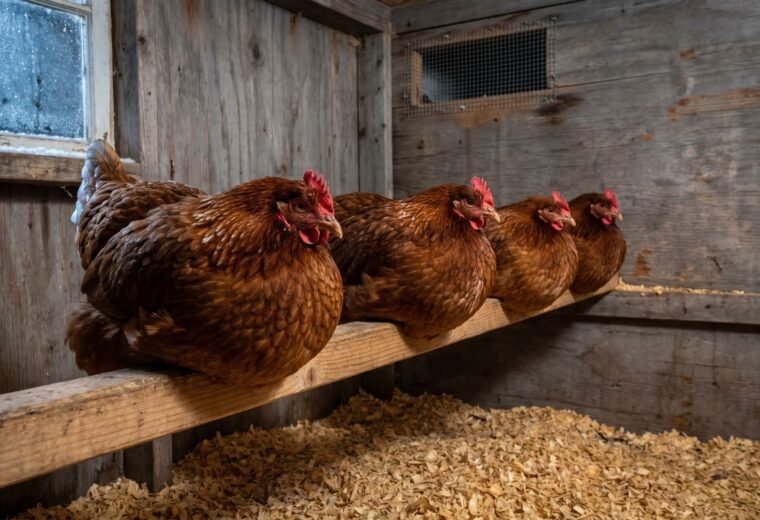
A chicken on a narrow round roost must grip with its toes exposed to cold air all night. On a flat, wide roost, the bird squats down and covers its feet with its breast feathers - a simple insulation trick that makes a real difference at 10 degrees Fahrenheit.
Ohio State Extension recommends roosts of 1.5 to 3 inches in diameter with at least 6 to 8 inches of linear space per bird. A rough-sawn 2x4 board mounted flat-side-up hits the sweet spot: about 3.5 inches wide, splinter-free if sanded lightly, and inexpensive. Avoid metal and plastic - both conduct cold readily and increase frost risk at contact points. Minnesota Extension notes roosts should start at least 12 inches above the floor and provide roughly 9 inches of space per bird.
Position roosts higher than the nest boxes so birds choose the roost over the boxes at night; chickens that sleep in nest boxes pack in poorly and foul them badly, compounding frostbite risk. For full roost design and height rules, see our chicken roosts and bars article.
Blocking drafts without blocking airflow
The distinction that trips most first-time keepers: a draft is cold air moving fast across birds at roost level; ventilation is air moving slowly through the coop above roost level. You want to eliminate the first and protect the second.
Walk your coop in early autumn with a stick of incense or a cheap smoke pen. Hold it at roost height near every wall gap, door frame, and window edge. Visible horizontal smoke movement at that level means a draft to fix. Common sources:
- Gaps between wall boards that opened when wood dried over summer
- Ill-fitting pop doors with daylight visible around the frame
- Nest box lids left propped open
- Low vents positioned at roost height rather than well above it
Fill gaps with caulk or staple hardware cloth over any openings that need to breathe but must block wind. The north and west walls typically catch the worst prevailing winds; prioritize those. South-facing vents or windows at the ridge can stay open through mild cold spells without creating a direct cross-draft at bird height.
Water: the single task you cannot skip
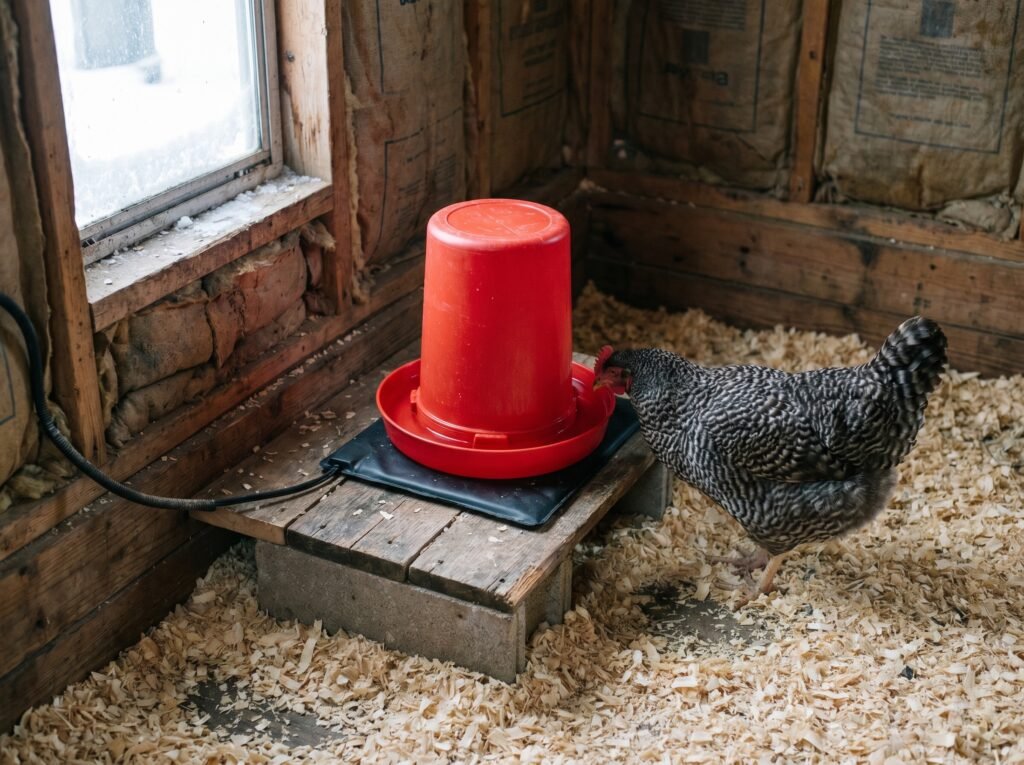
Chickens that cannot drink stop eating. A bird without water for even a few hours in winter drops production and weakens quickly. Frozen water is one of the most common winter-care failures, and it is entirely preventable.
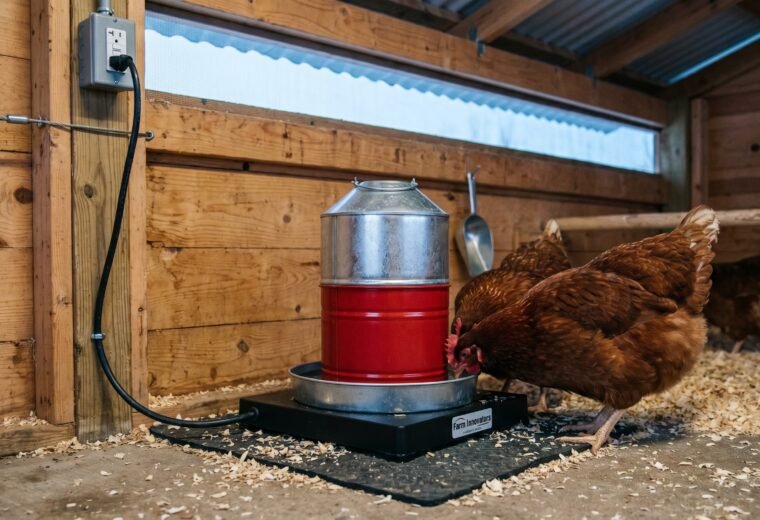
Ohio State Extension recommends changing water at least twice daily on cold days and checking availability in the evening. For most backyard keepers, a heated base or a submersible water heater is the practical answer - it keeps a standard plastic fount just above freezing without overheating the water or creating a steam problem inside the coop. Rubber buckets are useful because ice pops out easily when you invert them; they do not need electricity but require frequent trips.
Four rules that reduce failure:
- Place the waterer on a low platform or cinder block to keep litter out; do not set it on the floor where birds scratch shavings into it.
- Keep the waterer out of the corner with the best airflow - moving air freezes water faster. A slightly sheltered spot inside the coop is better.
- Never rely on snow as a water source; chickens consume very little of it and will go short.
- Check heated bases on the coldest mornings - the thermostat can fail and leave you with a block of ice by mid-morning.
Our best heated waterers roundup covers the options most worth buying for small flocks.
Cold-hardy breeds and comb type: a quick comparison
Breed choice is the only lever you can pull before winter that costs nothing during winter. Large, dense-feathered birds with small combs tolerate cold far better than lightweight, large-combed birds. The table below compares the breeds readers ask about most often, using data from Cackle Hatchery and extension breed lists.
| Breed | Comb type | Eggs per year (approx.) | Cold hardiness | Frostbite risk |
|---|---|---|---|---|
| Wyandotte | Rose (low, no spike) | 180-260 | Excellent | Low |
| Buff Orpington | Single | 200-280 | Very good (dense feathering) | Moderate |
| Plymouth Rock (Barred) | Single | 250-280 | Very good | Moderate |
| Light Brahma | Pea (very small) | 150-200 (Cackle Hatchery estimate) | Exceptional (size + pea comb + feathered shanks) | Very low |
| Dominique | Rose | 180-230 | Excellent | Low |
| Leghorn | Single (large) | 250-300 | Fair (light frame) | High |
| Easter Egger / Ameraucana | Pea | 180-200 | Good | Low |
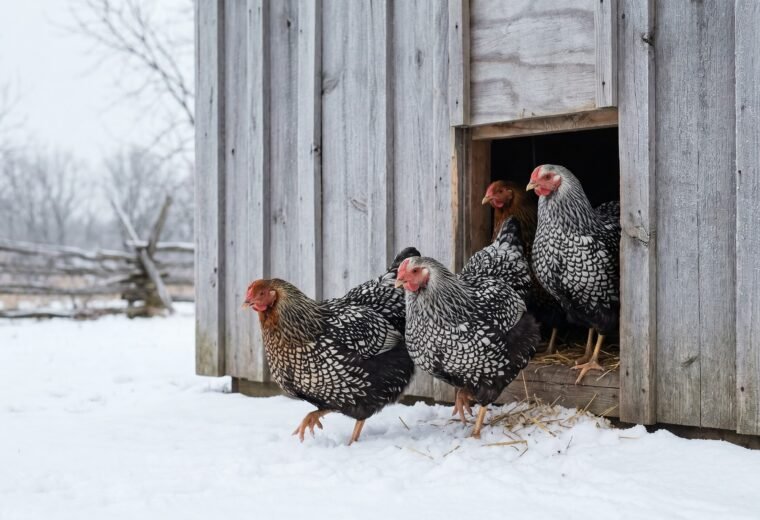
The comb type matters because it determines surface area exposed to cold air overnight. Extension.org's frostbite resource confirms that "the incidence of frostbite in chickens with the smaller comb types, such as pea and strawberry, is much less." Wyandottes carry a rose comb that "lies close to the chicken's head, making it less susceptible to frostbite than a larger, upright single comb," according to Cackle Hatchery's breed record. Brahmas are doubly protected: their pea comb is tiny, and their feathered shanks cover the toes that would otherwise sit exposed on a bare-legged bird.
Single-combed breeds like Plymouth Rocks and Orpingtons do fine in cold climates - their body mass compensates - but their combs need the petroleum jelly treatment on the coldest nights. Leghorns are the challenge bird: UNH Extension places White Leghorn production at 250-300 eggs per year for backyard flocks, and their large single combs and light frames make them a poor choice where nighttime lows regularly hit 10°F or below. For a full breed-by-breed breakdown, see our cold-hardy chicken breeds guide.
Frostbite: recognizing it, preventing it, and when to call a vet
Frostbite in chickens occurs when tissue fluid freezes and cells die. It most commonly hits combs, wattles, and toes, and roosters face greater risk because they typically carry larger combs and wattles. Pale gray or white tissue that later turns black and shrivels is the classic sign; a bird standing on one leg or repeatedly lifting a foot is telling you something is wrong.
Prevention comes down to the coop conditions already covered - dry air, dry bedding, adequate ventilation - plus one simple topical step: petroleum jelly rubbed onto combs and wattles on the coldest nights. According to UNH Extension, it provides a protective barrier that reduces moisture loss from exposed tissue. Apply it with a gloved finger to all prominent comb points after the birds settle on the roost. It is a useful addition for large-combed breeds, but it is not a substitute for a dry, well-ventilated coop.
If you find frostbitten tissue: bring the bird to a warm space and warm the affected area slowly using body heat or warm water. Do not rub the tissue - rubbing damages the already-fragile cells. Extension.org notes that healing from frostbite typically takes four to six weeks. For anything beyond mild surface discoloration - blistering, spreading blackened tissue, or signs of infection - contact a poultry vet rather than attempting home treatment. Our seasonal chicken care guide covers the broader arc of protecting your flock through weather extremes.
A pre-winter coop walkthrough: the checklist
Running through this list in October - before the first freeze - takes less than an hour and catches most of the problems that cause winter losses.
- Smoke-test all roost-height gaps and seal any that show draft movement
- Confirm high vents are open and unobstructed; clear cobwebs or debris from vent screens
- Switch to deep bedding: start at 4 to 6 inches of pine shavings or mixed shavings-and-straw
- Install or test the heated waterer base; verify the thermostat cycles correctly
- Check roost dimensions: a flat 2x4 board (3.5 inches wide) is ideal; if using round stock, Ohio State Extension specifies 1.5 to 3 inches in diameter; allow 6 to 8 inches of linear space per bird, and position roosts higher than nest boxes
- Apply petroleum jelly to large-combed birds' combs and wattles before the first hard freeze
- Confirm the pop door latch works smoothly with gloves on - cold makes small latches stiff
- Look for any insulation material accessible to birds and cover it; chickens eat foam insulation