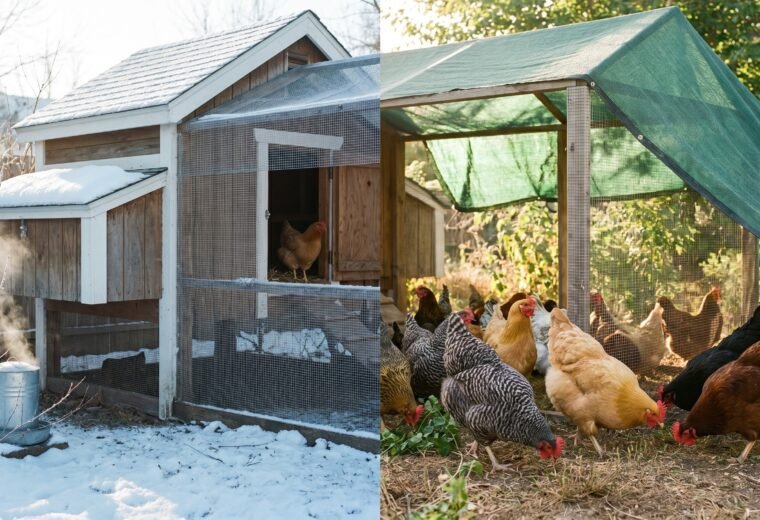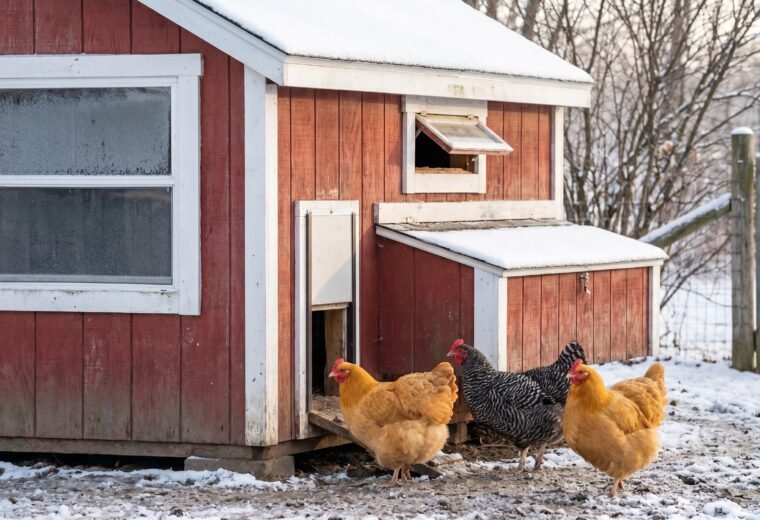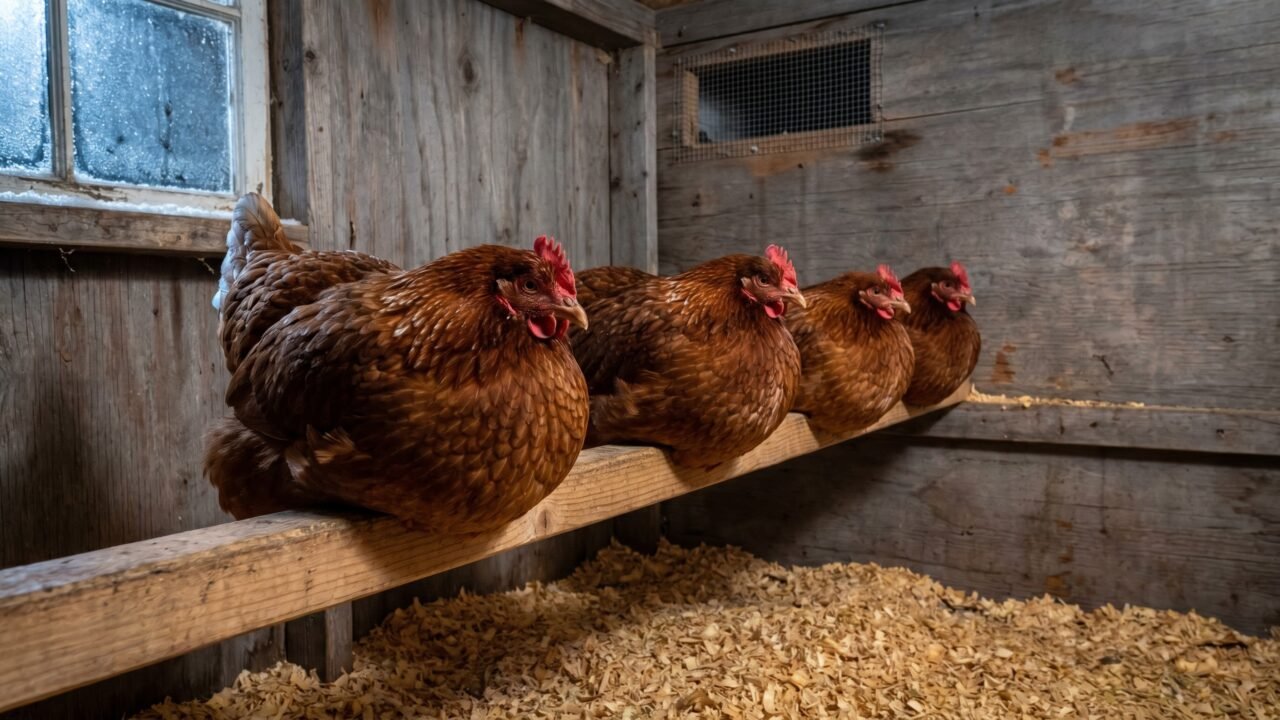
For the vast majority of backyard flocks, the answer is no. A healthy, fully feathered standard-breed chicken in a dry, draft-free coop can handle surprisingly brutal cold without any electric heat. Cold-tolerant breeds that are acclimated to winter weather and housed in a dry, insulated coop with adequate ventilation generally do not need added warmth - that is the consistent finding from Ohio State University Extension. University of New Hampshire Extension goes a step further, advising outright against it in most situations - because the fire risk from heat lamps and combustible bedding is, in their words, "too high."
There are real exceptions: bantams, young birds that are not yet fully feathered, and the occasional hard-freeze situation with a very small flock in an uninsulated structure. Knowing when heat genuinely helps - and how to provide it without burning the coop down - is what this guide covers.
Why do standard-breed chickens handle cold weather so well?
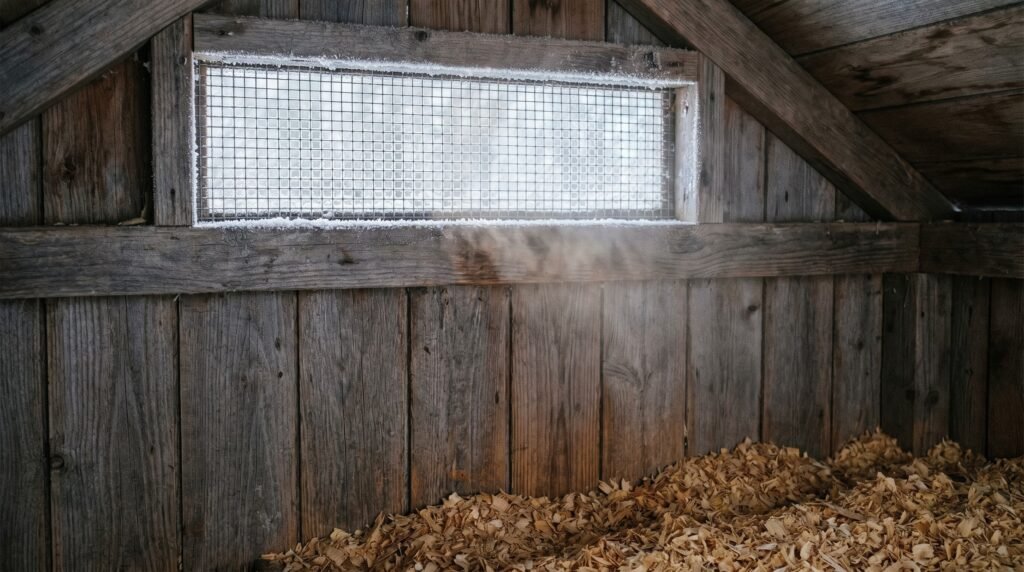
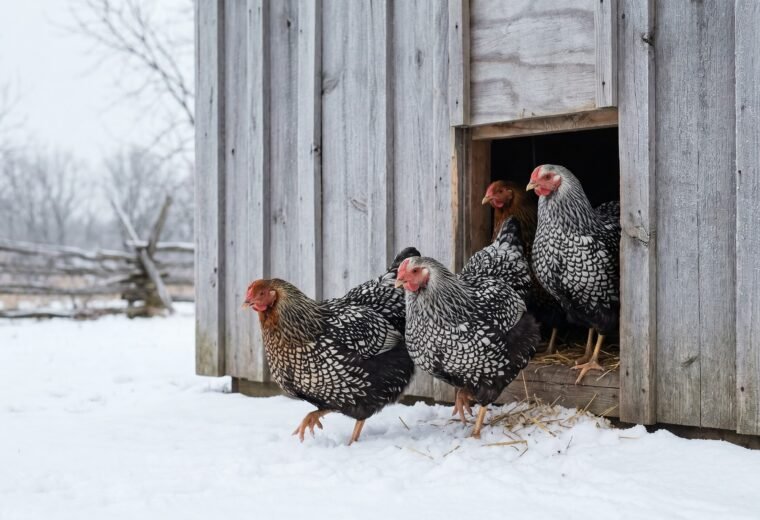
Standard-breed chickens run a core body temperature around 106 degrees F and are wrapped in dense down that traps warm air against the skin. On a wide roost bar they tuck their feet under their bodies overnight. The real enemy is not cold air - it is humid air inside the coop, which causes far more harm than low temperatures alone.
When they fluff up on a cold night they are doing the same thing a person does pulling on a down jacket. Given a roost bar wide enough to sit flat (a 2x4 set wide-side-up, 8-10 inches of bar per bird), they tuck their feet under their body and sleep comfortably well below freezing.
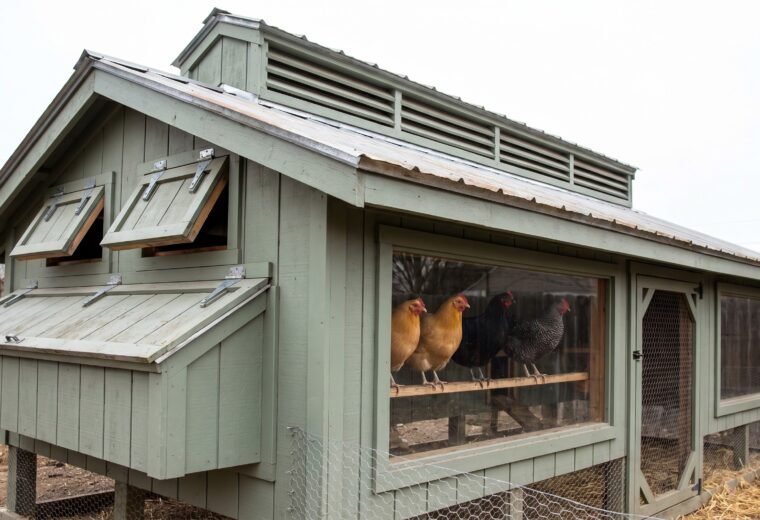
Where chickens actually struggle is not temperature alone. It's moisture. Humid air damages birds far more than cold air alone - it saturates feathers, raises the moisture contact on combs and wattles, and pushes frostbite risk even when outside temperatures are only moderate (Ohio State University Extension). Eight hens produce a substantial amount of water vapor through respiration and manure overnight. Seal a coop too tightly to hold warmth and that moisture has nowhere to go - it condenses on combs, wattles, and cold wall surfaces, creating the exact conditions that cause frostbite even in moderate temperatures.
This is the core argument against adding heat: keepers who seal their coops to trap warmth often inadvertently spike the humidity, creating the very conditions that hurt their birds. Ventilation and dry bedding do more for cold-weather health than a heat lamp. Extension recommendations for vent sizing use floor-area-based rules - Penn State and MSU guidance, for example, ties the required vent area to floor space rather than head count.
Breed selection also plays a bigger role than most first-year keepers realize. Pea-comb and strawberry-comb breeds - Brahmas, Buckeyes, Dominiques, Ameraucanas - are significantly less prone to frostbite than large-combed breeds like Leghorns in the same coop. eXtension's poultry health resources confirm: "The incidence of frostbite in chickens with smaller comb types, such as pea and strawberry, is much less." If you're building a flock for a genuinely cold climate, comb type deserves as much attention as egg production numbers.
How serious is the fire risk from heat lamps in a chicken coop?
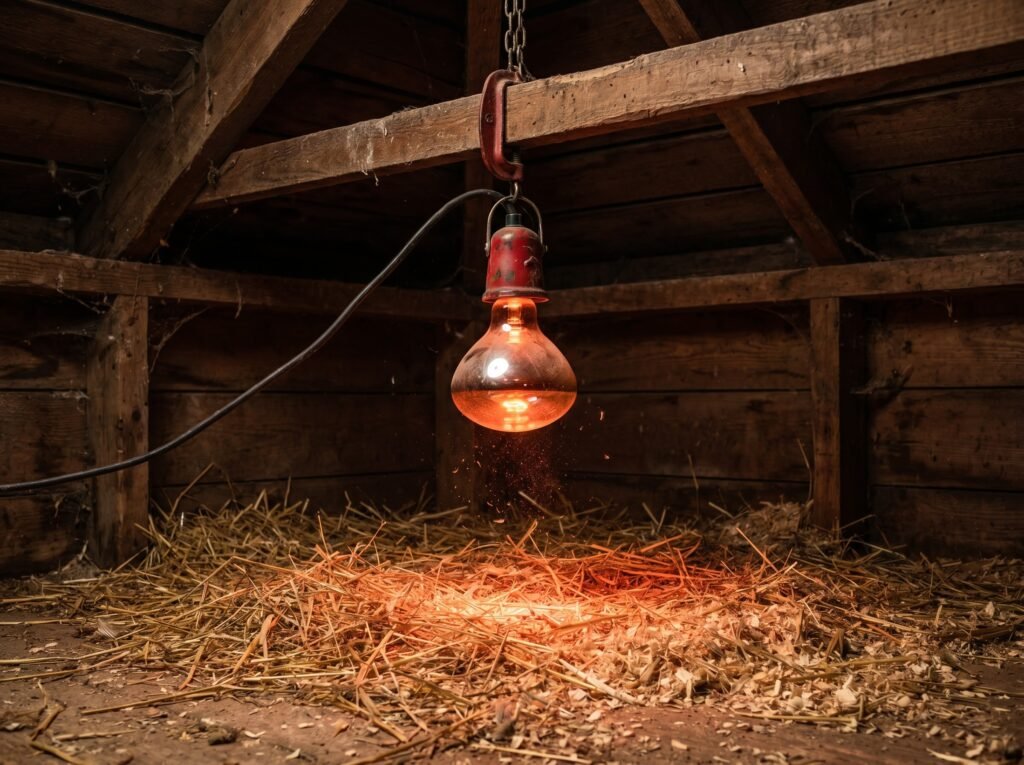
Serious enough that two major extension services advise against heat lamps outright. NFPA data show heating equipment as the leading cause of barn fires, peaking in January when keepers are most tempted to plug something in. A coop fire is fast and hard to stop - bedding is dry tinder and the structure is usually small and full of combustible dust.
Heat lamps killed more backyard coops last winter than cold weather did. According to NFPA data analyzed by Penn State Extension, heating equipment was the leading cause of barn fires between 2006 and 2010, peaking in January - the coldest month, when keepers are most tempted to add a bulb. Rutgers NJAES echoes the same data: "Heating equipment is the leading cause of fires in barns with heat lamps as the leading heating equipment involved."
Cornell Small Farms Program describes the physics without softening it: a heat lamp is "an exposed hanging hot bulb that is drying the bedding (tinder) below," and that combination is always a fire risk. Chickens amplify the problem - they knock things over, peck at cords, and produce enough fine dust that debris drifts onto the hot bulb. The coop is small and usually difficult to access quickly, so by the time a fire is noticed, the structure is already involved.
If you choose to use a heat lamp despite the risk, these precautions reduce (not eliminate) the danger:
- Hang it with a metal chain, never a cord or twine.
- Use a lamp fixture with a wire cage or guard around the bulb.
- Keep the bulb at least 18 inches from any bedding, walls, or perch material.
- Install a smoke detector inside or immediately outside the coop.
- Never run it from an extension cord - wire it to a dedicated outlet.
- Install an arc-fault circuit interrupter (AFCI) breaker on that circuit.
UNH Extension's position remains: the risk "is too high with combustible bedding materials present and given the tendency of chickens to knock things over."
When is supplemental heat actually warranted for chickens?
Four situations genuinely justify it: bantams (too little body mass to self-heat), chicks under 6-8 weeks old (no adult feathering), birds that are sick or underweight, and a very small flock in a large uninsulated space during a hard freeze. Healthy standard-breed adults in a properly built coop almost never qualify.
Some situations are genuinely different from the healthy-standard-breed baseline, and it is worth being precise about what they are.
University of Minnesota Extension recommends supplemental heat "when temperatures fall below 35 degrees Fahrenheit" - but measured at roost height inside the coop, not outside. A well-insulated coop with 15 or 20 standard-breed birds can stay 15-20 degrees F warmer than the outside air on the birds' combined body heat alone. Reaching 35 degrees F inside takes extremely cold outside temperatures in a well-built, well-populated coop. For a flock of three or four birds in a large, uninsulated structure, the threshold arrives much sooner.
The situations where supplemental heat is most defensible:
- Bantams. UNH Extension calls them out specifically: "If you raise smaller breeds like bantams, you may consider insulating the coop and/or carefully using a specially designed heater." Smaller birds have less body mass relative to surface area and lose heat faster than a seven-pound Plymouth Rock.
- Chicks not yet fully feathered. Young birds under roughly 6-8 weeks need supplemental heat regardless of season. A brooder plate is the right tool here, not a heat lamp.
- A bird that is sick, underweight, or recovering. A bird that is not eating normally may not thermoregulate normally either. Provide warmth, isolate the bird from the flock, and contact a poultry vet.
- A very small flock in an uninsulated space during a sustained hard freeze. One or two birds cannot generate meaningful group warmth. Monitor roost-level temperature; if it drops toward 35 degrees F, a flat-panel radiant heater is a better answer than a heat lamp.
What are the safer heating options if a coop genuinely needs warmth?
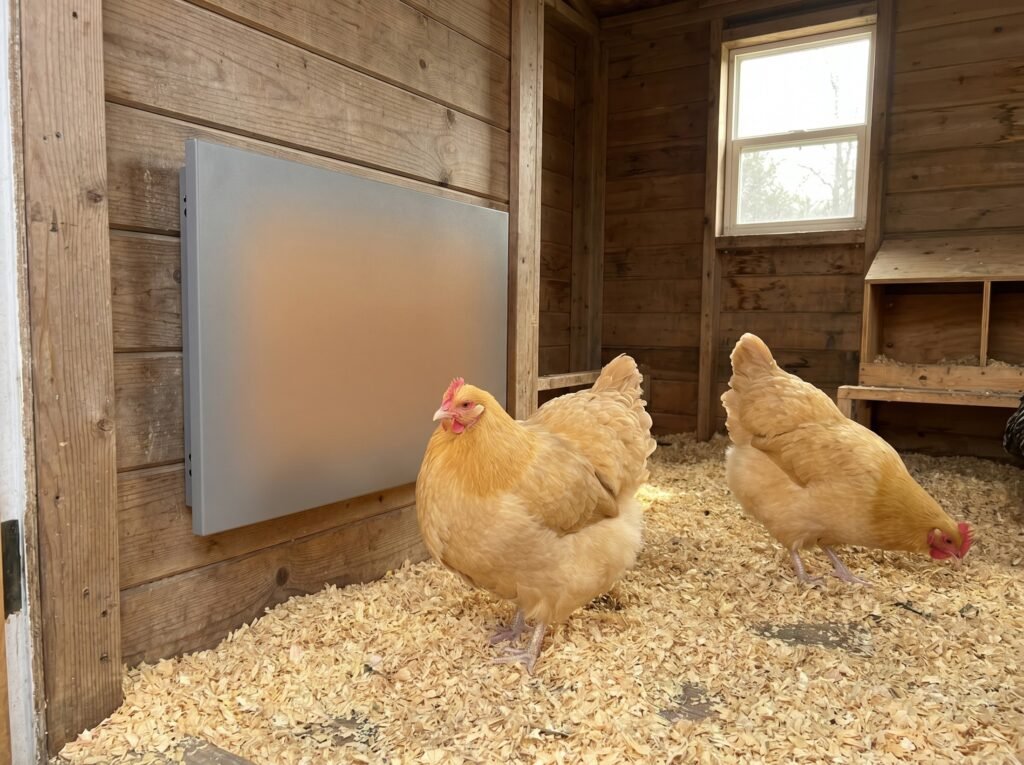
Flat-panel radiant heaters are the extension-recommended alternative to heat lamps. They warm the birds directly rather than heating the surrounding air, run at lower surface temperatures, and typically include tip-over and overheat shutoffs. Brooder plates work the same way for young chicks. Both carry substantially lower fire risk than a traditional 250-watt heat lamp bulb.
If your situation genuinely requires supplemental heat, the differences between heat sources matter a lot. Minnesota Extension describes radiant heaters this way: they "heat the birds but not the surrounding air space." A flat-panel radiant heater warms the birds sitting near it without turning the surrounding bedding into a desiccated fire hazard. Purpose-built flat-panel wall-mount heaters also typically include tip-over and overheat shutoffs that a traditional heat lamp simply does not have.
Here is how the main options compare:
| Heat source | Fire risk level | Effect on coop humidity | Best suited for | Main drawback |
|---|---|---|---|---|
| Incandescent heat lamp (250w bulb) | High - open bulb, actively dries bedding | Lowers humidity (dries air and bedding) | Brooding chicks (with strict precautions) | Leading cause of coop fires; no automatic shutoff |
| Flat-panel radiant wall heater | Low - flush mount, low surface temp, overheat shutoff | Minimal impact | Bantams; small flocks in extreme cold | Higher upfront cost; requires a wired outlet |
| Brooder plate (chick-size) | Low - thermostatically controlled | Minimal | Chicks in a brooder box | Too small for adult birds; not a full-coop solution |
| Deep litter method (passive heat) | None | Actively managed through turning and adding bedding | Any flock, year-round | Requires consistent moisture monitoring; not a substitute in extreme cold for very small flocks |
| Added insulation only (no electricity) | None | Can raise humidity if ventilation is reduced - must balance | Most standard-breed flocks | Limited effect with very small flocks in very large spaces |
Whatever option you choose, heat is not a substitute for proper moisture management. A warm, damp coop causes more frostbite than a cold, dry one.
What does non-electric winter management actually accomplish?
More than most keepers expect. Sealing floor-level drafts, maintaining deep dry bedding, keeping upper vents clear, and housing enough birds together can push roost-level temperatures 15-20 degrees F above outside air. That's the difference between a coop that stays above 35 degrees F on a cold night and one that doesn't - without any electricity.
Experienced keepers consistently report that the most reliable cold-weather gains come from four changes that require no electricity at all: sealing drafts at the floor and lower wall while keeping upper vents open, maintaining 8-10 inches of pine shavings on the floor, choosing cold-hardy breeds with small combs, and grouping at least 14 birds together in the space. Minnesota Extension's data supports the finding that these practices keep roost-level temperatures 15-20 degrees F above outside air through sustained cold snaps - no extension cord required.
Feed matters too. A chicken's digestion generates metabolic heat, and research consistently shows that birds eat more in cold weather than in summer to maintain core temperature. Minnesota Extension notes that poultry operating outside the 60-75 degree F thermoneutral zone draw on additional feed energy to stay warm, and this increased intake is normal and expected. Make sure your flock has free-choice access to their layer feed and unfrozen water throughout the day. Offering scratch grain late in the afternoon gives their digestive systems something to process overnight, producing a modest amount of additional body warmth - a useful small trick, not a substitute for adequate calories.
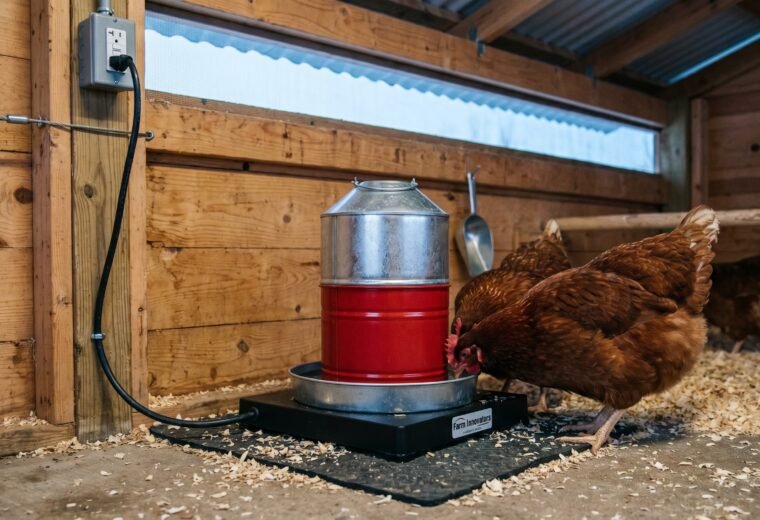
Water is the most pressing practical problem in winter, and it has nothing to do with coop temperature. A frozen waterer is a crisis within hours. A heated waterer base - the kind that sits under a standard metal fount - is the safest, most targeted electrical investment for cold-weather chicken keeping. A low-walled rubber bucket works as a manual alternative: flip it upside-down, knock the ice disc out, and refill.
For a full look at cold-season management - molt timing, winter lighting decisions, and how these choices interact across November through March - the seasonal chicken care overview ties those threads together.
What actually causes frostbite in backyard chickens?
Moisture, not cold alone. eXtension confirms that flocks can thrive at sub-zero temperatures if moisture is managed well. A coop that smells of ammonia or shows condensation on windows in the morning is the highest-risk environment for frostbite - not a coop that is simply cold. Fix the ventilation before worrying about the thermometer reading.
Frostbite appears most often on combs, wattles, and toes, and extension sources agree on the underlying mechanism: cold air combined with high moisture, not cold alone. eXtension's poultry resources confirm that flocks can thrive at sub-zero temperatures on deep litter with no supplemental heat, as long as moisture is managed. Walk into your coop on a winter morning and notice condensation on the windows or a strong ammonia smell - that is an inadequate-ventilation problem, and it raises frostbite risk more than the outside temperature reading does.
A practical frostbite prevention checklist:
- Maintain upper vent openings even during hard freezes - moving moist air out is more important than holding warmth in.
- Keep bedding dry; turn the litter and add fresh shavings when the surface gets damp.
- Use 2x4 roost bars set wide-side-up so birds can cover their toes with their belly feathers overnight.
- Apply a thin layer of petroleum jelly to large combs and wattles before a predicted hard freeze; it insulates against moisture contact but does not treat existing frostbite.
- Consider pea-comb or strawberry-comb breeds if your winters consistently drop below 10 degrees F.
If a bird shows gray, black, or brittle tissue on the comb, wattles, or toes, keep the area dry and get a poultry vet involved. Do not apply rapid heat or rub the affected tissue - that causes additional cell damage.