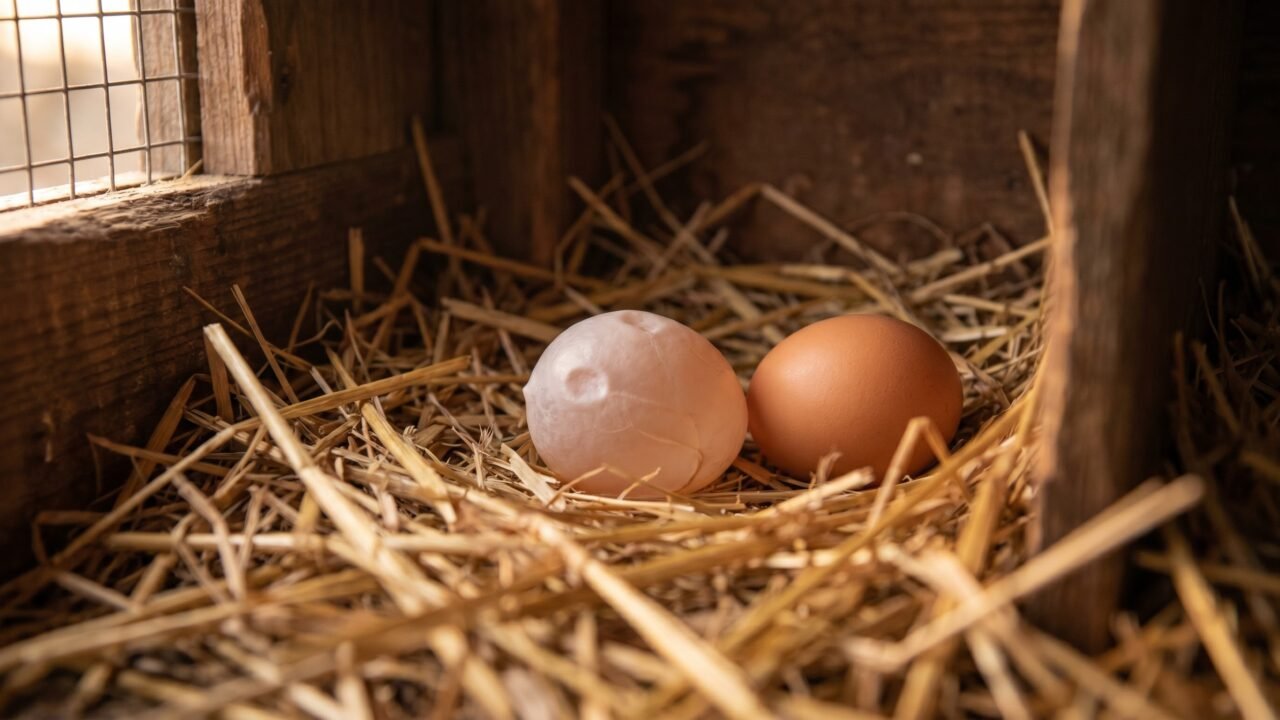
Pick up a soft, rubbery egg and your first instinct is to blame the feed. That instinct is usually right - but the story is a bit more layered than just "add calcium." An eggshell is mostly calcium carbonate, and building one takes 20 or more hours in the shell gland. A lot can go wrong in that window. The good news: most soft-shell problems in a backyard flock respond quickly to straightforward husbandry fixes. A few, though, are signals that something else needs attention.
Below is a practical breakdown of what causes soft and thin shells, which situations are genuinely normal, and what to change in the coop.
Why does eggshell formation put such a heavy demand on a hen's calcium supply?
Because building one shell overnight is an outsized physiological task. A hen mobilizes 8 to 10 percent of her total body calcium per shell; roughly 47 percent comes from bone, and the remaining 53 percent must arrive directly from that day's diet. Chronically short rations drain the skeleton faster than it can recover, collapsing shell quality over weeks.
That split matters. No supplement can fully compensate for a diet that is chronically short on calcium, because the hen's skeleton - specifically the spongy medullary bone tissue - is constantly being drawn down to cover the shortfall. Over weeks or months without an adequate dietary supply, those reserves drain and shell quality crumbles.
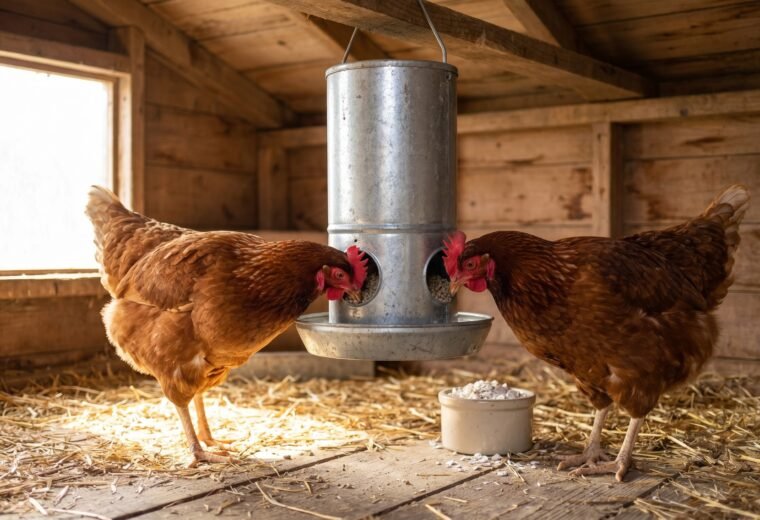
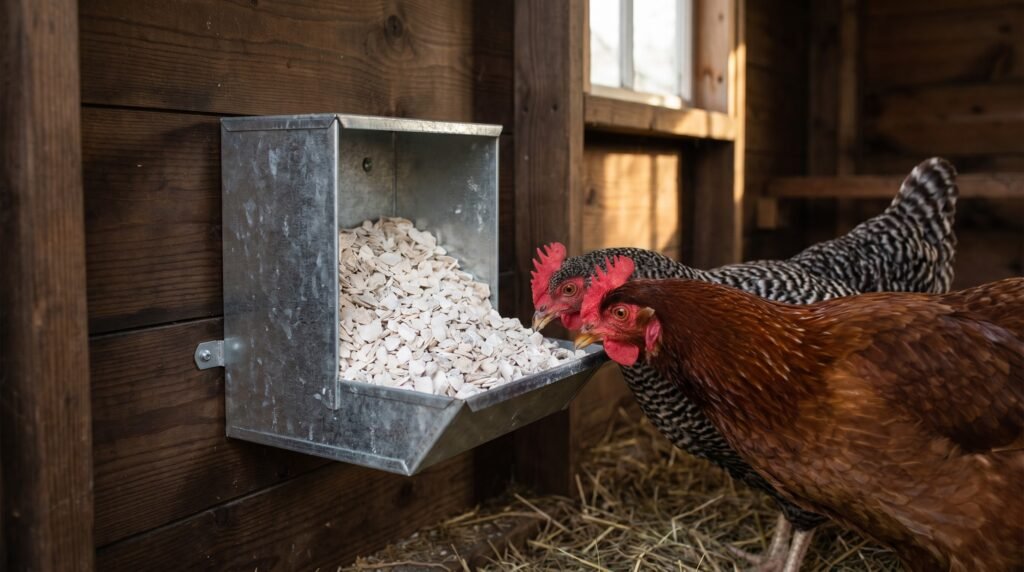
Layer feed is formulated to carry 2.5 to 3.5 percent calcium - compared with roughly 1.2 percent in a grower ration - precisely because laying hens need so much. That said, high-producing birds sometimes need more than a complete feed alone provides. Offering coarse oyster shell free-choice lets each hen self-regulate: chickens have a genuine calcium appetite and will eat more oyster shell on days when they sense the need.
Two other nutrients work alongside calcium. Phosphorus must be balanced correctly - too much or too little relative to calcium disrupts how well calcium is absorbed and deposited in the shell. Vitamin D3 is the third leg of the stool: it controls intestinal calcium uptake and, as Mississippi State University Extension notes, thin shells are consistently observed when vitamin D3 is not provided at adequate levels. Hens exposed to direct sunlight can produce some D3, primarily through UV exposure on bare skin areas such as the comb, wattles, and legs, but birds kept in covered runs rely almost entirely on what is in the feed.
When is a soft or thin eggshell something to worry about?
Not always. New pullets routinely turn out odd eggs for two to four weeks; that is normal calibration. In adult hens, one soft-shell every few weeks is low-level background noise. The warning sign is persistence: soft or thin shells from multiple birds, or from one hen for more than a week, calls for a systematic look at the causes below.
New pullets in their first two to four weeks of lay can produce shell-less eggs, paper-thin shells, double yolks, or tiny "wind eggs" with no yolk. The oviduct is calibrating itself; the shell gland's timing is imprecise early on. As long as the young hen has access to layer feed and oyster shell, these quirks settle down on their own and intervening with extra supplements is usually unnecessary.
In adult hens, an individual bird's calcium demand naturally runs higher than the flock average on some days. That variation accounts for most occasional soft shells in a healthy, well-fed flock - check the treat volume and move on.
What are the most likely causes of soft or thin eggshells in a backyard flock?
Dietary calcium gaps and feed dilution with scratch account for the majority of cases. Heat stress, advancing hen age, medullary bone depletion, predator-induced stress, and viral disease cover nearly everything else. The table below lets you match what you are seeing to the most probable cause and its fix.
Work through the table top to bottom and stop at the first match. The earlier causes are more common; reaching the disease row without a match first is genuinely uncommon in a small backyard flock.
| Cause | What you see | Likely flock size affected | Primary fix |
|---|---|---|---|
| Calcium gap in the diet | Thin shells, soft shells, or shell-less eggs; otherwise healthy birds | One or several birds | Switch to or confirm you are using a true layer feed (2.5-3.5% Ca); add coarse oyster shell free-choice |
| Feed dilution with scratch or treats | Thin shells across part of the flock; hens filling up on low-nutrient snacks | Often several birds at once | Cap scratch and treats at roughly 10% of total feed intake; prioritize the complete layer ration |
| Heat stress (summer) | Thin or pitted shells appearing during hot weather; otherwise normal production | Whole flock, coincides with heat wave | Improve ventilation and shade; offer cool water multiple times daily; see the cooling section below |
| Age (second year and beyond) | Gradual shell thinning over months; larger egg size | Older individual hens | Maintain oyster shell access; consider coarse-particle supplement for older birds; adjust expectations |
| Medullary bone depletion (no molt) | Increasingly poor shells in a high-producing hen that has never molted | Single hen | Allow or induce molt so bone reserves rebuild; see vet if concerned |
| Stress (predator pressure, flock disruption) | Occasional shell-less egg dropped outside the nest box, especially at night | One or two birds | Identify and reduce the stressor; secure the coop against nocturnal pressure |
| Infectious bronchitis or Egg Drop Syndrome | Sudden drop in shell quality across the flock; may see respiratory signs with IB | Multiple birds, rapid onset | Contact a poultry vet; no husbandry fix resolves a viral cause |
Does scratch grain or treat-feeding cause thin eggshells?
Yes - and extension advisors consistently identify feed dilution as the single most frequent cause of soft shells in backyard flocks. A good layer feed provides everything a hen needs, but only when it makes up the bulk of her diet. Generous scratch or treat portions displace the ration and cut effective calcium intake even when the feed bag says the right things.
Pour two cups of scratch into a 12-bird feeder at noon and half the flock may fill up on nearly pure carbohydrate and eat less layer feed for the rest of the day. That single act cuts effective calcium intake and dilutes every other nutrient in the ration - without the feed bag ever being at fault.
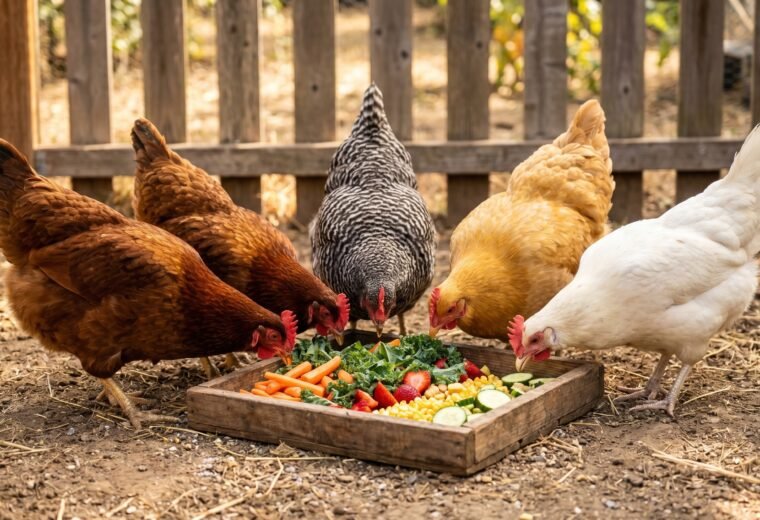
Scratch and treats belong in the flock's diet, just not as a major share of it. Keeping treats to roughly 10 percent of total daily intake - and offering them after the birds have spent a few hours eating their main feed - keeps the layer ration doing its job. Our guide to treats and what not to feed covers safe options and portion sizes in detail.
Can hot weather cause hens to lay thin-shelled eggs even on a good diet?
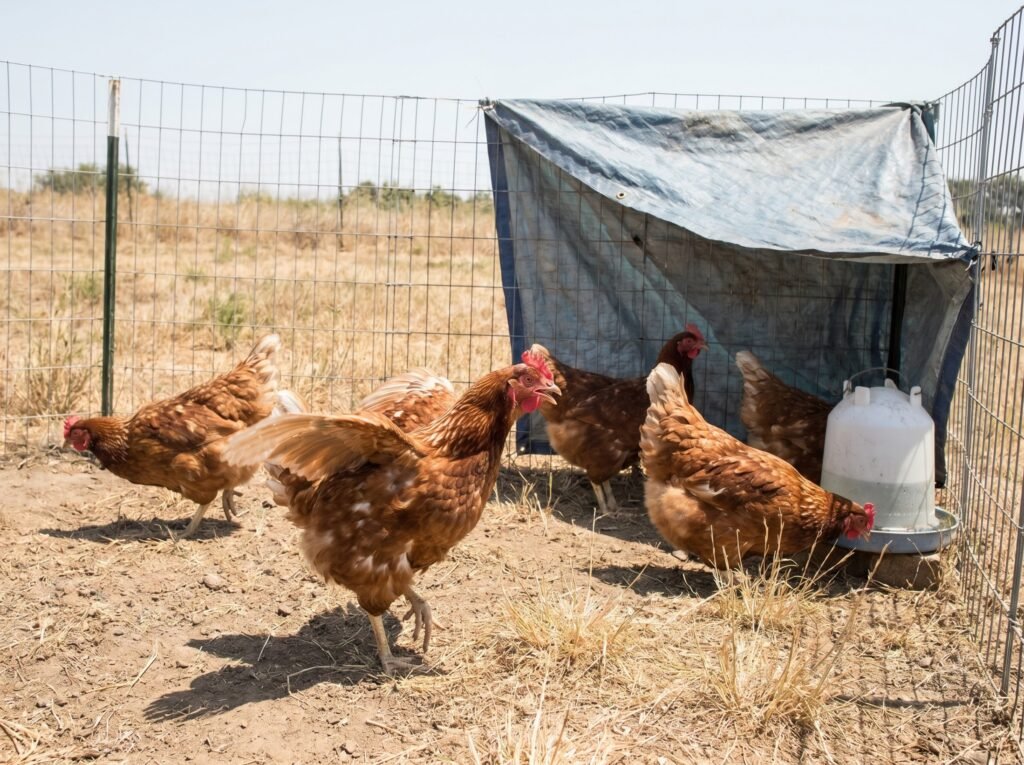
Yes. Heat stress triggers panting, which drives off CO2 and raises blood pH (respiratory alkalosis). That pH shift suppresses carbonic anhydrase, the enzyme the shell gland uses to deposit calcium carbonate. Peer-reviewed research found shell thickness dropped roughly 17 percent under severe heat - even when hens were eating the same ration as before.
The damage runs on two tracks at once. The enzyme disruption described above thins shells directly, and heat simultaneously suppresses appetite. Birds eat less feed, cutting calcium intake at exactly the point when the shell-gland chemistry is already compromised. The two effects compound each other.
Practical fixes during summer: maximize coop ventilation, provide shade over the run, and keep fresh cool water available throughout the day. Electrolyte products exist for heat-stressed flocks, though their effect on shell quality specifically is less established than basic temperature management. If thin shells appear in July and clear up by September, heat stress was almost certainly the cause.
Do eggshells get thinner as hens get older, even with proper feeding?
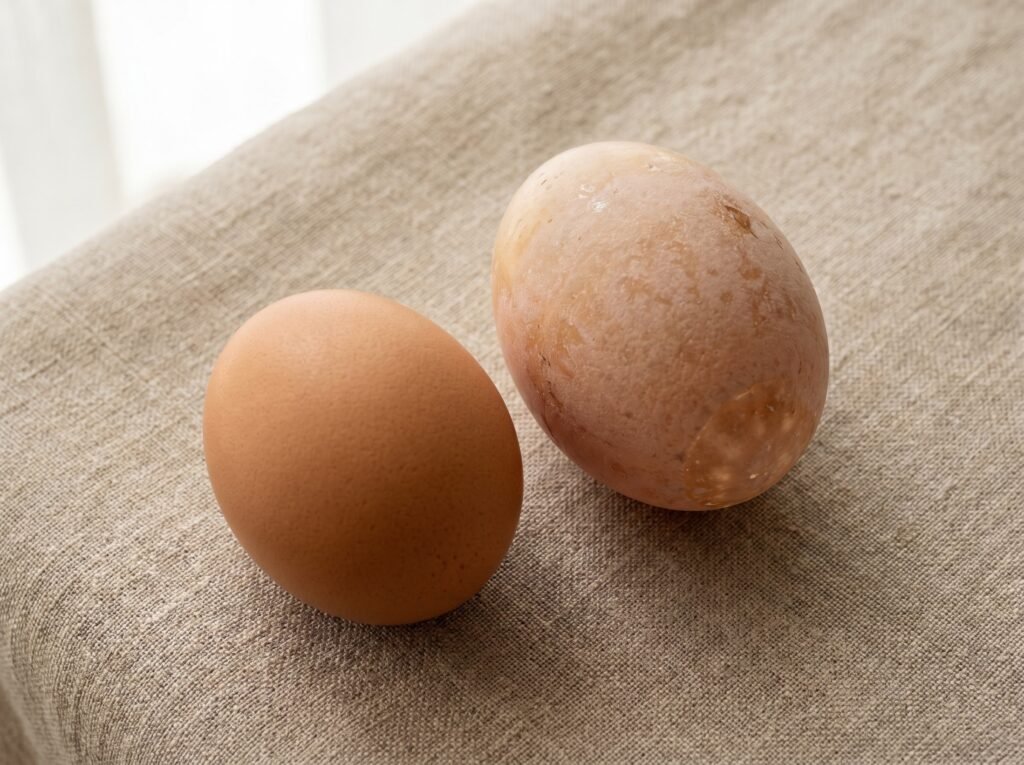
Yes, this is a well-documented and irreversible trend. Shell breaking strength fell 25 percent in one production-cycle study - from 5.8 kg at 33 weeks to 4.4 kg at 67 weeks - while eggs grew larger, spreading the same mineral over more surface. Free-choice oyster shell slows the decline but cannot stop it. Adjust expectations for any bird past 18 months.
Shell thickness data from the same study tells a parallel story: the measurement fell from 387 to 363 micrometers across the production cycle. Eggs also grow larger with age, so the same dwindling mineral supply must cover an increasing surface area. The effect of both trends together is a noticeably more fragile shell by the second or third laying year, even in a well-managed flock on a sound diet.
Structurally, the mammillary layer inside the shell loses density with age (about a 40 percent drop in that study), and the calcium carbonate crystals grow larger and less tightly packed. Neither oyster shell nor feed changes can fully reverse this. What they can do is slow the decline and keep shells in a functional range for longer. Maintaining consistent access to free-choice coarse oyster shell is the most practical lever available.
The other aspect of age is medullary bone depletion in hens that have never molted. As Ask Extension's response to a soft-shell case explained directly: a hen can drain her medullary bone reserves over a long laying cycle, and until she molts those reserves will not replenish. Natural molt in autumn is the body's reset. Hens that have not molted for two or more years may produce progressively worse shells partly because their calcium reserve pool has been exhausted. Allowing a natural molt - or consulting a vet about a managed molt - lets the skeleton rebuild. Our overview of why hens stop laying covers molt and its broader role in the flock cycle.
Which diseases cause soft or thin eggshells, and how do I tell them apart from nutritional problems?
Infectious bronchitis and Egg Drop Syndrome are the two diseases most reliably linked to shell problems. Bronchitis typically arrives with respiratory signs; Egg Drop Syndrome does not. Neither responds to husbandry fixes. If shell quality collapses suddenly across several birds - especially with any respiratory symptoms - contact a poultry vet rather than adjusting the ration.
Infectious bronchitis spreads quickly through flocks with respiratory contact and can affect shell quality before the respiratory signs become obvious. Egg Drop Syndrome - less common in small backyard flocks - can appear in otherwise healthy birds with no respiratory involvement, making a nutritional diagnosis easy to assume incorrectly. For an isolated hen with thin shells and no other signs, feed and management are still far more likely explanations and should be ruled out first before considering disease.
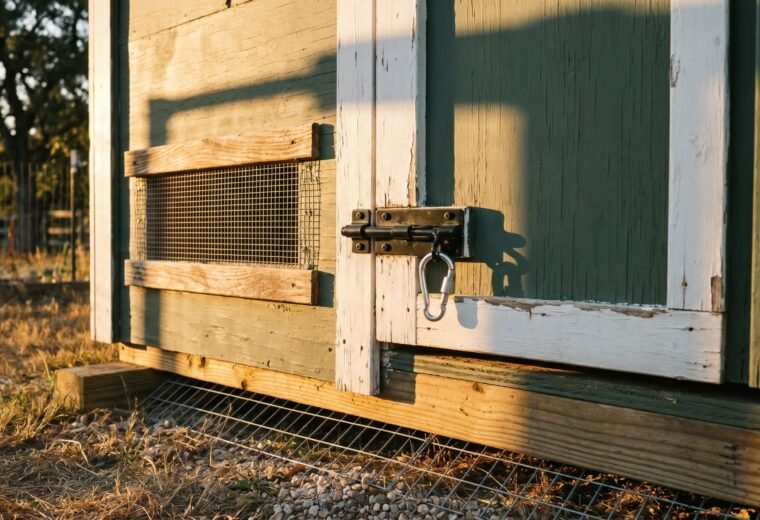
Shell quality can also reflect stress from predator pressure. Hens that are repeatedly spooked at night - by a raccoon circling the coop or a dog pressing the run fence - can release eggs prematurely, before the shell gland finishes its job. The result is a rubbery, underdeveloped shell, often found outside the nest box. Securing the coop and the run against nighttime pressure resolves this category quickly. Our predator-proofing guide covers the critical barriers by predator type.
What practical steps should I take right now if my hens are laying soft shells?
Start with the highest-probability causes first. Confirm the feed is a true layer ration, add coarse oyster shell free-choice, and audit treat volume. If it is summer, address heat before adjusting feed. Work through the six steps below and most backyard flocks resolve without a vet visit.
- Confirm the feed. Is it a complete layer ration labeled 16% protein and 2.5-3.5% calcium? If you have been using a flock raiser or an all-purpose feed, switch to a proper layer ration. Layer feed specifications and how to read the tag are covered in our layer feed guide.
- Add coarse oyster shell free-choice. Put it in a separate container, not mixed into the main feeder. Hens regulate their intake; some will eat a lot, some barely any. Both responses are normal.
- Audit treat volume. If scratch or table scraps make up more than roughly 10 percent of total daily intake, cut back.
- Check the season. Summer? Address heat and water first before making feed changes.
- Consider flock age. Birds in their second or third year will have softer shells on average regardless of management. Set realistic expectations and keep oyster shell available year-round.
- Watch for other symptoms. Respiratory sounds, sudden onset across many birds, or shells that are misshapen and discolored alongside soft texture all suggest a vet call is warranted. Egg abnormalities in a healthy-seeming flock usually have dietary or environmental explanations; those in a flock with visible illness do not.
One last thing worth knowing: a soft-shelled egg that passes intact and the membrane holds is not necessarily a welfare emergency. Hens pass them, eat if they feel like it, and continue. Repeated membrane failures - where the egg breaks internally before laying - are a different problem and a reason to involve a vet. For everything in between, the checklist above covers the territory most backyard flocks will ever encounter. For more on what a healthy egg tells you about your birds' condition, the egg overview lays out the full range of normal and abnormal.