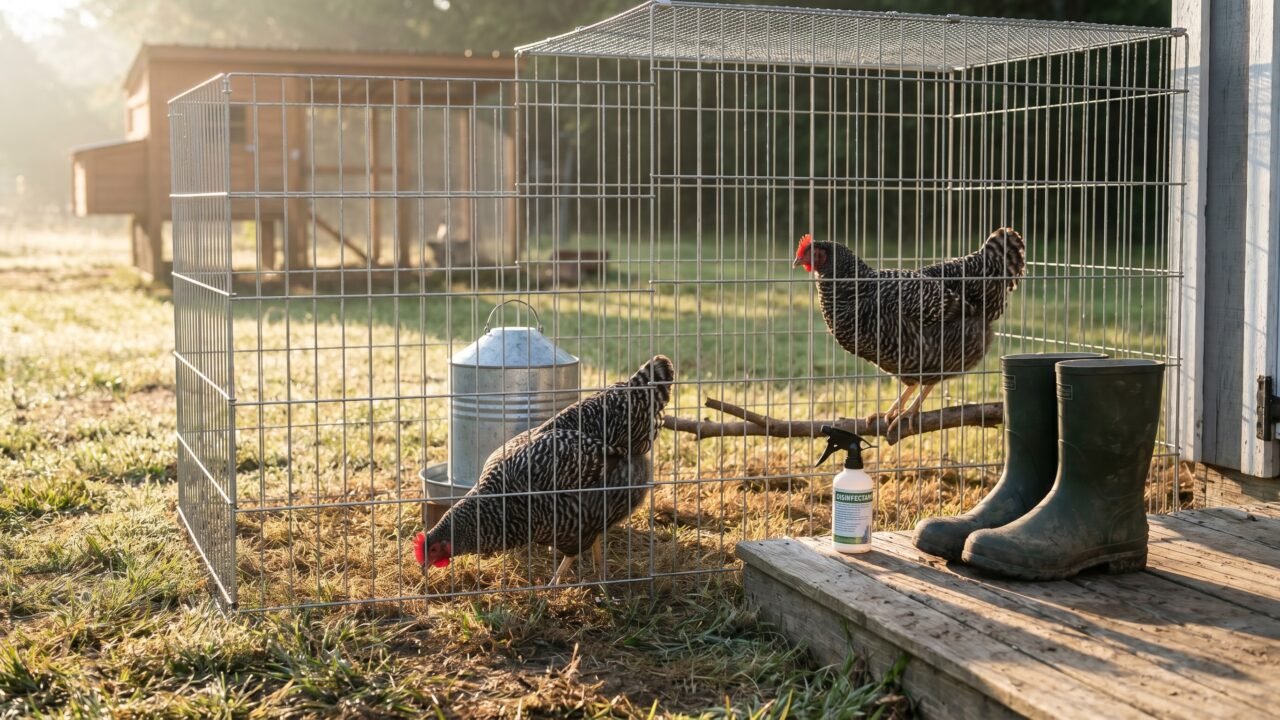
Your 14-bird flock faces its biggest disease risk not from your care routine, but from outside it - a new hen brought home from a swap meet, a shared waterer borrowed from a neighbor, or a mallard that lands in the run for five minutes. That is the core of chicken biosecurity: managing what comes in from the outside world, before it reaches your birds. Done well, it is a handful of steady habits, not a hospital protocol.
This guide covers the four levers that actually matter for backyard flocks: where birds come from, how you quarantine them, keeping wild birds and visitors out, and cleaning gear properly. It also gives you a plain look at the warning signs that mean something is wrong - and how early you need to spot them.
Start with where your birds come from
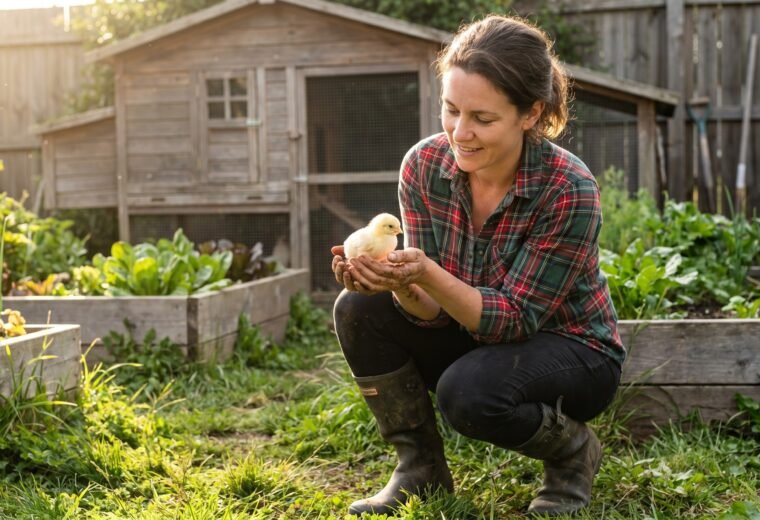
The surest way to bring disease into a healthy flock is to add a bird that is already carrying one. Before you bring any chicken home, ask the seller one simple question: is this flock enrolled in the National Poultry Improvement Plan (NPIP)? NPIP is a voluntary federal-state testing program through which breeding flocks are certified free of serious diseases including pullorum, typhoid, and avian influenza. The vast majority of U.S. states require birds shipped interstate to come from NPIP-tested flocks (USDA APHIS). Buying from certified sources does not guarantee a perfectly healthy bird, but it removes a documented layer of risk that unverified backyard flocks cannot.
The same rule applies to hatching eggs. If the laying flock that produced those eggs is unknown or untested, so is the chick that hatches. Reputable hatcheries - those large enough to maintain NPIP certification - are the lowest-risk starting point for new stock.
One more sourcing note: avoid buying adult birds at poultry swaps, auctions, or fairs unless you know the seller well. Birds from high-traffic events mix with hundreds of strangers over hours, which is exactly the environment where respiratory and intestinal diseases circulate fastest. For a flock you have spent months building, that gamble rarely pays off.
Quarantine: the step most keepers skip
Quarantine is where sourcing caution and day-one habits meet. Penn State Extension specifies 3 to 4 weeks of isolation for adult birds before any join an established flock. The University of Minnesota and University of Maryland Extension both recommend 30 days as the target window, because most diseases will show clinical signs within that period. Some sources - UConn Extension among them - say two weeks is sufficient, but that is the low-end outlier; the consensus across extension services is 21-30 days, and 30 days is the safer number if you have ever had a disease problem in your flock or live near commercial poultry.
What does quarantine actually require?
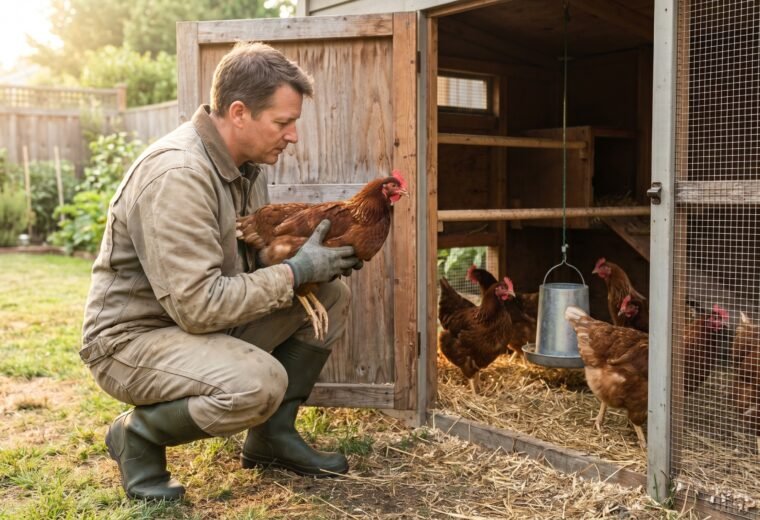
- A separate building or pen, ideally out of sight and airflow of your main coop - not just a few yards away in the same run
- Dedicated water and feed containers that never cross between the quarantine area and the main flock
- A different pair of boots or shoe covers when you enter the quarantine space - then wash hands before going back to your main birds
- Caring for your established flock first each morning, quarantine birds second, so you are not carrying anything from the new arrivals back to healthy birds
- Daily health checks on the new birds: watch their eyes, nostrils, droppings, and behavior
If a new bird falls ill during quarantine, do not move any bird from the quarantine area to the main flock - even the ones that still look healthy. USDA APHIS Defend the Flock guidance is direct: "Do not buy, sell, trade, or move any of the birds off your premises" once illness appears. That is the line that keeps a problem contained.
The full guide on merging quarantined birds into an existing pecking order is covered in our article on introducing new chickens, including gradual introduction through a wire partition.
Keeping wild birds and visitors from becoming vectors
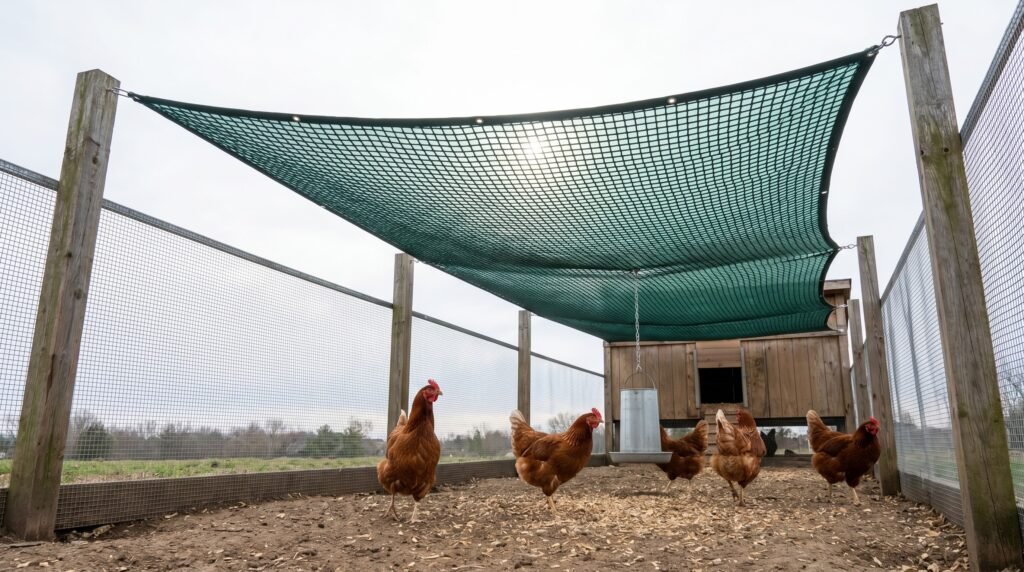
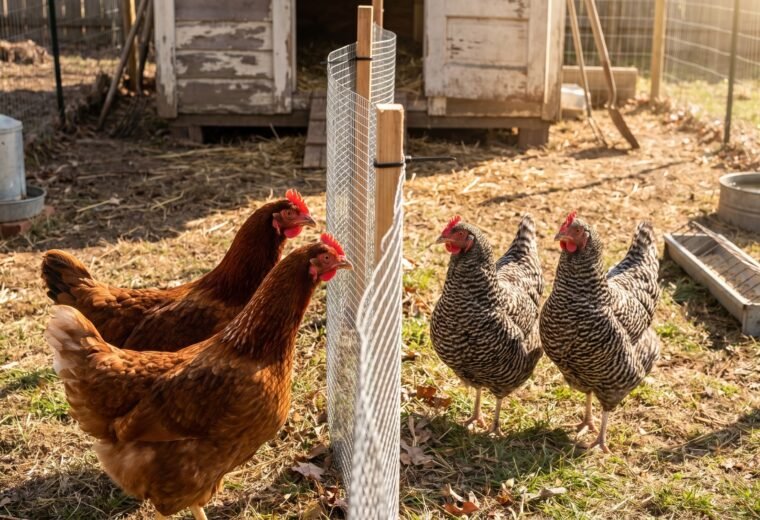
Wild waterfowl - ducks, geese, shorebirds - are the primary reservoir for avian influenza strains. They can carry and shed the virus without showing symptoms, meaning a mallard that wades through your run's water puddle on a Tuesday may leave behind something your flock encounters Wednesday. According to University of Minnesota Extension, the answer is direct separation: enclosed shelter and fenced outdoor areas that block wild bird access entirely. Keeping birds under a roof goes further still - it prevents contact with wild bird droppings landing inside the run, a route Mississippi State Extension specifically flags (extension.msstate.edu).
For most backyard keepers, a fully enclosed run with a solid or hardware-cloth roof achieves both goals - predator protection and wild-bird exclusion - in one structure. A roof does not have to be expensive; even a simple net cover over an existing run stops most flyovers. The bigger threat is usually feed spills and open water, which attract wild birds at ground level. Storing feed in closed containers inside the coop, and removing any remaining food before dark, cuts this risk significantly. See our article on chicken health for a broader look at environmental risk factors.
Visitors deserve a moment of attention too. Anyone who keeps birds elsewhere - a neighbor with a backyard flock, a friend who raises turkeys - can carry pathogens on their shoes and clothing without knowing it. A 72-hour window between visiting other poultry and entering your own flock area is the standard cited by Virginia Tech Extension, though that is not always practical. A more workable approach: provide disposable boot covers or a footbath at the coop entrance, ask visitors to use it, and keep non-bird-owners as your default tour group for your chickens.
One habit worth building: do not share equipment across properties. Feeders, waterers, and egg cartons can transfer pathogens even when they look clean - University of Minnesota Extension specifically warns against sharing any of these with neighbors. A secondhand feeder borrowed from a neighbor who had a respiratory outbreak three months ago carries real risk even after it looks clean.
Cleaning gear the right way
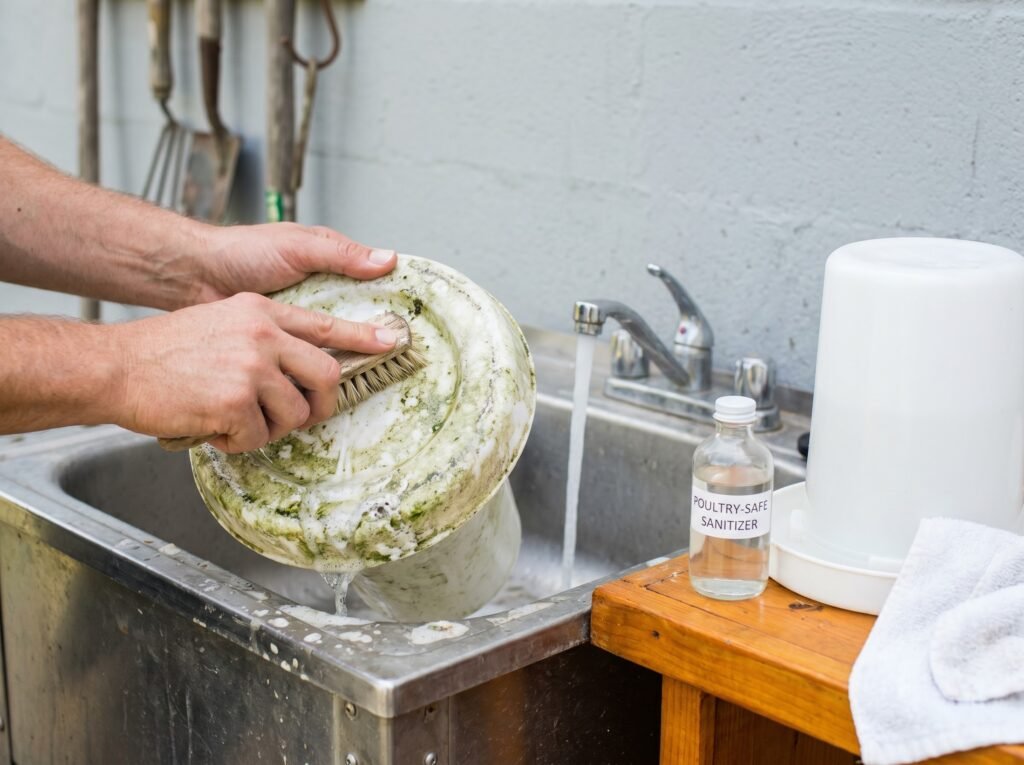
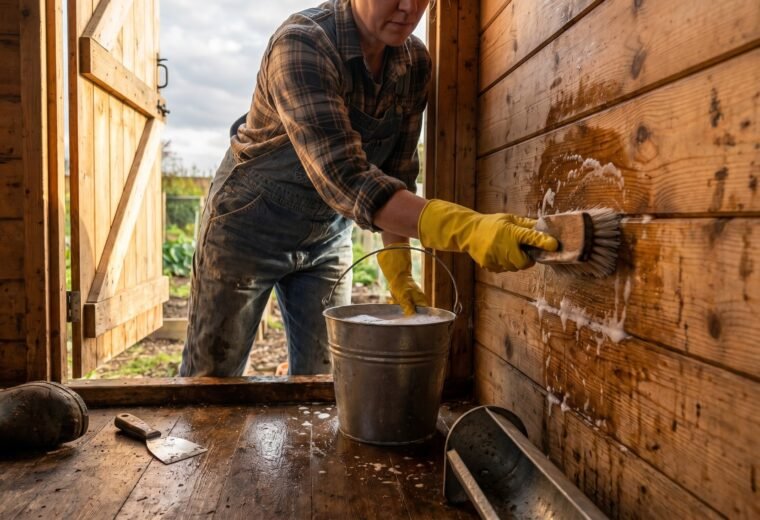
Cleaning and disinfecting are not the same step, and skipping the first makes the second nearly useless. Virginia Tech Extension draws the distinction clearly: cleaning removes debris and organic material from surfaces with soap and water; sanitizing kills bacteria on already-clean surfaces; disinfecting kills both bacteria and viruses. A disinfectant sprayed onto manure-caked plastic is blocked from reaching the surface by the organic matter sitting on top of it - it does not penetrate. Clean first, then disinfect.
Mississippi State Extension also flags something most keepers do not think about: use plastic or metal feeders and waterers rather than wood, because wood cannot be adequately cleaned. Porous wood absorbs moisture and harbors pathogens in cracks that no brush can reach.
A practical schedule that fits a backyard flock of any size:
| Task | Frequency | Notes |
|---|---|---|
| Rinse and scrub waterers | Daily or every other day | Biofilm builds fast; slime on the inside wall is a bacteria habitat |
| Scrub and disinfect waterers and feeders | Weekly | Mild bleach solution or poultry-safe sanitizer after scrubbing off residue |
| Remove soiled or wet bedding | As needed; at minimum weekly in damp weather | Wet litter is the single fastest route to respiratory illness and coccidiosis |
| Deep clean: remove all bedding, scrub all surfaces, disinfect | Monthly | Full bedding replacement; scrub walls, roosts, nest boxes before disinfecting |
| Full equipment and coop disinfection | Every 3-6 months | Also do this any time you add new birds after quarantine, or after a health event |
Your boots matter too. Designate one pair of footwear for coop use only. The cheapest rubber barn boots work fine - just keep them at the coop door and do not wear them into the house or into other animal areas. This single habit stops a meaningful amount of cross-contamination that has nothing to do with birds at all.
Coop hygiene connects directly to the deep cleaning process. Our cleaning the chicken coop guide walks through the full deep-clean sequence, including what to do with the old bedding and which surfaces to prioritize.
Signs that something is wrong - and how fast they move
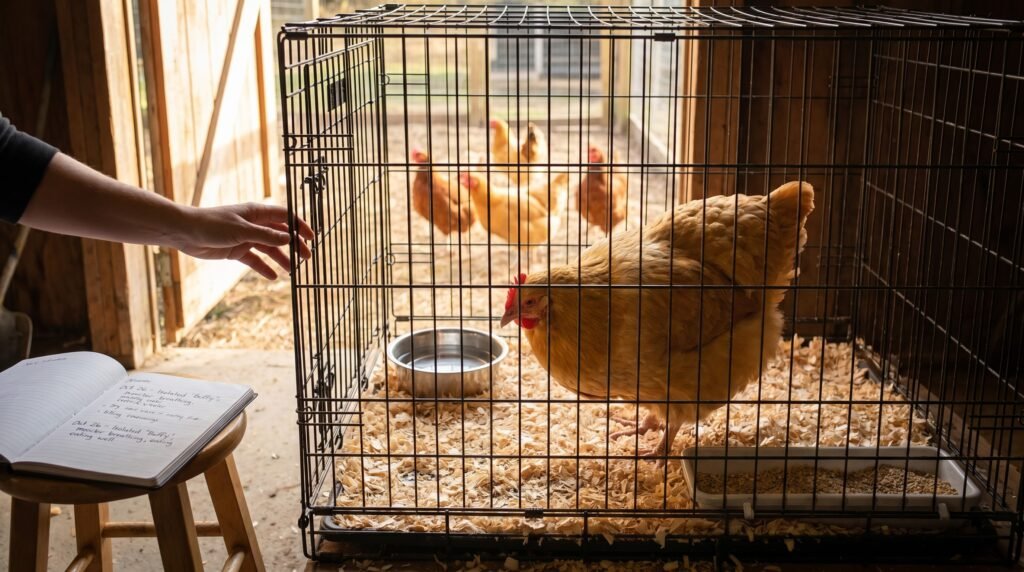
Here is a fact worth keeping in mind: chickens hide illness. Virginia Tech Extension notes that once a chicken shows visible symptoms, the disease is likely already in the later stages and very serious. By the time you notice a sick bird, the flock may have been exposed for days. Early detection is not about catching a problem the moment it starts - it is about building a daily observation habit so that subtle changes register fast.
Watch for these signs during your morning and evening checks:
- Drooping wings or hunched posture when the flock is otherwise active
- Watery or cloudy eyes; nasal discharge or crusting around nostrils
- Wheezing, rasping, coughing, or open-mouth breathing
- Sudden drop in egg production (not explained by season or molt)
- Watery, green, or bloody droppings
- Swelling around the eyes, face, or head; purple or dark discoloration of comb or wattles
- A bird sitting apart from the flock, not eating or drinking
- Multiple unexplained deaths in a short period
Any bird showing these signs should be separated from the flock immediately and evaluated by a poultry vet. Do not wait to see whether it gets better on its own. If you see sudden death in multiple birds within 24-48 hours, contact your state veterinarian or USDA APHIS at 1-866-536-7593 - rapid reporting is how disease outbreaks stay local instead of becoming regional.
The broader picture of what to watch for throughout a chicken's life, including annual health baselines, is in our chicken health guide.
A quick-reference biosecurity checklist
Use this as your standing reference. Every item has a corresponding habit; none require specialized equipment.
| Area | What to do | Why it matters |
|---|---|---|
| New birds | Buy from NPIP-certified sources when possible; quarantine 30 days | Most diseases show within 30 days; certification reduces baseline risk |
| Quarantine space | Separate coop/pen; dedicated tools; care for quarantine birds last | Prevents one-way contamination from new arrivals to established flock |
| Wild birds | Enclose the run; store feed in sealed containers; eliminate standing water | Wild waterfowl shed avian influenza without showing symptoms |
| Visitors | Boot covers or footbath at coop entrance; no handling by bird-owners from other properties without clean footwear | Shoes carry pathogens across property lines invisibly |
| Equipment | No sharing across properties; plastic/metal only; clean before disinfecting | Wood harbors pathogens; organic matter blocks disinfectants |
| Your clothing | Dedicated coop boots; change clothes after fairs, auctions, or visiting other flocks | Feathers and droppings on clothing transfer disease just as boots do |
| Daily observation | Morning and evening walk-through; know each bird's normal behavior | Chickens hide illness; catching it early reduces spread |
| Sick birds | Isolate immediately; call a poultry vet; report multiple sudden deaths | Delayed isolation is the fastest route from a single sick bird to a flock event |
If you are just getting started and biosecurity feels like one more thing to figure out on top of everything else, the raising chickens for beginners guide puts it in context alongside feed, housing, and the other foundational habits that make keeping backyard chickens genuinely manageable.
Species separation and the mixing question
One additional point that does not always get covered in biosecurity basics: mixing poultry species carries meaningful disease risk that is separate from anything a new bird brings in. Penn State Extension is direct: "Never mix different species in the same flock. Mixing species (e.g., chickens and turkeys or with waterfowl) on the same premises can be a deadly combination." Blackhead disease (histomoniasis), for example, can kill turkeys rapidly when chickens - which often carry the protozoan without symptoms - share the same ground.
If you keep mixed poultry, separate housing and separate outdoor areas are not optional biosecurity improvements - they are the baseline. The same principle applies to keeping chickens and ducks; our keeping ducks with chickens article covers the specific management adjustments that mixed waterfowl-chicken flocks require.