Most backyard flocks start with the same question: where do eggs actually come from, and what makes a hen lay well? The short version is that egg-laying is driven by light, age, and nutrition - not by roosters. A healthy hen in peak condition, with 14 or more hours of light per day, will produce one egg roughly every 24 to 26 hours, completely without a male bird present. What follows covers the full cycle: how eggs form, what to expect from each breed and age, how to handle and store safely, and what common problems are telling you.
How a hen actually makes an egg
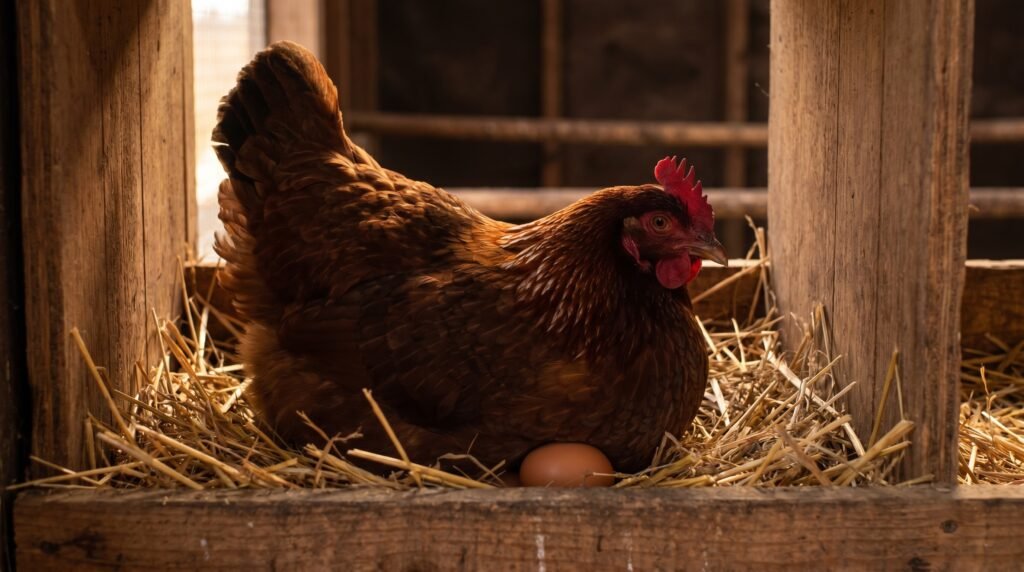
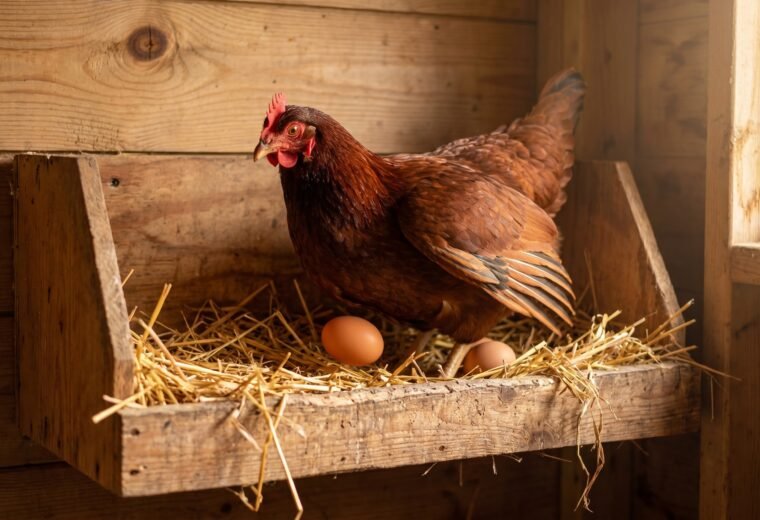
A hen's body builds one egg roughly every 24 to 26 hours. A yolk matures in the ovary, travels down the oviduct collecting albumen and membranes, then spends about 20 hours in the shell gland. In the final moments the hen adds the bloom - a protein coating that seals the shell's pores - before the egg is laid.
The process starts at the ovary, where a yolk (oocyte) matures over about seven to nine days. Once it's ready, the ovary releases it - a step called ovulation. About 30 to 75 minutes after a hen lays her previous egg, the ovary releases the next one. From there the yolk travels down the oviduct, picking up layers of albumen (egg white) in the magnum, then membranes, then the shell itself. Shell formation alone takes roughly 20 hours and is almost entirely calcium carbonate. In the final minutes before lay, a thin protein coating called the bloom - or cuticle - is applied to the outside. It seals the shell's pores and blocks bacteria from entering.
The entire process, start to finish, runs about 24 to 26 hours. That is why a hen cannot reliably produce one egg per calendar day; she lays a little later each day until she lays too late for her body to begin the next cycle, skips that day entirely, then starts fresh the following morning. A group of consecutive laying days is called a clutch. High-production breeds hold longer clutches with shorter rest periods; heritage breeds tend toward shorter clutches with more frequent skips.
Light is the trigger. A hen's reproductive system responds to day length via the eye and the pineal gland. Fourteen hours of light per day is the practical minimum needed to sustain production through the shorter months. Below that threshold, many hens taper off or stop entirely. This is why winter slumps hit flocks without supplemental lighting and why a single incandescent or LED bulb on a timer in the coop can extend the laying season through winter.
The rooster myth, settled
No rooster is needed for a hen to lay eggs. Hens lay regardless of whether a male is present. The eggs will be infertile - they will never develop into chicks - but are nutritionally identical to fertile eggs in every way that matters for the table.
No rooster is required for eggs. Full stop. A hen lays eggs whether or not a male is anywhere in the flock. The eggs will simply be infertile - meaning they will never develop into a chick, regardless of how long you incubate them. Nutritionally and in terms of taste or food safety, a fertilized egg and an unfertilized egg are identical. The only functional difference is a tiny "bullseye" ring visible on the yolk of a fertile egg when you crack it open.
A rooster becomes necessary only when you want chicks. For that, he needs to mate with a hen two or three times a week; a hen can store viable sperm for up to two weeks, so a single mating produces fertile eggs for days afterward. You generally need one rooster per ten hens for reliable fertility. Everything else - daily egg production, egg quality, shell strength, yolk color - is independent of the rooster's presence, as the rooster-free laying basics are covered in depth elsewhere on the site.
Production by breed and age: a reference table
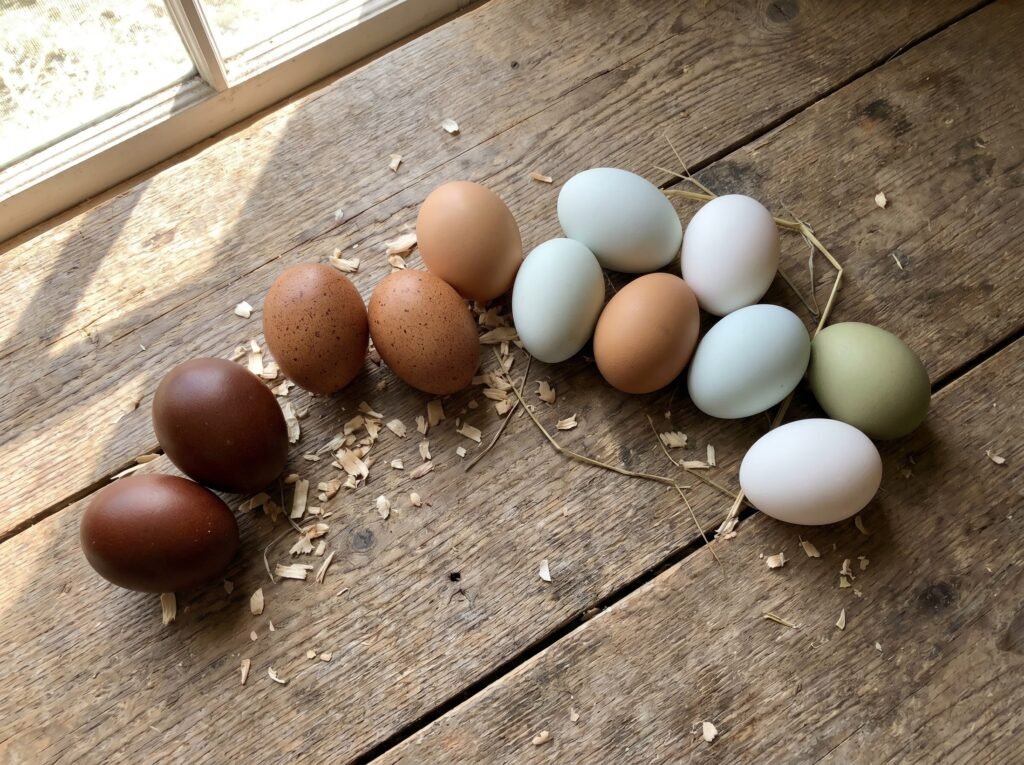
Breed is the single biggest driver of how many eggs you get per year. Commercial hybrid layers top the chart at 270-300 eggs annually. Heritage and dual-purpose breeds produce 150-250 and hold output more steadily across multiple years. Age reduces every breed's output; after the first molt most hens settle near 70% of their first-year peak.
Breed choice is the single biggest lever on production. Commercial hybrid layers were bred specifically to convert feed into eggs at high efficiency; dual-purpose and heritage breeds trade some production for hardiness, foraging ability, or meat yield. The table below pulls from hatchery breed data and extension research to give realistic ranges for a backyard setting - not commercial barn averages under tightly controlled lighting and nutrition.
| Breed / type | Eggs per year (backyard avg) | Shell color | Typical first lay | Notes |
|---|---|---|---|---|
| ISA Brown / Amberlink (hybrid layer) | ~280-300 | Brown | 18-20 weeks | Among the highest-output hybrids; shorter productive life than heritage breeds. The 250-325 figure from Hoover's Hatchery covers a mixed 7-breed assortment, not ISA Brown / Amberlink alone. |
| Production Red / Red Star | 270-290 | Brown | 18-20 weeks | Hardy, consistent; popular starter breed |
| White Leghorn | 250-280 | White | 17-18 weeks | Feed-efficient; can be flighty |
| Rhode Island Red (purebred) | 240-280 | Brown | 18-22 weeks | Dual-purpose; excellent in cold climates |
| Plymouth Rock (Barred) | 200-250 | Brown | 18-22 weeks | Calm temperament; good family flock bird |
| New Hampshire | 220-250 | Light brown | 18-20 weeks | Calm; good forager |
| Wyandotte | 180-220 | Brown/cream | 18-22 weeks | Cold-hardy; prone to broodiness |
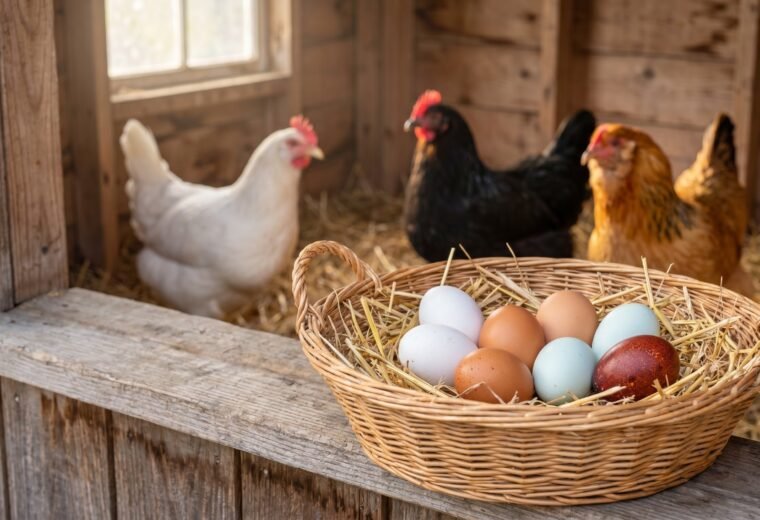
| Ameraucana / Easter Egger | 150-200 | Blue/green | 20-24 weeks | Lower production; eggs are the draw for color |
| Silkie (bantam) | 100-120 | Cream/tinted | 24-30 weeks | Highly broody; better for hatching than production |
These figures assume adequate nutrition, 14-plus hours of light, and no prolonged stress events. Cold-weather performance and feed-to-egg efficiency comparisons are broken down by breed in the best egg-laying breeds rankings.
Age matters as much as breed. Production peaks roughly six to eight weeks after a pullet's first egg, often reaching 90% lay rate across the flock. From there it slides. Each successive year sees lower output than the one before, and egg size tends to creep up while shell thickness tends to drop. A hen coming out of her first molt - which typically happens around 18 months - will return to production, but even the strongest layers settle in at roughly 70% of their pre-molt peak. By year three or four, many hens are still laying but at a noticeably reduced rate. Whether to keep older birds is a flock-management decision every keeper has to make based on feed costs, space, and their goals.
Collecting and storing: what the bloom changes
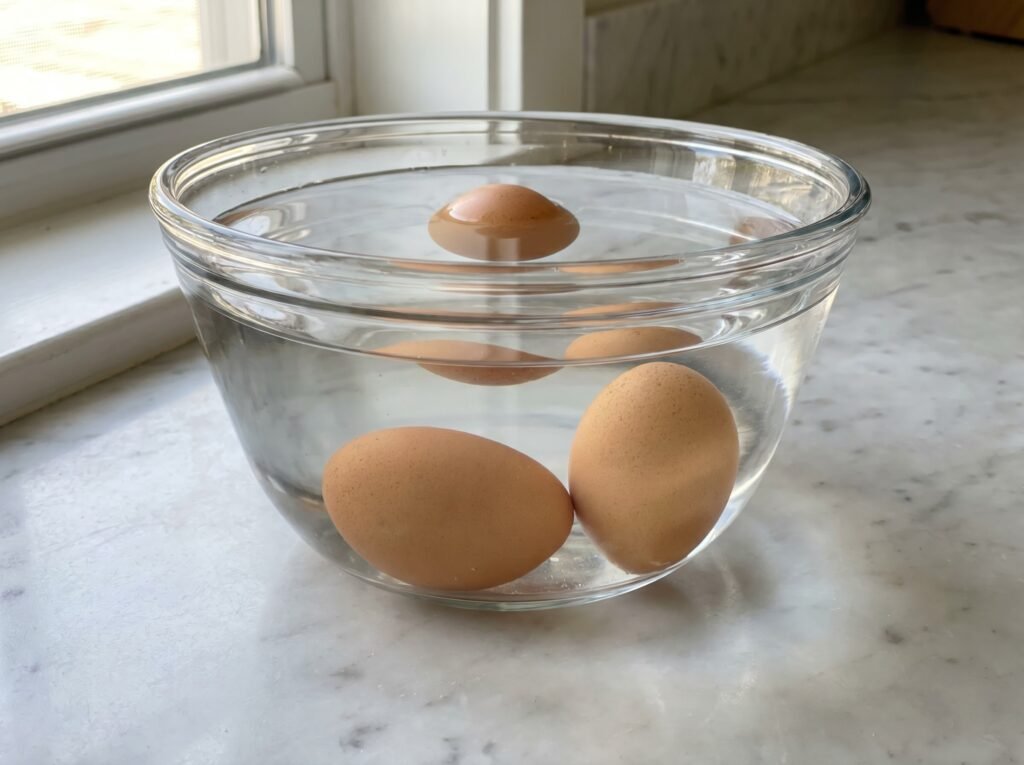
Unwashed eggs keep the bloom - a natural protein seal the hen deposits at lay - which allows safe room-temperature storage for a few weeks. Washing removes the bloom and makes refrigeration mandatory. Refrigerated eggs, washed or unwashed, last six to eight weeks. Collect daily, store based on wash status, and use the float test to check freshness.
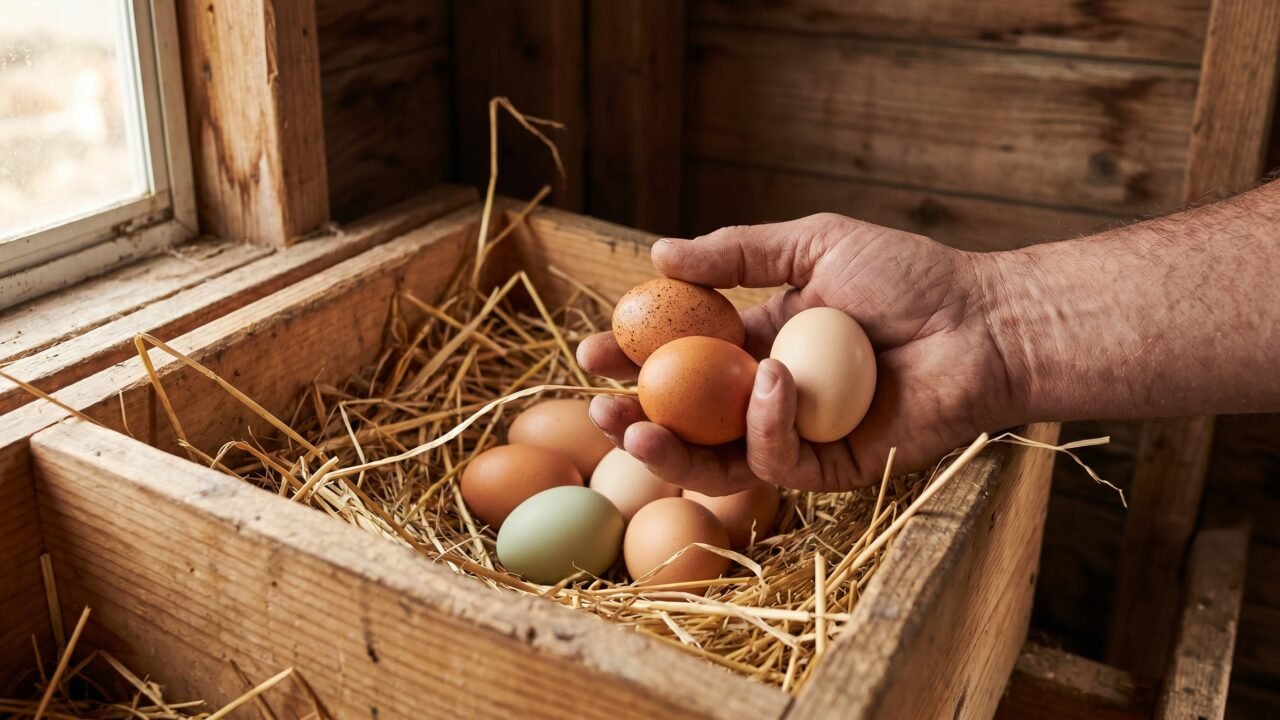
Collecting eggs at least once daily is practical, not just tidy. Eggs left in nest boxes longer accumulate breakage risk, invite pecking habits, and - in warm months - begin to lose quality faster. Twice-daily collection in summer keeps the nest boxes clean and discourages broody behavior from hens that pile up in a full nest. Once per day works fine in cooler weather.
What you do next depends on whether you wash the egg. The bloom is a thin protein layer the hen deposits on the shell in the final seconds before lay. It seals the pores, slowing moisture loss and blocking bacteria. An unwashed egg with its bloom intact can sit at room temperature for a few weeks without meaningful quality loss - USDA guidance allows up to one month for clean shell eggs under proper conditions, though actual shelf life varies with ambient temperature. Refrigerate it and it stays good for six to eight weeks or longer.
Washing strips the bloom. Once washed, the shell's pores are open, and the egg needs to go into the refrigerator - at or below 40°F - and stay there. A cold egg brought back to room temperature can "sweat," and that condensation can pull contaminants through the newly porous shell. This is why commercial eggs in the US are mandatory-washed at the processing plant and kept cold through the entire chain: the bloom is gone, so refrigeration becomes the main barrier against bacterial entry.
For backyard keepers, the practical rule: if the egg is clean and uncracked, skip the wash and refrigerate or store at room temp based on your preference. If it's soiled, wipe with a dry cloth or, for heavy soiling, wash with water at least 90°F (warmer than the egg) and refrigerate immediately. Never soak eggs in cool water - that creates a pressure differential that pulls wash water, and anything in it, into the egg. Cracked eggs should be used that day or discarded, not stored. Step-by-step egg-collection and storage protocols - including temperature charts - are on a dedicated page.
Checking freshness is straightforward. Float an egg in a bowl of water: a fresh egg sinks flat; an older egg tilts up at one end or stands upright on the bottom; one that floats has an air cell large enough to signal significant age. The air cell grows because moisture and carbon dioxide gradually escape through the shell over time. A floating egg is not automatically unsafe - crack it, smell it, and judge - but it has lost significant quality and should be used immediately or discarded if there is any off odor.
Common egg problems and what they mean
Most egg defects point to a specific fixable cause. Soft or shell-less eggs signal calcium or vitamin D shortfall. Blood spots are cosmetic and harmless. Double yolks are normal in young pullets. Sudden production drops almost always trace to light, stress, molt, or a feed change. Knowing which symptom points where saves time and vet calls.
Even a well-managed flock throws odd eggs occasionally. Here is what the most common issues signal and when to act.
Soft or shell-less eggs
A rubbery, membrane-only egg with no hard shell is nearly always a calcium or vitamin D shortfall. Laying hens need calcium at roughly 4 grams per day just to build one shell. If the diet is deficient, the hen pulls calcium from her bones - sustainable only briefly before shell quality collapses. Vitamin D enables calcium absorption; without enough of it, adequate dietary calcium still does not reach the shell gland in usable form.
The fix: confirm your hens are on a quality layer feed (~16% protein) rather than an unbalanced scratch-heavy diet, and offer free-choice oyster shell in a separate dish at all times. Hens self-regulate calcium intake remarkably well. Most soft-shell episodes resolve within a few days once oyster shell is available. Occasional soft eggs from a pullet in her first two to three weeks of laying are normal - the system is calibrating. Persistent soft shells in an established layer point to nutrition or, less commonly, an underlying health issue that warrants a call to a poultry vet; the full range of soft or thin-shelled egg causes is covered separately.
Blood spots
A small red dot on or near the yolk is a blood spot, and it is cosmetically alarming but not a food safety concern. Blood spots form when a tiny capillary ruptures as the follicle releases the yolk. If blood vessels cross the stigma - the natural break point in the follicle - a drop of blood gets incorporated into the egg during that release. Brown-egg breeds show higher rates of blood spots than white-egg breeds, partly because the shell pigmentation made blood-spot selection harder in older breeding programs. The egg is fully safe to eat. Pick out the spot with a knife tip if it bothers you, or cook and eat normally.
Double yolks
Two yolks in one egg happen when the ovary releases two ova in quick succession before the first has traveled far enough down the oviduct. Young pullets just coming into production are the most frequent producers of double yolks - the hormonal system is ramping up and sometimes overshoots. Double yolks are also more common in large, fast-maturing breeds. They are harmless and, for many keepers, a welcome surprise.
Pale or washed-out yolks
Yolk color is driven almost entirely by diet. Hens eating grasses, insects, and a varied range will produce deep orange-gold yolks; hens on a commercial corn-wheat ration with no access to forage produce pale yellow ones. There is no nutritional difference that matters in a practical sense - the carotenoid pigments that color the yolk are healthy, but a pale yolk from a well-fed hen is not a deficient egg. If your yolks are suddenly paler than usual, it often traces to reduced foraging time (winter confinement), a feed change, or less greens in the diet.
Sudden production drops
A flock that abruptly cuts output is almost always responding to one of a handful of triggers: a drop in day length below 14 hours, a stressful event (predator encounter, new birds added, major weather change), a transition into molt, a drop in water access, or a feed change. Molt is the easiest to identify - you will see loose feathers everywhere and new pin feathers growing in. Production during molt essentially pauses; boosting dietary protein to 18-20% supports faster feather regrowth and a quicker return to lay. The full list of stop-laying triggers and what each one calls for is laid out with breed-by-breed numbers.
Running the numbers for your flock
A household using one dozen eggs per week needs roughly six to seven peak-production hens. For sharing or local sales, scale up from there. Mix heritage and hybrid breeds for a balance between first-year peak output and multi-year sustained production. Expect 15-20% fewer eggs in year two and a further step down each year after.
Planning how many hens to keep is easier with concrete math. Take a flock of 24 hens, half Production Reds and half Barred Rocks. At peak (year one, full lighting), the Production Reds average roughly 275 eggs each and the Barred Rocks roughly 225 each. That is 12 birds at 275 (3,300 eggs) plus 12 at 225 (2,700 eggs) - around 6,000 eggs per year, or about 500 dozen. By year two, expect that figure to drop 15 to 20%, putting you around 4,800 to 5,100 eggs. By year three the production Reds may be pushing 60-70% of their first-year output while the Barred Rocks hold somewhat better, simply because the heritage-leaning genetics were never pushed as hard at peak.
If your household uses a dozen eggs a week (52 dozen a year), six to seven hens at peak is enough. If you also want eggs to share or sell locally, scale accordingly. Keep in mind that molt (typically fall), broody periods, very hot stretches, and any disease events will temporarily reduce the tally.