Pick up a freshly laid egg and you are holding something that already has its own food-safety system built in. That thin, barely visible coating on the shell - the bloom, also called the cuticle - is doing real work. Understanding it is the key to every decision about how to store fresh eggs: whether to wash, where to keep them, and for how long.
The short version: unwashed eggs with the bloom intact can sit on your counter for about one to two weeks. Wash the egg and the bloom is gone, which means refrigeration is no longer optional - it is required. Refrigerate an unwashed egg and you can stretch usable life to six weeks or more. Those numbers come from university poultry extension research and USDA guidance, and this article walks through exactly why they are what they are.
What the bloom actually does
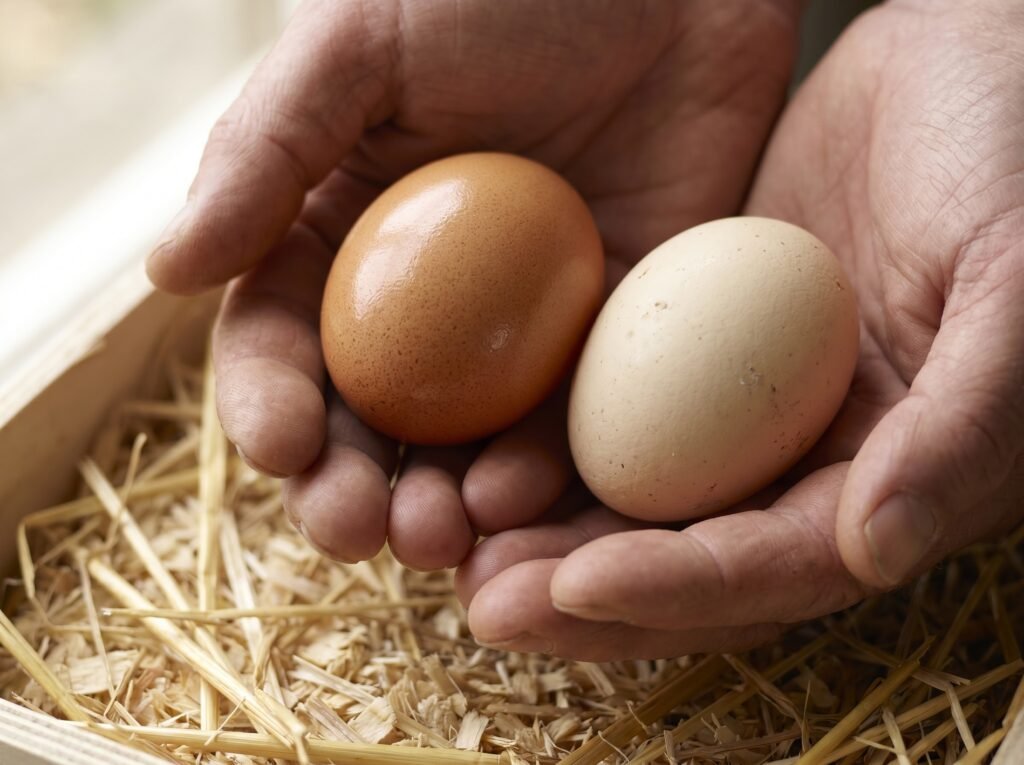
The bloom is the moist protective coating on a freshly laid egg that partially seals the pores of the eggshell to prevent penetration by bacteria, according to the Poultry Extension glossary at extension.org. It is deposited in the final minutes before lay and dries rapidly on contact with air. You can sometimes see a faint sheen on a brand-new egg. That is it.
Penn State Extension describes the cuticle as "an outer layer that provides protection by sealing the natural pores in the eggshell." The catch is that it is not permanent. The cuticle loses effectiveness over time and will be damaged or removed by brushing, washing, or rough handling. Once it is gone, the microscopic pores in the shell are open, and the egg needs refrigeration to stay safe and fresh.
Commercial egg processors in the US remove the bloom intentionally. They wash eggs in a warm sanitizing solution and then apply a thin coat of edible mineral oil to replace the bloom's barrier function. That is why cartons from the grocery store must stay refrigerated from the moment they leave the plant - the original coating is gone, and the oil substitute behaves differently. Your backyard eggs, collected unwashed, still have their bloom. That is a genuine advantage, if you handle them correctly.
Collect eggs right and storage gets easier
Everything downstream in your storage routine depends on how clean eggs are when you collect them. A muddy, wet, or manure-covered egg is a problem no washing technique fully solves, because aggressive scrubbing strips the bloom along with the dirt.
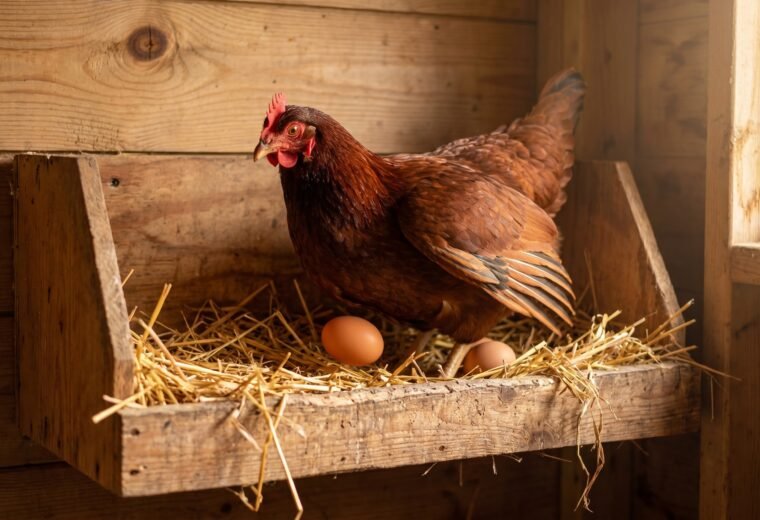
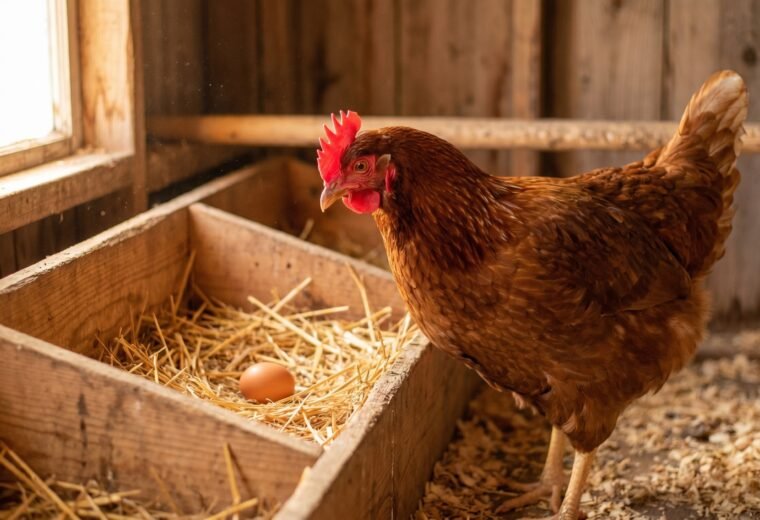
University of Arizona Extension recommends collecting at least once or twice a day to keep eggs clean and prevent exposure to heat, cold, or moisture. Penn State Extension adds that most flocks lay the majority of their eggs by 10 a.m., so a mid-morning collect catches most of the day's production while eggs are still fresh and the bloom is fully intact. A second afternoon round keeps nest boxes clear so hens are not sitting on eggs that have been warming for hours.
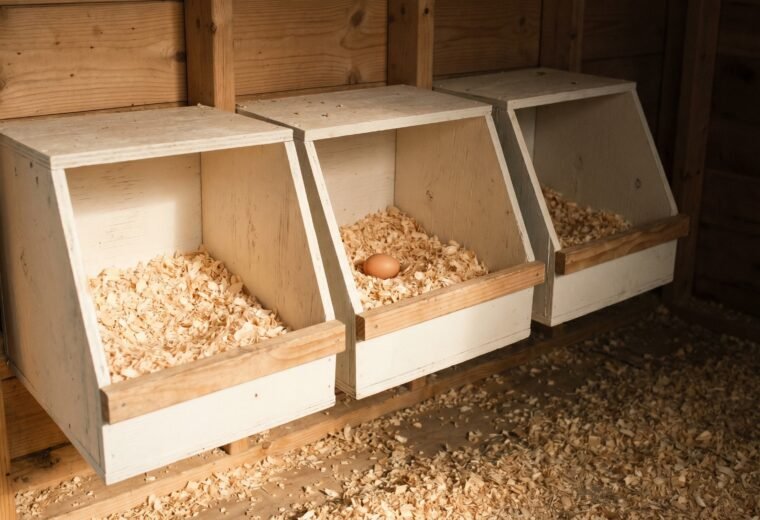
Clean, dry nesting material is the other half of the equation. Keep at least two inches of fresh, dry bedding in each box, and swap it out before it gets packed or damp. A clean nesting box means eggs arrive with the bloom undamaged and no wet contamination to deal with. If your nest boxes still produce dirty eggs, the chicken nesting boxes article covers bedding depth, box count, and placement in full.
Handle eggs gently from the moment you pick them up. The shell is porous, and so is the bloom. Cracks - even hairline ones invisible to the eye - bypass both barriers immediately. Discard cracked eggs rather than storing them.
Wash or don't wash: an honest look at the tradeoff
This is the question backyard flock owners debate most. Both sides have a real point.
The case for skipping the wash: a clean, intact bloom is genuinely effective protection. Wash the egg and it must be refrigerated immediately, shrinking your window and adding a step. University extension guidance supports counter storage for about one to two weeks for unwashed eggs with the bloom intact. In most of Europe, eggs are sold and stored unwashed at room temperature on store shelves for similar reasons.
The case for washing: if an egg has visible manure, mud, or cracked material on it, leaving that contamination on the shell is a real risk. Bacteria from fecal matter can migrate through pores, especially if the egg gets wet later. University of Arizona Extension puts it plainly: avoid washing if you can, but if you must wash a dirty egg, use water slightly warmer than the egg and use it immediately.
The mechanics of washing matter as much as the decision itself. Water colder than the egg causes its contents to contract and pull liquid inward through the pores - the opposite of what you want. A minimum wash water temperature of 90 deg F - and at least 20 deg F warmer than the egg's internal temperature - is the threshold specified by Penn State Extension. Ask Extension confirms the physics: using warm water "will prevent the egg contents from contracting and producing a vacuum" that pulls bacteria in through the shell. Never submerge eggs in standing water, and dry them completely before storing, because moisture sitting on a washed shell can wick through the now-open pores.
A practical rule that works for most backyard flocks: keep eggs that arrived clean and store them unwashed on the counter or in the refrigerator, then wash only the genuinely dirty ones right before use rather than right after collecting. That preserves the bloom on the clean majority and reserves washing for when it is actually necessary.
Counter vs. fridge: shelf life with real numbers
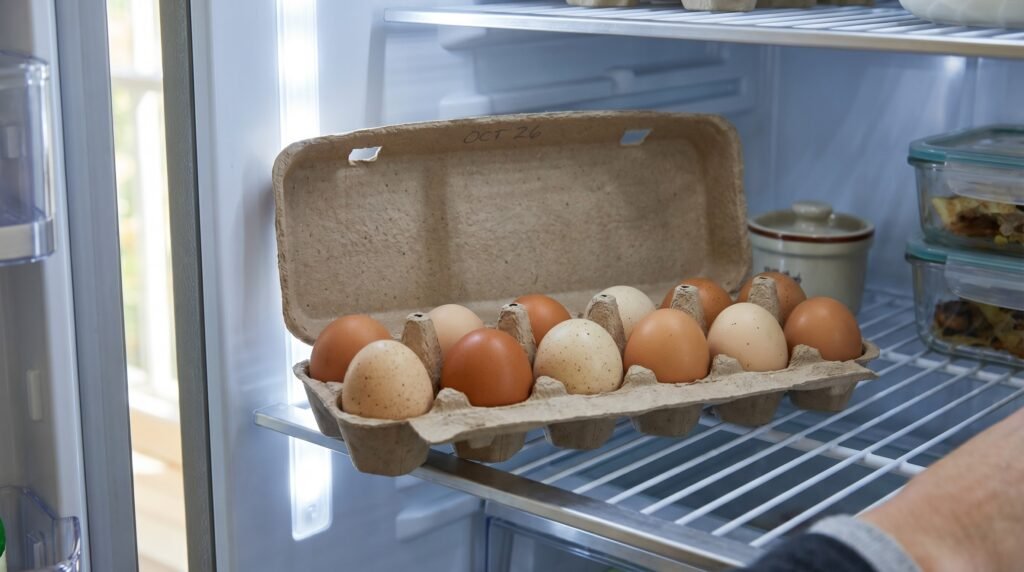
The numbers below come from peer-reviewed USDA research and university extension guidance. They differ quite a bit from what most people assume.
| Storage method | Typical usable life | Key condition |
|---|---|---|
| Counter, unwashed, bloom intact | ~1-2 weeks (up to 1 week if in doubt) | Bloom must be undamaged; keep away from heat and moisture |
| Refrigerator, unwashed | 6 weeks or more (up to 45 days per Ask Extension; University of Arizona Extension cites 2-3 months under optimal conditions) | Store large-end up, 40-45 deg F, away from door |
| Refrigerator, washed | A few weeks; quality declines faster than unwashed refrigerated | Must refrigerate immediately after washing; bloom is gone |
| Counter, washed | No more than 2 hours | Bloom removed; bacterial risk increases rapidly at room temperature |
The research behind those numbers is striking. A USDA Agricultural Research Service study found that refrigerated eggs - whether washed, oiled, or left natural - remained Grade A quality after 15 weeks. Room-temperature storage told a very different story: unwashed eggs stored at room temperature degraded from Grade AA to Grade B in just a week. A useful daily reference comes from Penn State Extension research: eggs sitting at room temperature of 65 deg F or higher can drop as much as one quality grade per day.
What this means for your flock: if you have a small household that goes through eggs quickly, the counter works fine for unwashed eggs gathered within the past few days. If you produce more than you eat in a week, or your kitchen runs warm in summer, the refrigerator is the better call by a wide margin. Store eggs large-end up at 40-45 deg F and 70% relative humidity, away from strong-smelling foods (eggshells absorb odors), and never in the refrigerator door where temperature swings with every opening.
One number worth flagging: the 2-3 month figure from University of Arizona Extension for refrigerated unwashed eggs represents optimal conditions and likely reflects eggs with fully intact cuticles stored at a consistent cold temperature. Most home refrigerators run at the warmer end of the safe zone, so a practical working target of six weeks or more is realistic for most households - consistent with Ask Extension's 45-day figure and Penn State's "at least six weeks" benchmark. Use the float test (below) to double-check any egg you are not certain about.
The float test: what it actually tells you
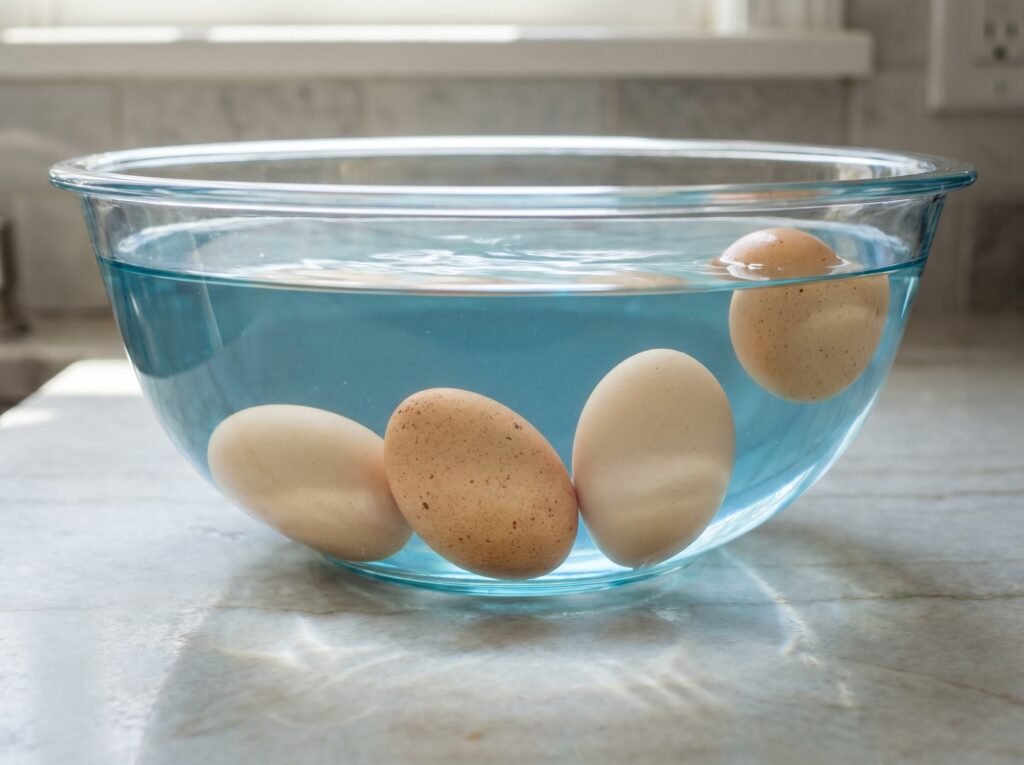
Lower an egg gently into a bowl of cold water and watch what it does. This is the float test, and it is one of the most useful tools a flock owner has - as long as you understand what it measures.
The test measures the size of the air cell inside the egg, not spoilage directly. As an egg ages, water vapor passes through the porous shell and the air cell at the blunt end expands. A larger air cell means a more buoyant egg. The float test is a freshness indicator, not a safety guarantee - it tracks air-cell size, not bacterial load. (University of Wisconsin Extension, livestock.extension.wisc.edu)
Here is how to read the results:
- Sinks and lies flat on the bottom: very fresh, small air cell, excellent quality.
- Sinks but tilts up at the blunt end: still good, probably a week or two old.
- Stands upright on the bottom, blunt end up: older but generally still usable; quality has declined.
- Bobs up off the bottom, partially floating: noticeably old; crack into a separate bowl first and smell before cooking.
- Floats at or near the surface: the air cell is very large; this egg is old and worth a careful sniff test.
A floating egg is not automatically a bad egg. University of Nebraska Extension states that a floating egg "means the egg is old, but it may be perfectly safe to use." The real check is sensory: crack it into a separate bowl and smell it. A spoiled egg will have an unpleasant odor when you break open the shell, either when raw or cooked. If it smells fine and the white and yolk look normal, it is likely still safe. Any off odor means discard it.
The float test cannot detect Salmonella contamination, which is odorless and invisible. It is a freshness indicator, not a safety guarantee. Proper refrigeration, clean collection practices, and thorough cooking are the actual safety controls.
Storing eggs for the longer term
If your hens are laying faster than you can use eggs within six weeks - common during peak spring production - you have a few reliable options.
Freezing works well and is the simplest long-term method. Whole shell eggs cannot go in the freezer (the contents expand and crack the shell), but cracked eggs can be beaten, poured into ice-cube trays or muffin tins, frozen solid, and transferred to a sealed bag. If you freeze yolks separately from whites, add a pinch of salt or a small amount of sugar before freezing - without it, yolks gel into a thick, unusable paste as they freeze. Label everything with the date and the egg count.
Pickling is another option for hard-cooked eggs. Keep pickled eggs refrigerated and use them within about three months, which is the standard guidance from food extension sources for home-pickled eggs.
Water glassing - submerging unwashed eggs in a lime-water solution - comes up occasionally in homesteading discussions. The National Center for Home Food Preservation (NCHFP) - the primary US authority on home food preservation - does not list water glassing among its endorsed methods. Penn State Extension research adds that the approach is ineffective at preserving albumen quality and carries pathogen risk if the process is done incorrectly.
Wondering whether surplus eggs are a seasonal pattern or a breed issue? The how many eggs hens lay article breaks down production by breed and season so you can plan storage needs ahead of time.
Quick decision guide
| Your situation | Recommended approach |
|---|---|
| Clean eggs, use within 1-2 weeks, cool kitchen | Counter, unwashed, bloom intact |
| Clean eggs, use within 6+ weeks | Refrigerator, unwashed, large-end up |
| Dirty egg, just collected | Wash immediately (warm water, 90 deg F+), dry thoroughly, refrigerate, use within a few weeks - the bloom is gone, so refrigeration is required from this point |
| Peak production surplus, more than 8 weeks of supply | Freeze (cracked and beaten) or pickle; label with date |
| Egg already in storage, age unknown | Float test first (this is for eggs that have been stored a while, not fresh dirty eggs); crack into separate bowl and smell before cooking |
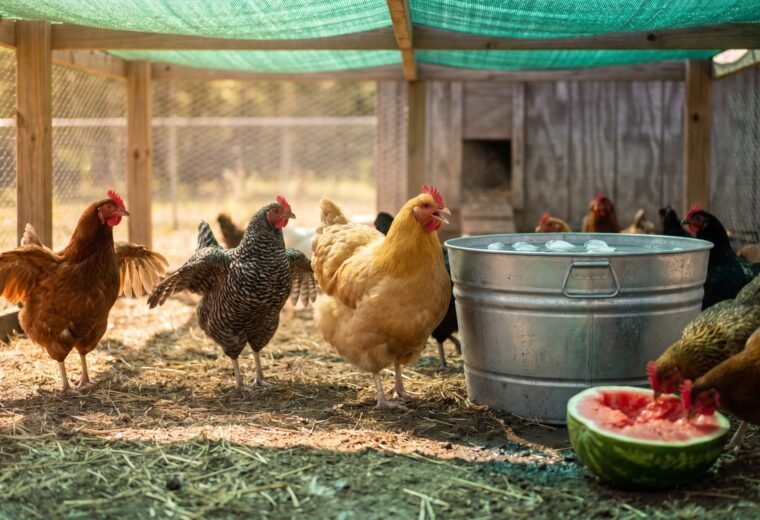
One final note on where collection and storage connect: the single most common beginner mistake is letting eggs sit in the nest box for hours in warm weather, then wondering why they do not keep well. Heat is the fastest enemy of egg quality. Every hour above 65 deg F in an uncollected nest box costs more than a day in the refrigerator can recover. Collect early and often, especially in summer, and the rest of this guide takes care of itself. Heat management starts before the eggs reach your kitchen - the keeping chickens cool in summer article covers ventilation, shade, and waterer placement so your hens stay comfortable and keep laying through the hottest weeks.