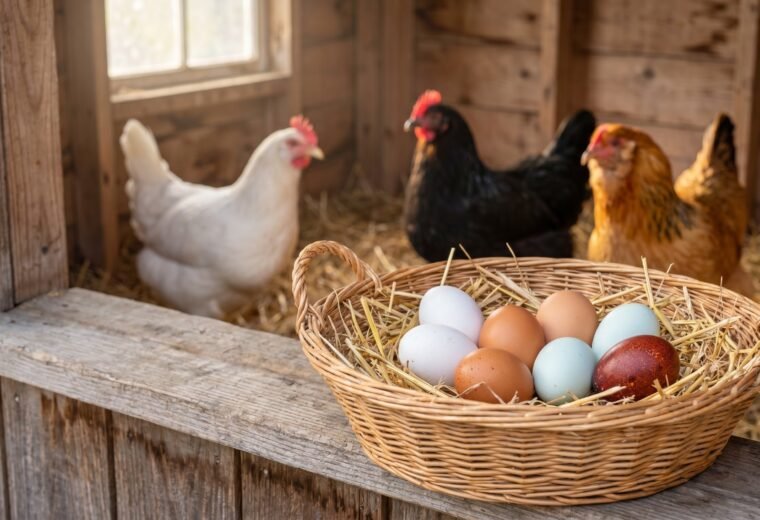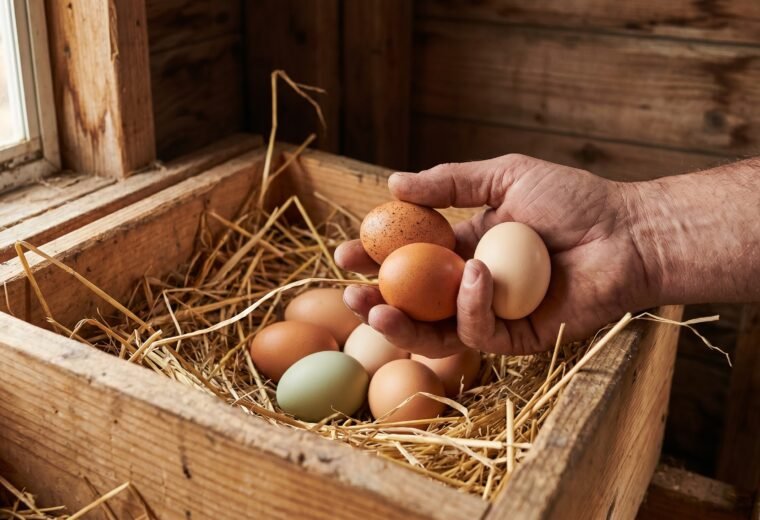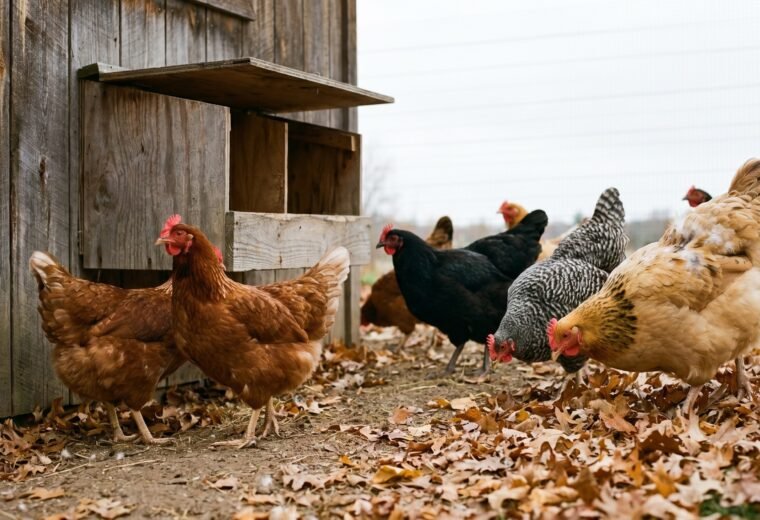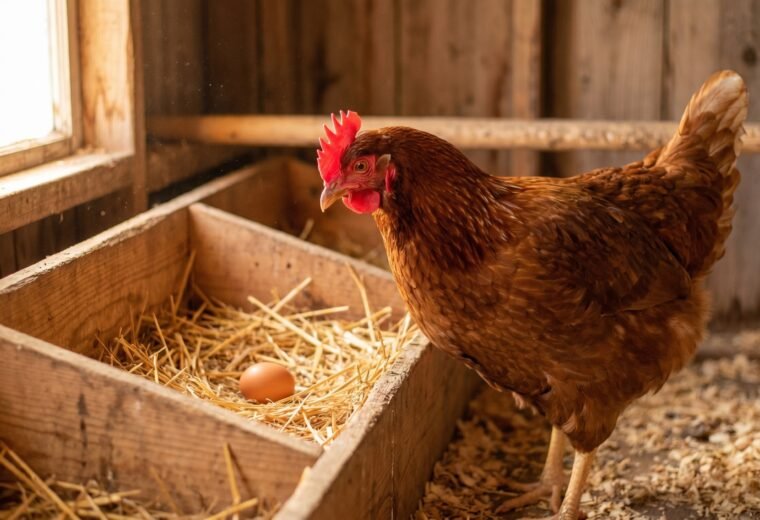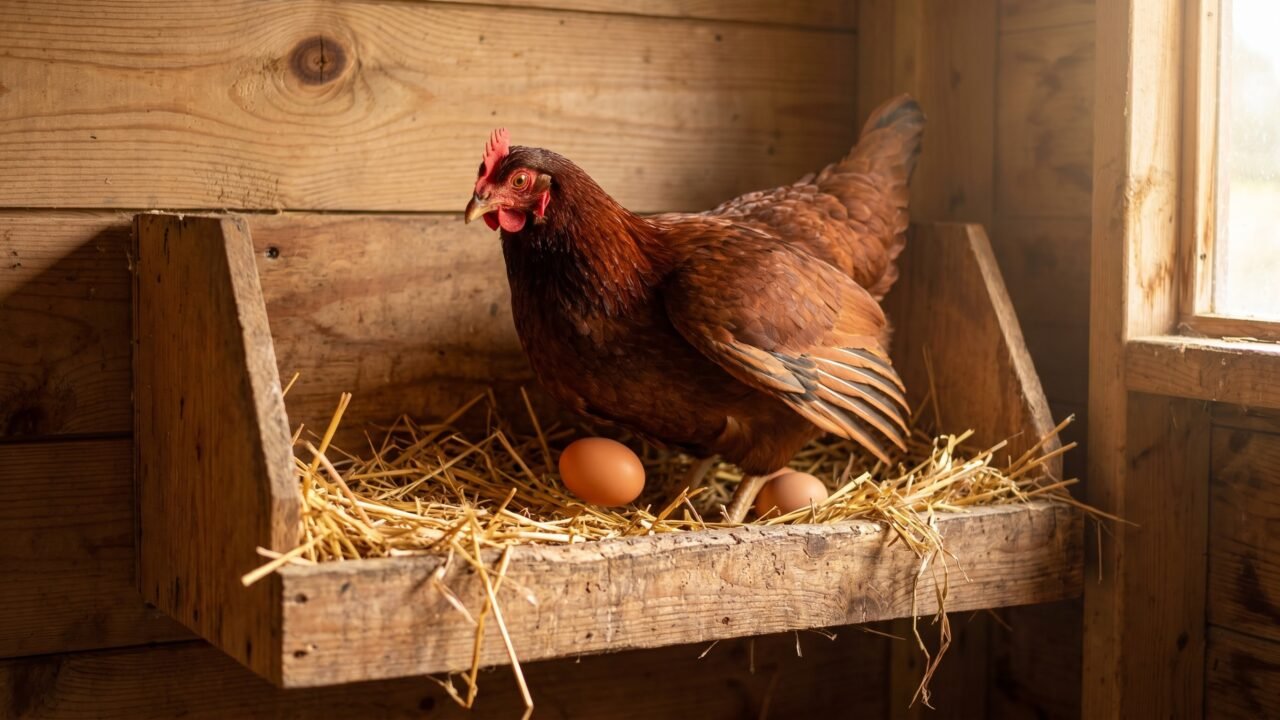
Four to six eggs a week is what a healthy hen at peak production delivers - not seven, because the biology of egg formation simply does not allow it. Each egg takes 24 to 26 hours to travel from ovary to nest box, which means a hen lays progressively later each day until her body skips a day and resets. That built-in pause is why "one egg a day" is a ceiling, not a guarantee, and why annual totals for even elite layers top out around 300 rather than 365.
What you actually collect depends on three interlocking variables: the breed you chose, how old your birds are, and what the calendar is doing to daylight hours. Getting those numbers right before you buy chicks - or before you try to figure out whether your existing flock is underperforming - is the whole point of this guide.
The biology behind the numbers
A hen's reproductive cycle is physically limited to one egg per day - and some days none at all. The full journey from ovulation to a laid egg takes 24 to 26 hours. Because light exposure controls when ovulation starts, the minimum a hen needs for steady production is 14 hours of light per day; 16 hours is the target for peak output. Those two facts together explain why even elite layers top out around 300 eggs per year rather than 365.
Ovulation in a hen is triggered by light hitting the retina, stimulating a hormonal chain that releases a yolk from the ovary. That yolk moves through the oviduct, picking up albumen (white), membranes, and shell in sequence. The shell alone takes about 20 of the total 24-26 hours. Because no segment of the oviduct can handle two eggs at once, peak output is one egg per hen per day - full stop.
As the cycle runs slightly longer than 24 hours, a hen lays later and later in the day across a "clutch" of consecutive eggs. Eventually she lays too late for light to trigger the next ovulation, so she skips a day entirely before the cycle restarts. Six eggs per week is therefore a realistic ceiling for the best layers; five is more common in mixed flocks, and three to four is normal for breeds that were not selected purely for production.
Light exposure is the throttle. Hens need a minimum of 14 hours of light per day to maintain steady laying; 16 hours is the target for strong, peak-season production. Production stalls when days shorten below 14 hours in fall and winter. Supplemental light (a simple timer-controlled LED in the coop) can hold the day at 14-16 hours year-round if you want consistent winter output. Whether to run supplemental light is a real debate among keepers - birds need rest, and some argue a natural winter pause supports long-term health - but the mechanism is settled science.
What to expect by breed
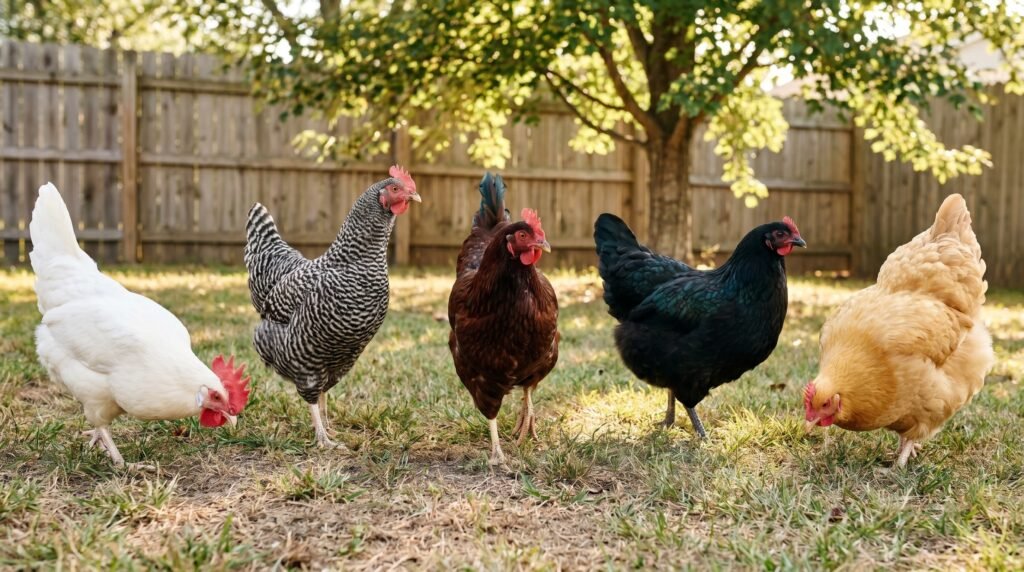
Breed choice sets the upper limit. The table below pulls production ranges from hatchery breed data (Cackle Hatchery) and from extension guidance, covering the breeds most backyard keepers actually run. All figures are for a healthy first-year pullet under good management: 14-plus hours of light, a quality layer feed, and fresh water available at all times.
| Breed | Eggs per year (yr 1) | Eggs per week (approx.) | Egg color | Notes |
|---|---|---|---|---|
| White Leghorn | 250-300 | 4-6 | White | Top commercial layer; can be flighty in home flocks |
| Cinnamon Queen / Golden Comet | 250-320 | 5-6 | Brown | Sex-link hybrid; highest output of common backyard breeds |
| Rhode Island Red | 250-300 | 5-6 | Brown | Hardy, consistent; also decent meat bird |
| Barred Plymouth Rock | 200-280 | 4-5 | Brown | Calm temperament; good dual-purpose choice |
| Black Australorp | 250-280 | 5-6 | Light brown | Holds production well through the second year |
| Buff Orpington | 200-250 | 4-5 | Brown | Goes broody frequently, which pauses laying |
| Easter Egger | 200-280 | 4-5 | Blue/green/pink | Colored eggs; not a standardized breed |
| Silkie (bantam) | ~100-120 (est.) | 2-3 | Cream/tinted | Strongly broody; eggs much smaller than standard |
A quick note on Silkies and other bantam breeds: their eggs run about half the weight of a standard large egg, so even a "good" bantam layer contributes less to your breakfast plate than the raw count suggests. On top of that, Silkies are among the most persistently broody breeds kept in backyard flocks - a broody Silkie sitting a clutch produces zero eggs for the duration. If you are choosing chickens for egg volume, broodiness will cut into your real-world total more than the annual range estimate suggests. The best egg-laying breeds page walks through the top-producing options in more depth.
One thing worth knowing about White Leghorns: extension research notes that commercial strains of this breed often underperform in small home flocks compared to production-focused environments. Hatchery strains bred for backyard keepers typically do better, but if you are choosing purely for volume in a backyard setting, the sex-link hybrids (Cinnamon Queen, Golden Comet, ISA Brown) consistently outperform or match Leghorns with less management fuss.
How age cuts into the numbers
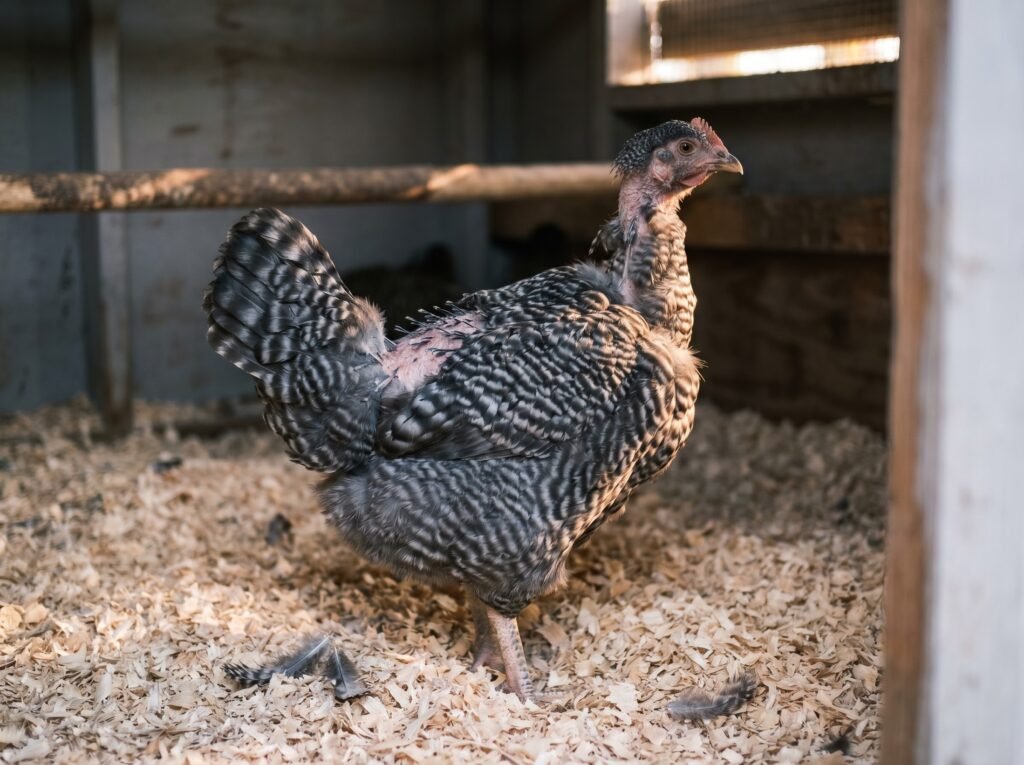
Every hen's first laying year is her best. After the first adult molt - which typically happens somewhere between 12 and 18 months of age (sooner for production breeds, later for heavier dual-purpose types) and lasts 8-16 weeks - annual production drops and does not recover to the prior peak. Purina's published guidance tracks the decline this way:
- Year 1: 250-280 eggs (peak; the baseline)
- Year 2: roughly 80% of year-1 output, or around 200-224 eggs
- Year 3: just under 70% of year-1 output, around 175-196 eggs
- Year 4: approximately 60% of year-1, around 150-168 eggs
The arithmetic matters for planning. A flock of eight hens at peak delivers roughly 32-40 eggs per week. Those same eight hens at three years old will likely produce 22-28 eggs per week under the same conditions - still plenty for a family that eats eggs daily, but worth knowing before you count on surplus eggs to sell or share.
During molt itself, laying stops almost entirely. That pause lasts 8-16 weeks. Egg size tends to increase after each molt even as count decreases, and shell quality (thickness, consistency) also gradually declines with age. The hen is not broken - she is just older, and her reproductive capacity reflects it honestly.
Hens that have been laying for 10 or more months straight will often stop, molt, rest, and restart on their own schedule, without any trigger from you. That is normal end-of-cycle behavior, not a sign of illness.
A quick tally: what your flock should produce
This method lets you set a realistic weekly target for your birds, accounting for breed, age, and time of year. Run it in 60 seconds for any flock size.
- Find your base rate. Use the breed table above to get eggs-per-week per hen. Mixed flock? Average across breeds.
- Apply the age factor. Year 1: multiply by 1.0. Year 2: multiply by 0.8. Year 3: multiply by 0.7. Year 4 and beyond: multiply by 0.6.
- Apply the light factor. If your birds are getting 14+ hours of light (natural or supplemented): multiply by 1.0. Short days with no supplemental light: multiply by 0.4-0.6 as a rough winter estimate.
- Multiply by your flock size.
Example: You have 12 Barred Plymouth Rocks in their second year, no supplemental light in January.
Base rate: 4.5 eggs/week per hen. Age factor: 0.8. Light factor: 0.5 (mid-winter). Flock size: 12.
4.5 x 0.8 x 0.5 x 12 = 21-22 eggs per week.
Come June, those same 12 hens on long summer days: 4.5 x 0.8 x 1.0 x 12 = 43 eggs per week.
The swing between seasons in that scenario is real - from under two dozen to nearly four dozen per week - and it catches new keepers off guard every autumn.
What reduces production (and what does not)
Most mid-season drops in egg production trace back to one of five causes. The full breakdown of why chickens stop laying covers each in detail, but here is the short version for troubleshooting:
Light. Fewer than 14 hours of daily light is the single most common reason production stalls in fall and winter. Extension guidance consistently cites 14 hours as the threshold for sustained laying, with 14-16 hours the target for year-round output. Note that Purina's guidance sets the bar at 16 hours for "strong" production; the truth is somewhere in that 14-16 hour band depending on your breed and individual birds. Adding a simple timer-controlled LED bulb is straightforward if you want to smooth out seasonal swings.
Feed quality has an outsized impact that is easy to overlook. Layer feed must contain at least 14% protein and around 3.5-4.5% calcium (older laying-mash specs list 2.5-3.5%, but modern layer pellets run higher). Diluting it with excessive scratch grains or table scraps pushes those levels down and egg output follows. Oyster shell free-choice alongside layer feed ensures calcium stays adequate, especially in high-producing breeds.
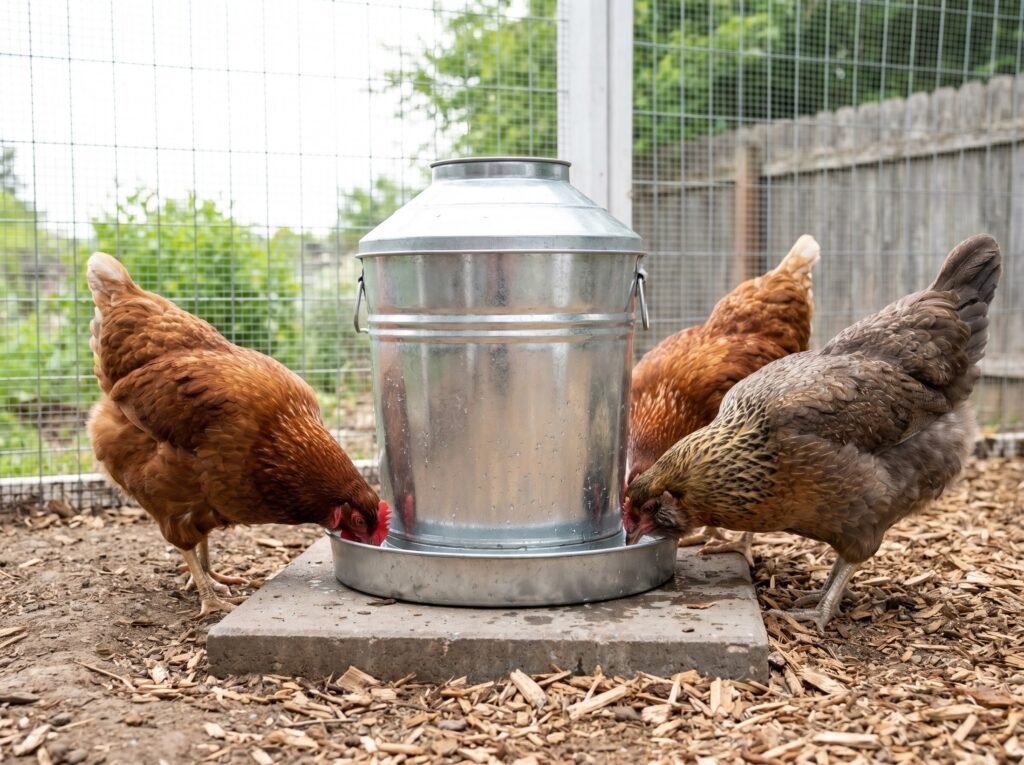
Water. A hen that runs dry for even a few hours on a hot day can stop laying for days afterward. Fresh, clean water available at all times is not optional. During hot weather, a single waterer may empty by early afternoon, so check capacity and add a second unit if needed. Production typically rebounds within a week once consistent water access is restored.
Anything a hen reads as a threat will put her hormonal system into pause mode. Predator pressure, bullying within the flock, overcrowding, sudden feed changes, or heat extremes all register as stress and suppress the hormonal signals that drive ovulation. A hen that is frightened or hurting puts her body's resources into survival, not egg production.
Molt and broodiness. Both are normal biology, not problems to fix. A broody hen that sits on a clutch stops laying until she either hatches eggs or is broken of the behavior. Buff Orpingtons, Cochins, and Silkies go broody far more readily than production breeds - worth knowing before you build a flock around them.
One thing that does not reduce production: the absence of a rooster. A hen lays eggs on her own reproductive schedule regardless of whether a male is present. A rooster is only needed if you want fertile eggs. For more on the biology, see our article on chicken eggs and how they form.
When to expect the first egg - and what follows
Most pullets lay their first egg somewhere between 18 and 22 weeks of age, with production breeds on the early end (18-20 weeks) and heavier dual-purpose breeds and bantams often taking 20-24 weeks or longer. The first few eggs are often small or misshapen - double yolkers, soft shells, odd shapes - as the hen's system calibrates. Give it two to three weeks to settle into a consistent rhythm.
After that first cycle stabilizes, a good layer in her first year should land within the breed's published range. If she is consistently falling short by more than 20-25%, check the light hours, the feed quality, and the flock dynamic before assuming the bird is a dud. The environmental variables usually explain the gap.
Understanding when hens start laying in the first place - including the role of day length at hatch time and how season affects pullet development - is covered in our guide on when hens start laying. And if your flock is producing but the shells are thin or the eggs oddly small, the calcium and protein content of the feed is almost always worth reviewing first.