Most beginner problems happen before the chickens arrive, not after. Buy the wrong feeder size, skip the hardware cloth, forget grit - and your first week turns into a scramble. This checklist covers every category in order: housing, containment, feeders and waterers, feed and supplements, bedding, brooding gear (if you're starting with chicks), and a first-aid husbandry kit. Print it, work through it section by section, and you'll be ready.
We built it for a starting flock of seven standard-size laying hens - big enough that the numbers are real, small enough that a backyard can hold it. Scale any figure up or down proportionally for your own count.
Housing: the coop and run
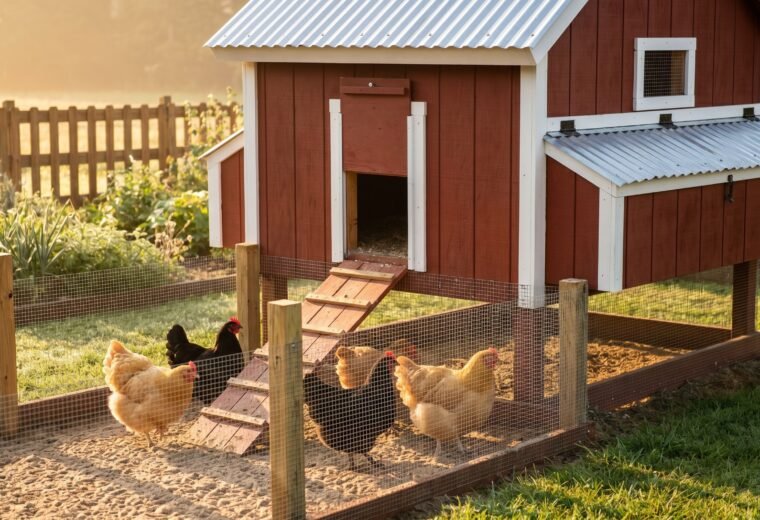
The coop is the biggest purchase and the one with the most hidden traps. If you haven't settled on a design yet, review your coop options before buying - but for shopping purposes the core numbers are straightforward. Plan for a minimum of 3-4 sq ft of indoor floor space per standard bird - that's 21-28 sq ft of enclosed coop for seven hens. The outdoor run needs at least 10 sq ft per bird (poultry.extension.org), so a 70 sq ft run is the floor for seven birds, and more is always better.
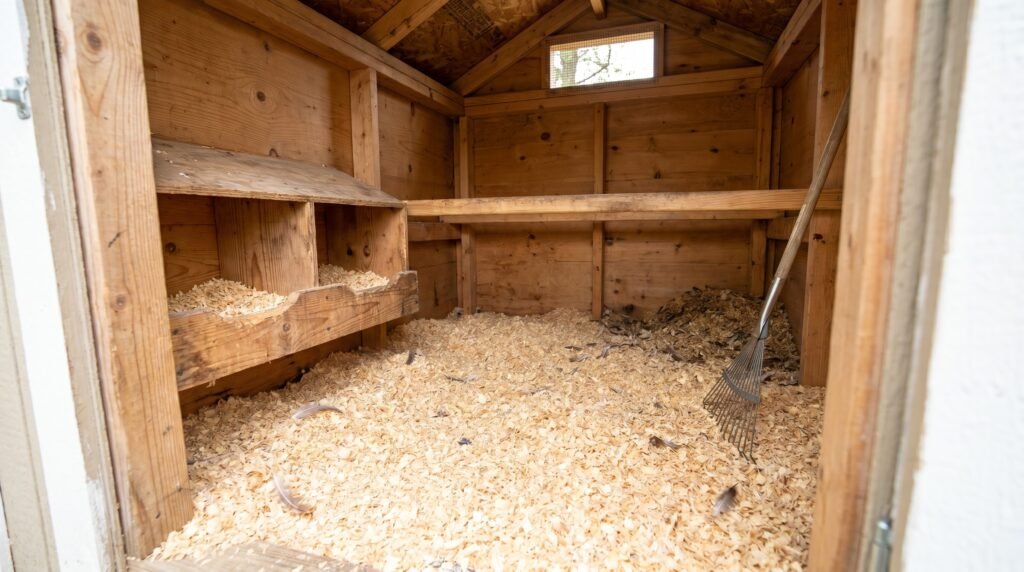
Inside the coop, two features matter more than anything else: roosts and nest boxes. Roost bars should give each bird 8-10 inches of linear space - at 7 birds that means 56-70 inches of bar. Six inches per bird is a bare minimum for tight retrofits only, not a target to plan around (Penn State Extension sets this floor; NC State Extension recommends the 9-10 inch range). Set them 18-24 inches above the floor on flat 2x4 lumber laid wide-side-up, which lets birds rest their full foot rather than gripping a narrow dowel. Nest boxes should measure at least 12x12 inches, with one box per four hens. For seven birds, two boxes work fine most of the time; add a third if you see hens queuing. Keep 3 inches of fresh pine shavings in each box and fit a 3- to 4-inch lip across the front to hold bedding in.
Ventilation beats heating every time. Healthy chickens tolerate cold well when the coop stays dry and draft-free; the enemy is moisture, not temperature. A common rule of thumb is to aim for vented area roughly equal to 1 sq ft per bird - screened openings near the roofline let ammonia and humidity escape without blasting cold air at roosting birds. Most backyard flocks in temperate climates do not need supplemental heat in winter.
| Feature | Minimum spec | For 7 birds | Notes |
|---|---|---|---|
| Indoor floor space | 3-4 sq ft per bird | 21-28 sq ft | 4 sq ft is far better than 3 if you can manage it |
| Run space | 10 sq ft per bird | 70 sq ft minimum | Larger run means less disease pressure |
| Roost bar length | 8-10 in per bird (6 in bare minimum only) | 56-70 in for 7 birds | Flat 2x4 wide-side-up; 18-24 in off floor |
| Nest boxes | 1 per 4 hens | 2 boxes | 12x12 in minimum; 3 in pine shavings inside |
| Ventilation | ~1 sq ft per bird | ~7 sq ft screened | Near roofline; screened to block predators |
Predator-proofing supplies
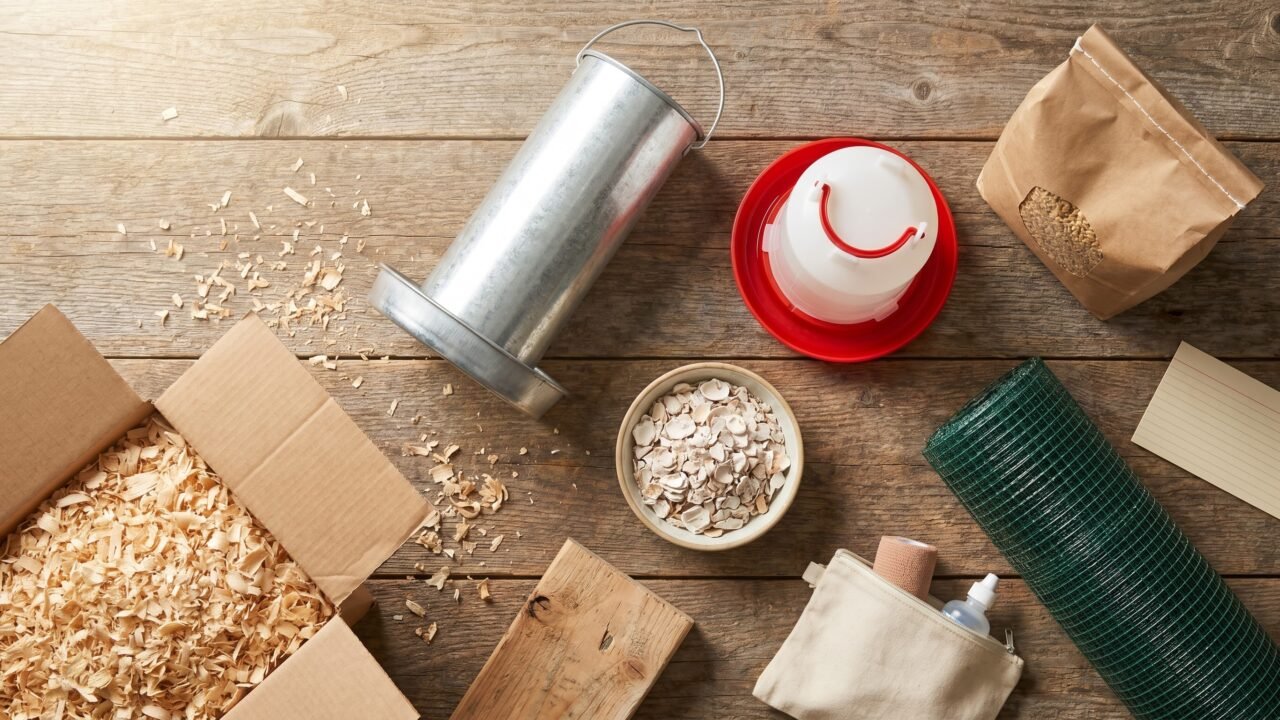
Hardware cloth is the most critical purchase on this entire list. Standard chicken wire keeps chickens in but stops almost nothing else - raccoon paws reach right through 2-inch hex wire, and weasels slip through gaps that look impossibly small. Use 1/2-inch welded hardware cloth for all run walls and any vented openings in the coop. For the bottom 12 inches of the run perimeter, bury the mesh outward at ground level or bend it into an L-shaped apron to stop digging predators. Door latches need to be the twist-lock or padlock style; a simple hook is no match for raccoon dexterity.
Overhead coverage matters too. A hardware cloth or solid roof over the run blocks aerial predators. Hawks are federally protected under the Migratory Bird Treaty Act, so non-lethal deterrents - overhead netting, covered runs, motion-activated sprinklers - are the only legal options.
Hardware cloth checklist for a standard 7-bird setup:
- 1/2-inch welded hardware cloth for run walls (length x height, plus 12-inch ground apron all around)
- 1/2-inch cloth for any vented coop openings
- Heavy-duty staples or screws and washers to attach cloth to framing (staples alone pull out)
- Twist-lock or carabiner-style latches on every door
- Overhead netting or solid roof on the run
Feeders and waterers
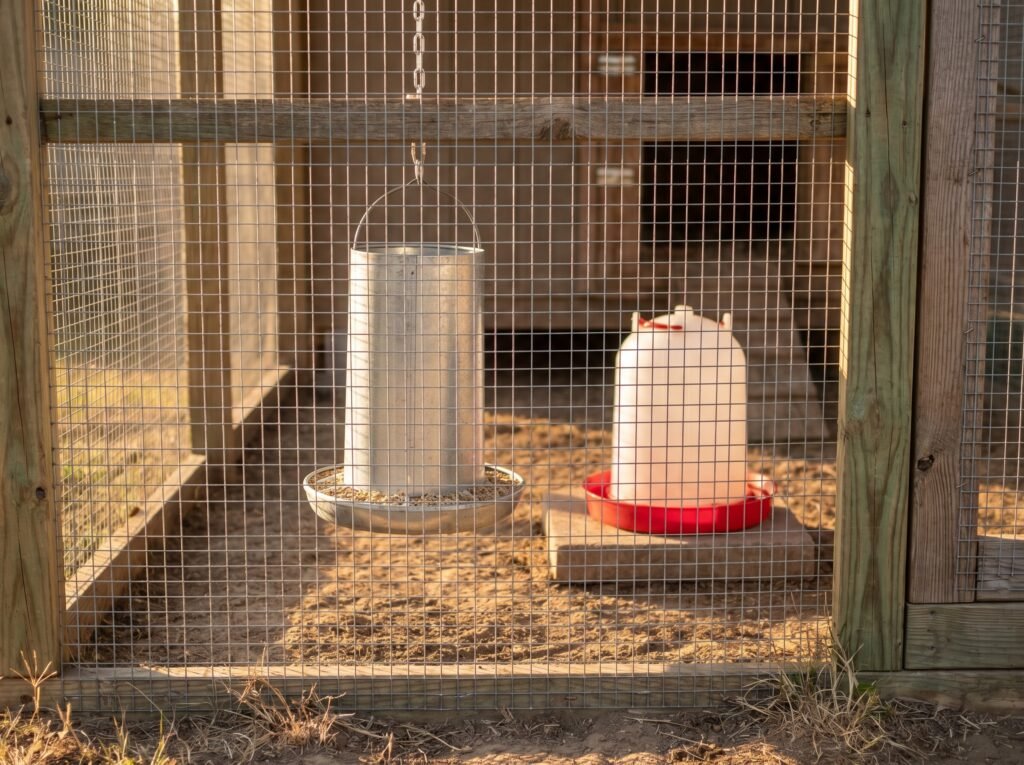
The golden rule for both: size them so every bird can access feed or water at the same time, and set the lip or nipple at back height to cut waste and contamination. Penn State Extension's guidance is to allow 3 linear inches of feeder space per bird - so seven hens need at least 21 inches of total trough access. A hanging tube feeder rated for 30 birds covers that easily and doubles as a good starter option because feed flows down by gravity. Tube, trough, and treadle feeders each have trade-offs worth knowing before you buy.
For waterers, plan on 1 linear inch of open-trough space per bird, or one nipple for every 6-8 birds. A nipple system stays much cleaner because birds can't bathe in it or knock debris in. Whatever type you choose, capacity matters in summer - a hen's water intake can double in heat. A good working minimum for seven hens is a 3- to 5-gallon waterer; in hot weather you may refill daily. Clean waterers every few days; algae and biofilm grow fast in warm weather and can suppress water intake enough to hurt egg production.
| Equipment | Spec per bird | For 7 birds | Type notes |
|---|---|---|---|
| Tube/trough feeder | 3 in linear access | 21 in minimum | Hang at back height; fill 2/3 full only |
| Open-trough waterer | 1 in linear access | 7 in minimum | 3-5 gal capacity handles summer demand |
| Nipple waterer | 1 nipple per 6-8 birds | 1-2 nipples | Stays cleanest; nipple at eye-level height |
Feed and supplements
Feed is the one supply you will buy every single week, so getting the type right from the start matters. The formula is age-driven: chick starter from hatch to about six weeks (18-20% protein), grower feed from six to 18 weeks (15-16% protein), then layer feed once hens approach laying age around 18 weeks (16-18% protein). Layer feed contains added calcium - typically 3.5-4.5% - that supports shell formation. Do not put chicks on layer feed early; the calcium load stresses developing kidneys.
A 6-pound hen eats roughly 3 pounds of feed per week while laying (UMN Extension). Seven standard hens will go through about 21 pounds of layer feed per week - plan your storage container size accordingly, and keep feed in a sealed rodent-proof bin.
Supplements to have on hand from day one:
- Crushed oyster shell - offered free-choice in a separate small dish; hens self-regulate calcium intake as needed
- Insoluble granite grit - necessary if birds have any access to whole grains, scratch, or treats; free-range birds pick up natural grit but confined birds cannot
- Scratch grains - a treat, not a diet; limit to no more than 10% of daily intake (NC State puts it at no more than 1/4 lb of grain per five hens per day)
A brief word on treats: chickens will eat almost anything offered, but not everything is safe. Avocado (the flesh and pit contain persin), raw or dried beans (contain phytohaemagglutinin), chocolate, and moldy feed are toxic. When in doubt, skip it.
Bedding
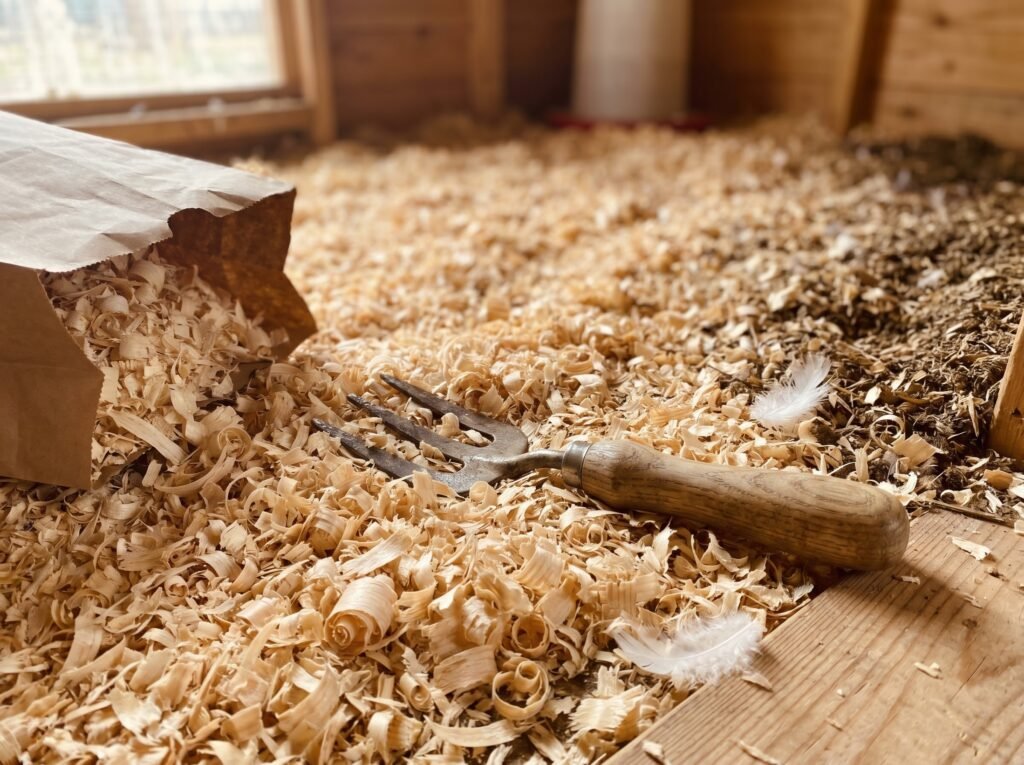
Pine shavings are the clear winner for coop floors. They are highly absorbent, dry quickly, compost well, and stay loose enough to prevent caking when stirred regularly. Straw absorbs poorly unless chopped to one inch or less, and it mats into a wet layer that traps ammonia - a real respiratory hazard. Rice hulls and sand are workable alternatives, but shavings remain the easiest to source and manage for most backyard keepers.
Start with 3-4 inches of shavings on the coop floor and stir the top layer every few days to keep it from packing down. Under the deep-litter approach, you add fresh shavings rather than removing the whole layer - building up to 10-12 inches by winter and doing one full cleanout in spring. Either system works; the absolute rule is that wet, compacted litter must come out immediately. Damp bedding breeds coccidia, grows mold, and raises ammonia fast enough to cause respiratory damage in a matter of days. Watch for any area that stays wet under the roost and add extra shavings or adjust ventilation to fix it.
Bedding quantities for a 7-bird flock (roughly 24 sq ft of floor):
- Initial load: two to three bags of pine shavings (bags are usually 8 cu ft compressed)
- Nest box refresh: one small bag per month keeps boxes clean
- Deep litter top-ups: plan for one bag every two to three weeks through winter
Brooding supplies (chick starter kit)
If you are starting with day-old chicks rather than started pullets, you need brooder equipment for the first six to eight weeks. This is a separate category from the main coop supplies - chicks have completely different temperature and space needs than adult birds.
The brooder temperature debate worth knowing about: heat plates (also called brooder plates) are now widely recommended over heat lamps by extension services and many experienced keepers. A plate heats the chicks from above like a mother hen and does not create the same fire hazard as a bare 250-watt infrared bulb suspended over dry shavings. If you do use a heat lamp, the UMN Extension guidance is firm: never hang it by the cord, use a porcelain socket with a cage around the bulb, and secure it so it cannot fall. Start brooder temperature at 95°F in week one directly under the heat source, and reduce by about 5°F each week until birds are fully feathered at six to eight weeks.
Brooder supply list:
- Brooder box or pen (cardboard ring, stock tank, or purpose-built brooder)
- Heat source - a heat plate sized for your chick count, or a 250-watt red heat lamp with a cage guard
- Thermometer to verify temperatures
- Chick-sized drinkers (1-quart jar waterers for the first two weeks; switch up as birds grow)
- Chick-sized feeder tray (1 linear inch per chick for the first two weeks, then 2 inches)
- Chick starter feed (18-20% protein, unmedicated or medicated depending on vaccination status - medicated starter contains amprolium, which suppresses the coccidia parasite; if chicks were vaccinated against coccidiosis before you received them, use unmedicated starter so the vaccine has time to build immunity rather than being undermined by amprolium)
- Paper towels or shelf liner over shavings for the first 48 hours (helps chicks find feed rather than pecking at the shavings)
First-aid and husbandry kit
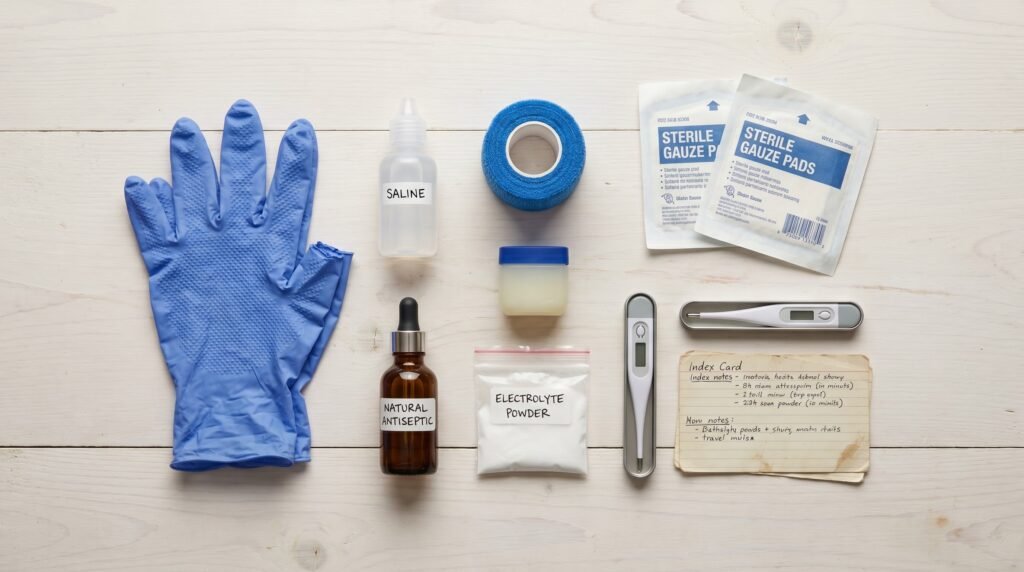
You do not need a pharmaceutical cabinet, but having basic supplies ready before you need them matters. A respiratory problem at 10 pm on a Sunday hits differently when you have nothing on hand. None of the items below are a substitute for a poultry vet - if a bird is genuinely sick or injured, call one. These supplies cover the routine husbandry situations and the small injuries that happen in any active flock.
A practical starting kit covers these core items:
- Electrolyte powder or liquid (for heat stress, transport stress, or a bird that has stopped drinking)
- Saline solution and a clean syringe (wound irrigation)
- Antiseptic scrub - betadine or chlorhexidine diluted per label
- Antimicrobial wound spray and plain antibiotic ointment (without pain reliever; some formulations toxic to birds)
- Vet wrap and sterile gauze pads
- Petroleum jelly (to protect combs and wattles from frostbite)
- Epsom salt (for soaking an egg-bound or footsore hen)
- Disposable gloves (multiple pairs)
- A dedicated poultry thermometer
- The phone number of a vet who sees poultry
A few items worth adding beyond that base list: a veterinary-grade wound gel or hydrogel spray for minor pecking injuries, a small spray bottle of dilute bleach solution (1 tablespoon bleach per gallon of water) for quick equipment sanitizing, and a notebook or log to track which birds have been treated and when. Consistent records are the single most useful thing you can have when something goes wrong and you need to describe the situation to a vet over the phone.
Optional but genuinely useful
Some supplies do not belong in the "must-have before day one" category but earn their place after a season or two in the coop.
- Automatic coop door - opens at dawn, closes at dusk; the single best insurance against forgetting to lock up
- Supplemental lighting - a timer-controlled LED bulb (25-40 watt equivalent) set to bring total daily light to 14-16 hours can maintain winter egg production; this is a live debate in the hobby, and there is no obligation to run supplemental light
- Dust bath box - a low-sided container with dry dirt, sand, or wood ash; essential for parasite prevention in confined flocks that can't dig their own
- Poop board under roosts - a board or tray positioned 6-8 inches below the roost catches overnight droppings and extends litter life dramatically; scrape it daily with a paint scraper
- Feed storage bin - a galvanized metal garbage can or sealed plastic bin; keeps rodents and moisture out of feed and prevents mycotoxin buildup from damp grain
If you are earlier in the planning process and still working through breed selection, local ordinances, and housing decisions, the beginner's guide covers those in order before you spend anything. Nipple, cup, and gravity waterer systems each clean and winterize differently - worth a read before committing to a type.