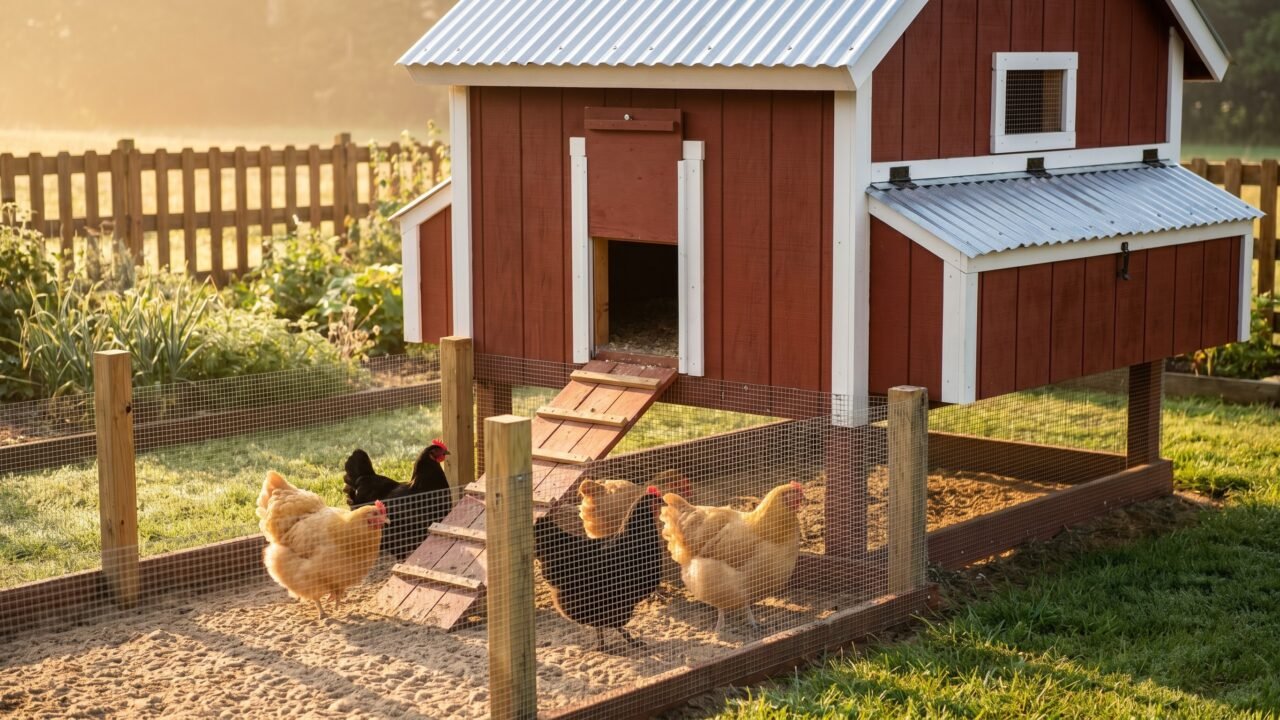
A good chicken coop starts with one number: 3-4 square feet of indoor space per standard hen. Eight square feet of indoor floor sounds reasonable until you realize that covers only two hens at the bare minimum. Most first-time keepers build too small, then rebuild within a year. A solid chicken coop is not complicated, but every element - space, ventilation, roosts, nest boxes, predator barriers, and a decent run - has a number behind it, and getting those numbers right from the start saves real money and real heartache.
This guide walks through each requirement in plain terms. Use the calculator below to size your coop before you build or buy, then follow the section links for deeper detail on whichever piece you want to plan next.
How much space does a chicken coop actually need?
The widely cited floor is 3-4 square feet of indoor space per standard hen, plus 10 square feet per bird in an outdoor run. Those figures come from multiple university extension programs and hold up as a practical minimum - not a generous target. Bantams can work in roughly half that footprint; large breeds like Jersey Giants or Brahmas are more comfortable with five or six square feet indoors.
More space is always better. Crowding is the single most common trigger for feather-pecking, egg eating, and disease spread in backyard flocks. If your municipality or budget allows, build at least 25-30 percent larger than your current flock requires. Adding two pullets to a full coop a year from now is much easier than pulling the whole structure apart.
Breed size, flock count, and run configuration all shift the numbers - the coop size per chicken guide runs the full math.
Coop Size Calculator
Use this table as a quick reference for common flock sizes. Figures assume standard-size hens with a dedicated attached run.
| Flock size | Minimum indoor floor (sq ft) | Minimum run area (sq ft) | Minimum nest boxes | Roost length needed (ft) |
|---|---|---|---|---|
| 4 hens | 16 | 40 | 1 | 2.7-3.3 |
| 6 hens | 24 | 60 | 2 | 4.0-5.0 |
| 10 hens | 40 | 100 | 3 | 6.7-8.3 |
| 15 hens | 60 | 150 | 4 | 10.0-12.5 |
| 20 hens | 80 | 200 | 5 | 13.3-16.7 |
Roost length is calculated directly at 8-10 inches per bird (Virginia Tech Extension VCE 2902-1092); the ranges above reflect that formula exactly. Round up to the nearest practical board length when building. Nest box count assumes one box per four hens. Bantam flocks can reduce indoor area by roughly 40-50 percent; free-range setups can reduce run area if birds genuinely free-range most of the day.
Ventilation: the most under-built part of most coops
Ammonia from droppings accumulates fast in a sealed space. University poultry programs set the health threshold at 25 ppm - above that, birds suffer eye damage and respiratory disease. You can detect ammonia by smell well before it reaches that 25 ppm health limit; if your nose catches it when you open the coop door, your hens have been breathing elevated levels continuously at levels that harm them.
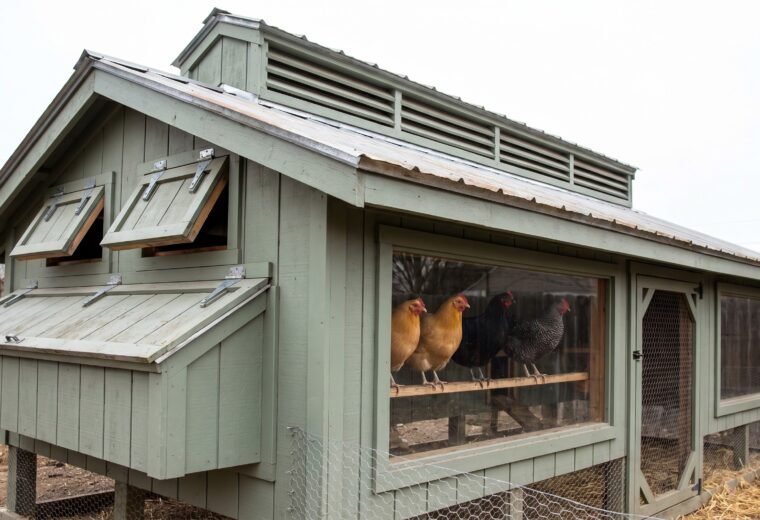
The fix is passive cross-ventilation: vents or openings high in two opposing walls so warm, moist air rises and escapes. Screen every opening with 1/2-inch hardware cloth to block predators. On still summer days a small box fan pointed outward handles the rest.
Cold weather is where keepers most often make the mistake of sealing everything up tight. Cold-tolerant breeds in a dry, well-ventilated coop with no drafts almost never need supplemental heat - the birds generate surprising warmth just by roosting together. Humid air trapped by a sealed coop actually causes more frostbite than cold dry air does. Leave your upper vents cracked even in January; close only the low drafts at bird level.
Heat lamps in a finished coop are a documented fire risk - a 250-watt bulb running 24 hours a day over dry pine shavings and feathers is genuinely dangerous. The live debate in keeping circles is not whether lamps carry risk (they do), but whether that risk is acceptable for extreme cold snaps. A radiant-heat panel mounted flat to a wall is a far safer option when supplemental warmth is genuinely needed.
Sizing vent openings for different coop volumes - and why ventilation-first design beats insulation-first - is the focus of the chicken coop ventilation guide.
Roosts and nest boxes: placement matters as much as size
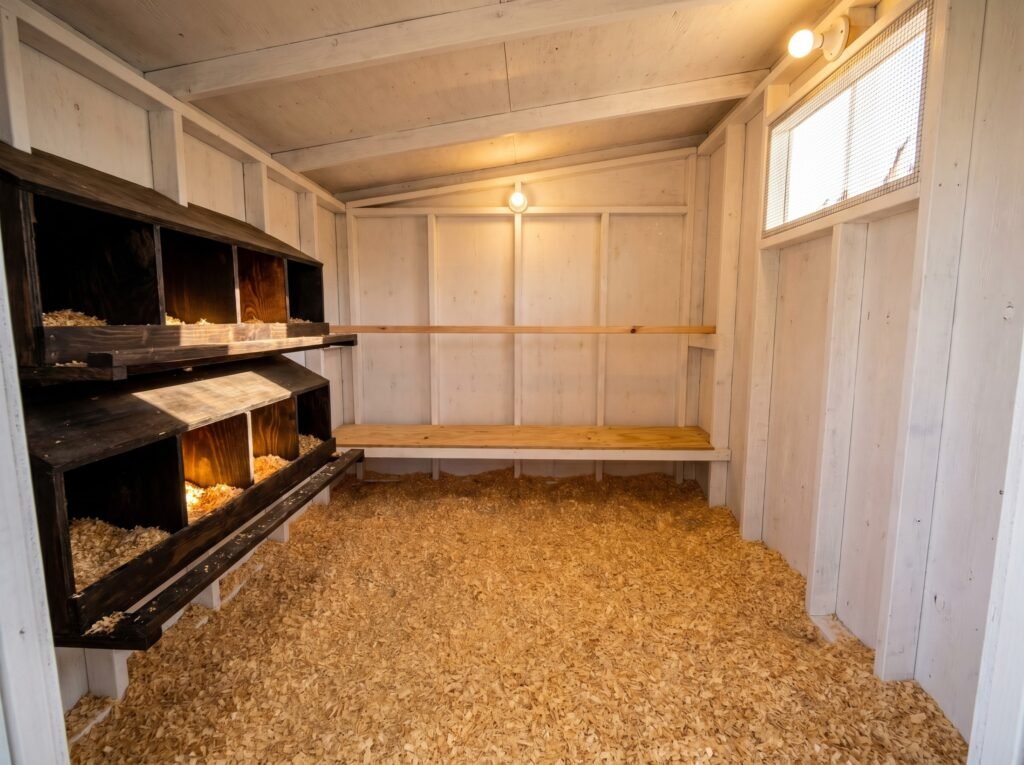
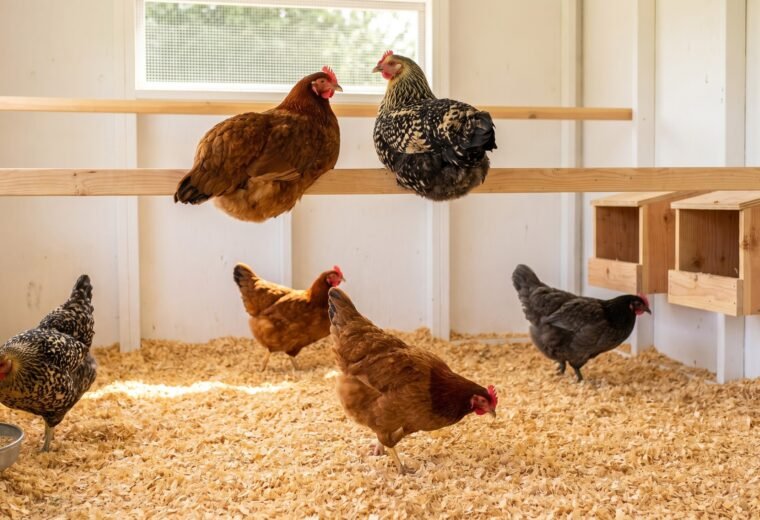
Chickens sleep on roosts, not on the floor. They instinctively climb as high as possible, so the roost must be the highest horizontal surface in the coop - always above the nest boxes, or hens will roost in the nests and foul them with droppings overnight.
Allow 8-10 inches of roost bar per standard bird. A 4-foot bar comfortably fits five hens. For the actual bar material, a 2x4 laid flat (wide side up) is favored by many keepers because the flat surface lets birds cover their toes with their breast feathers on cold nights, which reduces frostbite risk compared to a narrow round dowel. Round stock that is at least 1.5-2 inches in diameter works fine in mild climates. Set roosts 18-24 inches above the floor for standard birds; bantams do well at 12-18 inches.
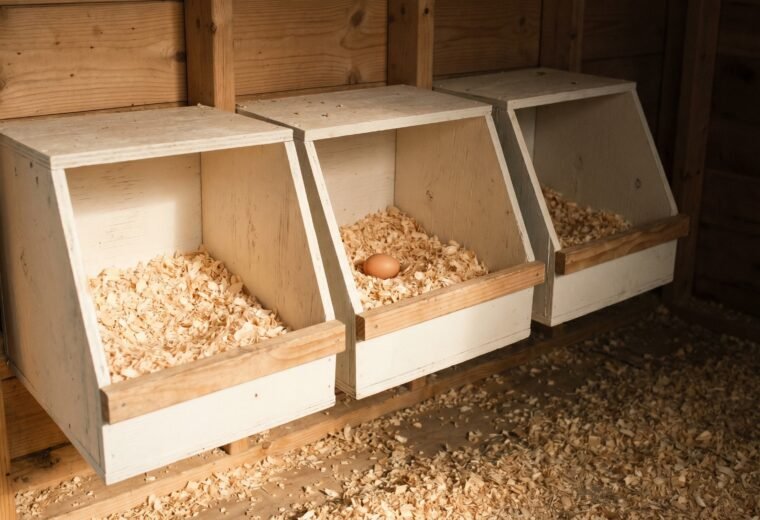
Nest boxes should be 10x10 to 12x12 inches for standard hens - snug enough that a hen feels secure but not so tight she cannot turn around. University of Maryland Extension cites 10x10 inches as the minimum adequate size; 12x12 inches is a common comfortable upgrade that most keepers prefer. One box per four hens is the working standard; more is better than fewer because peak-morning laying creates a queue. Mounting boxes 18-20 inches off the floor, with a landing perch below the entrance, reduces egg breakage and keeps the bedding in place.
Fill boxes with 2-3 inches of straw or pine shavings and check them daily - a clean, dark nest box means fewer hidden eggs and fewer broken ones. Box styles, dimensions, and community nest-box designs come next in the chicken nesting boxes guide.
Predator-proofing: where most coops fail
Predators account for more flock losses than disease in most backyard situations, and the majority of attacks happen at night while birds are locked in. A coop that feels solid to you can be opened by a raccoon in minutes if the latches are simple twist-knobs or hook-and-eye hardware. Raccoons learn to work them.
Key structural requirements:
- Use 1/2-inch or 1x2-inch welded hardware cloth on all openings - not standard chicken wire. Chicken wire keeps chickens in; it does not stop a determined raccoon, fox, or mink.
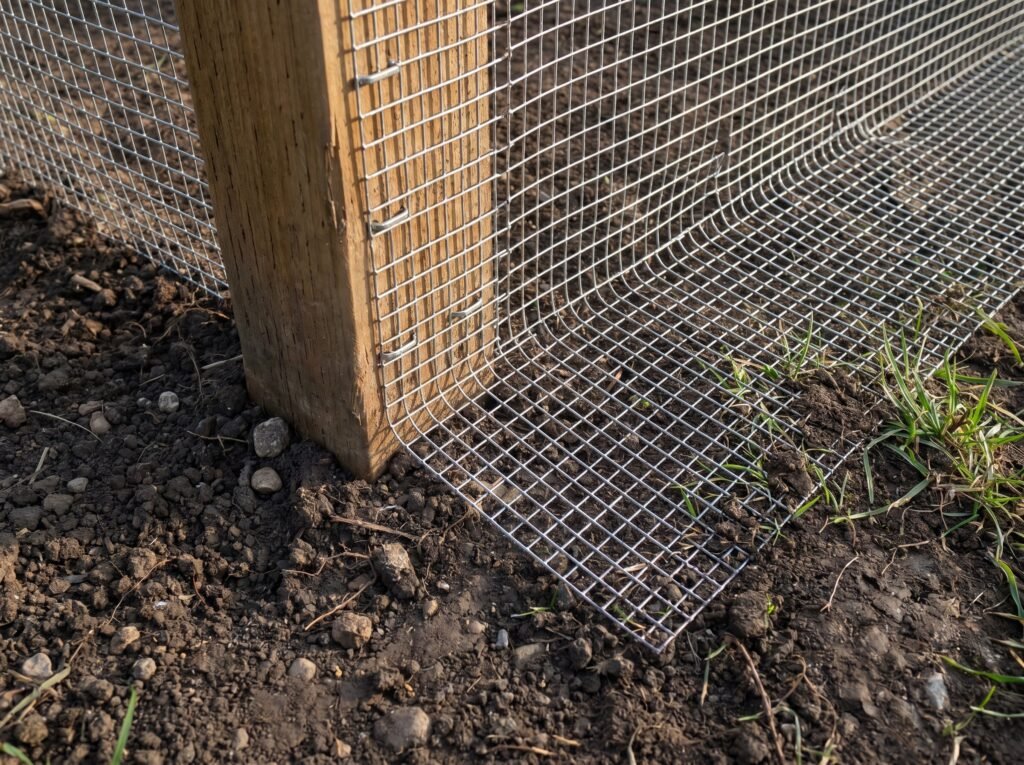
- Bury hardware cloth at least 12 inches straight down around the perimeter of the run, or bend it outward as an underground apron 12 inches wide. Foxes and dogs dig along fence lines, and an apron stops them without a deep trench.
- Cover the top of any enclosed run with hardware cloth or welded wire. Hawks can work through loose or weak spots in netting, and a hawk will take a bird in an uncovered run in broad daylight.
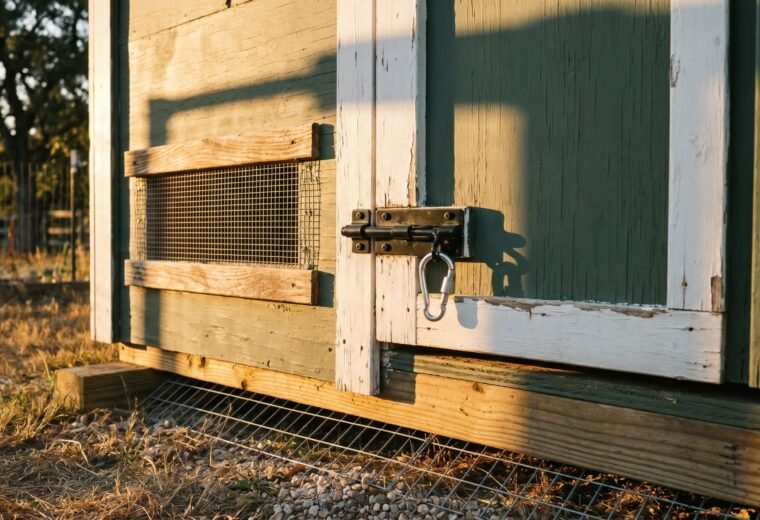
- Use two-step latches on every door - a carabiner through a bolt latch, or a slide latch plus a separate hook-and-eye at a different height. Raccoons can open single-action latches.
- Close birds inside at dusk, every night. A single forgotten evening is all it takes.
The coop floor needs the same attention. A dirt floor with no barrier is an open invitation to diggers. Hardware cloth stapled under a wooden floor, or a poured concrete slab, removes that entry point entirely. Raising the coop body 8-12 inches off the ground also eliminates the dark cavity underneath where rats and skunks like to den.
Hawks, raccoons, foxes, and weasels each attack differently - know which threats are active in your area before you build. Characteristic patterns and deterrents for each predator are in the chicken predators guide.
The chicken run: connected space the birds actually use
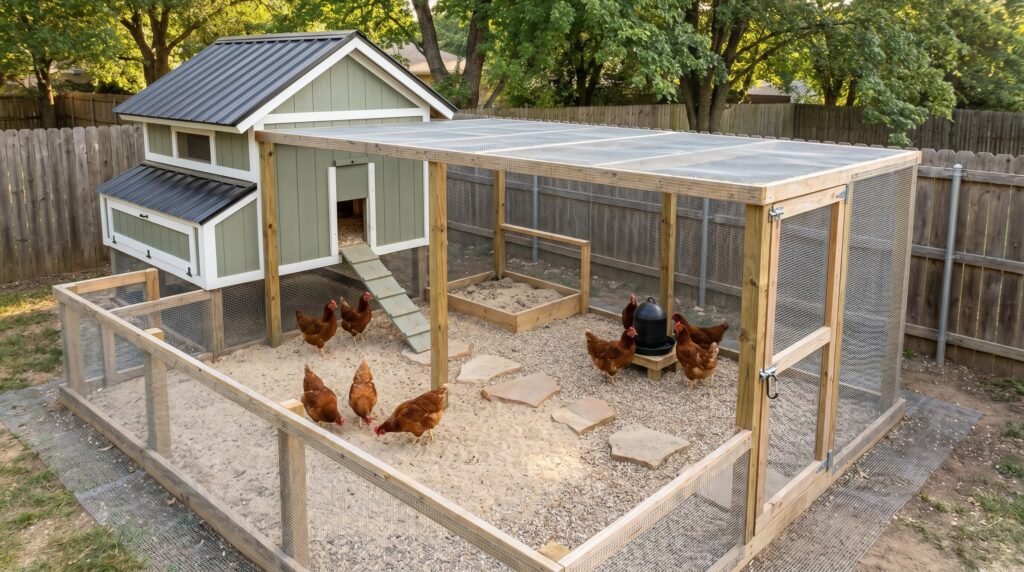
A run attached to the coop lets birds access daylight, dust-bathing spots, and foraging without supervision. The 10 square feet per bird minimum applies to a dedicated attached run where birds spend most of the day. Smaller runs are workable if you supplement with regular supervised free-ranging.
Run construction follows the same predator-proof logic as the coop: hardware cloth on the sides and either a covered top or a roof, hardware cloth buried or apron-bent underground, and a door that latches with two steps. A run that is open on top is fine in a low-predator area but becomes a liability if you have hawk pressure or if neighbors' dogs can reach the fence line.
Drainage matters more than most people expect. A run over clay soil gets muddy fast, and muddy birds get sick. A 2-4 inch base of coarse sand or gravel over the native soil drains well and is easy to rake. Add a few boards or flat rocks as dry stepping surfaces and birds use the whole space more evenly.
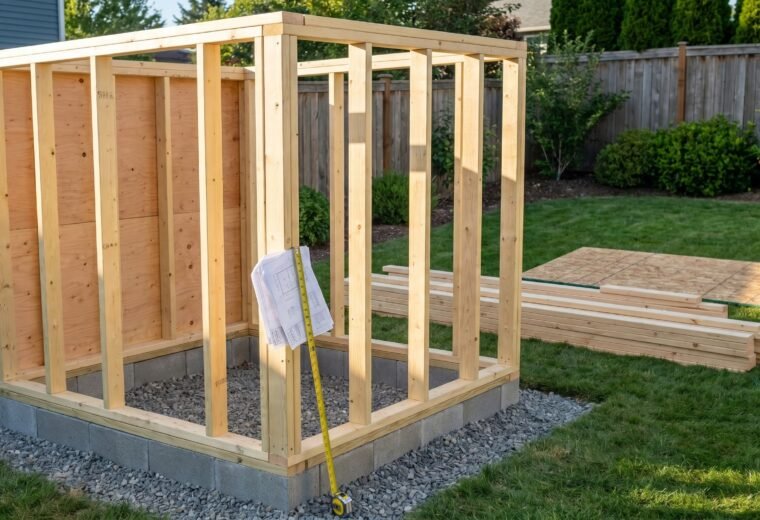
Larger run layouts, covered vs. open designs, and drainage solutions are worked through in the chicken run guide. If you are starting from scratch, building sequence - foundation to roofline - is the subject of the how to build a chicken coop guide.
Lighting, litter, and a few things people always ask about
Hens need roughly 14-16 hours of light per day to maintain peak laying. Natural daylight suffices in summer; winter days below 10-11 hours trigger a laying slowdown or stop in most breeds. A simple timer-controlled bulb adding light in the morning (rather than evening, to avoid an abrupt dark cutoff) extends the effective day without disrupting the roost routine. One 40-watt equivalent bulb per 200 square feet is enough.
Start with at least 4-6 inches of litter. Deep litter - managing the bedding as a composting layer rather than removing it entirely each week - is a legitimate method that generates microbial heat in the lower layers and reduces labor. Managed depth runs 4-12 inches as the material builds up between clean-outs. It requires good ventilation and monitoring for moisture; wet litter is the enemy in both the short (ammonia spikes) and long (coccidiosis, mold) term. Full clean-out twice a year with top-ups as needed is a common middle-ground approach for small flocks. Running the deep litter system well takes a bit of practice - the week-by-week management steps are in the deep litter method guide.
Common litter materials each have real tradeoffs worth knowing before you buy:
| Material | Relative cost | Absorbency | Ease of removal | Coccidiosis risk notes |
|---|---|---|---|---|
| Pine shavings | Low-medium | Good | Easy - light and rakes well | Low when kept dry; widely recommended as default |
| Straw | Low | Moderate | Moderate - clumps when wet and is heavy | Higher if wet; holds moisture in the core of each stem |
| Hemp bedding | High | Excellent | Easy - stays loose, composts fast | Very low; dries quickly even in damp conditions |
| Coarse sand | Low (one-time) | Low (drains through) | Easy - scoop like a cat box | Low; oocysts dry and die fast; poor for deep-litter method |
Cedar shavings are sometimes sold as bedding but can irritate chicken respiratory tracts; avoid them. Fine sawdust packs down, reduces airflow, and is not recommended.
Automatic coop doors are worth serious consideration for anyone who keeps irregular hours. A light-sensor or timer-controlled door closes at dusk reliably every night - which a tired keeper sometimes does not. A forgotten open door is the number-one cause of overnight predator losses in otherwise well-built setups.