Your zoning district, not your yard size, is the first thing that determines whether you can keep chickens at home. Millions of Americans now live in municipalities that allow small backyard flocks - but the rules differ block by block, and buying birds before you check the ordinance is one of the most common and painful mistakes new keepers make. This guide walks you through exactly how to find your local rules, what those rules typically say, and what to do when the law is on your side but the HOA isn't.
Step one: figure out which rules actually apply to you

The single biggest source of confusion is that multiple layers of law can apply to the same property at the same time - and the stricter one always wins. Start by pinning down which jurisdiction governs your address.
Properties inside city or town limits fall under municipal code. Properties in unincorporated areas fall under county code, which is almost always more permissive. A property can look rural but sit inside a city boundary, so don't guess. Most county and city websites have an address lookup or interactive zoning map that shows your parcel's zoning designation in seconds. The University of Arizona Cooperative Extension recommends using this map first, then pulling the actual ordinance text for that zoning designation and searching for "poultry," "livestock," or "chickens" in the document.
Once you have the municipal or county code in hand, there are three more layers to check:
- State preemption. A handful of states limit how restrictive local governments can be on agricultural animals. Check your state's agriculture department website.
- HOA covenants and CC&Rs. These are private contracts that often go further than the zoning code. An HOA ban on chickens stands even when the city says yes.
- Deed restrictions. Older subdivisions sometimes have restrictions written directly into property deeds, independent of any HOA.
Colorado State University's Extension program found that many homeowners associations forbid backyard chickens outright, so if your property has an HOA, verify that it allows poultry before you go any further. If it doesn't, your path is to petition the HOA board for a rule change - a longer road than checking first.
What most local ordinances actually say
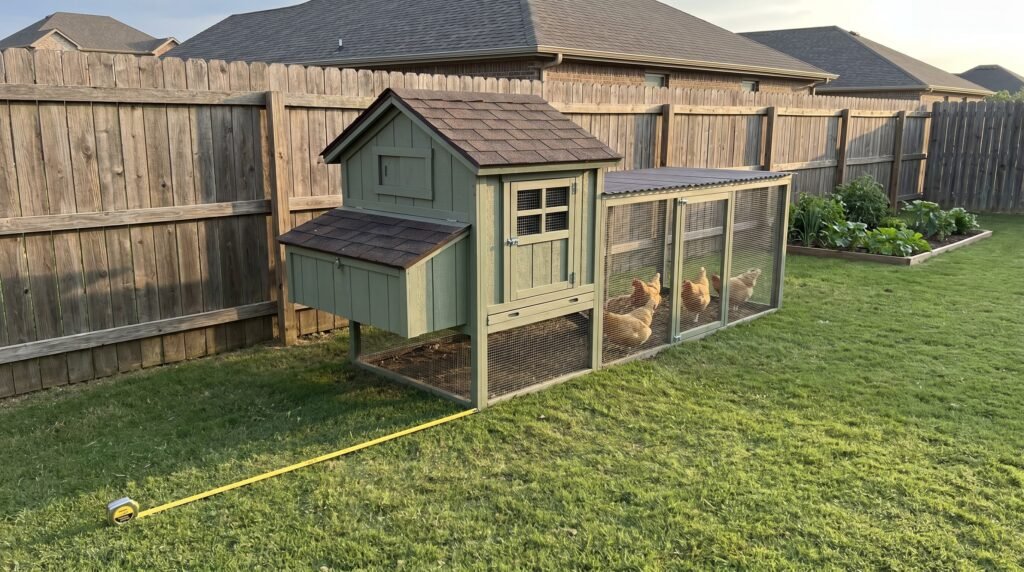
Once you track down the right code, you'll typically find the same five categories of rules regardless of which city wrote them. The table below summarizes what researchers at UConn Extension and Michigan State University Extension have found to be the most common standards. Use it as a checklist when reading your own ordinance.
| Rule category | What ordinances most commonly require | Notes for your research |
|---|---|---|
| Flock size | 4-6 hens maximum in urban/suburban zones | Some tie the limit to lot size; larger parcels may allow more birds |
| Roosters | Prohibited in most urban and suburban areas | Rural zones sometimes allow them; rarely permitted in residential zones |
| Coop setback from property lines | 5-20 ft; commonly 5-10 ft | Varies widely; some cities require rear-yard placement only |
| Coop setback from neighboring homes | 10-25 ft from the nearest dwelling | A few cities use 15 ft; rural areas sometimes have no setback at all |
| Permits | Required in some cities; fees are typically nominal | Special permits may require a public hearing; "as-of-right" permits are faster |
Michigan State University Extension's model ordinance guidance recommends a maximum of four to six birds per residential site, a setback of five to ten feet from any property line, and at least ten to twenty feet from a neighboring residence. Those ranges align with what UConn Extension found when it surveyed Connecticut's 111 chicken-friendly municipalities in 2025: the majority of those towns allow hens in residential zones with no additional permit paperwork, and almost half ban roosters entirely in residential zones, with some towns permitting roosters only on larger agricultural lots.
The rooster question
Roosters come up in nearly every backyard-chicken conversation, and the rule is almost always the same: hens are permitted, roosters are not. eXtension's urban poultry research network notes that most urban areas prohibit roosters because of noise - a rooster crows throughout the day, not just at dawn. By comparison, a hen's loudest vocalization (the egg-laying squawk) clocks in at around 63 dBA measured two feet away, roughly comparable to a normal conversation.
One thing worth knowing: you do not need a rooster for your hens to lay eggs. Hens produce eggs on their own cycle without any male present. If you want fertilized eggs or want to hatch chicks, a rooster is necessary - but for a backyard egg flock, he's optional. The basics of what a rooster-free starter flock actually needs are covered there.
Permits: when you need one and what it involves
Some cities require a permit; others allow chickens "as of right," meaning you simply comply with the rules and no paperwork is needed. UConn Extension's survey of Connecticut's 111 chicken-friendly municipalities found that the majority allow hens as-of-right while a smaller share require some permit application. Nationally, the picture is similar - permits are common in urban cores and rare in rural or semi-rural areas.
When a permit is required, it typically involves:
- A short application with your address, proposed flock size, and a coop diagram or description
- A fee (usually under $50, sometimes free)
- Occasionally, neighbor notification or written neighbor consent
- An inspection of the coop before or after you set it up
- Annual or biennial renewal
The NC State Extension program recommends calling your local animal control or zoning office before ordering birds - not after. A five-minute call can tell you whether a permit exists, what it costs, and how long approval usually takes. That timeline matters, because ordering chicks before you have the permit in hand can leave you scrambling if the process takes longer than expected.
How to check: a practical sequence
The University of Arizona Cooperative Extension lays out a clear sequence that works in almost any state. Here it is adapted for practical use:
- Look up your parcel on your county or city's GIS/zoning map. Search "[your county] zoning map" to find the portal. Enter your address and note your zoning designation (R-1, A-2, etc.).
- Pull the full municipal or county code for that zone. Search your municipality's name plus "municipal code" - most are on a public municipal code aggregator or the city's own website. Search for "poultry," "chickens," or "livestock" in the document.
- Read what you find carefully. Look for flock limits, allowed species, sex restrictions (rooster ban), setback distances, coop requirements, and any permit section.
- Call the zoning or planning office to confirm. Code language can be ambiguous. A direct call gets you an official interpretation and a name to document.
- Check your HOA documents. Pull your CC&Rs and any neighborhood rules. Look for "livestock," "poultry," "animals," and "pets."
- Check your deed. Deed restrictions are sometimes recorded separately from HOA documents and show up in your title report.
Once you're clear on what's allowed, thinking through how many birds actually makes sense for your household is the next step. Starting with three to four hens is enough for a small family to have eggs most of the week - the household egg math by flock size is laid out there if you want to pin down the right number before you order.
Neighbors: the unofficial fifth layer

Legal compliance isn't the whole picture. A neighbor who's bothered enough by your chickens can file nuisance complaints, prompt code enforcement visits, or push the city to tighten ordinances. Managing that relationship proactively costs almost nothing.
NC State Extension and Colorado State University Extension both suggest having a conversation with neighbors before your birds arrive. Let them know what you're planning, address any concerns about smell or noise, and - if they're interested - offer occasional fresh eggs. A well-managed coop with clean bedding, covered feed, and a tightly sealed run produces very little odor. Most neighbor objections are based on fear of what they imagine, and a short conversation dispels most of it.
Practical steps that reduce friction with neighbors:
- Place the coop at the maximum feasible distance from shared fences, not just the minimum required by ordinance
- Use a covered run to control odor and keep birds contained
- Clean the coop regularly and compost manure away from property lines
- Choose calm, quiet breeds - production breeds like Rhode Island Reds and Plymouth Rocks are far less vocal than some others
- No roosters in residential areas, whether the ordinance requires it or not
If your ordinance requires approval only on paper, the neighbor relationship is still your most practical insurance policy. Ordinances change when enough neighbors complain. Staying on good terms keeps your flock secure long-term.
When you're not allowed yet
If your current ordinance prohibits backyard chickens and you want to change that, the path runs through your city council or county commission. Municipal bans on backyard hens have been lifted in hundreds of cities over the past decade, usually after residents organized and proposed a model ordinance. MSU Extension's backyard poultry ordinance guidance is a solid starting point for drafting a proposal - it's written specifically for residents and local officials working together on this.
The argument that has worked most often in city council sessions: modest flock limits (four to six hens), clear setbacks, a permit requirement that helps the city track flocks for disease response, and a rooster ban. That combination addresses the three objections councils most commonly raise - noise, odor, and biosecurity - and it has cleared the way in hundreds of municipalities.
Once your ordinance and HOA situation are settled, the legal work is behind you - the next decisions are practical ones about coop size, breed selection, and what a small flock actually costs to set up and maintain.