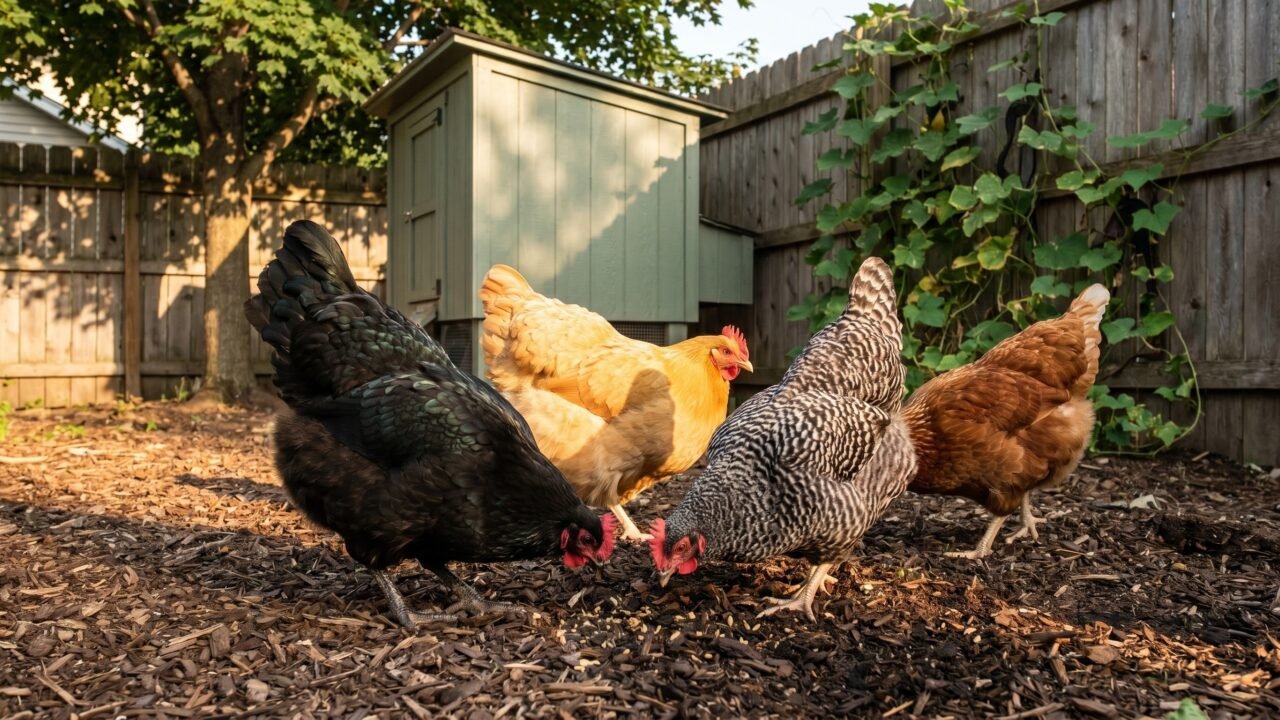
Four hens. That is the answer for most first-time backyard keepers feeding a household of two to four people - four birds from a production-leaning breed gives you a reliable 20 to 24 eggs a week in peak season, covers the slow winter weeks, and leaves enough margin that one bird's molt or off-day does not empty the basket. That said, the right number for your yard could be anywhere from three to a dozen, once you run the math on eggs, space, and what your city actually allows.
Below is a step-by-step framework for working that out, plus a sizing table that cuts through the back-of-the-envelope guessing.
Step 1: figure out how many eggs you actually need
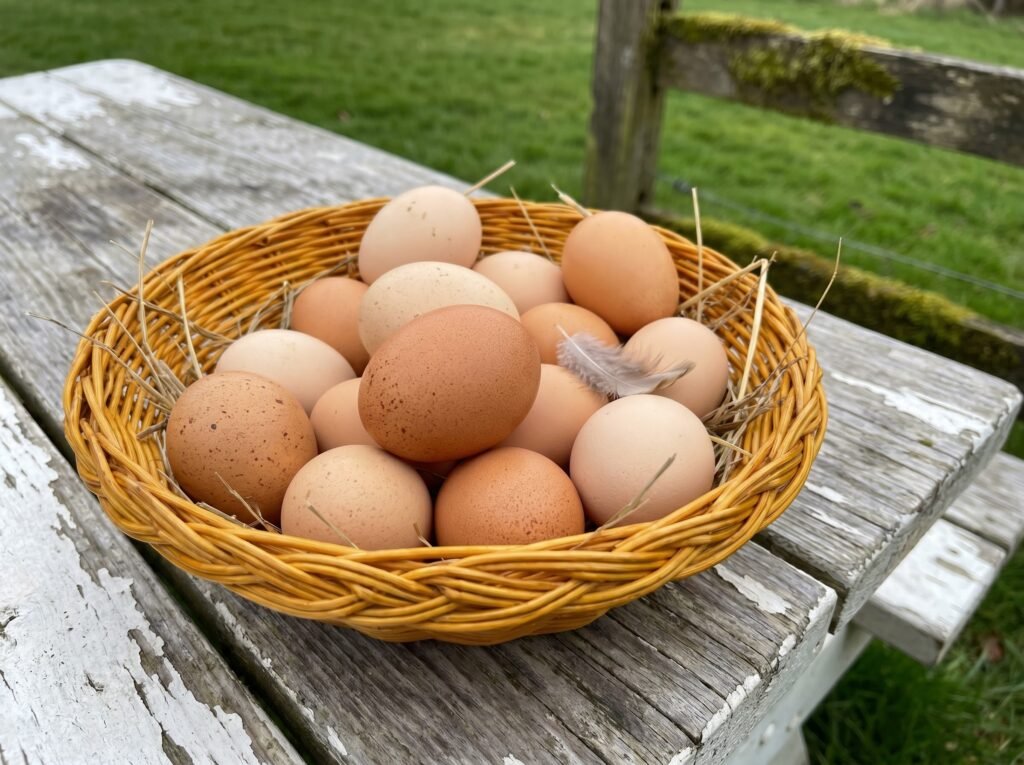
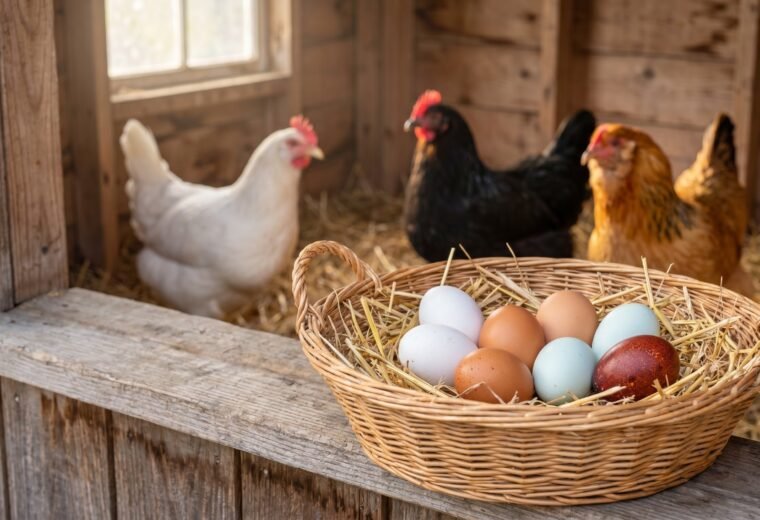
Breed matters more here than most beginners expect. NC State Extension notes that a typical hen produces around two eggs every three days during her first laying year. That works out to roughly 14 eggs per week from a flock of three birds, or just under five dozen per month. Production-type hybrids - Golden Comets, Cinnamon Queens, sex-linked crosses - push closer to 250 to 320 eggs annually per bird (per hatchery breed data). Heritage breeds and dual-purpose birds run much lower: Penn State Extension puts them at 50 to 100 eggs per year, with commercial egg-type breeds in the 200 to 260 range.
Pick your production target first. Then use this table to work backward to a flock size.
| Weekly eggs needed | Hens required (production breed) | Hens required (heritage/dual-purpose) | Typical household size |
|---|---|---|---|
| 7-10 | 3 | 5-6 | 1-2 people, light users |
| 14-18 | 4-5 | 8-10 | 2-4 people, regular users |
| 24-30 | 7-8 | 12-15 | 4-6 people or bakers |
| 36+ | 10-12 | 18-22 | Large household or selling extras |
Production breeds assumed at ~5 eggs per hen per week at peak; heritage/dual-purpose at ~2.5-3 per week. Numbers reflect first-year hens in reasonable management.
A few things shift these numbers. By year three, a hen lays roughly 65 percent as many eggs as she did in her first year. So a flock sized for peak production will come up short as the birds age, unless you add pullets or cull older hens. Also note that laying drops below 14 hours of daylight without supplemental lighting. If you are not adding a light in winter, plan on fewer eggs than peak-season math suggests. If you want to see the seasonal curve and how individual breeds stack up, the egg-count breakdown by breed has the numbers.
The flock-size floor: why three is the minimum
Chickens are not content alone or even in pairs. eXtension research confirms that laying hens can recognize around 30 individual flock-mates, and their social structure, the pecking order that keeps aggression orderly and predictable, only functions when there are enough birds to form a stable hierarchy. A single chicken or a pair is chronically stressed because the social scaffolding does not exist.
Three is the smallest flock that gives every bird a place in a real hierarchy. It also provides a practical buffer: if you lose one bird to illness or predation, the remaining two are not stranded in isolation while you source a replacement. Many keepers who start with three find that number right-sized for a small apartment-scale garden; the majority of first-time suburban flocks land between three and six birds.
On the upper end, that same eXtension research notes that social cohesion begins to break down in flocks of 30 to 60 birds, so small backyard flocks well below that threshold tend to be calmer and easier to manage than large commercial ones.
Space sets the hard ceiling
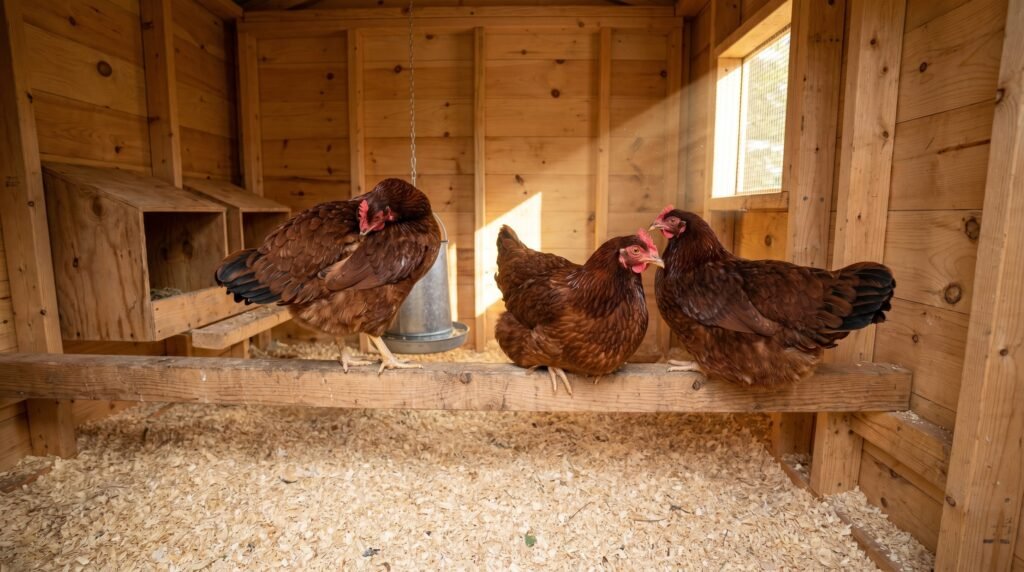
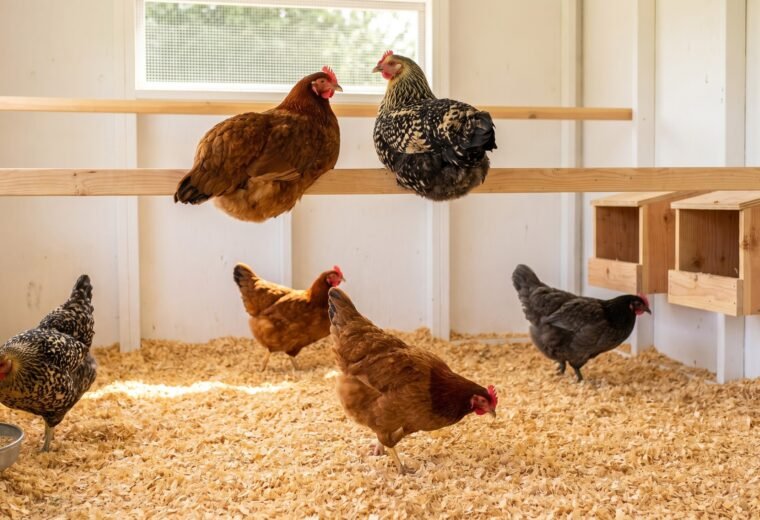
Your coop and run dimensions are the most concrete limit on flock size. eXtension's land-grant network recommends a minimum of 3 to 4 square feet of indoor space per standard hen, and 10 square feet per bird in the outdoor run. NC State Extension puts indoor minimums at 2.5 to 3.5 square feet per bird with at least 4 to 5 square feet of outdoor run per bird, acknowledging that dense urban settings often fall short of the generous outdoor target.
Working from those numbers:
- A 6x4 ft coop (24 sq ft) comfortably houses four to six standard hens indoors.
- A 6x8 ft run (48 sq ft) can support four to five birds at the recommended 10 sq ft each, or up to eight to nine birds at the denser urban minimum.
- Bantam breeds need roughly two-thirds to three-quarters of the standard allowance, depending on breed size (approximate rule of thumb - no single universal figure applies to all bantam varieties), so a small coop that fits four standard hens may accommodate five or six bantams as an approximation worth confirming against your specific breeds.
Crowding is the single fastest way to invite feather-pecking, disease, and miserable birds. If your math lands on six birds but your coop square footage only supports four comfortably, build to the space, not the wishlist. Before you finalize the bird count, measure the coop carefully - the room-by-room sizing reference shows how nest boxes, roost bars, and ventilation area all compete for floor space.
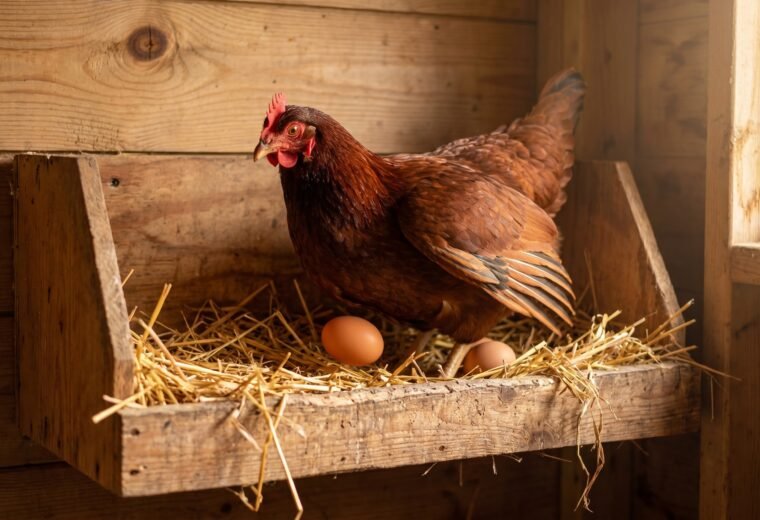
Penn State Extension specifies at least one 12-by-12-inch nest box for every four hens; extension guidance more broadly puts roost bar at 8 to 10 inches per bird (6 inches is the bare minimum for cramped retrofits). A 4-hen flock needs one to two boxes and at least 32 to 40 inches of roost bar - both easy to fit in a modest coop.
What your local ordinance actually allows
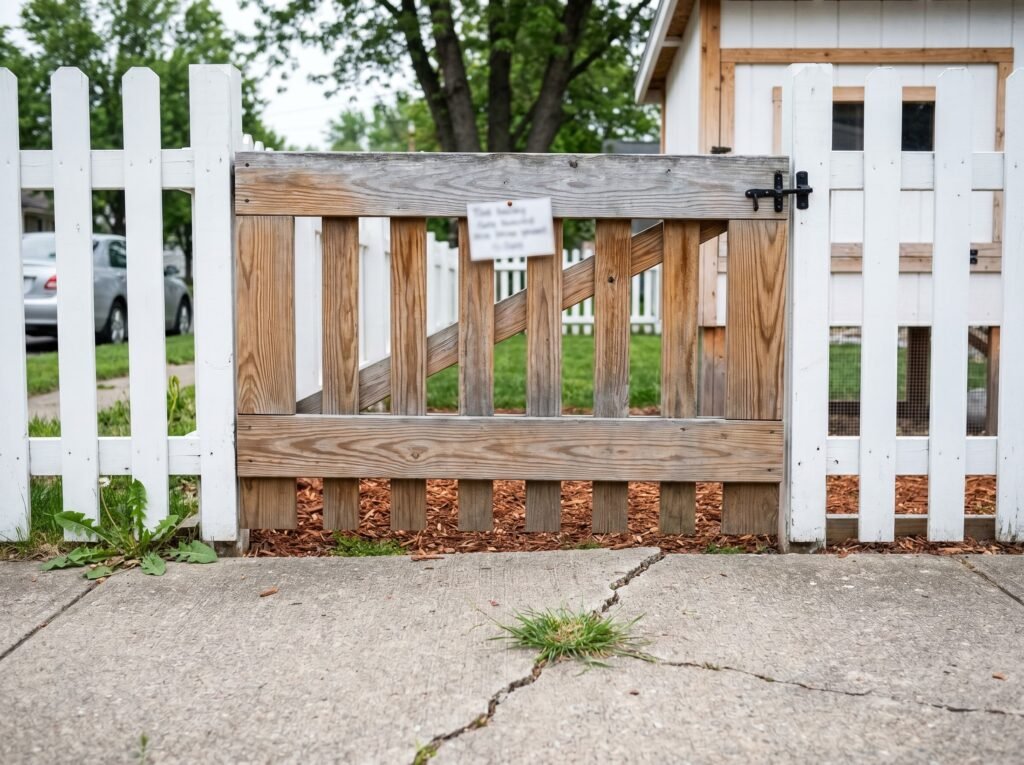
Check this before you buy chicks or order a coop. eXtension's urban poultry resource is direct: contact your local animal control or zoning office before ordering birds so you know exactly how many you are permitted to keep. Most urban and suburban ordinances allow between five and six hens, with roosters banned in the vast majority of jurisdictions because of noise. Some cities cap flocks at three. A few allow 20 or more on larger lots. The rules vary sharply by municipality, sometimes by neighborhood or HOA, and many have changed recently as backyard-chicken popularity has grown.
If your ordinance caps you at four hens but your egg math says you need seven, you have two options: pick a higher-production breed to close the gap, or accept that you will buy some eggs from the store. Trying to keep more birds than your permit allows typically results in mandatory removal, fines, or both - not worth the risk.
No rooster is needed for egg production. Hens lay perfectly well without one. A rooster only matters if you want fertilized eggs for hatching.
A complete sizing decision matrix
Use this to pull all four factors together before you commit to a number.
| Factor | What to check | What it tells you |
|---|---|---|
| Weekly egg goal | Count how many eggs your household uses per week (track for 2 weeks to get an honest number) | Minimum bird count at your chosen breed's production rate |
| Breed type | Production hybrid (250-320/yr) vs. heritage/dual-purpose (50-100/yr) vs. mixed flock | Multiplies or divides your bird count by 2-4x |
| Indoor coop floor area | Measure in sq ft; divide by 3 (dense minimum) to 4 (comfortable) for standard birds | Coop capacity ceiling |
| Run area | Measure in sq ft; divide by 10 for comfortable outdoor density | Run capacity ceiling (often lower than coop ceiling) |
| Local ordinance cap | Call zoning or look up city municipal code | Hard legal maximum; may be lower than space permits |
| Social minimum | Always at least 3 birds, no exceptions | Floor below which welfare suffers |
Your final number is whichever of those rows gives you the lowest value - that is your ceiling. Then make sure it is at least three. If it falls below three, your setup is not yet ready for chickens: expand the coop, resize the run, or wait until you can.
Common beginner mistakes when sizing a flock
Ordering too many birds too fast is the most predictable first-year error. The appeal makes sense: chicks are inexpensive, and it feels efficient to stock up. But a flock that outruns the space quickly becomes a flock with wet bedding, respiratory stress, and feather damage. Getting the foundation right from the start is the more valuable investment.
A few other traps worth knowing:
- Counting on peak production all year. Hens slow or stop laying through molt (typically in fall) and short winter days. A flock sized only for your peak-season target will leave you short for months at a time.
- Forgetting attrition. Over a 5-year span, expect to lose some birds to predators, illness, or age. Many keepers size slightly over their minimum so one loss does not drop them below the social floor of three.
- Assuming all breeds produce equally. A heritage Dominique laying around 230 to 270 eggs per year and a Golden Comet laying 300 eggs per year still require different flock sizes to hit the same weekly egg target - and lower-production heritage breeds widen that gap further. Check breed data from the hatchery before ordering.
- Skipping the ordinance check. Discovering after you have 10 birds that your city allows six creates a stressful situation with no good options.
If you are still deciding on setup and breed before committing to a number, start with the full beginner's walkthrough, which takes you from housing and feed choices through ordering your first birds.