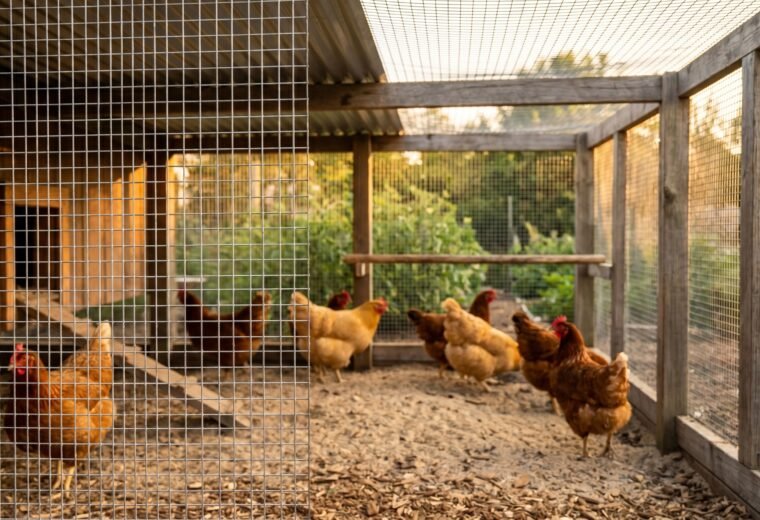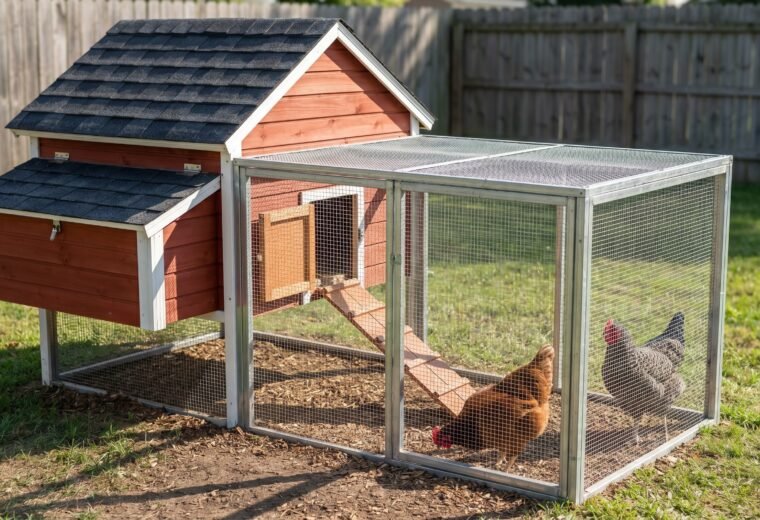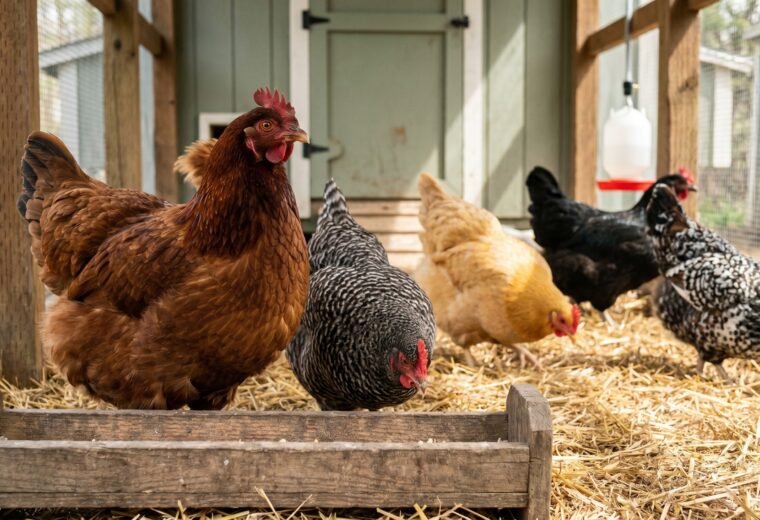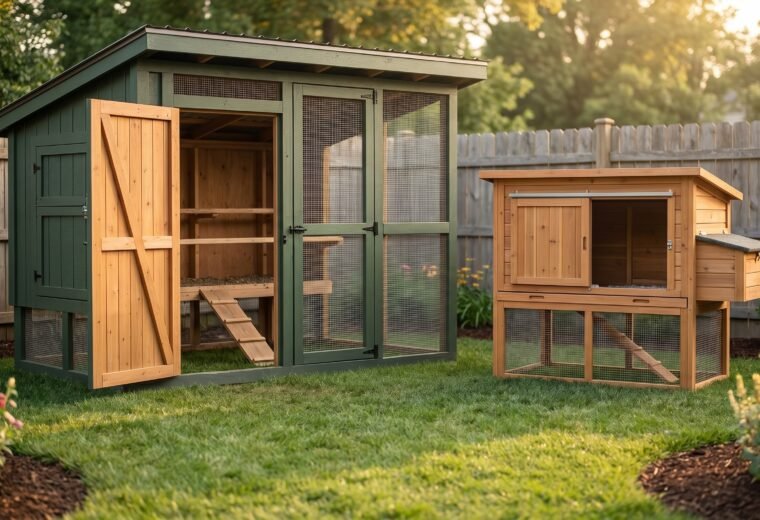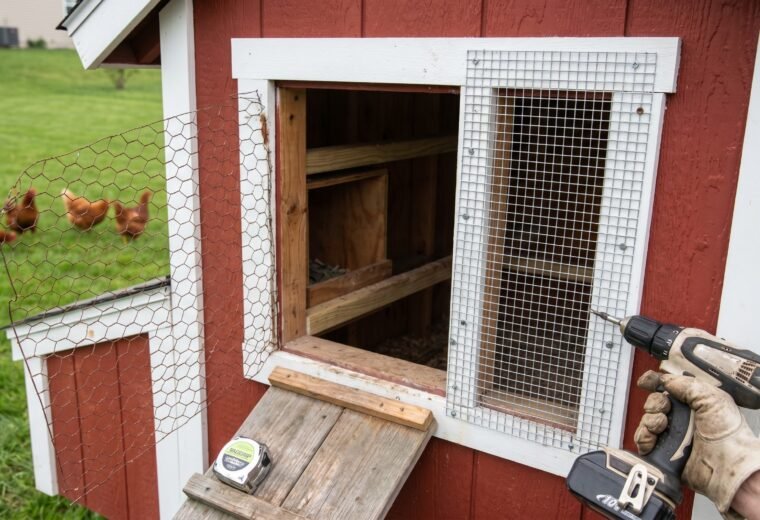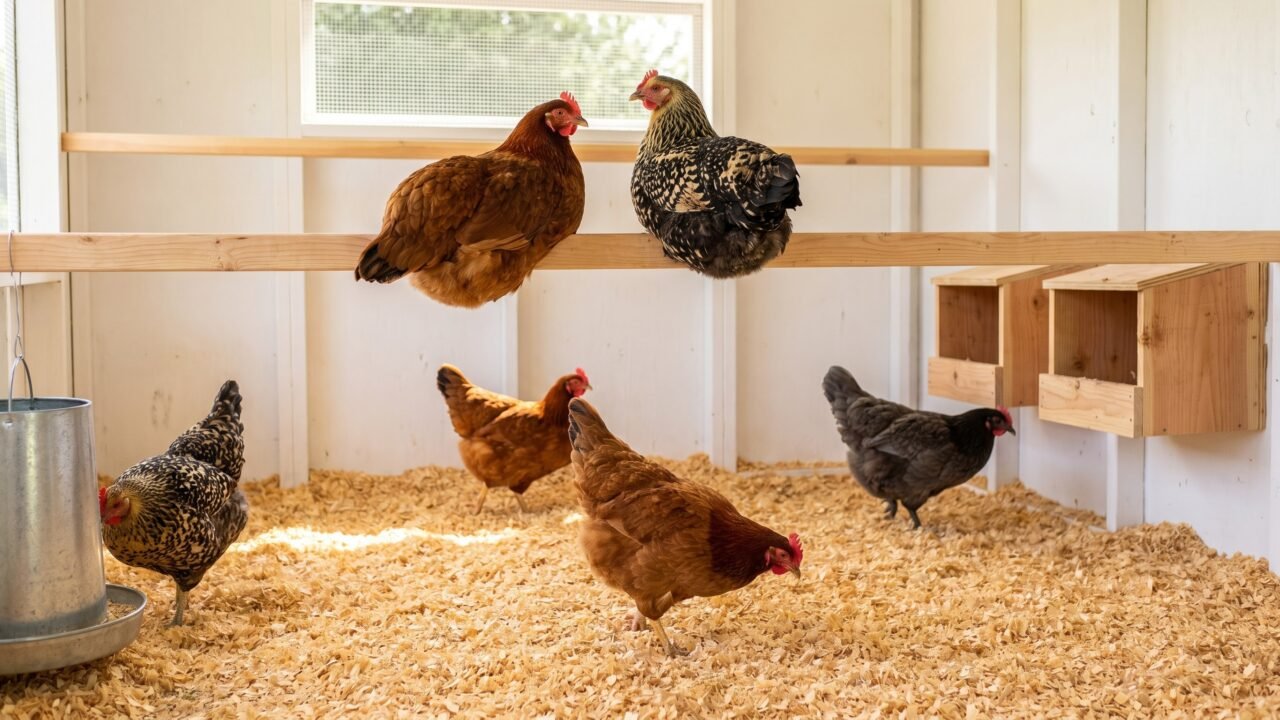
Four square feet of indoor coop space per standard-sized hen, and 10 square feet per hen in the run. That pairing is the most reliable starting point for a healthy backyard flock, and it appears in multiple university extension guides. If you keep bantams, the numbers shrink to 2-3 sq ft inside and 5-8 sq ft in the run. If you keep extra-large breeds like Brahmas or Jersey Giants, go to 5 sq ft in the coop and 12 or more in the run. What follows is everything you need to size your housing correctly, including why the specs differ across sources - and which figures to trust.
Why the numbers vary so much (and which sources to trust)
Pick up five different poultry handbooks and you will find indoor recommendations ranging from 1.5 to 5 square feet per bird. That spread is not an error. It reflects genuinely different contexts: commercial operations with continuous climate control, birds that never leave the house, birds with generous pasture access, and backyard flocks somewhere in between.
Extension.org - the Land-Grant university cooperative network - states plainly: "There is very little peer-reviewed research looking at the space allowances for backyard poultry." Most published standards grew out of commercial cage-free production, then were adapted for small flocks. Penn State Extension cites 1.5 square feet per hen as a workable floor space, a figure accurate for managed laying houses with controlled lighting and zero outdoor access. For a backyard flock that goes outside every day, that number is too tight.
Virginia Cooperative Extension's small-scale housing publication - covering quail through geese and distinguishing bantams from standard layers - is the most granular backyard-focused reference available. University of Minnesota Extension and extension.org both land at 3-5 square feet indoors for standard hens, consistent with the Virginia Tech figures. Those three converging sources, all from land-grant universities, are the foundation for the table below.
The practical rule: use the higher end of any range if your birds spend long stretches confined (rain weeks, deep winter, molt), and use the lower end only if they genuinely free-range most daylight hours. When in doubt, a coop with an attached run that meets both numbers independently is the safest design.
Reconciling the conflicting specs
Shoppers who look at USDA Organic or Global Animal Partnership (GAP) labeling will notice different numbers, often lower. Those programs target commercial flocks with engineered ventilation, automated feeding, and managed stocking cycles. Some commercial programs set meat-bird stocking densities in pounds per square foot rather than individual square feet per bird, and the production systems around those birds differ substantially from a backyard setup.
Commercial cage-free standards allow as little as 1.0 to 1.5 sq ft per hen indoors. Those figures assume 16-hour lighting cycles, continuous feed management, and professional flock health oversight. They are not appropriate benchmarks for a backyard coop where birds are shut in overnight for eight to twelve hours, where ammonia builds faster in a small enclosed space, and where the keeper checks in once or twice a day. The 3-4 sq ft and 10 sq ft run figures from the land-grant extension network are calibrated for that reality.
If a retailer's marketing uses commercial stocking numbers to justify a tight coop footprint, that is the gap worth recognizing. A coop sized for backyard conditions needs the extension-network standards, not commercial cage-free minimums.
Space by breed size: the reference table
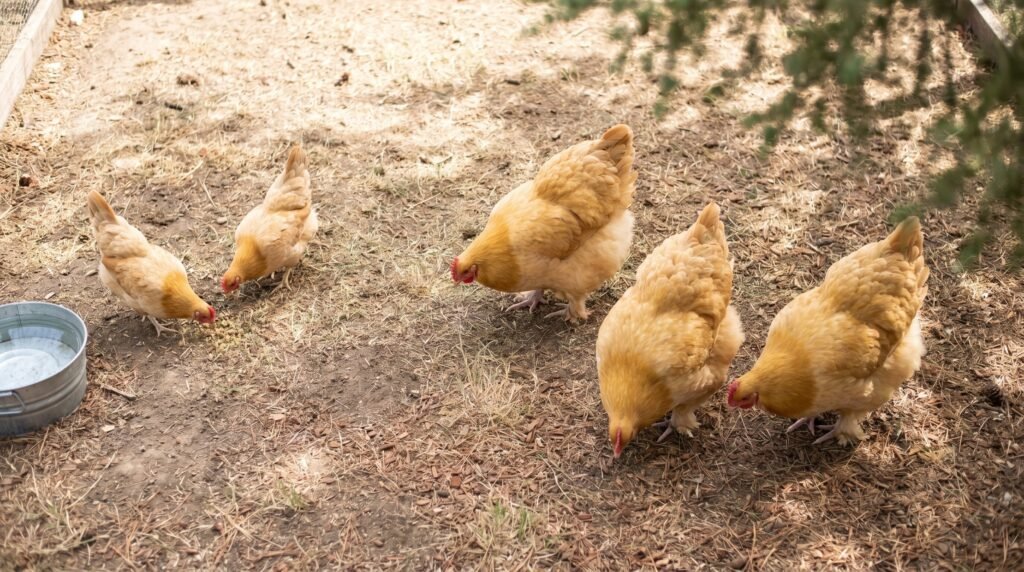
The numbers below are minimums per bird. More room is always better - "you can never provide too much space" (Virginia Cooperative Extension). More room keeps the pecking order civil, gives low-ranking hens escape routes, and reduces litter moisture - all of which matter more as flock size grows.
| Bird type | Coop (sq ft / bird) | Run (sq ft / bird) | Roost bar (inches / bird) | Nest boxes |
|---|---|---|---|---|
| True bantam (Serama, Dutch, d'Uccle, etc.) | 2 | 5 | 8 | 1 per 3-4 hens; 10x10 in box |
| Standard bantam (most bantam breeds) | 2-3 | 5-8 | 8 | 1 per 3-4 hens; 10x10 in box |
| Light standard (Leghorn, Ancona, Fayoumi) | 3 | 8-10 | 8-10 | 1 per 3-4 hens; 12x12 in box |
| Medium standard (Plymouth Rock, Wyandotte, Rhode Island Red) | 3-4 | 10 | 8-10 | 1 per 3-4 hens; 12x12 in box |
| Heavy / dual-purpose (Orpington, Sussex, Australorp) | 4 | 10-12 | 10-12 | 1 per 3-4 hens; 12x12 in box |
| Giant breeds (Brahma, Jersey Giant, Cochin) | 5+ | 12-15 | 12 | 1 per 3-4 hens; 14x14 in box |
Sources: Virginia Cooperative Extension pub. 2902-1092; extension.org Space Allowances; Penn State Extension management guidelines; University of Minnesota Extension. The nest box ratio of one per 3-4 hens follows the canonical standard across breed sizes. Roost bar numbers reflect the Virginia Tech 8-10 inch standard, with bantams at the lower end of that range given their smaller body width, and giants at 12 inches given their larger resting body width. Bantam nest box dimensions of approximately 10x10 in reflect common practitioner guidance; extension sources specify 12x12 in for standard hens only and do not provide a separate bantam dimension. Giant-breed nest box dimensions of approximately 14x14 in are a practitioner recommendation beyond extension guidance; Penn State specifies 12x12 in for standard hens.
How to calculate coop and run size for your flock
Multiply birds by the sq ft figure for your breed category, then check the result against the footprint of any coop you are considering. A worked example with nine medium-standard hens:
- Coop interior: 9 birds x 4 sq ft = 36 sq ft minimum. A 6x6 ft floor or a 4x9 ft floor both qualify.
- Run: 9 birds x 10 sq ft = 90 sq ft minimum. A 9x10 ft run works; so does a 10x10 ft run with a bit of margin.
- Roost bar: 9 birds x 9 inches = 81 inches total. Three 28-inch bars (84 in) cover it with a small margin.
- Nest boxes: 9 hens divided by 3-4 = two to three boxes, so three boxes is the right call.
Mixed flocks need a blended calculation. If you keep four standard hens (4 sq ft each) and three bantams (2 sq ft each), the coop minimum is (4 x 4) + (3 x 2) = 22 sq ft. Run the same math for the outdoor space using each group's run figure. Use the total that comes out higher as your target.
One caveat on runs: extension.org notes that even at the recommended outdoor density, a run will quickly lose all plant cover and can become muddy during wet weather. If you want live ground cover, you need more actual space per bird than the minimum - or you rotate paddocks while one section recovers. A well-planned run accounts for this with two or three rotating sections.
Overcrowding: the signs your coop is too small
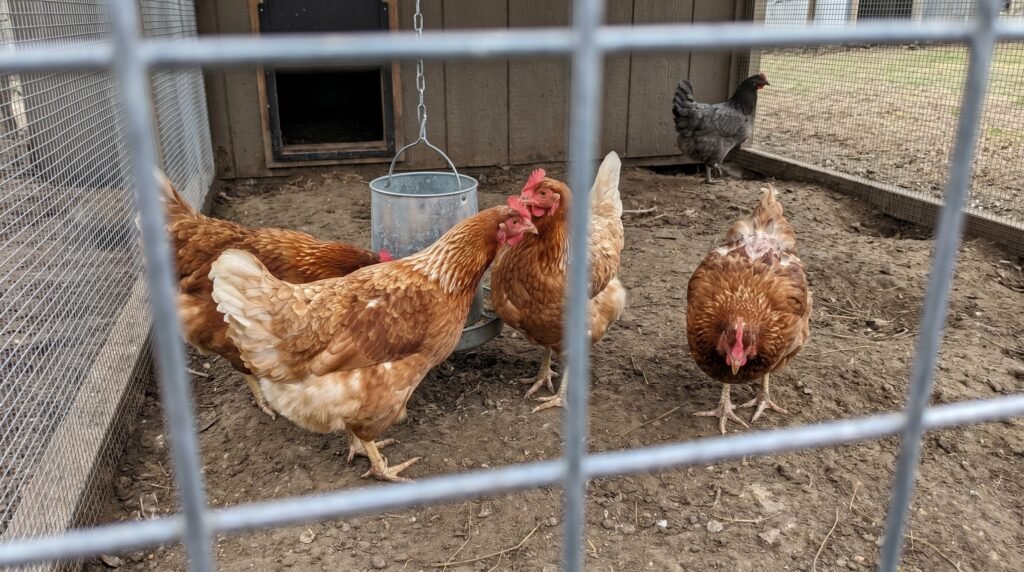
Space problems show up before you pull out a tape measure. Mississippi State University Extension identifies overcrowding as a direct trigger: "Overcrowding encourages pecking and cannibalism by increasing competition for feed and water space." The University of Maryland Extension adds that cramped conditions "can increase the stress level and may make flock mates more likely to use feather pecking as a means of retaliation."
Watch for these patterns:
- Persistent feather loss on the back, shoulders, or around the vent - especially on lower-ranking hens who cannot move away from dominant birds.
- Bloody spots or open wounds from pecking that has escalated. Once blood is visible, other birds are drawn to the spot.
- Submissive birds eating last or not at all. Watch the feeder at morning release. If the same two or three birds are consistently pushed away, the flock needs more feeder stations or more space - or both.
- Hens sleeping in the nest boxes instead of on the roosts. This often means roost bar space is too short or the lowest-ranking birds are being crowded off the bar.
- Soiled eggs every morning from birds roosting in the boxes overnight. A crowding and roost-bar-length problem together.
- Pacing along the fence line or repetitive pecking at one spot on the run perimeter. These are displacement behaviors that signal inadequate foraging space.
Any single item on that list warrants a head count against the sq ft figures above. Two or more together mean the flock needs either more space or fewer birds. Once space is corrected, reading how the pecking order works is the logical next step for reducing targeted bullying.
Roost bars and nest boxes: the numbers that matter as much as floor space
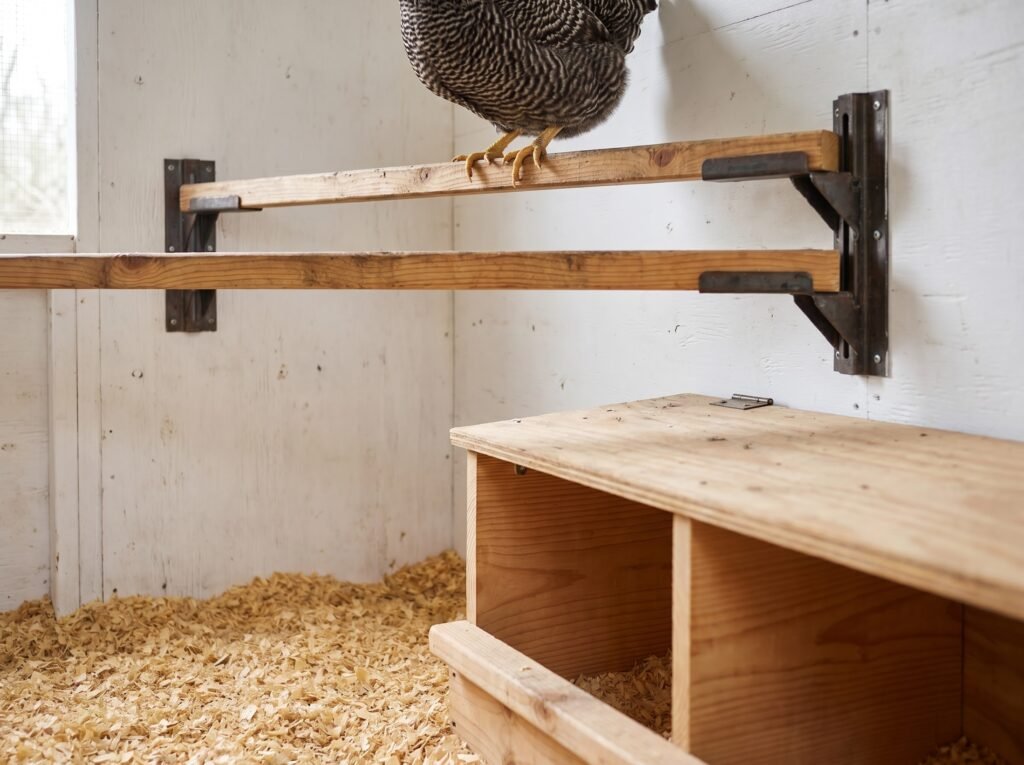
Floor area is only part of the equation. Birds with enough floor space but too little roost bar fight for position every night. Losers end up on the floor or crowded into nest boxes - both of which create problems.
Virginia Cooperative Extension recommends 8-10 inches of perch space per bird. Penn State Extension specifies 6 linear inches per bird for standard hens, with roost placement 24 inches above the floor; practitioner guidance commonly adds 12-inch center-to-center spacing between parallel bars to prevent crowding and droppings transfer. For heavy breeds - Orpingtons, Brahmas, Cochins - 10-12 inches per bird is more appropriate because their resting body width is simply larger.
Roosts must be higher than nest boxes. Chickens instinctively choose the highest available perch for sleeping. If a nest box is the tallest structure in the coop, hens will roost in it and leave fouled eggs every morning. Keep roosts at least 6 inches above the top of the nest boxes, and position the boxes away from the main traffic path so birds do not use them casually during the day.
On nest box ratio: Penn State Extension specifies one 12x12-inch box per four hens, and the standard working target is one box per 3-4 hens. Hens share willingly - a popular box gets used in sequence all morning. Two boxes for six hens is almost always adequate. Three boxes for ten hens covers most situations without the extras sitting unused and collecting mite habitat.
Free-range access and how it changes the math
Birds that spend most daylight hours on open pasture put far less pressure on coop and run dimensions. The coop becomes a nighttime shelter and laying station. In that scenario, many keepers succeed with coop space at the lower end of the 3-4 sq ft range because the birds are rarely all inside at once during waking hours.
The operative phrase is "most daylight hours." A flock that gets two hours outside on fair-weather days is functionally a confined flock. The free-range approach requires consistent daily access, not occasional outings. Weather, predator pressure, and seasonal factors keep birds inside for multi-day stretches in almost every climate - and that is exactly when the full space numbers matter. The safest design meets the full sq ft minimums for both coop and run, then treats pasture access as a quality-of-life bonus rather than a substitute for adequate structure.
As a concrete benchmark: to maintain live pasture rather than bare dirt, poultry keepers generally allow 250-500 sq ft of rotating pasture per bird - so a flock of eight hens benefits from 2,000-4,000 sq ft (roughly a quarter-acre divided into two or three paddocks) if real ground cover is the goal. That is a different scale entirely from a fixed run. If that much land is not available, a fixed run sized to the extension minimums with a deep-litter or sand floor is a more realistic and honest design than labeling a small yard as free-range.