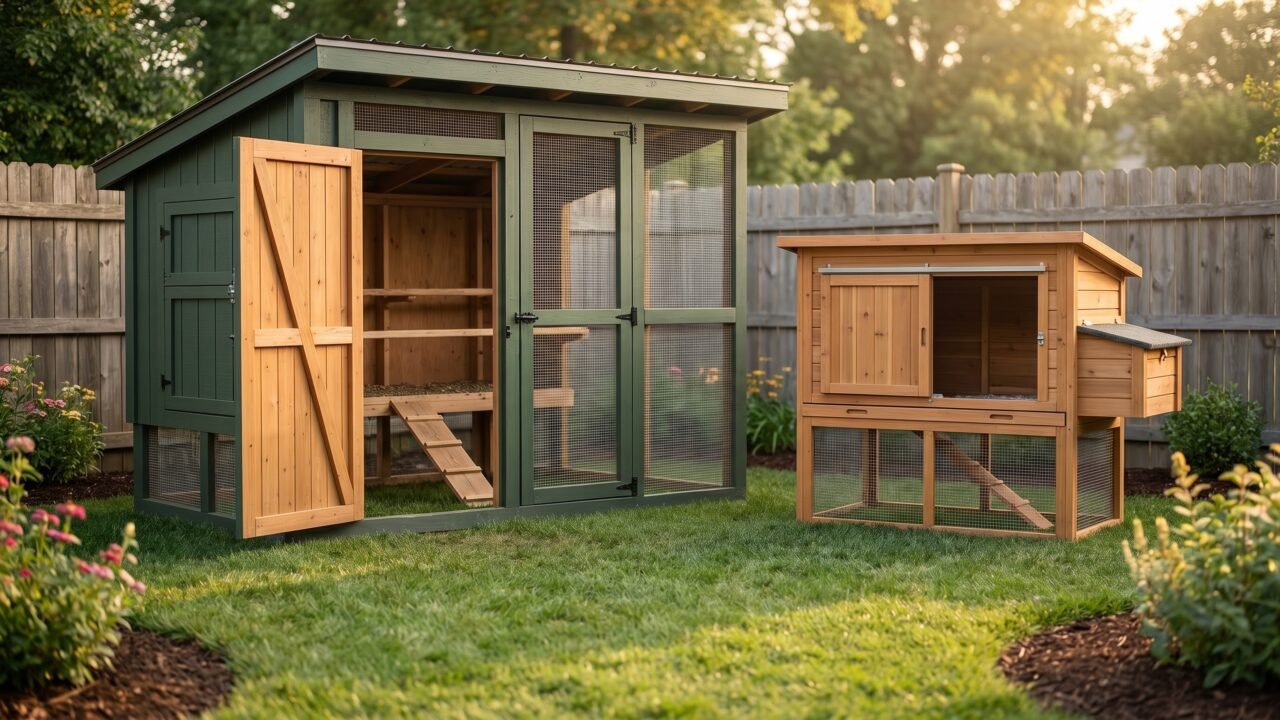
Twelve birds into a compact coop is a recipe for stress, disease, and early molt. Five birds rattling around a full-size walk-in structure costs extra money, eats yard space, and still needs the same daily care. Getting the coop type right from the start is easier than rehoming a structure that doesn't fit.
The short version: walk-in coops suit flocks of roughly 8 or more birds, keepers who want straightforward cleaning, and anyone who plans to add birds over time. Compact coops work well for three to eight birds, tighter yards, and budgets under $500. Neither is objectively better - the right call depends on your flock size, property, and how you want to spend 15 minutes every morning.
How each design is built, and why it matters
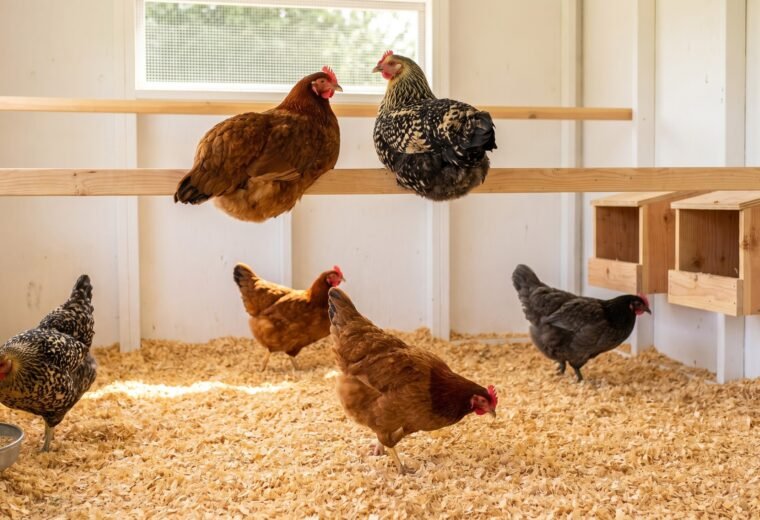
A walk-in chicken coop is tall enough for a person to stand upright inside - typically 6 feet or more of headroom. The sleeping area, roosts, and nest boxes are all housed in a structure you enter through a full-height door. Many walk-in designs attach directly to a covered run of equal height, so the entire setup is predator-managed from the inside.
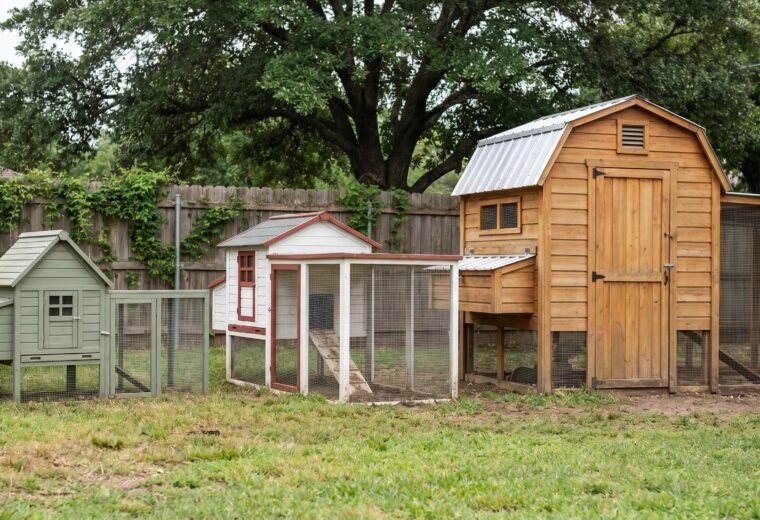
Compact coops - sometimes called hutch-style, A-frame, or shed-row coops - are built for the birds, not the keeper. Interior height runs 2 to 4 feet in most models. You access the interior through a hinged panel, drop-down front, or removable roof. Some sit on legs with an integrated run underneath; others rest on the ground. Tractor-style compact coops add wheels or skids so you can move them across the yard.
The build quality gap between a cheap flat-pack compact coop and a properly framed walk-in is significant. More on that in the predator section below.
Space: where compact coops often lie
This is the single biggest source of frustration among new keepers. A coop marketed for "up to 10 chickens" frequently provides 2 square feet per bird or less - below the 3-4 sq ft per bird minimum indoors that poultry extension guidelines consistently recommend, with 10 sq ft per bird in the outdoor run on top of that.
Crowding costs you in multiple ways. Ammonia from droppings accumulates faster in a dense, small space, and at elevated levels it causes conjunctivitis and respiratory damage in birds. Pecking order conflicts intensify. Egg production drops. We have measured a number of common compact coop models sold at farm stores; a 4x3 ft floor footprint (12 sq ft) comfortably fits three standard hens at 4 sq ft each - not six, not eight. The labeling on nearly every unit we checked was optimistic by a factor of two.
Walk-in designs are honest about capacity because a keeper standing inside one immediately sees that 20 birds would be shoulder-to-shoulder. Size the run the same way: our coop size per chicken guide lays out the math for different breed sizes and run configurations.
Bantams and smaller breeds need less room - roughly 2 sq ft indoors and 4 sq ft in a run (a practitioner estimate consistent with proportional scaling from the extension minimums for standards) - so a compact design can legitimately house a bantam flock of six in a footprint that would only suit three standard birds. If you keep or plan to keep a mixed flock, size everything for the largest birds present.
Cleaning: the daily and deep-clean comparison
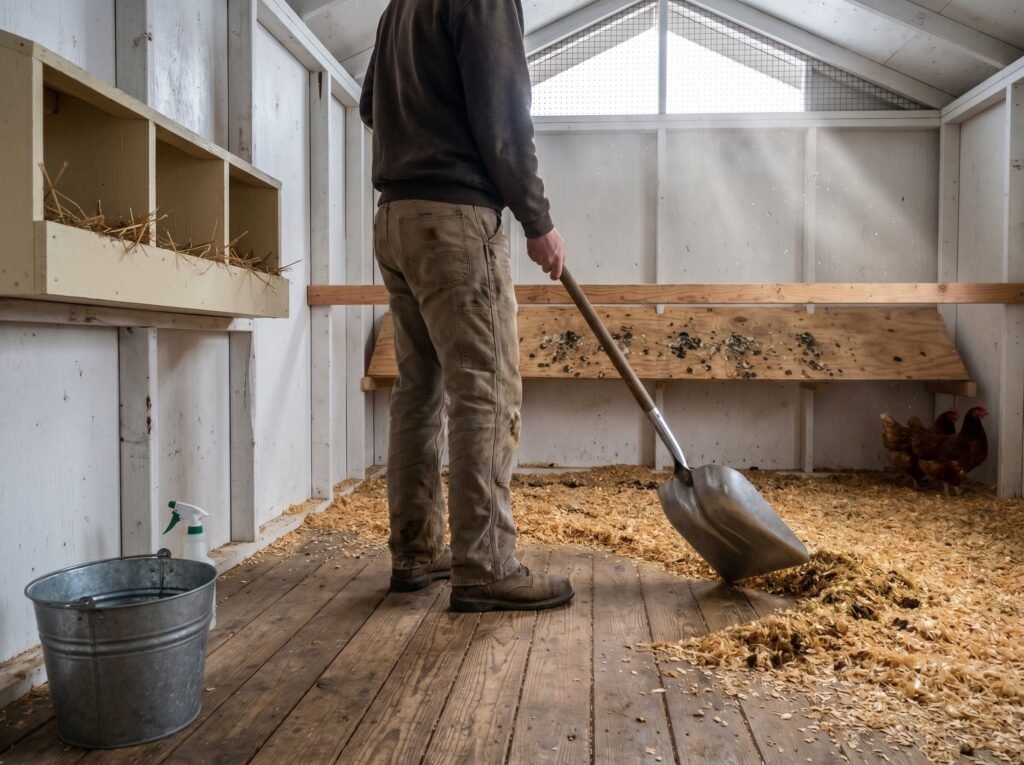
Walk-in coops win on cleaning ergonomics, and the margin is wider than most new keepers expect. You can stand upright, swing a full-size rake, and wheel a barrow straight to the door. A 10-bird flock produces roughly 130-150 pounds of manure per month (dry-weight basis; fresh droppings weight is considerably higher - verify with your extension office if you are planning compost volumes); getting that out without contorting yourself is worth something. A droppings board under the roost bar catches the bulk of the daily mess and takes about three minutes to scrape.
Compact coops demand more physical work for the same result. You're reaching in at arm's length, using a hand trowel, or pulling the structure apart to access the interior properly. If your compact coop doesn't have a removable floor tray, expect to spend significantly longer on the weekly clean than you would in a walk-in. Our full cleaning guide covers both styles, but the blunt fact is that walk-in designs reward keepers who actually do the cleaning regularly.
Deep litter management - building up a composting layer of bedding through winter instead of weekly full-cleans - is easier to execute in a walk-in with adequate floor space. The method needs at least 4-6 inches of litter to work correctly, and you need room to turn it. In a compact coop, the litter layer compresses quickly and the payoff is smaller.
Cost: upfront, operating, and hidden
A decent compact coop for four to six birds runs $150-$600 new from a farm store or online. A quality walk-in structure with an attached run starts around $800-$1,200 for a kit version and $1,500-$3,000 or more for a built-in-place option. Custom or barn-style walk-in coops for 15-20 birds reach $4,000-$8,000 built.
The hidden cost comparison tilts the other way. Cheap compact coops frequently need structural reinforcement within the first year: latches replaced, gaps sealed, floors replaced because thin plywood rots. Many keepers on small flocks buy one compact coop, outgrow or lose faith in it, and buy a second - spending more total than a walk-in would have cost. Walk-in structures built with proper framing lumber and hardware cloth hold up for 10-15 years with basic maintenance.
Running costs per bird are similar between types. Feed, bedding, and water are driven by flock size, not coop style. Where walk-ins have a slight edge is efficiency of time: 10 minutes of cleaning in a walk-in versus 25 in a cramped compact coop, multiplied by 365 days, adds up across a season.
| Factor | Walk-in coop | Compact coop | Edge |
|---|---|---|---|
| Practical flock size | 8-25+ birds | 3-8 birds (verify sq ft) | Compact for small flocks |
| Upfront cost | $800-$3,000+ | $150-$600 | Compact |
| Cleaning ease | Stand upright, full tools | Reaching in, hand tools | Walk-in |
| Footprint | Larger | Smaller / movable | Compact for tight yards |
| Scalability | Easy to expand | Usually must replace | Walk-in |
| Predator resistance (built well) | Generally superior | Variable - inspect closely | Walk-in (varies by build) |
| Ventilation control | More vents, easier to position | Limited vent options | Walk-in |
| Mobility | Fixed | Tractor models move | Compact |
| Deep litter method | Works well | Difficult under 4 ft floor | Walk-in |
| Long-term durability | High (quality build) | Variable, often lower | Walk-in |
Ventilation: a silent problem in compact designs
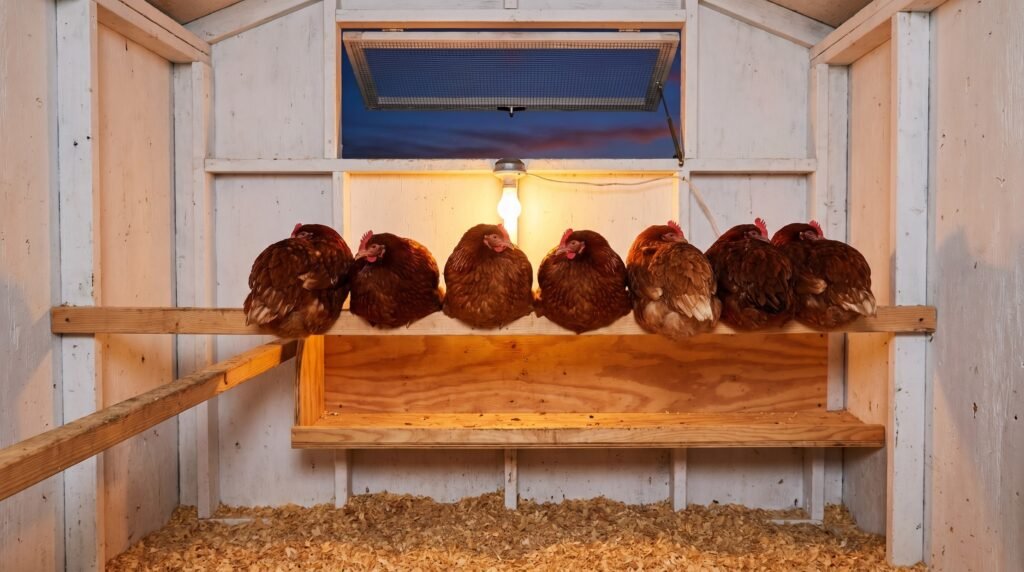
Chickens exhale a surprising amount of moisture. A small flock of eight hens can add 1-2 pints of water vapor to the air each night through respiration alone (an approximation drawn from poultry housing guidance; actual output varies with temperature and breed), on top of moisture from droppings. In a compact coop with limited vent area, that moisture condenses on walls and birds, raising the risk of frostbite on combs and wattles and respiratory illness year-round.
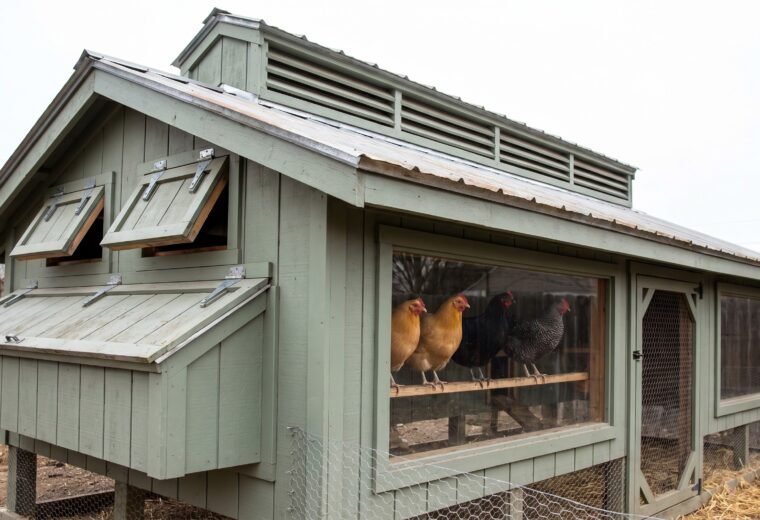
Good ventilation practice places vents high on the wall - above roost level - so stale, ammonia-laden air exits without blowing directly on roosting birds. Walk-in designs can accommodate ridge vents, adjustable gable vents, and multiple window openings at different heights. Most compact coops ship with one or two small vent panels, and repositioning them is not straightforward.
The benchmark used by many backyard keepers is roughly 1 sq ft of open vent area per 10 sq ft of coop floor (widely cited as a practitioner rule of thumb in poultry housing circles; treat it as a useful starting point, not a regulated standard). On a compact coop with a 12 sq ft floor, that means a minimum of about 1.2 sq ft of vent area - roughly an 8x22-inch opening. Measure your actual vent area before buying; the number on the spec sheet is often the vent panel size, not the actual open area.
For a deeper look at vent placement and sizing for different climates, our ventilation article covers the specifics by season.
Predator resistance: where cheap compact coops fail
Raccoons, weasels, opossums, and foxes are the primary nighttime threats to backyard flocks, and their persistence can surprise new keepers. Raccoons operate latches with their hands. Weasels pass through gaps as small as 1/4 inch - the least weasel can squeeze through a hole that small. Opossums are persistent opportunists; foxes dig.
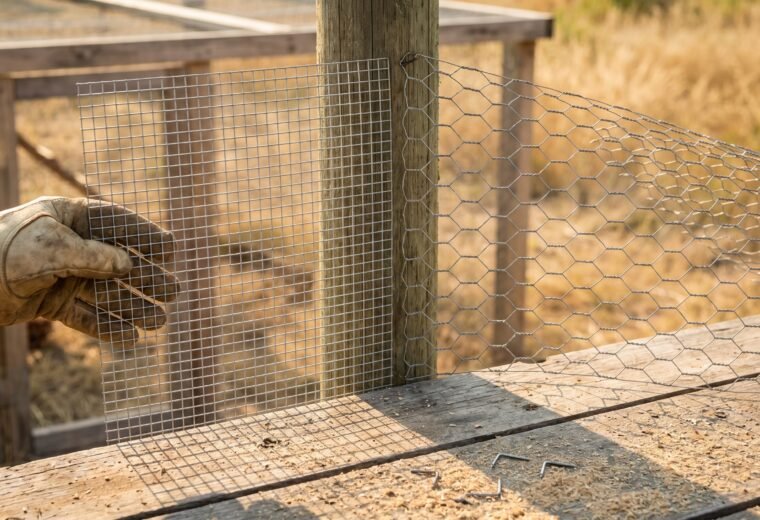
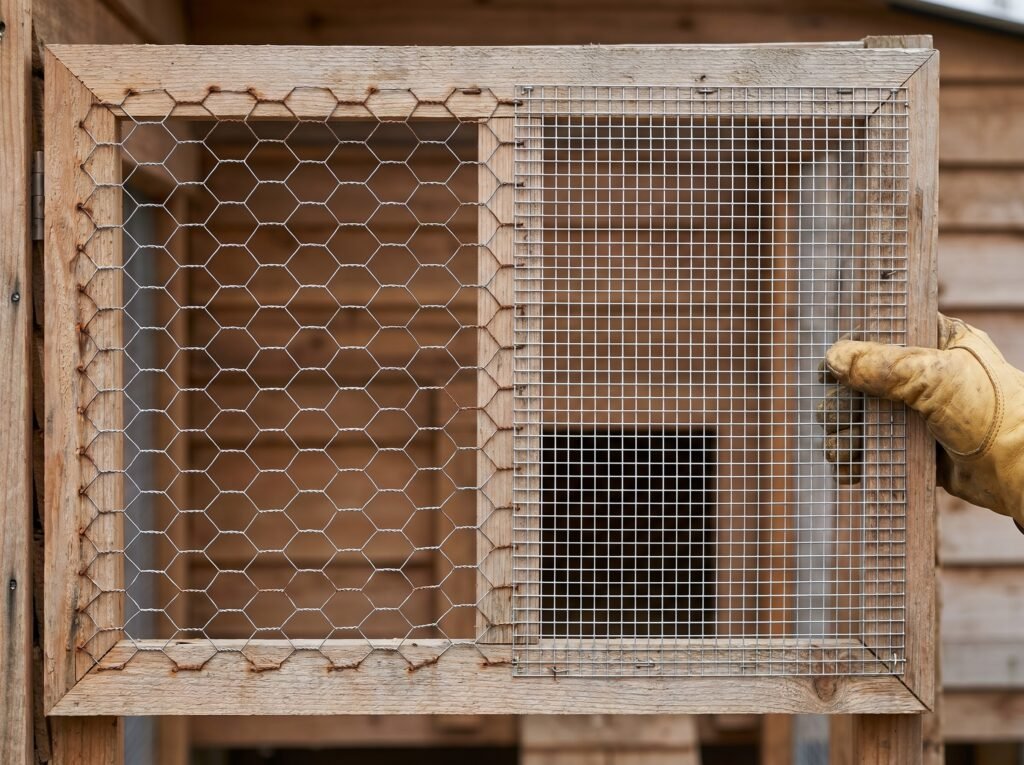
Hardware cloth - 1/2-inch galvanized welded mesh - is the material that stops most of them. Standard chicken wire (hexagonal mesh) has openings large enough for a weasel to pass through, and raccoons can tear it with consistent pulling. Extension service guidance is direct on this: weasels "typically can get through chicken wire," and burying hardware cloth at least 12 inches (30.5 cm) into the ground is the minimum protection against digging predators.
Many budget compact coops use chicken wire or thin hex mesh as the run and vent covering. Before buying any coop, check what material covers every opening - including vents, the floor of elevated designs, and the access panel edges. Replacing chicken wire with hardware cloth on a compact coop that didn't use it is a worthwhile upgrade, but factor that cost into your comparison.
Walk-in coops built for outdoor use typically use heavier gauge wire throughout, simply because their larger panels would visibly flex and fail at lighter gauges. That structural honesty is a benefit of scale. If you're shopping for a ready-made coop, check the gauge and mesh size on every section, not just the marketing description. Our hardware cloth vs chicken wire breakdown gives the gauge and mesh-size comparison for each threat type.
Scalability: planning for the flock you'll actually have
Most keepers underestimate how fast a small backyard flock grows. Three hens become six when a neighbor offers a couple of spare pullets, or when the spring hatchery catalog arrives. Six become ten when someone wants to add a different breed.
Walk-in coops handle this gracefully. Add another roost bar, a couple more nest boxes, extend the run, and you're done. The structure itself doesn't need to change until you're pushing 20 birds in a space built for 12.
Compact coops are harder to scale. Their fixed dimensions, often with integrated runs, don't extend without either buying a second unit or replacing the first. A keeper who starts with a 6-bird compact coop and adds birds to reach 10 is usually looking at a coop replacement, not a retrofit.
If you know you want chickens long-term and expect your interest to grow, a walk-in is almost always the better investment over five years - even at double the upfront cost. If you're genuinely testing whether you want to keep chickens at all, or if you have a firm, permanent limit of four to six birds, a compact coop does the job. The complete coop overview discusses how to think about planning for future flock changes before you build or buy.
Who should choose which
A compact coop fits you well if: your flock will stay at five birds or fewer, your yard has limited space, you're on a tight starting budget, or you want a mobile tractor-style setup to rotate across pasture. Bantam keepers can house eight to ten birds in a footprint that would only hold four standards, which shifts the math meaningfully in favor of compact designs.
A walk-in coop makes more sense if: you're starting with eight or more birds, you plan to add to the flock, you want the cleaning routine to take the least possible effort, or you're in a high-predator-pressure area where construction quality matters most. The extra upfront cost is real. So is the decade of not replacing a flimsy unit.
One underrated consideration: your own physical comfort. If bending double to scrape droppings at 6 a.m. sounds unsustainable to you, it will be. Pick the coop you'll actually maintain well, because consistent cleaning is the biggest single factor in flock health - more than breed choice, more than supplemental lighting, more than any product in the poultry aisle.