Your run's roof - or lack of one - is the single decision that determines whether your birds are vulnerable to hawks, drenched in winter mud, or baking in a too-hot enclosed space all summer. A flock in an open run will move freely and stay cooler; those same birds in a poorly ventilated solid-roof run can hit dangerous temperatures on an August afternoon. Neither setup is universally better. The right choice depends on which predators visit your property, how wet or hot your climate gets, and how much you can spend on materials and framing.
This guide lays out what each option actually protects against, where each falls short, and how a partial cover - the approach most experienced keepers land on - can give you most of the protection at a manageable cost.
What an open run protects against (and what it doesn't)
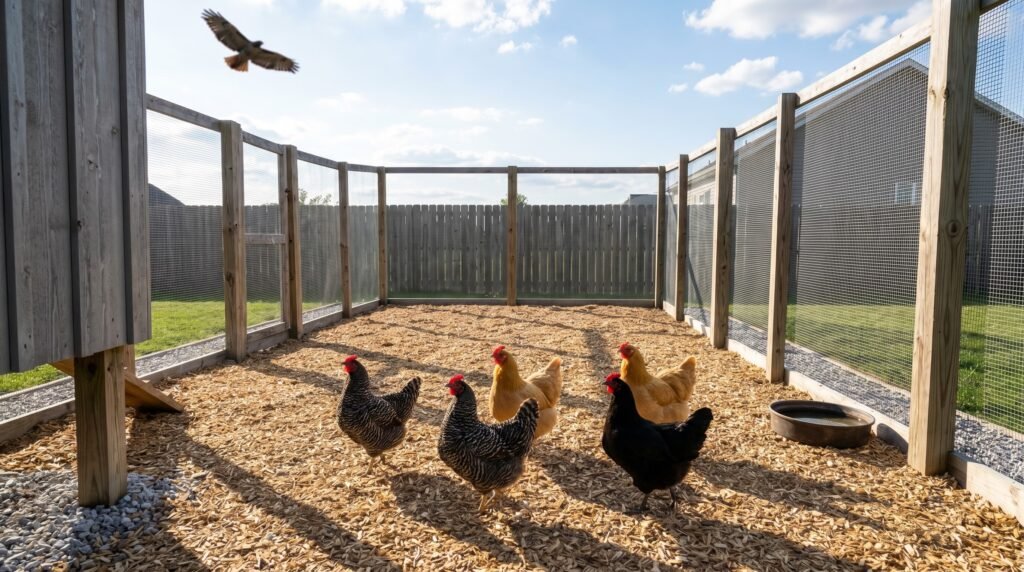
An open run stops ground-level threats - diggers, climbers, and fence-clearing predators - when the walls are built correctly with buried hardware cloth. It offers no protection against aerial predators (hawks and owls) and no shelter from rain, snow, or mud. In most regions with active raptor pressure, that gap is its defining weakness.
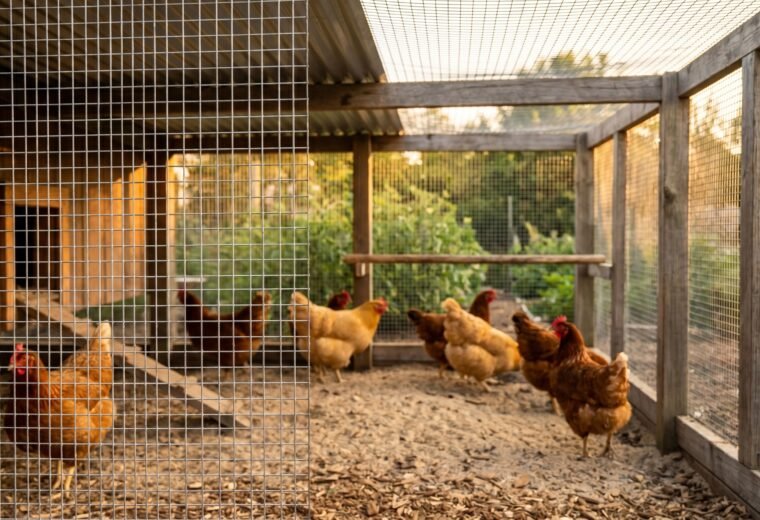
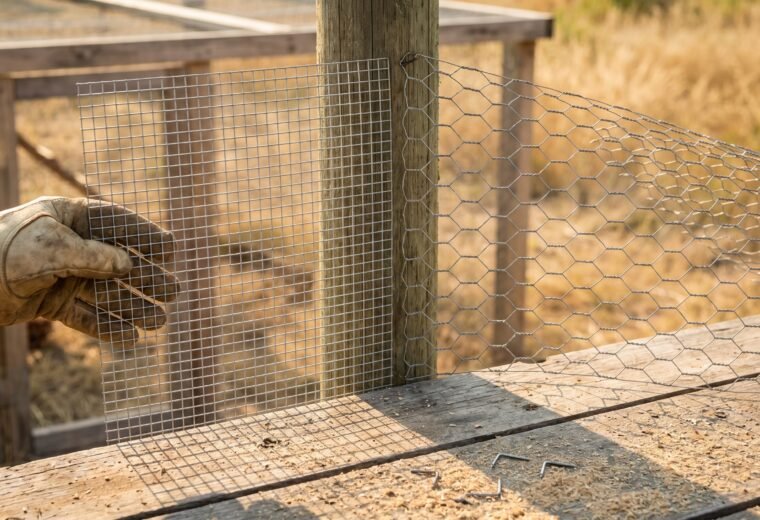
An open run stops ground-level and climbing predators when the walls and perimeter are correctly built - meaning 1/2-inch galvanized hardware cloth rather than standard poultry netting, buried at least 12 inches into the ground around the perimeter to stop diggers. Colorado State University Extension names raccoons, foxes, coyotes, bobcats, minks, and domestic dogs as common run threats, and notes that bobcats and coyotes can clear a 4-foot fence, so walls should stand at least 6 feet or lean outward at the top.
What an open run cannot stop is anything that comes from above. Hawks hunt in daylight, owls take birds at dusk and dawn, and both are federally protected under the Migratory Bird Treaty Act - meaning you cannot legally kill or trap them, and non-lethal deterrents are your only option. Keepers who have dealt with active raptor pressure consistently report that a hawk which has successfully taken a bird from a location will return to the same spot repeatedly. If your area has active raptor pressure, an open top is a recurring loss problem, not a once-a-season event.
Open runs also offer no rain or wind shelter unless you have natural tree cover. Birds will crowd under the coop overhang in wet weather, which concentrates waste and moisture in one corner and raises disease pressure. In regions with heavy snowfall, an uncovered run becomes unusable for weeks at a time because most chickens refuse to walk on snow.
What a covered run actually gives you
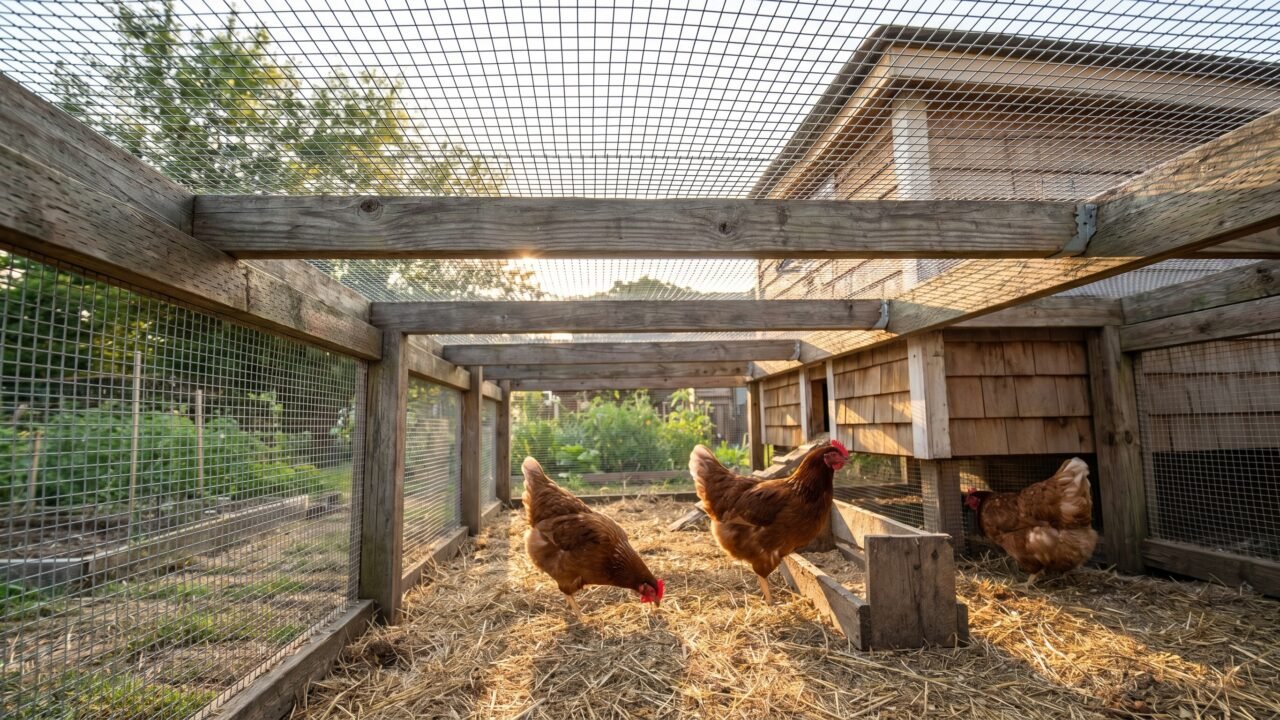
A full cover closes the aerial predator gap completely. Extension services recommend covering outside runs with mesh wire or netting as the primary protection against flying predators, and where raccoons or weasels can climb the walls and reach over the top, a roof closes that entry route too.
Beyond predators, a covered run keeps the ground dry. Dry litter is healthier litter - wet substrate breeds bacteria, parasites, and ammonia faster than almost any other variable in a run. In rainy climates, keepers with covered runs often report that their birds spend far more time outdoors than neighbors with open runs, simply because the ground stays walkable.
A covered run also lets you safely use the space in winter. Snow load is shed by the roof rather than collapsing mesh or burying the birds, and the enclosure stays accessible. In a rainy-climate scenario - a 10x16-foot covered run attached to a standard 4x8 coop, for example - the covered ground can remain dry and walkable throughout a wet winter while an adjacent uncovered pen turns to ankle-deep mud. That difference in ground condition is the consistent pattern keepers in the Pacific Northwest and similar climates describe when comparing the two setups.
The tradeoffs are real. A solid roof raises material and framing costs substantially. It limits natural light if you use opaque panels. And it concentrates heat in summer if ventilation isn't built into the design from the start - a critical point we'll return to in the materials section.
Where partial covers make sense
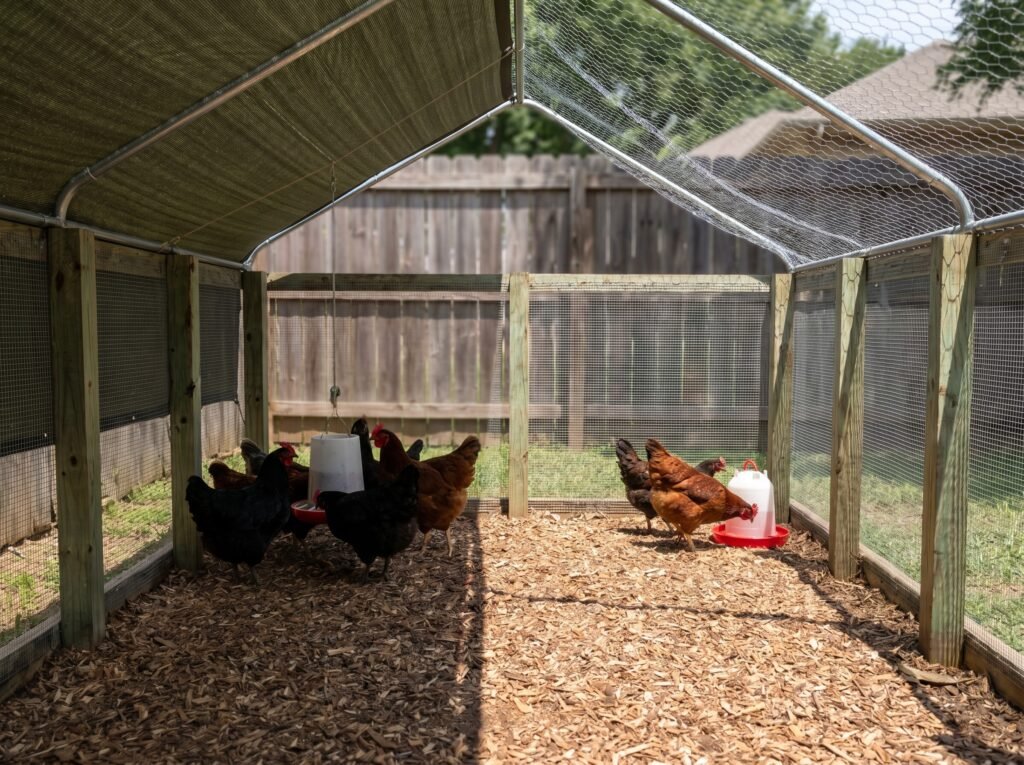
Most backyard setups end up somewhere between fully open and fully closed, because a partial cover solves the most common problems without the full cost or complexity of a solid roof. The two common approaches are covering the top third to half of the run nearest the coop, and adding a hawk-deterrent overlay across the full top without a solid panel.
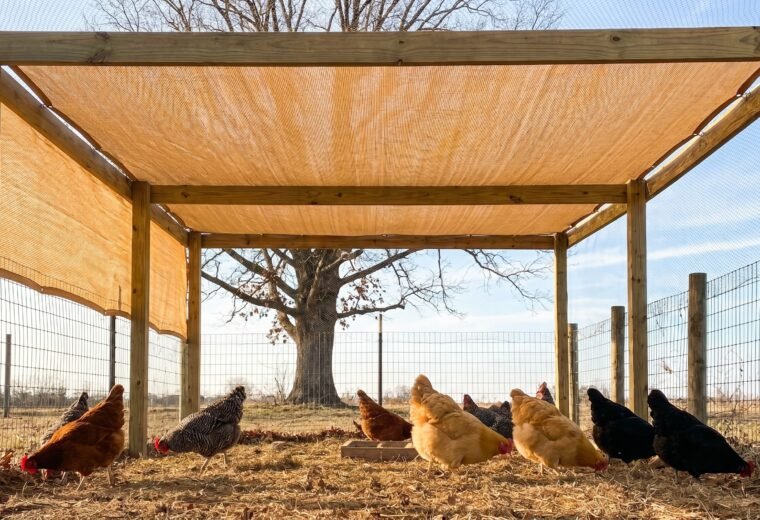
The first approach - a solid or semi-solid panel over part of the run - gives birds a dry shelter zone and a shaded retreat during heat without enclosing the whole space. Extension guidance says to position shade toward the middle or western portion of a run to catch the hottest midday-to-afternoon sun. A 12-foot run covered for its first 6 feet, with the far half open, delivers that shade zone plus open sky for ventilation and light.
The second approach - an overhead deterrent rather than a solid cover - works well where hawk pressure is the primary concern. The eXtension poultry resource describes several options: welded-wire fencing, standard chicken wire, game-bird netting, or even a random array of crisscrossing twine strung 3-4 feet above the pen. None of these stop rain or provide shade, but all make it difficult for a hawk to dive and exit with a bird. If your main worry is aerial predators and your climate is mild, an inexpensive netting overlay over hardware-cloth walls does most of the protection work at a fraction of solid-roof cost.
Among backyard flock keepers who report zero hawk losses over multiple years, the common thread is almost always some form of overhead barrier - whether that is a full solid roof, welded wire, game-bird netting, or polypropylene. The material matters less than the presence of any overhead layer that breaks a hawk's dive path.
Choosing your cover material: a decision table
The table below scores the five most common cover choices across the variables that matter most for a backyard flock. Predator rating reflects protection against aerial and climbing predators. Weather rating reflects rain, snow, and wind protection. Heat risk is high when a material traps heat without ventilation. Cost is per linear foot of standard 6-foot-wide roll or panel, rough order of magnitude.
| Material | Predator rating | Weather protection | Heat risk (summer) | Light | Relative cost | Best for |
|---|---|---|---|---|---|---|
| 1/2-inch galvanized hardware cloth | Excellent (aerial + climbing) | None | None | Full | High ($1.50-$3/sq ft) | High predator pressure; combine with partial solid panel for weather |
| 2x4-inch welded wire | Good (aerial; not small weasels) | None | None | Full | Moderate ($0.40-$0.80/sq ft) | Budget full-top coverage; lower weasel risk areas |
| Polypropylene bird netting | Fair (aerial only; not climbers) | None | None | Full | Low ($0.10-$0.25/sq ft) | Hawk deterrent, mild climates, temporary setups |
| Corrugated metal panel (solid) | Excellent | Excellent | HIGH - traps heat; needs open ridge or sides | None (opaque) | Moderate ($0.60-$1.20/sq ft) | Rainy or cold climates with good ventilation design |
| Corrugated polycarbonate (clear/tinted) | Excellent | Excellent | HIGH if clear; moderate if tinted; leave gaps at peak | High (clear) to moderate (tinted) | Moderate-high ($0.80-$1.80/sq ft) | Cold/wet climates where light is valued; needs shade cloth overlay in summer |
| 70% UV shade cloth (knitted) | Fair (aerial only; not climbers) | Light rain only | Low - breathes well | Good (30% pass-through) | Low-moderate ($0.20-$0.50/sq ft) | Hot climates; summer overlay over existing wire top |
Cost figures are rough ranges drawn from retail listings for standard widths and should be treated as comparison guides, not quotes. Always measure your run before pricing material.
The heat problem with solid covers
Chickens begin showing signs of heat stress - panting, reduced feed intake, production drops - as ambient temperature approaches 80 degrees Fahrenheit, a threshold Penn State Extension's hot weather data puts in plain numbers. At 85 degrees, the effects become clearly apparent. At 90-95 degrees, layers and heavier birds face danger of heat exhaustion, and above 100 degrees, survival becomes the concern.
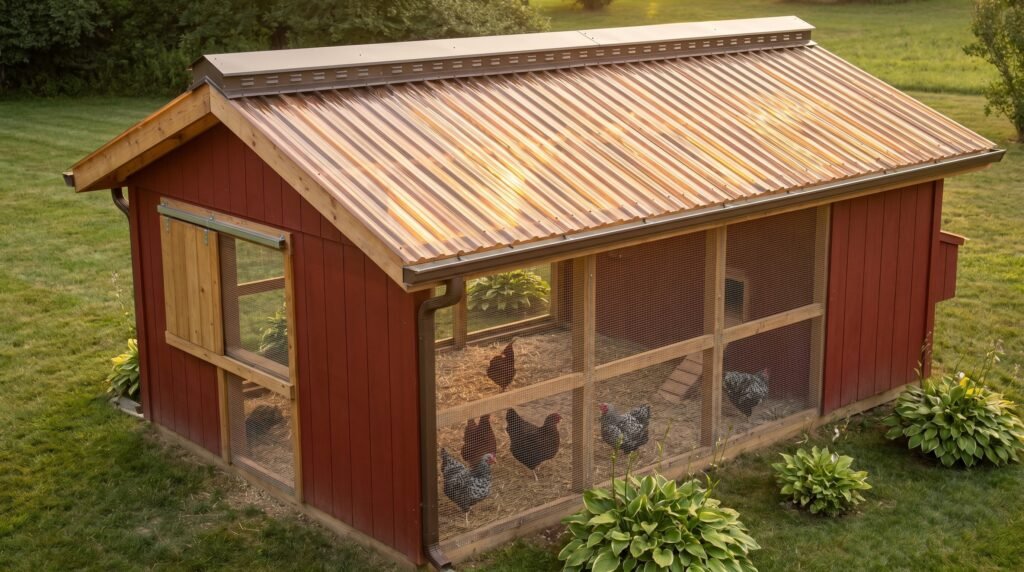
A closed solid-roof run facing south or west on a July afternoon can exceed outdoor air temperature by 10 to 20 degrees without active ventilation - pushing a 75-degree day well into dangerous territory for the birds inside. A clear polycarbonate roof with no ridge gap is one of the worst combinations: radiant heat builds quickly, and without an exit path for hot air, interior temperatures can climb 15 or more degrees above ambient. Adding a vented ridge cap and keeping one long wall as open hardware cloth is the standard fix, and keepers who have made that change consistently report the interior dropping to within a few degrees of outside air.
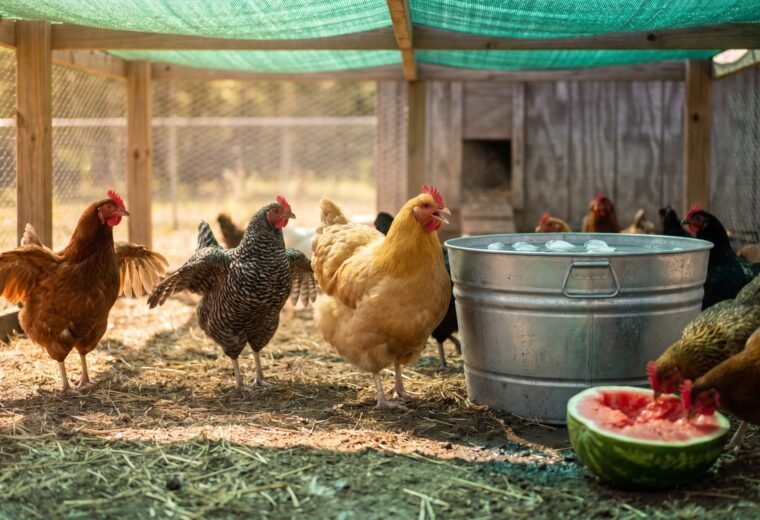
Penn State Extension recommends shade trees positioned where they don't restrict airflow, and to maintain grass cover around the structure to reduce reflected sunlight. The practical translation for a covered run is: pitch the roof so hot air rises and escapes from the peak, keep at least one long side as open mesh rather than solid panel, and in summer position shade cloth over any clear polycarbonate to cut radiant heat gain. Misters, frozen water bottles, and fan placement round out the summer toolkit - all covered in the summer chicken care guide.
Building the predator case for a full cover
If you're on the fence about spending the extra money on a framed solid roof, the predator math usually tips the decision. A single hawk kill in a small flock represents a significant percentage of your laying capacity overnight. Raccoons are persistent climbers and will work an open-top run repeatedly. Coyotes can clear a 4-foot fence. None of these threats can reach birds in a properly built covered run with 1/2-inch hardware cloth on the walls and a solid or wire roof.
The 12-inch buried apron matters too - it's not just a covered-run consideration, but keepers who upgrade to a covered run often add the buried skirt at the same time, since they're already building a more permanent structure. Hardware cloth buried horizontally (an apron extending outward from the base rather than down) is equally effective and requires less digging: lay 12 inches of cloth flat on the ground around the perimeter, stake it, and let grass grow over it.
Hawks specifically require an overhead barrier because no ground-level fencing stops them. They are also the predator most backyard keepers underestimate until the first kill. Open-range deterrent options - reflective tape, decoys, guardian animals - are a different problem addressed in the hawk protection guide; inside a run, the only reliable answer is something overhead they cannot pass through or dive under. Extension sources note that hawks will work the perimeter looking for entry gaps and will dive at birds pressed against the wire. An overhead cover stops the dive itself.
Sizing and flooring come before overhead coverage - the run planning guide walks through space requirements, floor materials, and run geometry so the structure is right before you frame a roof.
Frequently asked questions
Can I use chicken wire for the roof of my run?
Chicken wire (hex-mesh poultry netting) will stop hawks from diving in but a determined raccoon can pull it apart, and it rusts faster than galvanized hardware cloth. For a full roof, welded wire or hardware cloth is more durable. Chicken wire used as an overhead layer over hardware-cloth walls does add a hawk deterrent at low cost, but it's not a substitute for heavier wire on the walls and corners where climbing predators apply pressure.
Does a covered run reduce natural light enough to affect laying?
A wire or netting cover has no effect on light. A solid opaque roof does reduce light below, but if the walls remain open mesh, sidewall light is usually sufficient. Clear polycarbonate panels typically transmit roughly 80-90% of daylight (manufacturer specifications vary; check the product datasheet) and have minimal effect on laying. If you close all four sides and the top in solid panels, supplemental light in winter may support production - but that's a fully enclosed structure, not a standard covered run.
How do I handle snow load on a covered run?
Give the roof a meaningful pitch - typically 20 degrees or more - so snow sheds rather than accumulates. A flat or near-flat covered run in a heavy-snow climate needs to be checked and cleared after each storm, because wet snow weight can collapse mesh or light framing. Corrugated metal and polycarbonate shed snow well if the pitch is sufficient. Hardware cloth on a frame does not shed snow and needs a steeper pitch or a supporting crossbeam.
Is a fully open run ever the right answer?
Yes, in specific conditions: very low hawk pressure (urban areas with dense tree canopy, nearby structures that limit hawk approach angles), existing natural overhead cover (a run placed under a dense-canopy tree), and flocks that free-range during the day and are locked in a secure coop at night. An open run with correctly built walls and a solid coop is safer than a covered run with a flimsy door latch. Predators kill more birds through coop entry at night than run entry during the day.