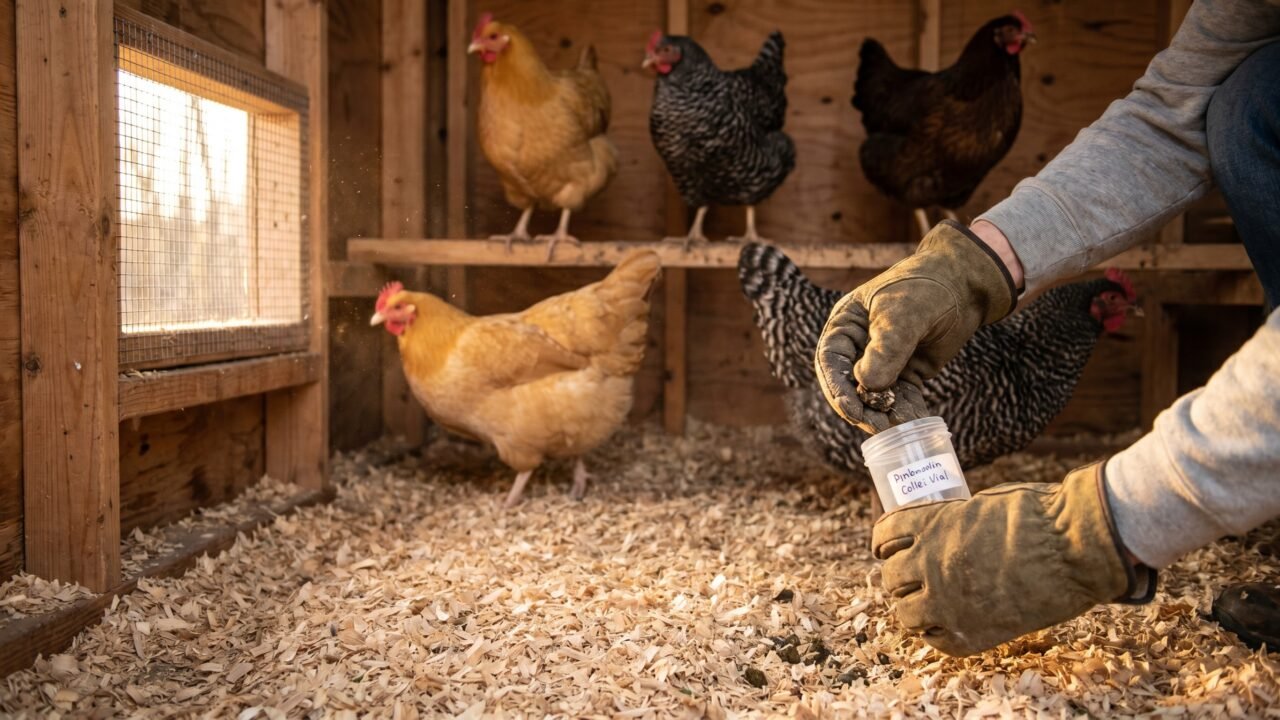
Most backyard flocks carry some intestinal worms, and that is not alarmist - it is biology. Free-range and pasture-access birds encounter worm eggs every time they scratch through litter or peck an earthworm. Research on free-range flocks in Germany found roundworm infection rates as high as 88%, with birds on clean-looking pasture testing positive at nearly every age. A low worm burden usually causes no visible harm. Heavy burdens do: weight loss, falling egg numbers, pale combs, and in severe cases intestinal blockage or death. The practical goal is keeping that burden low through management, catching trouble early with fecal testing, and calling a vet before you reach for any product.
The five worms most likely to hit your flock
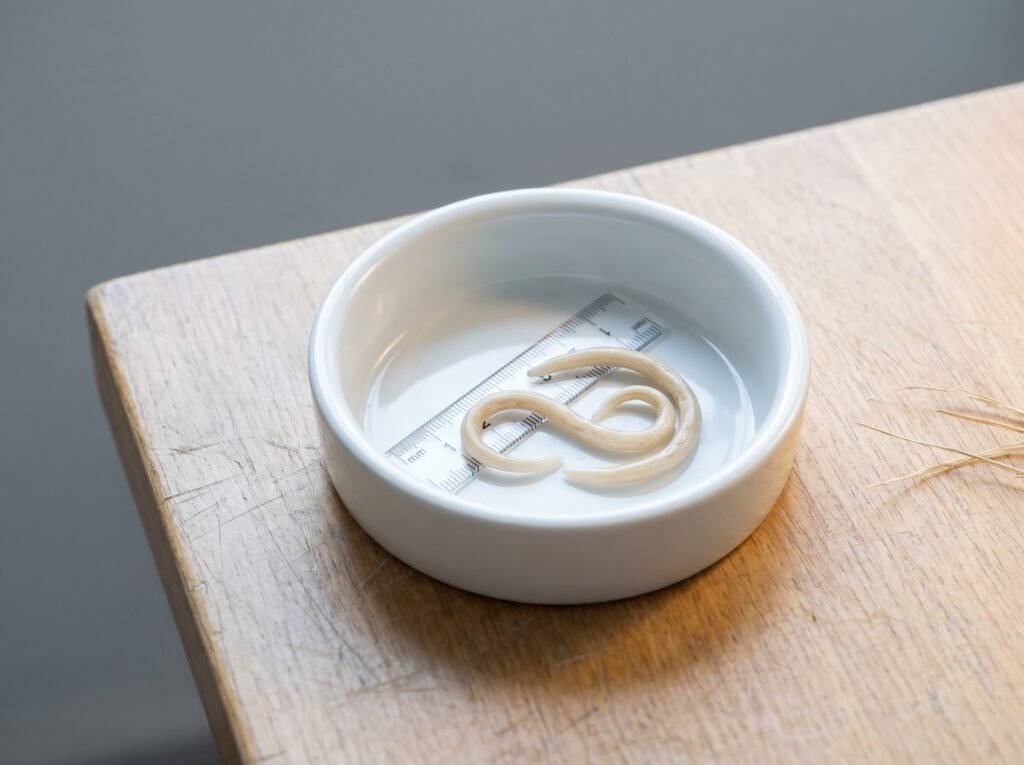
Each species behaves differently, which is why a visual guess is never enough for diagnosis.
| Worm | Species | Where it lives | How birds get it | Main risk |
|---|---|---|---|---|
| Large roundworm | Ascaridia galli | Small intestine | Ingesting infective eggs in litter, soil, feed, or water; also via insects | Nutrient theft, intestinal blockage; most common species in backyard flocks |
| Cecal worm | Heterakis gallinarum | Ceca | Ingesting eggs; earthworms carry the eggs and extend their reach | Carries Histomonas meleagridis (blackhead disease), which is deadly in turkeys |
| Capillary / threadworm | Capillaria spp. | Crop, esophagus, intestine | Direct fecal-oral; some species via earthworm intermediate hosts | Hemorrhage and erosion of intestinal lining; heavy loads cut production and fertility |
| Gapeworm | Syngamus trachea | Trachea (windpipe) | Eggs in litter or soil; also via earthworms, snails, slugs | Gasping, choking, head-shaking; can suffocate young birds; eggs remain viable in soil for more than four years |
| Tapeworm | Raillietina and others | Small intestine | Eating intermediate hosts: ants, beetles, flies, snails, slugs, earthworms | Nutrient loss; no approved drug treatment in the US |
Large roundworms are the most common problem Penn State Extension sees in backyard flocks. Cecal worms often get underestimated: the worms themselves rarely harm chickens much, but they act as carriers of Histomonas meleagridis, and that protozoan causes blackhead disease, which is far more dangerous in turkeys than in chickens. If you keep turkeys alongside or near chickens, controlling cecal worm burden matters even more. Poultry extension specialists recommend turkeys not range on pasture used by chickens within the past three years, precisely because cecal worm eggs persist in the soil.
Gapeworm deserves a special mention for keepers with young chicks or pullets. Adults showing open-mouthed breathing, grunting on exhale, and repetitive head-shaking should be evaluated by a vet immediately. Eggs left in the soil stay infectious for over four years, so a contaminated run can reinfect flock after flock.
Signs that something is off
Low worm loads often produce no symptoms at all. A flock of 15 birds can test positive on a fecal float and show no obvious signs whatsoever. Signs appear when the burden climbs.
Watch for these, and keep notes on when they started:
- Persistent loose or watery droppings not explained by diet
- Weight loss despite normal feed access, or birds visibly thin under the feathers
- Pale or shrinking comb on hens that were previously healthy
- A drop in lay rate across the whole flock rather than one or two birds
- Lethargy or birds standing hunched with ruffled feathers
- A dirty, matted vent (messy feathers around the vent)
- Gasping, choking, or repeated head-shaking (gapeworm until proven otherwise)
Worms visible in the droppings or (rarely) inside an egg are an obvious alert, but most species' eggs are microscopic and invisible to the naked eye. That is why the signs above should lead you to a vet and a fecal test, not straight to a product.
Diseases and nutritional deficiencies cause the same signs. A pale comb can be Marek's disease, anemia from mites, or a calcium problem. Weight loss can be coccidiosis. Respiratory distress can be a dozen things. Worms are one explanation on a list. Accurate diagnosis is the only way to match the right treatment to the right cause. If you want a reference for what healthy birds look like day to day, start with our chicken health guide, which walks through the normal baseline before getting into what sick birds do differently.
Prevention: the habits that actually reduce worm load
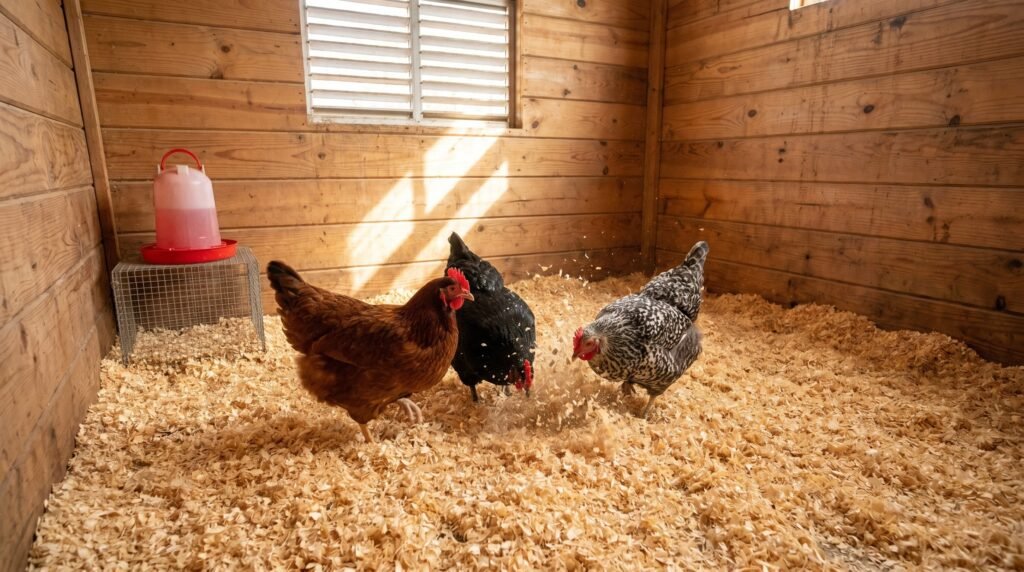
No management practice eliminates worms completely in a free-ranging flock. The realistic goal is reducing the egg burden in the environment so birds never accumulate a heavy load.
Keep litter dry
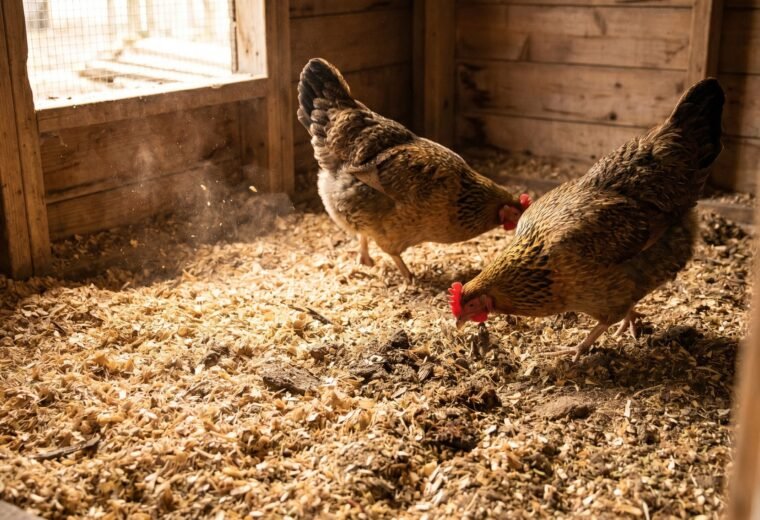
Roundworm eggs need moisture and warmth to develop. Ascaridia galli eggs reach the infective larval stage in as little as 11 days under warm, humid conditions. Wet litter accelerates this enormously; dry litter slows it. Penn State Extension lists keeping litter as dry as possible as the single most consistent environmental management action. Fix leaky waterers immediately. Use a deep litter system only if you commit to active management (turning the pack, adding carbon, never letting moisture accumulate). Our deep litter guide explains the difference between a properly maintained pack and one that just accumulates damp waste. Fix drainage around pop doors and run edges where puddling concentrates droppings.
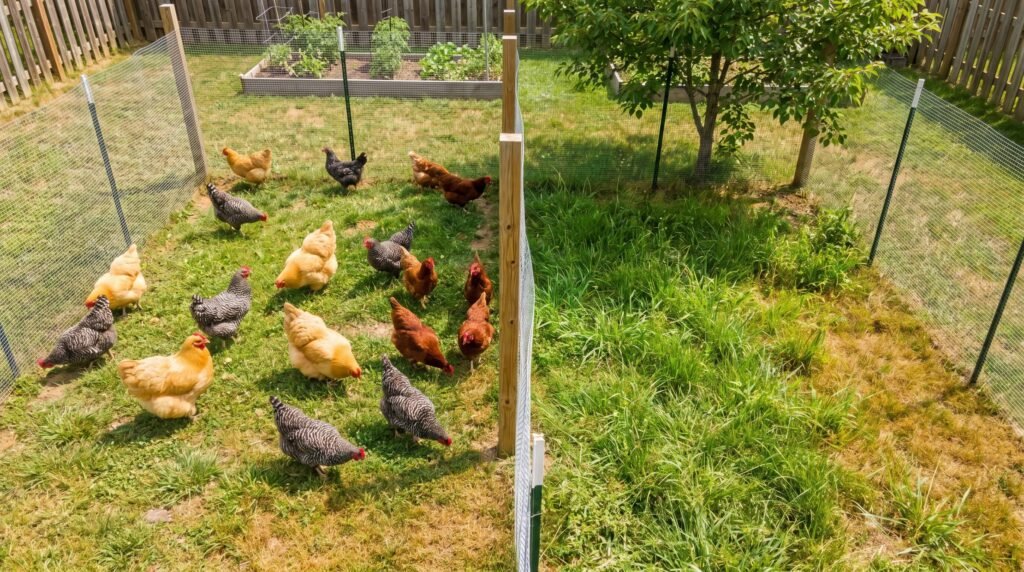
Rotate pasture or runs
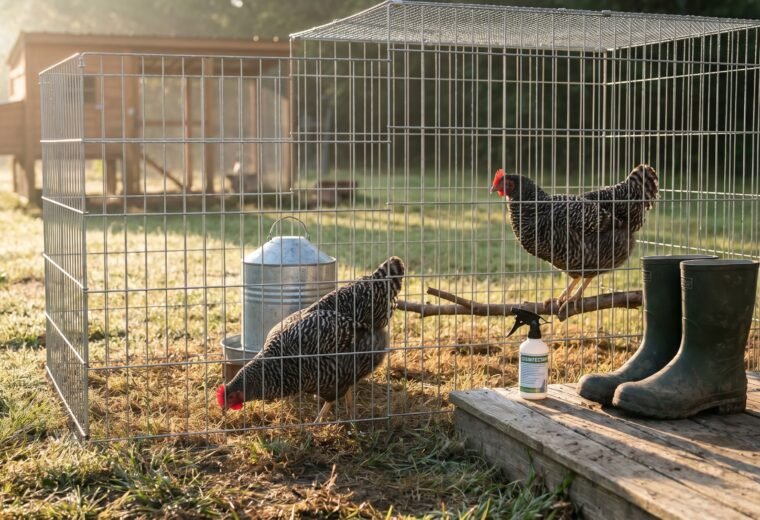
Moving birds to fresh ground regularly breaks the fecal-oral cycle. A contaminated section rests, eggs are exposed to sun and drying wind, and the load falls. For heavily contaminated outdoor pasture, extension specialists recommend leaving it vacant for at least eight months before returning birds. In practice, a simple two- or three-section rotation - move birds every few weeks - makes a meaningful difference even if none of the sections rests for eight months.
Chicken tractors do this automatically. Fixed runs are harder to rotate but you can subdivide with temporary fencing and let one section rest while birds use the other.
Reduce intermediate host exposure
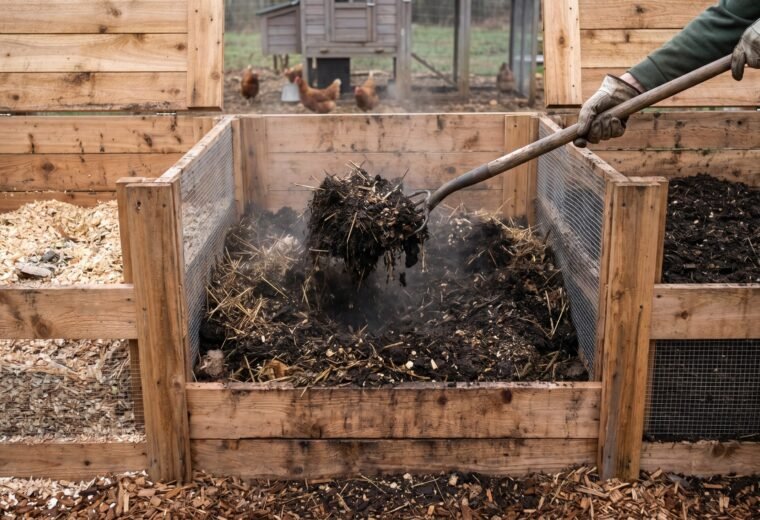
Earthworms, slugs, snails, beetles, and flies carry worm larvae for tapeworms, capillary worms, and gapeworms. You cannot eliminate earthworms from a garden run, but you can reduce worm buildup in one spot by moving birds regularly, composting manure rather than letting it pile up in corners, and reducing standing water that attracts slugs. Keeping the run surface clean and free of rotting organic matter helps. See our notes on composting chicken manure for how curing manure properly breaks down many parasite stages before it goes back into the garden.
Biosecurity when adding birds
A new bird brought into a flock is a potential worm vector, especially if it came from an outdoor environment. Standard quarantine is two to four weeks in a completely separate area. If the previous flock had a known worm burden, a fecal test before integration tells you what you are dealing with. Quarantine setup, housing separation distances, and what to watch for during the hold period are all covered in our biosecurity guide.
Nutrition as a supporting factor
UF/IFAS Extension notes that adequate vitamins A and B complex help birds maintain gut integrity under parasitic pressure. That is not a reason to feed supplements indiscriminately, but it is a reason to keep birds on a complete layer or grower ration rather than cutting feed quality.
What does not work
Garlic in feed or water is sometimes suggested online as a natural dewormer. Controlled research on poultry has not supported this: tests measuring allicin found no effect on intestinal worm populations. Diatomaceous earth, pumpkin seeds, and apple cider vinegar fall in the same category - plausible-sounding but without credible controlled evidence in chickens. Spending energy on these means less energy on the things that do work: dry litter, pasture rotation, and a fecal test when something looks wrong.
Fecal testing: what it is and how to do it right
Fecal flotation is the standard diagnostic tool. The procedure floats worm eggs in a solution dense enough for them to rise to the surface, then a technician examines the slide under a microscope. A good submission gives the lab enough eggs to identify the species accurately. Most backyard keepers collect fresh droppings from 20 to 25 spots across the coop and run, mixing samples from multiple birds rather than one. Fresh is important: keep samples refrigerated if there is any delay before submission. Your local veterinary clinic or a state diagnostic laboratory can run the test.
The test tells you which worm species are present and roughly how many eggs per gram, which is called the egg count. That number matters. A moderate egg count in a flock that looks healthy may warrant a management conversation, not immediate treatment. A high count in birds already losing weight changes the calculation. Treatment decisions are built on both the number and the clinical picture - and that combination is what a vet evaluates.
How often to test depends on your situation. Flocks on dirt runs with no rotation, mixed-age groups, or a history of worm problems benefit from at least one test per year; twice per year if problems have recurred. Flocks on concrete or hardware cloth floors with zero soil access have much lower exposure.
Why deworming products and dosing require a vet
This is the part that surprises some keepers who are accustomed to doing their own parasite control in other livestock. For chickens in the United States, the options are genuinely narrow.
Fenbendazole (available as a fenbendazole aqueous solution labeled for chickens, or fenbendazole medicated feed labeled for turkeys) is the only FDA-approved product for roundworms and cecal worms in US poultry. No approved drug exists for tapeworms. Capillaria and gapeworms have no approved treatment options at all. Penn State Extension puts it plainly: "You should always consult your veterinarian for assistance in the diagnosis, treatment, and control of intestinal worms in your flock." For any worm species outside the approved fenbendazole label, any treatment is extra-label use, which in the US legally requires a valid veterinarian-client-patient relationship.
Beyond legality, there is a biology argument. Merck's veterinary guidelines recommend targeting treatment at birds with clinical signs of heavy infestation - not blanket-treating the whole flock on a schedule. Routine deworming of all birds regardless of burden is how anthelmintic resistance develops. Fenbendazole resistance has already been documented in Ascaridia and Heterakis species in commercial poultry settings, and the concern extends to backyard flocks as the same medications are used. A vet can help you choose whether to treat, which birds, and how - and can monitor whether resistance is becoming a factor.
Dosing matters enormously with any antiparasitic drug. Under-dosing selects for resistance; over-dosing risks toxicity. The labeled fenbendazole protocol runs over several consecutive days at a weight-based concentration in the drinking water, and getting it right for a mixed-weight flock means weighing birds or estimating individual weights, calculating the correct concentration, and confirming how much each bird actually drinks. That is exactly why the dose itself is a vet's call, not a number to copy from an article. These are not impossible tasks, but they are ones where a vet's guidance prevents mistakes.
The egg withdrawal situation with fenbendazole is another reason to work with a vet: the approved aqueous fenbendazole product for chickens carries no withdrawal time when used as labeled. However, any extra-label use - different dose, different bird species, different duration - voids that label statement and puts the withdrawal period in the hands of the prescribing vet.
A quick triage checklist
Run through this when you suspect worms in a flock of any size:
- Look at all birds, not just the sick one. Is weight loss or lethargy isolated to one bird or spread across the flock?
- Check for mites and lice first. External parasites cause anemia, pale combs, and weight loss and are far more common than a heavy worm load in a well-managed flock.
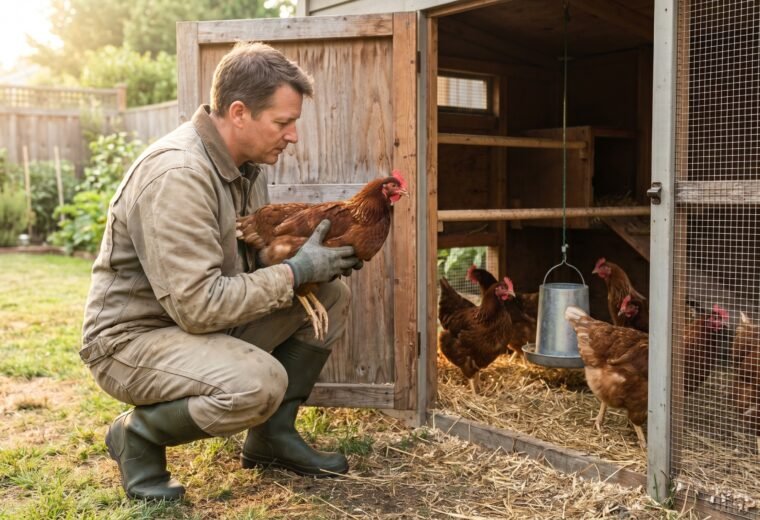
- Collect a fecal sample from multiple birds and submit to your vet or state diagnostic lab. Do not start treatment before a diagnosis.
- While you wait for results, check litter moisture, fix any leaking waterers, and confirm feed quality. These actions help regardless of the cause.
- Call your vet with the lab results in hand. Discuss whether treatment is indicated, which product applies to the worm species identified, and the correct dose for your flock's weight.
Worms are manageable. Most flocks that practice basic litter hygiene and some form of pasture rotation stay below the threshold where clinical signs appear. A yearly fecal test gives you a baseline so you know what normal looks like for your birds - and catches a rising load before it becomes a welfare problem.