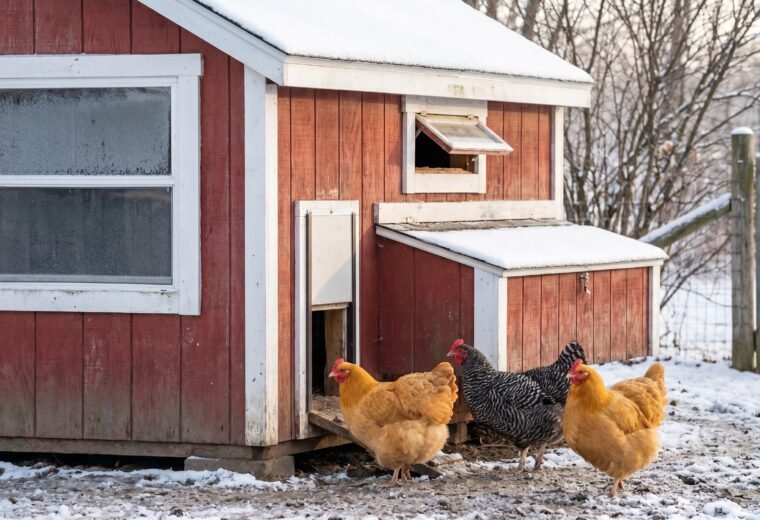
A laying hen needs access to clean water at all times. Lose that access for even a few hours on a bitter January morning and egg production drops. Lose it for a full day and your birds start showing real signs of stress. Frozen waterers are the single most common winter management failure backyard keepers face, and fixing it means choosing the right method for your setup, not just the most popular one.
Here is the short version: a thermostatically controlled heated base or a true heated waterer is the most reliable solution for sustained below-freezing temperatures. If electricity is not available, rotating two waterers and hauling warm water two to three times a day is the honest alternative. Everything else sits somewhere in between, with real limits you should understand before relying on it.
Why frozen water is a bigger deal than it looks
Water is the nutrient chickens cannot skip, even briefly. A laying flock short on water for just a few hours can drop egg production measurably, because eggs are 65 to 70 percent water (Alabama Cooperative Extension). The ratio of water to feed that hens require is roughly two to one by weight, so a bird eating a quarter pound of feed needs about half a pound of water every day. For 12 hens, that comes to around three-quarters of a gallon daily, just to maintain normal laying.
In cold weather, consumption goes down somewhat compared to summer, but it never goes to zero. A frozen waterer is a completely dry waterer. If you find one solid at 7 a.m. and do not get back out until 4 p.m., your flock has gone without for hours already, and they may have been without since the previous evening if you did not check before dark. Ohio State Extension is direct about the evening check: make sure water is available before bed so birds have access through the full 24-hour period.
The other silent consequence is humidity. Heated waterers that drip or leak add moisture to the coop air, which is the last thing you want in a cold, enclosed space. A well-chosen waterer on a raised platform matters as much as the heating method itself. Our coop winterizing guide covers ventilation and moisture control in more detail.
Heated bases and heated waterers: the reliable tier
For climates where temperatures regularly fall below 28 to 30°F for stretches of days, a purpose-built heated product is the practical choice. University of Minnesota Extension identifies three main commercial types:
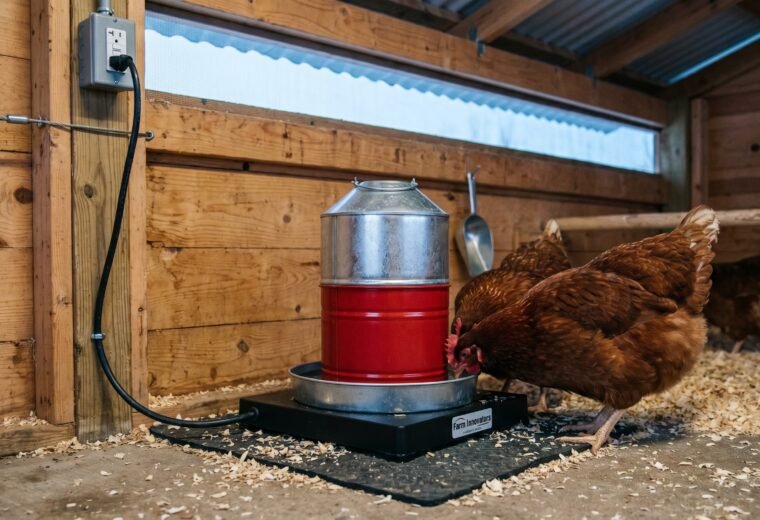
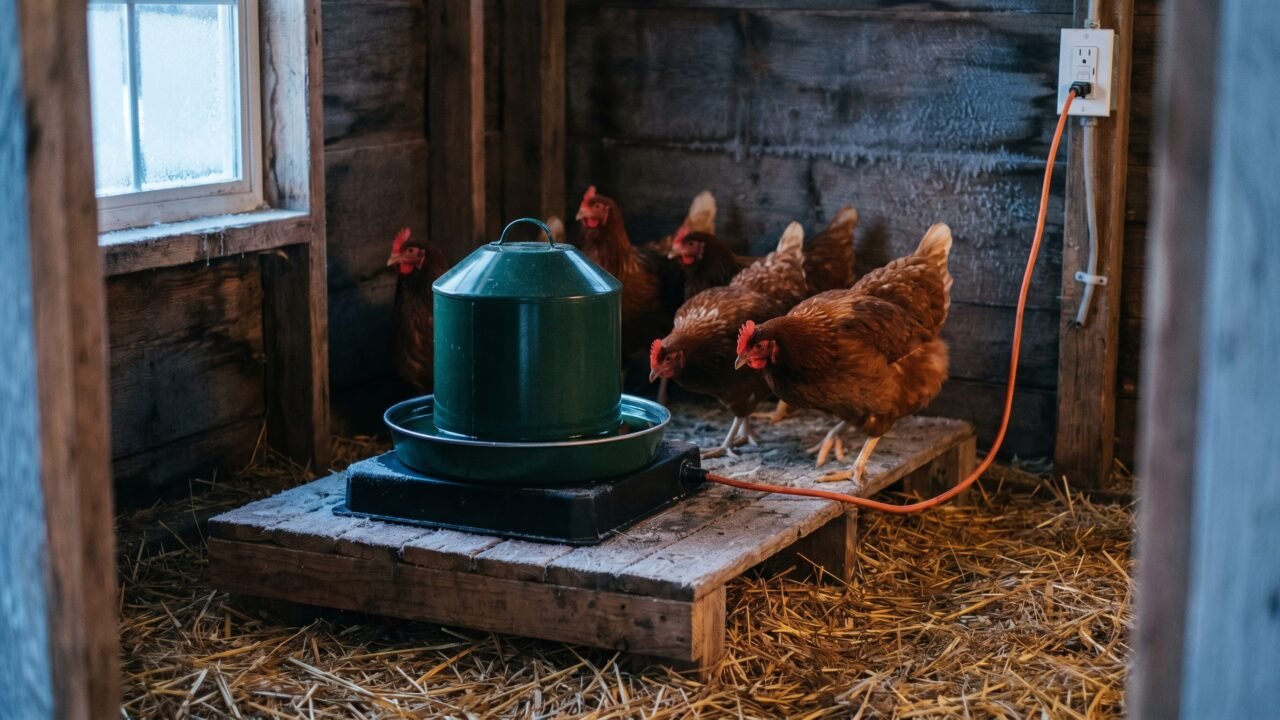
- Heated bases: a flat heating platform a standard metal fount sits on top of. The fount itself is the same one you use in summer; the base keeps the bottom warm enough to prevent freeze-up. Wattages typically run 60 to 125 watts depending on size.
- Plastic heated founts: an integrated unit with the heating element built into the body. These come in 1- to 3-gallon sizes and plug directly into an outlet.
- Heated dog dishes: a low-sided bowl with an internal thermostat that activates near freezing. They work, but the open top means more contamination from bedding and droppings, so they need daily cleaning.
All three methods rely on electricity, so the electrical setup matters just as much as the product itself (see the electrical safety section below). Our heated waterer comparison covers specific models, wattages, and which setups suit different flock sizes.
One thing to know: even a heated waterer can freeze if the power trips, the thermostat fails, or a dripping nipple ices over the outlet. Ohio State Extension puts it plainly in their winter flock factsheet: "Even automatic waterers can freeze if not heated or insulated." A daily check is still part of the routine, not something you skip because you spent money on heating equipment.
No-electricity options: what works, what barely works, and what is honest
Not every coop has a power outlet. Some keepers choose to avoid electrical loads in the coop entirely for safety reasons. The following methods range from genuinely useful to limited-usefulness depending on how cold your winters actually get.
The method comparison
| Method | Works reliably down to | Labor per day | Best for | Honest limit |
|---|---|---|---|---|
| Rotate two waterers (swap one indoors to thaw) | Any temperature | 2-3 trips | No-electricity setups in any climate | You must actually make the trips |
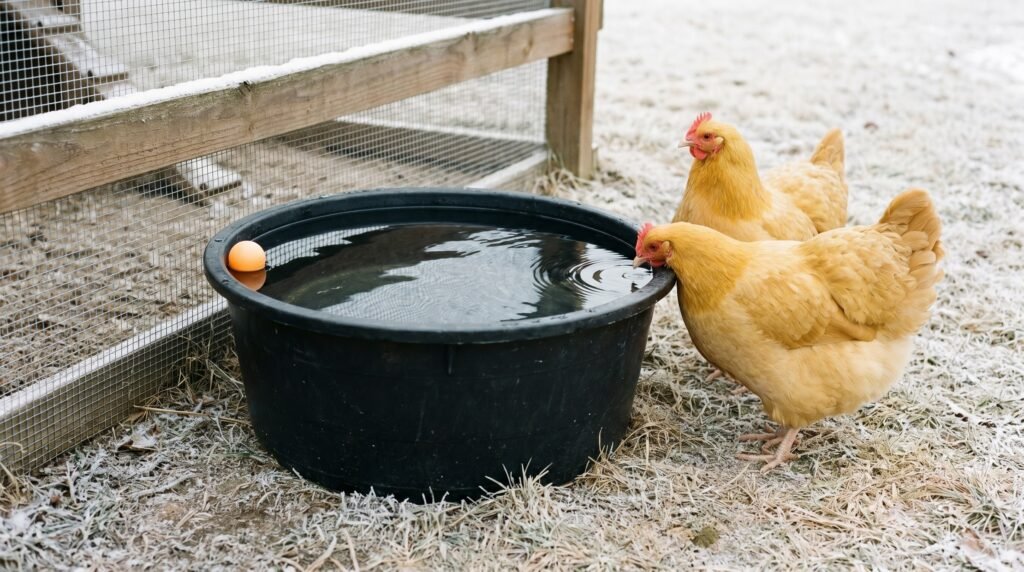
| Black rubber tub in sunlight | ~28-32°F (mild freeze only) | 1-2 trips | Sunny days just below freezing | Useless after dark or on cloudy days |
| Insulated water container | Above ~28°F (holds warmth ~2-4 hours) | 3+ trips | Very short cold spells | Not a sustained solution |
| Ping pong ball in the water | Marginal help at 28-32°F | 2+ trips | Very mild winters only | Does not prevent freezing, only slows surface ice |
| Salt-water bottle float | Marginal help at 28-32°F | 2+ trips | Temperatures that only briefly dip below freezing | Unreliable; fails in sustained hard freezes |
| Haul warm water 2-3x daily | Any temperature | 2-3 trips | Any climate without electricity | Time commitment; water may freeze before next check |
The black rubber tub is a genuinely useful tool within its limits. University of Maryland Extension recommends it specifically: black rubber absorbs solar heat, will not crack when you flex it to pop out a frozen block, and costs almost nothing. It is excellent for a New England October or a Pacific Northwest January but useless in a Minnesota February night at -10°F.
The ping pong ball and the salt-water bottle float work by the same principle: movement or a lower-freezing-point mass slows ice formation on the surface. University of Maryland Extension cites both as options. Neither generates heat. Neither stops a hard freeze. Use them as a mild-weather supplement, not a plan.
The salt-water bottle needs one clarification: the salt stays inside the sealed bottle, never in the drinking water. Salt is harmful to chickens in any significant quantity. A secure lid is mandatory. If the bottle leaks, remove it immediately.
Rotating two waterers is the no-power solution that actually works regardless of temperature. Wisconsin Extension describes the approach: keep one waterer in service and the other inside (your house, a heated garage, or even a mudroom) thawing. Swap them on schedule. For a flock of fifteen birds, this means three trips out per day on a hard-freeze day, morning, midday, and before dark. It is labor, but it works.
Electrical safety: the rules that are not optional
Coop fires from heating equipment are a documented and serious risk. The rules below come from manufacturer specifications and university extension guidance, and they apply whether you are running a water heater, a heat lamp, or any other electrical load in the coop.
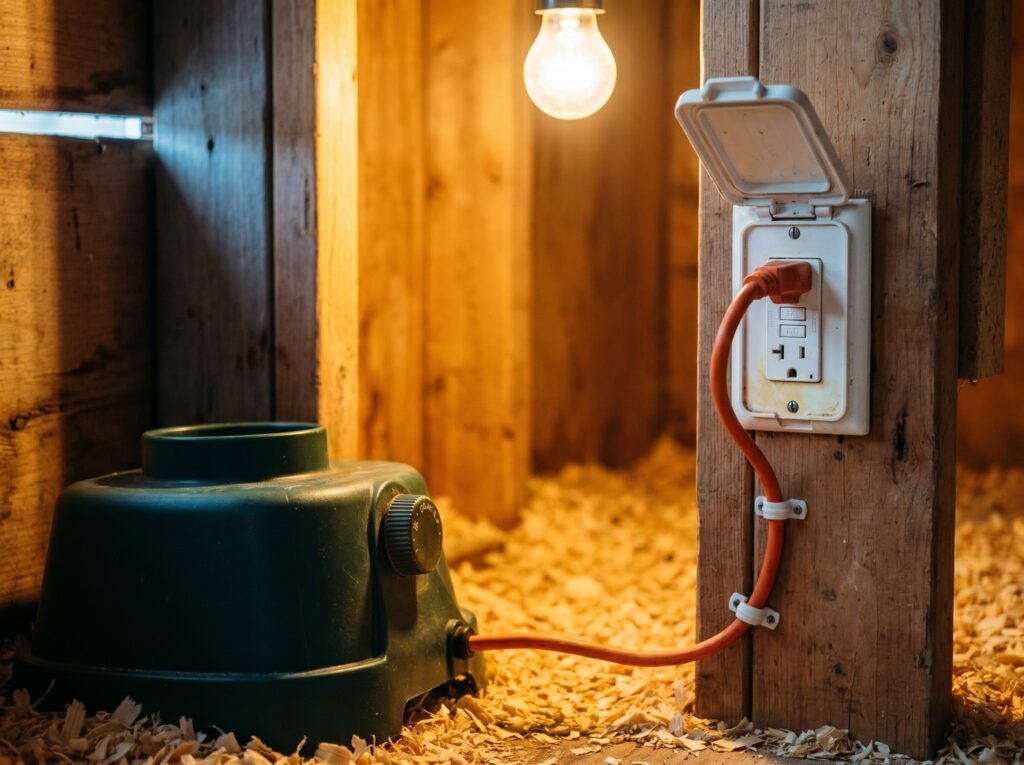
- GFCI outlet, always. A ground fault circuit interrupter outlet is required wherever heated waterers are plugged in. Manufacturer instructions for UL-listed heated poultry waterers specify that a licensed electrician should install a GFCI outlet rated for outdoor use, protected from wind, snow, and rain. A GFCI will not prevent fire from a shorted heating element, but it protects people from electrocution.
- No permanent extension cords. Manufacturer guidance on heated poultry waterers states clearly: plug the cord directly into an outlet; do not use extension cords. If a cord is truly unavoidable as a short-term measure, it must be UL-rated for outdoor use, and the connection point between cords must use a watertight clamshell connector to prevent moisture from entering the circuit.
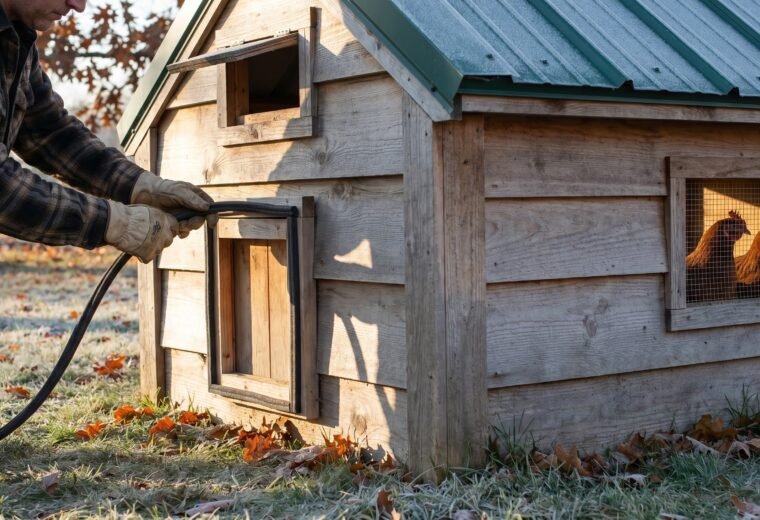
- Cords off the floor and away from birds. University of Minnesota Extension specifies that cords and connections must be off the floor and not accessible to chickens. Birds will peck at and pull on anything novel in the coop. A chewed cord near pine shavings is a fire waiting to happen.
- No wires near water or bedding. Minnesota Extension's guidance: "Keep all wires away from poultry, water, and flammable litter to prevent damage, shocks or fires."
- Permanent wiring requires a licensed electrician. Running power to a coop for the first time should be done by a professional, not with a long outdoor extension cord from the house. This is not a suggestion; it is the standard every university extension source references.
- Check the heated waterer daily. A thermostat can fail. A heating element can short. Ohio State Extension is clear that even automatic waterers can freeze when heated equipment malfunctions. A visual check every morning takes thirty seconds and is not optional.
A note on heat lamps over waterers: some keepers hang a heat lamp above the waterer rather than below it. This can work, but it introduces all the fire and tip-over risks associated with heat lamps near combustible litter. Our article on keeping chickens warm in winter covers heat lamp safety tradeoffs in detail. For water specifically, a dedicated thermostatically controlled base is lower-risk than a heat lamp aimed at a waterer.
The checking schedule: what 2-3 times per day actually means
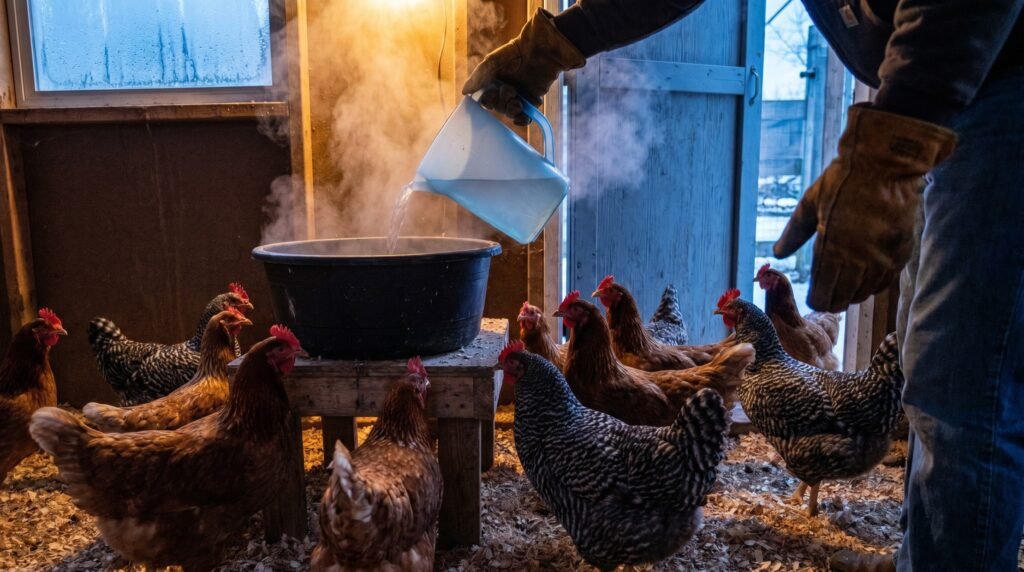
Two checks a day is the minimum during any period when overnight temperatures fall below freezing. Ohio State Extension's winter flock factsheet gives the specific cadence: check in the morning, and check again in the evening before dark. Three checks are better when daytime highs stay below about 25°F, because an unheated waterer may freeze solid within two to three hours at those temperatures.
A flock of 14 hens drinking the roughly half-gallon they need on a cold day will drain a standard 1-gallon waterer by midday anyway, so a midday trip accomplishes two things: refill and thaw check. This is worth building into the routine rather than treating as optional.
Crested breeds (Polish, Silkies (whose crests can mat and ice over), bearded Faverolle) have an additional vulnerability. When they dip their heads into an open bowl, wet feathers on the face can freeze and cause frostbite. Wisconsin Extension specifically recommends nipple waterers for these breeds to keep facial feathers dry. Our guide to chicken frostbite covers the warning signs and how to respond.
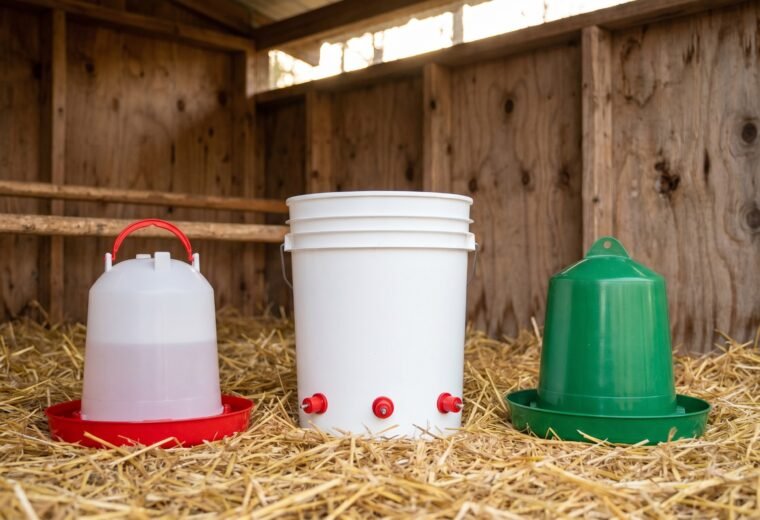
For a broader look at all the waterer types that work in winter, including nipple systems and bell drinkers, see our chicken waterer guide.
Placement and setup details that change outcomes
Where you put the waterer matters almost as much as what type it is. Three placement rules from extension sources that are worth following:
- Raise it off the floor. A waterer on a platform six to eight inches off the ground gets less bedding, feathers, and manure scratched into it, and the heating element (if any) stays away from flammable litter. University of Minnesota Extension recommends this specifically.
- Keep heated waterers away from high-humidity spots. Near a composting deep-litter pile or under a roost is the worst location. Drips and leaks from a heated waterer add moisture to coop air, which matters in a closed winter coop. OSU Extension flags this: "Check these waterers for leaks that can contribute to increased humidity problems in the coop."
- Keep a second waterer on hand. Equipment fails. A backup in the coop or garage means a power outage or a dead thermostat does not leave your flock dry while you wait for a replacement to arrive.