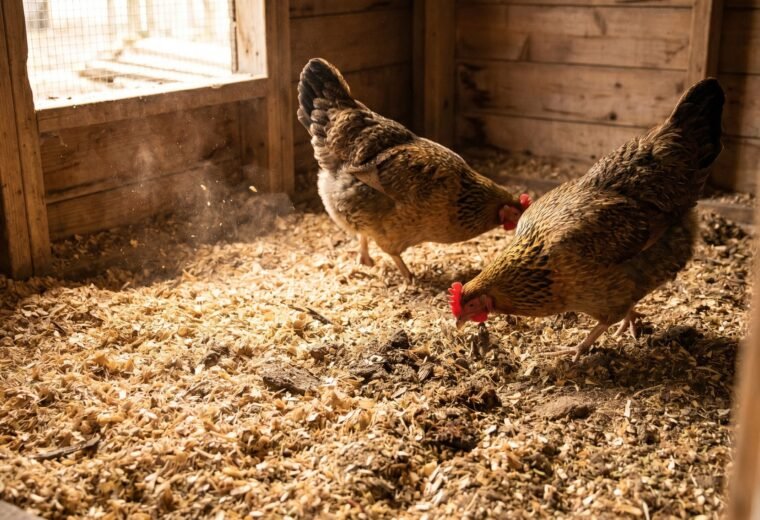
Most backyard keepers blame single-digit temperatures when they find blackened comb tips in January. Temperature matters, but the extension research points to something more preventable: moisture. A dry coop at 15°F is far safer for your flock than a damp one at 28°F. Understanding that shift changes what you actually do on a cold evening.
Chicken frostbite happens when tissue fluid freezes, destroying cells in combs, wattles, and toes. The damage ranges from pale, waxy discoloration that fully recovers to gangrenous blackening that mummifies over weeks. Preventing it is mostly a ventilation job - and that distinction matters for both bird health and coop fire risk.
Why moisture matters more than temperature
Ohio State University Extension's winter poultry factsheet puts it directly: "The buildup of humidity in a poorly ventilated coop will predispose the chickens to frostbite as humid air creates more frostbite risk than drier air." A single chicken exhales moisture, produces manure (roughly 70% water per University of Minnesota Extension), and drips water from a sloppy nipple drinker. Scale that up to even a small flock and a sealed coop turns into a humid chamber overnight.
That humidity coats comb tissue with a thin film of moisture. When temperatures dip below 32°F, that film freezes first - then the tissue beneath. The extension resource from poultry.extension.org confirms frostbite is most likely "during the nighttime hours in a cold, poorly ventilated coop with damp bedding." In a well-ventilated coop, moisture escapes before it can settle on tissue. That is the whole prevention argument in one sentence.
Wind chill adds another layer. Exposed toes on a roost - especially if birds crowd onto narrow perches and cannot tuck their feet under their feathers - lose heat faster in a drafty run or a barn coop where cold air streams across them. There is a meaningful difference between moving cold air (drafts at roost level) and gentle upper ventilation that exhausts humid air. Draft-free does not mean sealed.
Which birds are most at risk
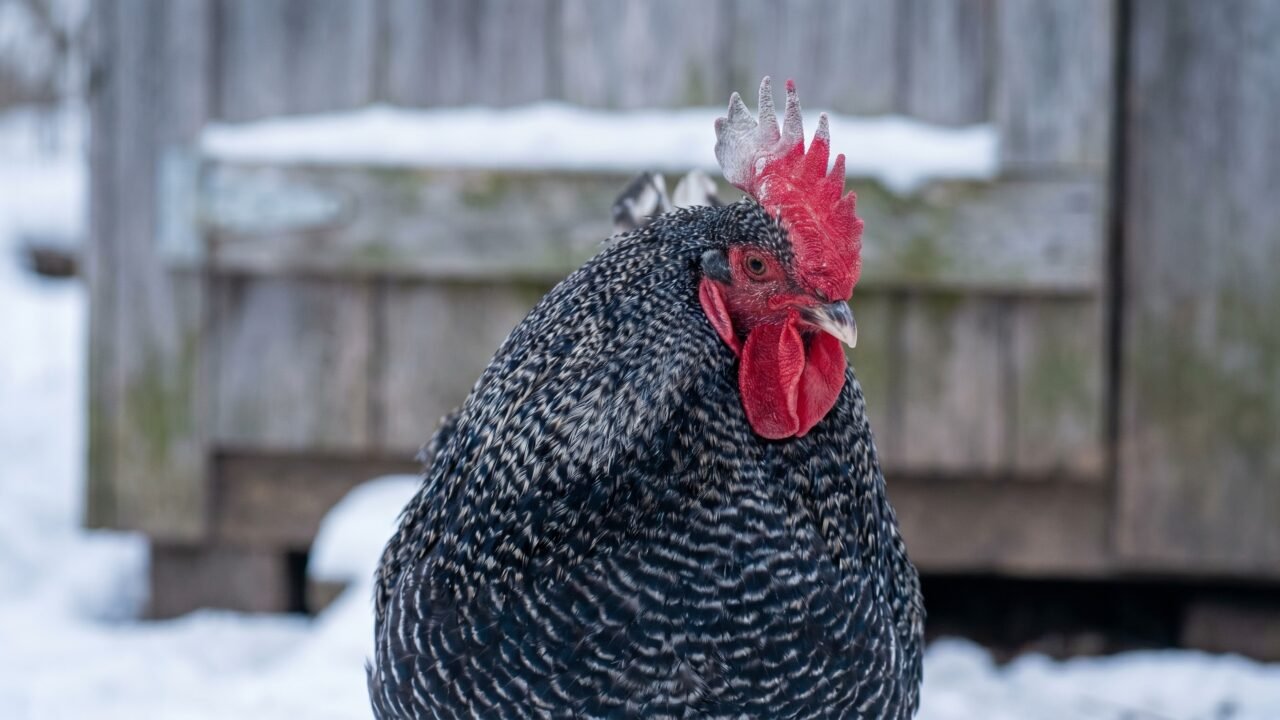
Comb shape and size determine vulnerability far more than ambient temperature does. The poultry.extension.org frostbite article states: "Frostbite is most common in roosters because they typically have larger combs and wattles, but any hen with a large comb, such as a leghorn, can be vulnerable as well. The incidence of frostbite in chickens with the smaller comb types, such as pea and strawberry, is much less."
The table below summarizes comb type, typical breed examples, and relative frostbite risk at temperatures near 0°F. Use it as a planning guide when you are selecting birds for a cold northern climate or deciding which birds need extra attention on a severe night.
| Comb type | Example breeds | Frostbite risk (near 0°F) | Why |
|---|---|---|---|
| Single (large) | Leghorn, Rhode Island Red, Australorp | High | Large upright points expose maximum surface area to cold air and moisture |
| Single (rooster) | Any breed rooster | Very high | Roosters carry larger combs and longer wattles than hens of the same breed |
| Rose | Wyandotte, Dominique, Hamburg | Low | Flat, close-lying surface; minimal exposed tissue |
| Pea | Brahma, Ameraucana, Easter Egger, Buckeye | Very low | Three small ridges, tightly set; extension confirms much lower incidence |
| Walnut / cushion | Silkie | Very low | Compact mass close to skull, poor surface-area-to-volume ratio for freezing |
University of Minnesota Extension confirms that "heavier breeds such as Plymouth Rock, Wyandotte, Ameraucana and Orpington over-winter well," while noting that "smaller breeds have less feathering, or have large combs and wattles and may need extra care to stay warm." If you keep a mixed pen with one Leghorn rooster and several Brahmas, the rooster needs your attention; the Brahmas likely handle the same night without trouble.
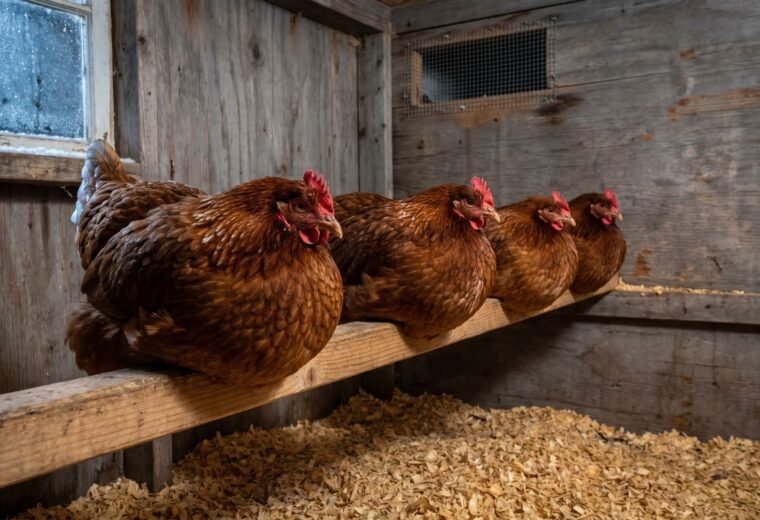
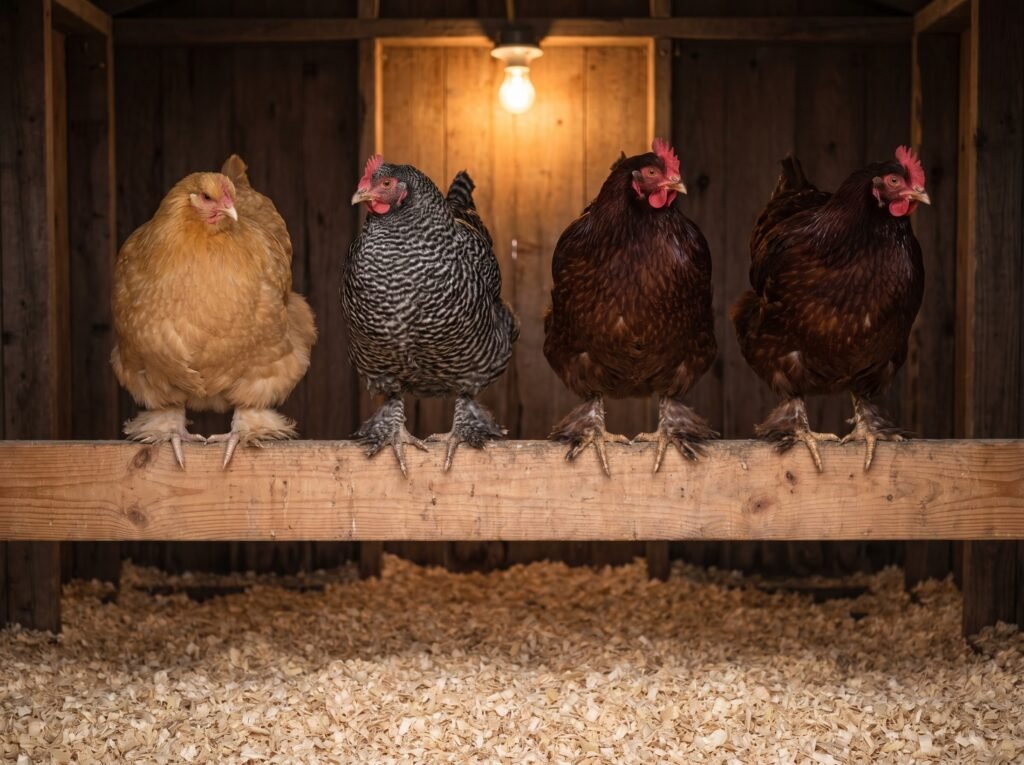
Toes are a second vulnerability and often overlooked. Birds that roost on thin dowel rods cannot flatten their toes under their body feathers. A wide, flat roost - a 2x4 set wide-side-up - lets chickens sit with feathers over their feet. University of Minnesota Extension recommends "wooden 2 by 4- or 2 by 2-inch boards" and at least 9 inches of roost space per bird so they can spread out without crowding.
For a deeper look at which breeds handle northern winters best, our cold-hardy chicken breeds guide compares physique, comb type, and laying performance through cold months.
How to prevent chicken frostbite: ventilation first
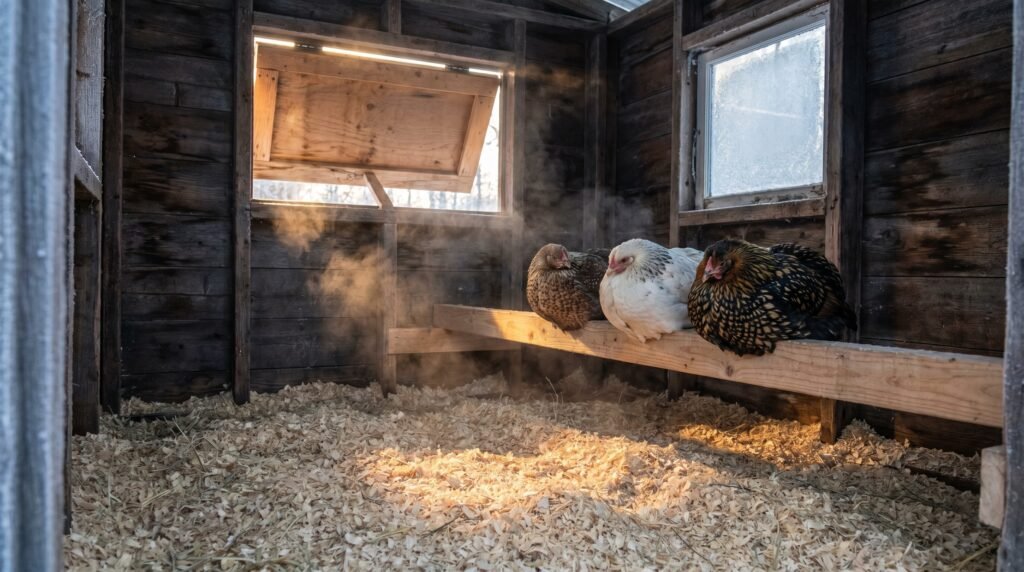
Good coop ventilation is the single highest-return action you can take. Alabama Cooperative Extension recommends maintaining coop humidity between 50 and 70 percent during cold weather - and the way you get there is fresh-air exchange, not a heater. Upper vents (above roost height, ideally on the leeward wall) let moist air rise and escape without creating a cold draft across sleeping birds. If you see condensation on windows or uninsulated walls first thing in the morning, the coop is too humid and ventilation must increase regardless of the outside temperature.
A practical inspection list for a flock of 14 birds heading into winter:
- Check that upper vents are clear and open - at least partially - even on the coldest nights. Close only if temperatures are genuinely extreme (sub-zero for multiple days) and a heat source is available.
- Top-dress bedding regularly through winter to keep the floor dry. Wet litter releases moisture continuously. Pull and replace any patch that is damp underfoot.
- Fix any leaking waterers immediately. A single dripping nipple raises coop humidity measurably overnight.
- Position roosts at least 12 inches off the floor, away from drafts, on flat 2x4 boards wide-side-up.
- Remove snow from the run entrance to keep birds from standing in wet slush, which accelerates toe heat loss.
Petroleum jelly on combs and wattles is a widely recommended secondary measure. University of Minnesota Extension notes it "helps insulate them and prevent frostbite damage," though the extension article at poultry.extension.org is clear that "coop management is the real key." Apply a thin coat to comb points and wattle tips on nights when temperatures are forecast below 20°F, particularly on single-combed birds and roosters. Reapply as needed - it melts off in a warm coop.
Our winterizing the coop checklist covers insulation, draft-sealing, and vent placement in more detail, and the piece on keeping chickens warm in winter addresses feed intake, water heating, and supplemental heat decisions.
On supplemental heat: the vast majority of cold-hardy flocks do not need it. University of Minnesota Extension generally recommends against supplemental heat for cold-hardy breeds, reserving it for genuinely extreme cold conditions where temperatures stay dangerously low for multiple consecutive days. Heat lamps are a documented fire hazard - the extension source notes they "are a potential fire hazard and care must be taken." If you use one, mount it securely in a metal fixture far from bedding, with a ceramic bulb rather than glass. A panel heater rated for agricultural use is lower-risk. See our article on whether chickens need heat in winter before adding any heating device to the coop.
Recognizing frostbite: what to look for
Early frostbite (sometimes called frostnip) shows as pale, whitish, or off-color tissue on comb tips or wattle edges. The tissue may still be pliable. At this stage the prognosis is good. As damage progresses, the tissue hardens, may blister, and eventually turns dark red, purple, or black as circulation fails and cells die. The poultry.extension.org article describes the progression: affected tissue "loses blood supply, depriving the cells of oxygen," and "off-color" areas eventually become "blackened areas of the tips of combs or toes or the ends of the wattles."
Feet are harder to monitor because the signs hide under feathers. Watch for a bird reluctant to walk, holding one or both feet up toward its body, or perching rather than moving around the run. Swollen or puffy toes on a morning after a hard freeze warrant a close look.
First-aid care for frostbitten birds
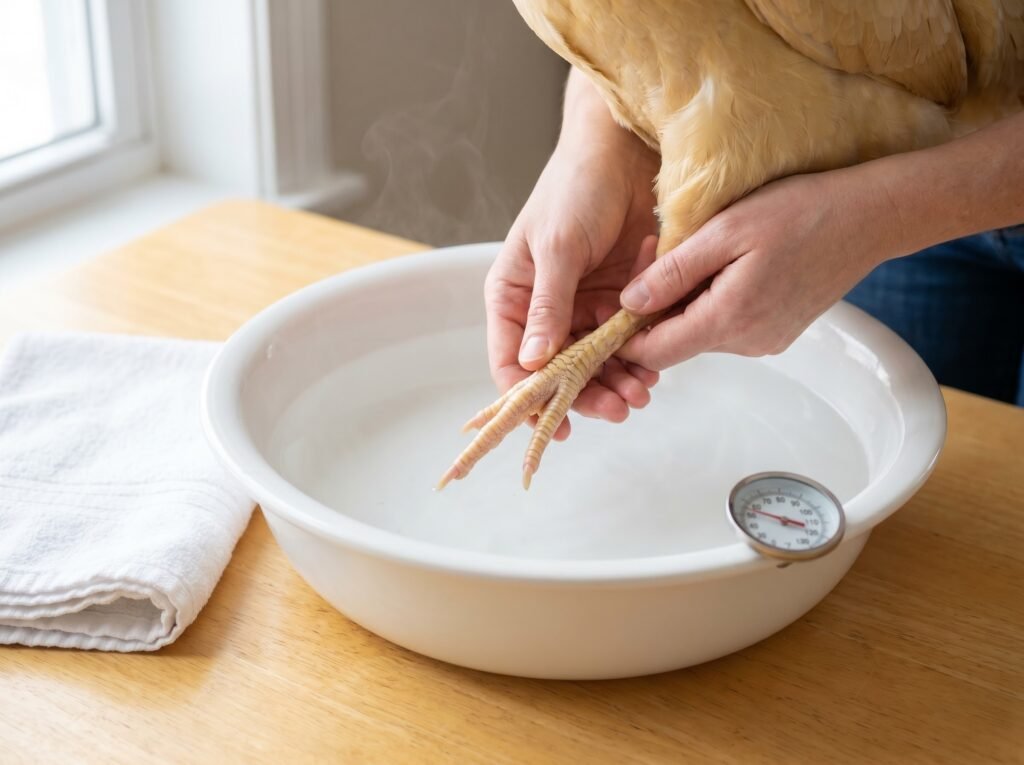
Move the affected bird inside as soon as you spot frostbite, away from pen mates who will peck at damaged tissue. Warmth and cleanliness are the priorities.
For combs and wattles: hold a washcloth soaked in lukewarm water gently against the tissue. Never use a hair dryer, heat lamp, or any direct heat source - rapid warming damages tissue further. Do not rub or massage, which breaks fragile cells.
For toes and feet: soak in lukewarm water - around 100-101°F, barely warm to the touch - for 20 to 25 minutes. Pat dry thoroughly and keep the bird on clean, dry bedding. Wet feet refreezing after treatment worsens the injury significantly.
Leave blackened tissue alone. It looks alarming, but it protects the living tissue underneath. The extension guidance is consistent: do not trim unless the area becomes infected. Healing takes four to six weeks, per poultry.extension.org. Watch daily for infection signs - swelling, redness spreading beyond the black area, discharge, or foul odor.
Give the bird quiet, warmth, clean water, and full-ration feed. Stress slows recovery. Keep it separated until the tissue has clearly demarcated (the line between viable and dead tissue usually becomes visible within two weeks) and the bird is moving normally.
When to call a poultry vet
Some situations go beyond first aid. Contact a poultry-experienced veterinarian when:
- The bird cannot bear weight on its feet at all after warming.
- Infection signs appear - swelling, discharge, odor, or spreading redness.
- Toes or comb sections appear to be mummifying and the bird is in visible distress.
- You see blistering across large areas of comb or multiple toes affected on both feet.
- The bird stops eating or drinking during recovery.
Severe deep-tissue frostbite may require surgical debridement after the line of demarcation stabilizes, which takes weeks. Pain management and circulation-support medications are also vet-territory decisions. Do not attempt to make those calls at home; the variables are too individual for general guidance to be safe.
Frequently asked questions
Can a chicken with a badly frostbitten comb still lay eggs?
Often yes, once she recovers and temperatures stabilize. Extreme cold does suppress production in all hens, and a frostbite injury adds physical stress that can pause laying temporarily. Egg production may be affected by extreme cold, but it typically recovers once conditions improve and the bird is no longer under stress. Do not expect normal production during the recovery window.
Does petroleum jelly actually work, or is it a myth?
It provides a measurable benefit as a barrier against moisture contacting comb tissue, and University of Minnesota Extension recommends it explicitly. What it cannot do is compensate for a humid, poorly ventilated coop. Use it as a supplement to good management. It cannot carry the load alone.
My flock survived last winter with no heat and no frostbite - do I need to change anything?
That result tells you your coop management is solid - dry bedding, adequate ventilation, and appropriate roost setup are clearly working. The variable that catches experienced keepers off guard is an unusually wet winter. Heavy precipitation raises indoor humidity even in coops that normally handle cold well, so re-check bedding moisture and vent airflow every few weeks rather than assuming last year's setup holds every year.
Is rose comb vs. single comb purely a frostbite issue, or does it affect anything else?
The main practical difference for northern keepers is frostbite risk. Rose-combed birds are otherwise identical in heat-regulation ability and laying behavior. Single-combed breeds radiate body heat more efficiently in hot weather (the large vascular comb acts as a heat sink), so in extreme-heat climates the calculus actually reverses. For most mixed-climate flocks the comb is a minor factor except on the coldest nights.