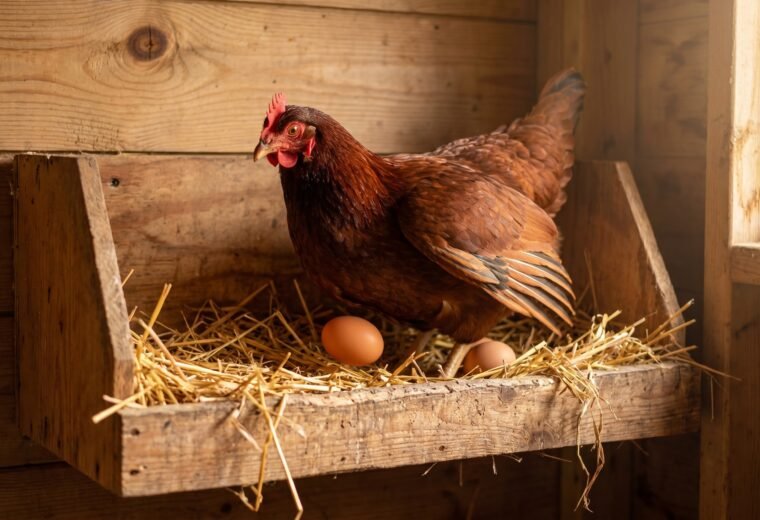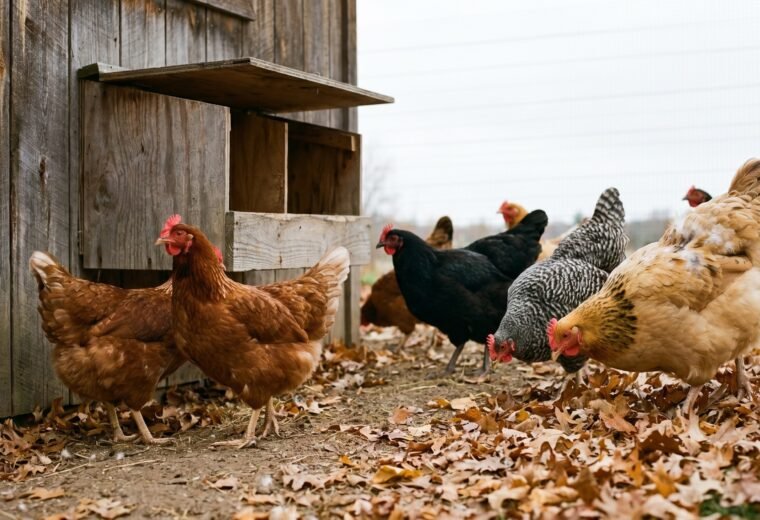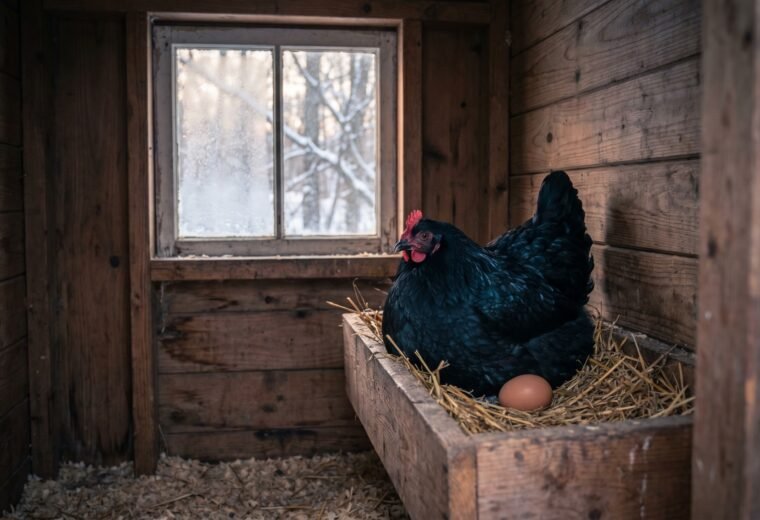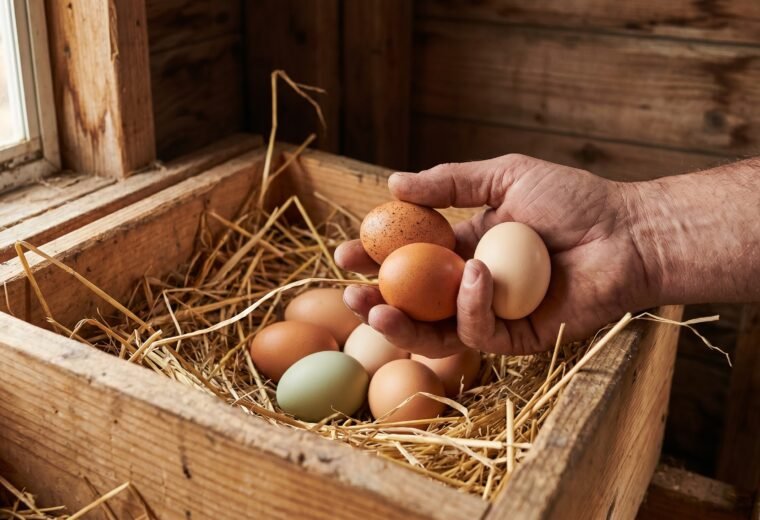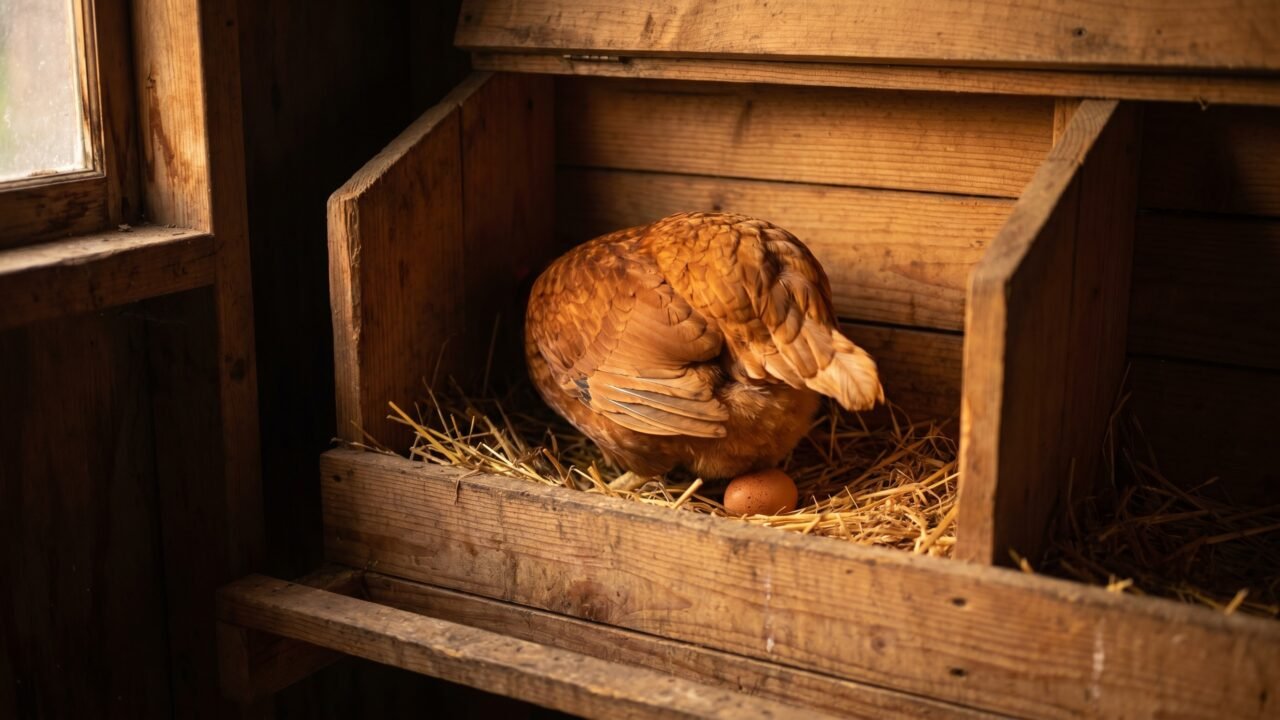
Most backyard hens lay somewhere between five and six eggs a week at their productive peak - not seven. That one missing egg per week is not a problem or a sign of poor management. It is biology. The whole process of building a single egg, from the moment the yolk is released to the moment the shell is complete, takes 24 to 26 hours. A cycle longer than one day means your hens physically cannot lay on a perfectly daily schedule, no matter how good their care is.
Understanding that gap helps you set realistic expectations, spot genuine problems sooner, and make smarter decisions about light management and flock rotation.
The 24-26 hour cycle explained
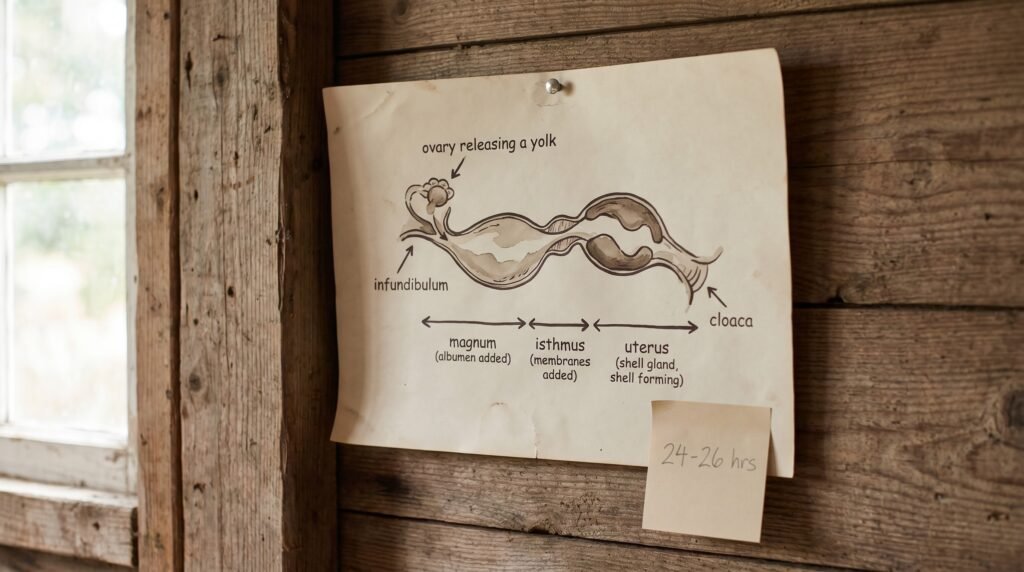
After a hen lays, the ovary releases a new yolk somewhere between 30 and 75 minutes later. That yolk then travels the full length of the oviduct - picking up albumen, membranes, and finally a shell - before being laid. The entire trip takes 24 to 26 hours.
Here is the part most keepers overlook: ovulation almost never happens after 3:00 p.m. under normal daylight. So if a hen lays late in the afternoon - say at 2:45 p.m. - her next ovulation gets pushed to the following morning. She skips one day entirely. Then the next clutch starts a little earlier, she catches up, and the pattern repeats.
This is why a single hen's laying time drifts forward by roughly 30-60 minutes each day for several days, then hits that late-afternoon limit and resets. A keeper in our community recorded a Black Australorp laying at 7 a.m., then 8 a.m., 9:30 a.m., 11 a.m., 1 p.m., and then going a full day without laying before resuming at 7 a.m. again. That is the clutch cycle (a series of consecutive laying days before a skip day) in action, not inconsistency.
How age shapes laying frequency
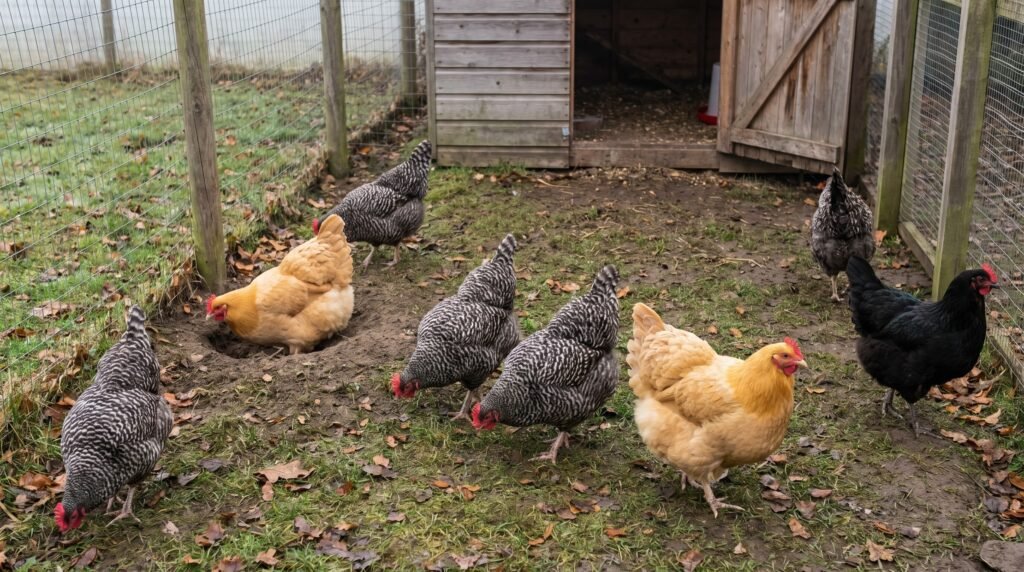
A pullet typically starts laying at 18-24 weeks, depending on breed and season. Production climbs quickly and can reach around 90% efficiency within the first 6-8 weeks of laying - meaning a good hen in a flock of 9 will average about eight eggs on any given day during peak season.
After that first year, output declines. By the end of 12 months of laying, average production across a flock typically sits closer to 65%. The second year is lower still, and most home flocks produce eggs on and off for three to four years before productivity drops to a point where keepers decide to rotate in younger birds. Egg size tends to increase as hens age while shell quality gradually decreases - thinner shells, occasional soft eggs.
The table below maps the typical arc so you can cross-check your flock's output against what to expect at each stage. All figures are approximate and vary by breed.
| Stage | Typical flock efficiency | Eggs per week (per hen) | Notes |
|---|---|---|---|
| First 6-8 weeks of lay | Climbs to ~90% | 5-6 | Pullets settling into cycle |
| Peak (months 2-12) | ~85-90% | 5-6 | Standard shell quality; eggs smaller than in later years |
| After first molt (year 2) | ~65-75% | 4-5 | Eggs larger, shells thinner |
| Year 3 and beyond | 50% or less | 3 or fewer | High variability by individual |
Good layers - high-production breeds like ISA Browns, Golden Comets, or Leghorns - compress that peak phase and can sustain 50-60 weeks of strong output before their first molt. Dual-purpose breeds like Plymouth Rocks or Wyandottes lay more modestly but often hold reasonable production longer into the second and third year. Breed-by-breed comparisons, including weekly egg ranges and laying lifespans, are in the best egg-laying breeds rundown.
What the molt does to your egg count
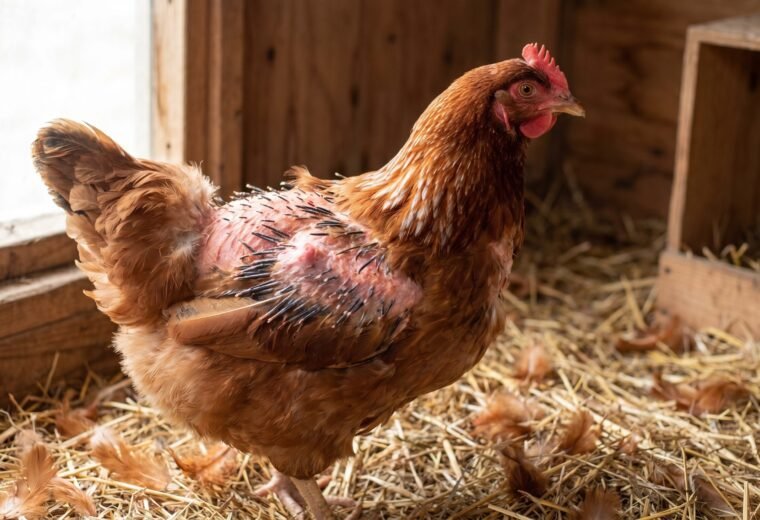
Molt typically halts or sharply cuts egg production for 8 to 12 weeks, once per year. Hens redirect protein toward regrowing feathers, and the reproductive system essentially pauses until the new coat is complete.
The trigger is usually shortening days in late summer or early fall. Hens drop their feathers and regrow them, and during that period production either slows sharply or stops entirely. The 8 to 12 week range varies because it depends heavily on the individual hen and the breed - fast-molting hens return to the box sooner than slow ones.
Good layers usually molt fast and hard (dramatic feather loss, quick regrowth) and return to production sooner. Slower, incomplete molts tend to signal a lower-producing hen. After the molt, a brief rest, then the next laying cycle begins - though at a somewhat lower rate than the previous year.
Supporting hens through the molt - including the protein bump that speeds regrowth - is the focus of the what to expect during molt piece.
Season and light: the real control switch
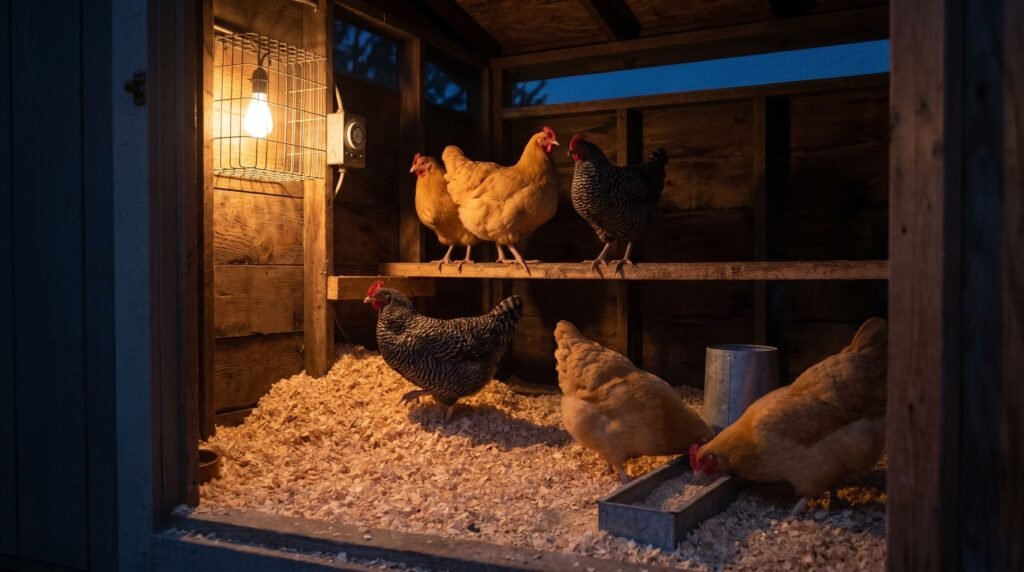
Daylight length is the primary signal that tells a hen's brain to produce reproductive hormones. Hens require 14 hours of light exposure to sustain full production; below that threshold output begins to taper. When day length drops below 12 hours - typical from October through February across much of the US - production frequently stops entirely. These are two separate thresholds, not one: 14 hours sustains full production, but hens can limp along between 12 and 14 hours at reduced output before the shutoff hits. This is not a malfunction. Hens evolved to time reproduction to spring and summer, when conditions favor chick survival.
If you want year-round eggs from a small flock, supplemental lighting is the most reliable tool. Sixteen hours of light per day is the target for mature laying hens, the figure Penn State Extension points to. Intensity does not need to be high: as little as 0.5 foot-candle (roughly 5 lux) at bird level is enough to stimulate production - a single low-wattage LED (roughly 40-60 lumen output) in a standard coop will cover it. Add the light in the early morning rather than the evening; this mimics lengthening spring days and tends to produce earlier daily laying times, which most keepers prefer. Increase or decrease photoperiod gradually - no more than about one hour per week - to avoid shocking the birds into a stress-induced molt.
Whether to run supplemental light is genuinely a judgment call. Year-round production keeps the flock in higher condition economically, but it does shorten a hen's total laying lifespan somewhat, since she has a finite number of ovulations. Letting hens experience a natural winter rest allows them to go through their molt on their own schedule, which some keepers prefer. The full trade-off - production lifespan versus year-round output - is laid out in whether chickens lay in winter.
Other factors that cut the daily count
Age and light get most of the attention, but several other variables quietly drag down your weekly tally:
- Nutrition. The eggshell is almost entirely calcium carbonate. Hens laying at full tilt need dramatically more calcium than growing birds do. A balanced layer feed (around 16% protein) with free-choice oyster shell handles this. Switching to scratch or excess treats dilutes the diet and often shows up first as thin-shelled or soft eggs, then reduced production.
- Heat stress. High summer temperatures reduce feed intake and directly depress egg production. Shade, airflow, and cold water matter more than most keepers expect in the July-August stretch.
- Social disruption. Adding new birds, a rooster, or any significant flock reshuffle creates stress that can pause laying for days to a couple of weeks while the pecking order settles.
- Illness or parasites. A drop in production is often the first visible sign that something is wrong. If a previously steady hen suddenly stops laying and you cannot trace it to molt, season, or stress, a check for mites, lice, or illness is worthwhile - and a poultry vet is the right call for anything that doesn't resolve quickly.
- Hidden nests. Free-ranging or partially free-ranging flocks sometimes relocate their laying spot. A sudden production drop with no other explanation is worth a coop perimeter walk.
When production stalls and you cannot pin it on the usual suspects, the troubleshooting steps for each cause are in why chickens stop laying.
A practical way to track your flock's output
If you keep seven hens at peak production, expect roughly 35-40 eggs per week - not 49. Run that math before deciding you have a problem. A simple notebook tally per week is more useful than daily counting because the clutch-cycle drift means one-day gaps are normal even in your best layers.
Flock average drops below about 50% of your hen count on a consistent basis? That warrants a real look at age distribution, season, nutrition, and health. Check the basics of egg production for the benchmarks by season, and our deep-dive on how many eggs hens lay by breed for breed-specific expectations to compare against.