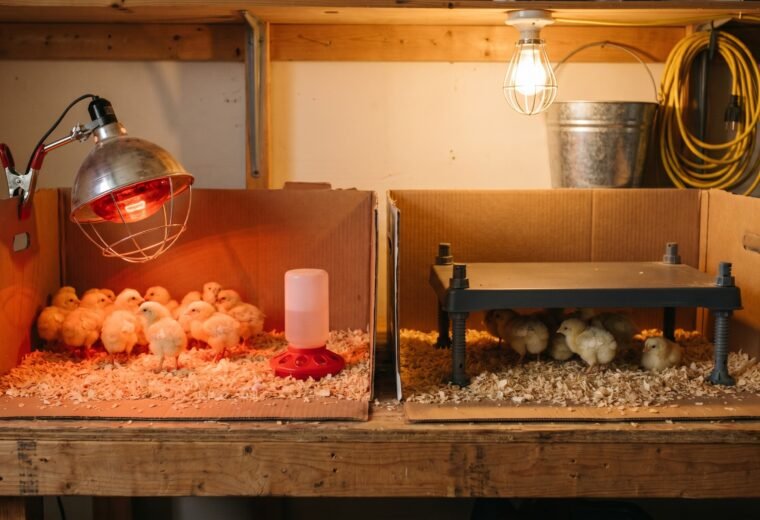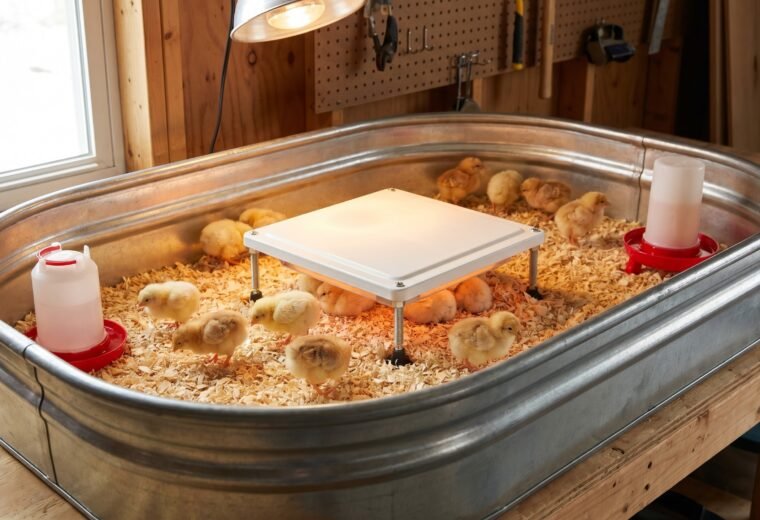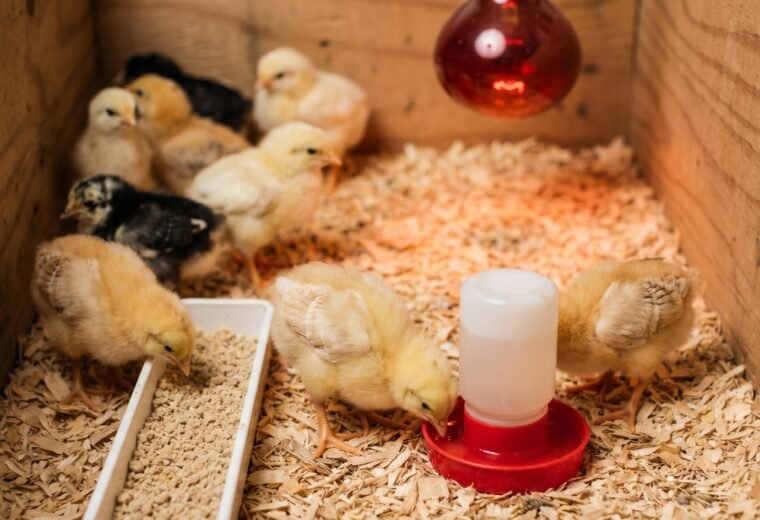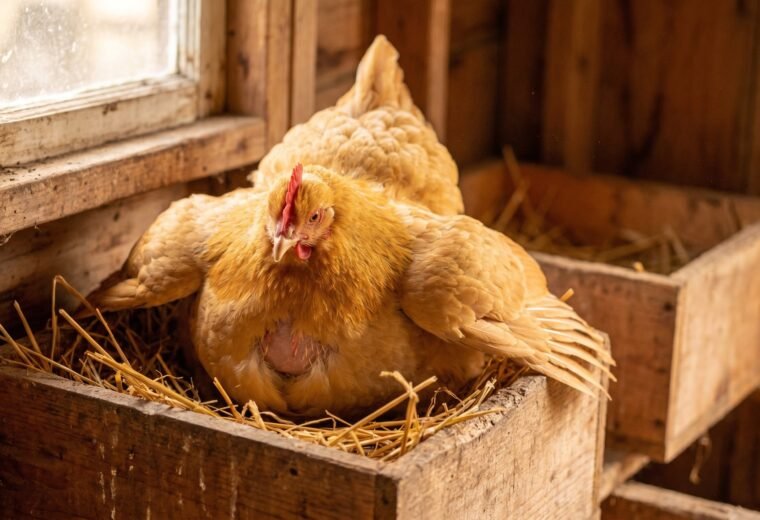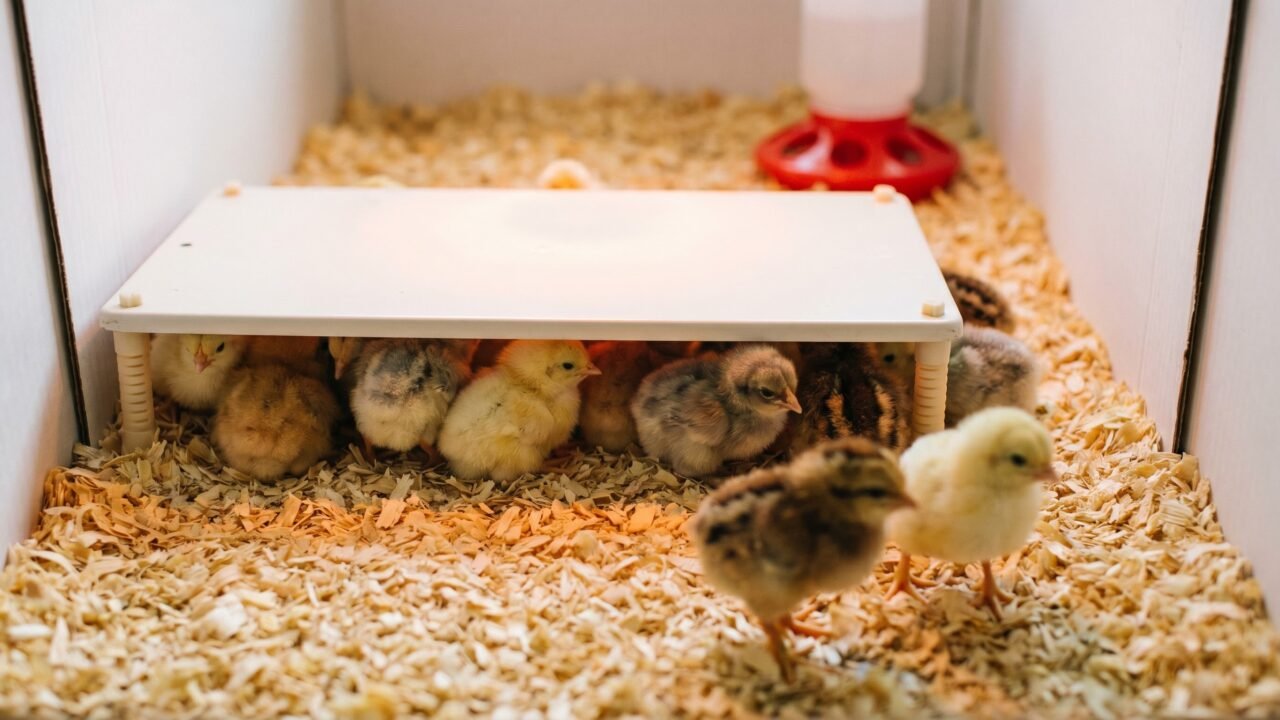
A heat plate keeps your chicks warm without a single open-filament bulb burning over dry shavings, and for most backyard keepers it is the clearest upgrade to make before the next batch of chicks arrives. Heat lamps work, but they carry a genuine fire record, and there are now several solid alternatives that either match or beat them on warmth while taking the fire risk off the table entirely.
This guide covers the three practical routes: radiant heat plates, a broody hen, and warm-room brooding. It also explains how to read chick behavior as a real-time temperature gauge, which matters regardless of which heat source you pick.
Why heat lamps deserve their reputation for fire risk
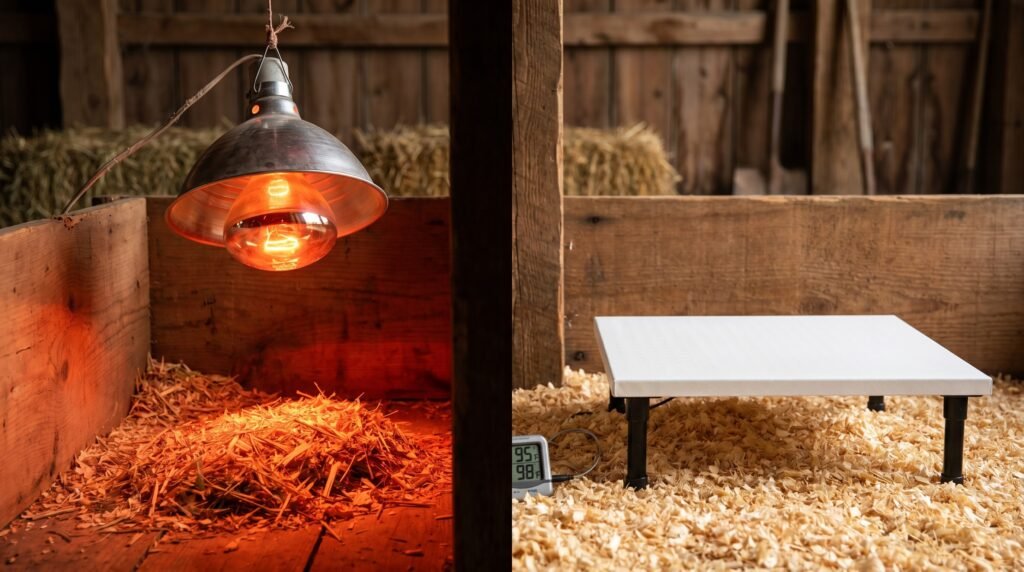
Cornell Cooperative Extension documented it plainly: cheap heat lamp fixtures arrive with short thin cords, poor connections to the socket, and unreliable attachment points. Two fires on one farm, another in Maine that killed livestock. The risk is not hypothetical.
The mechanics are straightforward. A 250-watt bulb generates enough heat to ignite pine shavings on contact. Hang one with baling twine instead of a chain, or let a curious pullet knock the fixture sideways, and the lamp tip into the bedding. The result is fast. Ohio State University's agricultural safety program recommends at minimum a chain suspension, porcelain sockets rated for infrared lamps, 20 inches of clearance from any flammable surface, and an arc-fault circuit interrupter (AFCI) breaker rather than a standard circuit - because frayed internal wiring can short without tripping a conventional breaker.
None of that makes a heat lamp impossible to use safely. It just means there are several non-trivial steps between "plug in lamp" and "safe brooder," and most beginners skip at least one of them. Compare that to a heat plate, where the surface temperature is low enough that direct contact with shavings will not start a fire.
For more on how these two options stack up side by side, the heat lamp vs. heat plate comparison covers specs, cost, and when one genuinely outperforms the other.
Radiant heat plates: how they work and what to expect
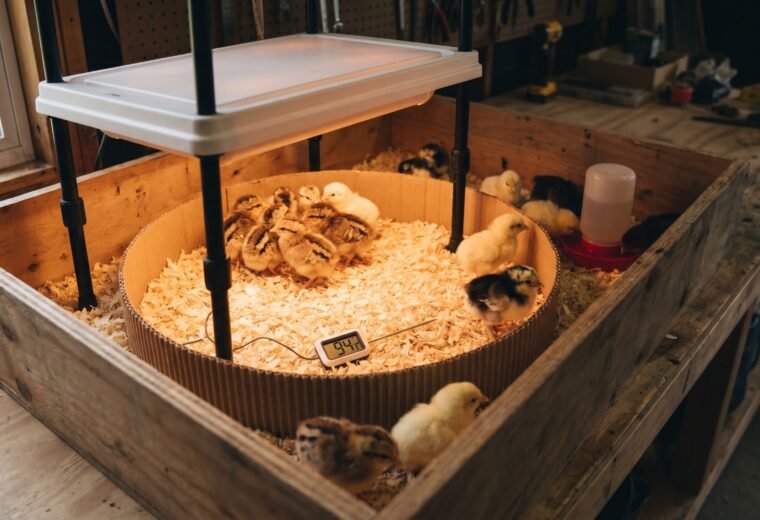
A heat plate is a flat, low-profile panel suspended a few inches off the brooder floor. Chicks crowd underneath it, press against the warm underside, and shuffle out to eat and drink when they are ready. This mirrors what a mother hen provides: a warm body to return to, with open space around it.
University of Georgia extension research found that radiant brooders direct roughly 90 percent of their heat downward to the floor, compared to about 40 percent for conventional overhead designs. The practical result is that chicks under a plate stay warm without heating the entire brooder air to 95°F, which means less electricity and a more natural thermoregulation experience for the birds.
Wattage numbers matter here. Plate wattage varies by model and manufacturer: a unit sized for 20 chicks may draw as little as 12 watts, while larger plates draw 20-25 watts or more. By contrast, a standard 250-watt heat lamp bulb uses more than 10 times that electricity per hour. One widely available 12-watt plate sized for 20 chicks draws less than a twentieth of that electricity per hour. Over a 6-week brooding period, the savings add up, but the real argument is safety and behavioral normalcy, not the electricity bill.
Height adjustment is the key management task. Start with the plate low enough that chicks must slightly crouch to get under it - roughly 1 to 2 inches above the litter for day-olds. Raise it by half an inch or so every few days as chicks grow. If chicks are piling and fighting for space underneath, lower it slightly. If they rarely go under it, the brooder room may already be warm enough or the plate is too high.
One limitation worth noting: heat plates work best when the ambient room temperature is at least 50-60°F. If the brooder sits in an unheated barn during a cold snap, the plate alone may not fully compensate. In that case, insulating the brooder walls and providing a small room heater to bring the ambient up is more reliable than expecting the plate to do everything.
For a broader look at box design and setup options that pair well with a heat plate, see our guide to the best chick brooders.
The broody hen option
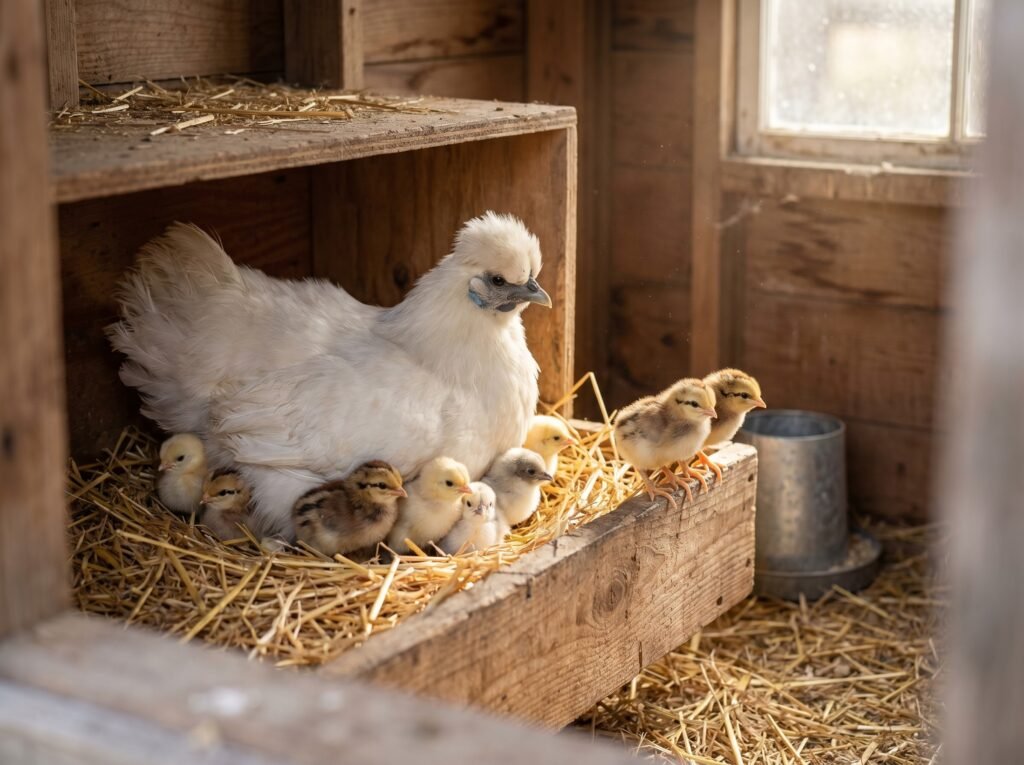
A hen that has gone broody is the original heat source, and in the right situation she is also the easiest one to manage. University of Alaska Fairbanks Cooperative Extension puts a broody hen's capacity at a dozen to 15 chicks, notes that she naturally protects that group from small predators, and specifies that the hen must be free of lice and in good health before chicks are introduced.
The setup they recommend is simple: a small, well-ventilated A-frame coop about 2 by 3 feet with a covered wire yard. Hen and chicks eat the same starter feed, which removes one feeding complication. The hen regulates warmth automatically, reads each chick's temperature needs better than any thermometer, and handles weaning herself by gradually reducing brooding time as chicks feather out.
The catch is timing. You need a broody hen at the moment you need chicks, which is not always predictable. Breeds that go broody reliably - Silkies and Cochins, for example - make this method more practical for people who plan around it. Breeds that rarely go broody (most production Leghorns, for instance) make it an unreliable strategy.
Integrating broody-raised chicks into the main flock also tends to go more smoothly than introducing artificially brooded chicks alone, because the mother provides social context and some degree of protection during the pecking-order negotiations. That is a real advantage worth considering for anyone who has struggled with introductions.
If you want to explore how to support or use a broody hen for hatching and rearing, our broody hen guide walks through breed selection, setup, and what to do if the hen abandons the nest.
Warm-room brooding: when it works and when it does not
Some keepers brood chicks in a warm indoor room - a heated laundry room, a bathroom, a spare bedroom - without any dedicated heat source at all. This can work, but only within a specific temperature window and with realistic expectations about the first two weeks of life.
The numbers from extension research are consistent: day-old chicks need an immediate environment of 90-95°F at floor level, measured about 2 inches above the litter directly under the heat zone. A room held at 75°F feels comfortable to you and is genuinely dangerous for a day-old chick. The gap between "warm room" and "warm enough for a newly hatched bird" is bigger than most people expect.
Where warm-room brooding makes sense is with slightly older chicks or as a supplement to a heat plate. A room at 70-75°F paired with a plate for the first three weeks, then the plate removed when the room alone is sufficient, is a reasonable approach. Chicks develop their ability to regulate body temperature between about 12 and 14 days of age, according to University of Georgia extension data. Before that point, they depend almost entirely on external warmth, and a too-cool room can chill them quickly.
Cold-brooding - intentionally brooding at cooler ambient temperatures from day one - is an older practice that some homesteaders use with spring or early-summer hatches. It is only attempted when the ambient space stays above 65-70°F throughout the day and night, and even then it requires starting with at least 25-30 chicks so the group generates enough communal body heat to compensate for the lack of a dedicated heat source. Bedding depth matters: a minimum of 4 to 6 inches of loose straw or shavings gives the group an insulating base to huddle into. Chick behavior must be monitored every few hours in the first week - sustained tight piling signals chilling and the practice should be abandoned in favor of adding a heat source. Losses are more likely than with a heat plate setup, and cold-brooding is not a method for small groups, inexperienced keepers, or chicks arriving in any season outside warm summer weather.
Reading chick behavior: your most reliable temperature tool
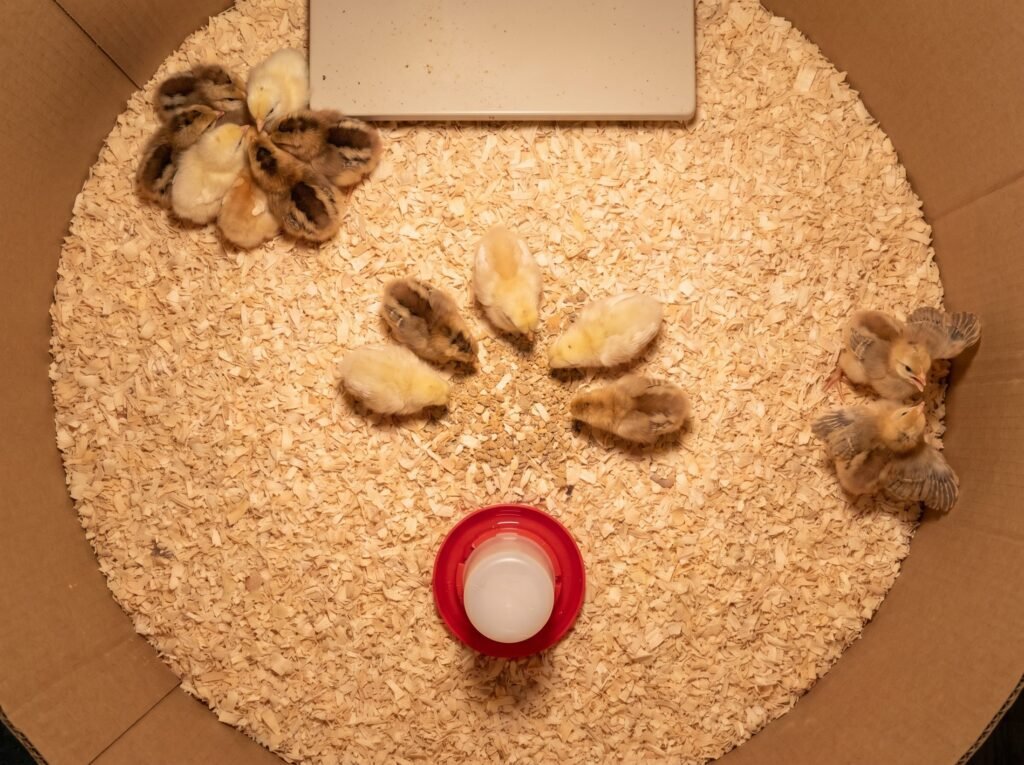
Whether you use a heat plate, a broody hen, or a warm room, the chicks themselves are better sensors than most consumer thermometers. University of Georgia extension researchers describe three clear patterns:
- Piling, huddling, and crowding toward the heat source: chicks are cold. Lower the plate, increase room heat, or add insulation.
- Pressing against the brooder walls, panting, wings held out from the body: chicks are too hot. Raise the plate or reduce ambient temperature.
- Moving freely, distributed across the brooder, soft peeping, eating and drinking regularly: temperature is right.
Check behavior within the first hour of placing new chicks in the brooder and again in the evening when nighttime temperatures may drop. A thermometer is still worth having - aim for 90-95°F at floor level in the warmest zone for week one - but the behavior pattern is what tells you whether the numbers are actually reaching the birds.
The standard schedule from University of Minnesota Extension is to reduce brooder temperature by 5°F per week until chicks no longer seek supplemental heat. In practice, most chicks raised with a heat plate start spending less time under it by week three and have largely stopped using it by week five to six, when feathering is substantially complete. In a heated room of 65-70°F, many chicks can go without a plate entirely by week five or six.
The detailed week-by-week schedule with exact temperatures is in our brooder temperature by week reference, which also covers when it is safe to move chicks to an outdoor coop.
Choosing the right method for your setup
The table below compares the three approaches across the factors that matter most to a backyard keeper. The judgment column reflects what works in practice, not a guarantee.
| Method | Fire risk | Ambient temp needed | Flock size | Skill level | Best for |
|---|---|---|---|---|---|
| Heat plate | Very low | 50-60°F minimum | Up to ~20-30 (depends on plate size) | Beginner-friendly | Most backyard keepers; heated garage or indoor brooder |
| Broody hen | None | No minimum (hen provides heat) | 12-15 chicks per hen | Requires a reliable broody breed | Homesteads with breeds that go broody; spring hatches |
| Warm room only | None | Must reach 90-95°F at floor level for week 1 | Any size, if room is warm enough | Intermediate; requires close monitoring | Late spring or summer; chicks 2+ weeks old pairing with room heat |
| Heat lamp | High if misused | Overcomes any ambient if properly installed | Any size, multiple lamps for larger flocks | Requires AFCI breaker, chain, porcelain socket, 20-in clearance | Experienced keepers in cold unheated barns who understand installation requirements |
For a first brooding experience with a small flock of 10 to 15 chicks, a properly sized heat plate in a room that stays above 55°F is the most forgiving option available. The margin for error is wider, the fire concern disappears, and the chicks self-regulate in a way that closely matches natural brooding under a hen. What comes next - feed changes, water setups, and housing transitions as chicks grow - is covered week by week in raising baby chicks week by week.