Pick up a full-grown Serama rooster and he weighs about as much as a can of soda - 16 ounces at the top of the American standard, and a good bit less in the smallest Malaysian show classes. That makes the Serama the tiniest chicken breed on record, and it shapes everything about keeping one: the feed budget, the coop footprint, the cold-weather plan, and yes, the eggs, which arrive about five to the size of a single large grocery egg.
If you are weighing whether a Serama fits your setup, this profile covers the whole picture - where the breed came from, what the numbers actually mean in practice, and the two or three things that catch new keepers off guard.
Origin and history
The Serama traces to the state of Kelantan on Malaysia's northeastern coast, where breeder Wee Yean Een began a deliberate crossing program in 1971. He started with local Ayam Kapan bantams, added Japanese Chabo bantams for their erect tail carriage, and worked in Silkie-feathered stock along the way. By 1988 he had birds consistently under 500 grams. He named the breed after Raja Sri Rama, a figure from the Malaysian shadow-puppet tradition he loved as a child.
The first official show ran in 1990. Within a decade the Serama had become the country's most popular pet bird, displayed on tabletops where judges assess posture and character while the bird walks freely - a style borrowed from Malaysian tradition and still practiced in North American shows under the Serama Council of North America.
A small import of 135 birds arrived in North America in the fall of 2000. An Asian bird flu quarantine later restricted further imports, so all North American Seramas descend from roughly 100 of those original birds. The American Poultry Association and the American Bantam Association formally accepted the Serama in April 2011, with white, black, and exchequer as the recognized colors. Additional varieties - blue, splash, ginger red, and wheaten - have since been added to the registry through 2024.
Size, weight classes, and what that looks like in practice
The ABA and APA use four weight categories for American-standard birds: cocks at 16 ounces, hens at 14 ounces, cockerels at 14 ounces, and pullets at 12 ounces. Malaysian and traditional show birds divide further into three classes by grams, with Class A cocks under 12 ounces and Class A hens under 10 ounces - and breeders in Malaysia have gone smaller still, producing birds under 250 grams (about 8.8 oz) for competition.
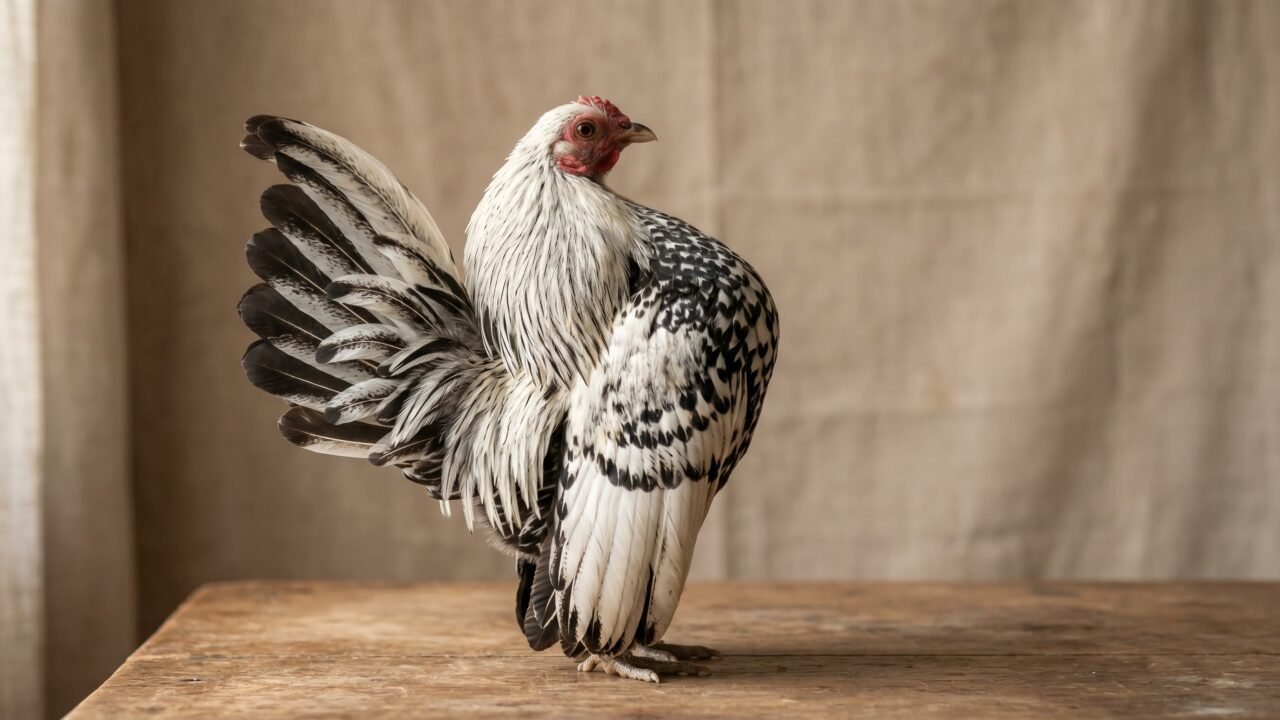
Standing 6 to 10 inches tall, a Serama looks almost architectural. The breed standard calls for a full, high-held breast, wings carried vertically and angled nearly to the ground, and a tail fanned upright close to the body. Viewed from the side the bird forms a wide V or vase outline. It is a posture that reads as deliberately proud, and breeders in Malaysia have long described it with words like "brave warrior." The stance is not exaggeration - it is the breed standard, judged on a tabletop while the bird walks.
One practical note: size does not breed true. A single clutch from good Serama parents typically yields one or two very small birds, two or three medium-sized ones, and a handful at the larger end of the scale. Breeders working toward competition-size Class A birds should expect that most offspring will be Class B or C.
| Category | American standard weight | Height range | Show format |
|---|---|---|---|
| Cock | 16 oz (top) | 6-10 in | Cage or tabletop |
| Hen | 14 oz (top) | 6-10 in | Cage or tabletop |
| Malaysian Class A cock | Under 12 oz | Under 10 in | Tabletop only |
| Malaysian Class A hen | Under 10 oz | Under 10 in | Tabletop only |
Eggs: what to expect and what not to
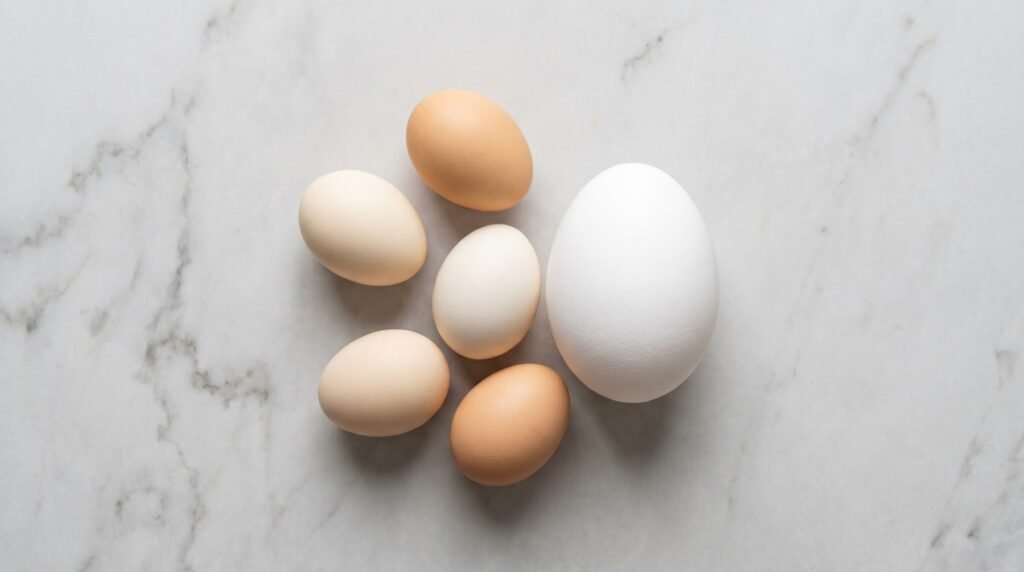
A healthy Serama hen lays up to three or four eggs per week when she is in lay, but Seramas go broody readily, so a realistic yearly total sits well below that ceiling, often around 100 small eggs or fewer - and the eggs are tiny. Five Serama eggs equal approximately one Grade A Large egg from the grocery store, so the practical output is closer to 36-40 "large equivalents" per year per bird. If you are keeping Seramas primarily for eggs, set those numbers against what you actually need before committing.
Egg color runs the full range from white to deep brown, cream being most common. Production holds year-round with no strong seasonal shutoff, though peak fertility and laying activity tends to cluster from November through February. Hens begin laying around 16 to 18 weeks of age, a little earlier than many standard breeds.
Broodiness is genuine and common. Serama hens make devoted sitters and attentive mothers - a trait that makes them useful for hatching small batches but means a broody hen will stop laying for the duration. Incubation runs 19-20 days, shorter than the 21-day standard for most chicken breeds, so check your incubator calendar accordingly.
One hatching note that matters more for Seramas than for most breeds: the short-legged phenotype, inherited from the Japanese Chabo side of their ancestry, carries a dominant lethal gene. This only affects you if you are hatching eggs - birds already living in your flock are not harmed by carrying one copy of the gene. The problem shows up at hatch: two copies of the gene are fatal in the egg, so a clutch from two short-legged parents will lose roughly a quarter of the eggs before they hatch. Breeders working to minimize hatch losses typically pair normal-legged males with short-legged hens, which prevents any chick from receiving two copies. If you plan to hatch Serama eggs, ask your source breeder whether their stock is specifically managed for this - many established breeders already do so as standard practice.
Temperament and handling
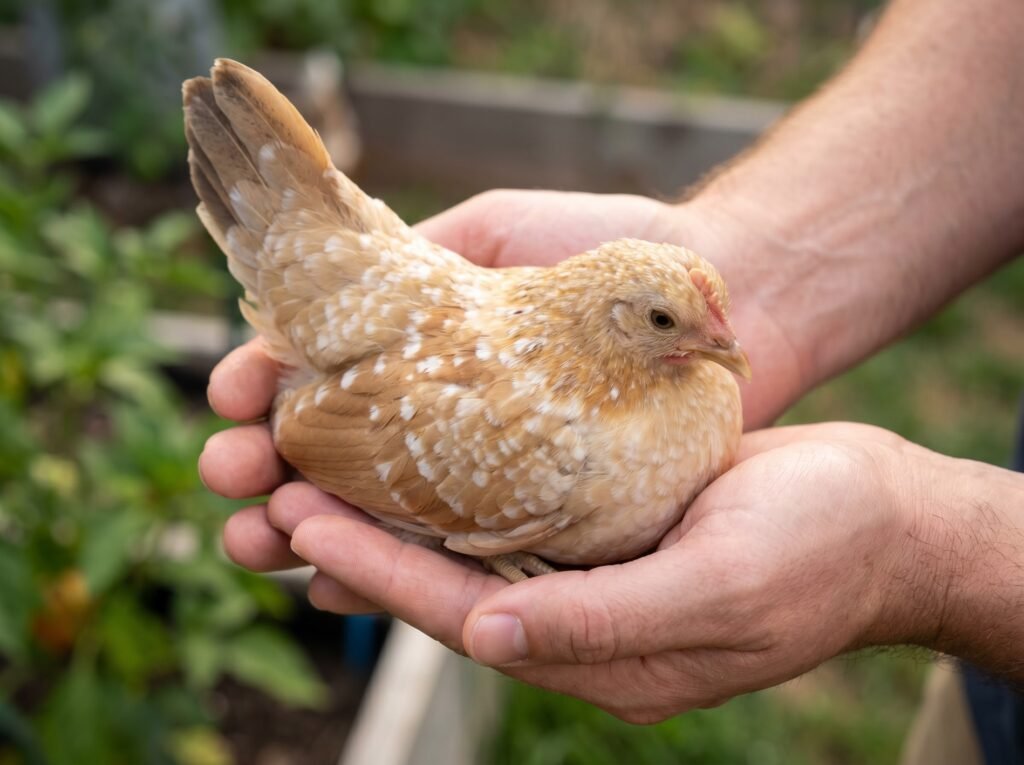
The Serama's show posture suggests attitude, but the actual disposition is the opposite of aggressive. Breed standards specify that birds should be "easily handled and show no aggression" - and in practice that holds. Seramas are among the most people-tolerant chickens kept anywhere, with hens and roosters alike showing little fear of hands or unfamiliar situations once they are accustomed to regular contact.
This makes them a natural fit for households with children, for urban settings where interaction with neighbors is unavoidable, and for anyone who wants a bird that stays calm during routine health checks. The friendliest chicken breeds overview covers temperament comparisons across the full bantam and standard-size spectrum if you want a broader look before deciding.
Roosters do crow - every day, starting early. The crow is higher-pitched and softer than a standard-size rooster's, carrying noticeably less distance, but it is still a crow. Hens are genuinely quiet by chicken standards. If you are dealing with noise ordinances or skeptical neighbors, a Serama flock of two or three hens is about as low-impact a chicken setup as exists.
Cold tolerance, heat tolerance, and where the Serama fits
Malaysia sits close to the equator. That origin is relevant: Seramas are a tropical breed and they behave like one.
Adult birds in full feather can handle moderate cool, but chicks are meaningfully more vulnerable to cold than chicks of most other breeds because of their tiny body mass. A draft hitting a Serama chick that would barely affect a Rhode Island Red chick is a real risk. Most keepers in USDA zones below 7 bring Seramas into a heated space once nighttime temperatures consistently drop below 40°F, and providing a draft-free, dry, insulated coop is non-negotiable regardless of climate zone.
Heat tolerance is solid. The breed's tropical background means it handles warm summers without the labored breathing and reduced production that breeds less adapted to heat - such as those with dense plumage - sometimes show in the same conditions, as long as fresh water and shade are available.
If cold hardiness is a priority for your setup, the cold-hardy chicken breeds guide covers the breeds that genuinely thrive without supplemental heat in northern winters - a different set of animals entirely from the Serama.
Housing and daily care
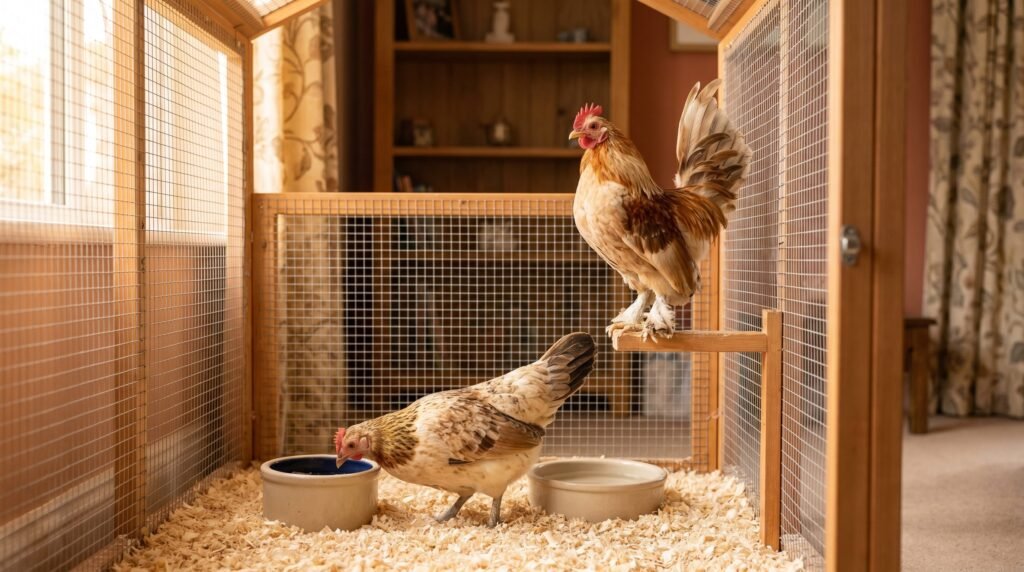
The Serama's small body size is a genuine advantage when it comes to space. A pair or small trio can live comfortably in a space roughly 24 by 18 inches, which breed references commonly cite as adequate for a pair or trio kept indoors. For outdoor coops, plan on about 2 square feet of interior space per bird and 4 square feet per bird in an attached run. Those numbers are considerably below the 3-4 square feet and 8-10 square feet per bird that standard-size chickens need.
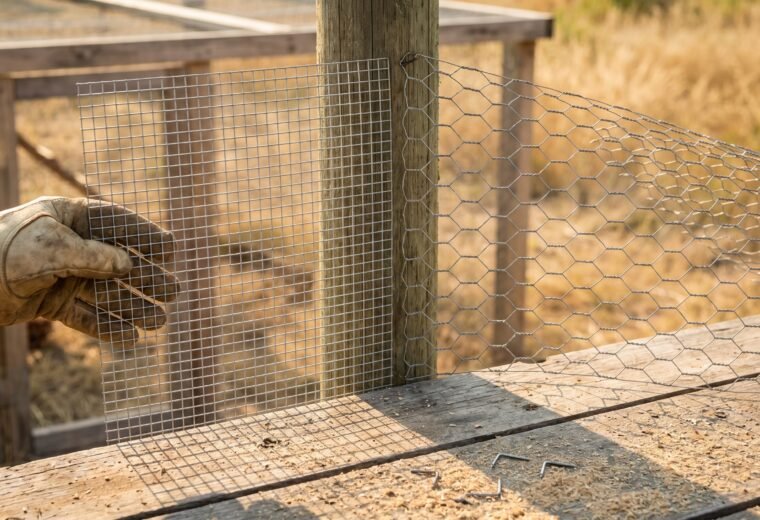
Seramas are strong flyers, more so than most bantams, so any run needs a full cover. Mesh size matters: use hardware cloth with openings no larger than half an inch - the fine mesh that stops weasels and rats matters even more for a bird this small. For a comparison of mesh options, hardware cloth vs. chicken wire breaks down the practical differences and predator risks of each.
Feed consumption is one of the most appealing numbers in Serama keeping. Each bird eats roughly one pound of feed per month, about a quarter of what a standard-size hen requires. One critical point: Seramas cannot manage standard pellets. The pellets are physically too large for smaller Class A birds and awkward even for Class B birds. Feed crumbles or mash at all life stages, switching from chick starter (about 18-20% protein) to a grower formula around six to eight weeks, then to a layer crumble with appropriate calcium once hens begin laying.
Oyster shell offered free-choice keeps eggshells solid once laying starts. Grit is necessary if birds are not free-ranging on natural ground. Keep treats well under 10% of the daily diet - the Serama's tiny crop fills fast.
Seramas were originally developed in Malaysia as household cage birds, and some keepers do maintain small groups indoors. If you go that route, respiratory dust from feathers and bedding is a real concern in enclosed spaces: bird keeper's lung is a documented risk, and ammonia from droppings accumulates faster in a small indoor room than in a coop with ventilation. Practical mitigation: clean the enclosure at least twice a week, run a small HEPA air purifier in the room, and wear a dust mask during bedding changes. Outdoor or semi-outdoor setups with a warm retreat for cold nights are generally easier to manage long-term and sidestep the air-quality issue almost entirely.
Do not house Seramas with significantly larger breeds. A Rhode Island Red or a Brahma will unintentionally injure a bird this size during normal flock interactions. Within the bantam world, though, they coexist well. The bantam chicken breeds guide covers compatible size-matched options if you are building a mixed small-bird flock.
Is the Serama right for you?
Few birds check as many boxes for urban and small-space keepers. Low feed cost, minimal coop footprint, genuine tameness, quiet hens, and a respectable lifespan for a bantam make the Serama compelling on paper - and the reality holds up for most people who try them.
The caveats are specific. Seramas need warmth. They are not beginner birds if you live in a cold climate and are not prepared to heat their space. Their eggs are small enough that a flock of three hens produces about two large-egg equivalents per day at peak - satisfying for a single-person household, less so for a family cooking regularly. And if you plan to breed them, the lethal-gene dynamic in short-legged lines adds a layer of genetic management that most keepers of production breeds never have to think about.
Sourcing deserves its own note. Large national hatcheries sometimes list Seramas, but this breed ships poorly: even with express delivery, transit stress produces higher losses than with most bantams because of the birds' very small body mass. For Class A birds in particular, many commercial hatcheries do not carry them at all. The more reliable route is through the Serama Council of North America breeder directory (scnaonline.org), local bantam club shows, or poultry swap meets where you can inspect birds in person. Buying local or from a specialist breeder eliminates shipping stress entirely and gives you a chance to assess posture, temperament, and health before you commit.
For a broader view of how the Serama compares across temperament, hardiness, and egg output against other bantam and small-flock breeds, the chicken breeds directory is a useful starting point.
| Factor | Serama | Notes |
|---|---|---|
| Space (coop) | ~2 sq ft/bird indoors | Works in apartments or city setups; cover the run - they fly |
| Space (run) | ~4 sq ft/bird | Must be fully enclosed; weasel-stopping half-inch mesh required |
| Feed cost | ~1 lb/month/bird | Must use crumbles or mash - pellets are too large for Class A birds |
| Eggs | Up to 4/week, tiny | Five eggs equal one large; not suitable as a primary egg source for cooking |
| Egg color | White to deep brown | Cream most common; color varies by individual hen |
| Temperament | Docile, people-friendly | One of the calmest breeds; suits children and therapy-animal roles |
| Cold hardiness | Poor; needs warmth below 40°F | Requires draft-free, heated space in northern winters; not a cold-climate breed |
| Heat tolerance | Good (tropical origin) | Still needs shade and fresh water; watch for heat stress above 95°F |
| Broodiness | Frequent, devoted | Great broody mothers; plan for laying pauses of 3-4 weeks per brood |
| Noise | Hens quiet; rooster softer than standard | Rooster still crows daily before sunrise - only the volume advantage is real |
| Lifespan | Typical bantam range; not officially verified | Long-term pet; expect multi-year commitment |
| Mixed flock | Bantam companions only | Standard breeds will injure them during normal flock interactions |