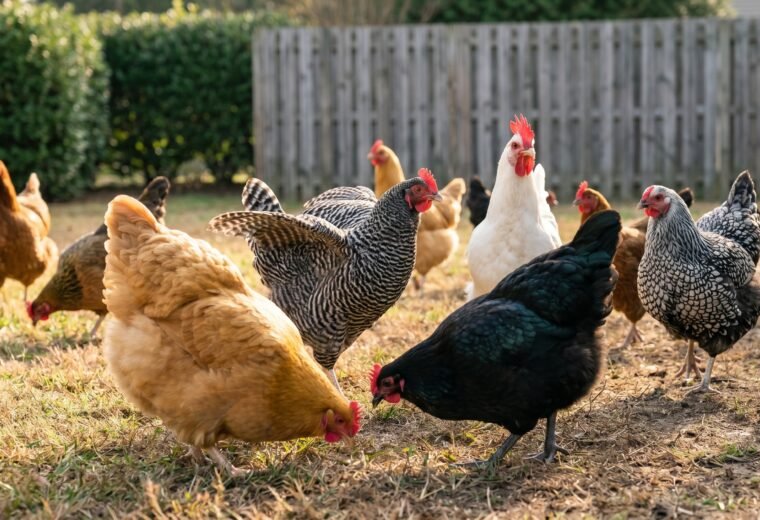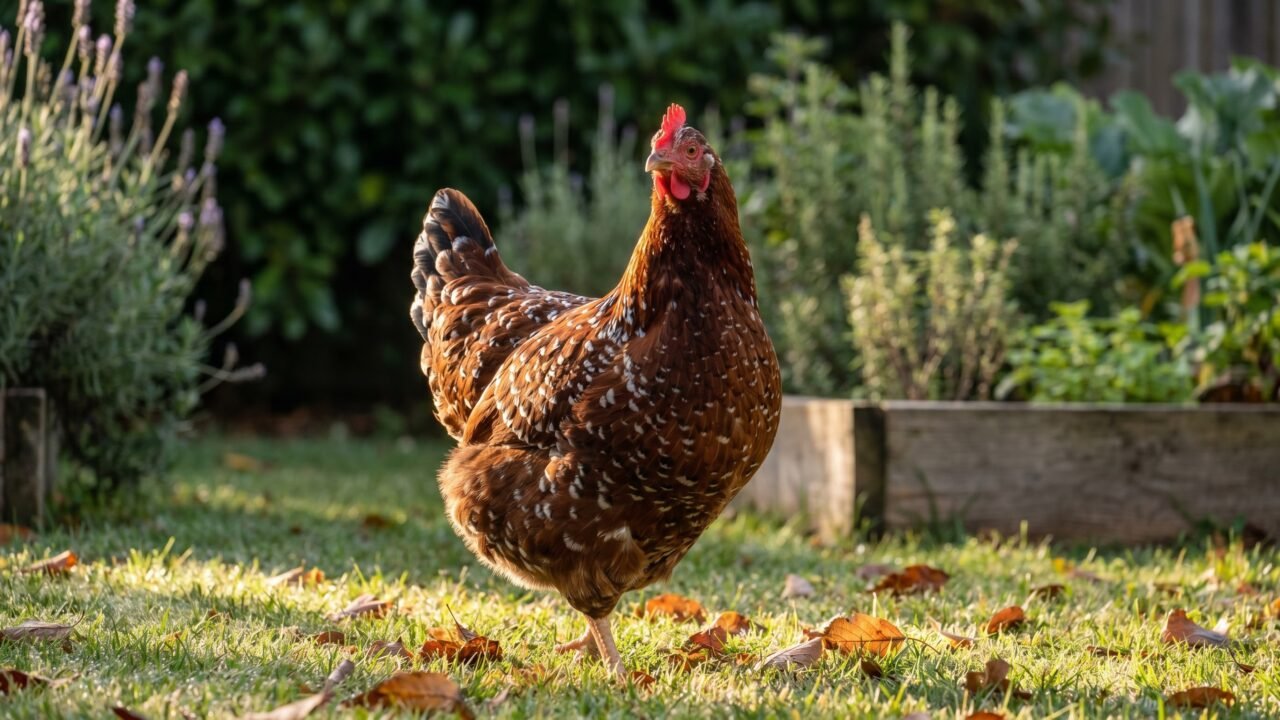
Around 200 to 240 light-brown eggs a year, a personality that makes even nervous first-timers feel confident, and a plumage pattern that gets more striking every time the bird molts. That's the Speckled Sussex in a sentence. This old English dual-purpose breed has been earning its keep in backyard flocks for well over a century, and the reasons are practical as much as they are aesthetic.
What follows covers everything you need to decide whether a Speckled Sussex belongs in your flock: origin and history, weight and conformation, egg production, temperament, climate tolerance, broodiness, day-to-day care, and who this breed suits best.
Origin and history
The Sussex chicken comes from the county of the same name in south-east England, a region that supplied London's markets with table birds for generations. The breed's oldest records are impressively deep: Sussex-type fowl appeared at the world's first poultry exhibition in 1845, and some historians trace the working stock even further back. The breed standard was formalized in 1902, and the American Poultry Association accepted the Speckled variety in 1914 under the English Class - the same year it recognized the Red Sussex.
Eight color varieties exist worldwide (brown, buff, coronation, light, red, silver, speckled, and white), but the Speckled is both the oldest and the most immediately recognizable. Bantam Speckled Sussex were admitted to the Standard of Perfection in 1960, though bantam specimens remain relatively uncommon at most hatcheries.
Appearance and size
A fully grown Speckled Sussex hen tips the scale at roughly 7 lbs; a rooster at 9 lbs. Pullets reach about 6 lbs and cockerels about 7.5 lbs at maturity. The body is broad, deep, and rectangular - classic dual-purpose conformation with muscular thighs and a wide breast that reflects the breed's table-bird roots.
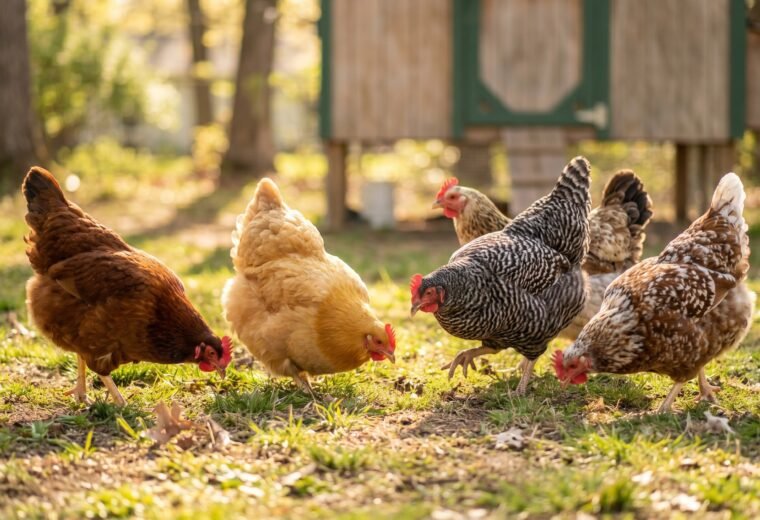
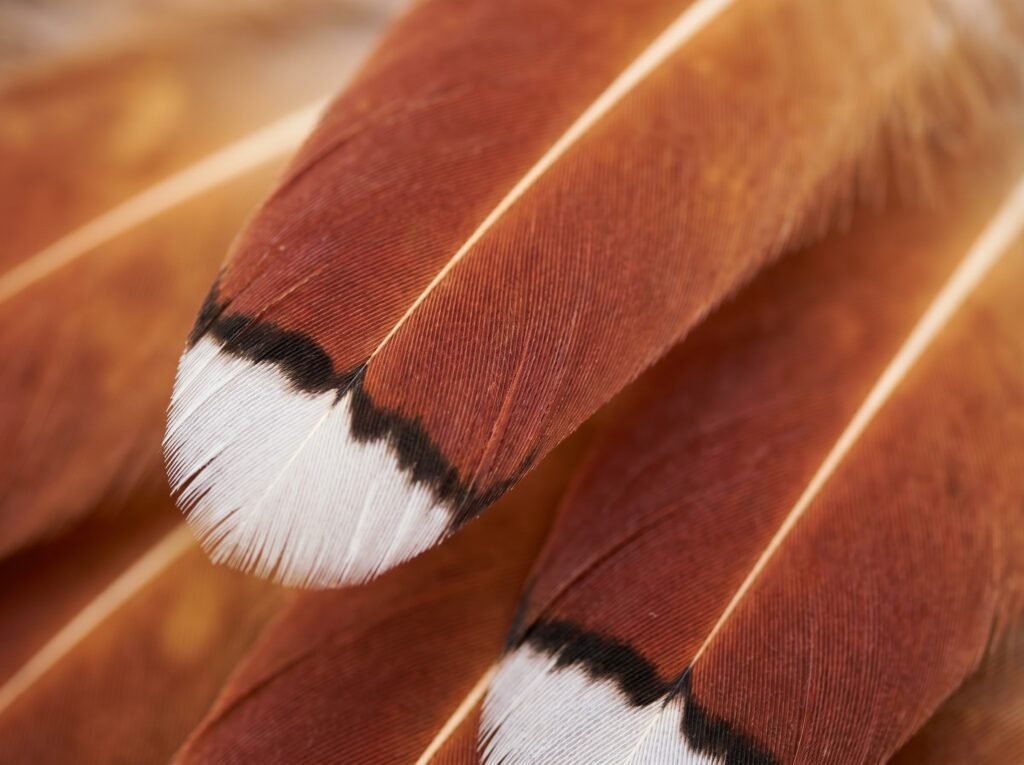
The plumage is the real showstopper. Each feather carries a rich reddish-brown base, a crisp V-shaped white tip, and a narrow black border between the two. The combined effect is a warm, speckled pattern of mahogany, black, and white that reads differently in every light angle. What makes the Speckled Sussex genuinely unusual among breeds is this: the pattern improves with age. After each annual fall molt, birds come back with more white tips, so a four-year-old hen is more colorful than a pullet. Older birds are worth keeping around on looks alone.
The comb is a single, upright type with five points, sitting on a red face with matching wattles and earlobes. The legs are clean and white.
Egg production and egg qualities
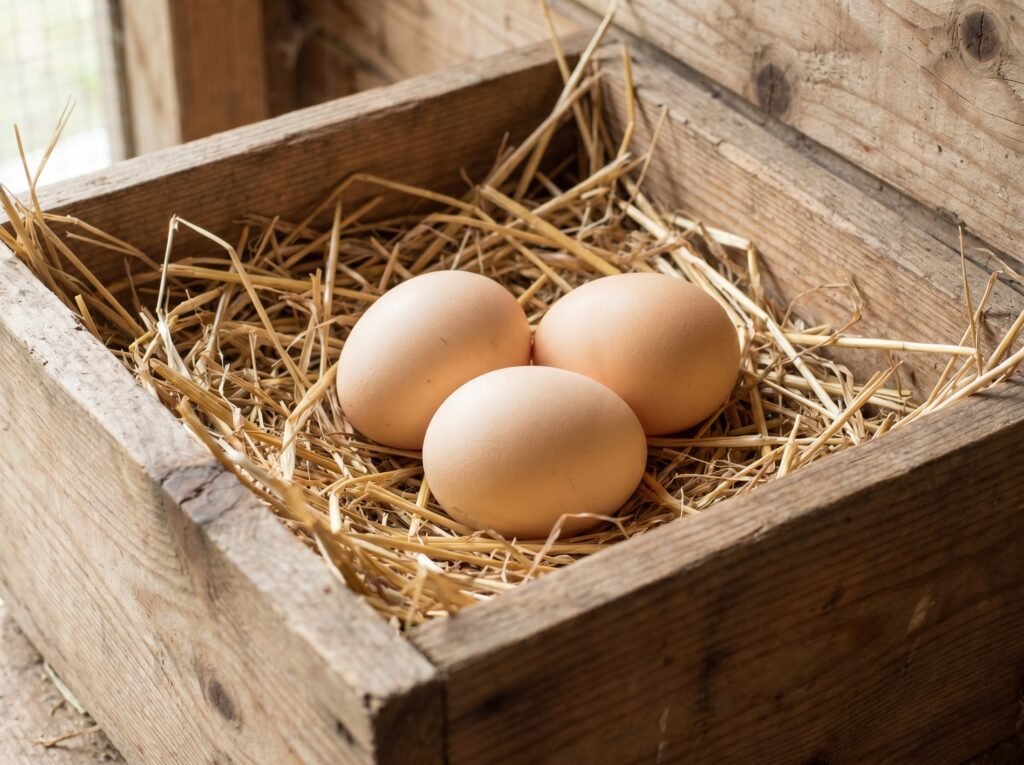
Speckled Sussex hens produce around 200-240 light-brown (sometimes described as cream or tinted) eggs per year, according to hatchery breed data. Hoover's Hatchery lists 240 as a typical annual tally; Cackle Hatchery's product page gives a range of 200-240 and notes that actual numbers vary with age, daylight hours, feed quality, and seasonal weather. Eggs are large.
That 200-240 range puts the Speckled Sussex comfortably in the productive-but-not-extreme tier. She won't match a White Leghorn's 280-320, but she'll stay reliably ahead of breeds primarily kept for ornament. For a household of four that wants consistent eggs without managing a commercial-scale flock, a group of five Speckled Sussex hens would realistically deliver 1,000-1,200 eggs over a laying year - a steady, predictable supply.
Egg color holds light brown to cream through the season. Egg size is large. Shell texture is smooth and firm.
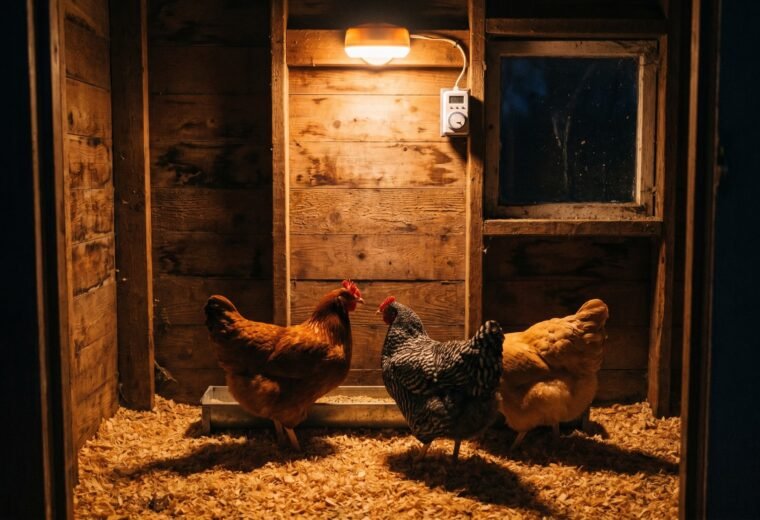
Like all chickens, Speckled Sussex hens lay one egg roughly every 24-26 hours during their productive cycle. Laying typically begins around 20 weeks of age. Annual molt in the fall reduces or pauses production for 8-12 weeks, after which hens resume laying. For strategies on keeping egg counts up through shorter days, our guide on supplemental light for laying covers the options and tradeoffs honestly.
Temperament and flock dynamics
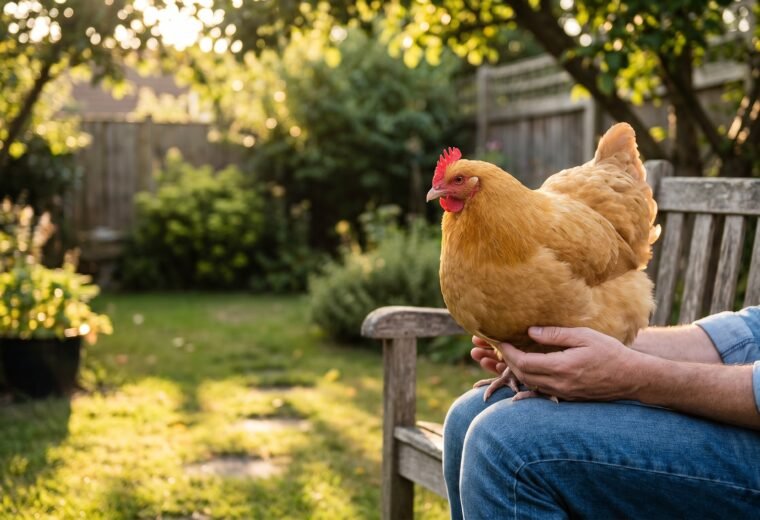
Cackle Hatchery describes the Speckled Sussex as "Active/Curious" - and that's a precise read. These birds come over to investigate anything new in the yard, follow people around during chores, and settle into handling without the flapping protest you get from flightier breeds. Hoover's calls them "Docile, Friendly, Gentle." Owners consistently report hens that squat for petting and roosters that stay manageable even as adults.
That combination of calm disposition and genuine curiosity makes the Speckled Sussex a breed that works well in mixed flocks. They hold their own in a pecking order without being bullies, and they typically integrate with new birds more smoothly than high-strung production layers. If you're weighing breeds against each other for a first flock, this one lands near the top of the best chicken breeds for beginners because the temperament removes a lot of the stress that other breeds can introduce.
They are also among the friendliest chicken breeds for families with children, particularly when hens are handled from a young age. Neither flighty nor aggressive, they tolerate being picked up better than most utility breeds.
Cold and heat tolerance
Hoover's Hatchery rates the Speckled Sussex as "Cold and Heat Hardy" - an accurate summary. Their dense feathering gives real insulation through winter, and breeders widely report that well-ventilated coops keep these birds comfortable at sub-zero temperatures without supplemental heat.
One caveat deserves attention: the single comb. Extension.org's frostbite guidance is clear that "the incidence of frostbite in chickens with the smaller comb types, such as pea and strawberry, is much less" - which means a single-combed breed like the Speckled Sussex carries a higher comb-frostbite risk than, say, a Dominique or Brahma. The same source notes that "for mild freezing, petroleum jelly helps, but coop management is the real key." In practical terms: keep the coop dry and well-ventilated (moisture is the primary frostbite driver, not temperature alone), use flat 2x4 roosts wide-side-up so birds can sit on their feet, and apply a thin layer of petroleum jelly to combs and wattles when overnight lows stay below 15-20°F for multiple nights. Roosters, with their larger combs, face higher risk than hens.
Heat tolerance is genuinely good for a heavy breed. They handle warm summers without the distress visible in breeds with very heavy feathering around the legs and feet. Standard hot-weather management - shaded run, cool fresh water at all times, good airflow in the coop - keeps them comfortable through summer. If you're in a hot climate, our article on keeping chickens cool in summer has practical steps that apply directly.
Broodiness
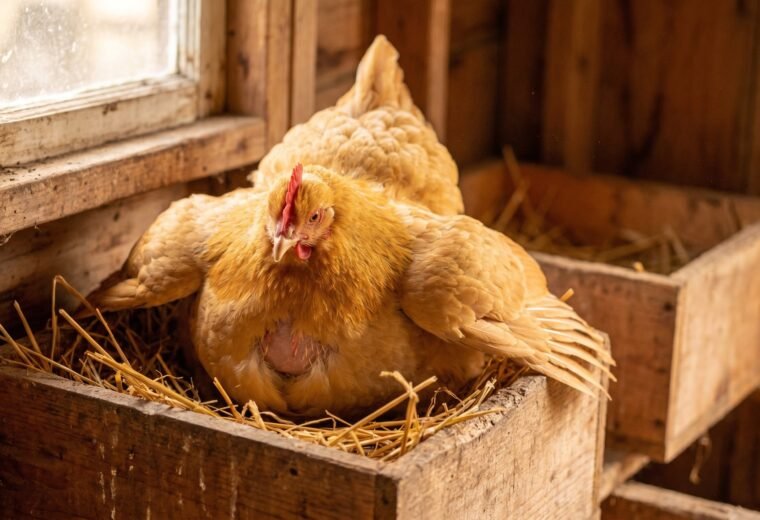
The Speckled Sussex goes broody occasionally - classified as "Setter" by Cackle Hatchery, and "Occasionally" by Hoover's. Cackle's heritage spotlight puts it plainly: "They are apt to set, and they are good mothers." This is neither a strongly broody breed like the Silkie nor a breed that almost never sets like a production Leghorn. Expect one or two hens per season in an average flock to claim a nest box and sit determinedly.
Whether that's a feature or a nuisance depends entirely on your goals. If you want fertilized eggs hatched naturally, a Speckled Sussex hen is a capable mother who will sit reliably and brood chicks attentively. If you want every hen laying through spring and summer without interruption, you'll need to break broodiness when it appears. Our full guide on broody hen: what to do covers both paths.
Foraging and confinement
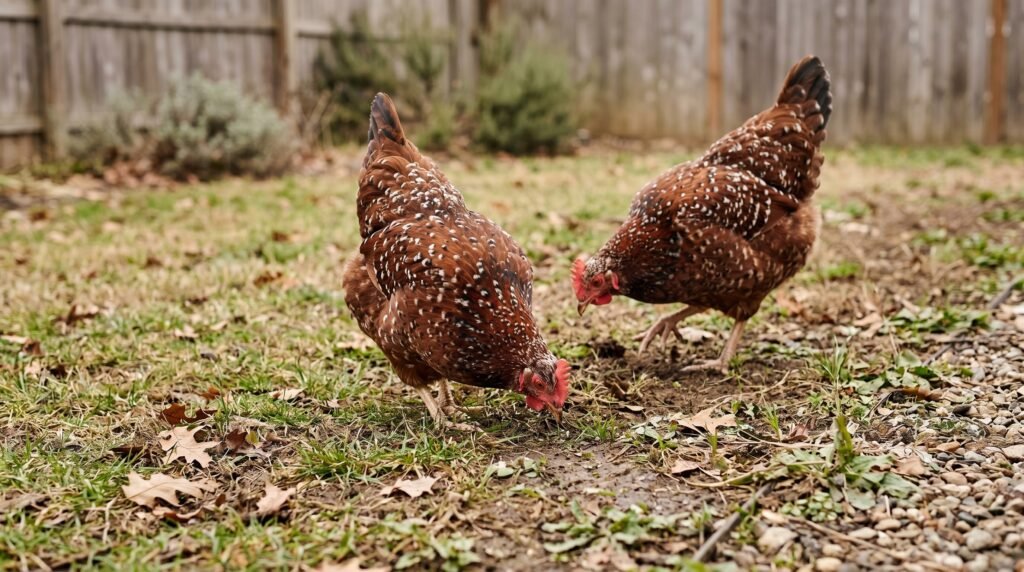
The Speckled Sussex is an active, capable forager. Cackle Hatchery notes they "do well in confinement, but are also great foragers" - and that combination is genuinely useful. Birds that forage effectively supplement their diet with insects, weed seeds, and green matter, which reduces feed costs and keeps them occupied. Their speckled coloring also provides reasonable camouflage from aerial predators, which matters on a free-range setup.
That said, they adapt to a confined run without the restlessness or feather-picking that afflicts breeds with strong free-range drives. A covered, enriched run with enough space (extension.org recommends a minimum of 10 square feet per bird outdoors) suits them well. If your setup leans toward confinement, enrich the space with perches at different heights, a proper dust bath area, and foraging opportunities like scratch scattered in deep litter.
Housing and care essentials
At 7-9 lbs, the Speckled Sussex is a moderately large bird. Use the extension.org minimums as your floor, not your target: 3-4 square feet of coop floor space per bird indoors, and 10 square feet per bird in the run. Roost bars should sit 18-24 inches off the floor, at least 8-10 linear inches per bird, and flat 2x4s wide-side-up are the right call (feet stay covered and warm). Nest boxes run one per every three to four hens, sized at roughly 12x12 inches.
Feed a quality 16% layer ration once hens are laying, and keep oyster shell free-choice so they can self-regulate calcium intake for strong shells. Grit is necessary if birds aren't ranging on natural ground. Keep treats to no more than 10% of total diet - the Speckled Sussex is a good eater and will pack on weight if given too many calorie-dense treats like scratch or corn.
Wet litter is the biggest husbandry mistake in any coop, and it's especially damaging in winter when it compounds frostbite risk and respiratory problems. Deep pine shavings (4-6 inches minimum), checked regularly, kept genuinely dry. Cedar shavings are not safe for poultry - the aromatic oils irritate respiratory tissue. If you're using deep litter method, our deep litter method guide has the management steps that make it work rather than just get wet and sour.
Quarantine any new birds for two to four weeks before introducing them to your existing flock - standard biosecurity that prevents importing disease regardless of breed. Annual deworming checks and regular mite inspections (run your fingers through breast feathers and check under wing bases) keep the flock healthy. For illness or injury, contact a poultry vet rather than self-diagnosing.
Who the Speckled Sussex suits best
This breed fits a wide range of keepers, which is one reason it has stayed popular across more than a century of backyard poultry keeping. The table below maps the key traits against keeper situations to help you decide quickly.
| Keeper situation | Speckled Sussex fit | Note |
|---|---|---|
| First-time chicken keeper | Excellent | Calm, forgiving temperament reduces beginner mistakes' consequences |
| Families with young children | Excellent | Tolerates handling; not prone to aggressive roosters |
| Cold climate (zones 3-5) | Very good | Single comb needs attention below ~15°F; dry coop is essential |
| Hot climate (zones 8-10) | Good | Handles heat better than heavily feathered breeds; shade and water critical |
| Mixed flock with other breeds | Very good | Settles into pecking order calmly; not a bully |
| Free-range setup | Excellent | Active forager; camouflage coloring offers some predator cover |
| Confined run only | Good | Adapts well with adequate space and enrichment |
| Natural hatching desired | Good | Occasional broody hens that make attentive mothers |
| Maximizing egg output | Moderate | 200-240/yr is solid but won't rival a Golden Comet or White Leghorn |
| Exhibition / showing | Good | APA-recognized since 1914; plumage improves with age, rewarding patient exhibitors |
Where the breed falls short of a perfect match: if your primary goal is maximum egg count per bird, production-bred hybrids will outperform a Speckled Sussex by 50-80 eggs annually. And if you need zero broodiness - say, a laying flock where every hen must produce without interruption from spring through summer - occasional setting hens require management.
For most backyard keepers, though, the tradeoffs are minor and the upsides are real. The Speckled Sussex remains one of the more complete dual-purpose breeds available, combining looks, personality, reliable egg production, and adaptability in a package that doesn't demand expert-level management. Our full chicken breed guide covers over 30 breeds if you want to compare directly before deciding.