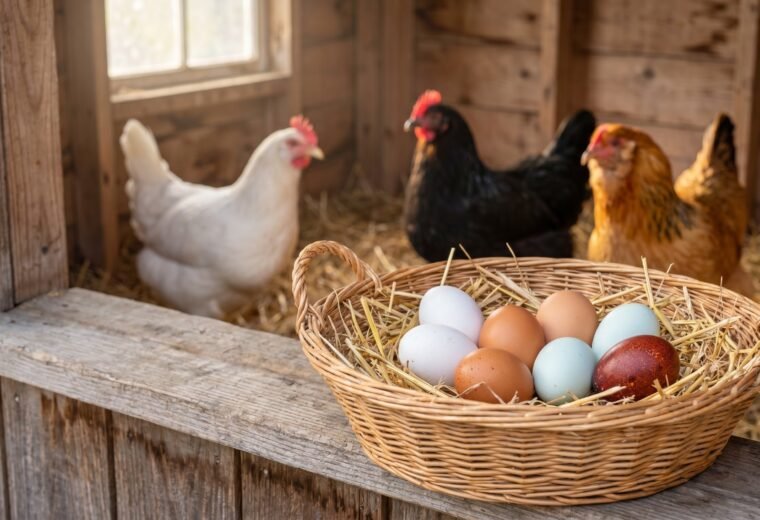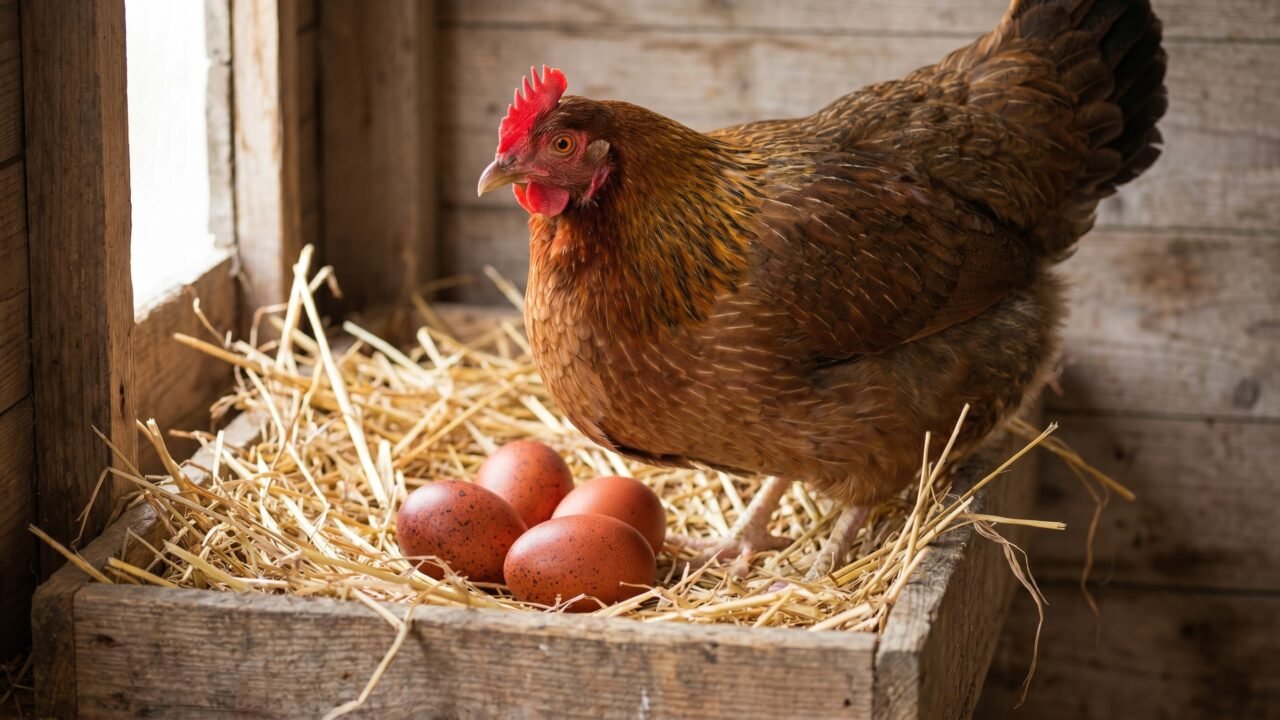
Pick up a Welsummer egg and you already know why keepers chase this breed. The shell is a deep, warm terracotta - often freckled with darker specks - unlike anything a Leghorn or Rhode Island Red ever drops. Behind that dramatic egg sits a bird that is smart, active, and genuinely at home on open ground. Hens lay around 160-180+ of those eggs per year, handle both cold snaps and summer heat without much fussing, and slot into a mixed flock without drama.
They are not a lap bird, and production won't rival a dedicated layer. For keepers who want beauty in the nest box plus an alert, self-sufficient forager rather than a docile pet, a Welsummer is a strong match.
Origin and breed history
The Welsummer takes its name from Welsum, a small village in the eastern Netherlands where farmers began refining the breed in the early 1900s. The foundation stock was local mixed-origin farmyard fowl crossed with Rhode Island Reds, Barnevelders, Partridge Leghorns, Cochins, and Wyandottes. By 1922-23 the type had become consistent enough to standardize, and the large fowl was admitted to the American Poultry Association's Standard of Perfection in 1929. The bantam version, developed in England and Germany during the 1930s, received APA recognition in the Continental class in 1991.
You'll often read that Cornelius - the rooster on the Kellogg's Corn Flakes box - is a Welsummer. It's a fun claim, but Kellogg's own historical records department cannot confirm it, the comb points on the mascot don't match the five-pointed APA standard, and Welsummers were uncommon in North America when the campaign launched in the late 1950s. The real origin of the mascot appears to be a Welsh language pun: the Welsh word for rooster, ceilog, sounds like Kellogg. True or not, the association stuck, and it does make a handsome rooster.
Size and physical description
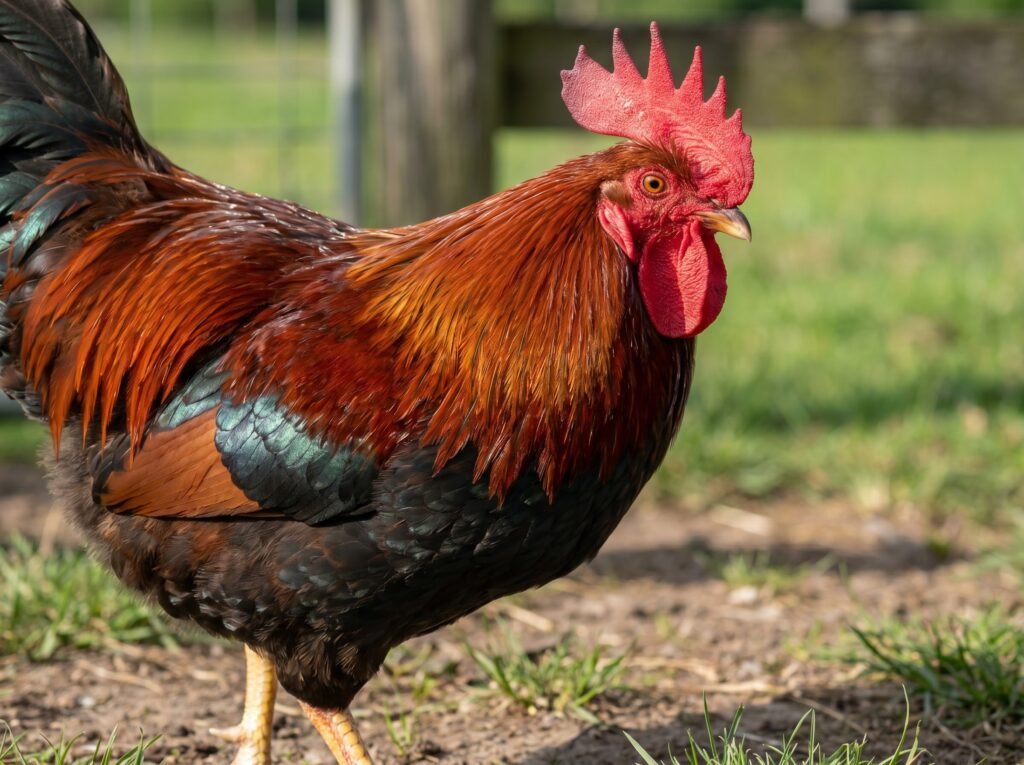
Welsummers are a medium-sized, upright bird with clean yellow legs, a five-pointed single comb, red wattles and earlobes, and a short horn-colored beak. The plumage is one of the breed's genuine selling points: roosters carry a rich mahogany red across the back and cape, a beetle-green gloss on the tail, and a black breast; hens wear a warm partridge pattern of brown, rust, and black that blends beautifully into leaf litter - an asset when free-ranging near cover.
Standard hens run 4.4-5.5 lb (2.0-2.5 kg); roosters reach 6.0-6.6 lb (2.75-3.0 kg). Bantam versions are roughly half that, with roosters topping out around 3 lb and hens near 2.5 lb. Both large fowl and bantam carry the breed's characteristic active build - lean rather than blocky.
| Feature | Large fowl | Bantam |
|---|---|---|
| Hen weight | 4.4-5.5 lb (2.0-2.5 kg) | ~2.5 lb (1.1 kg) |
| Rooster weight | 6.0-6.6 lb (2.75-3.0 kg) | ~3.0 lb (1.4 kg) |
| Eggs per year | 160-180+ | ~180 |
| Egg color | Terracotta dark brown, speckled | Dark brown, speckled |
| Egg size | Large (avg. ~65 g) | Medium (~47 g) |
| Comb type | Single, five-pointed | Single |
| APA class | Continental (1929) | Continental (1991) |
| Broodiness | Rare | Occasional |
| Cold hardiness | Good (single comb needs monitoring) | Good |
| Temperament | Docile, active, vocal | Docile, active |
| Purpose | Dual-purpose (egg-forward) | Egg/ornamental |
Eggs: color, cadence, and what to expect
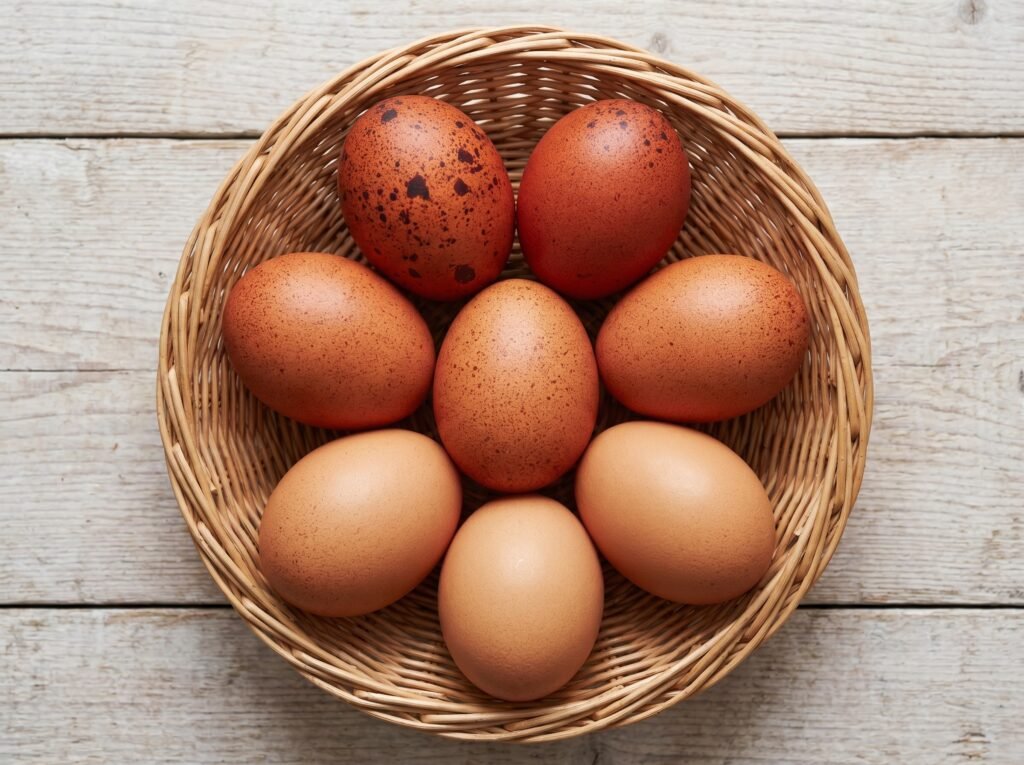
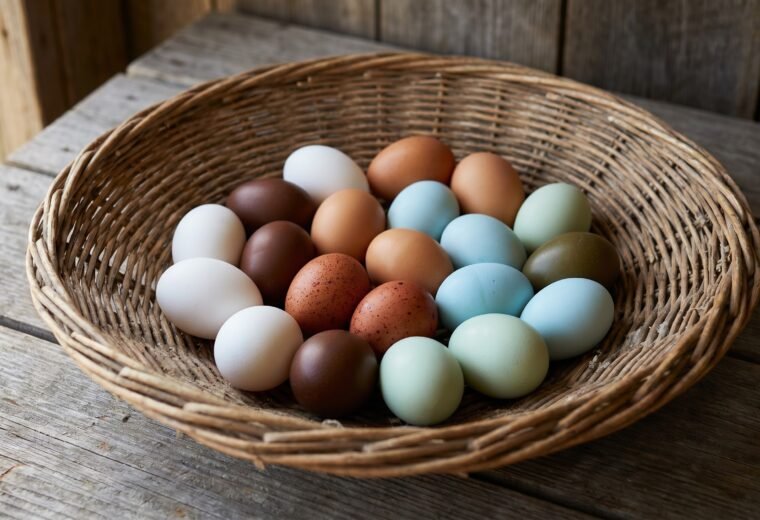
The Welsummer's calling card is its egg. The shell is a warm, reddish-brown - the shade most people describe as terracotta - and many eggs carry a darker speckle pattern that makes each one look slightly unique. That color comes from protoporphyrin, a pigment applied to the outer shell surface during the final stage of formation in the hen's shell gland (Texas A&M AgriLife Today notes that because deposition happens late, the pigment doesn't reach the interior, so the inside of the shell stays white). The speckles are a second, heavier deposit of that same pigment concentrated in spots rather than spread evenly.
Practical note: color intensity fades across a laying season as the hen depletes her pigment store. The first eggs of spring are typically the darkest; by late summer, the base color lightens noticeably, though the speckling tends to hold. After a molt, the next season's first eggs come back deep again. This is normal and is not a sign of nutritional deficiency.
Production from large fowl hens runs roughly 160-180+ eggs per year (Wikipedia's breed entry, citing the breed standard reference, puts standard hens at approximately 160; hatchery-selected lines often trend toward the higher end, though no hatchery source is included in the citations here). Bantam hens are surprisingly productive at around 180 per year. Neither figure rivals a dedicated production layer, but the egg itself has aesthetic value that a plain brown egg does not.
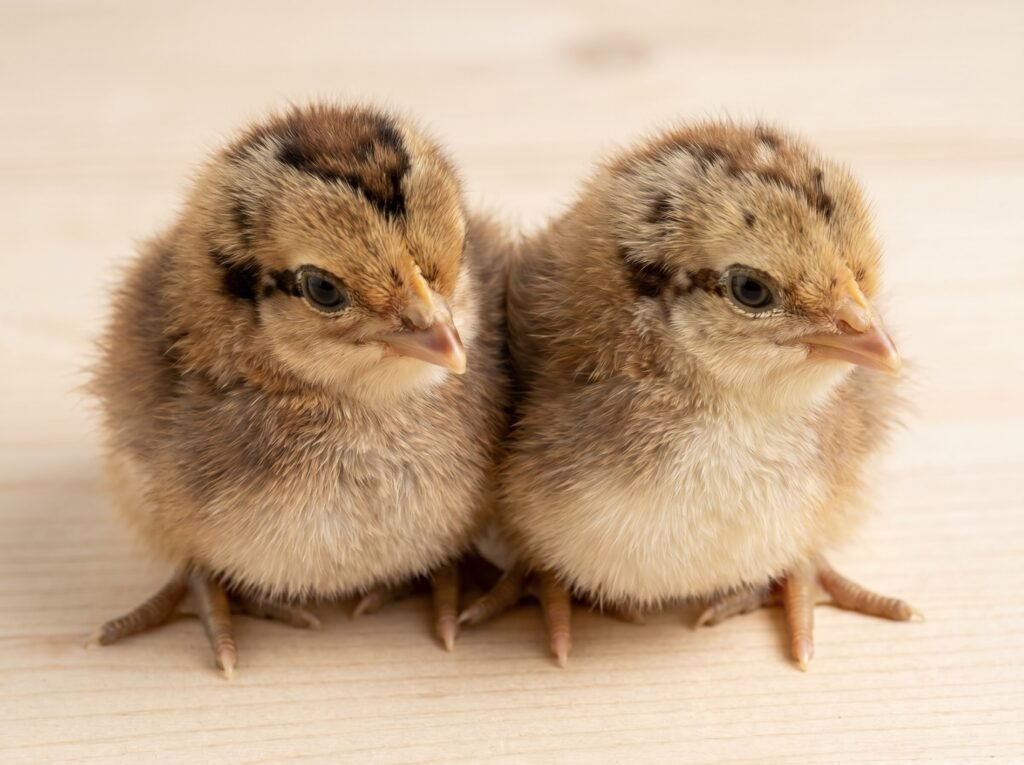
Welsummers are autosexable at hatch with reasonable accuracy. Female chicks carry a sharp, well-defined "eyeliner" stripe extending from beak to ear and a clear V-shaped marking on the head; male chicks show a fuzzier, less defined pattern. Experienced keepers report accuracy in the 85-90% range - useful if you want to select pullets only from an order of straight-run chicks.
If you want to see how Welsummer eggs sit against every other shell color - from white through olive to chocolate - the egg-colors guide has the full comparison.
Temperament and flock behavior
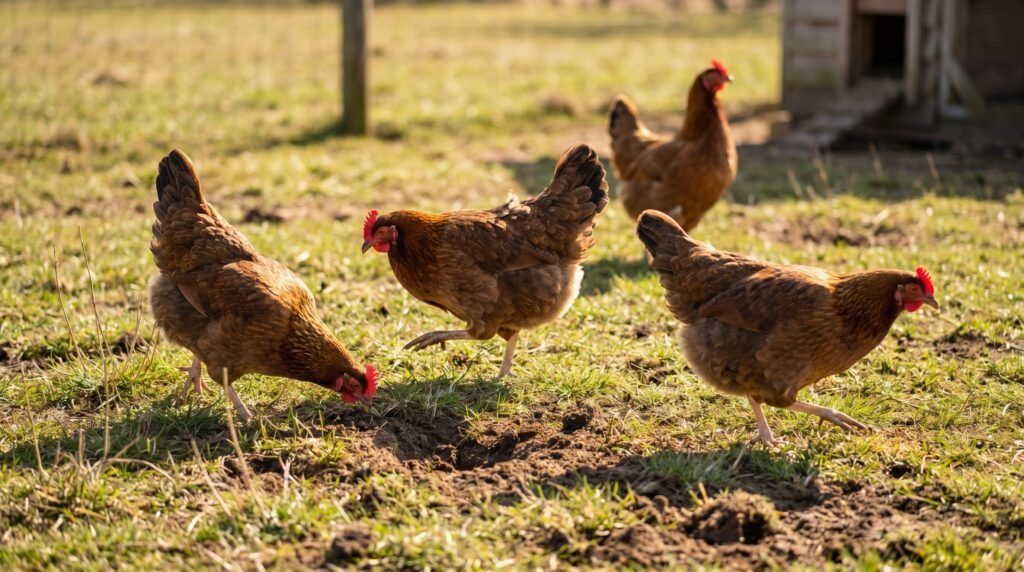
Hatchery descriptions consistently tag Welsummers as docile, active, friendly, and vocal. In practice that translates to a bird that is curious and engaged rather than skittish, tolerates calm handling without panicking, but will not seek out lap time the way a Buff Orpington or Cochin does. They learn quickly that humans mean feed and will come reliably to the hand; they just don't particularly enjoy being picked up and carried around.
The vocal side is real. Both hens and roosters communicate freely, and hens can be loud enough to matter in a close-residential situation. Welsummer roosters are not uniquely aggressive compared to other breeds, but a rooster is a rooster - standard supervision applies with kids.
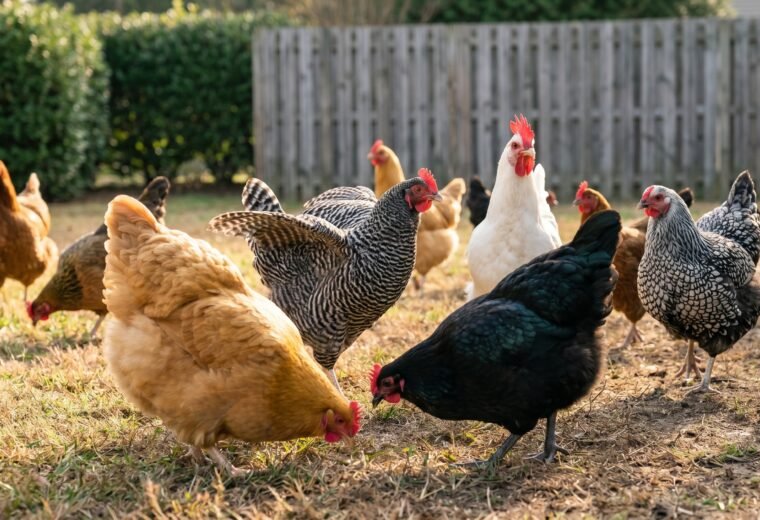
In a mixed flock, Welsummers generally hold a mid-rank position without being bullies. They move confidently and don't invite harassment from larger birds. Their alert, self-sufficient nature makes them one of the easier breeds to integrate into an established group, provided the usual gradual introduction process is followed. See the breed overview for integration tips that apply across types.
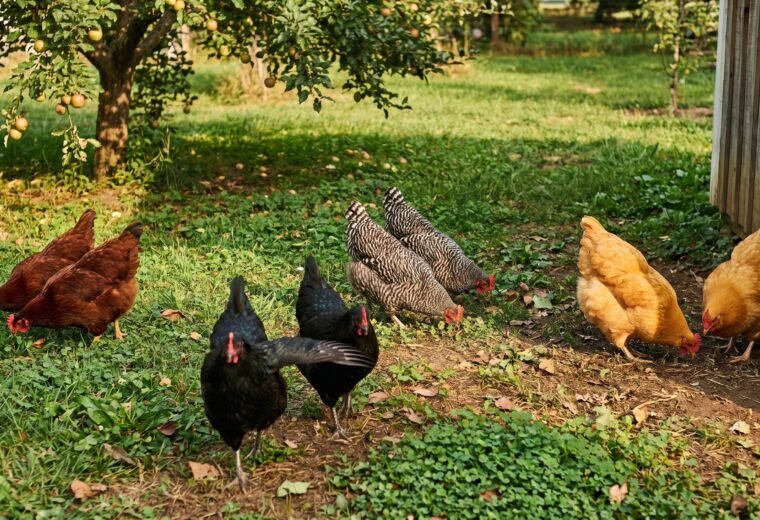
Foraging drive is a genuine breed trait. Hoover's Hatchery describes the Welsummer as "more athletic, taking to foraging and free ranging more often than other breeds," and that tracks with the lean, upright body type - these birds cover ground efficiently. A flock of ten Welsummers given open range will move across a lot of yard in a day, which keeps pest insect pressure down and reduces feed costs. Confinement is manageable with enough run space, but a cramped setup is a poor match.
Cold hardiness, heat tolerance, and climate considerations
Welsummers carry a reputation as a genuinely two-way hardy bird - tolerable in winter, manageable in summer - which reflects well on their Dutch farmyard origins. A few specifics worth knowing:
Cold weather: The breed's constitution is solid. University of Minnesota Extension notes that the main causes of frostbite are "high moisture and cold temperatures," and the single comb is the Welsummer's one vulnerability here - five upright points present more surface area than a rose or pea comb. In climates that see sustained below-freezing nights, apply petroleum jelly to the comb and wattles before cold sets in (UMN Extension recommends this specifically to "help insulate them and prevent frostbite damage"). Keep the coop dry and well-ventilated; moisture is far more dangerous than raw cold, and a damp coop with a closed vent is worse than an open-air, dry one at the same temperature.
Hot weather: Dark feathering absorbs heat, so Welsummers in a hot climate need shade positioned where it actually does something - the Poultry Extension recommends locating it at the midpoint or west end of the run to provide cover during the hottest part of the day, typically midday through afternoon. Keep multiple water stations in shaded spots, add ice blocks to water during heat spikes, and ensure the coop has enough ventilation to flush hot air. A fan for air circulation in enclosed spaces helps considerably during humidity-heat combinations. Welsummers handle warm weather well when those basics are in place; they struggle when shade and water are inadequate, as any dark-feathered bird does.
Winter laying behavior is worth noting separately: like most breeds, Welsummers slow down or pause in short-day months without supplemental light. Adding 14-16 hours of total light per day (natural plus artificial) keeps production more consistent year-round. Winter laying covers the light-management details.
Broodiness and incubation
Large fowl Welsummer hens rarely go broody, which is either an asset or a liability depending on what you want. If you're keeping them purely as layers, a hen that sits on a clutch for three weeks and stops laying is a production gap you don't need. If you want natural hatching, you'll need another breed to do the sitting - or an incubator.
Bantam Welsummers are occasionally broody, and their maternal instinct is stronger than the standard birds'. A bantam Welsummer hen may hatch a small number of standard Welsummer eggs, though her coverage area limits clutch size to 4-6 eggs at most - body coverage, not instinct, is the constraint here.
If you're incubating Welsummer eggs yourself, the standard incubation parameters apply: forced-air incubator at 99.5°F (still-air at approximately 102°F), humidity approximately 45-55% for days 1-17, rising to 65% or above at lockdown on day 18, turning 4-6 times daily, hatch at day 21 (Penn State Extension's hatching guide uses this range and notes that higher humidity during incubation restricts air-cell development). Welsummer eggs' dark, opaque shells make candling slightly harder than with a white-shelled egg - a bright candler pointed at the air cell end is the most reliable angle.
Care, housing, and feeding
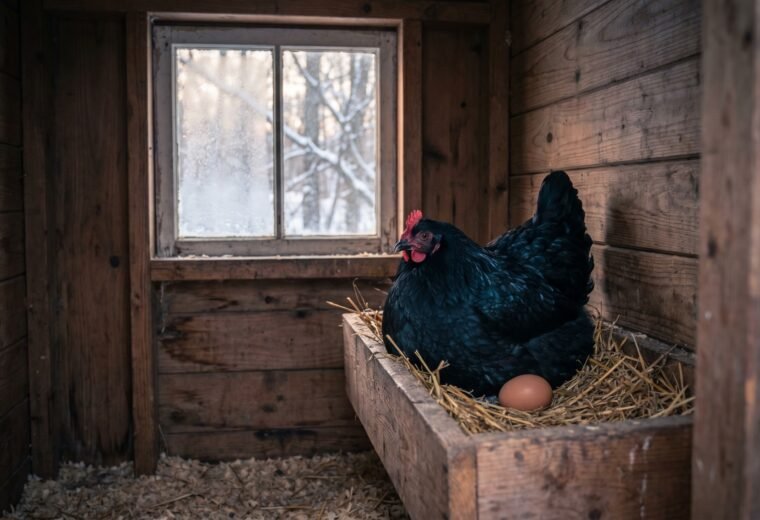
Welsummers are straightforward to keep. Standard housing rules apply: 3-4 sq ft of coop floor space per bird indoors, 8-10 sq ft per bird in the run, and roost bars providing at least 8-10 inches of linear space per bird (a flat 2x4 wide-side-up is the practical bar width, especially in cold climates where birds flatten their feet over the bar for warmth). Place roost bars higher than the nest boxes or birds will sleep in the nest boxes and foul them. One nest box per 3-4 hens at 12x12 inches is the standard ratio; Welsummers are not particularly large, so standard-size boxes work fine.
Ventilation is non-negotiable. A coop that retains moisture is the single largest winter health risk. Poultry extension guidance pegs the minimum at roughly 1 sq ft of vent area per 10 sq ft of coop floor space, positioned near the top of the coop so warm, moist air exits without creating a cold draft across the roost. Deep litter of 4-12 inches of pine shavings (never cedar - the volatile oils are a respiratory irritant) handles moisture at the floor level and provides some insulation. Wet litter is the enemy: damp bedding breeds pathogens and coccidiosis far faster than cold air does.
On the feed side, laying Welsummer hens need a layer ration with around 16% protein and 3.5-4.5% calcium starting from first egg (typically around 18-24 weeks of age). Free-choice oyster shell on the side keeps calcium available without overloading hens that are not yet laying. Grit is essential for confined birds that don't have access to natural ground material; free-ranging birds usually pick up sufficient grit on their own. Treats and scraps are fine at no more than about 10% of total diet - more than that dilutes protein and calcium intake and softens shells.
Because Welsummers forage actively, a flock of 12 birds given adequate open range will pull a meaningful portion of their diet from insects and plant material, which supplements the protein from their base ration and often improves yolk color. That darker, orange-yolked egg is a direct reflection of carotenoids from pasture access, not a breed-specific trait.
For a detailed dual-purpose breed comparison that puts the Welsummer alongside birds like the Dominique, Speckled Sussex, and Plymouth Rock, our dual-purpose guide lays out the production and meat tradeoffs side by side.
Is the Welsummer right for your flock?
The Welsummer earns its place when you want a productive, good-looking bird that genuinely works for its keep rather than waiting at the feeder. Below is a quick decision frame keyed to the situations where the breed shines versus where another choice serves better.
| Your situation | Welsummer fit | Consider instead |
|---|---|---|
| Open range, suburban or rural property | Excellent - foraging drive is genuine | - |
| Cold climate (Zone 4-6 winters) | Good - manage single comb for frostbite | Rose-comb breeds if comb care is a concern |
| Hot climate (sustained 90°F+) | Adequate - needs reliable shade and water | Leghorn, Naked Neck for heat tolerance |
| Highest possible egg count | Moderate (160-180+/yr) - not the leader | White Leghorn (280-320), Golden Comet (280-320) |
| Distinctive egg color for farm-stand sales | Excellent - terracotta speckled eggs stand out | Marans for darker chocolate; Olive Egger for green |
| Families with young children who want to handle birds | Fair - calm but not cuddly | Buff Orpington, Australorp for docility |
| Natural hatching wanted | Poor - standard hens rarely go broody | Silkie, Cochin as dedicated broodies |
| Mixed-flock integration | Good - mid-rank, non-aggressive | - |
| Small backyard, tight confinement | Fair - needs more space than sedentary breeds | Bantam Welsummer, Bantam Cochin |
For a keeper running ten to fifteen birds on a property with real outdoor space, a few Welsummers in the flock make a lot of sense. Their egg production is solid without being spectacular, their management demands are ordinary, and the visual payoff - both the birds themselves and the basket of speckled terracotta eggs - is genuinely distinctive. Keepers chasing maximum numbers per day should look at production breeds; keepers who want that plus beauty in the nest box will find the Welsummer earns its scratch.