The most common killers of chickens at night are raccoons, foxes, coyotes, weasels, minks, opossums, owls, dogs, and rats - each leaving a different set of clues at the scene. You close the coop at dusk and open it at dawn to find carnage. The first question is always the same: what was it? The answer is already written at the scene. Each night predator leaves a signature, and reading those clues correctly tells you exactly what to fix before the next attack.
Most losses happen because the wrong fix gets applied. A keeper who assumes raccoon and padlocks the door may still lose birds to a weasel that slips through a tiny gap in the wire. Getting the forensics right first is not a detective hobby. It is the fastest path to an actual solution.
Read the scene before you do anything else
Walk the area in daylight. Bring your phone and photograph everything before disturbances. You are looking for five types of evidence: the state of the remaining carcass, where it is, what is missing, the condition of the coop itself, and any tracks or droppings nearby. The table below distills what the major night predators leave behind, drawn from extension research at Virginia Tech, the University of Maryland, and the eXtension Foundation.
| Predator | Carcass / remains | Entry method | Other clues |
|---|---|---|---|
| Raccoon | Head missing or pulled through wire; breasts and entrails eaten; scattered feathers | Reaches through wire or forces unlatched doors | Latrines near feeding site; overturned feeders; twisted wire |
| Fox | Whole bird gone; scattered feathers only in the run or yard | Digs under fencing or squeezes through gaps; climbs if fence is short | Minimal blood; no carcass; disturbed soil at fence base |
| Coyote | Whole birds gone; many feathers left; tunnel dug under fence | Digs or forces entry; can clear a 4-foot fence | Larger entry breach than fox; tracks with oval shape and claws |
| Weasel / mink | Multiple birds dead, piled neatly, minimally consumed; back of skull bitten; blood at neck | Enters through gaps as small as 1/4 inch | Many birds killed in one night with little eaten (surplus killing); tiny tooth marks |
| Opossum | One bird at a time; lacerations near the vent (cloaca); partial consumption | Climbs; squeezes through gaps | Slow, opportunistic; rarely breaks hardware |
| Bobcat | One adult bird killed or partially eaten; carcass may be dragged away from the scene; large puncture wounds from canine teeth; claw-drag marks on ground nearby | Clears 4-foot fences easily; may enter an uncovered run from above or push through a gap | Larger kill than opossum or weasel; tracks show a wide rounded paw pad with no claw imprints (retractable claws); more common in rural and suburban fringe areas |
| Great horned owl / barred owl | Head and neck eaten; deep talon punctures on shoulders; pile of plucked feathers | Open roof or uncovered run; swoops at dusk, nighttime, or dawn | Large primary feathers near kill site; kills near perches or roost bars |
| Dog (domestic or feral) | Birds mauled but mostly not eaten; scattered throughout the yard | Breaks through chicken wire or lightweight fencing | Bite wounds all over the body; no single pattern of consumption |
| Rat | Chicks or small bantams killed; bite wounds on legs or hocks | Gnaws wood or squeezes through gaps; burrows under floors | Egg shells, gnaw marks on coop frame, burrows at foundation |
The five forensic clues and what they mean
You rarely have tracks and carcass and entry signs all at once. Most scenes give you two or three clues. Use this breakdown to triangulate.
Head only missing, body left behind
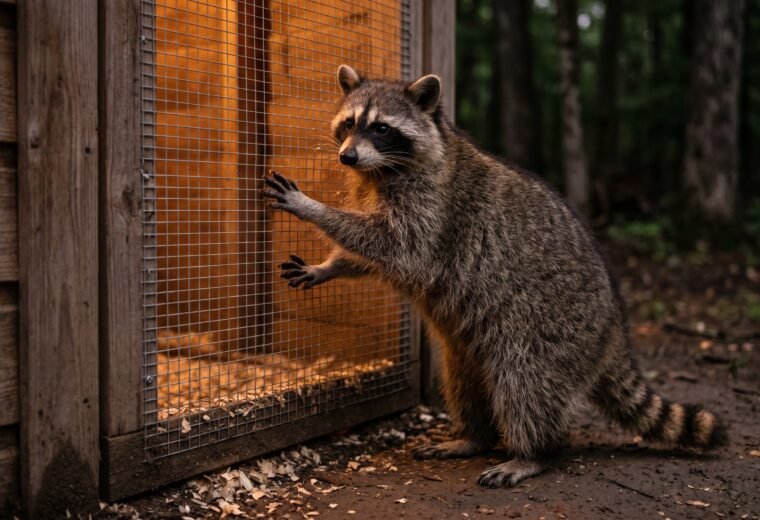
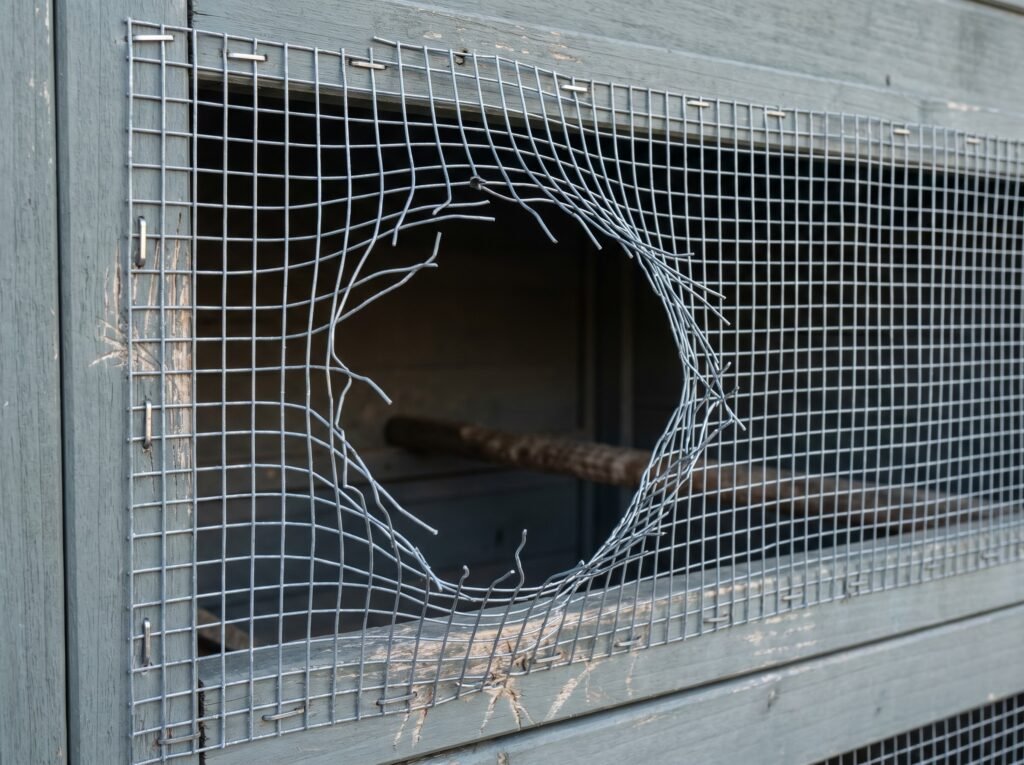
This pattern points most directly to raccoon or a large owl. According to research published through the eXtension Foundation cooperative, raccoons sometimes pull a bird's head through the wires of an enclosure and eat only the head. If the bird is inside the coop with its head gone and the door was closed, check every section of wire within reach of a paw. A bent or stretched section of chicken wire near a roost bar is nearly conclusive. Great horned owls also remove the head and neck and leave the rest, but they do so inside an open run or from a bird sleeping on an exposed perch - not through wire.
Whole bird gone, feathers scattered
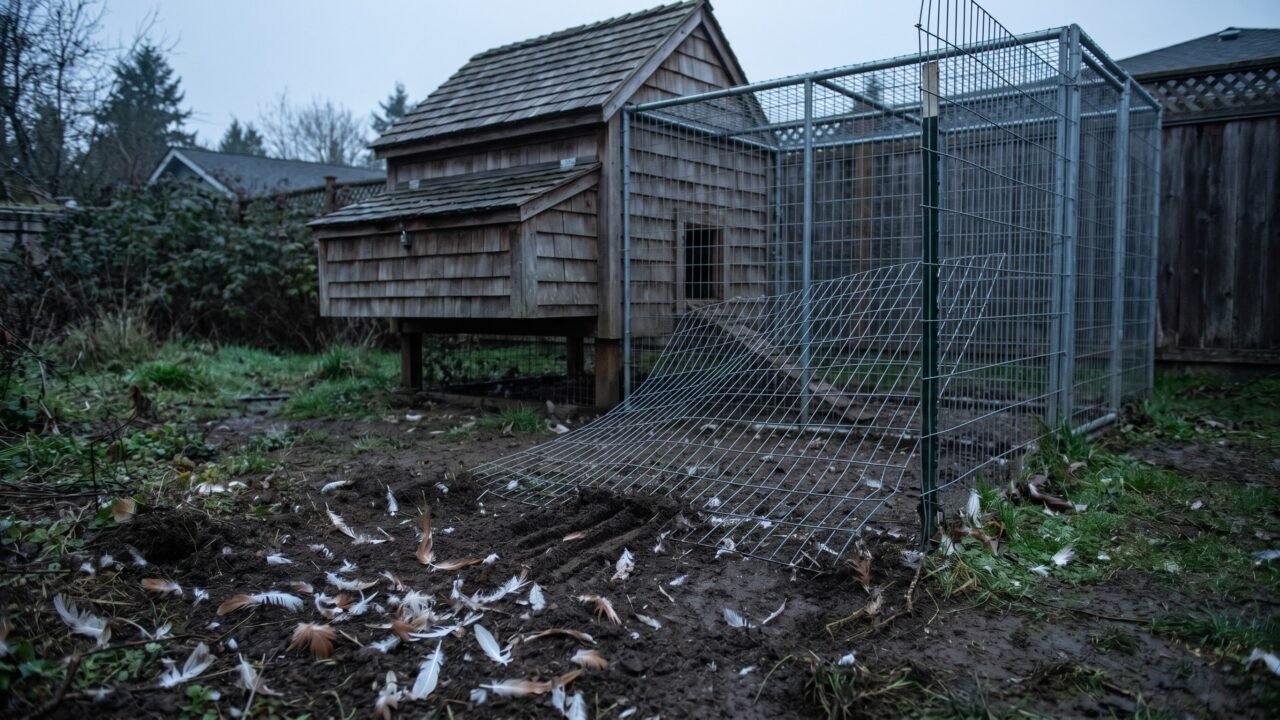
University of Maryland Extension research describes this as the fox signature: the whole bird is missing, with scattered feathers the only evidence. Foxes are efficient carriers, removing birds to a den or cache. A coyote does similar but tends to leave a larger tunnel or breach at the fence base - coyotes dig more aggressively and can force their way through in ways foxes rarely bother with. If you find a heap of feathers in the middle of the run and no carcass anywhere, a fox or coyote is the strongest read.
Multiple birds dead, barely eaten, stacked or scattered nearby
This is the weasel and mink pattern, and it is alarming precisely because of the scale. Weasels engage in surplus killing when they gain access to a confined flock. Virginia Tech Extension documents this: weasels kill multiple birds and pile them. The eXtension Foundation adds an important measurement: least weasels can squeeze through holes as small as 1/4 inch in diameter - meaning chicken wire offers essentially no protection at all. Look for tiny puncture wounds at the base of the skull and a very small entry hole, possibly gnawed slightly wider.
Wounds near the vent, one bird at a time
Lacerations near the cloaca signal opossum or, less commonly, a weasel relative. Virginia Tech Extension lists opossum and weasel as the predators associated with cloacal lacerations. Cloacal pecking by flock-mates - sometimes called vent-picking - can produce identical wounds, so rule out cannibalism before assuming a predator. Opossums work slowly and typically take one bird per visit. They climb well, so check the roof of the run and any gap where a wall meets the rafters.
Birds mauled, not eaten, spread across the yard
Dogs - domestic or feral - are the likely cause when birds show bite wounds all over the body and the carcasses are left where they fell rather than consumed or carried off. University of Maryland Extension notes that dogs usually maul birds but do not eat them. Dogs also break through lighter gauge fencing in ways that leave ragged, obvious damage. If you find chicken wire torn open rather than dug under or squeezed through, a dog is near the top of the list.
How each predator gets in (and what stops them)
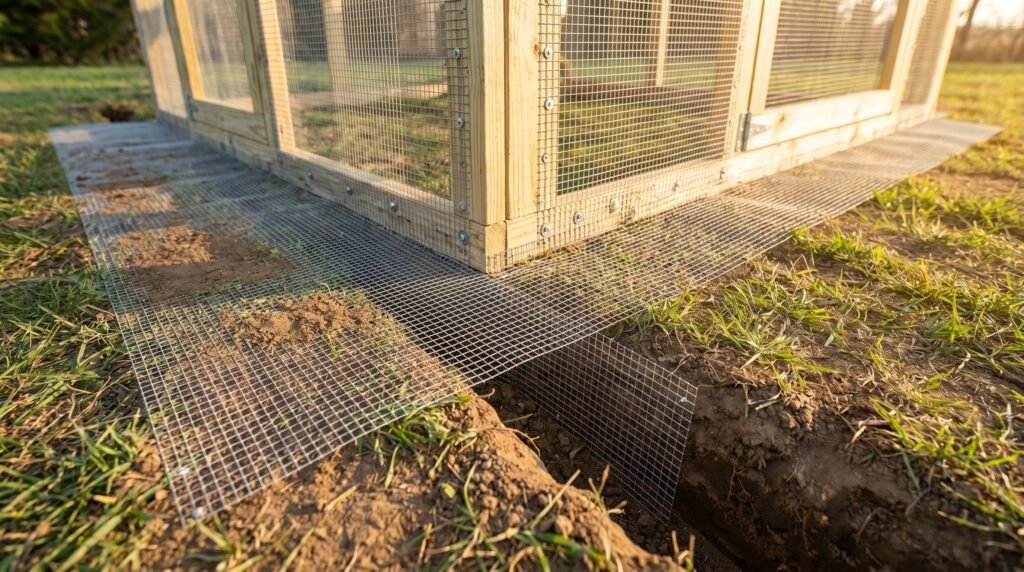
Knowing the killer is only half the fix. Each predator exploits a specific weakness in the coop or run. Here is the entry method paired with its specific countermeasure.
Diggers: fox, coyote, raccoon, skunk
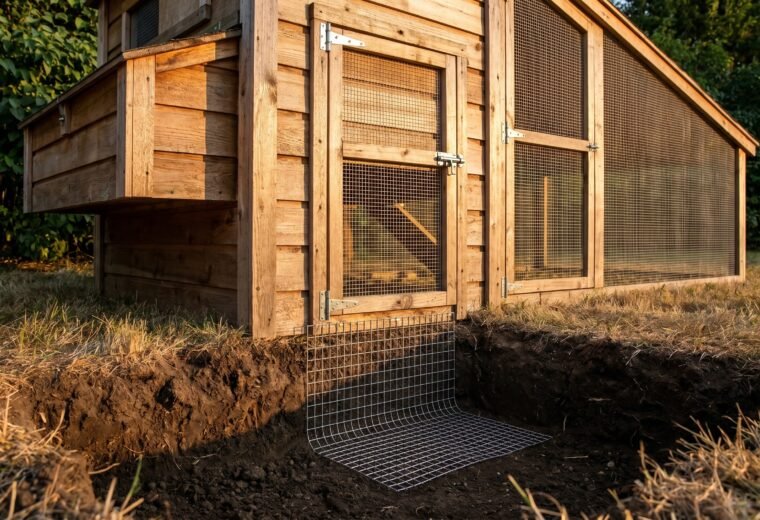
Foxes and coyotes dig at the base of the fence, working inward. The fix is an apron of hardware cloth that runs horizontally outward along the ground from the fence base. Because diggers work right at the wall, turning the mesh outward catches them before they get deep enough. University of Maryland Extension specifies going at least a foot into the ground and then making a 90-degree turn outward for at least 8-10 more inches. Virginia Tech Extension recommends burying wire 1-2 feet deep with an outward skirt. The eXtension Foundation cites 12 inches of burial as the minimum. Any of these specifications beats no apron at all - the L-shape is more important than the exact depth, because it intercepts the dig before it gets under the wall.
For a deeper look at run design and apron installation, see our guide on hardware cloth vs chicken wire and the full predator-proof chicken run overview.
Reachers and openers: raccoon
Raccoons do not need to break in. They reach through chicken wire to grab roosting birds, or they operate latches. University of Maryland Extension is blunt: raccoons can open simple latches, so doors must be locked. A two-step latch, a carabiner clip, or a bolt with a twist handle are all raccoon-resistant; a simple hook-and-eye is not. Use 1/2-inch hardware cloth on any wall a raccoon can reach - the 1-inch openings in standard chicken wire are large enough for a raccoon paw to grip a sleeping hen through the mesh. More detail on raccoon-specific tactics is in our article on raccoons and chickens.
Squeezers: weasel, mink, rat
These predators exploit any gap you have not noticed. The eXtension Foundation documents that least weasels pass through a 1/4-inch opening. Standard chicken wire, with its 1-inch hexagonal mesh, offers no meaningful resistance. Hardware cloth at 1/2-inch is the practical minimum for weasel deterrence, and even then, check every joint, grommet hole, and board-to-board gap. Close any opening larger than 1/2 inch with hardware cloth secured with screws and washers, not staples alone - a mink can pull stapled mesh off a wooden frame.
Climbers and swoopers: owl, opossum, bobcat
Great horned owls and barred owls hunt actively at night, and a bird sleeping on an uncovered roost or inside an open-topped run is vulnerable. Colorado State University Extension notes that bobcats and coyotes can easily clear a 4-foot fence, and owl attacks require no fence at all - just an open sky above the run. Covering the run completely with hardware cloth or heavy-duty deer netting solves both climbers and overhead threats. If you cannot cover the full run, stringing wire at irregular heights above the pen gives raptors nowhere to dive safely. A word on raptors: all hawks and owls are protected under federal law, meaning lethal control is not permitted regardless of losses. Exclusion is the only legal option - cover the run. Our article on foxes and chickens has more on deterrence strategies that apply equally to other determined predators.
Door-gap entries: any nocturnal predator
The most common entry point in backyard coops is a pop door left open after dark. An automatic door with a light sensor set to close at dusk removes the human variable entirely. Light-sensing openers respond to actual sunset rather than a fixed time, which matters as daylength shifts across seasons. Whatever the door style, the latch must require two actions to open - a single push-bar or hook is not enough against raccoons or a persistent fox nosing at the frame.
Protecting the flock: a quick-check list by threat level
Not every keeper faces every predator. Run through this list and address the gaps that apply to your setup. Our broader predator prevention overview covers additional species and daytime threats.
- Hardware cloth on all walls and the floor of any enclosed run - 1/2-inch, 19-gauge minimum; screwed and washered at every joint.
- Two-step or locking latches on every door and pop hole, including ventilation covers that a raccoon could reach.
- Buried apron or trench of hardware cloth at least 12 inches deep with an outward L at the base of the run - the single most effective dig deterrent.
- Covered run - roof mesh or solid roofing stops owls, opossum, and bobcat completely.
- Auto door or firm bedtime routine - no bird should sleep outside the locked coop after dark.
- Sealed gaps under 1/2 inch - walk the coop perimeter with a flashlight and stuff steel wool into any crack before stapling hardware cloth over it (steel wool discourages gnawing).
- Elevated coop floor - raising the coop 10-12 inches off the ground removes the shelter that rats and skunks need to establish a base.
What if you are not sure which predator it was?
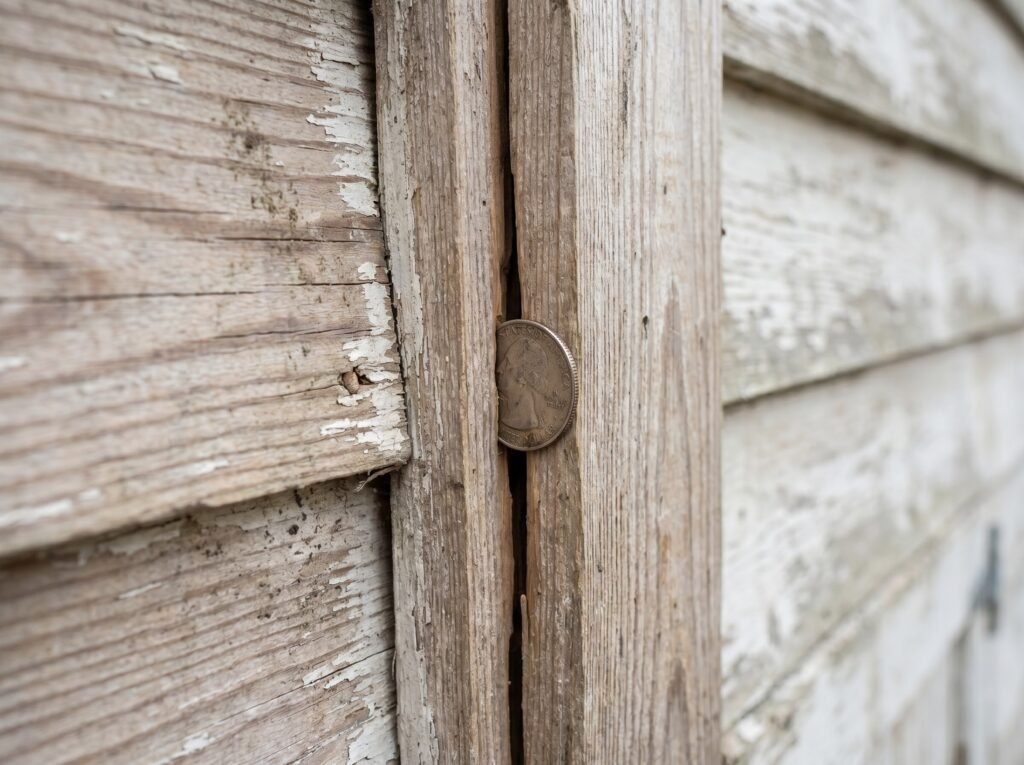
Mixed clues happen. A fox kills and removes one bird cleanly while a second bird inside shows wing damage from being grabbed. Run the table above and weight the evidence by what is most definitive: entry method beats carcass condition as a diagnostic because different animals sometimes produce overlapping wound patterns. If a tunnel appears under the fence, assume digger. If the wire is bent inward at roost height, assume raccoon. If the kill count is high and consumption is low, assume weasel or mink until you prove otherwise - the consequences of assuming wrong on a weasel problem are a repeat massacre the following night.
If the clues still do not resolve, set a trail camera aimed at the coop entrance before the next dark. A single night of footage is the fastest and most definitive way to confirm which predator is responsible - no amount of carcass inspection matches seeing the animal on video.
One final note: if birds survive an attack but show injuries, have them evaluated by a poultry veterinarian promptly. Puncture wounds from predator bites carry a high infection risk, and internal trauma is not always visible. The forensics guide above is about identifying the attacker and fixing the coop - a sick or injured bird needs professional care, not a home remedy.