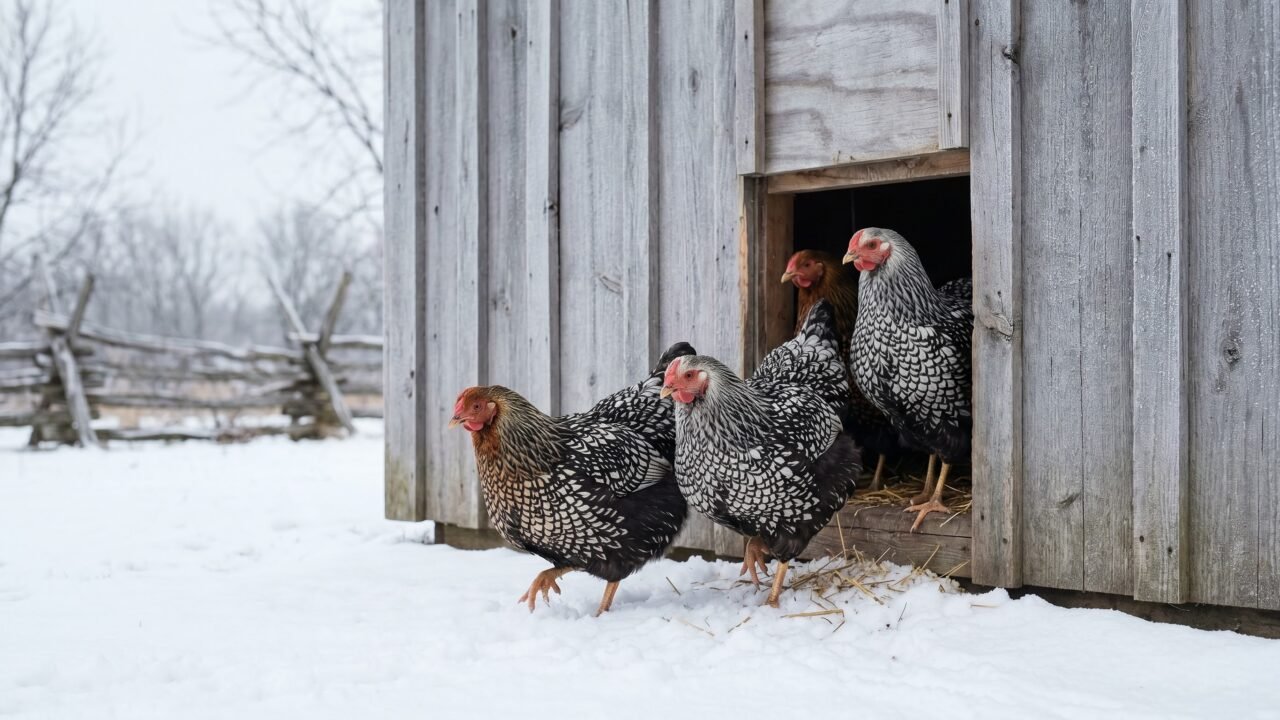
Pick the right breeds going in and winter becomes a management problem, not a survival crisis. The short answer: cold hardiness comes down to three things - comb size, feather density, and body mass. Breeds that combine all three stay comfortable through single-digit nights in a dry, well-ventilated coop, and most continue laying at a useful rate even when temperatures are brutal outside.
Below you will find a rundown of the traits that actually matter, a breed comparison table with honest egg numbers, and some practical notes on frostbite and winter laying that are worth reading before you order chicks.
What makes a chicken breed truly cold-hardy
Three physical traits do most of the work. Understanding them lets you evaluate any breed - not just the ones on this list.
Comb size and type
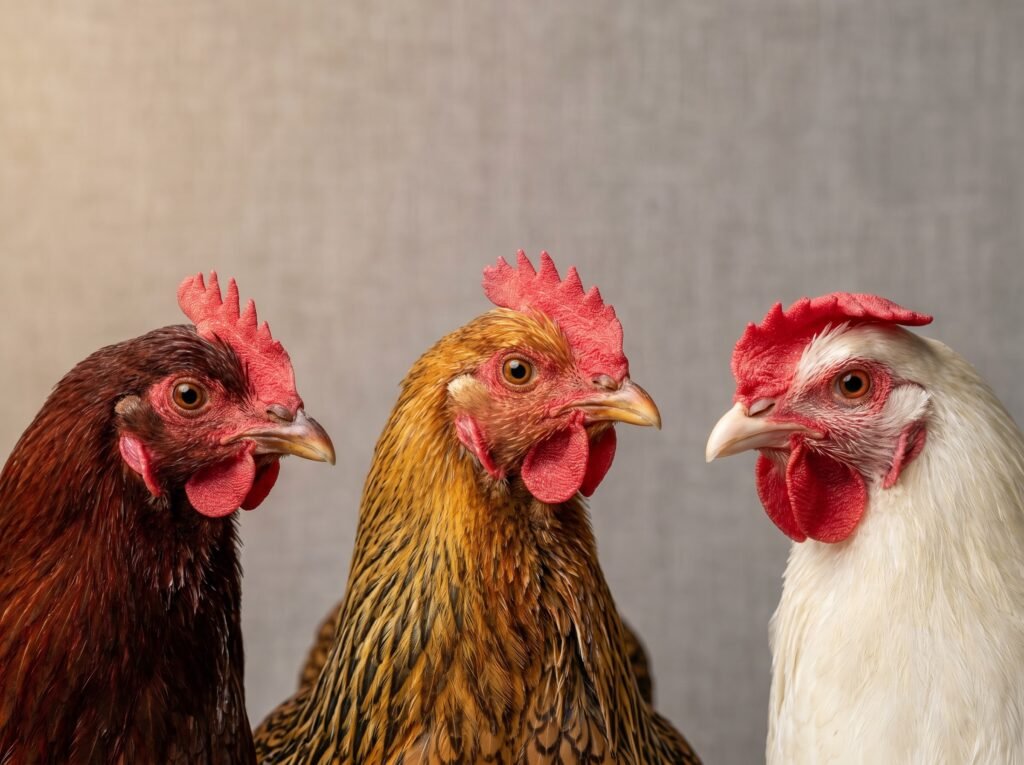
A chicken's comb is packed with blood vessels and acts as a heat radiator. That works beautifully in summer, but in a hard freeze the bird restricts blood flow to the comb to protect core temperature - and that restricted tissue is exactly what frostbite attacks. Smaller combs give frost far less surface area to work with.
The safest comb shapes for cold climates are the pea comb (three low ridges running front to back, found on Buckeyes, Brahmas, and Ameraucanas), the rose comb (flat, wide, sitting tight against the skull, found on Wyandottes and Dominiques), and the cushion comb (a smooth, low dome with almost no projections, found on the Chantecler and a small number of other rare breeds, but most commonly associated with the Chantecler in North American backyard flocks). Each sits close enough to the head that there are no tall points exposed to freezing air. A large, upright single comb - the kind you see on Leghorns and Rhode Island Reds - projects well above the skull and is the comb type most often blackened by a hard freeze.
Wattles matter too. Breeds with small or nearly absent wattles (Chantecler, Ameraucana) have less tissue to protect than breeds with long, drooping wattles. Roosters of any breed face higher frostbite risk because their combs and wattles are consistently larger than the hens'.
Feather density and down undercoat
Tight, dense plumage works like insulation: it traps a layer of warm air against the skin. Orpingtons carry a famously loose, fluffy coat that looks almost like a down puff around the body - Cackle Hatchery notes that "their loose feathering makes Orpingtons especially cold hardy." Brahmas back that up with a thick undercoat plus feathered shanks and toes, though that feathering on the feet is a maintenance trade-off we will get to. Breeds like the Leghorn, with flat, sparse plumage and little undercoat, lose body heat far more quickly.
Facial feathering - the muffs and beard on Ameraucanas and Easter Eggers - adds cold protection around the face. The catch: a wet beard in freezing weather can itself become frostbitten, so open-top waterers that soak the chin area are worth swapping for nipple or cup drinkers in winter.
Body mass
A larger bird generates more metabolic heat relative to the surface area losing it. This is why University of Minnesota Extension specifically names heavier breeds - Plymouth Rocks, Wyandottes, Ameraucanas, and Orpingtons - as birds that "over-winter well." A 4-pound Mediterranean breed fighting a northern January is working much harder to maintain body temperature than an 8-pound dual-purpose bird doing the same thing. That energy has to come from somewhere, which is why cold-weather feed consumption rises - UMN Extension puts the increase at up to 25 percent during cold weather.
Breed comparison: top cold-hardy picks
The table below covers the breeds we recommend most often for northern climates, with egg production figures drawn from hatchery specs (all estimates; real flock numbers vary with feed, light, and management). Comb type is the primary cold-weather variable; use it to judge frostbite risk at a glance.
| Breed | Comb type | Eggs/year (est.) | Hen weight | Key cold-weather note |
|---|---|---|---|---|
| Chantecler | Cushion (nearly flat) | 150-200+* | 6.5 lb | Built for Canadian winters; continues laying in cold; nearly no wattles |
| Dominique | Rose | 230-270 | 5 lb | America's oldest breed; rose comb hugs the head; good winter layer |
| Wyandotte | Rose | ~200 | 6.5 lb | Rose comb "exposes less flesh to winter weather"; dense feathering |
| Buckeye | Pea | 180-260 | 6.5 lb | Ohio heritage breed; pea comb + tight feathering; dual-purpose |
| Ameraucana | Pea | 180-200 | 5.5 lb | Pea comb, beard, and muffs; lays blue eggs; watch wet beard in freezes |
| Brahma | Pea | 150-200 | 10 lb | Sheer mass + thick feathering; feathered feet need checking in mud/snow |
| Buff Orpington | Single | ~200-250 | 8 lb | Loose, heavy plumage compensates for single comb; watch comb in hard freezes |
| Rhode Island Red | Single | 200-280 | 6.5 lb | Reliable layer; dense plumage helps; single comb needs petroleum jelly protection in hard freezes |
| Plymouth Rock (Barred) | Single | 120-180 (exhibition); production strains run higher | 7.5 lb | Heavy body helps; exhibition-type figures cited here (Cackle Hatchery); production strains are bred for a higher rate; single comb needs the same winter attention as RIR and Orpington |
* Chantecler egg range: Cackle Hatchery product page cites 150-200+ eggs/year; the spotlight breeding article cites up to 220 per year for select strains. The table uses the product-page figure as the primary estimate.
A quick note on the three single-comb breeds at the bottom of that table: they appear on Ohio State Extension's list of cold-tolerant breeds, and they genuinely are cold-hardy birds overall. But "cold-hardy" does not mean "immune to frostbite." Roosters of these breeds in particular need a smear of petroleum jelly across the comb and wattles before temperatures drop below 20 degrees F, and the coop must be dry and well-ventilated. A cold but damp coop injures combs far faster than a dry coop at the same temperature.
If you are building a mixed flock and want to cover a range of egg colors alongside cold hardiness, the combination of a Dominique, a Wyandotte, and two Ameraucanas gives you brown and blue eggs and three different frost-resistant comb types in a small mixed flock, and a decent year-round production rate. If you want to compare breeds across all purposes - not just cold weather - the chicken breeds roundup is the place to start.
Frostbite: what actually causes it, and how to prevent it
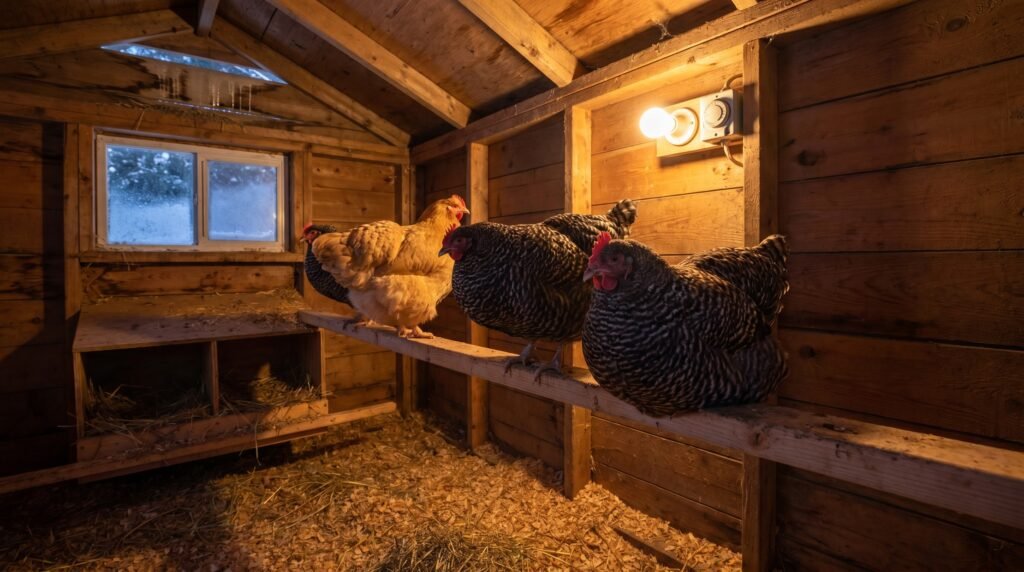
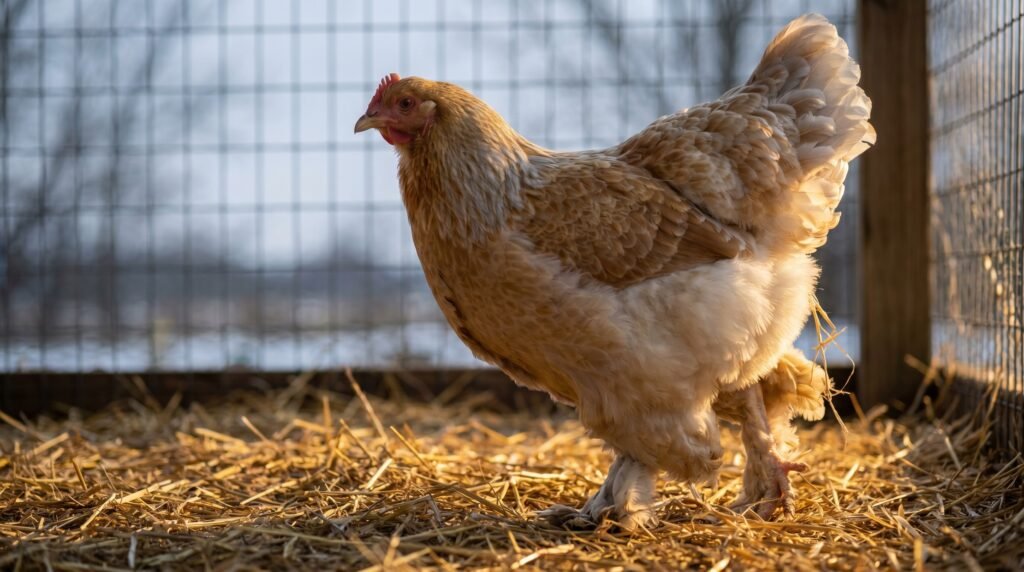
Moisture is the real culprit, and this surprises a lot of first-year keepers. Poultry extension researchers at extension.org are explicit: "Frostbite is more likely to occur during the nighttime hours in a cold, poorly ventilated coop with damp bedding." A coop sitting at 15 degrees F but dry and well-aired is far safer than one at 28 degrees F with condensation dripping from the walls.
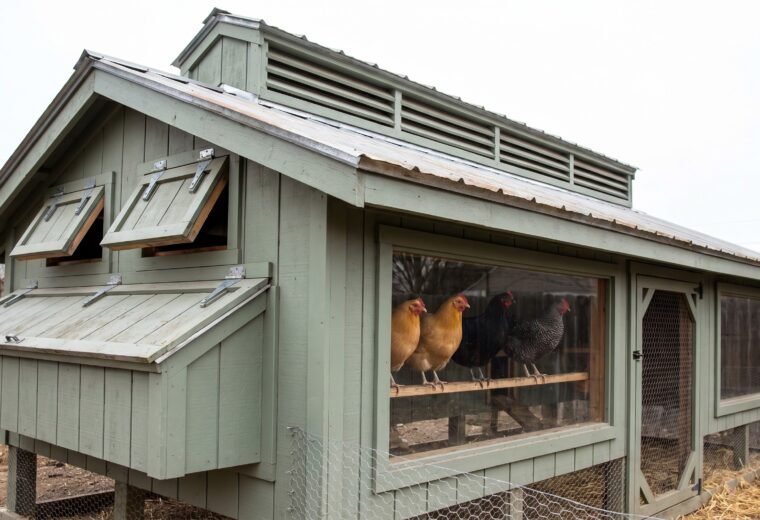
Chicken manure is roughly 70 percent water. In a closed-up winter coop that moisture has nowhere to go except into the air - and it lands on combs, wattles, and exposed skin. The practical fix is ventilation placed above roost height, so moving air carries the moisture out without blowing a draft directly onto roosting birds. A ridge vent, a covered eave opening, or a gable vent all work. What does not work: sealing the coop tight to "keep in the heat." That produces the exact conditions - damp air and poor airflow - that extension.org identifies as the primary frostbite triggers.
Feet are the other common injury site, especially in breeds with feathered shanks. Brahmas and Cochins can pack snow or ice into the feathers around their toes during outdoor time; check and clear those feathers after runs in wet snow. Roost bars matter here too - a wide, flat 2x4 laid with the broad side up lets birds sit with their toes covered by their belly feathers, which passively protects digits through the night.
When frostbite does happen, the affected tissue turns pale, then dark. Extension.org notes healing can take four to six weeks; do not remove blackened tissue unless it is infected, because it shields the tissue below it. For a bird you suspect has frostbite injury beyond surface discoloration, have a poultry vet take a look - the visible damage often understates what is happening underneath.
If you are working through roost insulation, bedding depth, and whether your coop actually needs supplemental heat (most do not), keep chickens warm in winter covers all of that in one place.
Winter laying: what to expect, and what actually controls it
Most keepers blame cold for the winter egg drop - the real cause is light, not temperature. Laying hens respond to the number of hours of daily light, and when that drops below roughly 12 hours, they stop getting the hormonal signal to ovulate. The cold outside is largely irrelevant to that signal. (Kansas State University Extension)
Penn State Extension recommends 16 hours of total light per day for mature laying hens to maintain peak production; UMN Extension puts the threshold for optimal production at 14 hours. The difference reflects two slightly different outcomes: 14 hours sustains production for most hens, while 16 hours is the ceiling that keeps peak layers fully active through short winter days. If you want the highest consistent output in December and January, aim for 16 hours. The practical math: most of the US gets around 9-10 hours of daylight in December, so you need 6-7 hours of supplemental light, typically added before sunrise on a timer. A low-wattage LED equivalent (around 40-60 watts equivalent) mounted high in the coop is sufficient for a small backyard flock; the key is that every corner of the roost area receives some light. Penn State Extension also recommends gradual transitions - increase or decrease by no more than one hour per week to avoid stress-related behavioral problems.
Cold-hardy breeds with denser feathering tend to hold laying rates better through winter than lightweight Mediterranean breeds, but that is partly because their heavier bodies burn fewer calories on thermoregulation and have more energy left for egg production. The Dominique, at 230-270 eggs per year with a frost-resistant rose comb, is one of the most consistent cold-weather layers in the heritage category. Chanteclers reportedly continue laying during the winter months even in hard Canadian conditions. Ameraucanas often keep producing blue eggs through short winter days, which is one reason they stay popular in northern flocks.
If you decide to add supplemental light, collect eggs more often - ideally twice a day. UMN Extension notes that freshly laid eggs come out at 109 degrees F but cool quickly, and eggs left in an unheated coop in hard freezes can crack. Cracked shells let bacteria in and the egg is no longer safe to use.
When you are ready to think through how breed, light, and feed choices interact across the whole year, the best egg-laying breeds breakdown has production rates sorted by breed type.
A few traits that cut both ways
Feathered feet on Brahmas and Cochins provide passive insulation on the shank, but snow and ice packing into those feathers can cause frostbite on the toes during outdoor time in wet snow conditions. Keep runs scraped down or use straw on the run floor after snowfall, and do a quick shank-check when birds come in from wet conditions.
Orpingtons deserve a specific callout on comb risk. Their body is exceptionally well-insulated for cold - loose, heavy plumage traps air beautifully - but they carry a single comb that needs monitoring in the same hard freezes that spare a Wyandotte or Dominique. In practice, a well-managed Orpington flock handles northern winters without much trouble. Just keep petroleum jelly on hand for the roosters when the forecast dips below 20 degrees F.
Bantam versions of cold-hardy breeds (Wyandotte bantam, Dominique bantam, Cochin bantam) carry the same comb advantages as their standard counterparts but generate less body heat due to smaller mass. If your climate routinely hits minus temperatures, standard-size birds hold their own more easily than bantams. Bantams work well for someone in a zone 6 or 7 climate who wants small birds with low-frostbite combs, and they eat noticeably less - worth knowing if feed cost is a factor.
Once you have your breed picks sorted, seasonal chicken care walks through how coop insulation, climate zone, and flock size all fit together across the year.