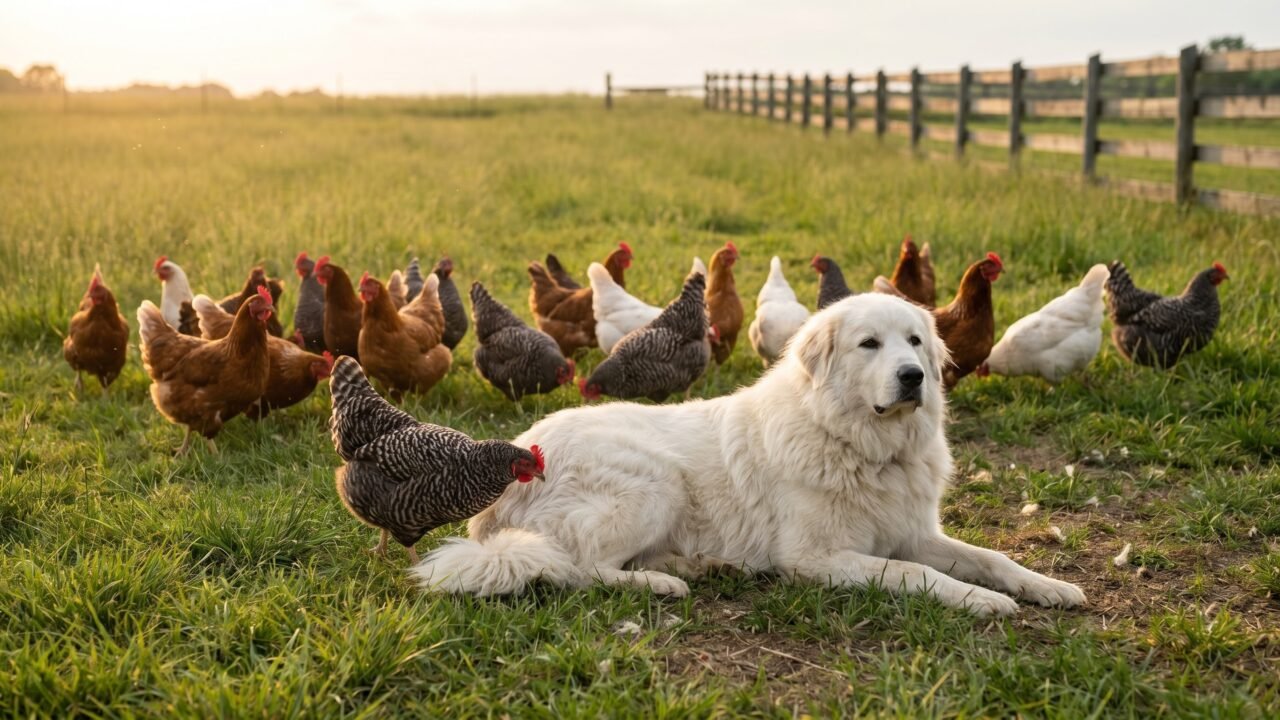
Three or four hens scratching through your garden patch probably do not need a 100-pound dog patrolling beside them. A flock of 20 birds free-ranging across half an acre with coyotes pressing in at dusk is a different calculation entirely. A livestock guardian dog can be a genuinely powerful tool for predator control, but whether one makes sense for your setup depends on flock size, property size, neighbor proximity, and how much of the first two years of a dog's life you are ready to invest. Here is an honest look at the three breeds most commonly used with poultry, what training actually looks like, and what to do if the answer turns out to be "skip the dog."
What makes a livestock guardian dog different from a regular farm dog
Most dogs chase what moves. A livestock guardian dog (LGD) is bred over centuries to do the opposite: stay calm beside vulnerable animals, read the environment for threat, and place itself between prey and predator without waiting for a human command. That independence is the entire point. When a coyote works the field edge at 2 a.m., there is no handler to give instructions.
The behavioral foundation is bonding. Puppies placed with the species they will protect during the critical window between 3 and 16 weeks of age imprint on those animals much the way they would on littermates (Wikipedia, "Livestock guardian dog"). Experts recommend starting that exposure at four to five weeks. A puppy that misses this window can still become a functional guardian, but it takes substantially more supervised correction and the bond is usually shallower.
Primary defense is deterrence, not combat. The Anatolian's approach is characteristic of the whole group: "An Anatolian's first defensive measure is visual deterrence. They simply stand and let themselves be seen. If that doesn't do the trick, intruders are greeted with a mild, throat-clearing sort of bark that will escalate, if necessary, to a bloodcurdling warning" (AKC). The Maremma works similarly: its role "is mostly one of dissuasion, actual physical combat with the predator being relatively rare" (Wikipedia, Maremmano-Abruzzese Sheepdog). Size and presence do most of the work.
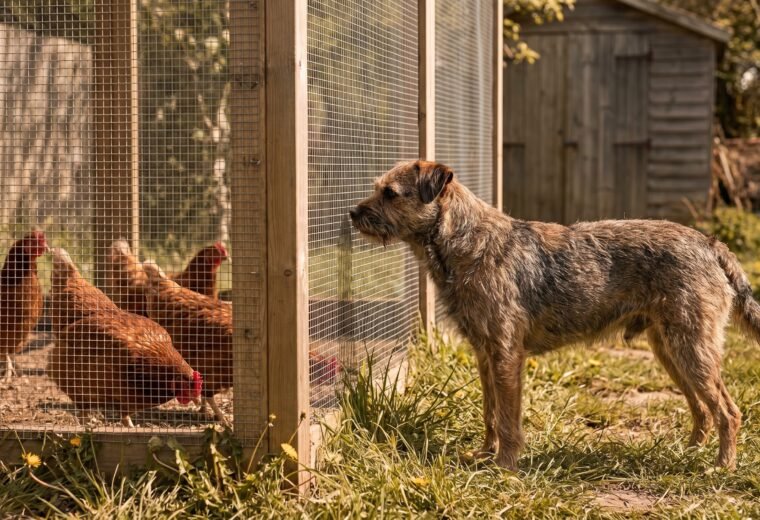
Protecting chickens specifically requires an additional step that sheep and goat operations can skip. A dog raised beside sheep will generally ignore chickens unless it has been exposed to them from early puppyhood. Texas A&M AgriLife Extension makes the point directly: a "sheep dog should be calm around cattle, and not chase the chickens or harass the pigs." Poultry exposure during that same early imprinting window is not optional - it is the difference between a guardian and a predator wearing your collar.
The three breeds most often used with poultry flocks
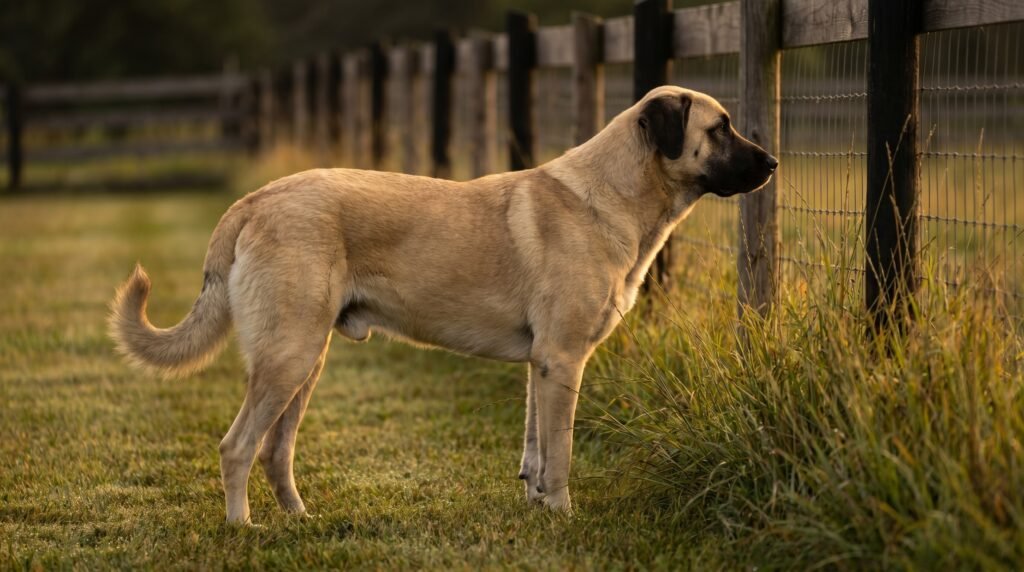
The comparison table below pulls together the practical numbers. All three breeds fall into the same working-dog category, but they behave and manage differently enough that breed choice matters for a small operation.
| Breed | Typical weight | Guarding style | Temperament with strangers | Best match for | Notable caution |
|---|---|---|---|---|---|
| Great Pyrenees | 100 lb minimum (male, AKC); 100+ lb typical | Patrols perimeter, works at night, may roam | Calm, patient, tolerant; "smart, patient, calm" (AKC) | Larger free-range flocks; owners comfortable with night barking | Heavy night barker; independent and may expand territory |
| Anatolian Shepherd | 80-120 lb (female); 110-150 lb (male) (AKC) | Perimeter guardian; fast and agile for the size | Reserved, territorial with strangers; needs early socialization | Larger predator pressure; experienced LGD owners | Least forgiving of under-socialization; strong prey instinct if chicken bond is weak |
| Maremma | 65-90 lb (female); 75-100 lb (male) (Wikipedia) | Stays closer to flock; bark-first, fight rarely | Gentle with its flock; wary but less aggressive than Anatolian | Mixed-species farms; operators who want slightly smaller dog | Can bond more to farm buildings than to birds (pilot study, PMC9977226) |
The Great Pyrenees is the most widely used LGD in North America, with the Anatolian and Maremma (along with the Akbash and Komondor) also common in farm settings. Crosses between two LGD breeds - Great Pyrenees and Anatolian Shepherd, for example - are sometimes used and can work well, since both parent breeds carry the core guardian instinct.
One finding worth surfacing from a 2019 pilot study (PMC9977226) involving two Maremmas protecting 450 pastured laying hens: the dogs spent 82.5 percent of their nighttime locations within 75 meters of the farmhouse and only 0.09 percent of locations near the chicken paddock. Despite that apparent disconnect, no fox predation occurred during the 46-day observation period. The researchers flag a "possible disconnect between producer beliefs and expectations towards their LGDs versus the realities of potential distractions and bonding imbalances." The takeaway for poultry keepers: presence on the property matters, but dogs bonded primarily to the house rather than the flock may offer perimeter-level deterrence rather than close flock protection. Small flocks confined to a run gain less from that arrangement than large free-ranging operations do.
Realistic training timeline and the biggest beginner mistake
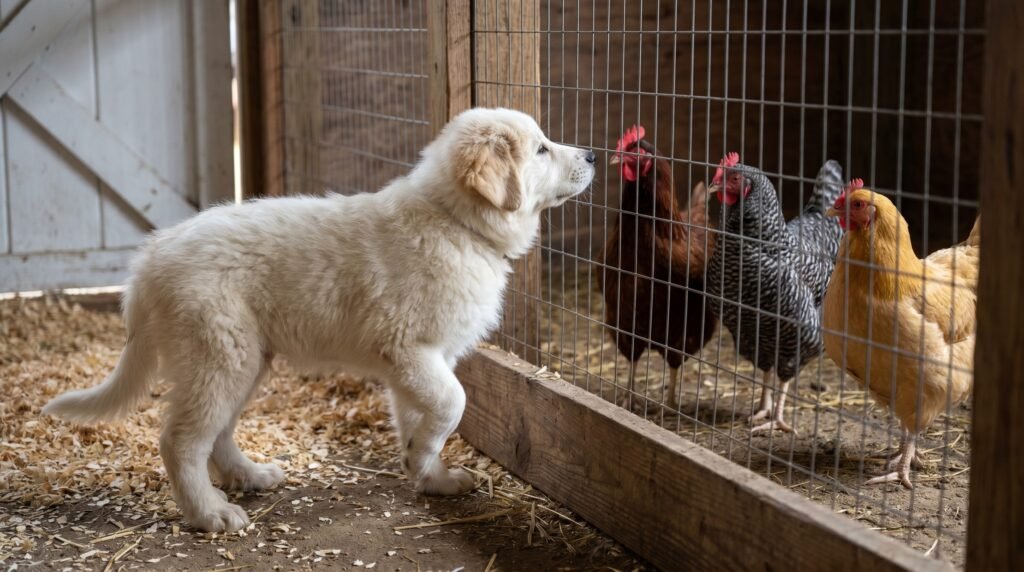
The phrase "livestock guardian dog" makes it sound like you buy a trained tool. You do not. You buy a puppy with the genetic potential to become one, and then spend roughly two years creating that tool.
Wikipedia's summary of the research is plain: "A guardian dog is not considered reliable until it is at least 2 years of age. Until that time, supervision, guidance, and correction are needed." Texas A&M AgriLife Extension adds the most important nuance on timing: dogs bonded at the producer's property just after weaning are more likely to stay with livestock long-term than dogs bonded first by a breeder and purchased at an older age. If you buy an eight-month-old dog that lived in a kennel, you are starting at a disadvantage.
A rough sequence for a poultry keeper starting from a puppy:
- Weeks 4-8 (at breeder or your farm): Puppy is in the imprinting window; every day of exposure to chickens now pays dividends for years.
- Weeks 8-16: Primary bonding period closes around week 16. Puppy should be living adjacent to the flock in a shared pen with a divider, not running loose among birds.
- Months 4-12: Supervised time with the flock. Correct immediately - calmly but consistently - any rough play, chasing, or mouthing. "Do not allow the dog to bite or chew on weak or small animals" (Texas A&M AgriLife). Chickens are smaller and more fragile than sheep; an LGD puppy that chases a hen even once in play can injure or kill it.
- Year 1-2: Gradually extend unsupervised periods. Expect imperfection. Expect one or two bad days you will need to correct. This is not a sign to give up; it is the normal training arc.
The single highest-frequency failure is rushing this progression. An owner who lets a six-month-old LGD loose with the flock because "he seems calm" skips the phase where the dog learns that chickens are his responsibility. The result is usually a dead chicken and a frustrated owner.
Why a livestock guardian dog is the wrong choice for many backyard flocks
An LGD optimized by breeding history to work across open mountain pasture does not automatically translate to a suburban quarter-acre. Several realities stack up against it.
Space. Large LGD breeds need room to patrol. Keeping a 100-pound dog that is wired to cover territory in a small fenced yard is not fair to the dog and often produces the exact problem behavior - fence-testing, barking, anxiety - that makes the setup unworkable.
Night barking. LGDs communicate with predators through vocal warning. That is the mechanism. A Great Pyrenees announcing a raccoon at midnight does so loudly and repeatedly. In rural areas with tolerant neighbors and distance between properties, this is an acceptable tradeoff. In a neighborhood with houses 30 feet away, it is a fast path to an animal control complaint.
Training commitment. Two years of consistent supervision is a serious ask. Owners who travel frequently, keep irregular schedules, or lack prior experience with independent-thinking working breeds run a real risk of producing a dog that chases rather than protects.
Flock size math. For a backyard flock of 12 birds in a secure coop and run, a well-built predator-proof enclosure delivers more reliable protection at a fraction of the cost and effort. An LGD starts to make economic and practical sense when the flock is large enough and the free-ranging range wide enough that physical enclosure becomes impractical.
For more context on the full range of threats your birds face and how different deterrents stack up, our overview of chicken predators covers ground predators and aerial hunters together. If you already have a family dog and are wondering how to manage coexistence, the dynamics are different - that situation gets its own treatment in our piece on dogs and chickens living together safely.
Practical alternatives when an LGD is not the right fit
The goal is a flock that survives intact. A livestock guardian dog is one route. For most small backyard setups, these alternatives deliver better returns per dollar and hour invested.
| Method | Best against | Limitations | Key spec |
|---|---|---|---|
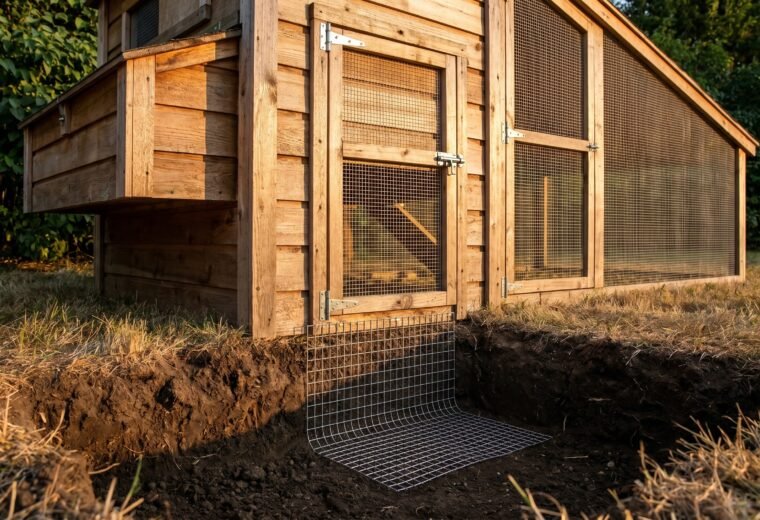
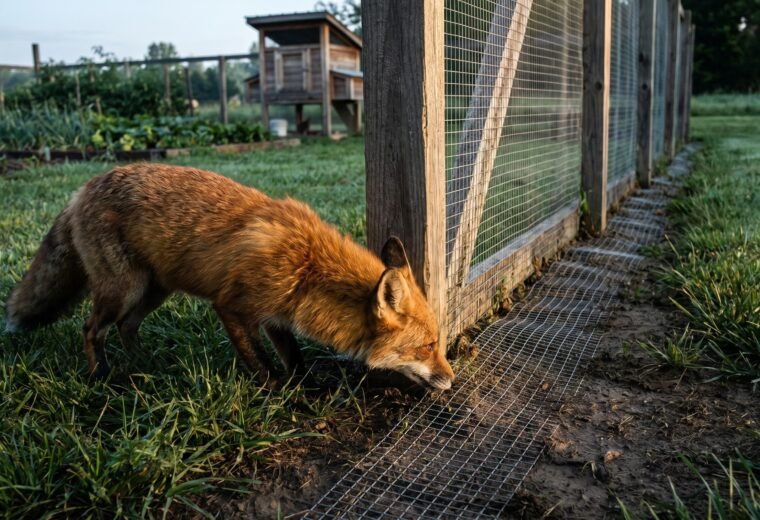
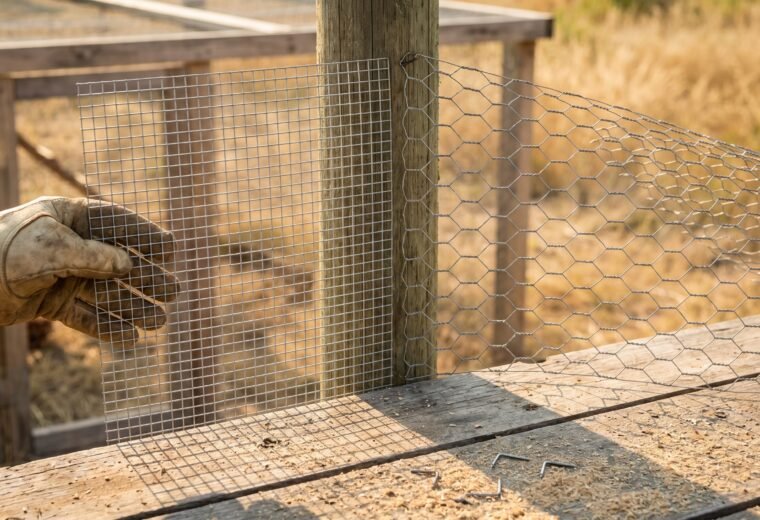
| Hardware cloth coop/run | Raccoons, weasels, foxes, snakes | Does not protect free-ranging birds | 1/2-in mesh; bury apron 12 in minimum (eXtension) |
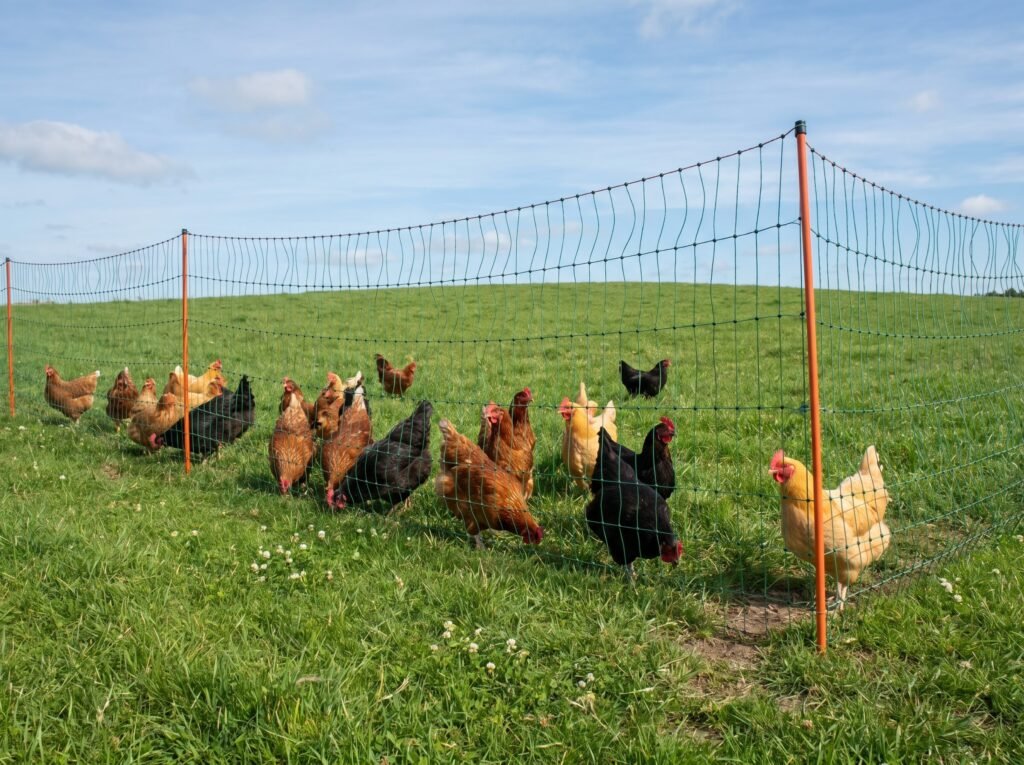
| Electric poultry netting | Ground predators (coyotes, foxes, dogs) | Not effective against aerial predators; needs power source | Moveable; designed for pastured chickens and small livestock (eXtension) |
| Covered run or aviary roof | Hawks, owls, aerial predators | Cost; limits free-range area | Hardware cloth or welded wire over full run footprint |
| Automatic coop door | Nocturnal predators that wait for birds to roost | Birds must reliably return before dark | Light-sensor or timer model; eliminates the "forgot to close" variable |
| Guardian donkey or llama | Coyotes, dogs, foxes at pasture scale | Size limits small yards; cost of care; needs companion | Single female donkey most common choice at small farm scale |
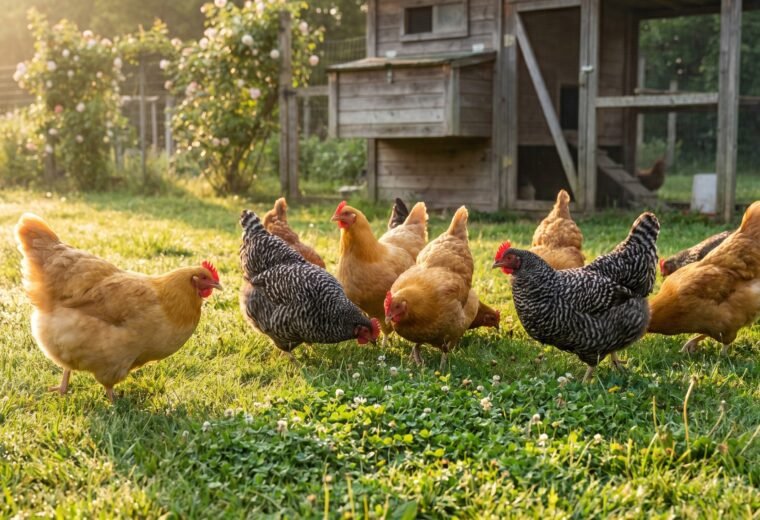
Electric poultry netting deserves specific mention because it closes the gap between "birds locked in a coop" and "birds free-ranging with no protection." eXtension describes it as a fence that creates "small, moveable grazing pastures for small livestock, such as chickens, sheep, and goats while keeping them safe from predators." For a flock of 15 to 25 birds that you want to rotate across a half-acre, electrified netting is often the most cost-effective answer. It does nothing for aerial threats, so pair it with a covered loafing area or a guardian animal if hawks are a real pressure in your area.
If your birds range freely, the question is not whether risk exists but when and where it is highest - supervision schedules, risk windows, and habitat management are all worked through in our free-range chickens guide. Foxes specifically get their own detailed breakdown in our article on foxes and chickens, including the hours when fox pressure peaks and physical deterrents that work at fence level.
Making the decision: a quick framework
Run through these four questions before committing to an LGD puppy.
- Flock size and ranging area. Fewer than 15 birds in a manageable run? Physical barriers will serve you better. Twenty or more birds free-ranging over one or more acres with active coyote or fox pressure? An LGD becomes a serious candidate.
- Property size. Can the dog patrol without crossing your fence line? Can you absorb nighttime barking without neighbor conflict?
- Two-year commitment. Are you genuinely set up to supervise a working-breed puppy through two years of training, or does your schedule make consistent correction unrealistic?
- Cost. A working-line LGD puppy, veterinary care, food for a large-breed dog, and fencing to contain it properly add up to a significant investment before the dog becomes reliable. Make sure that cost makes sense against the size of the operation it is protecting.
If you cleared all four questions, an LGD - introduced to your chickens during that critical puppy window and supervised patiently through year two - is one of the most effective predator deterrents available for a free-range operation. If even one question gave you pause, the alternatives in the table above will protect your flock just as well at smaller scale.