Pick up a just-laid egg and you are holding something with its own built-in protection system. Whether to wash it off is one of the most genuinely contested questions in backyard poultry keeping - and the answer depends heavily on where you live, what condition the egg is in, and what you plan to do with it. Here is a clear walk-through of the science and the rules, so you can make the right call for your flock.
What the bloom actually does
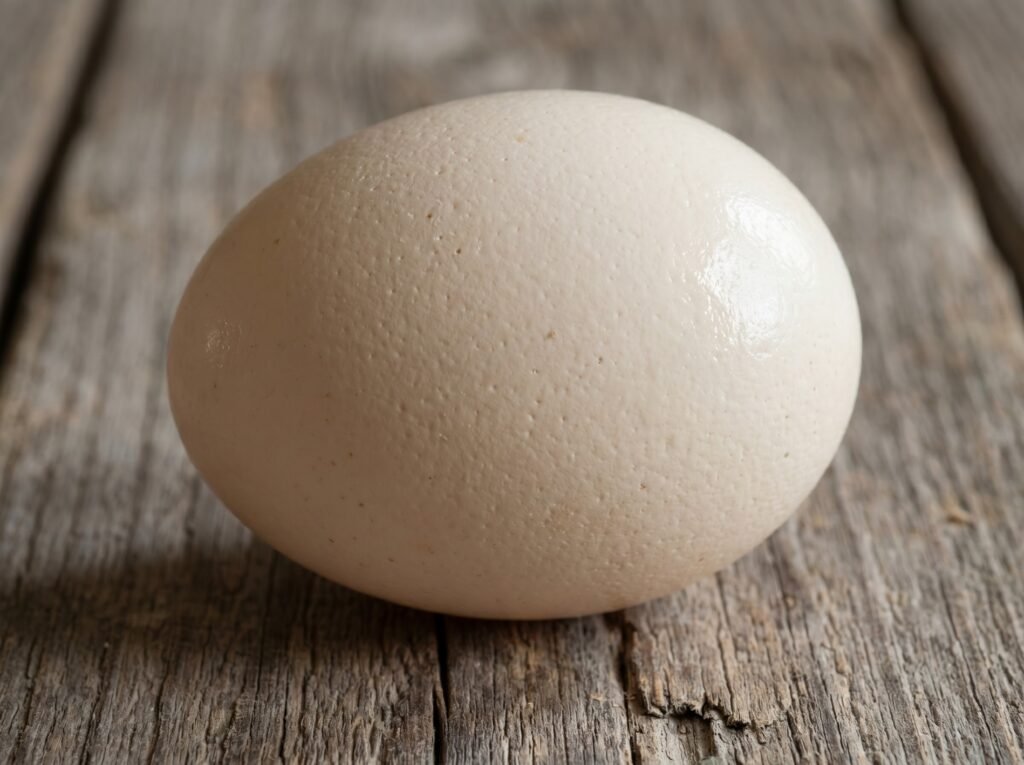
The bloom (also called the cuticle) is a thin, water-soluble protein layer deposited on the shell in the last few minutes before a hen lays. It dries almost immediately and serves two jobs: it slows moisture evaporation from inside the egg, and it plugs thousands of tiny shell pores that bacteria could otherwise use as entry points. It is not magic - it degrades over time and is gone if you scratch, brush, or wet it - but on a freshly laid egg it is a real line of defense.
Because the bloom is water-soluble, any contact with water removes it. That includes rinsing, dunking, or wiping with a damp cloth. Once the bloom is gone, the shell pores are open, and the egg behaves differently in storage. Penn State Extension puts it plainly: the cuticle "will be damaged or removed by brushing, washing, or rough handling." Ask Extension notes that "any washing with water will remove the bloom, which is a water-soluble mucous layer meant to protect the eggs from foreign bacteria."
So washing is not a neutral act. It is a tradeoff. You remove surface contamination and reduce bacterial counts on the shell - but you also remove the egg's own barrier, which means refrigeration becomes non-negotiable immediately after.
The US rule: wash, sanitize, refrigerate
In the United States, commercial eggs must be washed and sanitized before sale, and kept at 45°F or below beginning 36 hours post-laying. The FDA mandates refrigeration throughout the distribution chain, and every commercial egg carton in the country must carry the label: "Keep eggs refrigerated, cook eggs until yolks are firm, and cook foods containing eggs thoroughly."
For backyard keepers, there is no federal mandate requiring you to wash your own eggs before eating them at home. But the guidance from Penn State Extension, Oregon State, and the USDA Agricultural Research Service all point the same direction: if you wash, refrigerate immediately; if you store unwashed, still refrigerate for the best shelf life. USDA ARS researcher Deana Jones studied 5,400 eggs across four storage methods over 15 weeks and found that refrigerated eggs - washed or unwashed - held Grade A quality throughout. Unwashed eggs left at room temperature dropped from Grade AA to Grade B in one week and lost 15% of their weight in moisture.
The practical shelf life from Penn State Extension: properly handled eggs kept covered in the refrigerator stay safe for at least one month. Most backyard keepers find the actual quality window is longer, but that one-month guideline from a university extension source is your reliable anchor point.
Why Europe does the opposite
Walk into a supermarket in France, Germany, or the UK and the eggs sit unrefrigerated on an ambient shelf. European Union regulations (most recently consolidated in a more recent EU delegated regulation) prohibit washing Class A shell eggs sold for direct consumption. The reasoning is the inverse of the US approach: keep the cuticle intact, and the egg maintains its own barrier without refrigeration.
The EU's strategy leans on Salmonella vaccination programs rather than washing to control pathogen load. Laying hen flocks across the EU are subject to mandatory Salmonella monitoring and vaccination programs; if flock-level targets are not met, compulsory vaccination kicks in. The UK Food Standards Agency similarly requires Salmonella vaccination of laying hen flocks, which is why UK guidance recommends keeping eggs at home below 68°F - considerably warmer than the US's 40°F threshold - and the food safety math still works.
Neither system is obviously wrong. The US approach works well when the cuticle is removed (because washing is assumed), and the European approach works well when the cuticle is kept intact (because vaccination reduces the pathogen burden at the source). The two systems just break down if you mix the assumptions - for example, washing eggs and then leaving them on a warm counter.
When to wash and when to skip it
Most eggs from a well-managed backyard flock come out reasonably clean. Hens that have access to clean nesting boxes and fresh bedding usually lay eggs that need nothing more than a quick visual inspection. For those eggs, the simplest path is to collect them promptly (at least twice a day), store them covered in the refrigerator, and rinse just before cooking. No bloom disruption, no extra steps.
The table below lays out the decision by egg condition:
| Egg condition | Recommended action | Storage after | Notes |
|---|---|---|---|
| Clean shell, no visible debris | Store as-is; rinse just before using | Refrigerator, covered, up to 1 month | Bloom intact; lowest intervention |
| Light smudge or dust | Dry-brush with a fine-grit pad or soft brush | Refrigerator, covered, up to 1 month | Minimal cuticle disruption if kept dry |
| Dirty shell (mud, manure, broken yolk) | Wash with warm water (at least 20°F above egg temp, minimum 90°F); do not submerge; dry completely | Refrigerator immediately; use within 2-3 weeks | Bloom removed; refrigerate right away |
| Cracked or pitted shell | Use immediately; do not store | Cook today | Shell is compromised regardless of washing |
| Selling or giving away eggs | Check your state's regulations; many states require washing before sale | Refrigerator; label carton per local rules | Requirements vary by state and volume sold |
How to wash eggs correctly
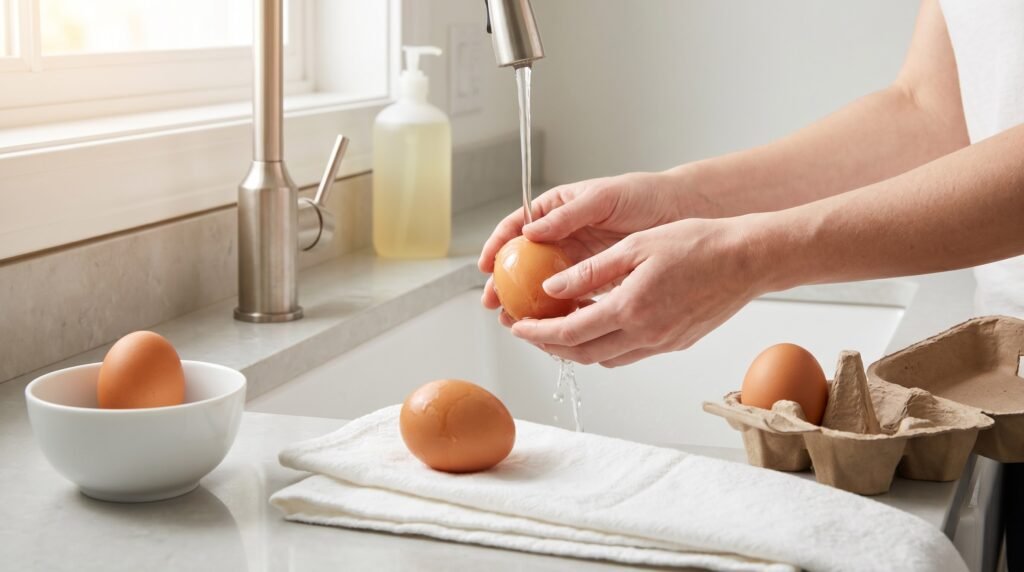
If an egg genuinely needs washing, three things matter most: water temperature, no submerging, and drying completely before refrigerating.
Water temperature is critical because of the way egg contents respond to heat. Eggshell is porous, and the contents inside contract when they cool. If you rinse a room-temperature egg under cold tap water, the internal contents pull inward and create a slight vacuum - enough to draw contaminated water through the shell pores and into the egg. Penn State Extension is explicit on this: agitate the egg "in water that contains a food-safe detergent and is at least 20°F higher than the internal temperature of the egg, and a minimum of 90°F." The warm water keeps the contents stable or expanding slightly outward, not contracting inward.
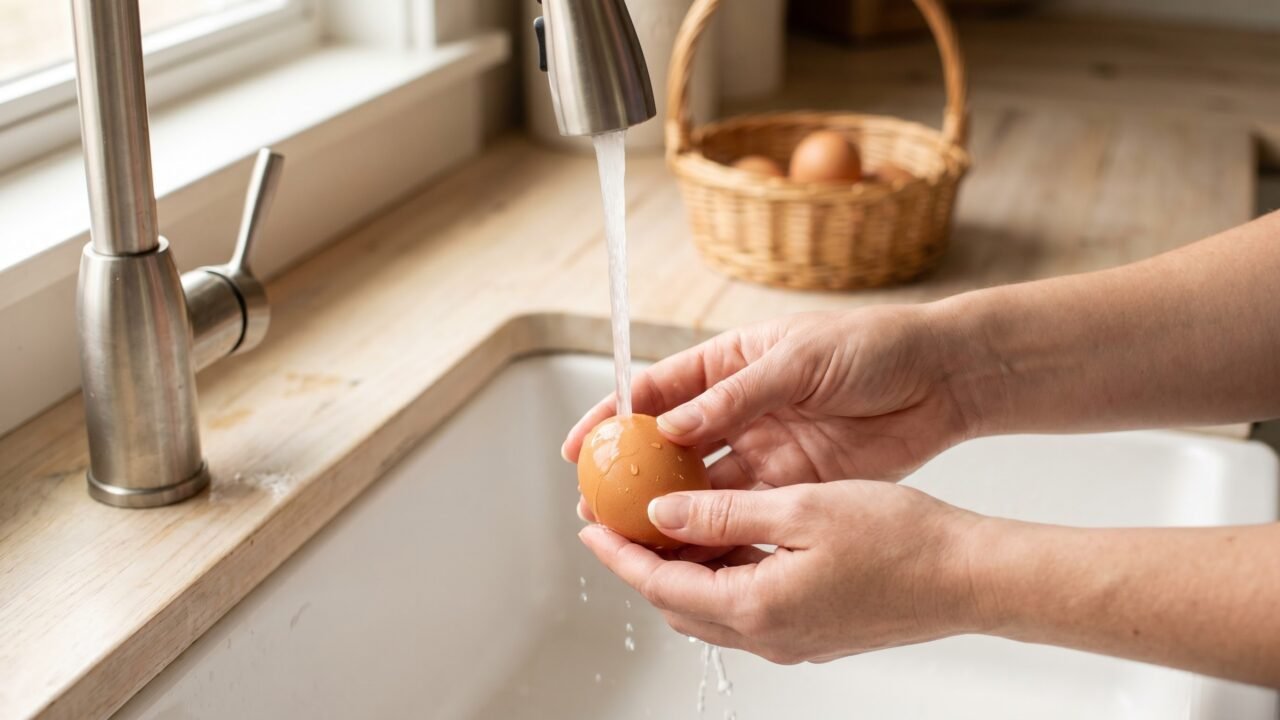
Do not submerge. The shell membranes are selectively permeable, meaning liquid solutions (including wash water with whatever is in it) can move through under the right pressure. Holding an egg under running warm water or using a spray bottle gives you adequate surface cleaning without the submersion risk.
Dry the egg completely before it goes into the refrigerator. A damp egg cooling in a cold environment can pull moisture through the now-open pores. Let washed eggs air dry or pat them with a clean paper towel, then refrigerate promptly.
For eggs that need sanitizing beyond basic washing - perhaps from a bird with a health issue - Ask Extension guidance suggests a sanitizing dip of one tablespoon of household bleach per gallon of water, followed by complete drying before storage. That said, heavily soiled or cracked eggs are best simply discarded. Washing reduces bacterial counts significantly on clean eggs (from roughly 31,000 colony-forming units down to about 3 on a log scale, or from log 4.5 to log 0.5), but on badly contaminated shells the reduction is smaller and the pathogen load after washing may still be meaningful.
The one mistake that catches people out
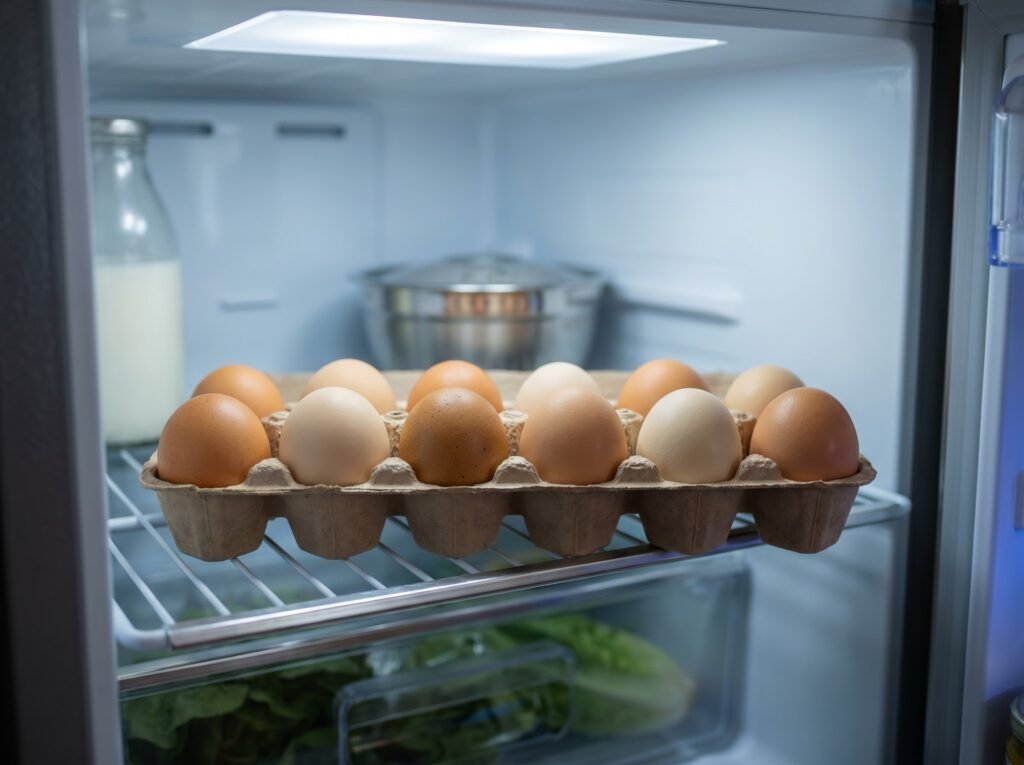
Refrigerating first, then taking eggs back to room temperature, is where things go wrong. Once an egg has been chilled - whether at the store or at home - moisture condenses on the shell when it warms up. That condensation can carry surface bacteria through the shell pores. The USDA's published guidance on this: "a cold egg left out at room temperature can sweat, facilitating the movement of bacteria into the egg and increasing the growth of bacteria." Keep chilled eggs chilled. The direction of travel is one-way.
This is also why buying eggs from a farmer's market vendor who keeps them unrefrigerated, then putting them straight into your refrigerator, is actually fine - the eggs were never chilled, so condensation is not a factor. But if a carton has been sitting in a cooler and then warms up on the drive home, the risk profile changes.
Egg quality also starts before the shell even forms. What a hen eats, her stress level, and her overall health all influence shell integrity, yolk color, and nutritional profile - topics covered in the full egg reference and, when something looks off at the shell level, in the flock health guide. For the step-by-step handling picture from nest to kitchen, the collecting and storing guide covers collection timing, nesting box hygiene, and carton labeling. To check whether an egg on the back of the shelf is still good, the freshness test guide walks through the float test and what it actually tells you.