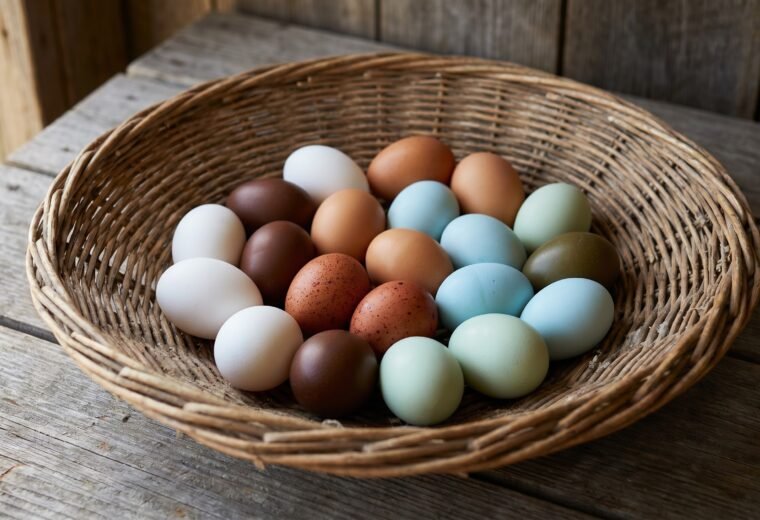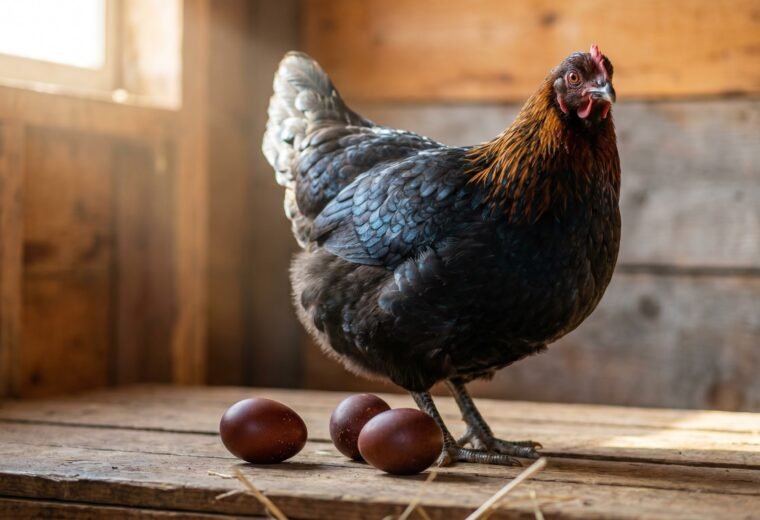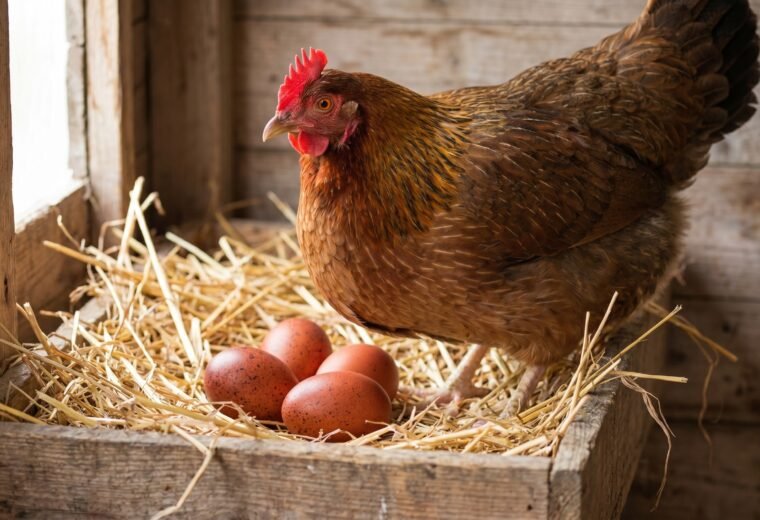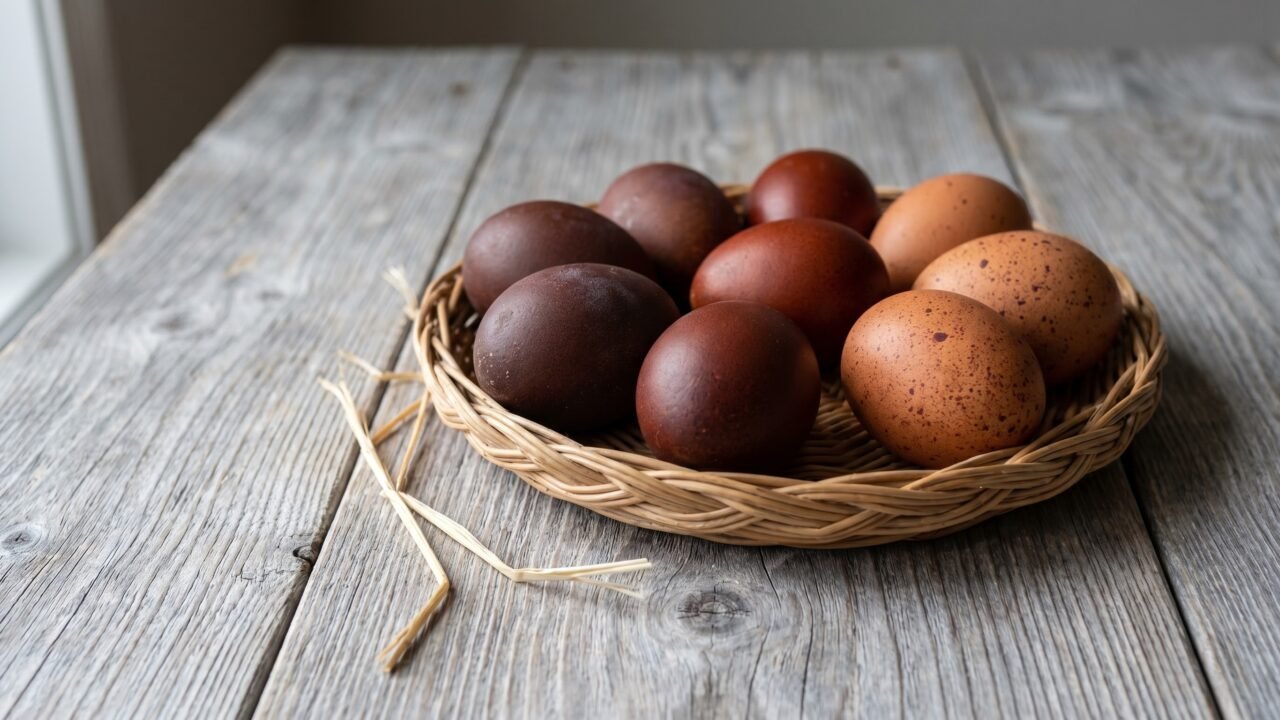
Five breeds stand out as the go-to dark brown egg layers: Marans, Welsummer, Barnevelder, Penedesenca, and Empordanesa. Of those five, Marans is the only one with a formal egg-color rating scale (numbered 1 to 9), and it claims the darkest possible eggs of any domestic chicken. The rest produce shells ranging from terracotta to rich chocolate, depending on the individual hen, her age, the season, and a biological reality most new keepers find surprising - the darkest color can fade or smear if you scrub the egg too hard.
Here is how each breed compares, what drives the color, and how to pick the right one for your flock.
Why some eggs are dark brown in the first place
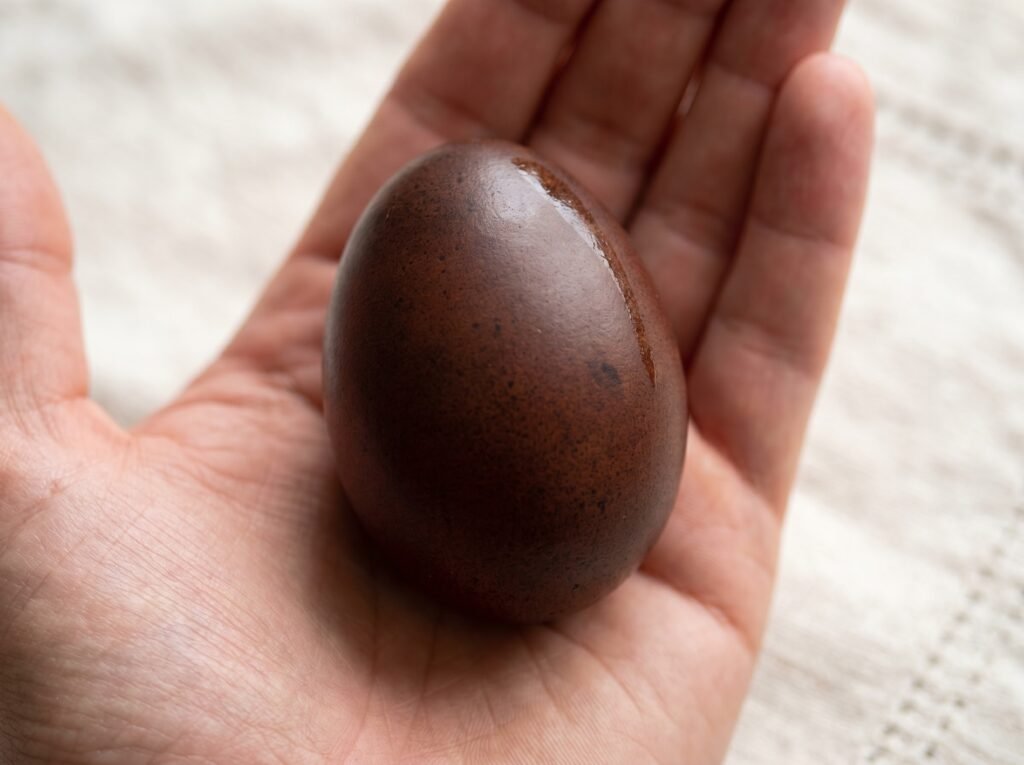
Brown eggshell color comes from a pigment called protoporphyrin IX, deposited onto the shell in the final hours of formation inside the shell gland. Texas A&M AgriLife explains it simply: the pigment goes on late, which is why the interior of a brown shell is always white - the color is a surface treatment, not a tint all the way through.
Research published in Poultry Science (Oxford Academic, 2013) found that 80 to 87 percent of that pigment sits embedded in the calcareous shell itself, with 13 to 20 percent in the thin outer cuticle. For most everyday brown-egg breeds - Rhodies, sex-links, and the like - this arrangement means the color is reasonably durable. But certain breeds, especially Marans, deposit an unusually heavy layer of pigment at the very surface. On a freshly laid Marans egg, that surface layer is still slightly tacky; it can be smeared with a finger or rinsed lighter under running water. Once fully dry, the egg is more stable, but rough nesting box bedding, repeated scrubbing, or soaking can still knock down the visual depth. The breed's stunning chocolate color is real - it is just more delicate than it looks.
Several factors cause a hen to deposit less pigment over time regardless of breed: stress (which triggers epinephrine and disrupts the cuticle-forming stage), advancing age, viral illness, and certain medications. University of Florida IFAS Extension notes that "no single factor is responsible for the loss of shell pigment" - which is worth keeping in mind when a hen's eggs pale from one month to the next.
To see how all five breeds line up by production and typical shell depth, the comparison below is a useful starting point.
Dark brown egg layers compared
| Breed | Origin | Egg color description | Typical production (est.) | Bloom effect on color | US availability |
|---|---|---|---|---|---|
| Marans (Black Copper) | France | Chocolate to near-black; #4-#9 on Marans scale | 180-200+ eggs/yr (est.) | Strong - surface layer wipes off when fresh | Wide (many hatcheries) |
| Marans (Cuckoo) | France | Medium-dark reddish-brown; typically lighter than Black Copper lines | 180-200+ eggs/yr (est.) | Moderate | Wide |
| Welsummer | Netherlands | Terracotta dark brown, often speckled | 200-280 eggs/yr | Moderate - speckling can smear slightly | Wide |
| Barnevelder | Netherlands | Chocolate to deep brown, occasional speckles | 150-200 eggs/yr | Moderate | Moderate (specialty hatcheries) |
| Penedesenca | Catalonia, Spain | Dark reddish-brown, among deepest of any breed | ~160 eggs/yr | Strong - similar to Marans | Rare (specialty only) |
| Empordanesa | Catalonia, Spain | Very dark brown | 130-180 eggs/yr (est.) | Strong | Very rare (White variety only) |
Production figures are hatchery estimates and will vary with daylight, feed, health, and flock management. See our egg colors by breed guide for a broader look across all shell colors.
Breed-by-breed breakdown
Marans
No other domestic chicken breed has its own egg-color rating system, but Marans does. The Marans Club of France developed a 1-to-9 scale specifically to grade shell darkness. The Marans Club of France sets a minimum color standard of #4 - hens that routinely lay below that are not considered proper Marans by French standards. Most hatchery birds produce eggs in the #4 to #6 range; well-bred Black Copper lines can reach #7 or higher. Verified flock data from specialty hatcheries shows Black Copper lines producing shells in the #4-#8 band, with a small number hitting #9. Those top-end eggs - near dark mahogany or purple-tinged - are genuinely striking.
The color comes at a tradeoff. Marans are not the highest egg producers; hatchery production estimates run around 180-200+ eggs per year, with Black Copper and Cuckoo varieties in a similar band (Cuckoo lines typically trending slightly higher, Black Copper lines trending slightly lower but laying darker shells). The eggs also demand careful handling. Soft, clean bedding in nest boxes and a gentle hand at collection preserve the color better than rough shavings and a quick scrub. For a deeper look at the breed's history, temperament, and the different color varieties, our Marans breed profile covers it in detail.
Welsummer
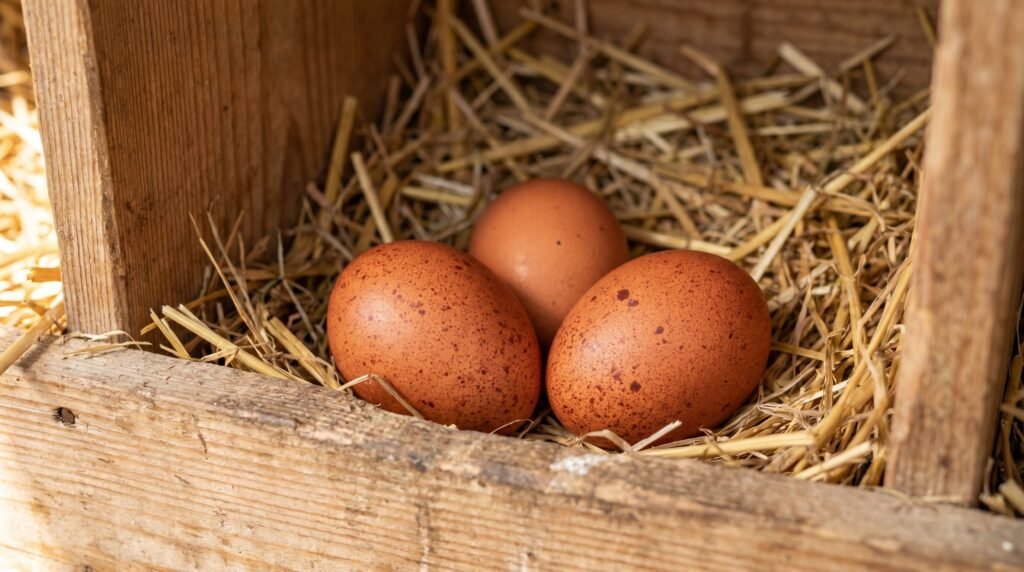
The Welsummer comes from the Dutch village of Welsum and is the only breed on this list that reliably produces speckled dark brown eggs - dark spots on a terracotta or reddish-brown base. One hatchery survey describes the typical egg as "terracotta dark brown, often with dark speckles" and places production at around 250 large eggs per year; a broader range across sources runs 200-280, acknowledging that speckle intensity and shell depth vary by individual hen and can shift through the laying season.
Welsummers are better producers than Marans overall and less demanding about nest box conditions, since their speckling sits more firmly in the shell surface. The speckle pattern is caused by uneven pigment deposition during the last phase of shell formation - not a coating that scrubs off cleanly the way the heaviest Marans bloom can. Some hens produce beautifully speckled eggs consistently; others in the same flock lay plain medium-brown shells. Selective breeding within a flock improves consistency over time. Our Welsummer breed page goes into temperament and management specifics.
Barnevelder
Barnevelders were developed in the Barneveld region of the Netherlands, where local breeders selected specifically for rich dark brown shells that fetched a premium at market. Production estimates across hatchery sources range from 150-200 eggs per year on the higher end down to 160 large dark brown eggs per year on the more conservative end. Color descriptions converge on "chocolate to deep brown," with the caveat that "egg shade can vary by hen, age, laying cycle, feed, and season."
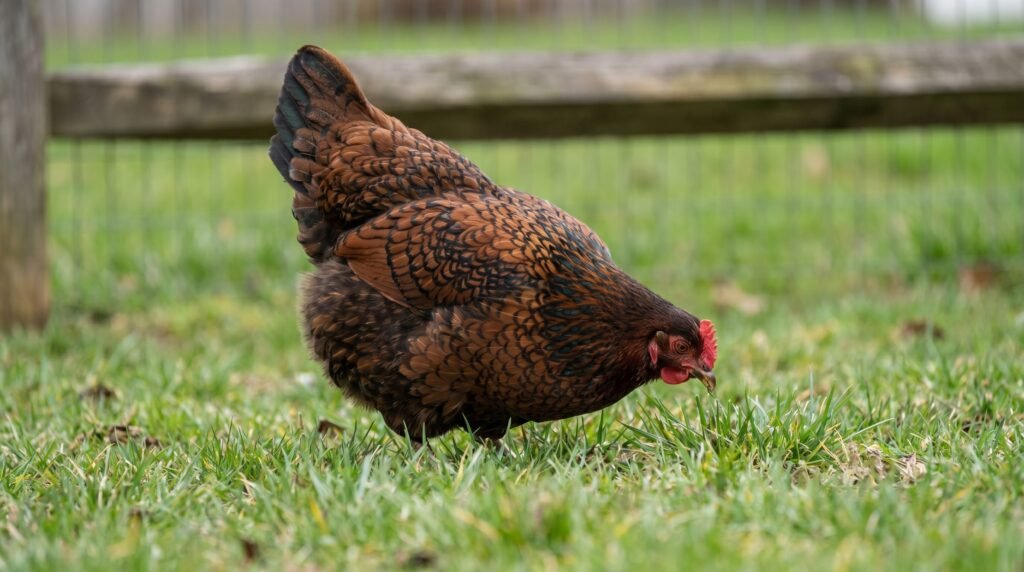
The honest gap to flag: hatchery-sourced Barnevelders often lay medium-to-dark brown eggs rather than the deep chocolate shown in breed photos. Purpose-bred lines from specialty breeders produce reliably darker shells. If deep color is the goal, look for stock from a breeder who actively selects for shell darkness rather than a general hatchery. The double-laced feather pattern - iridescent green and bronze on a rich brown base - is a practical management bonus too: those birds are easy to spot in a mixed flock at a glance.
Penedesenca
The Penedesenca is a Catalan breed, documented since 1928 and now classified as critically endangered by the FAO. Wikipedia's breed entry, drawing on European breed registry data, gives egg production at approximately 160 per year with an average egg weight of around 60 grams. The shells are described as dark reddish-brown and rank among the deepest egg colors of any breed - comparable to high-end Marans in intensity.
Two features make Penedesenca genuinely unusual. First, it carries a carnation comb - a flattened comb with multiple spikes or lobes rather than a single upright blade - found in no other breed. Second, and more confusing to egg-color logic: Penedesenca hens have white earlobes. In most poultry, white earlobes signal white eggs. Penedesenca breaks that rule entirely and lays some of the darkest eggs in the world. Availability in the US is very limited; expect to source from a specialist.
Empordanesa
The sister breed to the Penedesenca, the Empordanesa comes from the Emporda region of Catalonia. It nearly vanished in the 1980s before a Spanish government conservation program pulled it back from the edge. Breed descriptions consistently note very dark brown shells - often listed alongside Penedesenca and Marans as the darkest possible. Production estimates of 130-180 eggs per year appear across multiple breed registries, though a primary-source figure for US-raised flocks is not available; treat those numbers as general guidance.
Only the White Empordanesa color variety has been imported to the United States, so finding birds or hatching eggs requires dedicated searching. If you are drawn to rare heritage breeds and deep egg color, it is worth the effort - but realistic flock-planning means budgeting time to locate a reputable source rather than ordering from a catalog.
Getting the darkest eggs from your flock: what actually moves the needle
Genetics set the ceiling. A Welsummer or Barnevelder from average hatchery stock will never reach the #8 on a Marans color chart, no matter how well managed. Within a breed, though, several practical factors shift results noticeably.
- Stress minimization. University of Florida IFAS Extension identifies stress as the leading cause of pale brown eggs - specifically, the epinephrine released by fear or crowding disrupts cuticle formation in the final 3 to 4 hours of shell development. Calm, low-disturbance routines matter more than most keepers expect.
- Flock age. Egg color typically peaks in pullet year and fades gradually as hens age. A three-year-old Marans hen may lay shells two full grades lighter than she did in her first season.
- Nest box bedding. Soft, deep bedding (pine shavings or straw) protects freshly laid Marans eggs from surface abrasion before the bloom sets. Avoid coarse materials in boxes where heavy-bloom breeds nest.
- Washing practice. Unwashed eggs keep the bloom intact. If you must clean an egg, use the lightest touch - a dry cloth or barely damp rag rather than soaking or scrubbing. Heavy scrubbing on any dark-brown egg removes surface pigment and will lighten the visible color.
- Laying position in the cycle. All dark-egg breeds lay their darkest shells at the start of a laying cycle and progressively lighter ones as the cycle extends. A long, uninterrupted laying stretch produces the most obvious fade; a molt reset often brings color depth back.
Choosing the right breed for your situation matters as much as management. If production volume is the priority alongside dark eggs, Welsummers offer the best combination - up to 280 eggs per year in good conditions, with reliably attractive speckled shells. If maximum color depth is what you want and you are willing to accept lower production, a well-bred Black Copper Marans line is the benchmark. Barnevelders split the difference in temperament and moderate production; Penedesenca and Empordanesa are for keepers who enjoy rare breeds and can source carefully. Our full breed directory can help narrow down options by temperament, size, and climate suitability.
A note on "how dark is dark"
Marketing photos of Marans eggs are frequently taken of fresh-laid eggs in optimal light, sometimes from the darkest individual in a flock. Real carton averages from typical hatchery birds look noticeably different. Before committing to a breed based on photos alone, look for flock photos posted by keepers rather than hatchery promotional shots, and check what color scale number breeders are actually selecting for. A breeder who culls below #6 on the Marans scale will produce consistently darker eggs than one who keeps any bird that lays a brown shell.
For keepers who want a rainbow carton rather than just dark brown eggs, our egg colors by breed overview covers the full spectrum from white through blue-green to chocolate.