The short answer: Keep 90% of your hens' diet as complete layer feed and limit all treats, scratch, and kitchen scraps combined to 10% - roughly 2 tablespoons per hen per day. Foods to avoid entirely: avocado (all parts), raw or dried beans, chocolate, rhubarb, moldy food of any kind, and green or raw potato. Everything else on the safe list is fine in proportion.
Most backyard keepers already know avocado is trouble. What surprises people is how easy it is to accidentally undercut a flock's nutrition with food that seems perfectly wholesome - a generous handful of scratch, a bowl of garden scraps, week-old table leftovers. Treats for chickens are genuinely useful, but they work only when they stay in proportion. Get that proportion wrong and egg production and bone health quietly suffer long before anything looks wrong.
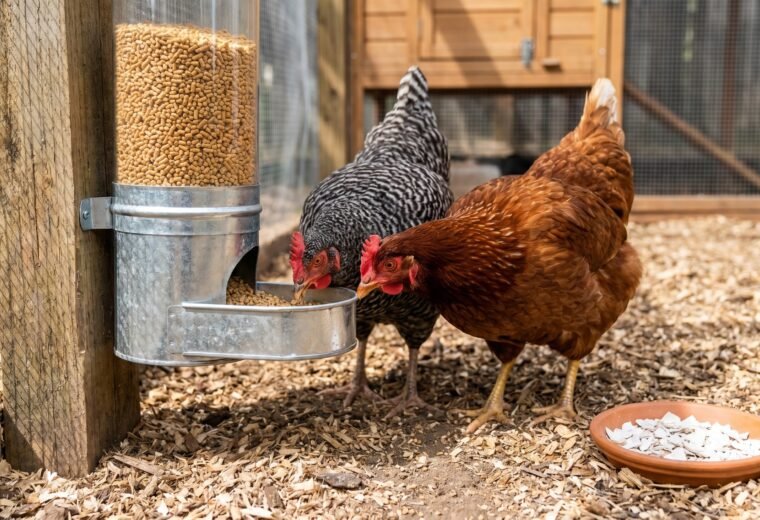
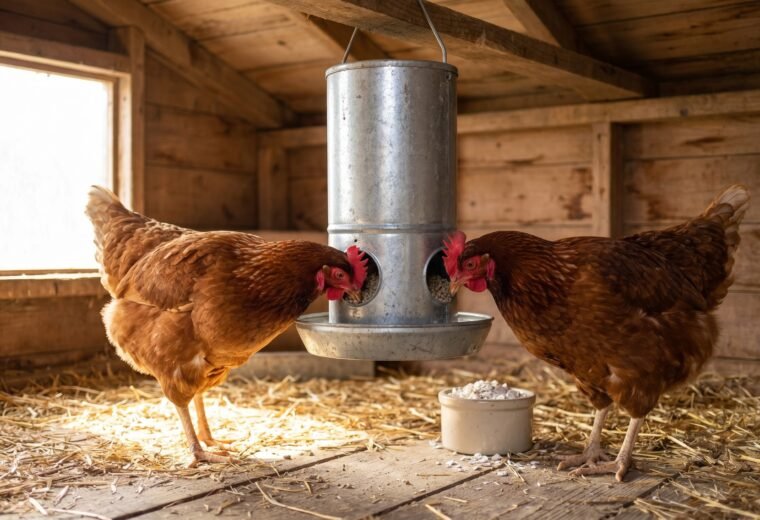
Complete layer feed should make up 90% of what your hens eat each day. The remaining 10% - treats, scratch, kitchen scraps, all of it combined - is the ceiling, not the floor. For a typical laying hen eating roughly a quarter pound of feed daily, 10% works out to about 2 tablespoons of extras. That's not much. For a flock of seven hens, you're looking at roughly a generous three-quarters of a cup of treats shared among the group before the balance starts to tip.
What treats are safe for chickens, and how much can I give?
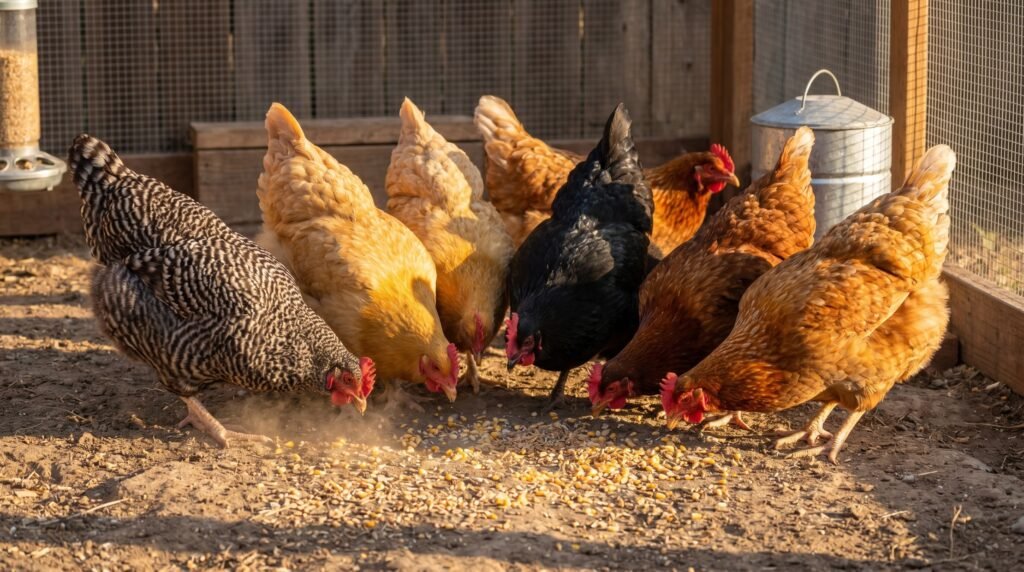
The safest treats are fresh vegetables, fruits, cooked grains, and dried protein like mealworms - foods that add nutrition without displacing the minerals in layer feed. The hard limit is 10% of total daily intake, roughly 2 tablespoons per hen. Scratch grains count toward that cap, so offer them last in the day after birds have eaten their complete feed.
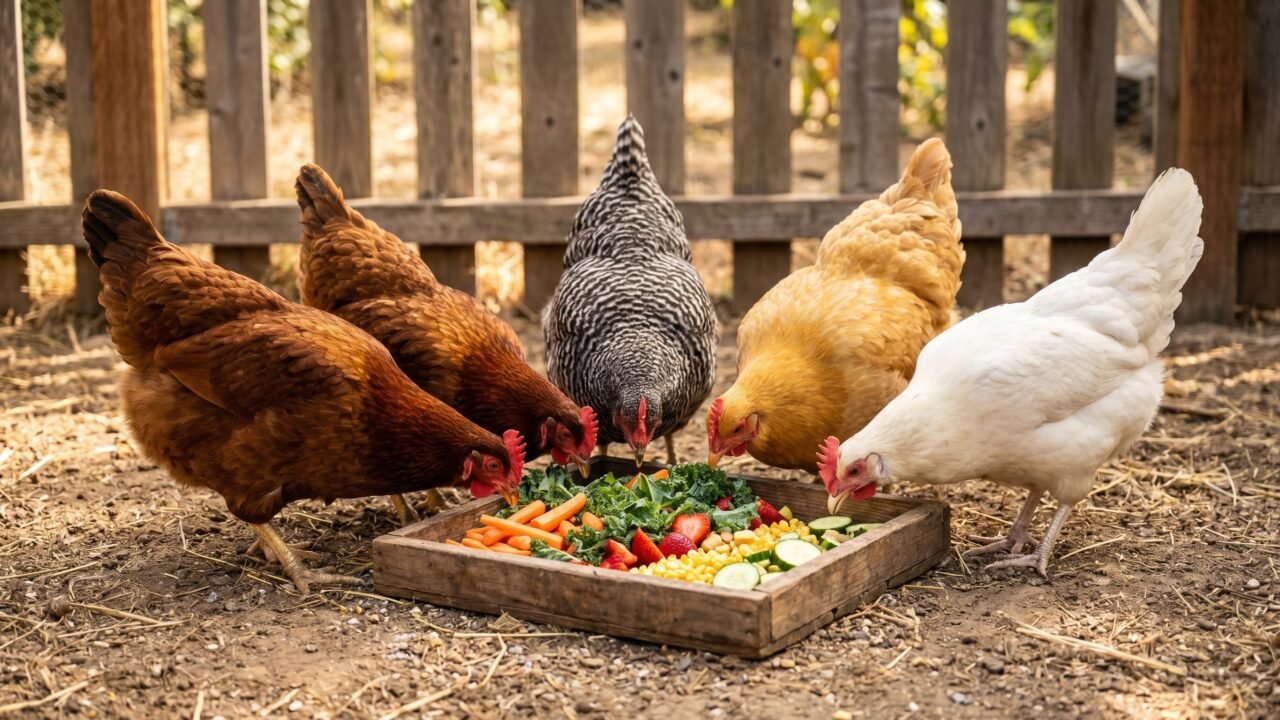
The best treats are foods that add something nutritious without displacing the balanced minerals in layer feed. Vegetables and fruits fit well. The list below covers what we offer in the run regularly and what the birds reliably clean up.
| Treat category | Good options | Notes |
|---|---|---|
| Leafy greens | Kale, lettuce, Swiss chard, spinach | Excellent low-calorie option; hang in a cluster to slow consumption |
| Other vegetables | Broccoli, squash, pumpkin, cucumber, beets, carrots | Pumpkin seeds are a bird favorite; carrots fine raw or cooked |
| Fruits | Watermelon, strawberries, blueberries, apple slices (no seeds) | High sugar; keep amounts small; remove apple cores |
| Protein boosts | Dried mealworms, scrambled eggs | Especially useful during molt when feather re-growth demands extra protein |
| Cooked grains | Plain oatmeal, plain rice, plain pasta | Feed warm (not hot) on cold mornings; no sauces or salt |
| Herbs | Oregano, parsley, cilantro, mint, thyme, basil | Chickens nibble fresh or dried; no measurable harm in normal amounts |
| Scratch grains | Corn, milo, wheat blends | Offer only in the afternoon after birds have eaten complete feed; scratch is low in protein and high in carbs - treat it like a snack, not a supplement |
Scratch grains deserve a specific word of caution. Extension poultry specialists describe them as the french fries of chicken feed: irresistible, but crowding out the nutritious meal. Offer scratch only after birds have had access to their complete feed for most of the day, and limit it to what the flock finishes in 20 minutes or so.
If you want more background on how layer feed is formulated and why those nutrient ratios matter, the chicken feed article covers the full breakdown by life stage.
Which foods are genuinely toxic to chickens?
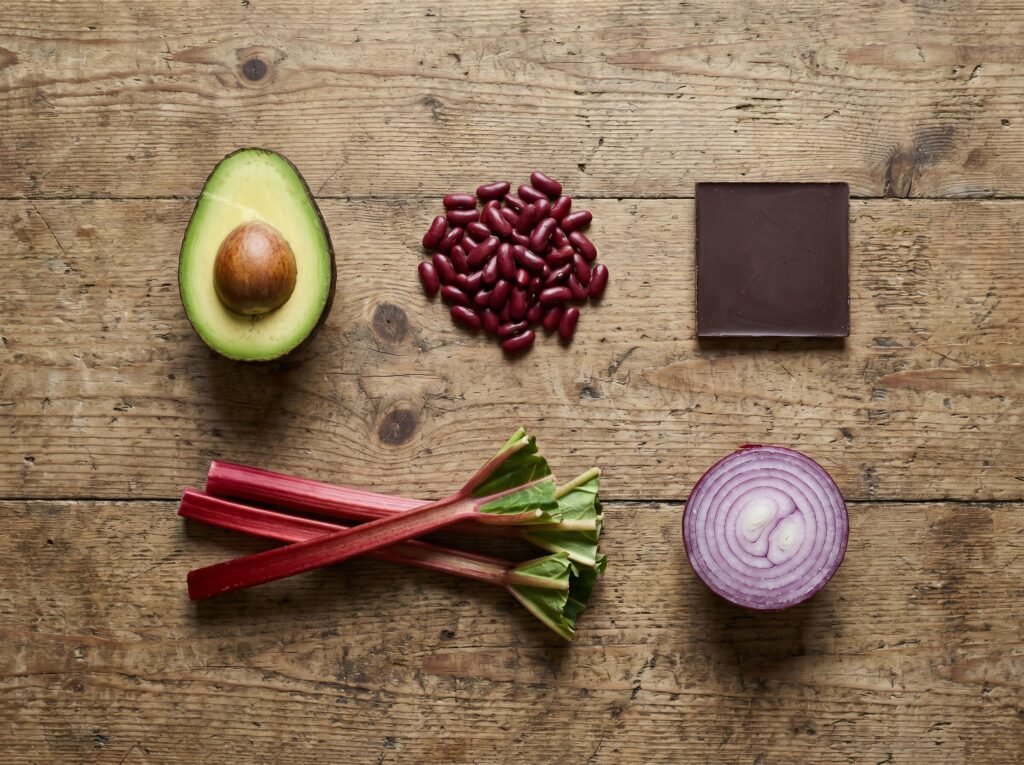
Avocado (all parts), raw or dried beans, chocolate, rhubarb, and any moldy food are the non-negotiable no-list. Green or raw potato and large amounts of onion also cause serious harm. None of these are "feed sparingly" foods - they belong entirely out of the flock's reach. Cooking eliminates the danger in beans; it does not fix the others.
The list of foods that can seriously harm or kill chickens is shorter than many keepers fear, but the items on it cause real damage. These are not "feed sparingly" foods - they belong out of the flock's reach entirely.
| Food | Toxic component | Which parts / notes | Risk level |
|---|---|---|---|
| Avocado (leaves, skin, pit) | Persin | Leaves are the most toxic; skin and pit also harmful. The flesh is generally considered lower risk, but the whole fruit is safest avoided. | High - can cause respiratory distress and death in birds |
| Raw or dried beans | Hemagglutinin (phytohaemagglutinin) | All raw or undercooked common beans (kidney, pinto, navy, etc.); cooking fully neutralizes the compound | High - inhibits digestion; can be fatal |
| Chocolate and cocoa | Theobromine and caffeine | All forms; dark chocolate highest concentration | High - toxic to the cardiovascular system |
| Moldy food of any kind | Mycotoxins (aflatoxin, ochratoxin, others) | Includes moldy bread, moldy produce, stored feed that has gotten damp | High - mycotoxins cause organ damage and death |
| Rhubarb | Anthraquinones; oxalic acid (especially in frost-damaged stalks) | Leaves worst; stalks also a concern | Moderate to high |
| Green or raw potato (nightshade family) | Solanine | Green flesh, eyes, and the entire above-ground plant; cooked plain potato is fine | Moderate |
| Onion and garlic (large quantities) | Thiosulfates; flavor compounds | Small incidental amounts unlikely to harm, but feeding onion-heavy scraps taints egg flavor and high amounts can damage red blood cells | Low to moderate |
| Very salty foods | Sodium excess | Heavily salted chips, cured meats, pickles; poultry sodium requirement is only 0.12-0.2% of diet | Moderate - can cause fluid imbalance and death in severe cases |
The avocado situation is worth unpacking a bit further, because it generates more questions in our inbox than almost anything else. The Merck Veterinary Manual notes that caged birds like budgerigars are far more susceptible to persin than chickens and turkeys - small amounts of avocado have caused death within days in documented cases with caged birds, while chickens show considerably more resistance. That relative resistance does not make avocado safe for your flock. The leaves, skin, and pit all carry the toxin, and the safest rule is simply to keep all parts of the avocado plant away from birds.
Moldy food is the toxic item that keepers most often accidentally serve. Any food that has gone bad in the refrigerator, any feed stored where moisture can reach it, any garden produce left to rot in the run - all of it is off the table. Alabama Cooperative Extension puts it plainly: "Never allow birds to eat moldy feed; toxins produced by molds will cause serious harm to poultry."
Which kitchen scraps can chickens eat safely?
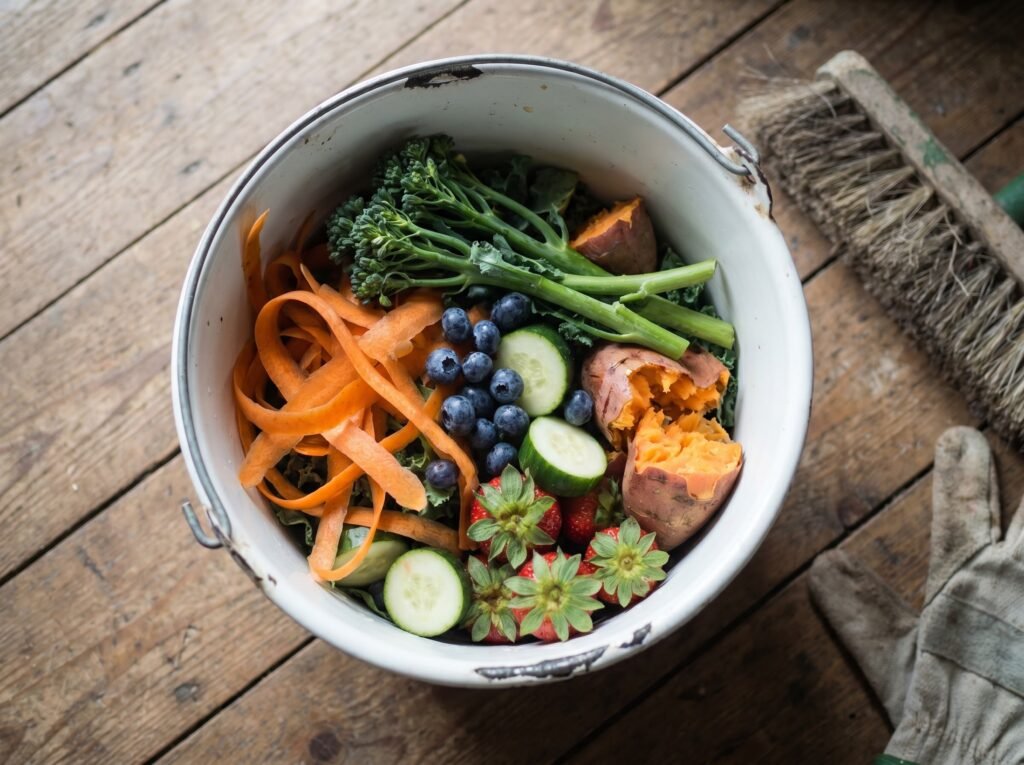
Plain cooked vegetables, unsalted cooked grains, fresh fruit trimmings, plain scrambled eggs, and plain cooked potato all pass the scraps test. Anything salted, pickled, moldy, dairy-heavy, or past its edible date fails it. The single most practical rule: if you'd compost it because it's past prime, don't send it to the flock instead.
Kitchen scraps can be a genuinely good supplement or a slow nutritional drain depending on what you're putting in the bucket. The deciding factors are freshness, salt content, and whether the food itself falls on the safe list.
A useful mental filter: if you would compost it because it's past prime, don't send it to the flock either. Chickens are not a secondary garbage disposal. Rotting organic matter can harbor Clostridium bacteria and produce botulinum toxin, a serious risk that's entirely avoidable.
These pass the scraps test:
- Plain cooked vegetables (no butter, no salt, no sauces)
- Unsalted, unbuttered cooked rice, oats, or pasta
- Fresh fruit trimmings (rinds, cores without seeds, overripe but not fermented)
- Plain scrambled or hard-boiled eggs (yes, chickens can eat eggs - it's a good protein source; just don't make them recognize whole raw eggs as food)
- Plain cooked potato (not green, not raw)
- Bread in small amounts - but this is filler with little nutritional value, so go light
These fail the test:
- Anything salted, pickled, or heavily seasoned
- Milk, soft cheese, and other lactose-heavy dairy - chickens lack the digestive enzymes to handle lactose efficiently, and loose droppings tend to follow (plain unsweetened yogurt in small amounts is a reasonable exception)
- Raw meat or fish (risk of pathogen introduction and it can encourage pecking behaviors you don't want)
- Onion-heavy dishes (egg flavor pickup is a real and persistent problem)
- Anything moldy, fermented unintentionally, or past its edible date
- Avocado in any form, raw beans, rhubarb, chocolate
If you're still calibrating what a fully balanced diet for your birds looks like, the what to feed chickens guide walks through complete feed types, protein requirements by age, and when to transition between starter, grower, and layer rations.
Why does the 90/10 ratio matter more than any specific treat?
Treats displace layer feed, and layer feed is where calcium, protein, and the full vitamin-mineral balance come from. When treats crowd out feed, hens pull calcium from their own bones to maintain shell production. The deficit builds invisibly for weeks before you notice thinning shells or skeletal weakness - by which point the damage is done.
Chickens self-regulate their energy intake surprisingly well when given access to complete feed. The problem is that treats - especially scratch, bread, and cooked grains - are energy-dense but nutritionally thin. When birds fill up on treats, they eat less layer feed, which means less calcium, less protein, and less of the vitamin and mineral balance the feed is formulated to provide.
The consequence shows up first in eggshell quality. A laying hen needs 3.5-4.5 grams of calcium daily to produce a well-shelled egg. Layer feed is formulated to supply around 3.5-4.5% calcium. When treats crowd out feed, hens start pulling calcium from their own bones to maintain shell production. You may not notice anything wrong until shells start thinning or a hen develops skeletal weakness - by which point the deficit has been building for weeks.
Offering oyster shell free-choice (for hens 16 weeks and older only) gives layers a calcium buffer to draw on. Growing birds should not have access to oyster shell - their calcium requirement is much lower, and excess calcium damages developing kidneys. Separate the feeders if you run a mixed-age flock.
Grit is a different matter from oyster shell. If your birds free-range on natural ground, they'll find what they need. Confined birds that eat anything with texture - scratch, whole grains, vegetables with tough fibers - need insoluble granite grit to grind those items in the gizzard. Offer it free-choice and let them take what they need. For more on the full feeding picture, see our overview of chicken health and what routine husbandry looks like through the seasons.
What is safe and what is not? A quick-reference treat table
Most common vegetables, fruits, cooked grains, and protein treats are safe within the 10% daily budget. Absolute no-list: avocado in any form, raw or dried beans, chocolate, rhubarb, moldy food, and green potato. Dairy and bread sit in a limited middle ground. Use this table as a fast lookup before tossing anything new into the run.
This table consolidates the most common questions we get about specific foods. Use it as a fast lookup before you toss something into the run.
| Food | Safe? | Condition or limit |
|---|---|---|
| Watermelon | Yes | Birds and all; the rind is fine too |
| Strawberries, blueberries, raspberries | Yes | Keep amounts modest; high sugar |
| Apple slices | Yes | Remove seeds and core (seeds contain amygdalin) |
| Grapes | Yes | Fine in small amounts; cut large grapes in half for bantams |
| Avocado (any part) | No | Persin in skin, pit, and leaves; avoid entirely |
| Broccoli, kale, leafy greens | Yes | One of the best treat choices; high water, some vitamins |
| Cooked potato | Yes | Plain, no green flesh, no skin from green potatoes |
| Raw green potato | No | Solanine; the whole plant above ground including greens |
| Cooked beans | Yes | Must be fully cooked; raw or dried beans are toxic |
| Raw or dried beans | No | Hemagglutinin; fatal in sufficient quantity |
| Scrambled or hard-boiled eggs | Yes | Good protein source; don't feed recognizable raw whole eggs |
| Plain cooked oatmeal or rice | Yes | No salt, no butter, no flavoring; good warm-morning treat |
| Bread | Limited | Nutritionally empty filler; small amounts are harmless, large amounts displace real food |
| Chocolate | No | Theobromine toxic to poultry; all forms |
| Moldy food | No | Mycotoxins; discard anything with any visible mold |
| Rhubarb | No | Anthraquinones and oxalic acid; all parts |
| Onion (large amounts) | No | Egg taint; thiosulfates at high volumes; small incidental amounts are not an emergency |
| Dairy | Limited / varies | Milk and soft cheeses: skip - chickens don't digest lactose well, loose droppings result. Plain unsweetened yogurt: small amounts occasionally acceptable - lower lactose and sometimes used as a probiotic supplement during recovery. No flavored or sweetened dairy. |
| Mealworms (dried) | Yes | High protein; excellent during molt; still counts toward the 10% treats budget |
| Scratch grains | Yes | Offer in the afternoon only, after birds have had complete feed; no more than the flock clears in 20 minutes |
| Pumpkin and seeds | Yes | Seeds are a favorite and a source of healthy fats; whole pumpkin is a good seasonal enrichment item |
| Very salty processed foods | No | Chips, cured meats, pickles; sodium excess causes fluid problems |