Most backyard flocks stay healthy not because their keepers react quickly to problems, but because they prevent most problems before they start. The same dozen or so husbandry habits, repeated season after season, account for the vast majority of a flock's disease resistance: clean air, dry litter, sound biosecurity, and enough space for birds to behave normally. When something does go wrong, catching it early matters, because chickens are wired to hide weakness until they are genuinely struggling.
This guide covers the prevention layer in enough depth to act on it, explains what warning signs actually look like, walks through the two parasite categories that hit backyard flocks hardest, and draws a clear line around the vet-only territory so you know exactly when to pick up the phone.
Is air quality really the most underrated health variable in a backyard coop?
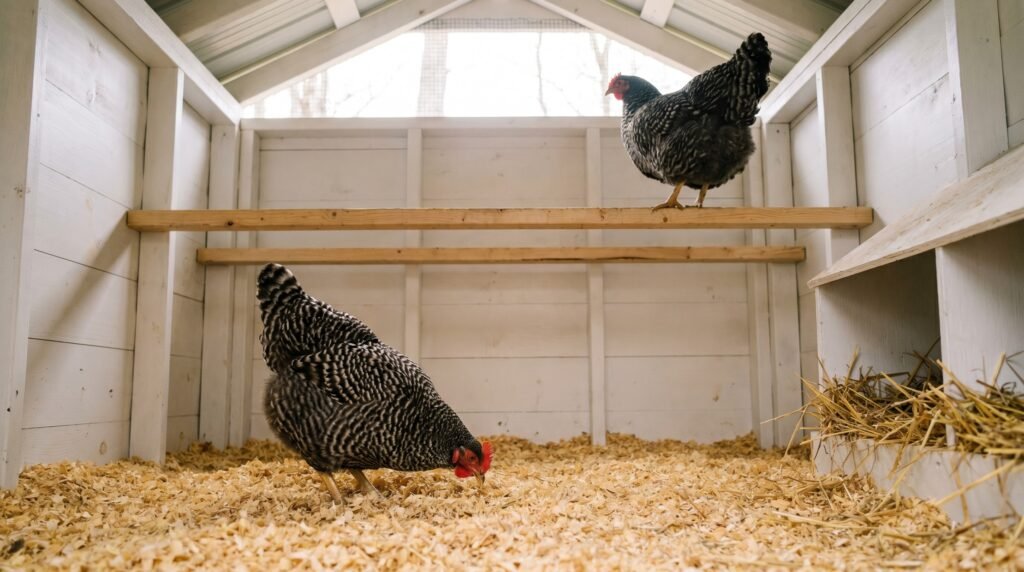
Yes - and ammonia is the specific reason. It accumulates invisibly from wet litter long before it smells alarming, and extension research shows measurable harm to birds at concentrations most keepers assume are safe. Controlling ammonia through ventilation and dry bedding is the single highest-leverage husbandry habit available to a backyard flock owner.
Ammonia is the silent threat in most backyard coops. It builds from decomposing manure in wet litter, and it has no obvious smell until it's already doing damage. Research published in Frontiers in Veterinary Science (PMC10886321) assigned measurable health risk at concentrations above 10 ppm, with documented pododermatitis, vision injuries, and mucosal lesions in birds exposed to levels the study categorized as high risk (15-20 ppm) or very high risk (above 21 ppm). OSHA and NIOSH set an occupational exposure limit of 25 ppm for human workers; poultry research indicates serious bird health effects already begin below that threshold at the "very high risk" level above 21 ppm.
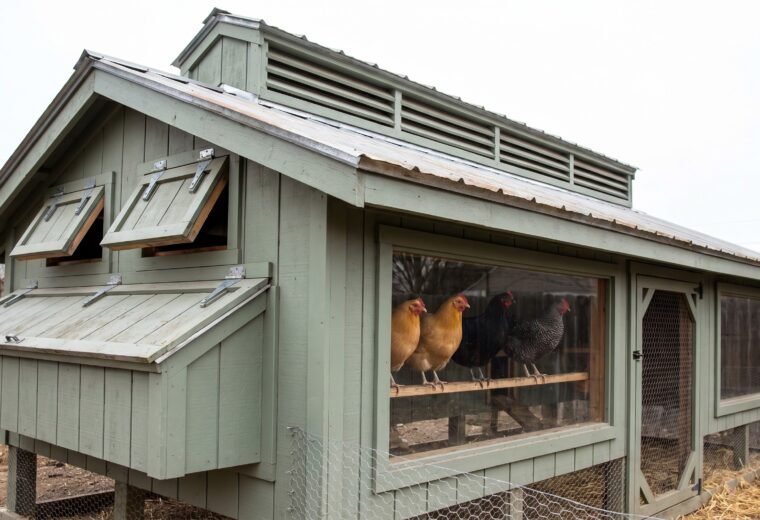
The practical fix is ventilation, not deodorant. Air exchange moves moisture-laden air out before ammonia builds to harmful levels - University of Minnesota Extension makes that point plainly. Ridge vents, soffit gaps, or adjustable windows placed above bird height accomplish this without creating a cold draft at roost level. A rough field test: walk into the coop in the morning after the birds have been closed in all night. If your eyes sting or your nose prickles before you smell the birds, ammonia is already elevated. That's the cue to add ventilation and turn or remove wet litter, not to add a cover smell.
Cold weather makes keepers want to seal the coop. This is the single highest-frequency mistake in winter flock management. Healthy adult chickens tolerate cold far better than they tolerate poor air. Supplemental heat is only warranted when temperatures drop below 35°F, per University of Minnesota Extension guidance, and even then, radiant panel heaters carry less fire risk than heat lamps. If you do use a heat lamp, the combustion point of dry bedding is low enough that the bulb's surface temperature alone poses a genuine ignition hazard - mount it with a secure cage and a solid hook, never on a cord alone. Winter coop ventilation is a subject worth understanding in full before cold weather arrives.
How often does a backyard coop actually need to be cleaned?
For a flock of eight to 20 birds, high-traffic areas need spot-cleaning at least twice a week, and wet spots should come out the same day you notice them. The right interval for a full cleanout depends on stocking density and your bedding approach, but the target is always the same: dry litter that does not cake or smell of ammonia.
Litter management is where air quality, parasite load, and pathogen pressure all converge. The goal is dry bedding that doesn't cake. Wet spots under waterers or in high-traffic corners should come out the same day you notice them. For the rest of the coop, the right cleaning interval depends on stocking density and your approach.
Spot-clean high-traffic areas (under roosts, around waterers) at least twice a week in a flock of eight to 20 birds. A full cleanout - removing all bedding down to the floor, scraping roosts, and hosing the structure - keeps the environment reset. Cornell Small Farms Program describes a four-stage cleanout sequence: dry clean first (sweep dust off all surfaces before any water goes in), then soak, wash with neutral-pH detergent in hot water, and rinse immediately to remove detergent residue. Disinfectants only work on already-clean surfaces; organic matter neutralizes them.
The deep litter method, covered in its own article here at HenAcre, is a legitimate approach when managed correctly, but it requires consistent turning and good ventilation to keep ammonia in the safe zone. It's not the same as simply not cleaning. Keepers curious about that approach will find the monitoring details in the deep litter method piece.
Feeders and waterers deserve their own schedule. Cornell's guidance calls for soaking them in a 200 ppm chlorine solution (roughly one tablespoon of bleach per gallon of water) on a regular basis. Waterers get priority, because as Poultry Extension documents, "Without water, dry feed forms clumps in the crop" that can press on the carotid artery and decrease blood flow to the brain. Dehydration from a fouled waterer is a faster killer than most people expect.
Bedding type matters too. Pine shavings and other absorbent materials wick moisture away from the surface. Sand drains well but stays cold in winter. Whatever you use, the test is simple: press a handful together. If it holds a clump and smells of ammonia, you're overdue. The tradeoffs between pine shavings, sand, and straw are laid out in the chicken bedding options piece for anyone choosing between materials.
What does practical biosecurity look like for a backyard flock?
Biosecurity means preventing disease from reaching your birds in the first place. For a backyard keeper with eight to 20 birds, Poultry Extension defines it as "the measures taken to prevent the introduction and/or spread of disease in a poultry flock," and it reduces to five consistent habits: quarantine new birds, limit outside contact, control pests, manage coop downtime between batches, and know your HPAI reporting obligations.
Quarantine every new bird. Poultry Extension's minimum is two weeks of isolation before any contact with the established flock, with the new birds housed in a separate building. The HenAcre team recommends 30 days when you have the space - USDA APHIS uses that longer window for some species because certain pathogens take longer to express. Care for quarantined birds last, after you've handled the main flock, and use separate equipment.
Limit outside contact. Poultry Extension states that anyone working with your flock "should not have had contact with other birds for at least 24 hours before interacting with the flock," including visits to live bird markets, swap meets, or even a neighbor's coop. Wild bird droppings carry pathogens too. Screening windows and vents reduces wild bird access to feed and water.
Control rodents and insects. Rodents eat feed and carry disease. Clean up spills immediately, store feed in sealed metal bins, and address any rodent activity before it normalizes. Lesser mealworm beetles are documented vectors for Marek's disease and salmonella, per Penn State Extension, so a clean coop structure isn't just about aesthetics.
Manage the coop between batches. If you replace or add a group of birds, Poultry Extension recommends a two-week downtime for cleaning and drying before new birds arrive.
Know your HPAI risk. Since 2022, highly pathogenic avian influenza has affected more than 100 million birds in the US, with backyard operations making up over half of affected flocks, according to the Merck Veterinary Manual. Report any sudden unexplained mass mortality, severe respiratory distress, or neurological signs to your state veterinarian immediately. HPAI is a reportable disease and rapid response protects both your remaining birds and neighboring flocks.
What is the difference between external and internal parasites in backyard chickens?
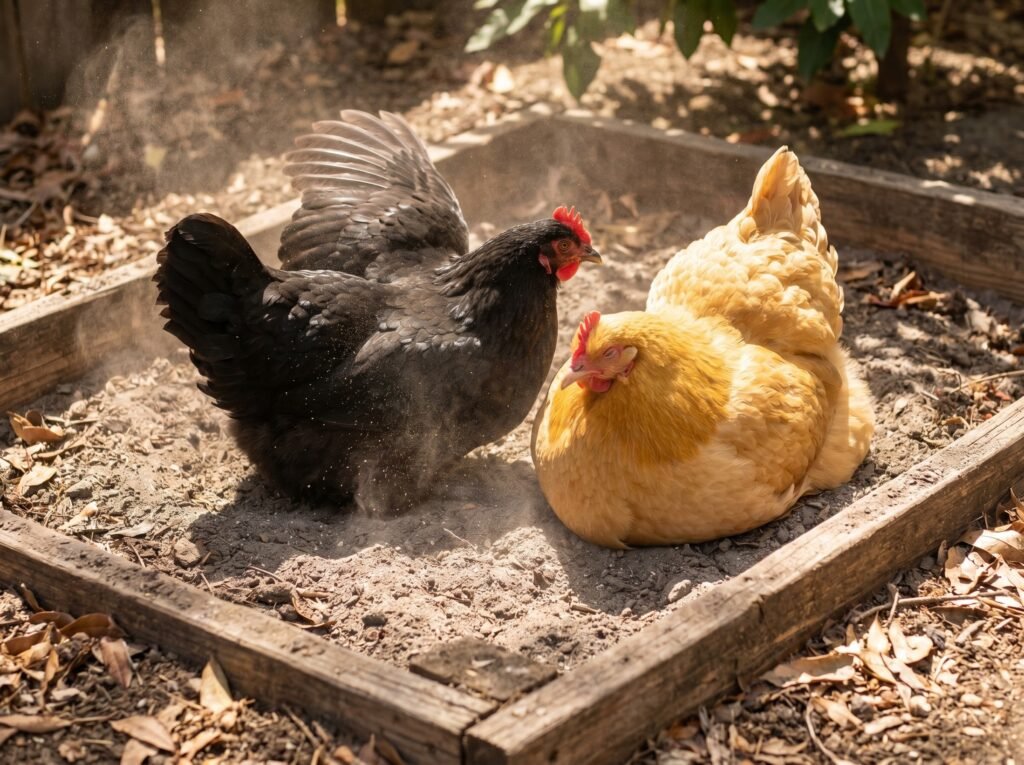
External parasites (mites and lice) live on or near the bird and are detectable through feather inspection; internal parasites (worms and coccidia) live inside the gut and require a fecal test to confirm. The treatments, timing, and prevention strategies differ enough that confusing the two categories leads to ineffective management. Getting the biology right is what makes treatment actually work.
External parasites: mites and lice
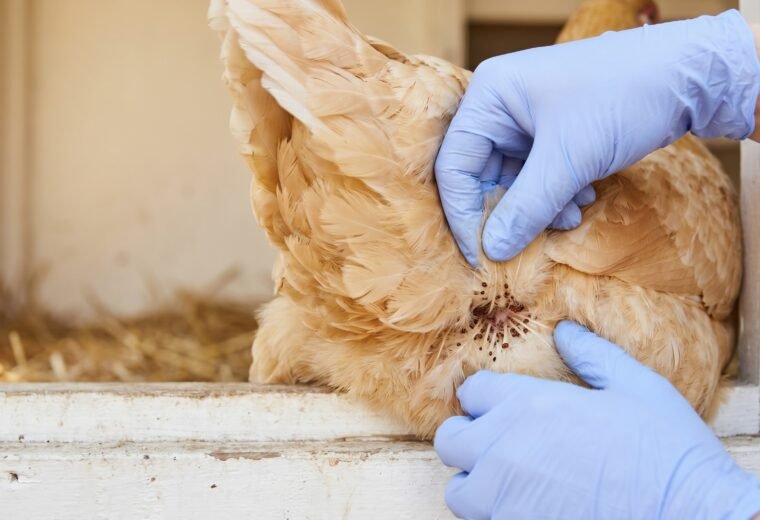
Northern fowl mites and chicken (red) mites are the two you're most likely to encounter, but they live in entirely different places. The northern fowl mite, per Mississippi State University Extension, "spends its entire life on the animal, sucking blood and irritating the bird." Check the vent area for matted, discolored feathers - that rough buildup of dried blood and mite excreta is the signature. The chicken mite, by contrast, hides in cracks and crevices during the day and feeds on birds at night. Its entire life cycle can complete in as little as 10 days, which is why re-treatment timing matters: a treatment that kills adults but not eggs needs a follow-up in 7-10 days to catch the next generation before it matures.
This means treating only the birds misses the problem if you're dealing with chicken mites - you also need to treat the coop structure. And treating only the coop won't fix a northern fowl mite infestation, because those mites never leave the host. Anyone dealing with an active infestation will find chicken mites identification and treatment covered in detail in that dedicated piece.
Lice are chewing parasites, not blood feeders. Look for white egg clusters at the base of feathers. Large lice infestations cause weight loss and a measurable drop in egg production, per Mississippi State Extension. Permethrin applied per label instructions is the standard treatment; like mites, a second application 7-10 days later catches newly hatched eggs.
Dust bathing is the flock's own maintenance behavior against external parasites. Poultry Extension describes it as "rolling or moving around in the dirt to cleanse the skin and feathers of parasites, dead skin, and other skin irritants." Birds without outdoor access need a container of dry dirt or play sand inside the coop - if they can't dust bathe, parasites build up faster and stress levels rise.
Internal parasites: worms and coccidia
Roundworms are the most damaging internal worm in backyard flocks, per Poultry Extension, reaching up to 4.5 inches long and spreading through contaminated soil, water, and intermediate hosts like earthworms and beetles. Clinical signs are often vague - weight loss, dull feathers, reduced laying, general unthriftiness - which makes a fecal float test the reliable diagnostic tool. Bring a fresh dropping sample to a vet or diagnostic lab; the test identifies what species of parasite is present before any treatment decision is made. Tapeworms lack approved medications entirely in the US, so prevention through managing intermediate hosts matters more than reactive treatment.
Coccidiosis is a different category of problem. It's caused by Eimeria protozoa, not worms, and the Merck Veterinary Manual describes the disease course as rapid: symptoms progress over 4-7 days. Signs range from decreased growth rate to bloody diarrhea and significant mortality. Young birds three to six weeks old are most vulnerable. The Merck Manual notes that birds kept on wire floors have far fewer infections because they can't reingest oocysts from their own droppings - for ground-kept birds, keeping litter dry and feeders clean is the equivalent prevention. Coccidiostats in starter feed, or vaccination at the hatchery, give day-old chicks protection during that critical window.
How do you read flock behavior as a health signal?
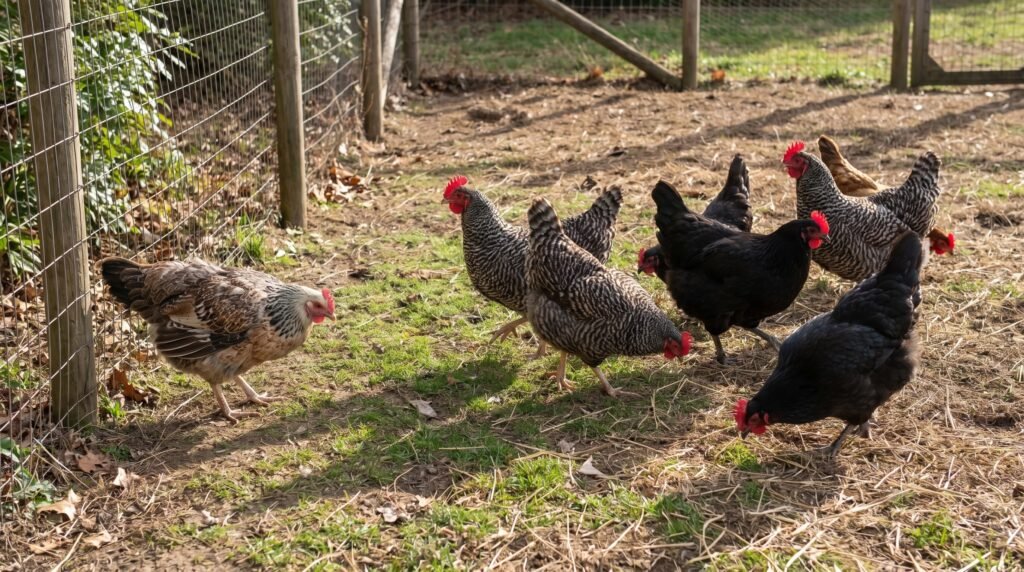
Watch for deviations from each bird's individual baseline: reduced activity, isolation from the flock, ruffled feathers outside a molt, and reduced eating or drinking. Because chickens are prey animals wired to suppress illness signals, these behavioral cues often appear before physical symptoms become obvious. Knowing your flock's normal is what makes early detection possible.
The reason behavioral observation matters is simple: chickens evolved to hide weakness. University of Maryland Extension explains that sick birds suppress illness signals because "such behavior tells predators that the ill chicken may be an easy meal." By the time a bird looks obviously unwell, it has often been ill for some time already. Knowing your flock's individual baseline - which hens are first to the feeder, who roosts where, normal daily energy level - is what makes early detection possible.
The University of Maryland Extension identifies the key behavioral warning signs: dullness or reduced interest in surroundings, lethargy with excessive sitting and closed eyes, hunching with ruffled feathers and drooped wings, reduced eating or drinking, and self-isolation from the flock. A bird standing off by itself, not foraging when the others are, is showing a classic early signal worth watching closely. Inattentiveness to movement or sound from a normally alert bird is another.
Some behavioral issues are social rather than medical. Pecking order dynamics can turn aggressive when space is too tight, when a new bird is introduced too abruptly, or when feeders and waterers become competition points. The line between normal pecking order jostling and stress-driven aggression is worth understanding before intervening. The practical fix for most pecking problems is more space and additional feeding stations, not removing the "bully."
Physiological baselines are useful to know even without equipment. University of Maryland Extension's FS-1178 fact sheet gives a normal body temperature range of 105-109.4°F; note that many veterinary clinical references cite the upper end of normal as approximately 107°F, so a reading approaching 109°F warrants attention as it overlaps with mild hyperthermia. Respiratory rate is 23-36 breaths per minute at rest; heart rate is 250-300 beats per minute. A bird panting in moderate temperatures, or one you can feel is noticeably cold to the touch while the rest of the flock is active, is outside normal range.
When should you call a poultry vet instead of managing at home?
Call the same day if you see respiratory distress in multiple birds simultaneously, sudden unexplained deaths, neurological signs, or rapid-spreading bloody diarrhea in young birds. For a single bird showing early-stage behavioral changes, isolate first and call if symptoms don't resolve with supportive care. Prevention-first husbandry reduces the frequency of illness, but it does not eliminate the situations that require professional diagnosis.
Call a vet the same day you observe any of the following: respiratory distress in more than one bird (coughing, gasping, or rales across several individuals simultaneously), sudden unexplained death of multiple birds in a short period, neurological signs like head twisting or loss of coordination, bloody diarrhea with rapid spread through young birds, marked facial or wattle swelling, or any purple-blue discoloration of the comb or wattles. Poultry Extension notes that it "is not unusual for poultry to die suddenly without showing any signs of disease," which is why a necropsy on a sudden-death bird is worthwhile - it gives you information that protects the rest of the flock.
Single-bird illness warrants isolation first, then a vet call if symptoms don't resolve with supportive care (warmth, water, rest from the flock). University of Maryland Extension's guidance applies here directly: "Establish a relationship with a reliable local veterinarian, call your vet for a diagnosis, and treat your chickens as directed." A vet who has seen your birds healthy can make a far better judgment about what's wrong than any description in an article, including this one.
The Merck Veterinary Manual's framework for disease control sums up the whole approach: "vaccination, good biosecurity, good management, proper sanitation practices, and a good plane of nutrition are key to the control of disease." None of those elements are exotic or expensive. They're consistent habits applied across seasons.
What should a daily and seasonal health check schedule look like?
A working flock-health schedule covers six intervals: daily morning and evening observations, a weekly ammonia and litter check, a monthly hands-on parasite inspection per bird, a twice-yearly fecal float test, a pre-integration quarantine period for new birds, and an annual vaccination and structure audit. The table below summarizes each interval for a flock of eight to 20 birds.
| Interval | What to check | What you're preventing |
|---|---|---|
| Daily (morning) | All birds present and moving; water clean; no panting, ruffled feathers, or isolates | Early illness detection; dehydration |
| Daily (evening) | Everyone roosted; coop door secured; no bird left on the ground | Predation; overnight health decline |
| Weekly | Ammonia sniff test (eyes-sting check); wet spots in litter; waterer and feeder scrub | Ammonia toxicity; pathogen buildup in waterers |
| Monthly | Vent area and feather base inspection on each bird for mite or lice signs; comb and wattle color | External parasite buildup; early illness markers |
| Twice yearly | Fecal float test (vet or diagnostic lab); full coop cleanout | Internal parasite load; pathogen reset |
| Before adding new birds | 30-day quarantine minimum in separate housing; observe for disease signs before integration | Disease introduction to established flock |
| Annually | Marek's vaccination for new chicks at hatch; coop structure repairs; rodent control audit | Marek's disease; rodent-borne pathogens |
The table above represents our own operational summary, drawn from the extension and veterinary sources referenced throughout this article. It's designed as a working rounds schedule for a flock of eight to 20 birds.