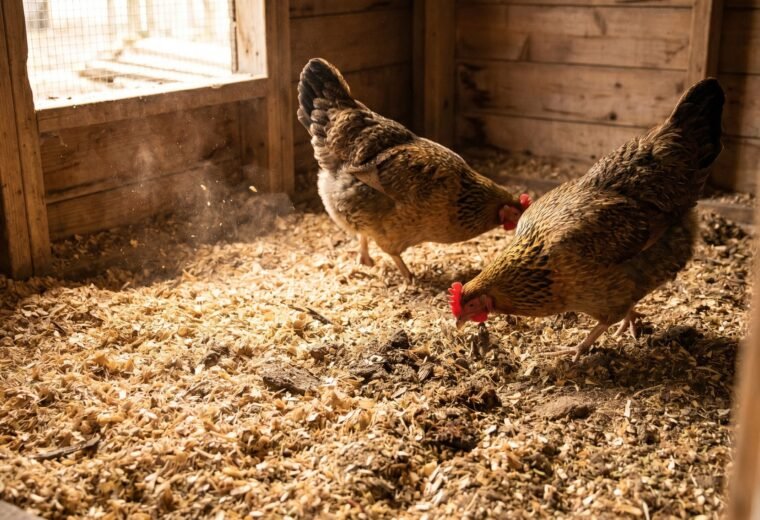
Walk into a coop with the wrong bedding at the wrong moisture level, and your nose tells you immediately. That sharp ammonia sting is more than unpleasant - it signals a welfare problem for your birds. Penn State Extension's work on poultry housing air quality found that a mere 5% jump in litter moisture (from 20% to 25%) at room temperature can trigger a 140% increase in ammonia release. The bedding you choose has a direct line to that number, which is why picking the right material matters well before any smell appears.
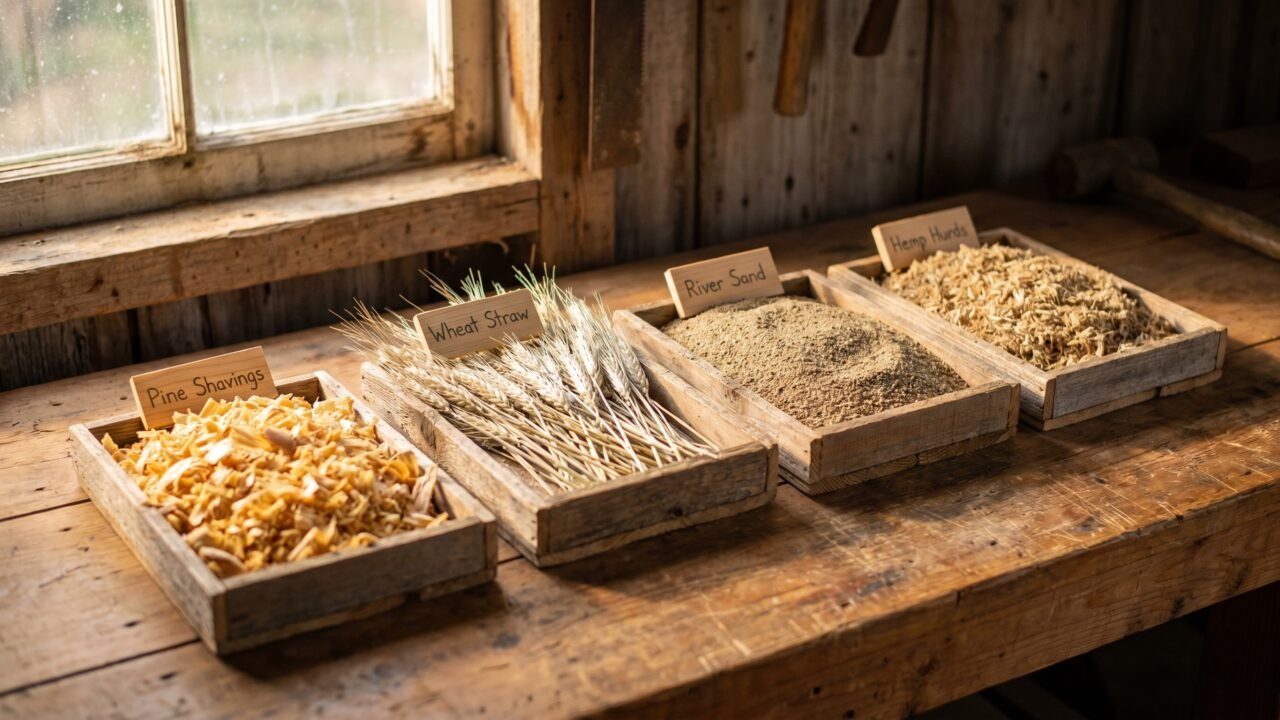
Four materials dominate backyard flocks: pine shavings, straw, sand, and hemp. Each one handles moisture, odor, cleaning labor, and deep-litter management differently - and the right pick depends on your coop floor, your budget, and how often you want to be out there with a pitchfork. The comparison table below captures the key variables at a glance; the sections that follow explain the tradeoffs in enough detail to make a confident decision.
The bedding comparison at a glance
The table below lets you scan all four materials side by side. Every figure in the table is consistent with the body text and the FAQ; the sources block at the end lists the primary authorities behind each claim.
| Material | Moisture absorption | Odor control | Relative cost (upfront) | Cleaning effort | Deep-litter compatible? | Best for |
|---|---|---|---|---|---|---|
| Pine shavings | Good - holds moisture while staying friable | Good when dry; breaks down quickly once wet | Low-moderate ($7-15 per compressed bale) | Easy - forks out cleanly | Yes - the standard choice | Most backyard flocks; deep litter; beginners |
| Straw | Poor - mats and traps moisture below the surface | Poor once wet; molding risk is high | Low ($4-10 per bale, regional) | Harder - compacts into dense mats | Limited (chopped only) | Nest boxes as a supplement; occasional top-dress |
| Sand | Does not absorb - droppings dry on the surface | Good when droppings are scooped regularly | Low upfront (coarse construction sand, $5-15/bag); heavy to haul | Daily scooping like a litter box | No - droppings do not compost with sand | Covered runs; warm climates; keepers who scoop daily |
| Hemp | Very high - holds several times its dry weight | Excellent when dry; slow to break down | High ($20-40 per bag); lasts longer per change | Moderate - similar to shavings | Yes - early evidence is promising | Keepers willing to pay more; allergy-sensitive flocks |
One figure worth anchoring before reading further: whatever material you choose, keep coop litter at 3-4 inches deep and replace or top-dress any section that feels wet to the hand. Mississippi State University's litter research sets the ideal band at 4-6 inches; Penn State's laying-flock guidance uses 3-4 inches as the practical floor. Both agree that moisture above 25% is where problems begin.
Pine shavings: the workhorse most flocks rely on
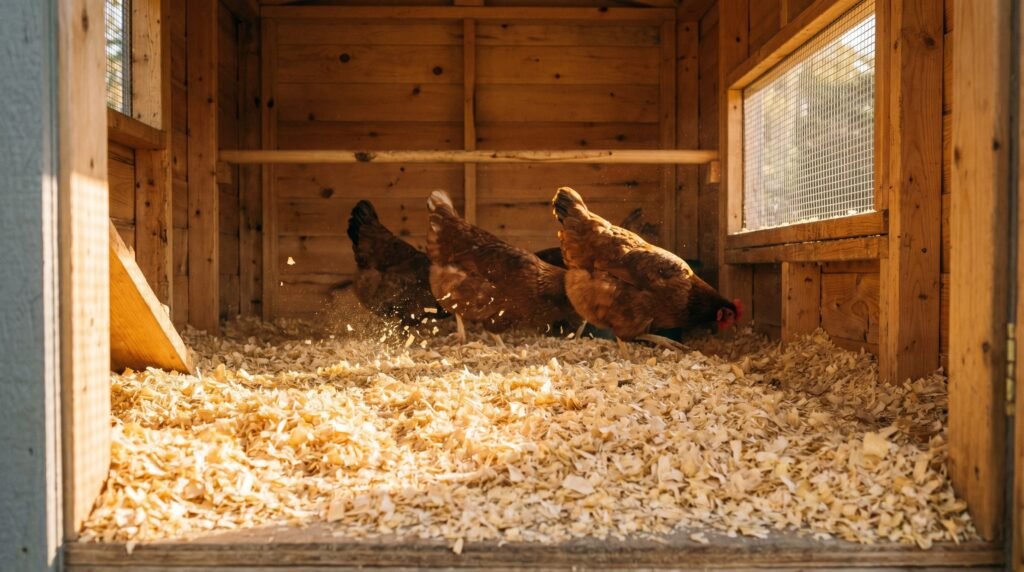
Among softwood choices, pine consistently comes out on top for backyard flocks - it stays friable, meaning loose and crumble-able, which lets droppings fall through rather than sit on top. That is the conclusion of the eXtension Small and Backyard Poultry program, which names pine as the preferred option among softwoods such as spruce and hemlock. Friability matters because compacted litter holds water in tighter molecular bonds, and once a mat forms you are essentially fighting the chemistry rather than managing it.
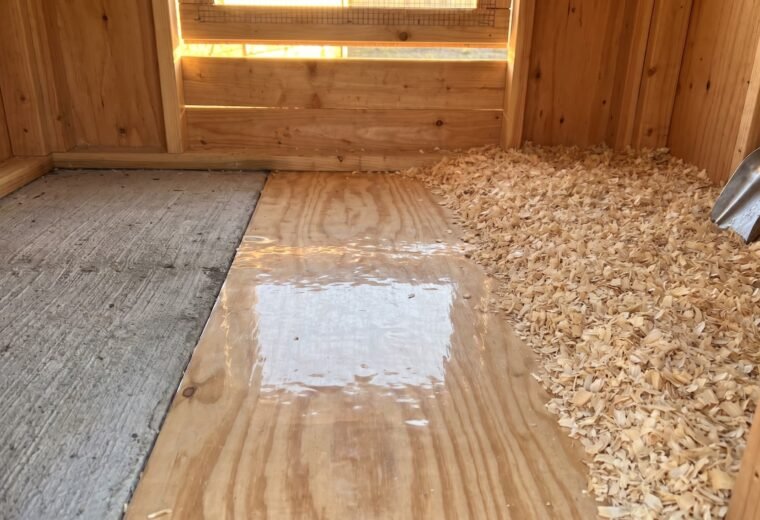
Look for kiln-dried product. Kiln drying reduces the starting moisture content and kills mold spores that might otherwise ride along from the sawmill. At the feed store, you will typically pay $7-15 for a compressed bale that expands to cover a 4x8-foot space at 4 inches deep - roughly 64 square feet per bale at standard depth. For a 7-bird coop with 28 square feet of floor, one bale lays that 4-inch foundation with room to spare.
On the cleaning side, pine shavings fork out of a coop faster than any other common material. They do not knit into each other the way straw does, and they compost efficiently when you add them to the pile. They also serve as the standard bedding for the deep-litter method, where you build depth over a season and let microbial activity do most of the decomposition work inside the coop.
One genuine warning: never use cedar shavings. Cedar releases aromatic oils that cause respiratory discomfort in chickens, whose respiratory tracts are far more sensitive than ours. The volatiles that give cedar its pleasant scent are the same compounds that irritate avian lung tissue. Keep cedar outside the coop entirely.
Excessively dry, fine-particle materials like pure sawdust create a dusty environment that can irritate birds' sensitive respiratory tracts, so opt for shavings cut at a medium flake rather than fine dust. If the bag looks more powder than flake, pass on it.
Straw: cheap but demanding
Straw is affordable, available at nearly every farm store, and the first thing many beginners reach for - which explains why it is also the bedding responsible for a lot of wet, moldy coops.
The structural problem is hollow straw stems. They wick moisture from droppings down into the mat, but that moisture stays trapped. The surface feels dry while the layer beneath turns damp and anaerobic - straw draws moisture in and holds it rather than releasing it, which creates the conditions mold needs. The Merck Veterinary Manual puts straw in the poor-absorbency category for exactly this reason, noting that it often becomes moldy. Mold carries its own respiratory risks and creates a hospitable environment for coccidian oocysts, the parasites behind coccidiosis. Penn State's coccidiosis research makes the case for dry litter from the other direction: keeping birds on a thick, dry layer of litter dilutes fecal material and reduces the number of coccidia ingested during litter pecking - the logical inverse being that wet, caked litter concentrates that exposure.
If you want to use straw, chop it. The eXtension poultry program specifies that straw should be "chopped to one inch or less" because shorter pieces resist matting and allow some airflow. Whole or long straw "will mat over more quickly," locking in moisture far sooner than you might expect. Even chopped straw is a second-tier choice for main coop bedding - it works better as a nest-box topper or a quick run cover after rain. For the coop floor proper, it needs more frequent full replacements than shavings to stay ahead of the moisture curve.
Cost advantage is real: straw bales often run $4-10 depending on region and season. But if you are replacing it twice as often as pine shavings to keep moisture in check, the per-week cost closes the gap fast.
Sand: the daily-scooper's option
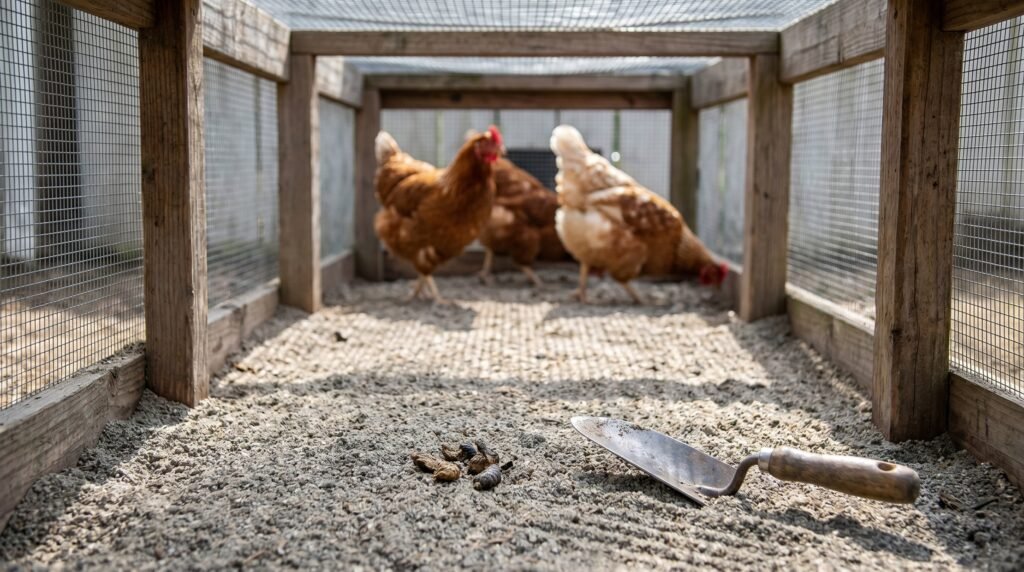
Sand does not absorb anything. That sounds like a disqualifier, but it is actually the point. Droppings fall onto the surface, the liquid drains away or evaporates, and the solids dry out quickly in a ventilated space. The eXtension Small and Backyard Poultry program reports that broilers raised on sand performed as well as or better than those on pine shavings, with houses recording less dust and reduced caking.
The management model is different from any other bedding. Sand requires daily scooping the way a cat litter box does - a wide scoop through the surface to pull out dried droppings. Skip that step for even a few days and the sand becomes foul. Owners who commit to daily scooping find that a bed of coarse builder's sand (not fine play sand, which compacts and stays wet) can go months before needing a full change. Those who fall behind on scooping discover the downside immediately.
Sand is heavy. Moving a wheelbarrow of moist sand is physical work, and hauling initial fill is a one-time labor investment that should not be underestimated - a 4-inch layer across even a modest coop floor weighs well over half a ton. That same weight is what makes sand poor in anything but a well-drained, covered space - in an open run with rain exposure, it washes and channels.
Sand is not compatible with the deep-litter method. There is no organic matrix for microbes to colonize, so the composting process that makes deep litter work simply does not happen. For runs and covered outdoor spaces, though, sand excels, and it doubles as a natural dust-bathing spot that birds enjoy. If you are still deciding what goes under the sand - concrete slab, hardware cloth, or bare earth - the coop flooring guide walks through each base type and its drainage tradeoffs.
Hemp: higher cost, strong performance
Hemp bedding - made from the hurds (inner woody core) of the hemp plant - entered the poultry market relatively recently. It absorbs several times its dry weight in moisture, more than pine shavings by most measures, and it produces noticeably less fine dust than wood-based products. For birds with any history of respiratory sensitivity, that lower dust load is a genuine advantage.
Long-term peer-reviewed research on hemp specifically for poultry flocks is still limited compared to the decades of data behind pine shavings, so the performance claims here carry that caveat honestly. What early small-flock reports and the material's physical properties do support: hemp hurds stay drier at the surface longer than shavings under similar moisture input, and they break down more slowly, which means a bed of hemp holds its structure longer before a full change is needed.
The cost reality: hemp bedding typically runs $20-40 per bag at poultry and farm supply stores, compared to $7-15 for pine shavings. If hemp genuinely lasts two to three times longer per full change, the weekly cost per square foot becomes roughly comparable - but that math depends on your coop's moisture load, flock size, and how diligent you are about spot-removing wet patches. For a 7-bird flock in a reasonably ventilated coop, expect to evaluate after your first two full cycles before drawing firm conclusions about longevity.
Hemp works with the deep-litter method in the same mechanical way shavings do - organic matrix, microbial activity, gradual decomposition. Whether it produces a better or worse deep-litter environment than pine shavings over a full season is an area where more controlled backyard-scale data would be useful. Use it the same way you would shavings: start at 6 inches, add material as needed, and pull the full bed at minimum once a year, preferably in fall.
The silent killer: wet litter and why it compounds
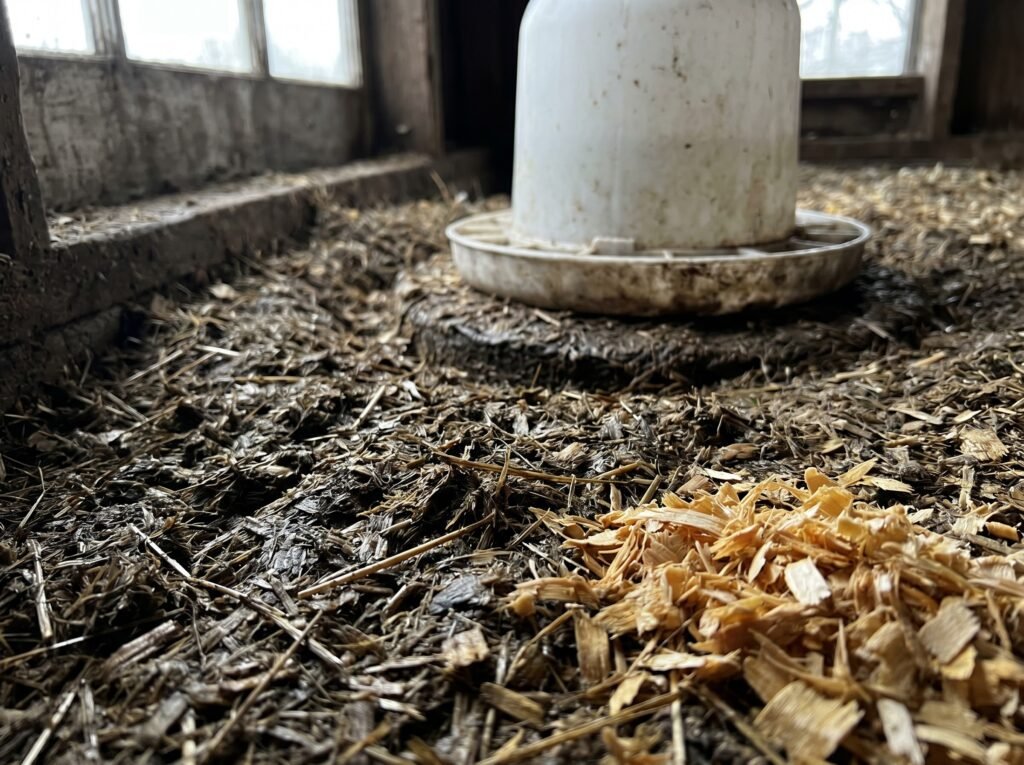
Across all four materials, the single highest-frequency beginner failure is the same: ignoring wet spots until the whole coop is damp. Wet litter is not just unpleasant. Ammonia burns of the cornea, footpad dermatitis, breast blisters, and skin burns are among the welfare consequences that accumulate when litter stays damp - a progression the Merck Veterinary Manual documents for birds kept on wet bedding. These are welfare failures that develop quietly over days and weeks.
The ammonia connection is the part most keepers miss. Your nose adapts to ammonia faster than your birds' respiratory systems do. Penn State Extension's ammonia detection research puts the human detection threshold at 20-30 ppm - meaning you often cannot smell a problem that is already harming your flock. Sustained exposure above the 25 ppm threshold damages the mucociliary system that clears pathogens from airways, leaving birds open to secondary respiratory infections. Knowing which early symptoms signal a respiratory problem is worth reading up on before an issue surfaces - the flock health guide covers what to watch for and when to call a vet.
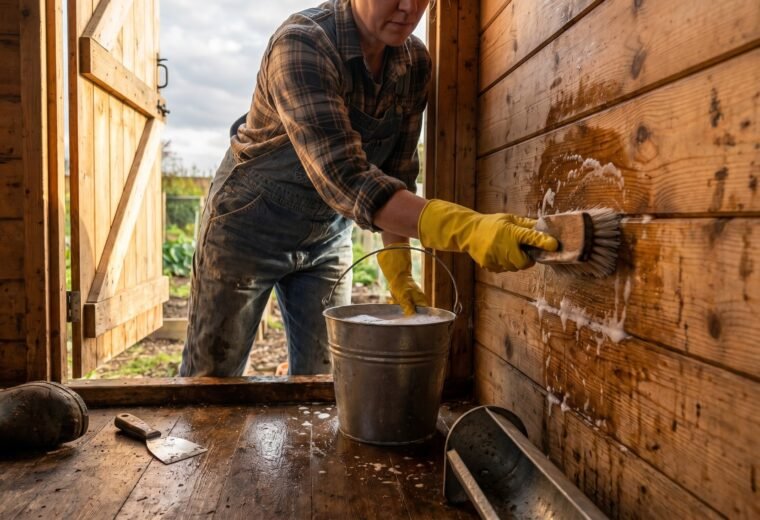
The practical countermeasure is simple but requires consistency. Every time you open the coop, check the litter under the waterers and along the north-facing wall (the coldest, least-ventilated zone in most coops). Wet patches should come out immediately and be replaced with dry material. A full coop cleanout on a schedule - whether that is every 6 weeks for a conventional bed or seasonally for deep litter - resets the moisture baseline. Penn State's coccidiosis guidance adds another reason: a dry litter floor dilutes coccidia oocysts and reduces infection pressure even in unvaccinated flocks.
Deep litter: which beddings work and which do not
The deep-litter method builds a managed bed of bedding and manure over a season, allowing microbial decomposition to generate a small amount of warmth and create some immunity exposure for the flock. It works specifically with organic, carbon-rich materials - pine shavings and hemp are the two best candidates from this list. Sand does not qualify. Straw can function in a deep-litter system only if it is chopped and managed carefully, but it is harder to keep at the right moisture without matting.
For a functional deep-litter bed, start with at least 6 inches of material - Ask Extension's deep-litter guidance sets that as the minimum. As the season progresses, add fresh material on top when the surface becomes damp or compacted. The bed should smell earthy rather than sharp. If you catch an ammonia note, the moisture has climbed too high or ventilation is insufficient. Pull the whole bed at minimum once a year, preferably in fall before the coop closes up for winter. The spent litter composts to excellent garden amendment.
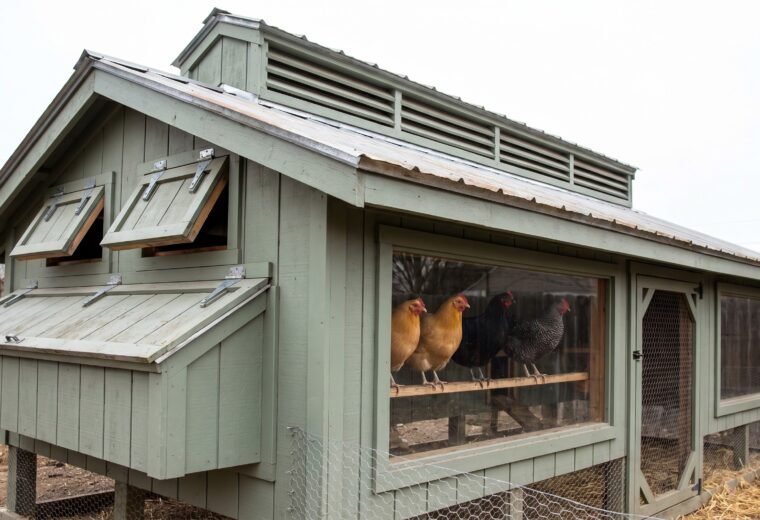
Ventilation is the factor that determines whether deep litter succeeds or creates a slow disaster. Without enough airflow, evaporation stalls, moisture climbs, and ammonia follows - Mississippi State University Extension's litter research identifies the ventilation program as the controlling variable for both odor and wet litter. A deep-litter coop needs more airflow than a conventionally cleaned one. Before you build or modify a coop for deep litter, run through the ventilation sizing guide to confirm your vent area and placement will handle the extra moisture load.
Nest box bedding: a separate decision
Nest boxes benefit from softer, cushioning material that also keeps eggs clean. Pine shavings work here too, and keeping at least 2-3 inches of clean shavings in nests provides adequate cushioning for eggs and comfort for laying hens. Straw is acceptable in nest boxes specifically because eggs are collected daily, limiting moisture buildup. Replace nest box material whenever it looks dirty or wet - soiled nesting material transfers bacteria to eggshells, which matters for food safety.
Hemp makes an excellent nest box fill given its softness and low dust. The higher cost is easier to justify in a nest box than across an entire coop floor because nest box volume is small. Avoid sand in nest boxes - it provides no cushion and eggs cracking on contact with hard substrate is a real risk.