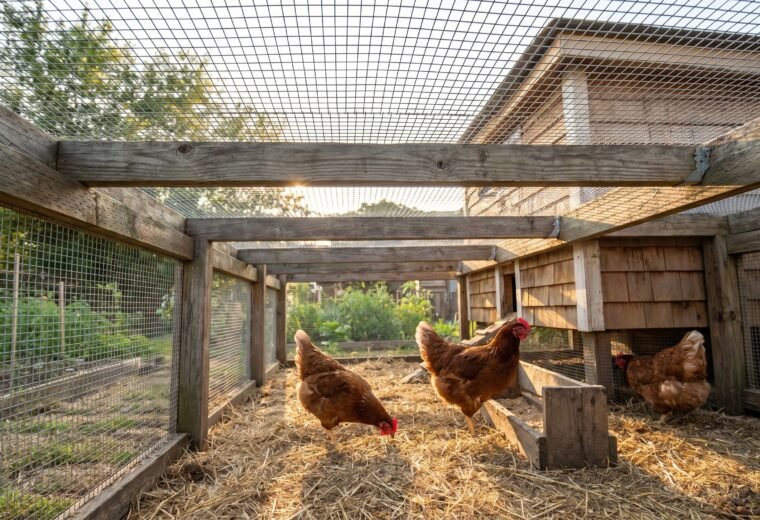
Standing water in a chicken run is more than an inconvenience. Mud soaks footpads, triggers foot infections, and keeps coccidiosis oocysts alive. The fastest path to a dry run is usually fixing where the water comes from before worrying about what you put on the ground. This guide covers both.
Chickens spend a surprising share of every day on their feet, and the litter quality underneath them matters. Wet, compacted ground is the leading risk factor for footpad dermatitis, per Virginia Tech Extension's publication on the subject. Fix the drainage first, then choose the surface material that fits your soil, climate, and flock size.
Why do chicken runs turn into a swamp?
Three forces combine to turn a run into a muddy mess: compacted bare soil from continuous scratching, heavy daily manure moisture load, and outside water flowing in from slopes or unguarded roof edges. Most flocks are dealing with at least two of these at once, and a surface fix alone rarely solves the problem unless the root cause is addressed first.
Three forces combine to create a muddy run, and most flocks are dealing with at least two of them at once.
Concentrated traffic on bare soil. Chickens strip every plant from a run quickly. Bare dirt plus continuous scratching breaks up the soil structure. Rain then pools instead of draining, and a cycle begins: the more they scratch, the worse the drainage, the more mud they track back through.
Manure loading. Chicken manure is roughly 70% water by weight, according to University of Minnesota Extension. Eight hens in a 200-square-foot run deposit a meaningful volume of nitrogen-rich liquid daily. On poorly drained soil, that load sits on the surface and turns the top few inches into a slurry.
Poor siting or overflow from the coop roof. Runs at the foot of a slope, or directly under a roof edge with no gutters, collect runoff that has nothing to do with the birds. A quarter-inch of rain on a 150-square-foot coop roof sends gallons directly into the run area if the guttering is missing or aimed the wrong way.
Knowing which of these drives your mud problem shapes which fix to reach for first. A run that floods from outside runoff needs drainage addressed before you add any surface material. A run that stays damp mainly from manure loading needs more frequent raking or a higher-carbon cover. Both problems together call for the layered approach described below.
What ground cover actually works - and what to watch for?
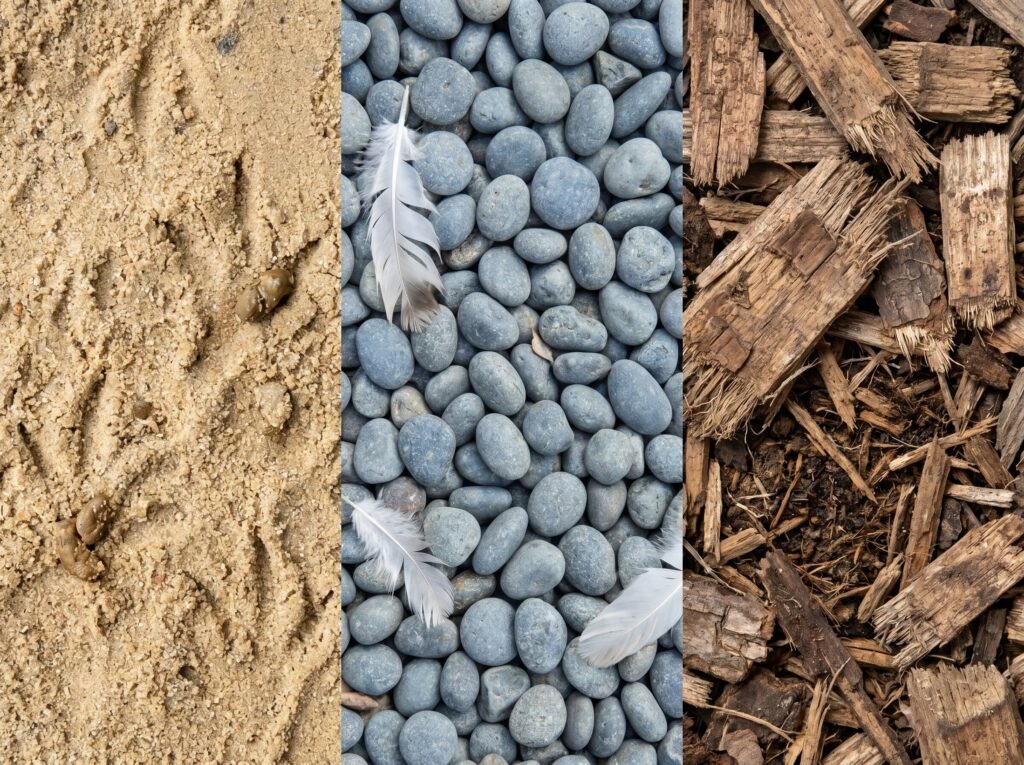
Sand drains well in moderate climates; gravel handles heavy rainfall over clay; wood chips give birds something to forage in and compost in place; deep litter builds on chips with added carbon; concrete locks out burrowing predators but demands a softer top layer. The right choice depends on your rainfall, soil type, budget, and tolerance for maintenance - and most permanent setups layer two or three materials rather than relying on one alone.
Every material in the table below has real advantages and real tradeoffs. The right call depends on your rainfall, soil type, budget, and how much maintenance you want to do each season. A 10-bird flock on sandy loam in a mild climate faces a different problem than 10 birds on clay in a wet Pacific Northwest winter.
| Material | Drainage | Foot comfort | Maintenance demand | Best for | Watch out for |
|---|---|---|---|---|---|
| Coarse construction sand (3-4 in) | Good once established | Comfortable; cushions joints | Scoop/rake droppings 2-3x per week | Dry or moderate climates; runs with some base drainage | Compacts into near-concrete on clay; play sand clogs fast, use coarse only |
| Pea gravel (3/8 in max; 3-4 in deep) | Excellent; fast gravity drain | Moderate, hard on bare feet over time | Low; rinse/turn annually; dig up every 2-3 years as fines accumulate | High-rainfall areas; clay soils; permanent runs | Fines from manure clog voids over time; not ideal for bantams or young chicks |
| Wood chips / arborist chips (4-6 in) | Good when fresh; improves with depth | Excellent, soft, warm, foraging-rich | Low initially; top-dress as needed; compost full pile annually | Any climate; runs where birds will forage; best for deep litter system | Green (fresh-cut) chips risk mold; avoid dyed/treated chips; may attract rodents if damp |
| Deep litter (wood chips + carbon layers) | Moderate, relies on microbial moisture draw | Excellent; birds love to scratch | Low labor; add carbon material, turn occasionally; harvest compost once or twice a year | Temperate climates; keepers who want a slow-build composting system | Needs consistent carbon additions; can go anaerobic and slimy if neglected or over-watered |
| Concrete or pavers | Excellent with slope and drain | Hard, needs a softer top layer | High (pressure wash regularly); add bedding layer on top | Urban setups where burrowing predators are a major concern | Costly; must slope to drain; barefoot on concrete causes joint stress long-term |
Coarse sand
Construction sand (also sold as bank or sharp sand) drains well and dries quickly in warm weather. A depth of 3 to 4 inches over a firm, well-raked base works for most runs. Use coarse sand, not play sand. The fine-grained variety compacts immediately and holds water like a sponge. On heavy clay, lay a 2-inch layer of pea gravel under the sand to give water somewhere to go before it saturates the ground beneath. Sand doubles as a built-in dust bath, which birds appreciate.
The downside is manure management. You need to scoop or rake droppings two or three times per week to keep it sanitary, essentially treating the run like a giant litterbox. In rainy climates, sand alone often shifts from "damp but manageable" to a cold slurry unless the run is at least partially covered.
Gravel
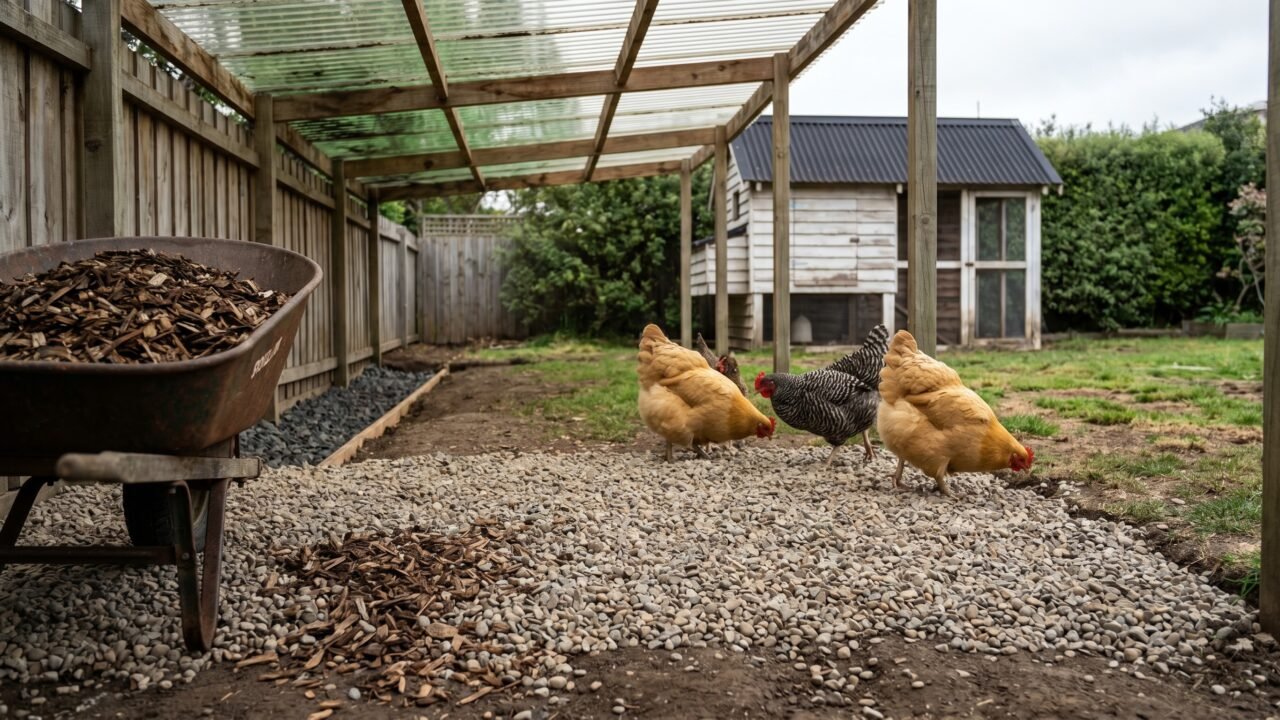
Pea gravel or 3/8-inch crushed stone in a 3-to-4-inch layer gives excellent gravity drainage, even over clay. Water moves through the voids before the surface becomes saturated. Gravel suits permanent runs where you want a set-and-mostly-forget surface, and it handles high-rainfall climates better than sand or organic materials on their own.
The main tradeoff is foot comfort. Smooth pea gravel is gentler than angular crushed stone, which matters if your birds are heavy breeds or if you keep bantams whose smaller feet can slip between larger stones. Fines from decomposed manure and organic matter will gradually fill the voids. A practical maintenance guideline based on keeper reports is to rake and partially refresh the gravel layer every two to three years, or sooner if you notice standing water returning after rain - that is the most reliable sign that void space has been lost to accumulated fines.
Wood chips
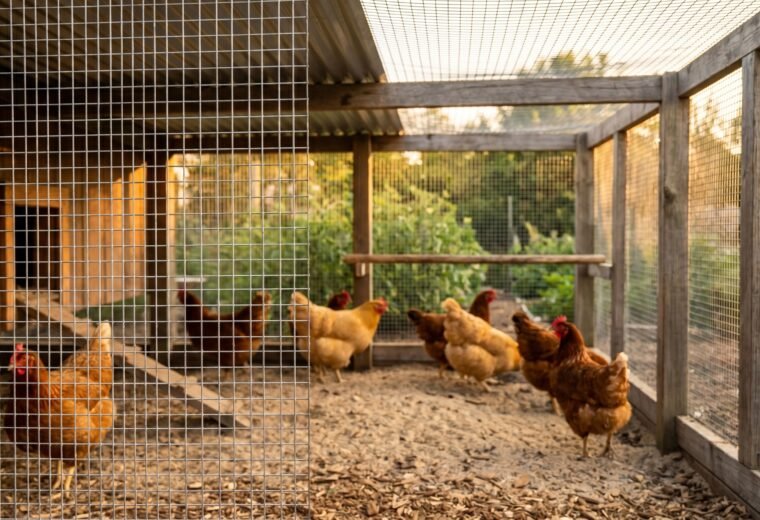
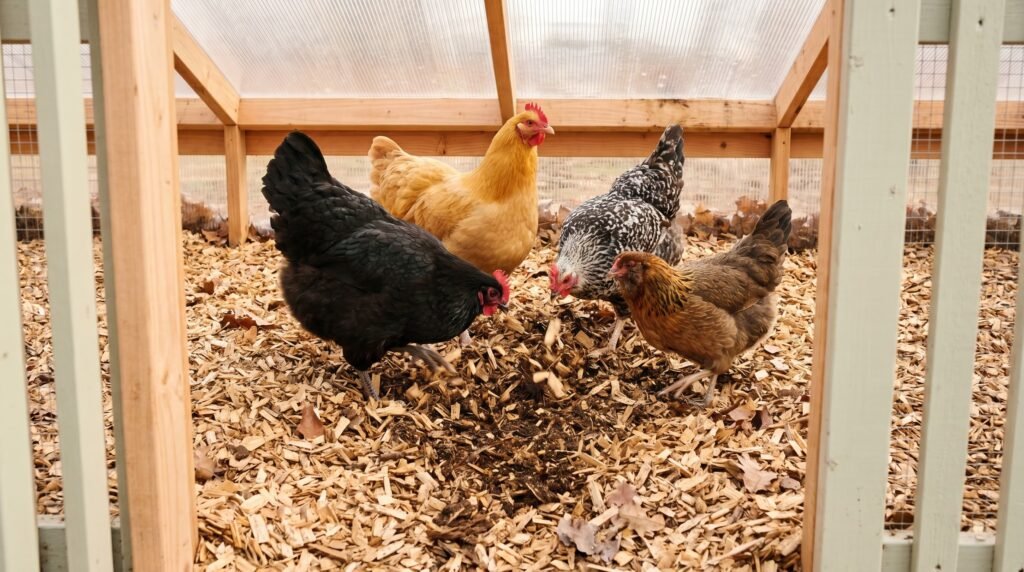
Aged arborist chips (4 to 6 inches deep) are a practical choice for most backyard runs. The chunky texture stays open, resists compaction better than straw or shavings, and gives birds something to scratch through and forage in. Chickens will work insects into and out of the pile all day. As chips break down, they naturally absorb moisture.
Two cautions from Ask Extension: use kiln-dried or aged chips, not green freshly cut wood, which can support mold and release compounds that irritate a bird's respiratory system. Skip treated, dyed, or chemically scented decorative chips entirely. Those are not safe for poultry. Untreated, aged arborist chip drops are often free from tree companies if you call ahead.
Deep litter in the run
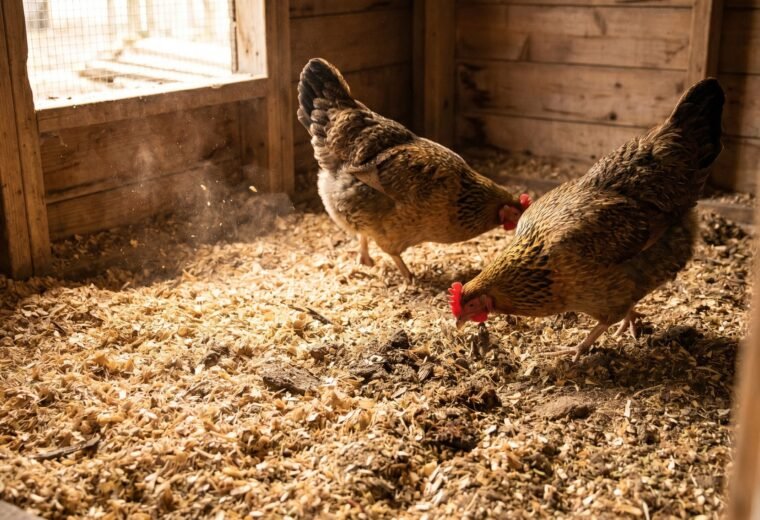
The deep litter method adapts naturally to covered runs. The idea is to build carbon depth (wood chips as the base, topped with dry leaves, straw, or shavings as needed) and let the chickens' constant scratching and the microbial community do the composting work in place. UGA Cooperative Extension recommends a brown-to-green ratio of roughly 3 to 1 (about 70-75% carbon material to 25-30% nitrogen-rich manure and greens) for a healthy composting pile. In a run, that means adding a barrow of dry chips or leaves every few weeks to balance the ongoing manure deposit.
Done well, the pile stays warm, damp in the middle but not wet on the surface, and largely odor-free. Done poorly (not enough carbon, too much rain saturating the pile, or going months without any additions) it turns anaerobic, smells of ammonia, and contributes to the wet-litter problem rather than solving it. A covered or partially covered run makes this system far more manageable in wet climates.
Concrete and pavers
Concrete or paver-covered runs are primarily used in urban setups where burrowing predators (rats, foxes, raccoons) are a serious concern and the keeper needs a permanent, impenetrable floor. Drainage requires deliberate planning: the surface must slope at least 1 inch per 4 feet toward a drain or open edge, or water simply pools. A bedding layer of coarse sand or wood chips on top is not optional - birds standing directly on bare concrete develop joint problems and foot lesions over time from the unyielding surface.
Maintenance is higher than organic options: pressure washing removes the ammonia and pathogen load that organic materials break down naturally. Pavers allow slightly better drainage through joints (especially if set in gravel rather than mortared) and are easier to lift and relay than poured concrete if drainage needs correcting. The cost and labor involved make this the least common choice for backyard keepers, but for urban settings with serious predator pressure, it is the most predator-resistant floor available.
How do you fix chicken run drainage at the source?
The four core fixes are: regrade or raise the run floor above surrounding grade; install a French drain trench along the uphill perimeter to intercept incoming water; redirect roof downspouts at least 3 to 4 feet away from the run; and cover at least half the run area to limit how much rainwater the surface material has to absorb. Most chronic mud problems need two or more of these combined.
Surface material alone cannot overcome a run that floods from below or from outside water flowing in. These fixes address the root cause.
Regrade or raise the run floor. If the run sits in a low spot, the simplest fix is bringing in 4 to 6 inches of compactable fill (crusher run or road base), then adding your surface material on top. This raises the run above the surrounding grade and gives rainwater somewhere to run off to. poultry.extension.org puts it plainly: locate the run in a well-drained area from the start. If you are retrofitting an existing run, grading is the most durable fix available.
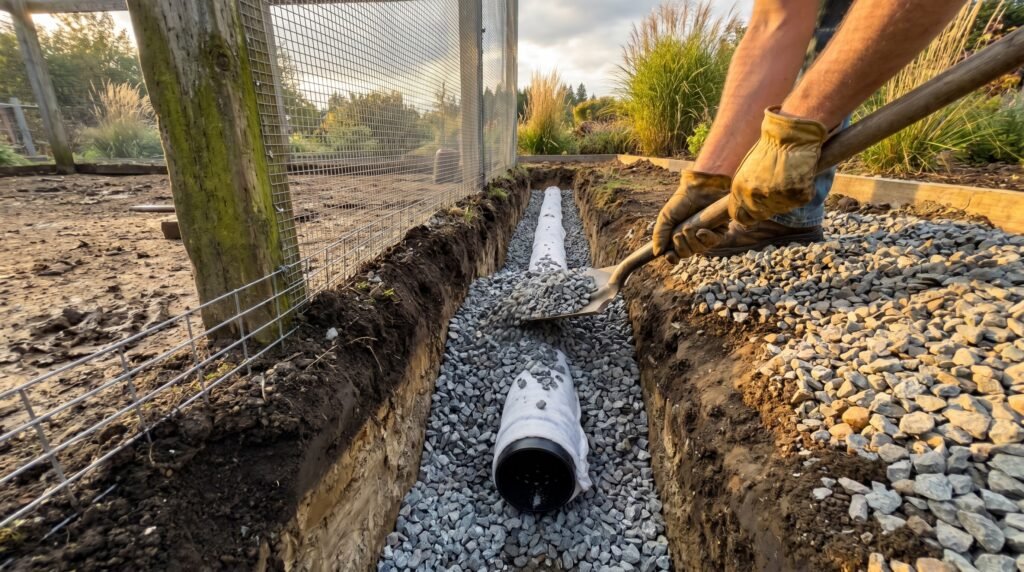
Install a French drain at the uphill edge. A French drain is a gravel-filled trench with a 4-inch perforated pipe that intercepts water before it enters the run. Dig a trench 12 to 18 inches deep and 9 to 12 inches wide along the uphill side of the run, lay landscape fabric to prevent silt migration, add 2 to 3 inches of 3/4-inch clean crushed stone, set the perforated pipe with the holes facing down, and backfill with more stone. Route the pipe to daylight or a dry well at least 10 feet away. This approach solves hillside runoff without regrading the whole area.
Add gutters and divert roof runoff. A standard coop roof sheds a significant volume of water during any real rain event. Gutter downspouts aimed at the run entrance or a low spot next to the run are a common source of persistent mud that is easy to overlook. Redirect downspouts at least 3 to 4 feet away from the run perimeter, or collect into a barrel for garden use.
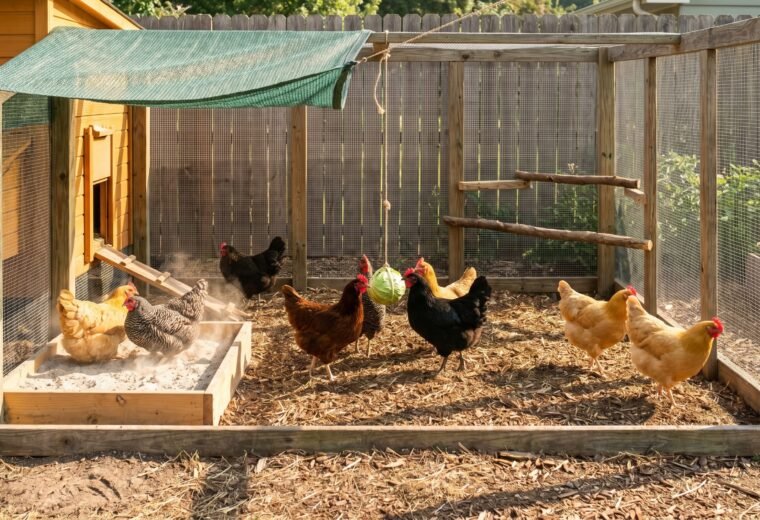
Cover at least part of the run. A roof over even half the run area dramatically reduces how much water the surface material has to manage. Clear corrugated panels let in light while blocking most rain; a waterproof tarp works for smaller runs. Covered area also gives birds a dry retreat during heavy weather, which they will use. In a covered run, deep litter and wood chips both perform substantially better than in an exposed one.
The one cause most flock owners miss
Stocking density is the hidden driver behind many persistent mud problems. The extension network recommends 10 square feet of run space per laying hen as a working guideline, and notes that even this gets quickly denuded of vegetation and can become muddy under wet conditions. A flock of 15 hens in a 75-square-foot run (5 sq ft per bird) is generating twice the manure load per square foot that the same flock in a 150-square-foot run would. No amount of gravel fixes the math.
If your run is undersized and expanding it is not practical, the most effective tool is giving birds supervised free-range time in a larger area during dry weather, or attaching a larger secondary run that can be rotated. More creative run configurations (L-shapes, expanded wire panels, attached paddocks) let you grow the footprint without rebuilding from scratch.
Why mud is worth fixing: the health case
Persistent wet conditions create three specific health risks that keepers often underestimate until they have a sick bird.
Footpad dermatitis starts as a small lesion on the underside of the foot and progresses to the "black, necrotic skin and inflammation" described in Virginia Tech Extension's publication APSC-191. The primary driver in every case reviewed is wet litter. Once a bird develops a serious foot lesion, treatment requires veterinary care. This is not a condition to manage at home with wound wraps alone. Prevention costs nothing; treatment is time-consuming and stressful for the bird.
Coccidiosis oocysts complete their lifecycle faster in moist, warm litter (University of Minnesota Extension). Young birds and new introductions are most vulnerable, but even adults with established immunity can be pushed into clinical disease by a high oocyst load in saturated ground.
Ammonia buildup compounds both risks. Wet nitrogen-rich litter releases ammonia, which irritates mucous membranes and opens the door to respiratory infections. If you can smell ammonia at ground level near the run, the litter is too wet and the load is too high. Rake it out, add dry carbon material, and increase ventilation in any adjacent covered space.
For any bird showing swelling, lameness, discolored footpads, or labored breathing, the right move is a poultry vet, not a home remedy. The points above are husbandry and prevention; diagnosis and treatment belong to a professional.
Putting it together: a layered approach for wet climates
If you are dealing with persistent mud and want to fix it properly rather than patch it season by season, combine the fixes in this order.
- Redirect any roof runoff away from the run. Gutters and a downspout extension are the fastest win.
- Grade or raise the run floor so water drains away. Even a 1-inch slope across the run surface moves water out faster than flat ground.
- If uphill runoff is a problem, install a French drain trench at the uphill perimeter.
- Add a gravel base (3-4 in of 3/8-inch pea gravel or clean crushed stone) directly on the native soil. This acts as a drainage reservoir and keeps the surface layer from pressing into mud.
- Top with your preferred surface material: coarse sand, wood chips, or the start of a deep litter system.
- Cover at least half the run if rainfall is heavy or persistent.
This layered approach works for most backyard setups. A flock of eight to twelve standard hens in a covered, gravel-based, wood-chip-topped run on properly graded ground stays dry through heavy rain seasons without constant intervention. The birds scratch and forage. The chips compost in place. Maintenance drops to periodic top-dressing rather than repeated mud removal.
Before committing to a surface treatment, work through the layout and sizing decisions for your run so the drainage fixes and material choice match your actual footprint.