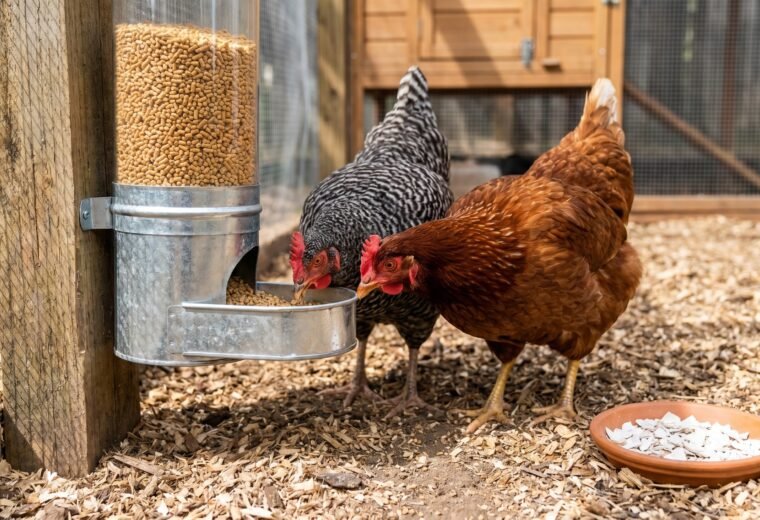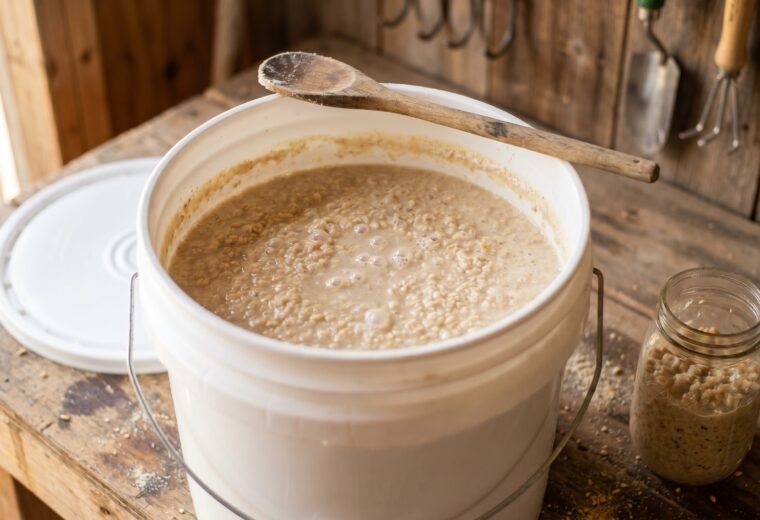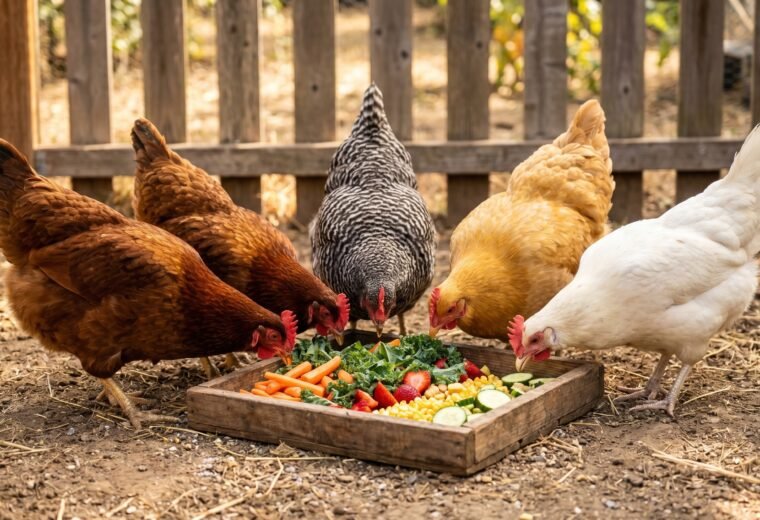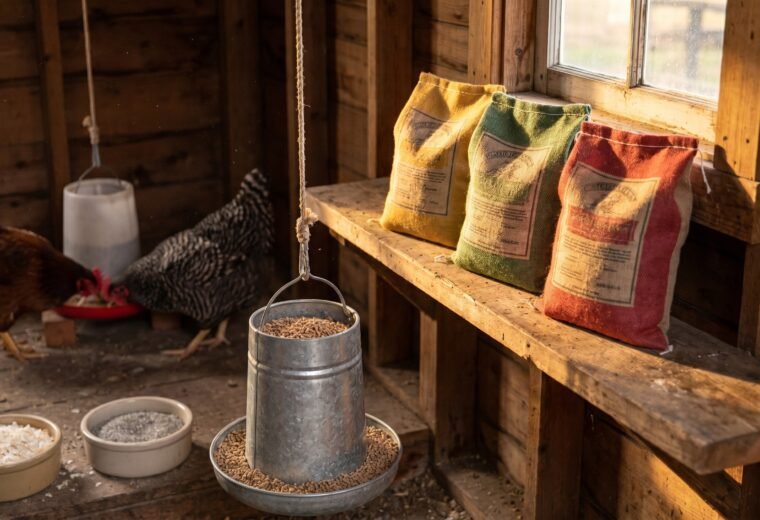
Sprouting a tray of barley in January and watching fourteen hens pull it apart in minutes is one of the more satisfying sights in backyard poultry keeping. Fodder and fresh greens genuinely benefit your flock, but only if you go in with clear eyes about what they do and do not provide. They are a supplement to complete feed, not a replacement for it, and mold in a sprouting tray can hurt birds faster than almost any other homegrown mistake.
Here is what the research actually shows, how to set up a simple tray system, which garden plants are worth your effort, and how to keep everything safe through winter.
What fodder actually does for a chicken's diet
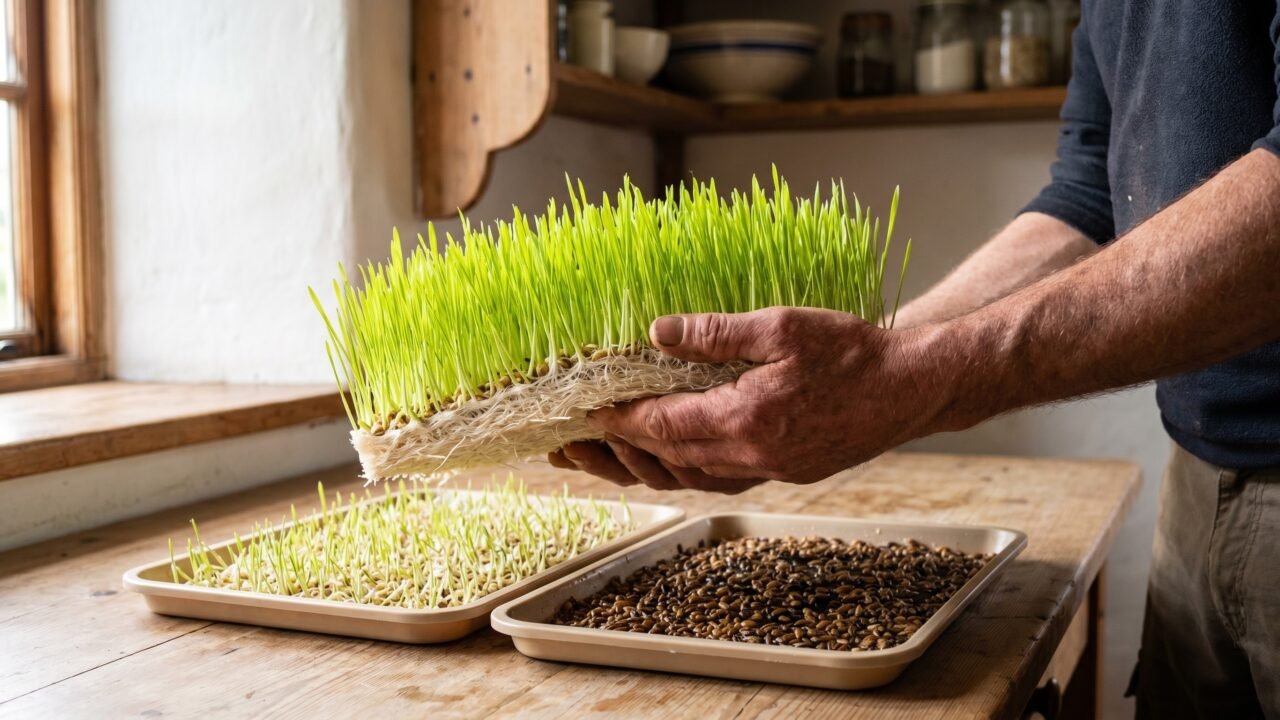
Fodder for chickens is typically grain (barley, wheat, oats, or rye) sprouted in shallow trays until it forms a grass-like mat, usually at the 7-to-10-day mark. The appeal is straightforward: a small seed becomes a living green with more accessible nutrition than the dry grain it started as.
The biochemistry behind that claim holds up. A peer-reviewed study published in PMC found that sprouted barley contained 38.6% more crude protein than raw barley grain on a dry-matter basis, with starch dropping 18.5% as enzymes break it down into simpler sugars. Total soluble carbohydrates rose by 245% over the same period. Beta-glucan levels also fall during sprouting, which matters for poultry because beta-glucans are poorly digested by chickens and, at high levels, increase gut viscosity (poultry.extension.org notes that barley beta-glucans "cannot be easily digested by poultry").
There is a catch embedded in those numbers. Moisture content in sprouted barley runs roughly nine times higher than in raw grain. That means a kilogram of fresh fodder mat is mostly water. Once you account for dry matter, you are feeding considerably less actual nutrition per pound than the raw numbers suggest. NDSU Agriculture's extension publication on sprouted grains is direct on this point: "some dry matter is lost during the germination process as heat, CO2 and moisture are produced." The dry-matter nutritive value does not fall dramatically, but the sheer water weight means you cannot replace bagged layer feed with fodder without shortchanging your birds on energy, protein, and the micronutrients baked into a formulated ration.
A 2025 peer-reviewed trial with Lohmann Brown laying hens (120 birds, 24 pens) gave groups 0, 15, 30, or 45 grams of sprouted barley per hen per day alongside their normal ration. Egg production, body weight, and egg weight showed no significant differences across groups. Eggshell strength showed a statistically significant effect by day 42 (P = 0.021), driven by an interaction between supplementation level and study day, though all shells remained within acceptable ranges for table eggs. The researchers recommended larger-scale trials with optimized inclusion levels before drawing firm conclusions. The practical takeaway: sprouted fodder at moderate amounts neither harms production nor dramatically improves it. Its real value is enrichment and behavioral - birds work for it, it keeps them busy, and in winter it delivers genuine green matter when pasture is frozen solid.
How much is the right amount? Poultry extension guidance consistently frames supplemental foods as something birds should finish in about 20 minutes, keeping the bulk of nutrition coming from a complete formulated feed. For a flock of 15 standard hens, a tray measuring roughly 10×20 inches is a reasonable daily serving. Think of it as a beneficial addition - more like a daily vitamin than a meal replacement. The full breakdown of what a complete poultry diet should look like lives in our guide on what to feed chickens.
How to set up a sprouting tray system
The equipment list is genuinely short. You need:
- Shallow trays with drainage holes (cafeteria-style trays, nursery flats, or stackable mesh trays work well)
- Whole grain seed - feed-grade whole barley or wheat from a farm or feed store, not treated garden seed
- A clean water source
- A spot that stays between 60 and 70°F (15-21°C)
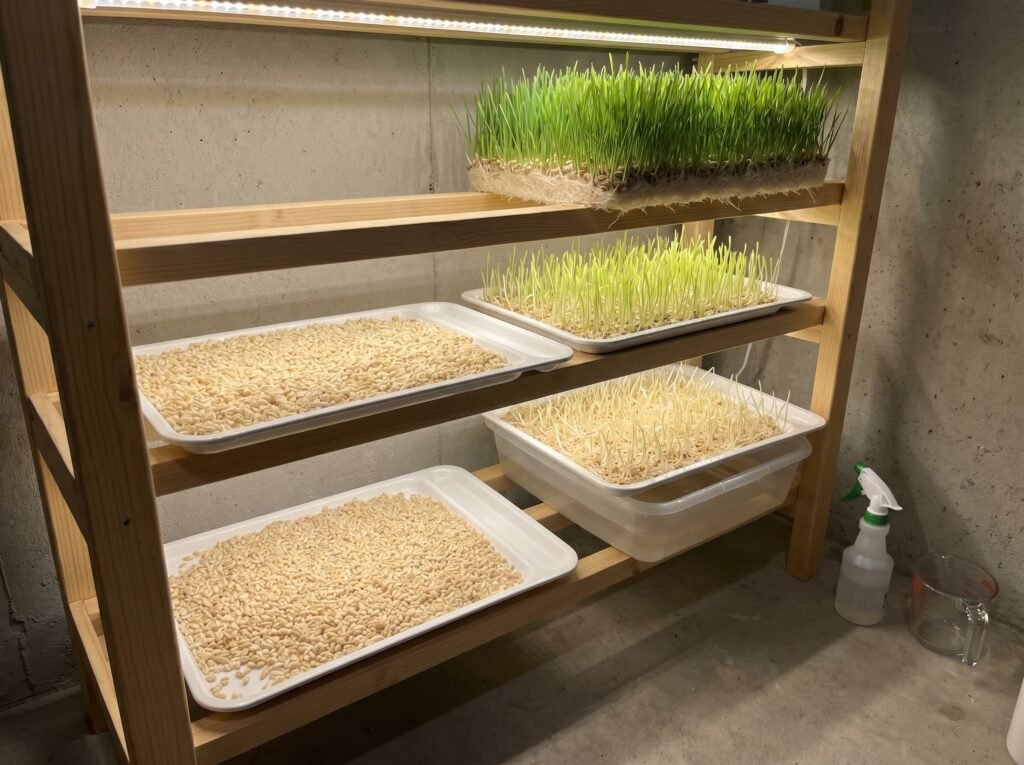
The process runs on a 7-to-10-day cycle. Soak seeds overnight in clean water (roughly a 1:2 seed-to-water ratio by volume), drain thoroughly, then spread them about half an inch deep in your trays. Rinse and drain twice daily - morning and evening is a workable rhythm. By days 2-3, white root tips appear. By day 5-6, green shoots push up. At 7-10 days you have a mat of lush green shoots on top and an interlocked root mass on the bottom. Feed the whole thing - roots and all.
To get a daily harvest, start a new tray each day. A seven-tray rotation means you always have one tray ready. If you are feeding 15 hens, figure on one standard cafeteria tray per day and adjust from there based on how quickly the birds clean it up.
Temperature matters more than many growers expect. Below about 55°F (13°C) and germination slows to a crawl, pushing your cycle toward 12 days or longer. Above 75-80°F (24-27°C), mold risk climbs fast. A basement corner, a heated garage, or an insulated shelf in the house usually sits in the sweet spot. Supplemental lighting is not necessary - the shoots do not need to photosynthesize to be nutritious at 7-10 days.
The mold problem: the one thing you cannot ignore
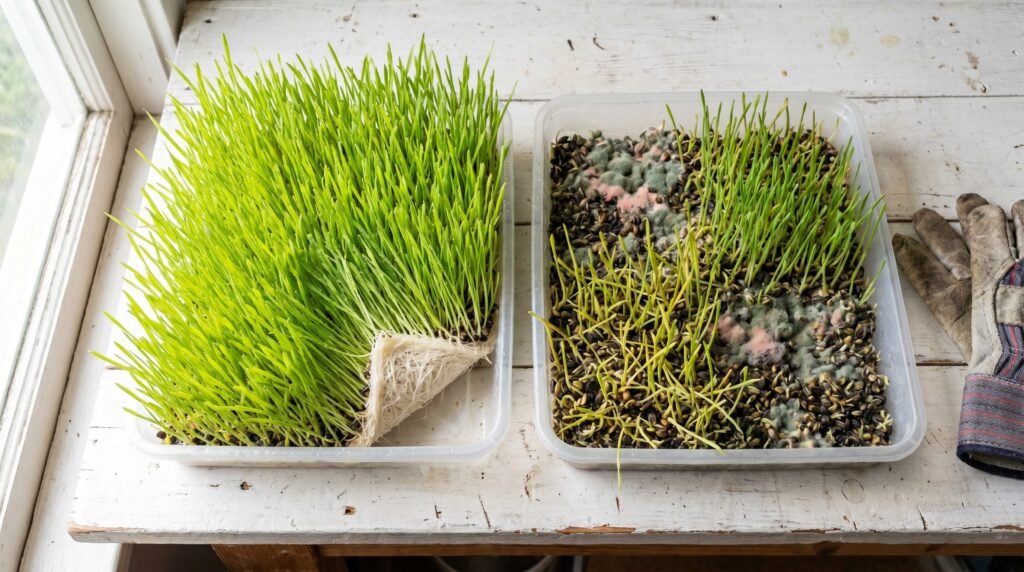
Mold is the single biggest failure point in any home fodder system, and it is not merely a quality issue. It is a serious health risk.
Sprouting grain is warm, wet, and rich in sugars - nearly ideal conditions for Aspergillus, Fusarium, and Penicillium, the three mold genera most commonly found in poultry feed (poultry.extension.org identifies these as the primary producers of dangerous mycotoxins). Aflatoxin from Aspergillus is particularly dangerous for young chickens under eight weeks. UF/IFAS Extension is explicit: "mold can produce harmful toxins that lead to respiratory issues, digestive problems, or poisoning." Critically, mycotoxins persist even after visible mold is killed or removed - the toxin stays in the grain after the mold is gone.
Aspergillosis, the respiratory disease caused by inhaled Aspergillus spores, has no cure. Birds that develop it typically die. The path to infection is exactly what a poorly managed fodder tray creates: birds inhaling spore-laden dust or material from contaminated feed.
Preventing mold comes down to four non-negotiable practices:
- Drain completely after every rinse. Pooled water at the bottom of a tray is the fastest route to a mold bloom. Trays should tip freely and drain within a minute or two.
- Keep temperatures in the 60-70°F range. Heat accelerates mold as much as it accelerates germination.
- Rinse twice daily without skipping. A single missed rinse in warm weather can allow surface mold to take hold within 24 hours.
- Discard any tray with fuzzy growth. Pink, black, or white fuzz is mold. A sour smell is a warning sign even before visible growth appears. Do not feed it, do not compost it into material birds can access. Bag it and bin it.
Some growers add a small amount of food-grade apple cider vinegar to the soak water, and there is some evidence that acidic environments slow surface mold. However, this is not a substitute for proper drainage and temperature control, and the practice is not backed by poultry extension research specifically for fodder trays. Rely on the fundamentals first.
Garden greens worth growing for your flock
You do not need a dedicated fodder system to give your birds fresh greens. A few well-chosen garden plants deliver real nutritional value and work with even a small growing space.
Poultry extension sources consistently note that young, tender plant material is a valuable supplement, while old, fibrous growth is poorly digested and offers little. The implication for garden planning: fast-growing, leafy plants cut while young are worth far more than mature, woody material.
Plants that genuinely earn their space:
- Kale and Swiss chard - sturdy, cut-and-come-again crops that produce through cool weather into early winter. Cut leaves while young and tender; birds ignore tough, mature leaves anyway.
- Sunflower heads - whole sunflower seeds are a legitimate poultry feed ingredient used in commercial and backyard rations. For backyard hens, a handful of whole heads tossed in the run gives protein, fat, and entertainment.
- Lettuce and spinach - fast-growing, high in water content, good for hot weather enrichment. Not highly nutritious compared to kale, but hens enjoy them and they are easy to grow in quantity.
- Pumpkin and squash - the flesh and seeds are safe; pumpkin seeds have a long folk history as a de-wormer, though the scientific evidence for that specific claim is limited and inconclusive. What is clear is that they are non-toxic and birds enjoy them.
- Herbs (oregano, thyme, basil) - anecdotally popular with backyard keepers; no harm in growing them and letting birds pick through the clippings.
A few plants to keep birds away from: green or sprouting potato material (solanine), avocado in any form (persin is toxic to chickens), and ornamentals like rhododendron, oleander, and azalea. Raw or dry beans of any type are also dangerous - phytohemagglutinin causes severe digestive poisoning, and this applies to raw soybean as well (Mississippi State Extension notes that raw soybeans "should never be fed to poultry or game birds"). For a comprehensive list of what is off-limits, our treats and toxic foods guide covers it in full.
One practical note: do not feed lawn clippings if any herbicide or pesticide has been applied recently. The chemical concentration in clippings can be high enough to sicken birds.
Keeping greens coming through winter
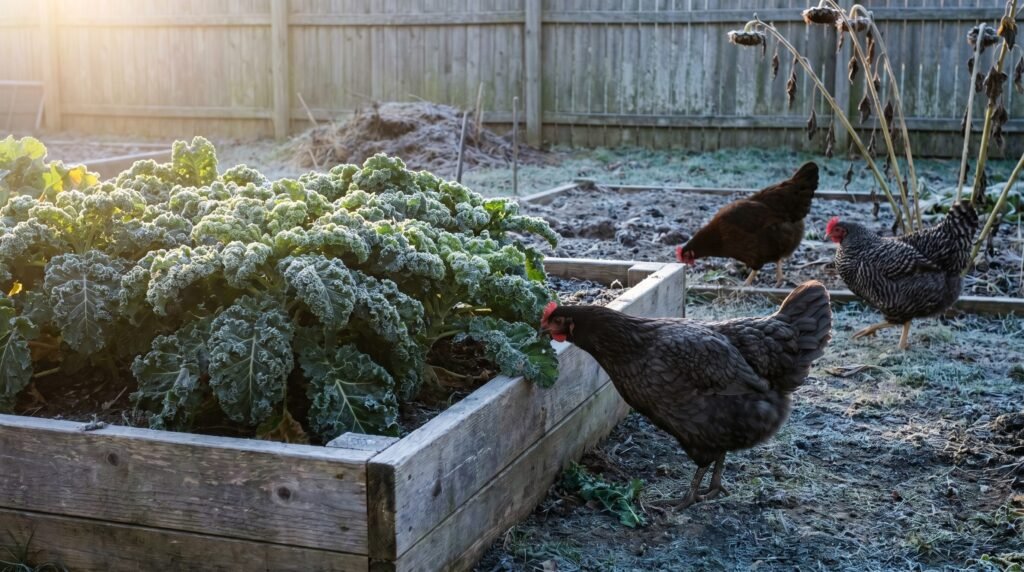
Pasture offers almost nothing to chickens in winter. Frozen ground, dead grass, no insects - the forage value drops to near zero once hard frosts arrive. This is exactly when an indoor sprouting system earns its keep, and when a cold frame or low tunnel in the garden makes a real difference.
A few practical strategies for cold-weather greens:
Indoor sprouting scales to any size. A shelf in a basement or utility room with a few stacked trays can supply a daily serving of fodder for a flock of 15-25 birds through the whole winter. You are not fighting cold or short days - the seeds sprout fine in low ambient light as long as temperatures stay above 55°F. The trays described in the system above work identically in winter; just move them indoors.
Cold frames extend the outdoor season. Kale, Swiss chard, and spinach survive light frosts and even short hard freezes under a basic cold frame. In many climates, you can harvest kale leaves well into December or even through a mild winter entirely. The plants do not grow quickly in cold weather, but they persist and provide intermittent harvests.
Stored pumpkins and winter squash from the fall harvest keep for months at cool room temperature. A pumpkin split open and tossed in the run in January gives birds something to peck at and is a real morale boost during a long stretch of confinement weather.
Fermented feed is a related strategy worth knowing about: fermenting complete feed increases beneficial bacteria, improves digestibility, and keeps birds occupied in a way similar to fresh greens. Our article on fermented chicken feed walks through the method in detail.
The supplement vs. replacement question: a decision table
This is the question growers ask most often, so here is a direct answer organized by scenario.
| Situation | Can fodder/greens replace complete feed? | Why |
|---|---|---|
| Active laying hens (16%+ protein layer ration) | No | Fodder is high-moisture, lower in energy and calcium per pound than formulated feed; eggshell quality and production rate depend on a complete mineral/protein profile. |
| Meat birds on a finisher ration | No | Broilers need calorie density fodder cannot provide; growth rates and feed conversion suffer. |
| Hens on full-season free range (good pasture) | No - but supplement needs are lower | Free-range hens already get insects, seeds, and greens; extra fodder is nice enrichment, not a nutrition gap-filler. |
| Winter confinement, no pasture access | No - but value is highest here | Fodder and garden greens fill a behavioral and mild nutritional gap; still pair with complete feed. |
| Chicks under 8 weeks | No - and be cautious with mold risk | Young chicks are the most vulnerable to aflatoxin. Stick to commercial chick starter; greens can wait until birds are older and eating grit. |
The consistent answer is that fodder and greens are an addition, never a substitution. The research on laying hens confirms this: birds given sprouted barley alongside their normal ration maintained egg production; the supplement added enrichment without fixing something that was not broken. If your complete feed is sound - whether conventional or organic - the right conversation about what to pair with it is covered in our chicken feed guide.