Picture a bird that can clock down a grasshopper, scream at a passing hawk, and eat its body weight in beetles over a summer - but will also wake your neighbors at 5 a.m., clear your property line by Tuesday, and turn your rooster's life into a daily ordeal. That is guinea fowl in a single paragraph. Whether they belong on your property depends entirely on what you need from a bird and how much land you have to offer.
Guinea fowl (helmeted guinea, Numida meleagris) sit in a category of their own. They are poultry, but only loosely domesticated, and understanding their actual strengths alongside their genuine drawbacks will save you a lot of frustration. Our flock observations and the research below tell a complicated story - one that the "nature's pest control" crowd tends to skip past.
What guinea fowl are actually good at
Guinea fowl genuinely earn their keep as active insect hunters, effective alarm callers, and unusually hardy foragers - three roles that chickens fill less reliably. Their shortcomings are equally real, but on the right property the upside is substantial.
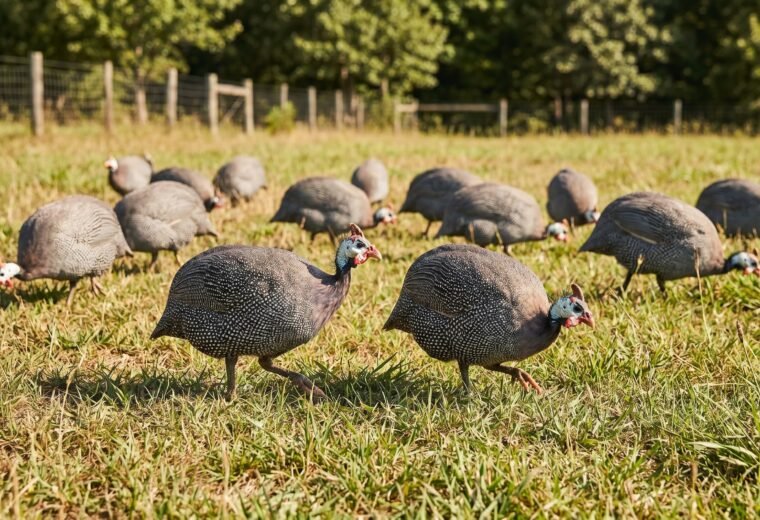
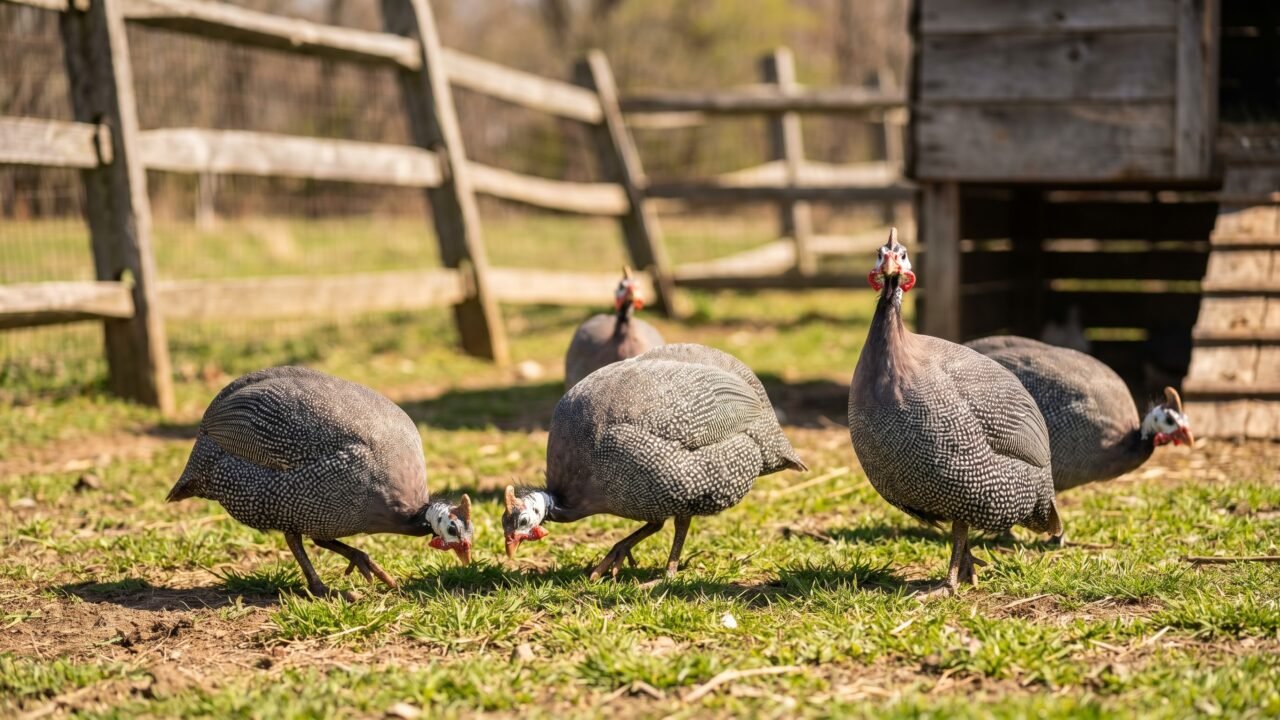
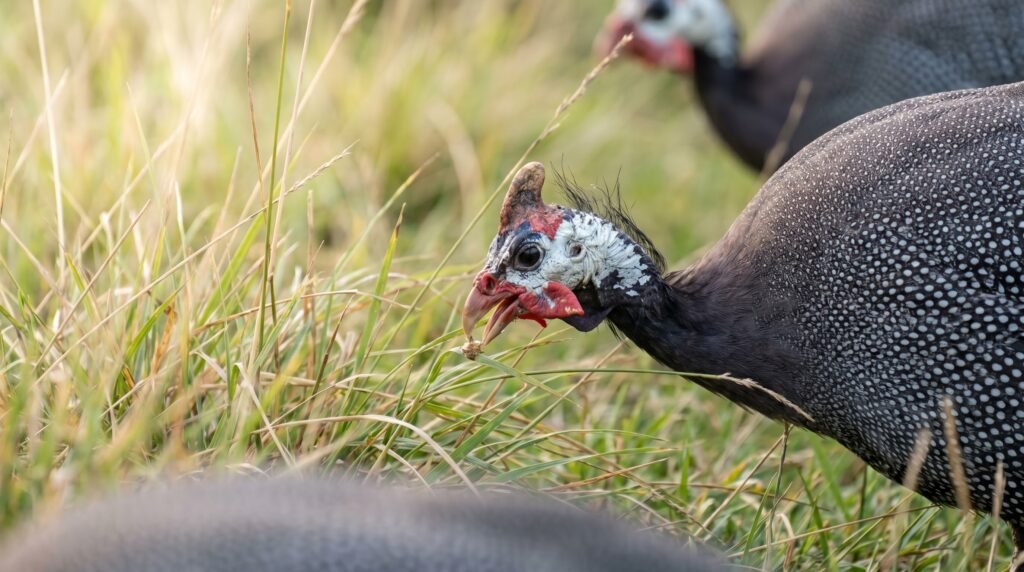
The pest-eating reputation is real and it is broad. Free-ranging guineas work through grasshoppers, flies, beetles, crickets, caterpillars, and slugs throughout the day. They will also kill mice and small rats, and flocks have been observed attacking snakes. Unlike chickens, which mostly scratch the ground, guineas actively hunt - a distinction that makes them noticeably more effective at catching fast-moving insects like grasshoppers.
The tick story, however, is more complicated. Guinea fowl do consume adult ticks, and two of the three North American studies reviewed by Penn State Extension found that adult tick populations dropped where guineas ranged. However, both studies that examined nymphal ticks - the small, hard-to-spot stage most likely to transmit Lyme disease - found that guinea fowl did not reduce nymphal populations. Worse, the birds became hosts for those nymphs. A 2024 study published in the Journal of Medical Entomology found "no evidence that guinea fowl are an effective biological control of lone star ticks" and confirmed via blood-meal analysis that engorged nymphs collected from guinea coops had fed on the guinea fowl themselves. Penn State Extension's conclusion: "landscape modifications, using tick tubes, or applying acaricides" are more reliable tools. Guineas eat ticks. They also carry them.
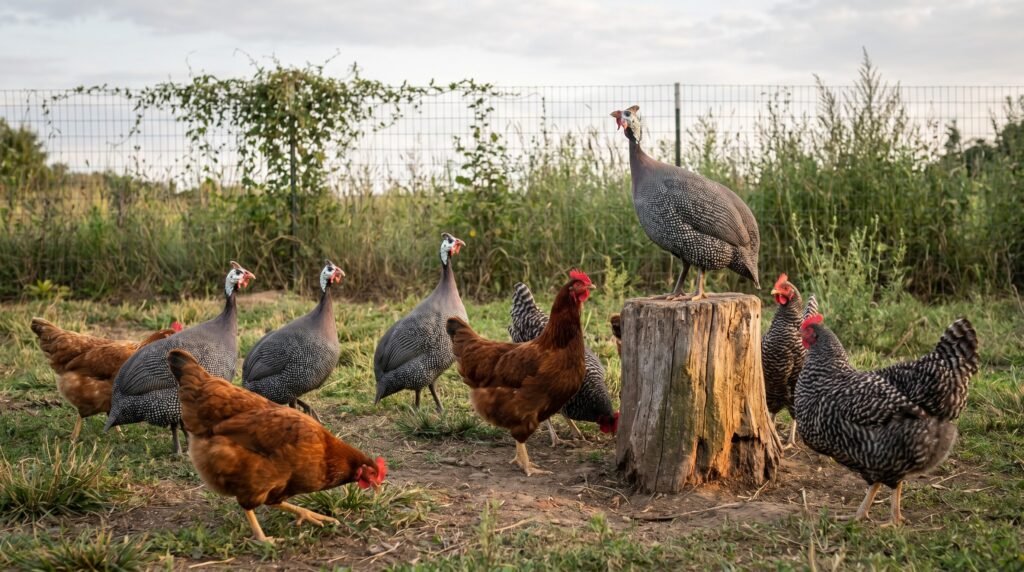
The alarm system benefit, on the other hand, holds up consistently. Guinea fowl are significantly more alert than chickens, and their warning call is loud enough that the whole yard hears it. University extension guides describe guineas as a built-in alarm system, kept with chickens specifically to warn the flock of predators in the air. In a mixed free-range group, a guinea's alarm gets chickens moving toward cover faster than anything else we have tried. For hawks especially, the advance warning has value - particularly if your free-ranging chickens cover ground where aerial predators are active.
Guineas also hold up in weather that would stress other birds. After the first two weeks of life they are widely considered the hardiest of all domestic fowl, tolerating heat and cold that would slow a comparable-sized chicken.
The three big downsides you need to weigh honestly
For most backyard keepers the deal-breakers are noise, wandering, and conflict with existing roosters - three problems rooted in the bird's semi-wild nature and not fixable through training alone. None of them is fatal on the right property, but all three get worse in smaller or more suburban settings.
Noise is the dealbreaker for most suburban and semi-suburban keepers. Guinea hens produce a distinctive two-syllable call - Extension.org describes it as sounding like "buckwheat, buckwheat" or "put-rock, put-rock" - that carries a long distance and repeats persistently when the birds are alarmed or excited. Both sexes can be relatively calm when nothing disturbs them, but shift to very loud the moment anything unusual happens, which in a backyard setting means dogs, cars, wind, strange people, and shadows. If your nearest neighbor is 200 feet away, this is likely a problem. If your nearest neighbor is a quarter mile away, it may not be.
Wandering is the second issue, and it is structural to the bird's nature rather than a training failure. Guinea fowl are strong fliers - they can cover 400-500 feet in a single flight - and very good runners. When free-ranging, they will cross property lines. The university's finding: guineas will range and cross the boundaries of a small lot (University of Kentucky Cooperative Extension). Confining them fully is possible but creates a different problem: stressed, crowded birds need at least 2-3 square feet per bird in enclosed housing, and that confinement leads to behavioral issues. The standard recommendation is a period of two to six weeks confined to their permanent home before being allowed out, which trains them to return at night, but does not prevent daytime wandering once released.
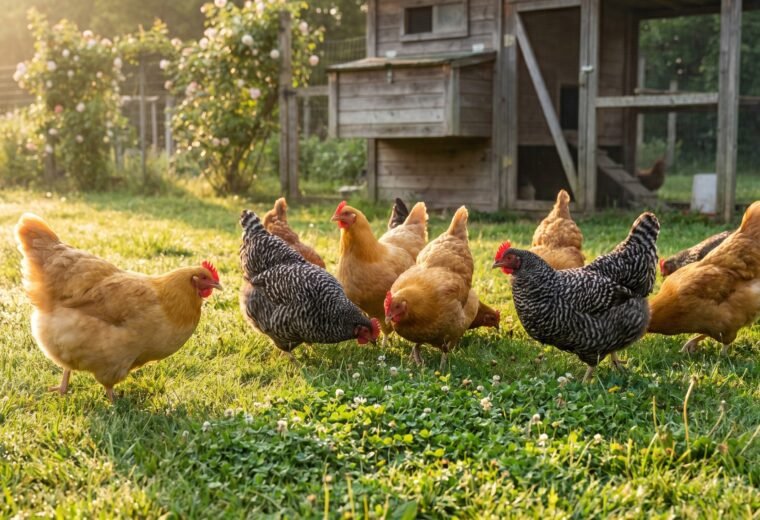
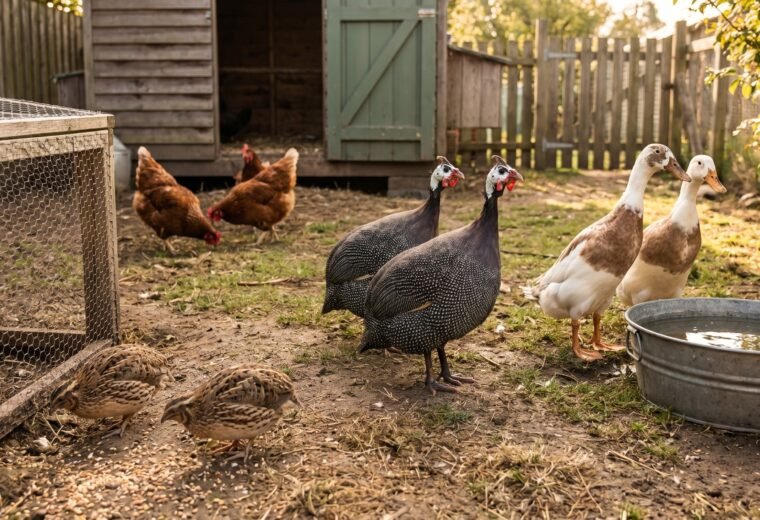
Temperament with other birds is the third complication. Guineas are "not as easily tamed" as chickens and "seem to retain some of their wild behavior" (Extension.org). In a mixed flock, male guineas confined with roosters will chase the roosters from food and water - something that can stress or injure a rooster over time. Free-ranging usually reduces the tension because there is space to establish distance, but a small enclosed run with both species is a recipe for conflict. If you are adding guineas to an existing chicken flock, plan on separate feeding stations until a pecking order settles.
Egg production: smaller eggs, shorter season
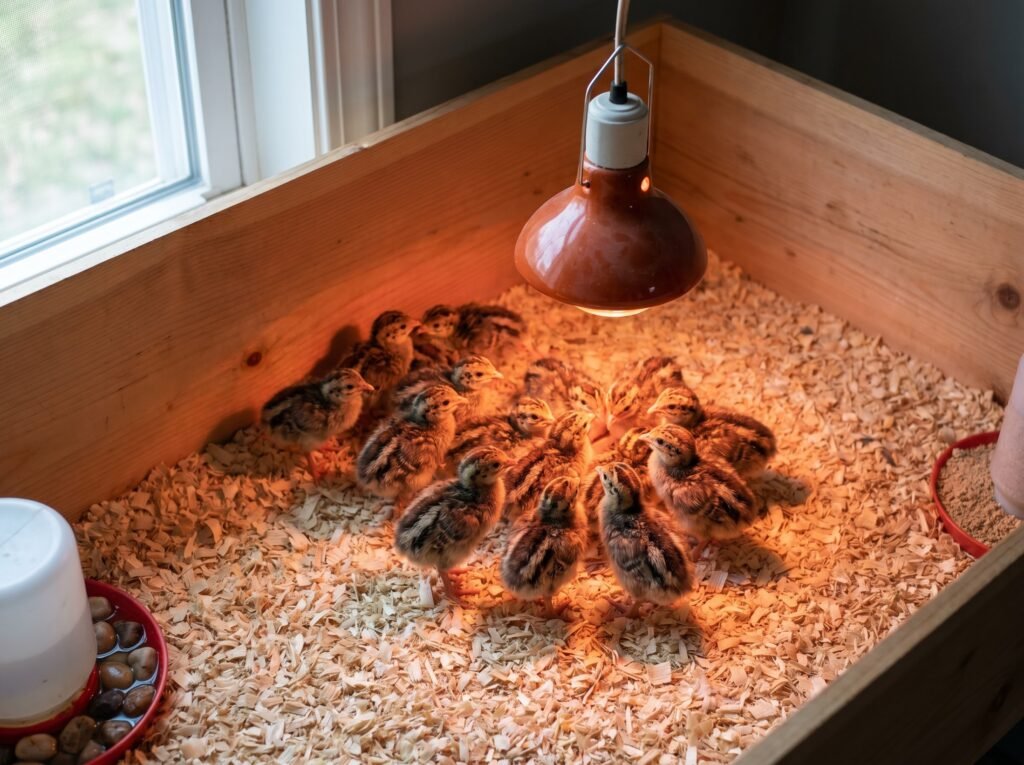
Guinea fowl lay seasonally, not year-round, and a well-managed hen tops out around 100 eggs annually - respectable, but with a narrower window and more management demands than a good laying chicken breed.
Guinea hens lay during daylight-hour-driven seasons, typically March through October. A well-managed hen may produce 100 or more eggs in a year (Extension.org), but that figure assumes attentive management; output varies considerably with management quality, and broodiness can interrupt a laying cycle at any point. The eggs are smaller than chicken eggs, with thicker shells and a richer yolk that many keepers prefer for baking. Incubation takes 26-28 days, roughly a week longer than chickens. Keets are more fragile than chicks in their first two weeks: they chill easily and are vulnerable to dampness, so brooding setup matters. Start keets at 95°F and step down 5°F per week, the same schedule as chicks - but keep them especially dry and draft-free in that first fortnight.
For anyone thinking about hatching or brooding keets alongside chicks, the feeding regimen differs. Extension guidance recommends a 24-26% protein game bird or turkey starter for the first several weeks; standard chick starter is too low in protein for young keets. The protein level then drops to roughly 18-20% for weeks five through eight, and to a 16% layer mash after eight weeks. The keet brooding guide has temperatures, bedding, and waterer setup in full detail.
Who should keep guinea fowl - and who shouldn't
Guinea fowl are a strong fit for rural keepers with at least an acre, an existing free-range flock, or serious insect pressure - and a poor fit for anyone with close neighbors, a small enclosed run, or expectations of a tame bird.
The table below treats the key decision variables honestly. Use it to match your situation to the bird's actual requirements before committing.
| Your situation | Guinea fowl: good fit? | Why |
|---|---|---|
| Rural property, 1+ acres, no close neighbors | Yes | Noise and wandering both need space to be manageable; enough buffer here |
| Suburban backyard, neighbors within 150 ft | No | Alarm calls will generate complaints; wandering crosses property lines |
| Tick problem and want biological control | Partial, with caveats | Adult tick reduction documented; nymphal tick control not supported by research - birds may host nymphs |
| Existing chicken flock, free-range setup | Yes, with care | Space reduces male aggression; alarm benefit adds genuine value; introduce gradually |
| Small enclosed run with roosters | No | Males will harass roosters from food/water in tight confinement |
| Grasshopper or large-insect pressure | Yes | Active hunters; faster and more aggressive at insect foraging than chickens |
| Want consistent egg production year-round | No | Seasonal laying (March-October); smaller total output than good laying breeds |
| Small children or visitors expecting tame birds | No | Semi-wild temperament; not friendly in the way most chicken breeds become |
| Interested in predator awareness for the whole flock | Yes | Alert, loud alarm callers; noticeably improve hawk detection in mixed groups |
A few things first-time guinea keepers get wrong
Releasing keets too early is the most common failure. Guineas that have not bonded to a home location will simply leave - or end up as predator losses because they roost in trees rather than returning to shelter. Guineas need far longer confinement than chickens to learn where home is; keep new birds shut in their coop for two to six weeks before allowing access to the yard. Even then, offer scratch grain near the coop at dusk; guineas that associate the coop with evening food are far more likely to come home. This is not a trick so much as working with the bird's routines.
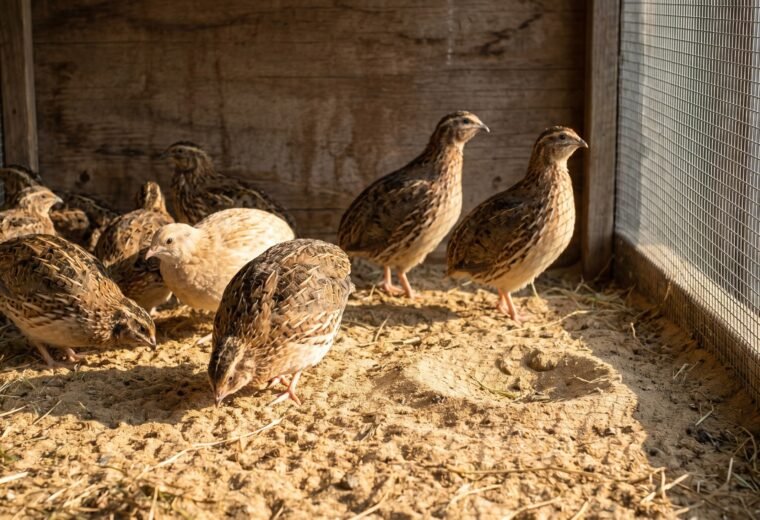
Expecting them to behave like chickens is the second error. Guineas are not tame poultry that happen to be noisy. They are closer to semi-wild game birds that tolerate human presence without seeking it. They will not eat from your hand, they will not follow you around the yard, and they will not let you pick them up without a fight. If that kind of interaction is important to you, other poultry species will serve you better - coturnix quail, for instance, are quieter, more compact, and manageable in smaller spaces.
Assuming the tick problem is solved is the third mistake, and the research makes it clear. Guineas eat ticks. They also host tick larvae and nymphs. Managing tick pressure on a property still requires habitat management, possibly acaricide treatments, and regular checks on both humans and birds - the guinea flock is one layer, not the whole answer.
The bottom line: guinea fowl are a good fit for rural keepers who want active insect control, a built-in flock alarm, and a bird that thrives without much fussing - and who have the space and the neighbors to absorb the noise and wandering. If those conditions are not in place, a different bird will serve you better.