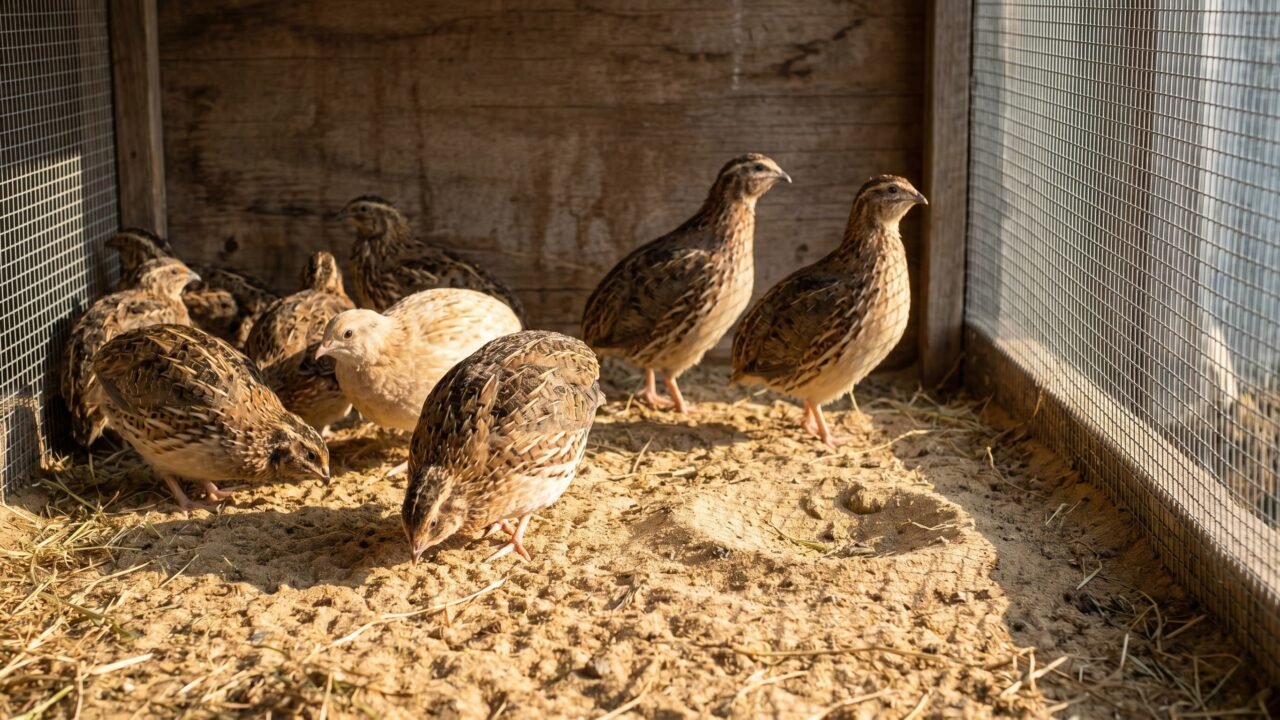
Six weeks. That is how long it takes a coturnix quail chick to go from shell to first egg - a timeline that makes even the fastest-maturing chicken breeds look slow by comparison. If you have a small yard, a strict HOA, or a neighbor who would notice a rooster, quail can solve problems that chickens cannot. They are compact, genuinely quiet, and surprisingly productive for their size.
This guide covers everything a first-time quail keeper needs to know: why coturnix is the species to start with, how to house and feed them correctly, what predators target them, and where they differ from chickens. For a deeper look at egg production specifics and flock size math, see our article on raising quail for eggs, and for a side-by-side comparison of the two species, see quail vs. chickens.
Why coturnix, and why quail at all
Of the several domesticated quail species available, Coturnix japonica - the Japanese or coturnix quail - is the right starting point for beginners. They are the most forgiving, the most productive, and the easiest to source. Bobwhite and California quail are interesting birds, but they are wilder in temperament, need more space, and take longer to mature.
The case for quail over chickens comes down to a few honest advantages. Space is the biggest one. Coturnix do well with roughly 1 square foot per bird in a wire-floored cage system - a fraction of what a standard laying hen needs. You can house a flock of a dozen birds in a footprint that would barely accommodate three hens. They also skip the noise problem entirely. Female coturnix are nearly silent. Males produce a soft, repetitive call that is genuinely hard to hear from next door - nothing like a rooster's crow, and nothing like the egg-announcement cackle of a hen. That makes quail legal in many municipalities where chickens are restricted or roosters are banned entirely; check your local ordinances before buying birds, since rules vary considerably.
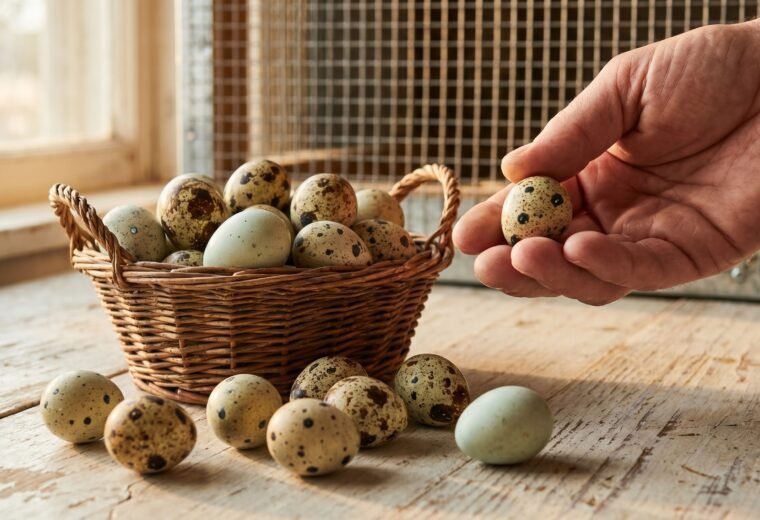
The maturity speed is striking. According to Mississippi State University Extension, coturnix "may begin laying eggs as young as 6 to 8 weeks of age" - a lifespan milestone that chickens reach at four to six months. For someone who wants eggs quickly, or wants to hatch their own replacement birds on a short cycle, that biology is a real advantage.
Peak production numbers are also worth knowing upfront before you size your flock. A coturnix hen in her first year lays roughly five to six eggs per week at peak - about 250-300 eggs per year, derived from an average of 5.5 eggs per week over 52 weeks. Compared to a productive laying hen, that is a similar annual output from a bird that takes up a fraction of the space. Six to eight hens in good production will deliver roughly 35-45 quail eggs per week - enough for regular household use. Plan on using three to four quail eggs wherever a recipe calls for one large chicken egg, so a flock of eight hens gives you effectively 10-15 chicken-egg-equivalents per week.
There are honest trade-offs too. Quail eggs are smaller than chicken eggs - see the conversion note above if you are planning flock size around a cooking volume. Individual birds have shorter productive lifespans than hens, with peak output typically in the first year. And quail have almost no interest in being cuddly; they tolerate handling but they are not lap birds. If a friendly flock is your goal, chickens win that comparison. Our quail vs. chickens guide works through those tradeoffs in detail.
Housing: the decisions that matter most
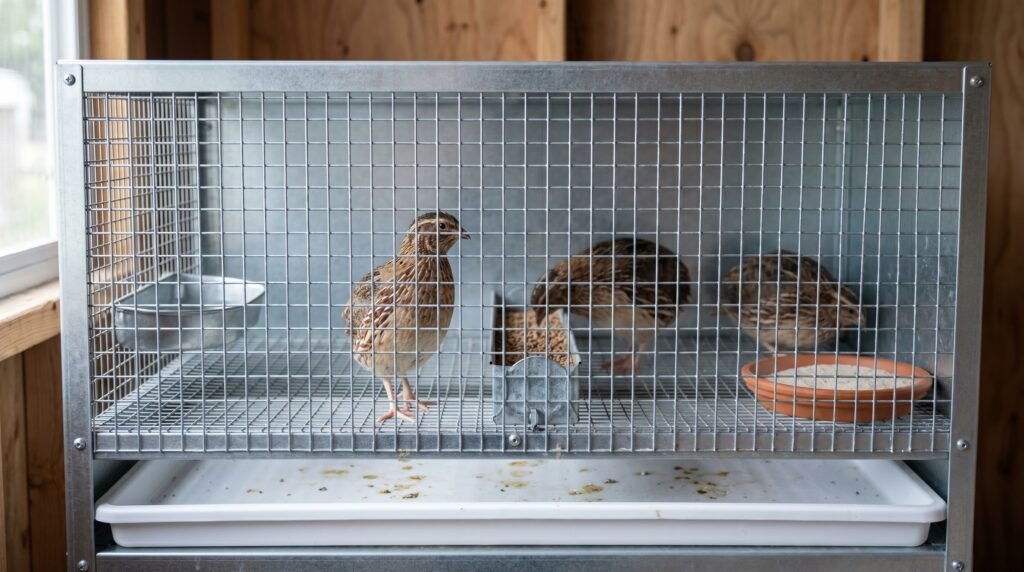
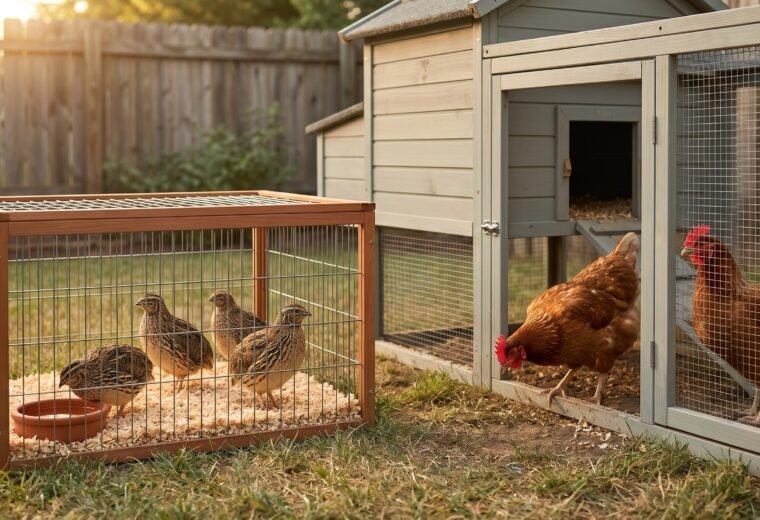
Coturnix quail are kept successfully in two very different systems: wire-floor cages (stacked or single-tier) and ground-level floor pens with deep litter or sand. Each has real pros and cons worth knowing before you build or buy.
Wire-floor cages keep droppings out of contact with the birds, reduce disease pressure, and make a small footprint work for a larger flock. The downside is behavioral restriction. A peer-reviewed welfare review in Frontiers in Veterinary Science (PMC12144487) notes that quail "spend most of their time on the ground, often pecking, scratching, or hiding under cover" and that cage systems prevent expression of those natural behaviors. Providing a sand tray for dust bathing, a few visual barriers, and some ground cover material goes a long way even in a small cage.
Floor pens with a sand or deep-litter floor give birds more room to express natural behaviors and are often easier for small keepers to build with basic materials. Plan on at least 2 square feet per bird in a floor pen - more if you can manage it. Ground systems require more attention to predator-proofing underneath the pen, and wet litter can build up ammonia quickly if the pen is not maintained.
One housing rule applies to both systems: cage height. Coturnix have a hard-wired flush reflex that sends them straight up when startled. In a tall enclosure, that vertical launch can produce head and neck injuries against the roof - a problem the welfare literature specifically flags. The safe working targets are either a cage no taller than 10-12 inches (limits upward speed) or an aviary tall enough - at least 6 feet - that birds can complete the flush safely. Heights in between are where injuries happen most. Keep the ceiling surface smooth if you go low, and avoid anything protruding from the top interior.
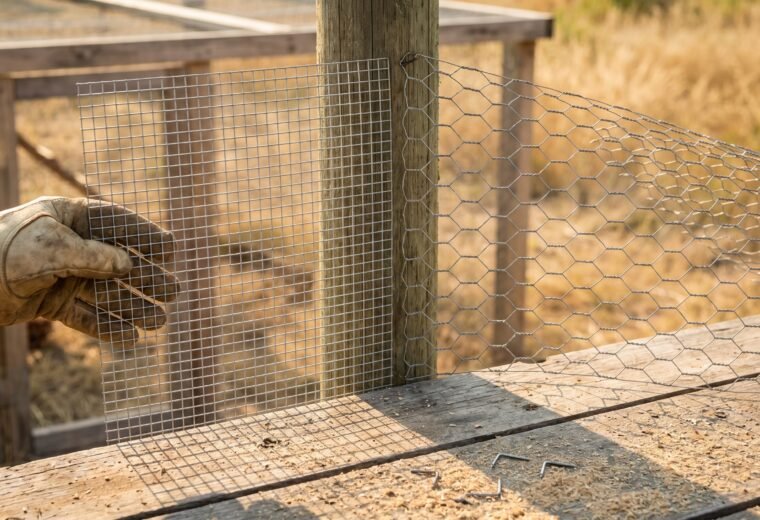
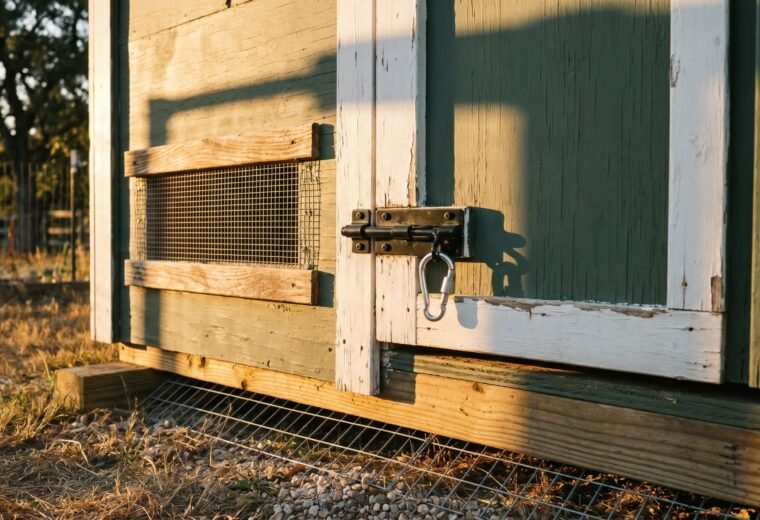
All quail housing needs a solid roof - open tops are an invitation to every hawk and owl in the area. Use hardware cloth for the sides and floor - 1/4-inch mesh is the safer choice, especially where weasels are present, since 1/2-inch mesh will not stop the smallest weasel species. Standard chicken wire is too weak and has openings large enough for a juvenile rat. Bury or fold an apron of hardware cloth at least 12 inches outward at the base of any ground-level structure, or elevate the pen so digging is not an option.
The quail keeper's decision matrix: cage vs. floor pen
This comparison covers the five variables that new keepers most often get wrong when choosing a housing system. There is no universally better option - it depends on your space, your flock size, and how much daily maintenance you want to do.
| Factor | Wire-floor cage (stacked) | Ground floor pen (litter/sand) |
|---|---|---|
| Space per bird | ~1 sq ft minimum in the cage footprint | 2+ sq ft recommended |
| Droppings management | Fall through wire; tray cleaned 2-3x/week | Mixed into litter; full clean monthly (more often if wet) |
| Behavioral welfare | Limited dust bathing; add a sand tray | Full scratch, peck, dust bath possible |
| Disease pressure | Lower - birds not in contact with droppings | Higher if litter gets wet or soiled |
| Flush injury risk | High if cage taller than 12 inches | Low in a tall walk-in pen (6 ft+) |
| Scalability | Stack cages to add birds without more floor area | Each bird needs more floor space |
| Predator weak spot | Sides and top; check wire gauge | Bottom (digging); apron or hardware cloth floor required |
| Egg collection | Eggs roll to a catch tray if the floor is tilted | Eggs on the ground; hens may lay in corners or scatter them |
Feed: what coturnix need and why chicken feed falls short
Quail need more protein than chickens at every life stage. Feeding a standard layer ration to coturnix - even a good one - will produce underperforming birds. The protein gap is the single most common feeding mistake beginners make.
For chicks from hatch through approximately six weeks, use a game bird starter feed. Purina's Game Bird 30% Protein Starter is a widely available option; the manufacturer specifies it as "a complete feed for starting quail" and recommends feeding it "for the first 6 weeks of life" for coturnix. The high protein level drives the fast growth rate that defines this species.
Once birds are past six weeks and approaching laying age, transition to a game bird layer or breeder feed. Purina's layer formulation for game birds runs around 20% protein - still higher than the standard 16% chicken layer pellet. Keep oyster shell available free-choice once hens are in production to support eggshell quality.
Water is deceptively important in the first week of a chick's life. Quail chicks are tiny - genuinely small enough to drown in the waterer troughs designed for chicken chicks. Use a quail-specific waterer or place marbles in a shallow dish to displace the water depth. Remove the marbles once birds are past the first week. A wet chick in a cold brooder is a chick at serious risk.
Light drives production. Coturnix hens need 14-16 hours of light per day to maintain strong egg output; production slows when daylength drops below about 12 hours. If you keep birds indoors or under a covered structure, a simple timer-controlled LED on a 15-hour cycle maintains consistent laying through winter.
Hatching your own: brooding and incubation basics
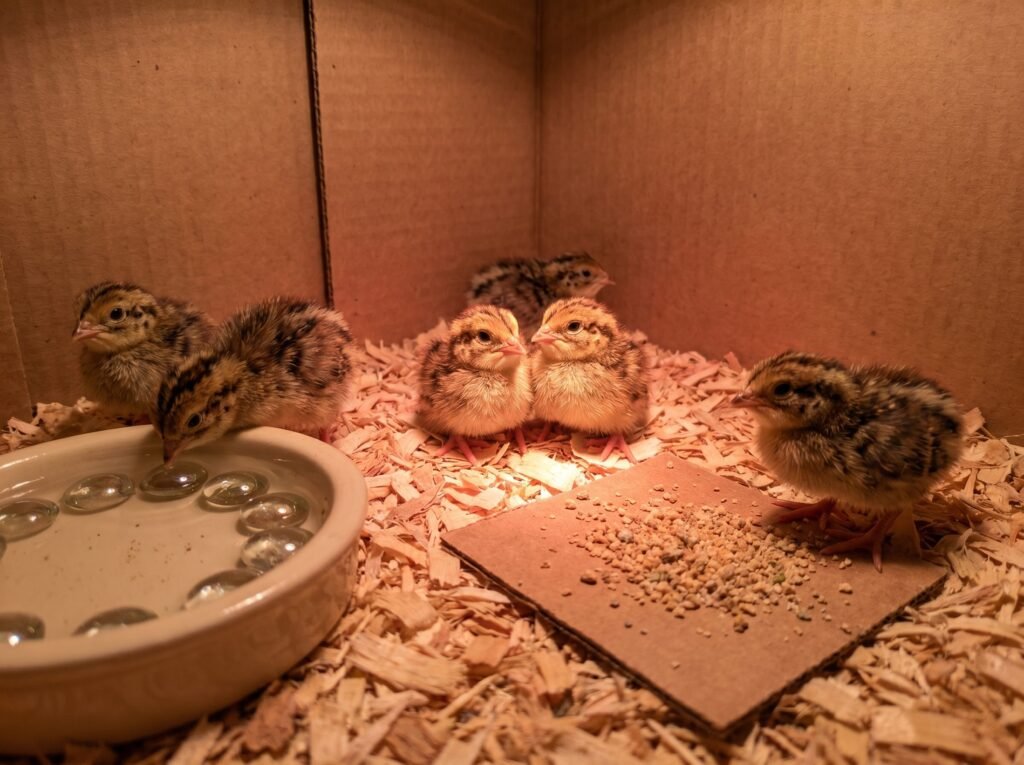
Hatching coturnix is manageable for a first-time keeper, mostly because the timeline is short and the margin for error is reasonable. Coturnix eggs incubate in 17-18 days at 99.5 F in a forced-air incubator, with humidity at 45-50% for the first 14 days. On day 14 or 15, stop turning, raise humidity to 65-70%, and wait. That last phase - "lockdown" - gives the chicks enough moisture to hatch without the membranes drying out against the shell.
The most common failure mode is running humidity too high during the first two weeks. Excess early humidity prevents normal air cell development and causes late embryo deaths just before hatch. If your hatch rate is consistently poor, that is the first thing to check.
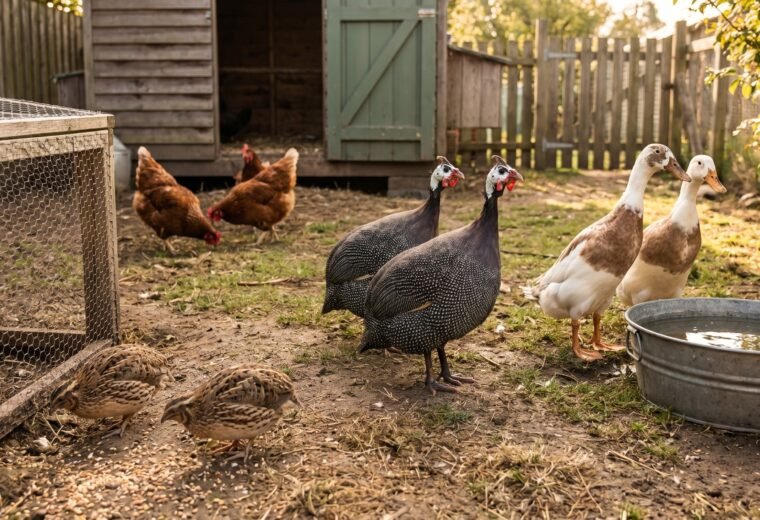
Once chicks are dry and active, move them to a brooder. Mississippi State University Extension recommends starting brooder temperature at 90-95 F for the first week, then reducing by 5 F per week. At five weeks, "chicks can maintain their own body temperatures when the room stays around 70 degrees." Coturnix feather out faster than chickens - most are fully feathered by four to five weeks - so the heat taper is relatively quick. Our other poultry guide covers the broader picture of starting different species side by side if you are mixing coturnix with ducks or guinea fowl.
Predators: what targets quail and how to stop it
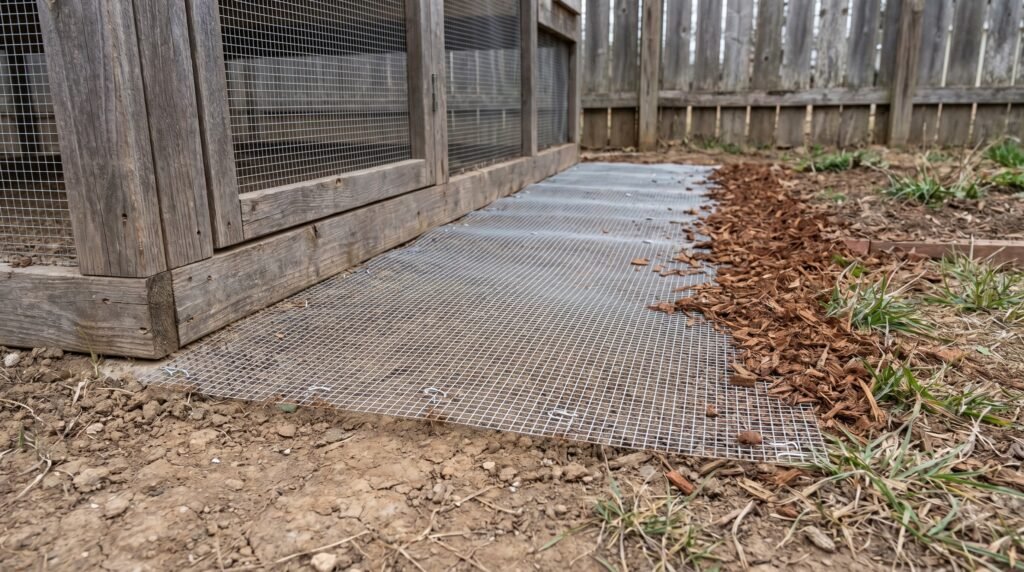
Quail are small, ground-dwelling birds. That combination attracts nearly every predator in a typical backyard environment. The threat list includes raccoons, opossums, weasels, rats, snakes, hawks, and owls. Each approaches differently, and housing needs to account for all of them.
Raccoons are strong enough to tear through standard chicken wire and reach through any gap wider than roughly 1 inch - a real danger to birds that sleep close to the sides of a cage. Juvenile rats can also squeeze through gaps close to 1 inch. Hardware cloth stops both, but mesh size matters: 1/2-inch mesh is adequate for rats and raccoons, but least weasels (Mustela nivalis) can pass through gaps as small as 5/8 inch, so only 1/4-inch mesh reliably excludes them. If weasels are active in your area - a real concern in many parts of the US and Canada - use 1/4-inch hardware cloth, not 1/2-inch. It costs more than chicken wire, but it is the only material that actually works. Our detailed breakdown of hardware cloth vs. chicken wire explains the construction differences and why one is a predator barrier while the other is not.
Hawks and owls require an enclosed top - there is no other option. A partially covered run will not protect birds that free-range in the open portions. Quail are particularly vulnerable because they are small, low to the ground, and not fast enough to evade a diving raptor. Hawks are federally protected under the Migratory Bird Treaty Act, so lethal control is not a legal option - overhead cover is the only answer.
Digging predators (foxes, dogs, and sometimes raccoons) are stopped with a buried or outward-folded apron of hardware cloth at the base of ground-level pens. Fold it out horizontally at least 12 inches from the pen wall before backfilling with soil. Elevating the pen entirely also works if the height is enough to prevent reach-under access.
Snakes present a specific problem for brooder-age chicks, since a small snake can enter through surprisingly small gaps. Hardware cloth at 1/4-inch mesh is effective here too. The same principles that protect a chicken flock apply directly to quail - see our article on predator-proofing the coop for a comprehensive checklist.
Common beginner questions
Do coturnix quail need a rooster to lay?
No. Hens lay regularly without a male present, just as chickens do. You only need a male if you want fertilized eggs for hatching. If your goal is table eggs, skip the male entirely - it simplifies management and eliminates most aggression problems. If you do add a male, one male per four or five females is the widely recommended ratio. Going lower than 1:3 tends to produce over-mating and hen injuries.
How cold is too cold for quail?
Adult coturnix tolerate cold well when they are dry and protected from drafts - the same logic that applies to chickens. What they cannot handle is wet, cold conditions with no wind break. Brooder-age chicks need the scheduled temperature reductions outlined above; adult birds in a well-constructed pen generally do not need supplemental heat unless temperatures drop severely and prolonged (below 0 F for extended periods). Damp bedding and poor ventilation create far more health risk than cold air alone.
Can quail and chickens share a coop?
It is possible but not recommended as a general practice. Chickens can carry respiratory pathogens and internal parasites - including Mycoplasma gallisepticum and Heterakis worms that transmit blackhead disease - that quail have less resistance to; separate housing prevents cross-infection. Size differences also create stress and injury risk. If you want to keep both species, separate housing is cleaner and safer for both. Our broader other poultry guide covers mixed-flock considerations in more detail.
How long do coturnix quail live and lay?
Coturnix typically live two to three years. Peak egg production is in the first year, with output declining noticeably after the first birthday. Most keepers who raise quail for eggs bring in a new cohort of pullets annually to keep production steady, overlapping the generations by a few weeks during the transition.
How many quail do I need for a regular supply of eggs?
As covered in the production section above, six to eight hens at peak output delivers 35-45 eggs per week - roughly 10-15 chicken-egg-equivalents. Keep in mind that this assumes a 14-16 hour light cycle; in winter without supplemental lighting, production can drop 30-50% as daylength shortens. If you need a consistent year-round supply, plan your flock size around the off-peak number, not the summer peak. Our full breakdown of rotation schedules and seasonal variation is in our raising quail for eggs article.