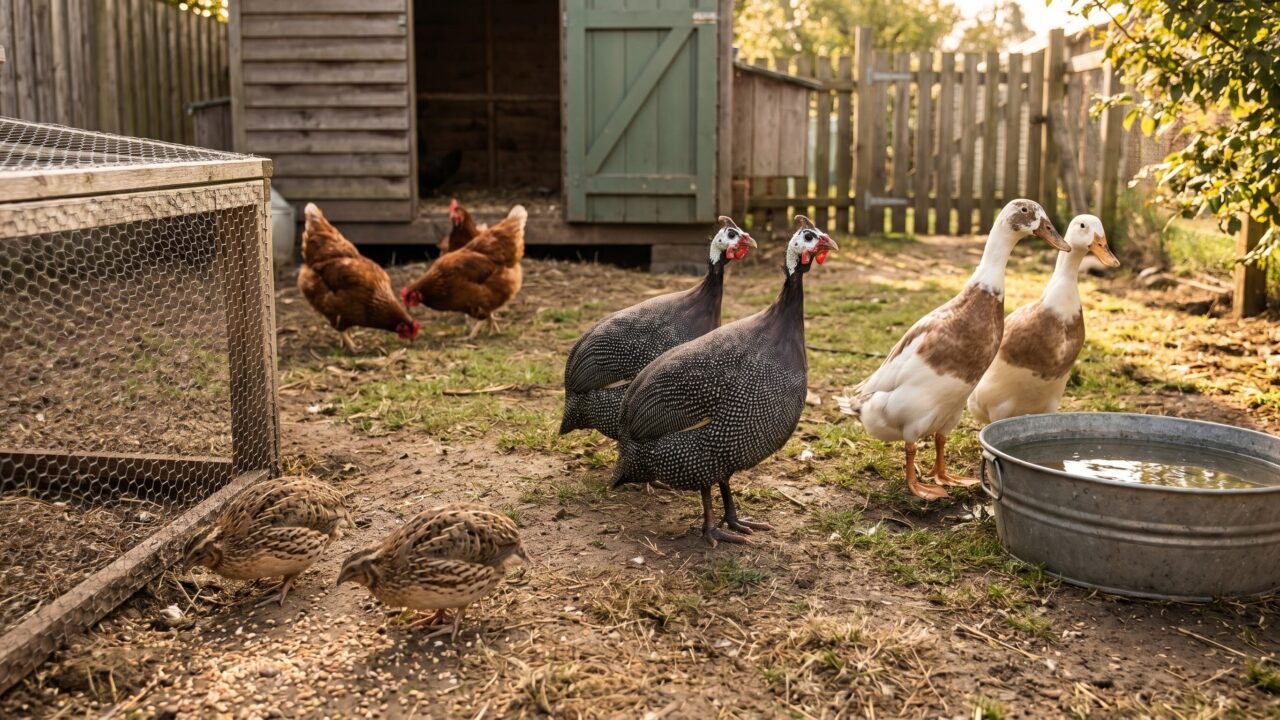
Chickens are the default, but they are not always the best fit. In a 200 sq. ft. suburban yard, 12 coturnix quail can out-egg a small chicken flock in far less space. On a tick-infested half-acre, a few guinea fowl will work the perimeter every day without you lifting a finger. Ducks thrive where chickens hate wet ground, and they often out-produce laying hens on the annual egg tally. The right question is not which species is "best" - it is which one matches your land, your tolerance for noise, and what you actually want from your birds.
This guide covers the four most common choices for small backyard operations: coturnix quail, guinea fowl, ducks, and chickens. Each section covers the numbers that matter, the honest tradeoffs, and the beginner failure most likely to bite you. Use the comparison table below to match species to situation at a glance, then follow the links into the dedicated guides for each.
Quick-reference comparison: quail vs. guinea fowl vs. ducks vs. chickens
The table below pulls together the figures that change the most between species. Everything assumes a small backyard flock of 6 to 20 birds under reasonably good management. All space figures are minimums - more is always better.
| Species | Indoor space (min.) | Egg production | Laying age | Noise level | Best fit | Hardest challenge |
|---|---|---|---|---|---|---|
| Coturnix quail | ~1 sq. ft. per bird (wire cage); ~3 sq. ft. on deep litter | ~5-6 eggs/week per hen | 6-8 weeks | Low (soft calls, no crowing) | Small urban lots, apartments with outdoor space, high-density egg production | Tiny size means predator and escape risk; replace hens at 12-18 months |
| Guinea fowl | 2-3 sq. ft. per bird if confined; prefer free-range | ~100 eggs/yr (March-October only) | ~26-28 weeks | Very high (alarm screech; legal risk in suburbs) | Rural acreage with tick pressure; farms needing a living alarm system | Cannot be contained by standard fencing; roam and cross lot lines |
| Ducks (laying breeds) | 4 sq. ft. per bird indoors | 300-350 eggs/yr (top layers); ~4 eggs/week for Runners | ~16-28 weeks by breed | Moderate (females quack; drakes quieter) | Wet climates, mixed flocks where egg volume matters, foragers on soft ground | Watery manure and water mess require daily management to keep coop healthy |
| Chickens | 3-4 sq. ft. per bird indoors; 8-10 sq. ft. in run | 250-300 eggs/yr (top layers); ~10-20% annual decline | 18-24 weeks | Low-moderate (hens cluck; roosters prohibited in many areas) | First-time keepers, most lot sizes, broadest breed selection | Predator pressure; pecking-order stress in cramped quarters |
Coturnix quail: the high-density egg machine
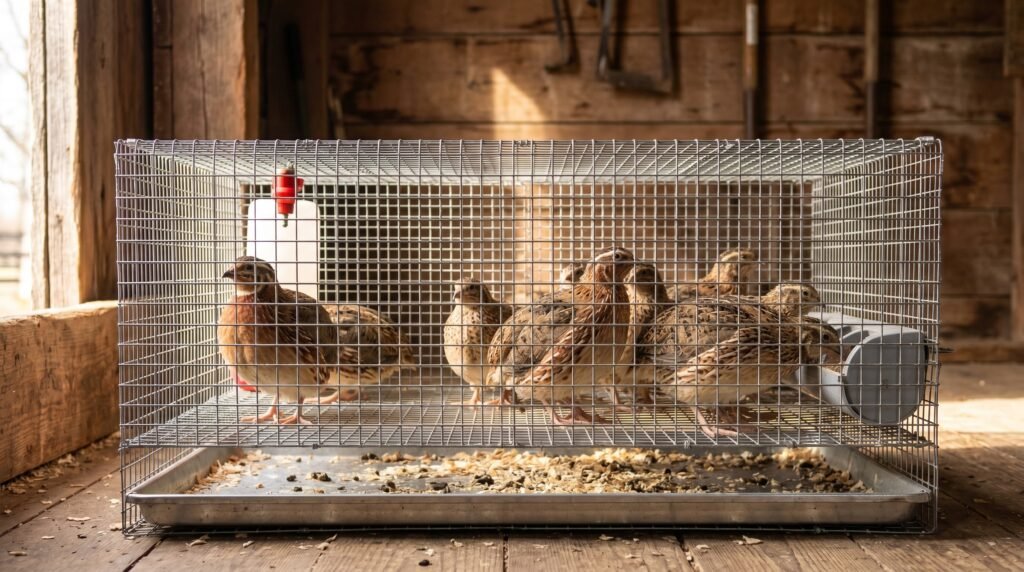
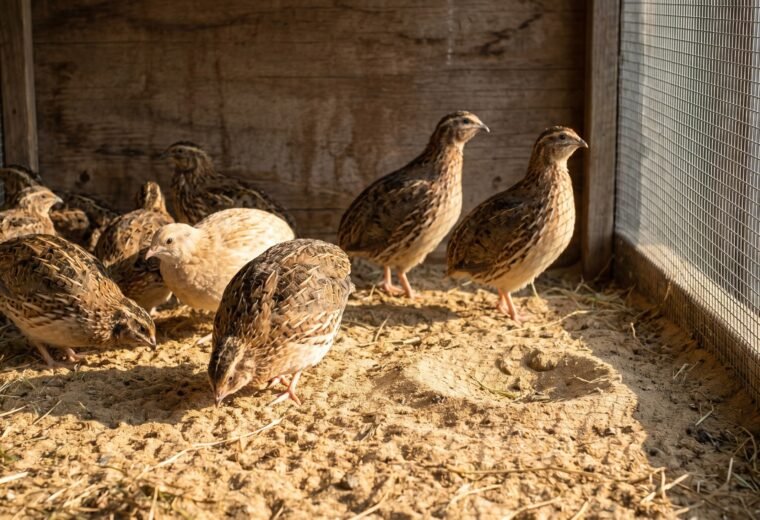
Mississippi State Extension's quail program is clear on timing: coturnix "may begin laying eggs as young as 6 to 8 weeks of age," which is roughly three times faster than a typical chicken pullet. A healthy hen produces five to six eggs a week at peak - small eggs, roughly a third the size of a large chicken egg, but the production rate per square foot of housing is unmatched in backyard poultry.
Space is where quail shine. In a wire-floored cage, one square foot per bird is workable. On solid-floor or deep-litter setups, bump that to three square feet per bird to keep ammonia and stress in check. A colony of 15 hens in a 4x4 ft. wire pen is a realistic setup for a suburban keeper - and those 15 birds will yield 70-80 eggs a week at peak.
The flip side is short productive life. Most quail keepers replace hens between 12 and 18 months because production falls off sharply after that first laying cycle. Plan for that turnover before you start.
Quail are quiet enough for most neighborhoods - males produce a soft crow that is a fraction of a rooster's volume, and females stay nearly silent. They are poor candidates for free-ranging because hawks, cats, and even large insects can take them. Hardware cloth with openings no larger than half an inch is essential, and young quail chicks can drown in shallow waterers, so small-marble spacers in drinkers matter in the first two weeks.
Our guide on raising quail covers housing builds, feeding programs, and the incubation details (17-18 days at 99.5 degrees F, lockdown humidity up to 65-75% for the final three days) in full.
Guinea fowl: excellent pest control, terrible suburban neighbor
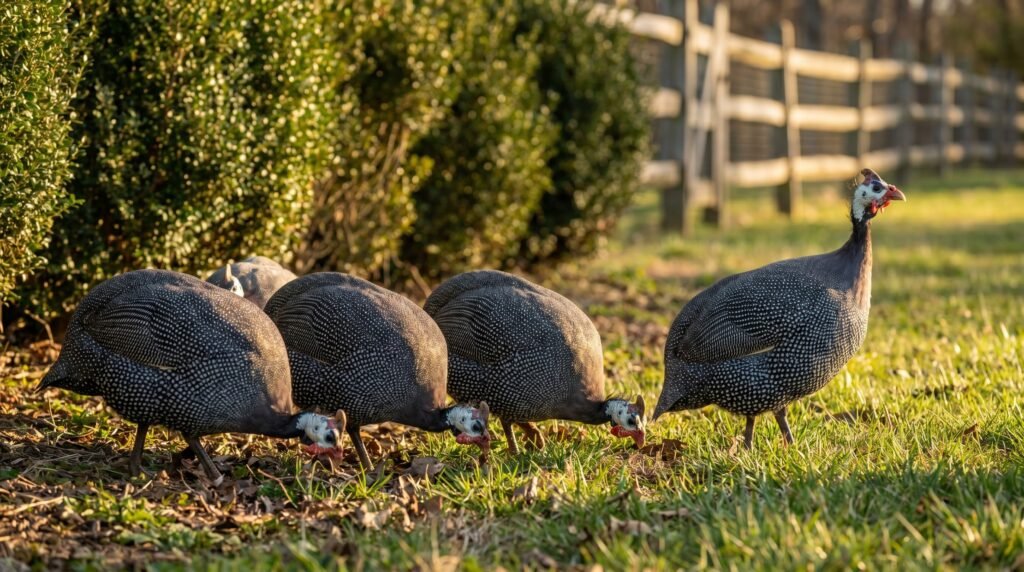
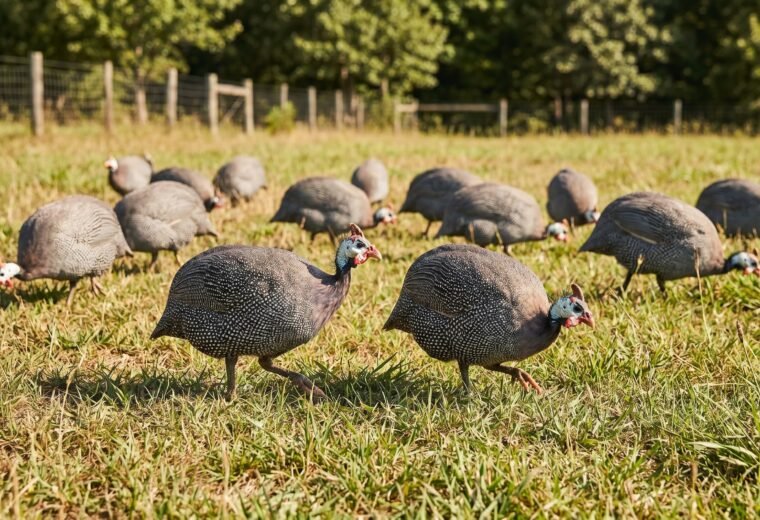
Guinea fowl rank among the most effective tick-reduction tools available to small landholders. The eXtension guinea fowl guide documents their consumption of deer ticks (the primary Lyme disease vector), grasshoppers, flies, crickets, and wood ticks - without damaging garden plants in the process. On a property with genuine tick pressure, a flock of eight to twelve birds working the perimeter daily produces measurable results through the warmer months.
Every other advantage comes wrapped in a significant caveat: these birds are loud, wild at heart, and built to roam. The eXtension guide puts it plainly - guineas "will range and cross the boundaries of a small lot," and they become "strong fliers able to fly 400 to 500 ft. at a time" from a very young age. Standard chicken fencing will not hold them. A covered run is the only reliable way to confine them, and they need at least 2 to 3 sq. ft. per bird indoors if you do.
Noise is the dealbreaker for suburban properties. Female guineas make a two-syllable "buckwheat, buckwheat" call that carries a long distance, especially when startled. Neighbors who are 50 feet away will hear it. That alarm function is genuinely useful on a farm - the birds alert to hawks, foxes, and strangers - but it has cost more than a few keepers their local zoning permits.
Egg production is seasonal and modest: the eXtension guinea fowl guide notes that a hen may produce an egg a day on peak days, but average annual yield is roughly 100 eggs per hen across the March-through-October laying window. Guinea eggs have thicker shells than chicken eggs and a richer yolk, but the production window is nothing like a laying hen's year-round output. Incubation runs 26 to 28 days - longer than both chickens (21 days) and coturnix quail (17-18 days).
Mixed flocks of guineas and chickens are common and usually stable. The eXtension interaction guide notes that the two species "do not interact much and get along well," though it records incidents of guinea males attacking roosters. Keep that in mind if you run a cockerel. And whenever two poultry species share space, disease transmission risk rises - biosecurity between pens matters more than usual.
The full species profile, including keet brooding temperatures and flock-sex ratios (keepers generally aim for one male per four to five females), is in our guinea fowl guide.
Ducks: the wettest, often most productive, egg layers
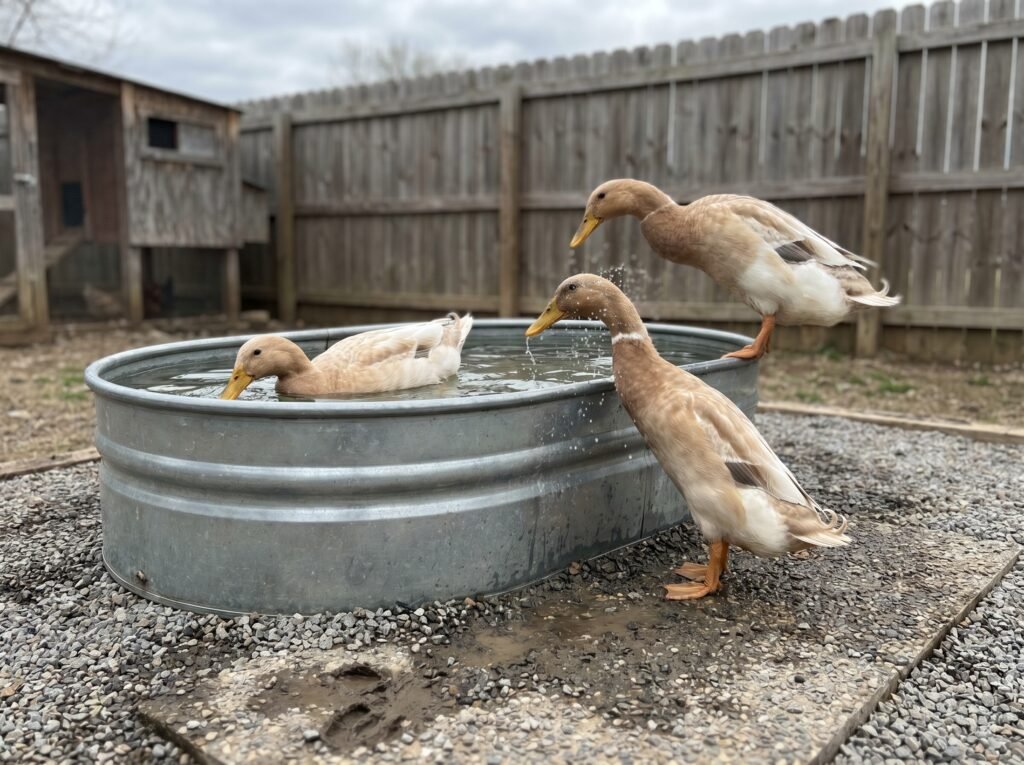
If raw egg numbers are the goal, top laying duck breeds beat most chicken breeds outright. The eXtension duck feeding guide reports that "commercial ducks can lay 300-350 eggs per year" against roughly 250 for commercial chickens. Runner ducks - often called the Leghorn of the duck world - average four eggs a week for about eight months per year, and some utility strains have cleared 300 eggs annually. Khaki Campbells reach similar territory. Duck eggs are also larger than chicken eggs: large chicken eggs run 24-26 oz. per dozen (USDA grade A minimum). Lightweight laying breeds like Runners and Khaki Campbells typically produce eggs in the 23-30 oz. per dozen range; heavier breeds such as Muscovy or Cayuga reach 32-34 oz. per dozen.
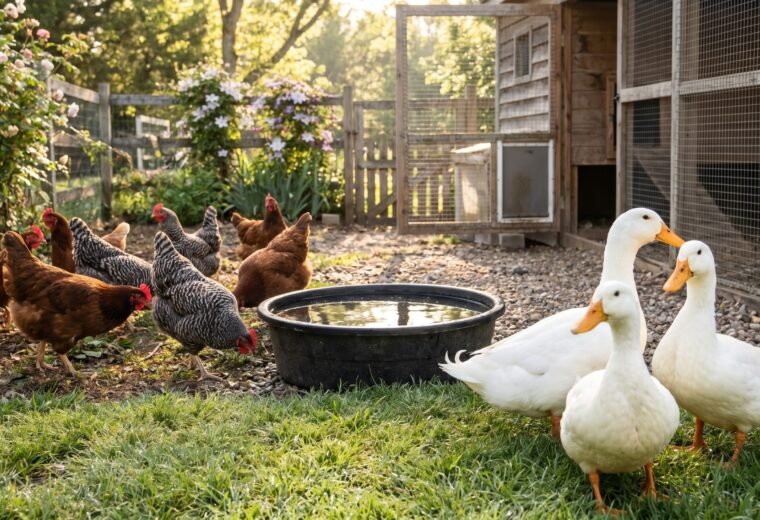
The cost is water management. Ducks need water deep enough to submerge their bills - they use it to clear nostrils and eyes, not just to drink - and they will turn any water source into a muddy mess within minutes. Their droppings are watery and voluminous; the eXtension species selection guide flags that "waterfowl have very wet droppings and have specific housing requirements to deal with the excess moisture." Wet bedding inside a coop drives respiratory illness and frostbite risk for any birds sharing the space. The practical fix: keep duck waterers outside, on a sand or gravel drainage pad, and keep chicken waterers separate and inside.
Feed costs run 20-30% higher per dozen eggs than for chickens, so the volume advantage narrows once you account for feed bills. Ducklings also need significantly more niacin than chicks - roughly twice the level - which means chick starter feed alone is not adequate for ducklings. An all-flock or waterfowl-specific starter covers both if you are running a mixed brooder.
Ducks are cold-hardy, calm under handling once socialized, and remarkably disease-resistant compared to chickens. They do not roost and do not need elevated perches - nesting happens at ground level. Housing them with chickens works, but requires thought about water placement, bedding depth, and the feed niacin issue. Our full breakdown of logistics and compatible management is in keeping ducks with chickens.
Chickens: why they remain the default for most beginners
The reason chickens dominate backyard poultry is largely practical. Breed selection is vastly wider than any other species - calm dual-purpose birds, high-production layers, cold-hardy heritage strains, and bantams for small spaces are all available from established hatcheries. The husbandry knowledge base is deeper, local feed is reliably formulated for them, and most backyard-poultry regulations are written with chickens in mind.
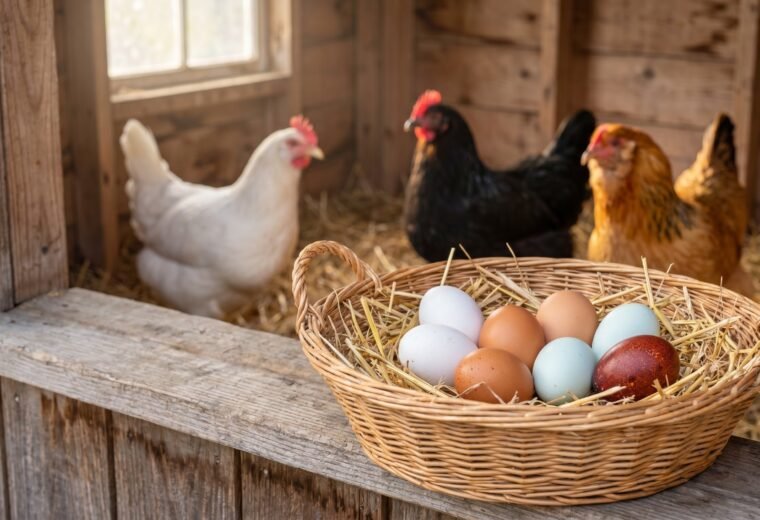
Good laying hens reach 250-300 eggs a year at peak, declining roughly 10-20% each year after their first full laying cycle. They start producing at 18-24 weeks depending on breed - slower than quail, comparable to or faster than ducks and guineas. They adapt to a wide range of climates and tolerate confinement better than guinea fowl, though they need real space: 3-4 sq. ft. per bird indoors and 8-10 sq. ft. in the run is the floor, not the target.
The highest-frequency beginner failure with chickens is not disease or predators - it is crowding. A cramped run produces feather-picking, bullying, and chronic stress that suppresses laying. If your lot limits you to tight quarters and you want high egg output, 15 coturnix quail in a well-built wire colony will serve you better than six hens in a cramped coop.
New to the whole enterprise? Our raising chickens for beginners guide covers coop sizing, breed choices, and first-year setup in full.
Matching species to situation: a decision guide
Here is how the HenAcre team thinks about species selection for the most common scenarios we hear about:
- Urban lot under 2,000 sq. ft., noise-sensitive neighborhood: Coturnix quail. Maximum eggs per square foot, minimal sound, no rooster needed.
- Suburban half-acre, primarily eggs, some grass to work: Chickens or ducks (or both, managed carefully). Chickens are simpler to start; ducks out-produce on volume but require water management.
- Rural acreage with tick or insect pressure, can tolerate noise: Guinea fowl added to an existing chicken flock. They handle the pest patrol; chickens handle consistent egg production.
- Wet climate or poorly drained land: Ducks are more at home on wet ground than any other common backyard species. Chickens on persistently muddy ground suffer foot and respiratory problems.
- Mixed flock for interest and resilience: Chickens as the base; quail in a separate pen for fast egg turnaround; ducks if space and drainage allow. Keep guinea fowl in this mix only on large properties where noise and roaming are not issues.
One planning note that matters across all species: local zoning ordinances vary significantly. Many municipalities that allow backyard chickens prohibit ducks or other fowl entirely, and guinea fowl noise has triggered ordinance complaints even in rural townships. Check your local rules before you purchase birds.