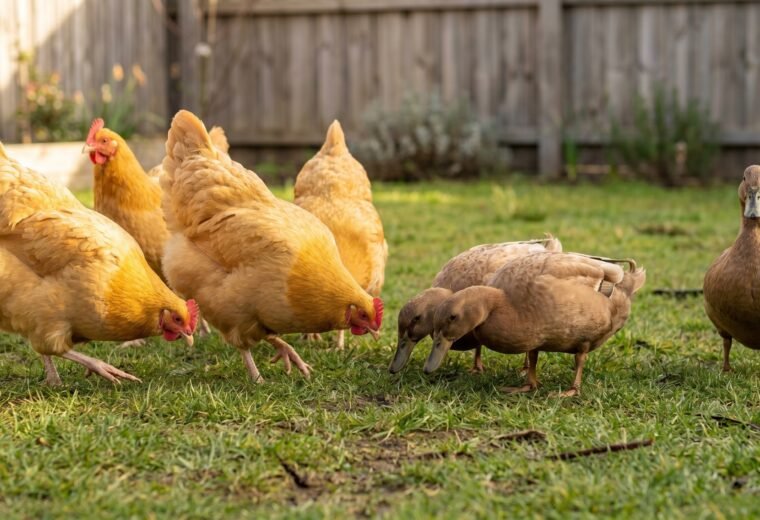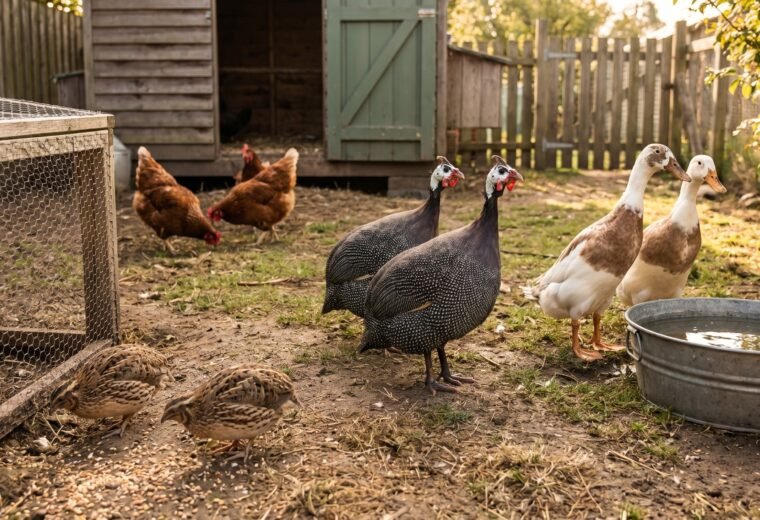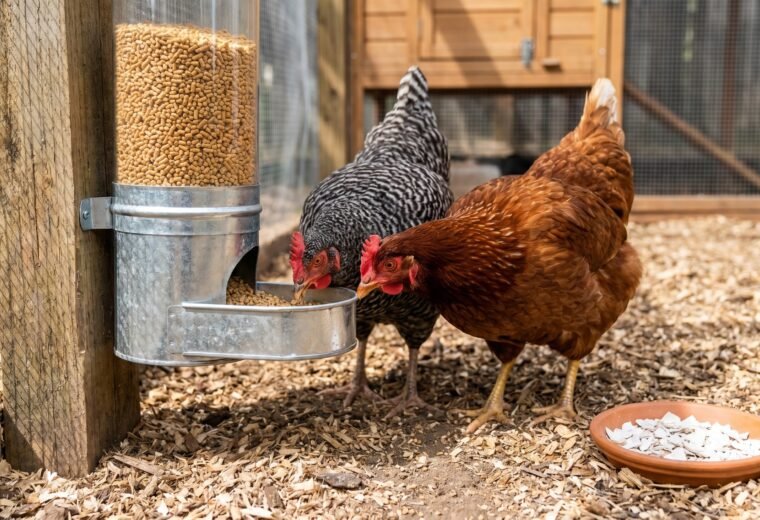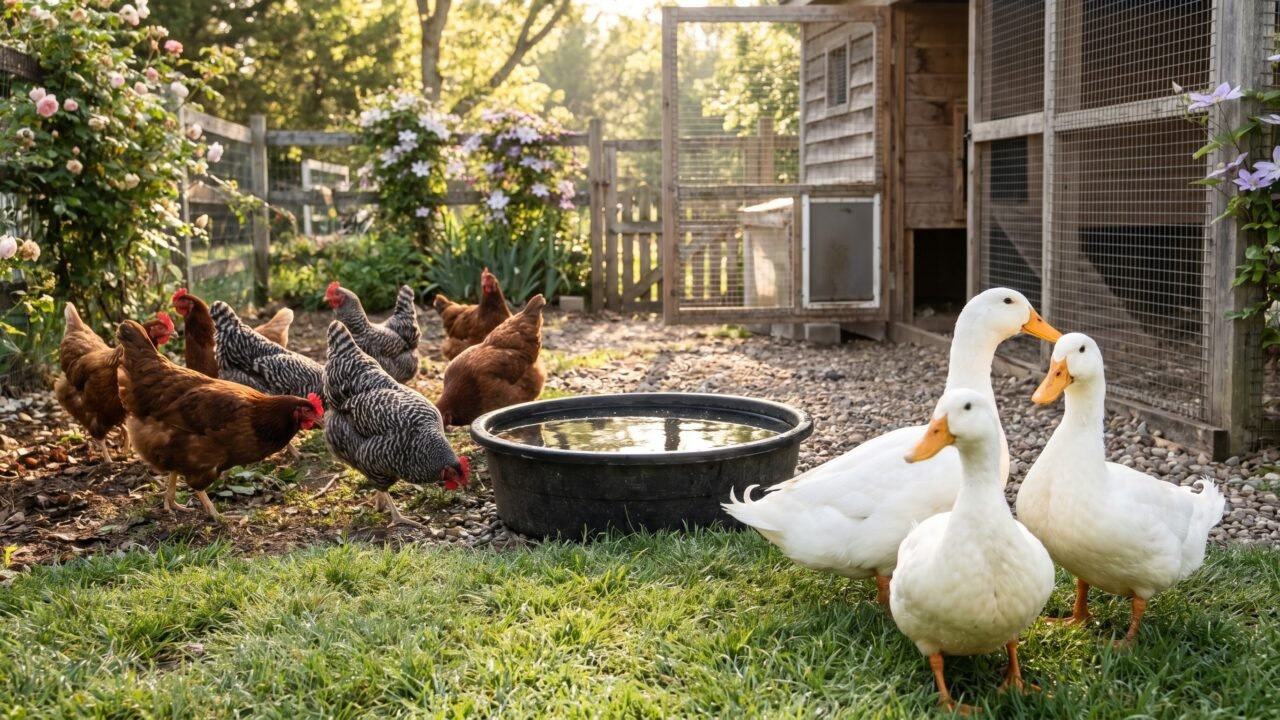
A small flock of four or five ducks can thrive alongside a dozen chickens - but only if you plan for the differences upfront. Ducks and chickens share a tolerance for the same general climate and roughly the same predators, yet they handle space, water, feed, and nighttime routines very differently. Ignore those gaps and you end up with wet, ammonia-stinking bedding, niacin-deficient ducklings, and exhausted hens who haven't slept a full night in weeks. Get them right, and a mixed yard is genuinely fun to keep.
This guide covers what ducks actually need day to day, how to manage the notorious water-and-mess problem, the feed differences that matter most, how to run a mixed flock without headaches, and which breeds make the most sense if you're just starting out. For a broader look at expanding beyond chickens, our other poultry guide puts ducks in context alongside quail, guinea fowl, and geese.
What do ducks need that chickens don't?
Ducks need floor-level sleeping space instead of roosts, water deep enough to submerge their bills, non-medicated feed with adequate niacin, and more frequent bedding management because their droppings carry far more moisture than chicken waste. Every other management difference flows from those four points.
Ducks are waterfowl, which sounds obvious until you see the practical consequences. They are built to forage in and around wet areas, which means their bills, feet, and digestive systems are optimized for conditions that are hostile to chickens. A few key differences shape every management decision.
They don't roost. Chickens sleep perched off the ground; ducks bed down on the floor. A duck shelter needs generous floor space (at least 4 sq ft per bird per eXtension guidance) but not the vertical height or the roost bars a chicken coop requires. You can absolutely use a modified corner of a larger coop for ducks - just keep them off the area directly beneath the chicken roosts, where droppings fall overnight.
Their droppings are very wet. Cornell University's Duck Research Lab puts duck feces at over 90% moisture - chicken droppings are considerably drier by comparison. Four ducks produce noticeably more liquid waste than four chickens. In a shared space, this tips the litter from manageable to soggy faster than most keepers expect, and soggy litter means ammonia, mold, and respiratory trouble for everyone in the building. Deep litter methods that work fine for an all-chicken flock need more frequent turning and topping when ducks share the space.
They are semi-nocturnal. Chickens go to roost at dusk and sleep through until dawn. Ducks take short naps throughout the night and are genuinely active in the dark - splashing in water, foraging, and making noise. Those nighttime habits matter a lot for mixed housing (more on that below).
They don't need a pond, but they do need real water. Swimming is not a requirement. What ducks can't do without is water deep enough to submerge their bill - Cornell's lab specifies a minimum drinking-trough width of 4 cm (about 1.5 inches) so the bill can clear on both sides. Without that, ducks can't clear their nostrils and sinuses, which leads to respiratory and eye infections. Standard nipple drinkers designed for chickens are not a workable solution for ducks.
The water and mess problem
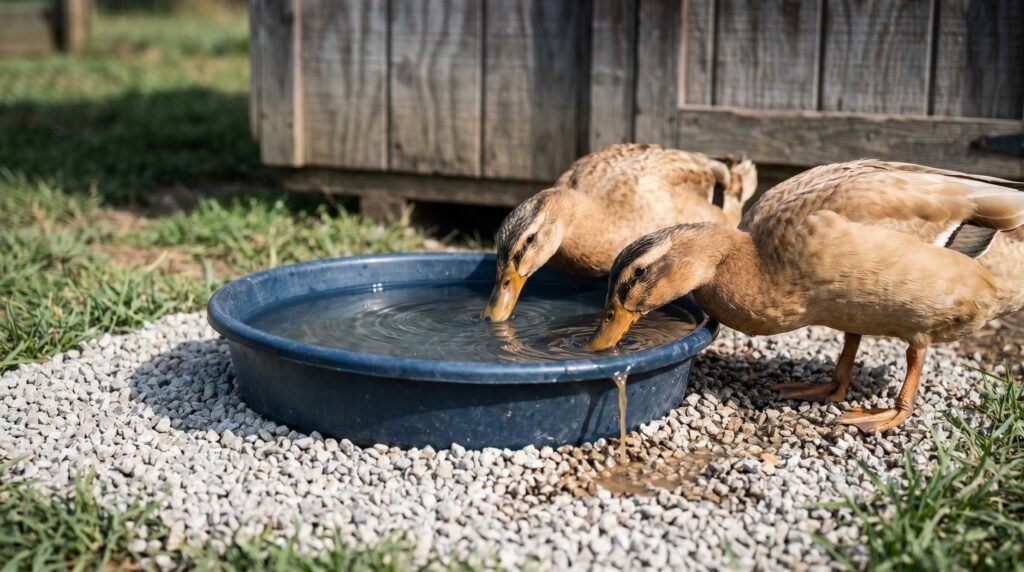
Water management is the single area where most beginners underestimate ducks. It is worth being blunt about what happens if you skip the planning: within a few days, a duck's drinking area turns into a mud wallow, the surrounding bedding goes anaerobic, and the whole coop smells. That's not an exaggeration.
Three practices keep things tolerable.
First, place duck waterers outside the sleeping shelter whenever possible, or at the very least at the far edge of it. Ducks will splash, dunk food in their water, and fill the container with debris several times a day. Moving the water source outdoors (or into a run with good drainage) keeps that mess out of the bedding. Many keepers find that a wide rubber feed pan half-buried in a gravel pad a few feet outside the pop door works well - the gravel carries the overflow away from the structure, and refreshing the water twice daily keeps it from turning foul.
Second, if you want to give your ducks a swim area - a kiddie pool or large tub works well - locate it away from the main chicken hang-out zones and away from the coop entrance. Chickens will sometimes wade in at the edge for a drink, which is fine; what you want to prevent is standing water pooling back toward the coop door or run floor.
Third, use absorbent bedding and change it more often than you would for an all-chicken flock. Pine shavings work well. The University of Wisconsin-Madison Extension notes that litter dampness is "more of a problem with ducks than with chicks," and the same logic applies to adult ducks in a shared space. Expect to add a fresh layer two to three times a week rather than once a week, and plan a full cleanout more frequently.
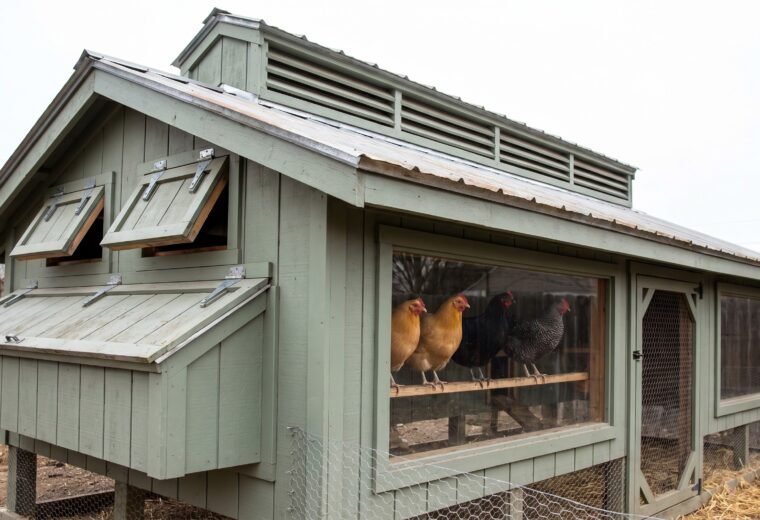
Good ventilation matters even more with ducks. Because their droppings carry so much moisture, the humidity inside a shared shelter rises faster. The same 1 sq ft of open ventilation per bird that protects an all-chicken flock from respiratory problems should be treated as a minimum when ducks are in the mix - not a ceiling.
Feed: where you cannot cut corners
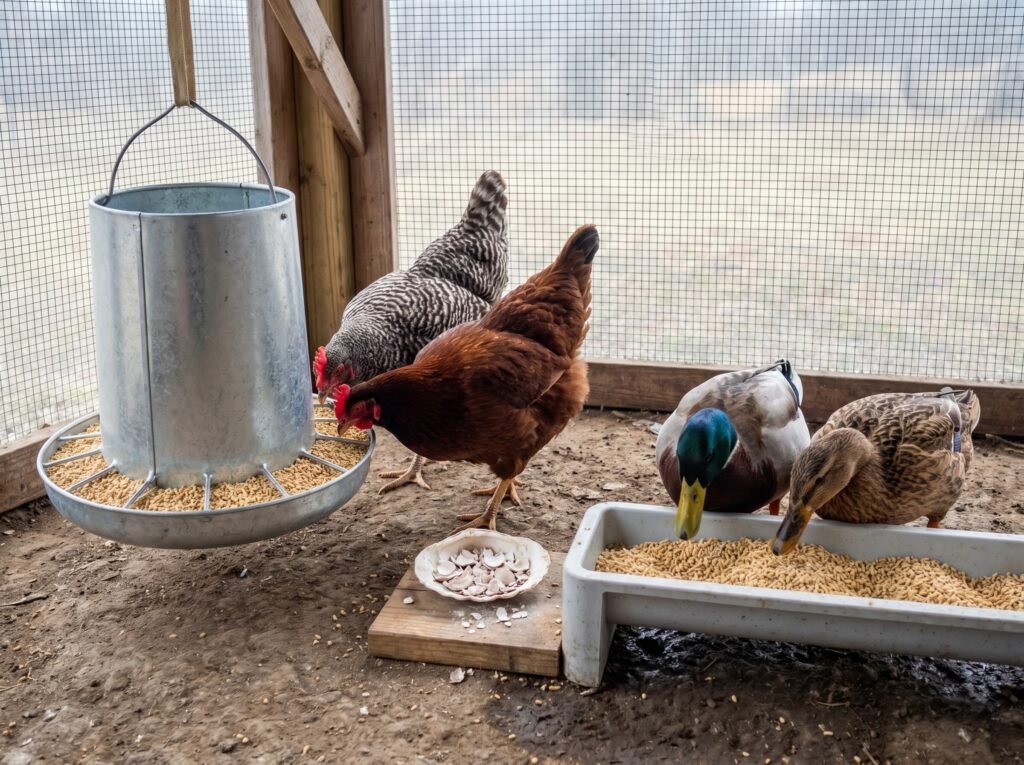
Chickens and ducks have meaningfully different nutritional needs at every life stage. Feeding them exactly the same ration is convenient but carries real risks.
The niacin gap
This is the most important nutritional difference, and it catches beginners off guard. Ducks require roughly 55 parts per million of niacin in their feed; standard chick starter is formulated for chicken needs, which run closer to 27-35 ppm. Ducklings fed only chick starter through their fastest growth period (weeks two through seven) often develop leg problems - bowed legs, difficulty walking - as a result of niacin deficiency. The leg damage can be severe enough to be permanent if not caught early.
NC State Extension's feeding table puts the niacin requirement for starter ducklings at 25 mg per pound of feed (roughly 55 mg/kg). A brewer's yeast supplement stirred into the feed is a practical fix if dedicated waterfowl starter isn't available in your area. One major waterfowl hatchery recommends about 9 mg of niacin daily for a growing duckling consuming around 0.35 lbs of feed - which works out to the same 55 ppm target.
Medicated feed: a hard no for ducks
Medicated chick starters contain amprolium, an anticoccidial drug. NC State Extension states explicitly that such medications lack FDA approval for use in ducks. Beyond the regulatory issue, amprolium is formulated to prevent coccidiosis, a disease that ducks rarely face anyway. Use only non-medicated starter with ducklings.
Layer feed and calcium
Layer pellets contain 3-4% calcium (the eOrganic/USDA-funded minimum for laying ducks is 3%). That level is correct for laying hens and laying ducks, but too high for non-laying birds. Feeding layer pellets long-term to drakes, juveniles, or non-laying hens - of any species - stresses the kidneys because the excess calcium has to be processed out. If you keep a mixed flock that includes drakes, offer an all-flock or grower feed instead, then make oyster shell available free-choice so your laying hens and ducks can self-regulate their calcium intake.
The table below summarizes the practical feed approach across life stages for a mixed chicken-and-duck flock.
| Life stage | Recommended feed | Key notes |
|---|---|---|
| Ducklings 0-8 weeks | Non-medicated waterfowl starter (20-22% protein) or non-medicated chick starter + niacin supplement | Never medicated; niacin target 55 ppm; brewer's yeast works as supplement |
| Chicks 0-8 weeks | Non-medicated chick starter (18-20% protein) | Keep separate from ducklings - ducklings' wet habits harm chicks |
| Juveniles 8-18 weeks | Grower or all-flock (15-16% protein, ~0.8-1% calcium) | Works for mixed species; add oyster shell free-choice |
| Laying hens and laying ducks | All-flock + free-choice oyster shell, OR layer pellets if no drakes present | 3% calcium in layer pellets; drakes need all-flock only |
| Drakes (adult males) | All-flock or grower | High-calcium layer feed harms kidneys over time |
Can ducks and chickens live together?
Yes - ducks and chickens can share outdoor space successfully, and many keepers run a happy mixed yard for years. Success depends on managing three specific friction points correctly: brooding, nighttime housing, and water access during the day. Get those right and the two species generally coexist without drama.
Brooding: keep them separate
Raise ducklings and chicks in separate brooders. Ducklings grow faster, splash water everywhere, and soak the bedding in ways that chill or sicken chicks. As one major hatchery puts it plainly: "Raising ducks and chickens in the same brooder is a recipe for disaster." Start chicks at about 95°F and ducklings a little cooler at 85-90°F, then reduce each group by about 5°F per week (ducklings can take the cooler end as they adjust) - the two schedules track each other after the first week, but the mess management requirements are very different. Merge them in the outdoor run only once both groups are fully feathered, typically around six to eight weeks.
Nighttime housing: a decision worth making carefully
The most common mistake in a mixed flock is assuming one shared coop works for both species at night. It can - but only with enough space and ventilation, and only if you accept that your chickens may not sleep as well. Ducks are semi-nocturnal and genuinely active after dark - splashing, waddling, and vocalizing through the night. Intermittent disturbances disrupt hens' normal sleep patterns, which over time affects their welfare and can reduce laying consistency.
Many experienced keepers settle on this arrangement: shared outdoor run during the day, separate small shelters at night. A duck house can be simpler than a chicken coop - no roost bars, lower ceiling, just a draft-free, predator-proof box with good floor space and a pop door. If a single shared building is what you have, give the ducks a partitioned section at one end with their own pop door, and make sure the ventilation is generous. Placing the duck section near the largest vent panel tends to reduce ammonia buildup compared to a dead-corner placement, since duck droppings off-gas moisture continuously and good airflow across that section makes a real difference.
Daytime cohabitation
Out in the run, chickens and ducks typically ignore each other after the first day or two of sizing each other up. Ducks are not aggressive toward chickens as a rule, and the reverse is true as well - though a dominant rooster will occasionally chase a duck that wanders too close to his hens. The standard integration caution applies: give both species enough space so they can avoid each other when they want to. Integration steps and behavioral troubleshooting are covered in depth in raising both species together.
One practical note: provide at least two water stations in a shared run. Ducks monopolize a water container by dunking food in it and splashing, leaving the water murky. Chickens will avoid drinking from it. A dedicated, clean chicken waterer at roost height - where ducks can't easily reach it - solves this quickly.
Predator security
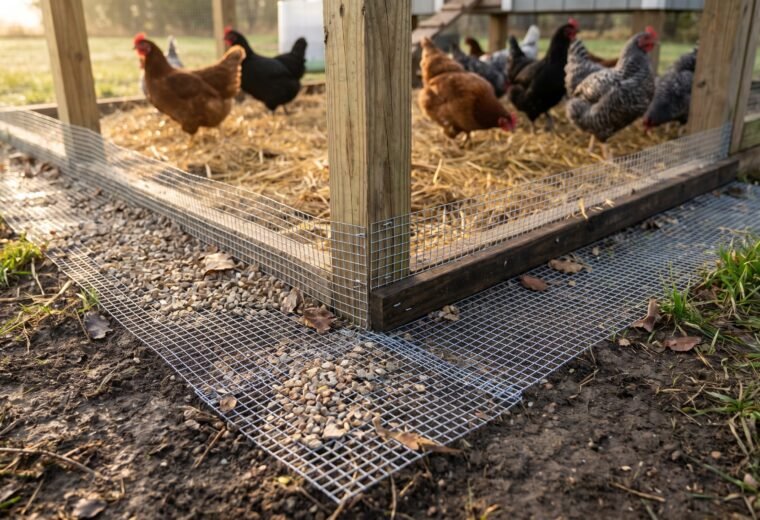
Ducks face the same predators as chickens: raccoons, foxes, mink, weasels, and hawks. Mink are a particular hazard for ducks because they are semi-aquatic hunters and follow water sources onto properties. Weasels can slip through gaps smaller than an inch. Hardware cloth at 1/2-inch mesh (not standard chicken wire) is required; raccoons can pull chicken wire apart with their paws, and weasels pass through the hexagonal openings easily. Bury or apron the mesh at least 12 inches outward from the base of any run to stop digging. Lock both the duck shelter and the chicken coop at dusk, every night. One practical difference from chickens: ducks sleep on the ground, which puts them at floor-level exposure all night. That means the base of the enclosure - the lowest 12 inches of wall mesh, the door threshold, and any gap between wall and floor - deserves the same scrutiny you'd give the roost area for chickens. Full build guidance and hardware specs live in the predator-proof run article.
Five beginner duck breeds worth considering
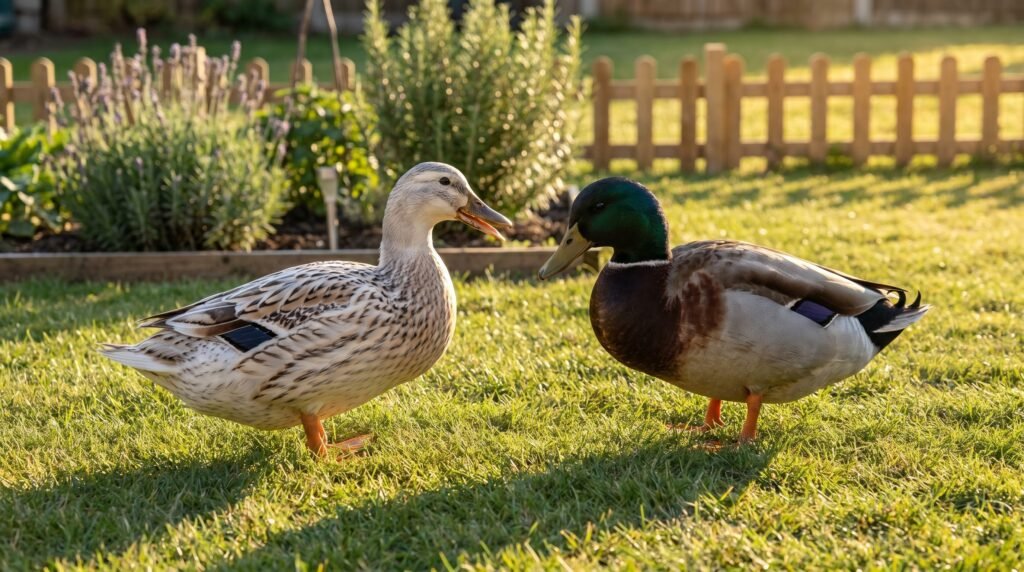
Breed choice shapes everything from daily egg count to how much the ducks test your patience. The table below draws on data from two major waterfowl hatchery sources to compare five solid starter options.
| Breed | Eggs/year | Mature weight* | Temperament | Best for |
|---|---|---|---|---|
| Khaki Campbell | 165-240 | 3.5-4.5 lbs | Active, alert (can be nervous) | Maximum egg production, smaller footprint |
| Welsh Harlequin | 240-300 | 4.5-5.5 lbs | Calm, good forager | High egg output with calmer handling |
| Pekin | 150-200 | 8-12 lbs | Calm, friendly | Families, pets, dual-purpose (meat/eggs) |
| Rouen | 140-180 | 5-7.25 lbs | Docile, calm | Exhibition, ornamental, low-key dual-purpose |
| Indian Runner | 100-180 | 3.25-4 lbs | Active, flocks together (can be nervous) | Insect control, novelty, small-space foraging |
* Weights shown are hen (female) figures. Welsh Harlequin drakes typically run 5.5-6.5 lbs; Rouen drakes reach 7-7.25 lbs. The Pekin and Indian Runner weights encompass both sexes given their narrower range.
Welsh Harlequins are the recommendation we land on most often for people who already keep chickens and want productive ducks that aren't a management headache. Their egg output rivals Khaki Campbells, their temperament is calmer (easier to handle and less likely to startle the chickens), and at 4.5-5.5 lbs they're a manageable size. Pekins are the better pick if you have kids who want to interact with the birds, or if you want the option of table meat down the line.
Runners are genuinely entertaining - their upright posture and synchronized running behavior make them a conversation piece - but they're high-energy and can stir up a chicken flock more than the calmer breeds. Save them for once you have duck management down.
Whatever breed you choose, start small: three to five ducks alongside your existing chickens is enough to work out the water management and housing logistics before you scale up. More detailed breed comparisons, including egg color and cold-hardiness ratings, live in our other poultry section.