Fourteen square feet of combined coop-and-run space. That is what a single standard laying hen needs at a minimum - and it is often the first number that sends apartment dwellers and small-yard owners straight toward coturnix quail. Both birds lay eggs, both can produce meat, and both will wake you up in their own way. But they are genuinely different animals to keep, and which one suits you depends on factors most comparison lists skip: how your city classifies them, what happens to egg production after year one, and whether a two-pound bird you cannot name will bother you when it is time to cull.
If space or noise is your constraint, quail often win. If you want bigger eggs, social birds you can interact with daily, and a longer productive lifespan per animal, chickens usually do. The table below lets you compare both at a glance, and the sections that follow explain the numbers behind each row.
Space: the clearest difference between the two
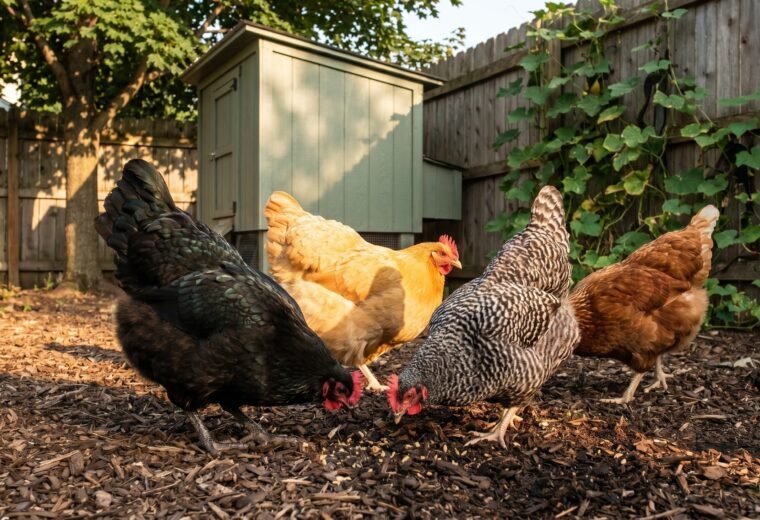
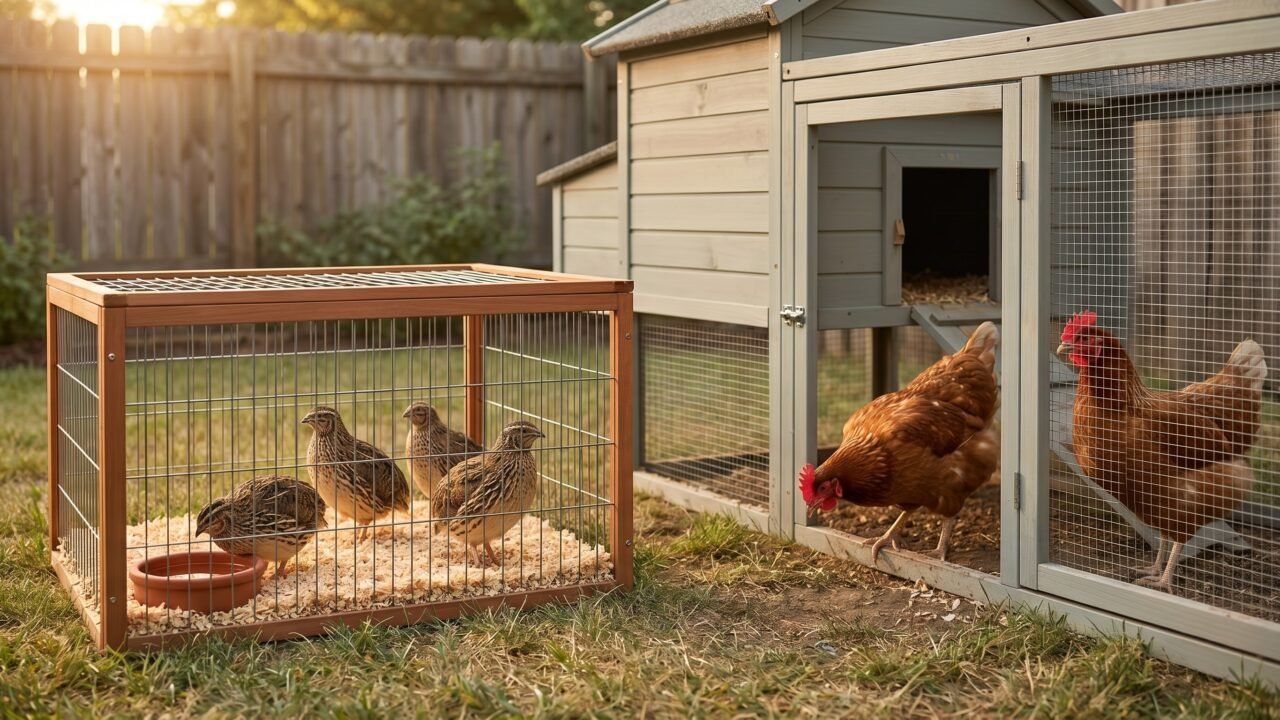
A standard laying hen needs at least 3-4 sq ft of covered coop space plus 10 sq ft of outdoor run, according to poultry extension guidelines for small and backyard flocks. For a flock of four hens that is a minimum footprint of 52 sq ft of combined indoor and outdoor space before you add roost bars and nest boxes - more than many urban yards can spare in a usable configuration.
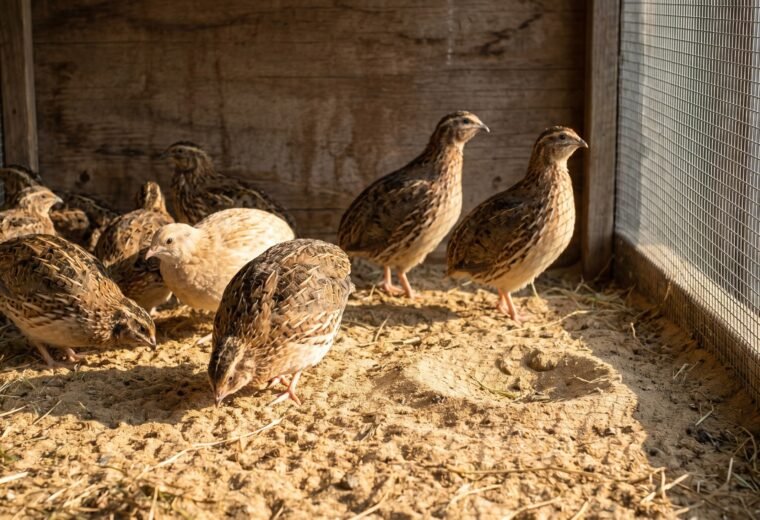
Coturnix quail (the species most backyard keepers raise) work on an entirely different scale. Research data puts floor requirements at roughly 40-50 sq in per bird in a litter pen, which works out to about one-third of a square foot each. In practical terms, a 2x4 ft cage comfortably houses eight adult quail. Some keepers run 12-15 birds in that footprint, though crowding above that raises stress and feather-pecking risk. The takeaway: you can fit 15 quail in the space one chicken needs outdoors.
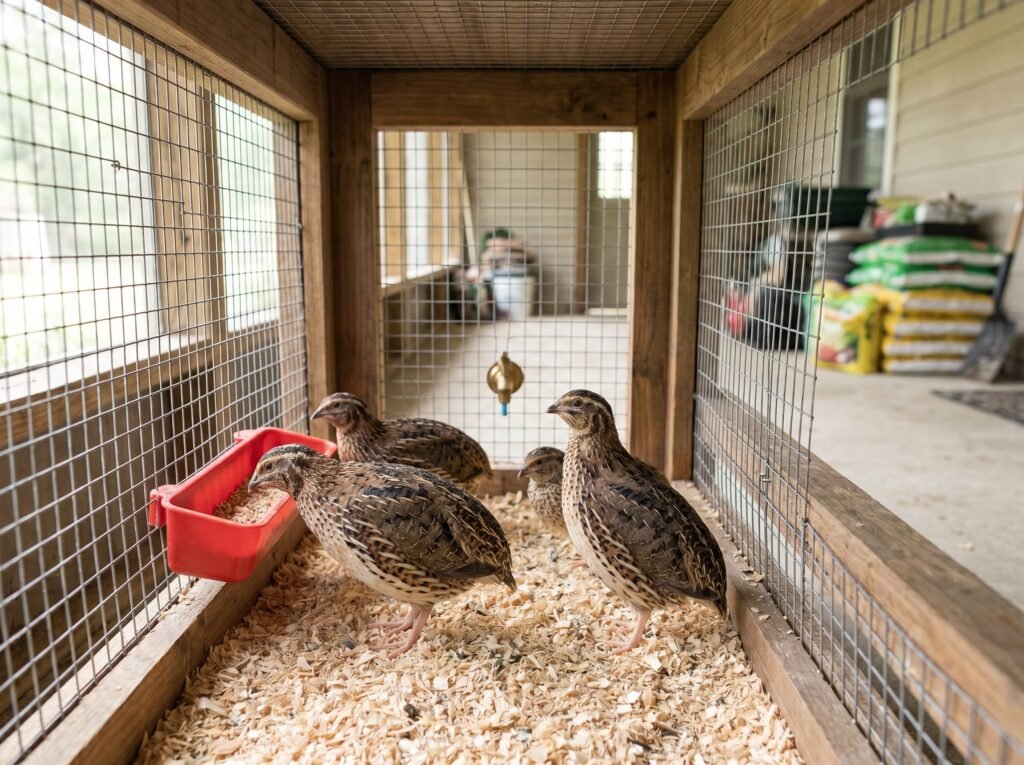
Quail are also comfortable in covered wire cages in a shed, garage, or covered porch - no traditional coop required. Chickens need solid shelter with ventilation, roost bars set roughly 18-24 inches off the floor, and nest boxes (roughly one 12x12-inch box per three to four hens). That infrastructure costs money and space that quail simply do not demand.
One caveat: quail are ground-nesters and terrible fliers within a cage, but they startle easily and bolt straight up if surprised. Any housing needs a solid roof - no open-top runs. Chickens can be managed in open runs with overhead netting; quail cannot be trusted in any configuration where the top is absent.
Egg production: close numbers, very different eggs
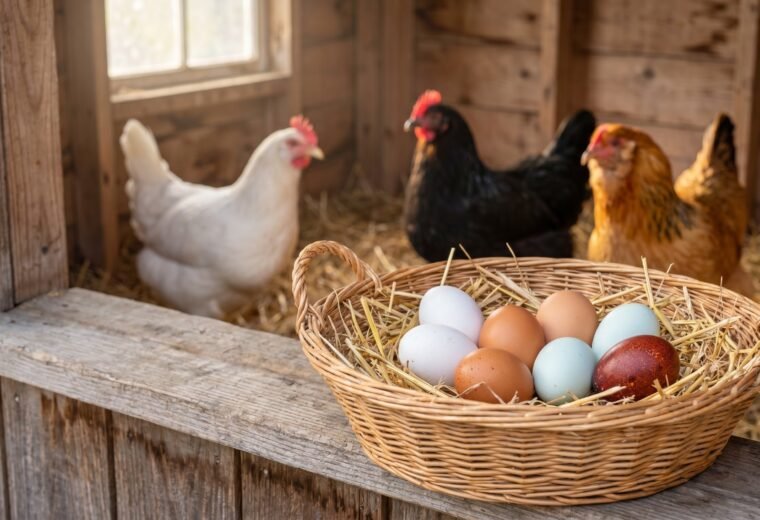
Both birds are genuine layers. A productive coturnix hen lays between 250 and 300 eggs per year beginning at roughly six weeks of age. A good commercial-strain laying hen produces 200-260 eggs per year, with high-production hybrids reaching 240-280, and begins laying around 18-24 weeks of age.
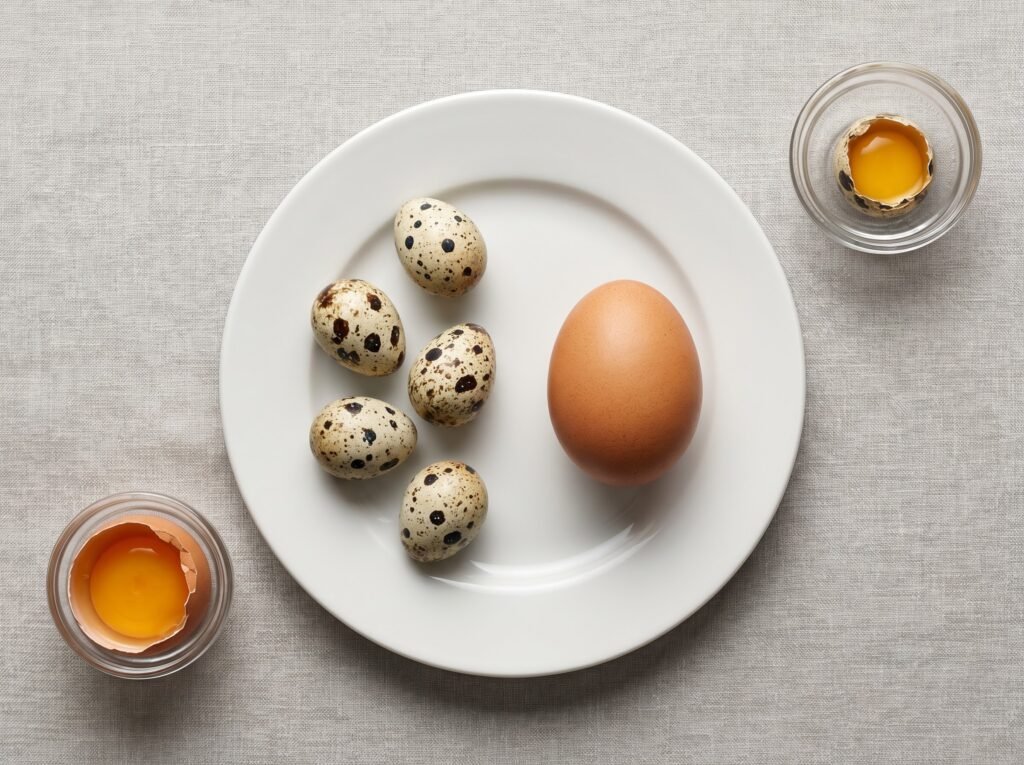
So quail reach production roughly three months sooner and can hit the high end of the same annual range. The catch is egg size. A coturnix egg weighs about 10-12 grams - roughly one-fifth the weight of a large hen egg (approximately 57 grams). To match the protein and volume of a dozen chicken eggs you need about five to six dozen quail eggs. That math shifts how you think about yield: a flock of four hens gives you a meaningful supply of usable eggs; four quail give you a pleasant snack.
Flavor is similar - some people find quail eggs slightly richer - but the difference is minor enough that it comes down to personal preference and intended use. Quail eggs are prized for pickling, appetizer plates, and specialty markets, which matters if you plan to sell surplus.
Laying persistence is another dividing line. Hens decline roughly 10-20% in annual output after their first laying year, and extension sources note that "a hen that lays for two to three years can be considered a successful layer." Quail ramp up fast but also taper sooner: most commercial operations keep layers for 8-10 months before replacing them. For a backyard keeper who wants animals for several years without restocking, chickens hold an edge. For someone who wants maximum early production and is comfortable cycling birds, quail work well.
Side-by-side decision table
| Factor | Coturnix quail | Standard laying hens | Edge goes to |
|---|---|---|---|
| Minimum indoor space per bird | ~40-50 sq in (~0.3 sq ft) | 3-4 sq ft | Quail |
| Minimum outdoor run per bird | Not required (cage-kept) | 10 sq ft | Quail |
| Age at first egg | 6-8 weeks | 18-24 weeks | Quail |
| Annual egg yield per bird (peak) | 250-300 | 200-280 | Roughly equal |
| Egg size | ~10-12 g (small) | ~57 g (large) | Chickens |
| Daily feed per adult bird | 20-25 g (~0.05 lb) | ~114 g (~0.25 lb) | Quail |
| Productive laying lifespan | 8-10 months (typical) | 2-3 years | Chickens |
| Mean overall lifespan | ~2 years | 5-8 years (pet-kept) | Chickens |
| Meat yield (processed bird) | ~77 g per bird | 4-7 lb per bird | Chickens |
| Noise level | Quiet hens; males crow softly | Hens cluck/squawk; roosters very loud | Quail |
| Urban legality (typical) | Variable; often unregulated or in gray zone | Commonly permitted (5-6 hens in most cities) | Chickens (more consistent) |
| Startup infrastructure cost | Low (wire cage, brooder) | Moderate-high (coop, run, nest boxes) | Quail |
| Beginner-friendliness | Moderate (fast cycle, short lifespan) | High (forgiving, long-lived, well-documented) | Chickens |
Meat: quail are a specialty item, chickens are a meal
A dressed coturnix quail weighs about 77 grams - a single serving, and a small one. Survey data from commercial operations puts average slaughter weight around 110 grams live, yielding roughly 77 grams after processing. Most meat-type quail reach market weight and are harvested at 5-6 weeks, by which point live weight is sufficient for processing (NCBI and FAO references consistently cite this range for Coturnix meat birds). The carcass is delicious - mild, fine-grained, and well-regarded in restaurant kitchens - but you need a lot of birds to feed a family dinner.
Dual-purpose chicken breeds (such as the Plymouth Rock or the Delaware) reach a processed weight of 4-7 lb and provide a genuine roasting bird. Meat-specific breeds like the Cornish Cross hit slaughter weight faster but are single-purpose. If meat production is a real goal rather than a side benefit of culling old layers, chickens are the practical answer for most households. Quail meat is a bonus of flock management, not a primary output at small scale.
Both species require the same processing basics: scalding, plucking or skinning, and evisceration. Quail are faster to process individually but you need far more of them to fill a freezer. Reports from hobbyist forums and small-scale keepers suggest that most people who start quail for eggs end up processing spent birds as a bonus rather than running a dedicated meat operation.
Noise and neighbors: who will complain?
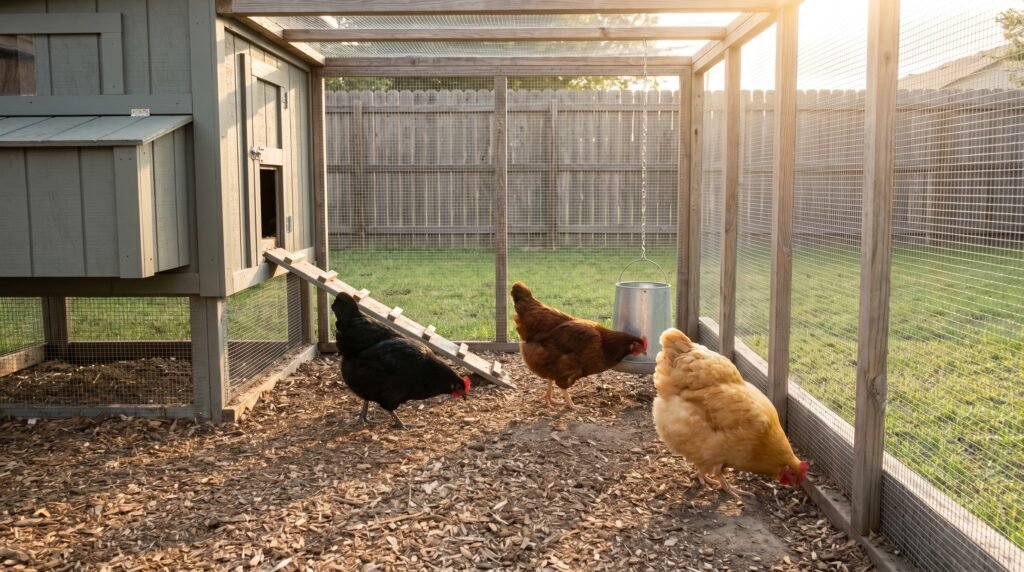
Extension research measured a squawking hen at 63 dBA at two feet - roughly the volume of a normal conversation. A rooster crowing is considerably louder and carries at distance; most urban ordinances ban roosters outright because of it. Hens cluck, cackle during egg laying, and announce distress at a volume most neighbors will notice through a fence.
Coturnix hens are nearly silent by comparison. Males produce a soft crow that is audible nearby but rarely carries more than 20-30 feet. It is not inaudible - a neighbor sleeping with their window open ten feet from your setup might hear it at dawn - but it is nowhere near the volume of a rooster. If noise is your primary concern, quail are the clear answer.
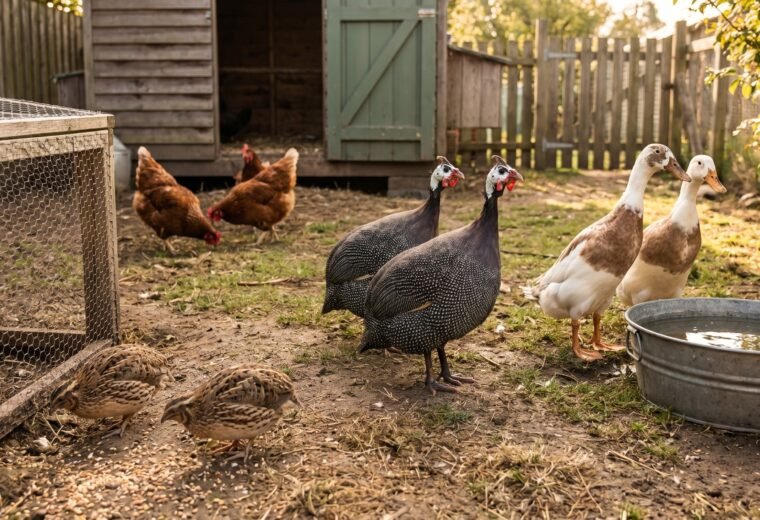
Guinea fowl, ducks, and geese are all louder than chickens, for reference.
Legality: chickens have the better paper trail
Chickens are the most commonly regulated backyard poultry, which cuts both ways. Most US cities that allow any backyard birds specify chickens explicitly - typically five to six hens per property without a permit, with roosters banned. The rules are written, the precedent exists, and you can usually call your city planning office and get a clear answer in five minutes.
Quail live in a murkier space. Many municipal ordinances simply say "poultry" and leave quail in an undefined zone. Some cities classify coturnix as game birds under state wildlife regulations rather than domestic livestock, which may require a state permit even where chickens are freely allowed. Others have no rules on quail at all. Before you buy quail, check your municipality's specific ordinance text and call the planning department - do not assume that silence means approval. HOA rules add another layer: many HOAs ban all livestock, including poultry, regardless of city rules, and quail will not get you an exemption.
If you are in a jurisdiction that allows chickens and you want the simplest path to legal backyard eggs, chickens win. If your city bans chickens by name but says nothing about quail, that grey area is worth investigating - but get the answer in writing.
Effort and daily care
Both species need daily water, feed, and a quick welfare check. The differences are in infrastructure maintenance and the emotional character of the flock.
Chickens are more work to house but easier to bond with. They have individual personalities, establish a clear pecking order you will learn to read, and will follow you around the yard if allowed. Egg collection is once-a-day and easy. Coop cleaning on deep litter requires a full clean-out one to two times per year with regular turning in between. Introducing new birds to an established flock takes patience, but it is manageable with a slow introduction.
Quail cages need more frequent spot-cleaning because the birds cannot be given outdoor access easily and manure accumulates faster per square foot. Wire-floor cages let waste drop through (easier to clean) but are harder on the birds' feet; litter-floor cages require daily or every-other-day attention. Quail are also more flighty and skittish than chickens. They do not "tame" in the way a chicken does. Handling them is stressful to the birds if done roughly. For keepers who want animals they interact with daily, chickens are more rewarding.
Feed math gives quail a modest advantage on daily intake but the picture narrows when you account for egg size. At 20-25 g per bird per day, 15 quail consume roughly 300-375 g of feed daily and produce approximately 12-15 eggs (each about 11 g). Four laying hens at 114 g each use about 456 g of feed daily and produce roughly 3-4 eggs (each about 57 g). To make a true comparison, convert to grams of edible protein yielded: a 57 g hen egg contains roughly 6 g of protein; an 11 g quail egg contains roughly 1.2 g. So 15 quail producing 12 eggs at peak yield about 14 g of egg protein per 340 g of feed (roughly 1 g protein per 24 g feed). Four hens producing 3.5 eggs yield about 21 g of egg protein per 456 g of feed (roughly 1 g protein per 22 g feed). At peak production, the two species are within a few percent of each other on feed-to-protein efficiency - the real quail advantage is in space and startup cost, not in feed savings per egg.
One often-skipped point: quail have a much faster generation cycle. A hen purchased as a day-old chick will not lay for nearly five months. A coturnix chick hatches and lays within six weeks. That fast cycle also means the flock turns over quickly - you will be restocking quail far more often than chickens if you want consistent production. For some keepers that is a feature (fresh birds, easy to scale up or down); for others it is a hidden cost and emotional burden.
A note on raising both
Some backyard keepers run a small chicken flock alongside a quail cage and find the combination satisfying: the chickens supply full-sized eggs and social interaction, the quail supply a specialty product in a tiny footprint. Keep them in completely separate housing. Respiratory and intestinal diseases - including Mycoplasma gallisepticum and histomoniasis (blackhead) - can move between the two species, and the size difference makes cohabitation physically dangerous for the quail.
Which bird is right for you?
Choose quail if: your outdoor space is under 50 sq ft, noise is a firm constraint, you want eggs within two months of setup, your budget for initial infrastructure is tight, or you are in a jurisdiction where chickens are explicitly banned but quail are not covered.
Choose chickens if: you have at least a 4x8 ft coop and a modest run, you want animals with personality you can interact with, you need full-sized eggs without the math of scaling up quail numbers, you want productive layers for two to three years without restocking, or you are in a jurisdiction with clear chicken-keeping ordinances.
Neither is harder in absolute terms - they are different in character. Chickens are more forgiving of beginner mistakes and have decades of accessible husbandry knowledge behind them. Quail demand cleaner cage management and a willingness to restock more often, but they fit in spaces where chickens simply cannot. Both deserve better research than the average social-media post provides, and both will produce more than you expect once you get the setup right.